State Quarters 1999-2008

Coin Series
State Quarters 1999-2008 series coin

About This Series

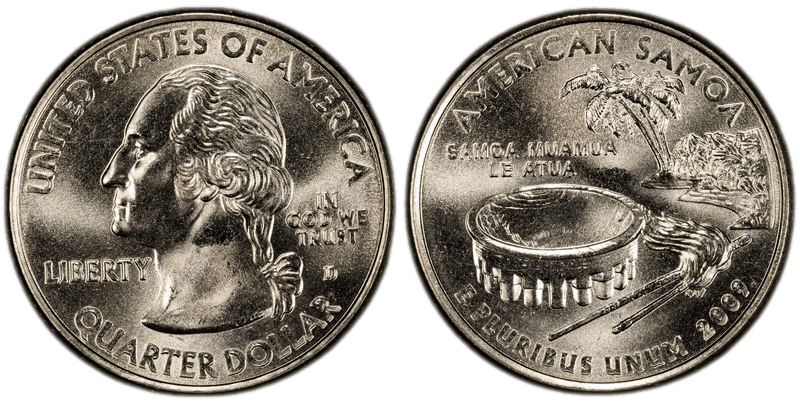
Authorized by the 50 States Commemorative Coin Program Act of 1997, the State Quarters program released five reverses a year, in the order the states ratified the Constitution or joined the Union, from Delaware (1999) through Hawaii (2008). The Mint issued more than 34 billion state quarters and estimates that 147 million Americans collected them; it calls the program the most successful coin initiative in U.S. history. Each state's governor recommended a design, which the Treasury Secretary chose after consulting the Commission of Fine Arts, resulting in diverse imagery: from Delaware's Caesar Rodney to Alaska's grizzly bear. The obverse kept John Flanagan's Washington portrait, reworked by William Cousins; UNITED STATES OF AMERICA and QUARTER DOLLAR moved to the obverse, and the date to the reverse. Struck in copper-nickel clad at Philadelphia (P) and Denver (D), with San Francisco (S) proofs in both clad and .900 fine silver, collectors pursued complete date-and-mintmark sets. Known varieties include the 2004-D Wisconsin Extra Leaf High and Extra Leaf Low quarters and the 2005-P Minnesota Extra Tree doubled dies. The program's success directly spawned the America the Beautiful and American Women quarters programs, establishing rotating-reverse quarters as a permanent fixture of American numismatic culture.

From NumisDex News

Series Information

Production Years
1999-2008
Designer
John Flanagan (obverse, modified by William Cousins in 1999)
Composition
Copper-nickel clad copper (silver proofs: 90% silver, 10% copper)
Weight
5.67g
Diameter
24.26mm
Edge
Reeded

Browse by Base(10 bases)

Showing all 10 listings

About the Program

The 50 States Commemorative Coin Program Act, Public Law 105-124, was approved on December 1, 1997. It gave the quarter a new reverse for each state over ten years starting in 1999, five states a year, taken in the order they ratified the Constitution or joined the Union. The Treasury Secretary picked each design after hearing from the state's governor and the Commission of Fine Arts. The law ruled out head-and-shoulders portraits, living people and anything frivolous.

The states ran their own selection. According to Wikipedia, governors made the final choice in 33 states and public votes decided the other 17. The Mint struck the first Delaware quarters at a ceremony in Philadelphia on December 7, 1998, and Hawaii closed the program in late 2008.

The Mint estimates that 147 million Americans collected the coins. It issued more than 34 billion state quarters to the Federal Reserve Banks and earned about $3 billion in seigniorage, and it calls the program the most successful coin initiative in U.S. history.

The eagle quarters of 1965-1998 are covered on the Washington clad quarter page. In 2009 the DC and U.S. Territories quarters followed, and the America the Beautiful quarters began in 2010.
The Designs

Each year page lists that year's five coins in release order.

1999

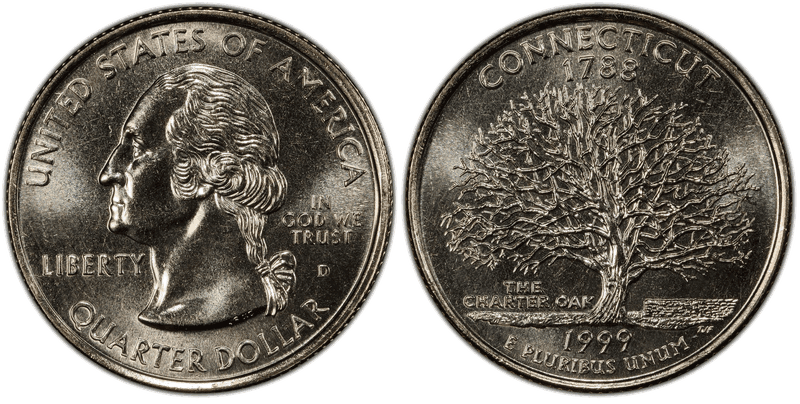
Delaware (Caesar Rodney on horseback), Pennsylvania (the Commonwealth statue and a keystone), New Jersey (Washington crossing the Delaware), Georgia (a peach framed by live oak) and Connecticut (the Charter Oak).

2000

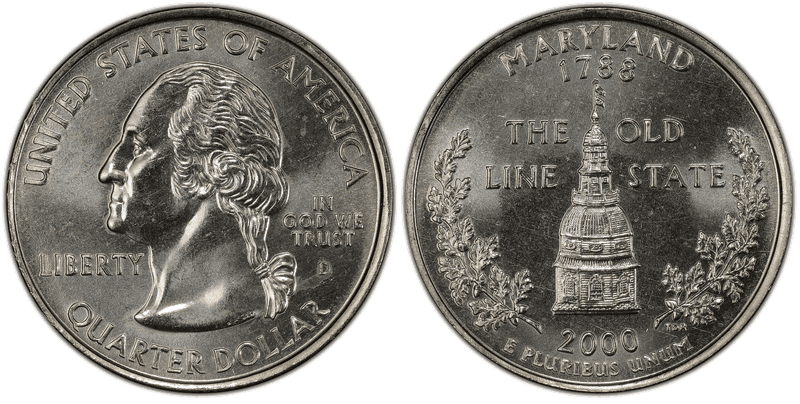
Massachusetts (the Minuteman), Maryland (the State House dome), South Carolina (palmetto, Carolina wren and jessamine), New Hampshire (the Old Man of the Mountain) and Virginia (the three Jamestown ships).

2001

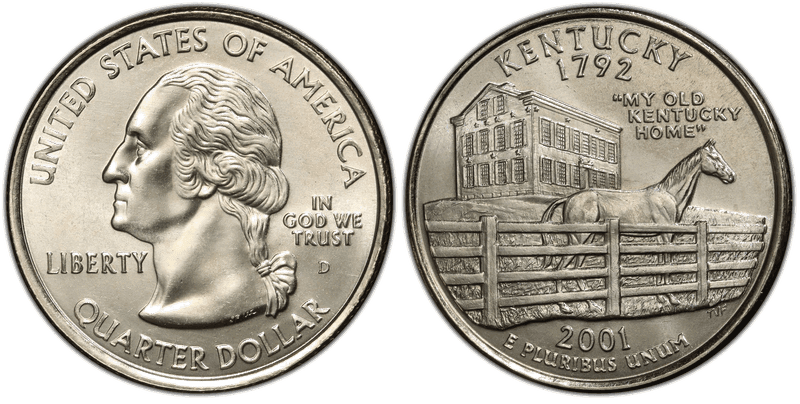
New York (the Statue of Liberty), North Carolina (the Wright Flyer), Rhode Island (a sailboat on Narragansett Bay), Vermont (Camel's Hump and sap buckets) and Kentucky (a racehorse before Federal Hill).

2002

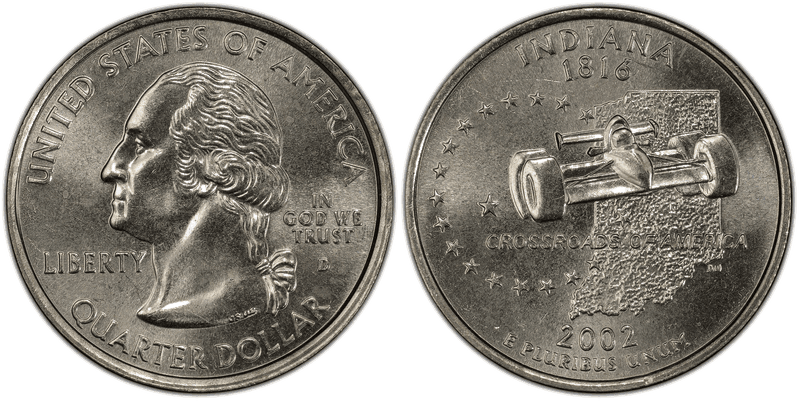
Tennessee (fiddle, trumpet and guitar), Ohio (an early airplane and an astronaut), Louisiana (pelican, trumpet and the Louisiana Purchase), Indiana (a race car) and Mississippi (magnolias).

2003

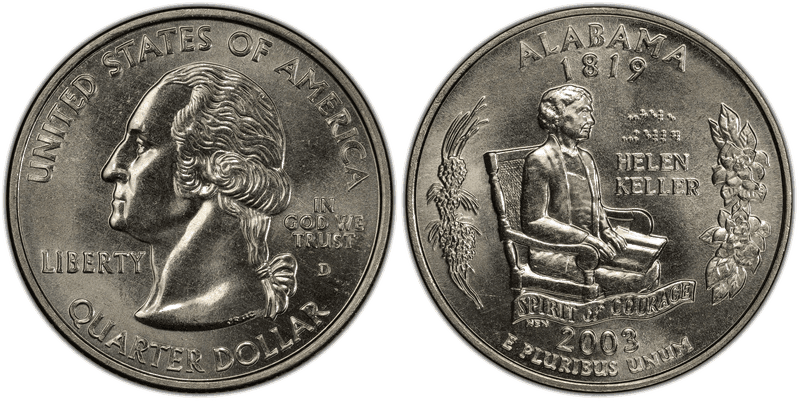
Illinois (young Lincoln), Alabama (Helen Keller, with her name in Braille), Maine (Pemaquid Point Light), Missouri (Lewis and Clark below the Gateway Arch) and Arkansas (a diamond, rice and a mallard).

2004

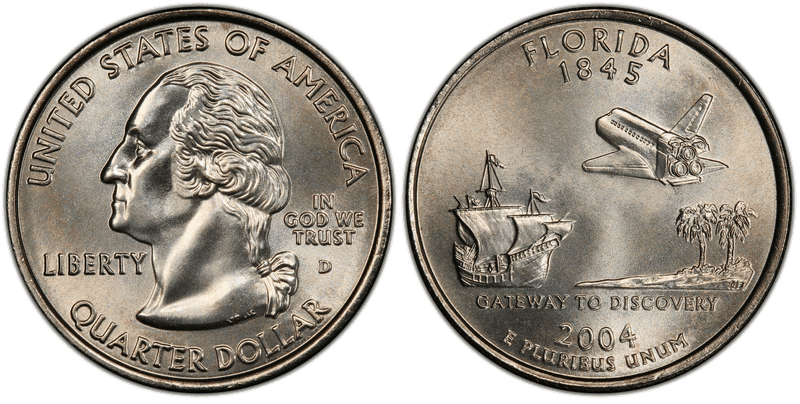
Michigan (the Great Lakes), Florida (a galleon and the Space Shuttle), Texas (a lone star in a lariat), Iowa (a schoolhouse after Grant Wood) and Wisconsin (a cow, cheese and corn).

2005

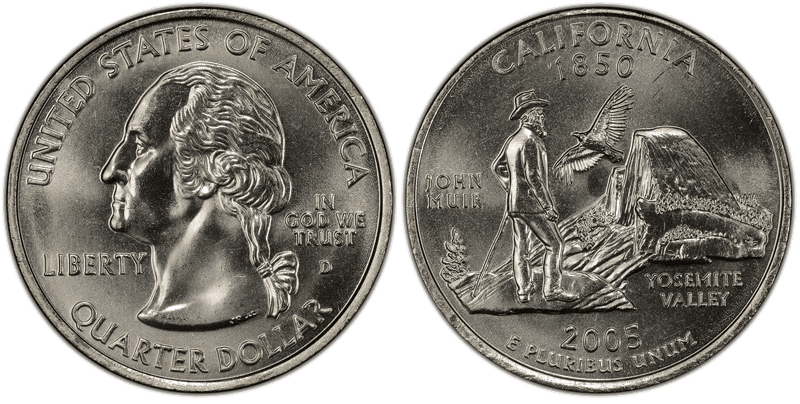
California (John Muir and Half Dome), Minnesota (a loon on a lake), Oregon (Crater Lake), Kansas (a bison and sunflowers) and West Virginia (the New River Gorge Bridge).

2006

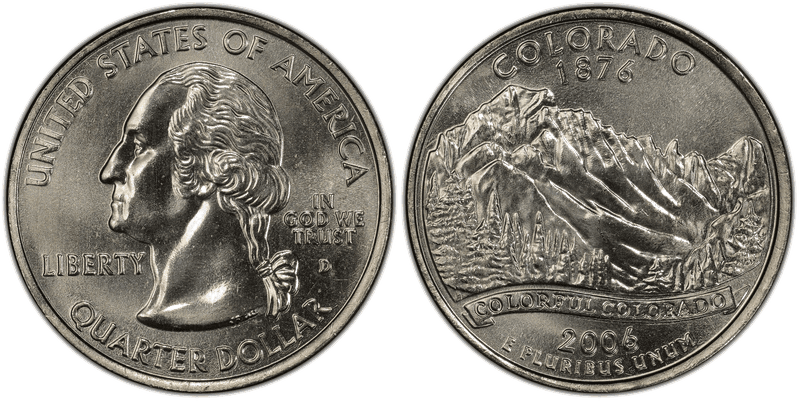
Nevada (three mustangs), Nebraska (a covered wagon and Chimney Rock), Colorado (the Rockies), North Dakota (bison in the Badlands) and South Dakota (a pheasant over Mount Rushmore).

2007

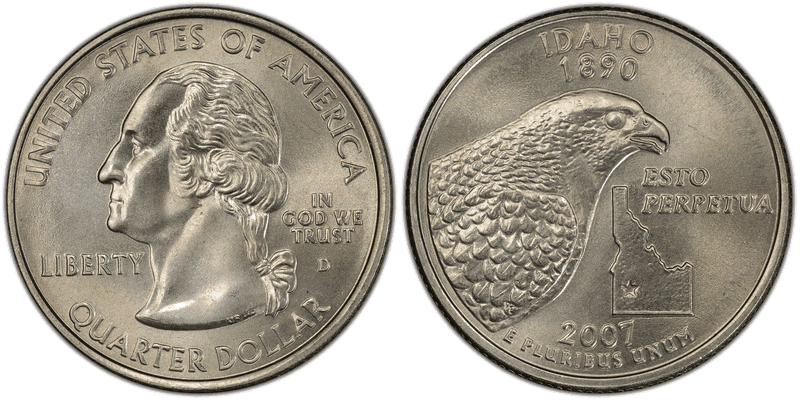
Montana (a bison skull), Washington (a salmon and Mount Rainier), Idaho (a peregrine falcon), Wyoming (a bucking horse and rider) and Utah (the golden spike).

2008

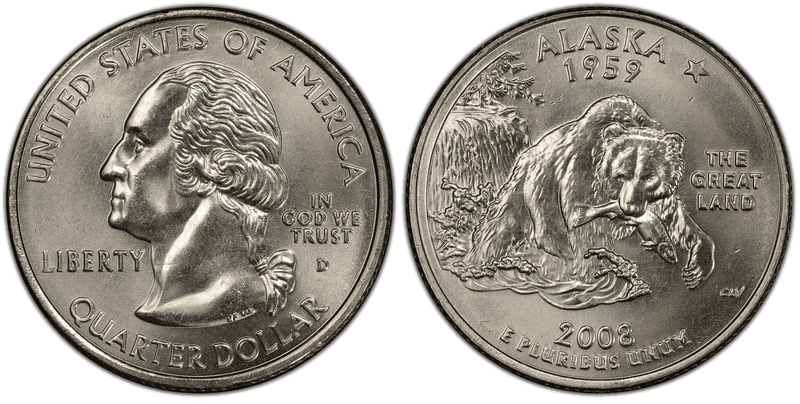
Oklahoma (a scissor-tailed flycatcher), New Mexico (the Zia sun), Arizona (the Grand Canyon and a saguaro), Alaska (a grizzly with a salmon) and Hawaii (King Kamehameha I).

Mintages

State Quarters 1999-2008 mintages by design and finish, taken from each coin's page in our catalog. Each figure opens that coin's page, which lists its varieties and errors. A dash means no figure was recorded. Where one issue was struck in more than one type, each type is listed.

DesignPDP SatinD SatinProofSilver Proof
1999 Connecticut
1999 Delaware
1999 Georgia
1999 New Jersey
1999 Pennsylvania
2000 Maryland
2000 Massachusetts
2000 New Hampshire
2000 South Carolina
2000 Virginia
2001 Kentucky
2001 New York
2001 North Carolina
2001 Rhode Island
2001 Vermont
2002 Indiana
2002 Louisiana
2002 Mississippi
2002 Ohio
2002 Tennessee
2003 Alabama
2003 Arkansas
2003 Illinois
2003 Maine
2003 Missouri
2004 Florida
2004 Iowa
2004 Michigan
2004 Texas
2004 Wisconsin
2005 California
2005 Kansas
2005 Minnesota
2005 Oregon
2005 West Virginia
2006 Colorado
2006 Nebraska
2006 Nevada
2006 North Dakota
2006 South Dakota
2007 Idaho
2007 Montana
2007 Utah
2007 Washington
2007 Wyoming
2008 Alaska
2008 Arizona
2008 Hawaii
2008 New Mexico
2008 Oklahoma

How to Tell Them Apart

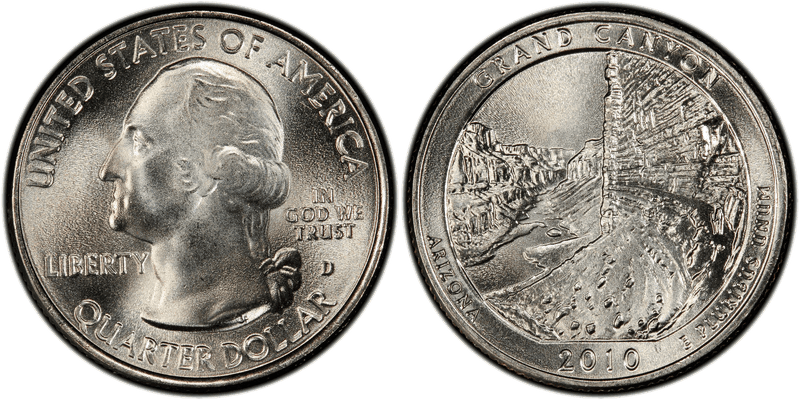
Obverse. To clear the reverse for the state designs, the Mint moved UNITED STATES OF AMERICA, QUARTER DOLLAR, LIBERTY and IN GOD WE TRUST to the front. CoinWeek credits William Cousins with the reworked Washington portrait, based on John Flanagan's. The date moved too: each reverse carries the year of issue beside the state's name.

Mint mark. It is on the obverse, right of Washington's ponytail and below IN GOD WE TRUST. On the eagle quarters it sat at the lower right, beside the neck. P means Philadelphia and D Denver, both for circulation. S means a San Francisco proof.

Clad or silver proof. Every year has two S proofs: a copper-nickel clad coin from the regular proof sets and a 90% silver coin from the silver proof sets, which began carrying state quarters in 1999. Look at the edge: clad coins show a copper stripe.

Satin finish. From 2005 the Mint's Uncirculated Coin Sets used a satin finish for the first time. So the 2005-2008 sets hold P and D state quarters with a soft, matte look, separate from coins struck for change. NGC gives 1,160,000 satin coins of each design for 2005, 847,361 for 2006, 895,628 for 2007 and 745,464 for 2008. These are not proofs, and earlier Mint set quarters were not satin.

Errors and Varieties

2004-D Wisconsin Extra Leaf High and Extra Leaf Low. An extra leaf sticks out from the left of the corn stalk, steeply upward on the High and almost level on the Low. A Treasury Inspector General report, covered by Numismatic News in 2008, traced the High Leaf to one Denver press in November 2004. Its operator stopped the press, went to lunch and came back to find it striking again, and up to 50,000 coins went out. The report found no sign of intent and ruled out clashed dies. NGC's own note suggests a worker altered the dies, so the two views differ. No explanation was given for the Low Leaf. Most were found around Tucson and San Antonio.

2005-P Minnesota Extra Tree. Several Philadelphia reverse dies were doubled, leaving a faint extra spruce beside the third full tree right of the state outline. Specialists blamed tilted hubs, and PCGS labels the coins "Extra Tree" by die number. One die turned up on a satin-finish Mint set coin.

Delaware "spitting horse." A die crack runs from the horse's mouth on some 1999 Delaware quarters, and collectors report it on Denver coins too (search).

The mule. In May 2000 Frank Wallis of Arkansas found a coin struck with a state quarter obverse and a Sacagawea reverse on a golden dollar planchet. It has no date, and CoinWeek counts 19 known. See the Sacagawea mule page.

Composition and Silver Content

  • Circulation, Mint set and clad proof coins: outer layers of 75% copper and 25% nickel bonded to a pure copper core, 91.67% copper and 8.33% nickel overall; 5.67 g; 24.26 mm; reeded edge.
  • Silver proofs: 90% silver and 10% copper; 6.25 g; 24.26 mm; reeded edge; 0.1808 troy ounce of silver, as NGC gives it.

The satin coins are struck in the same clad metal as circulation quarters.

FAQ

What is the 2004-D Wisconsin extra leaf quarter, high leaf vs low leaf?

Two Denver varieties of the Wisconsin quarter show an extra leaf on the left side of the corn stalk. On the High Leaf the extra leaf points sharply upward; on the Low Leaf it lies nearly level. A Treasury Inspector General report said up to 50,000 bad coins left one Denver press in November 2004 and found no evidence the flaw was intentional. Most turned up around Tucson and San Antonio. See our Extra Leaf High and Extra Leaf Low pages.

What is the 2005-P Minnesota extra tree quarter?

A Philadelphia Minnesota quarter whose reverse die was doubled, so a ghost of one spruce tree appears beside the third full tree right of the state outline. Specialists blamed a hub that was tilted when the die was made, and several different dies are known. PCGS attributes them as "Extra Tree" varieties by die number. At least one was found in a satin-finish Mint set. See our 2005-P Extra Tree page.

What is the 1999 Delaware spitting horse quarter?

A Delaware quarter with a die crack that runs from the horse's mouth, so the horse seems to spit (search). It is a die crack, not a separate design, and price guides say it proved more common than first thought (search).

Which state quarters are silver?

Only the silver proofs, made for the Mint's silver proof sets every year from 1999 through 2008. They are 90% silver, weigh 6.25 grams, carry an S for San Francisco and hold 0.1808 troy ounce of silver. Quarters from circulation, Mint sets and the regular proof sets are copper-nickel clad.

What order were the state quarters released in?

Five a year from 1999 to 2008, in the order the states ratified the Constitution or joined the Union. Delaware came first and Hawaii last. The full list by year is in The Designs, above.

Is there a state quarter and Sacagawea dollar mule?

Yes. An undated coin struck from a state quarter obverse and a Sacagawea dollar reverse on a golden dollar planchet was found by Frank Wallis of Arkansas in May 2000, and CoinWeek counts 19 examples. Greysheet also lists a single 2000-D Sacagawea dollar struck with a South Carolina quarter reverse (search). See our quarter-obverse mule and South Carolina mule pages.

↑ Back to the coins: every year, mint, variety and error

Explore Other Denominations

Collector Essentials

Tools and references for building and protecting your coin collection.

As an Amazon Associate, NumisDex earns from qualifying purchases.