
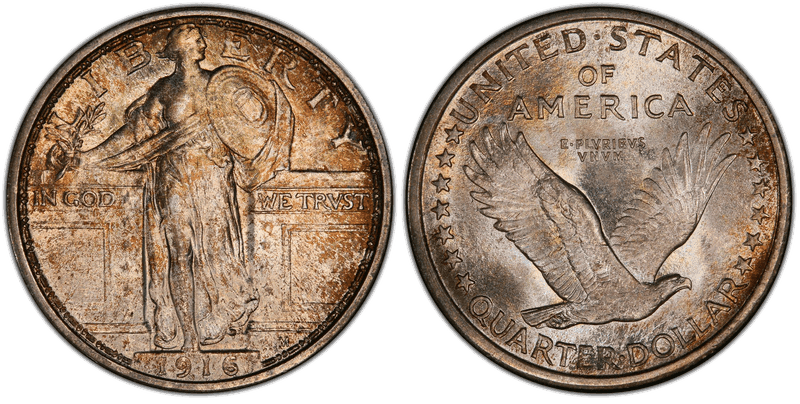
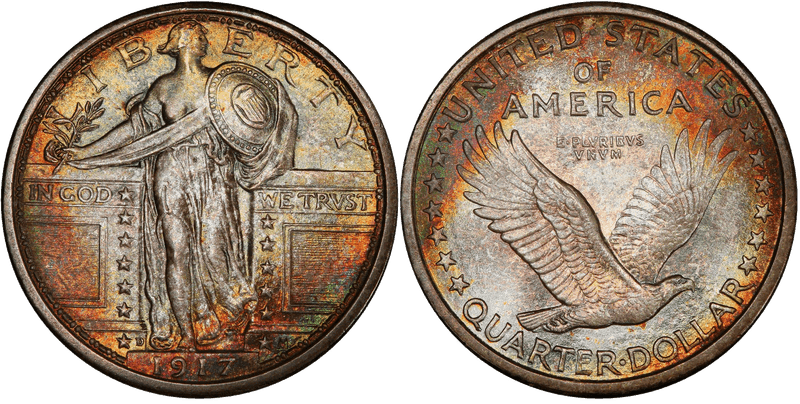
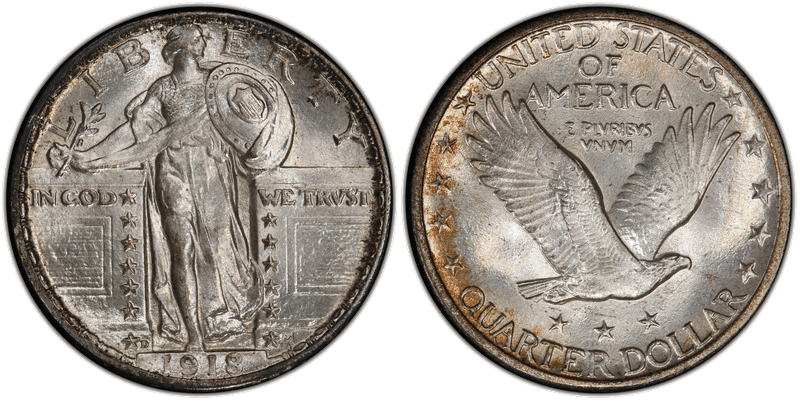
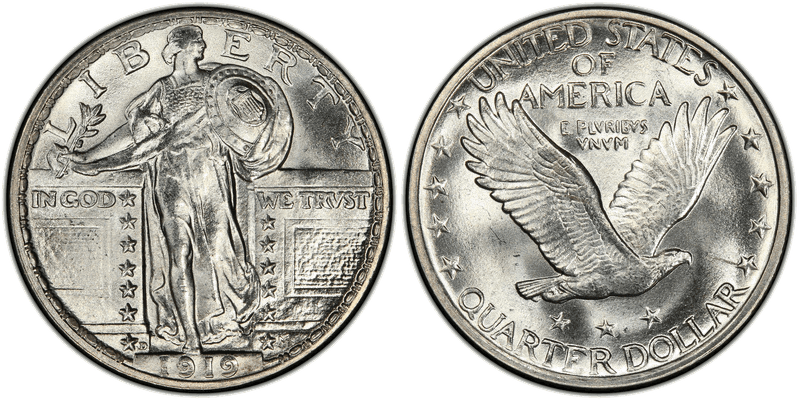
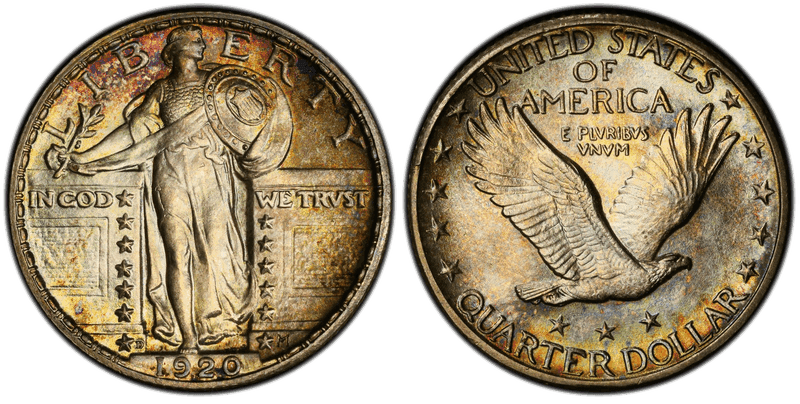
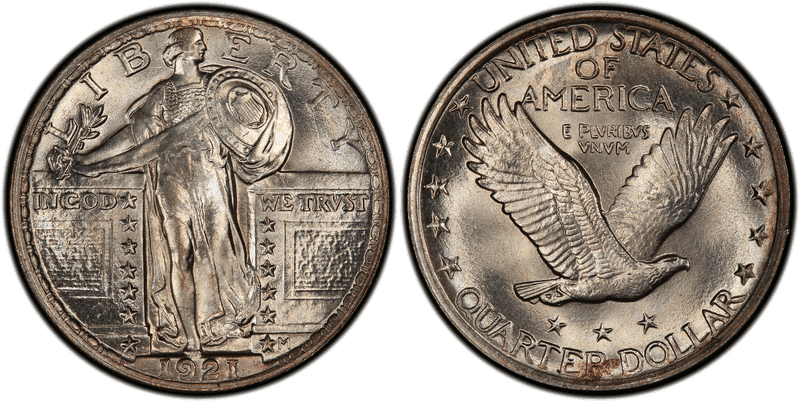
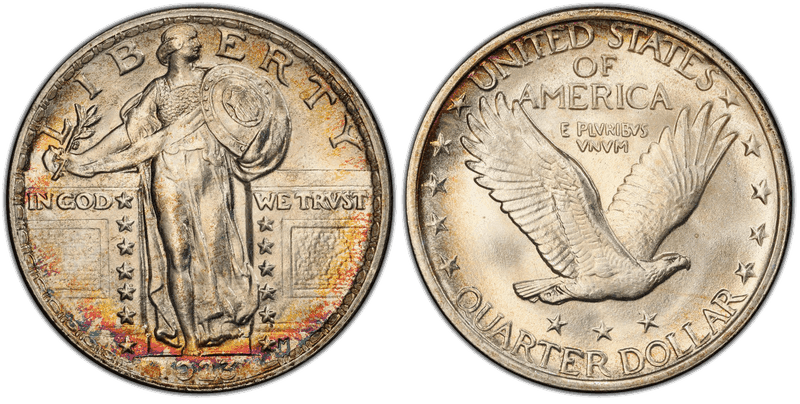


The Mint Act of 1890 allowed a coin design to be replaced after 25 years, and Charles Barber's quarter had been struck since 1892. Mint Director Robert W. Woolley, who read the law as calling for a change once that time was up, invited outside sculptors to compete for new silver designs in 1916. Hermon A. MacNeil won the quarter, while Adolph Weinman's designs went on the dime and half dollar.
MacNeil reworked his models through 1916, and the Treasury approved a version in August. What reached the presses was something else: according to NGC, the Mint's own engravers had returned to an earlier obverse and redrawn the reverse. Only 52,000 quarters were struck on December 16, 1916, from a soft obverse hub. A sharper hub was ready at the start of 1917, and the Mint held the 1916 coins back so that both dates could be released together on January 17, 1917.
MacNeil was shocked by the coins and protested. Congress passed the revision on July 9, 1917, and the result is what collectors call Type 2. NGC describes revised models from MacNeil, while CoinWeek credits Chief Engraver George T. Morgan with the changes. A popular story says public objection to Liberty's bared breast forced the change; the complaint NGC documents is MacNeil's own.
Type 2 coins were harder to strike, and the dates of 1916 through 1924 wore off quickly. In 1925 the Mint recessed the date. No quarters were struck in 1922 or 1931, and the Washington quarter replaced the design in 1932.


