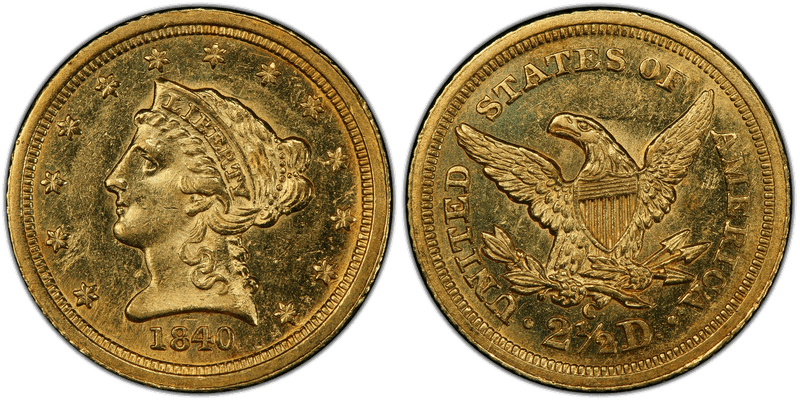
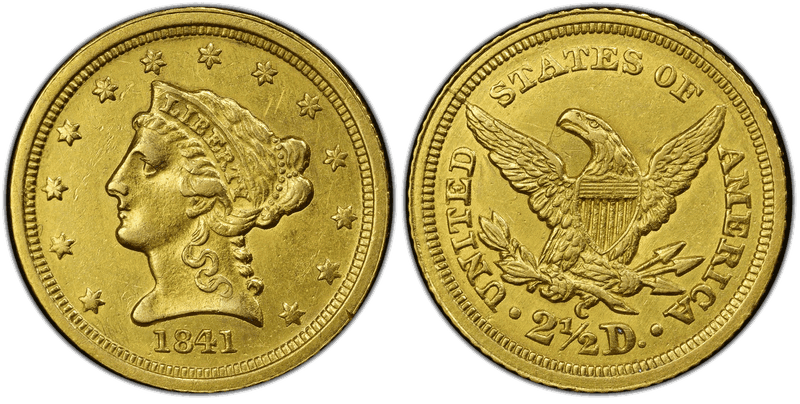
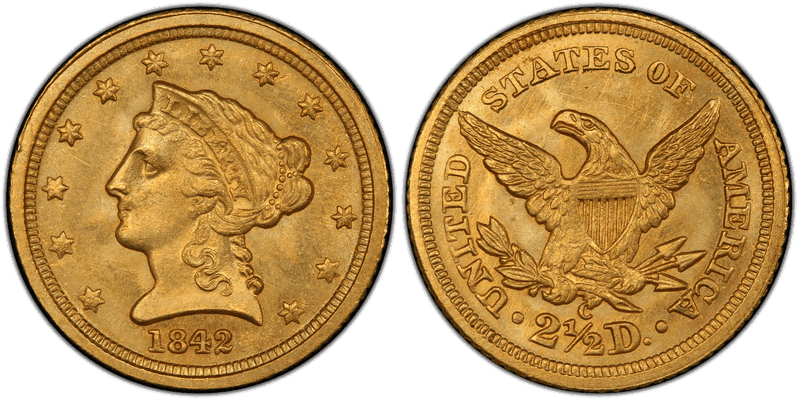
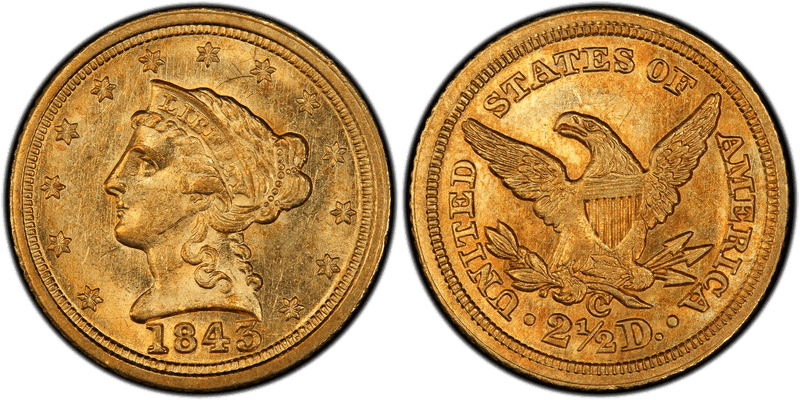
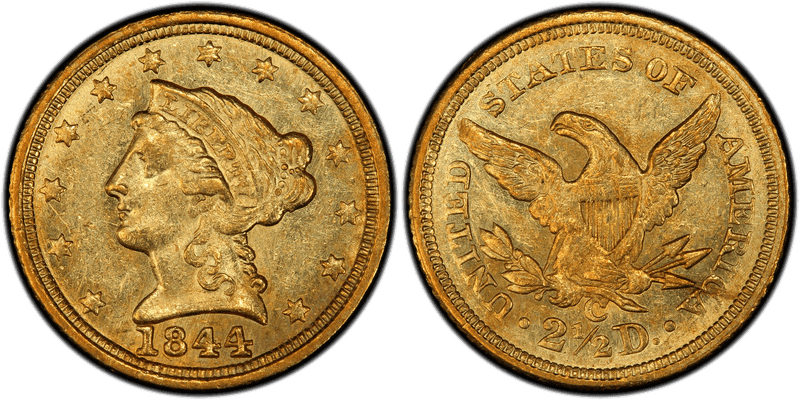
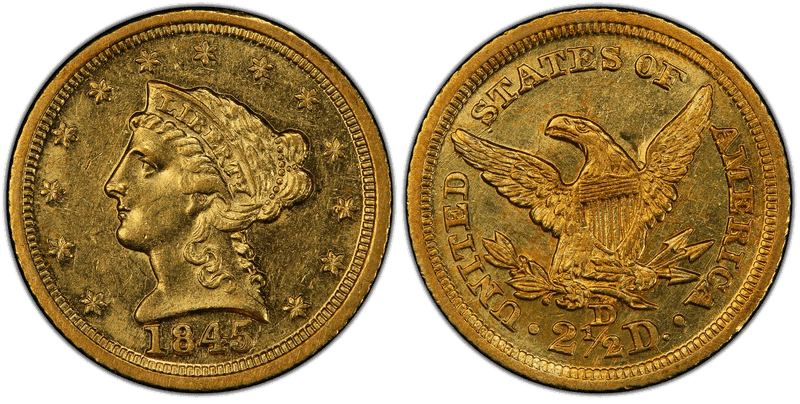
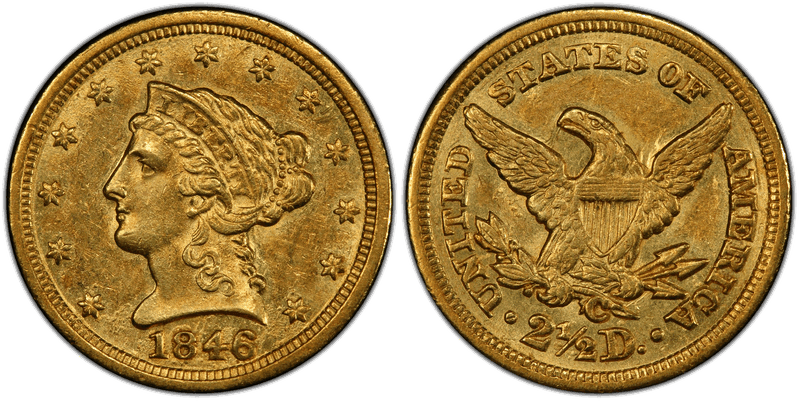
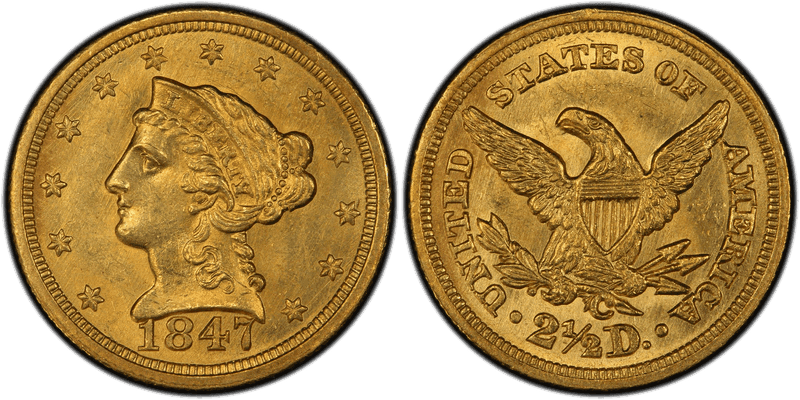
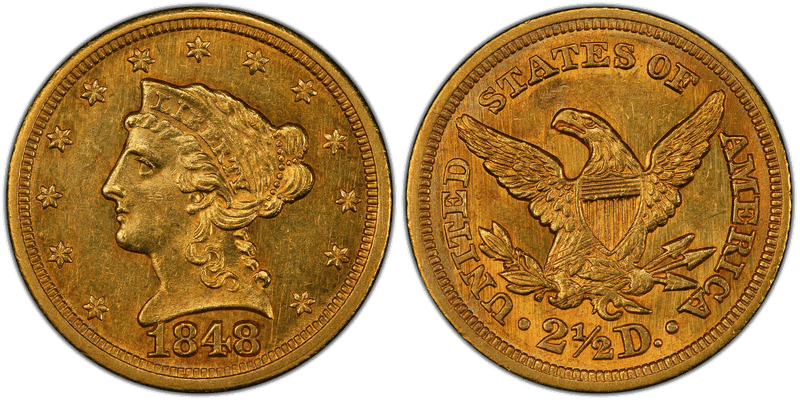
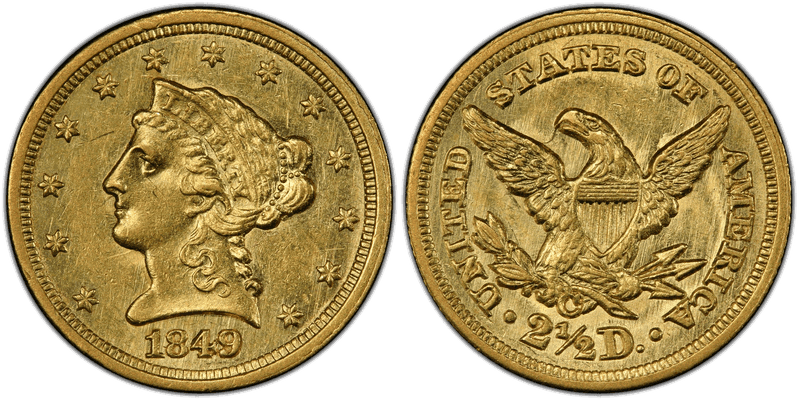
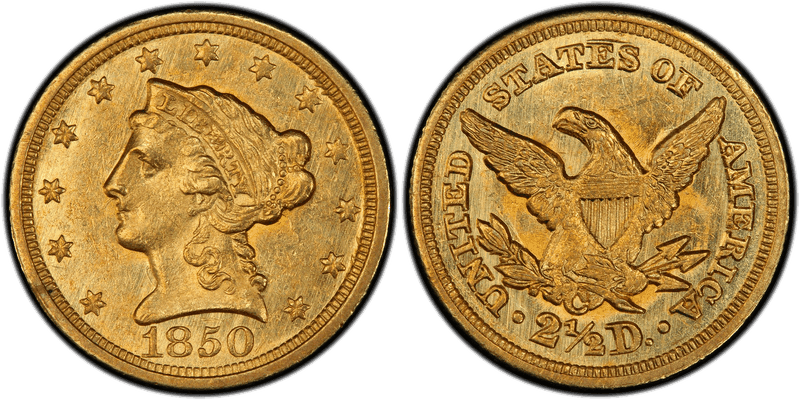
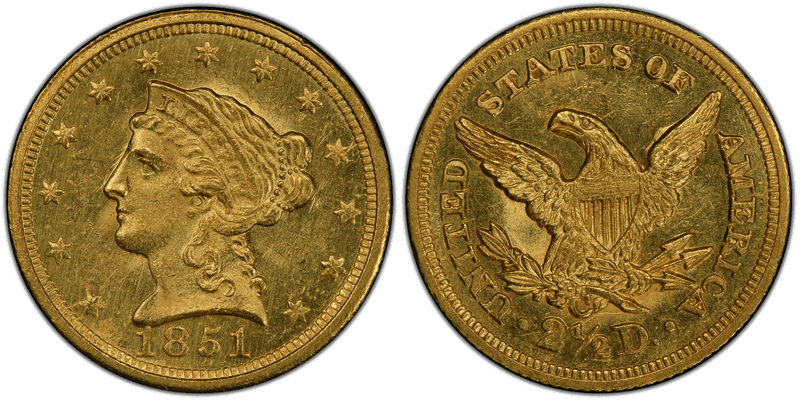
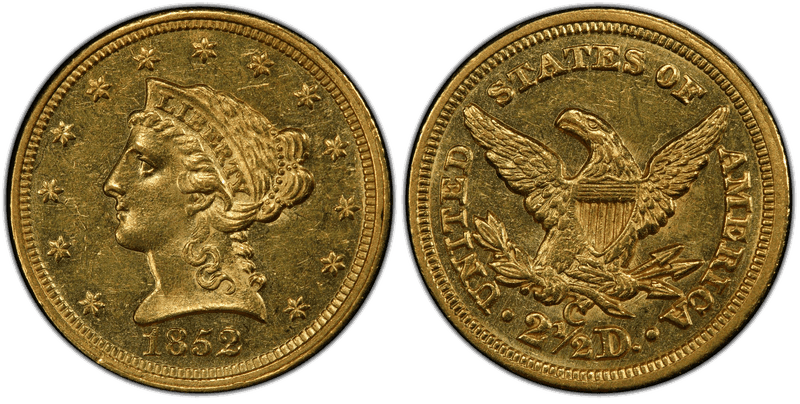
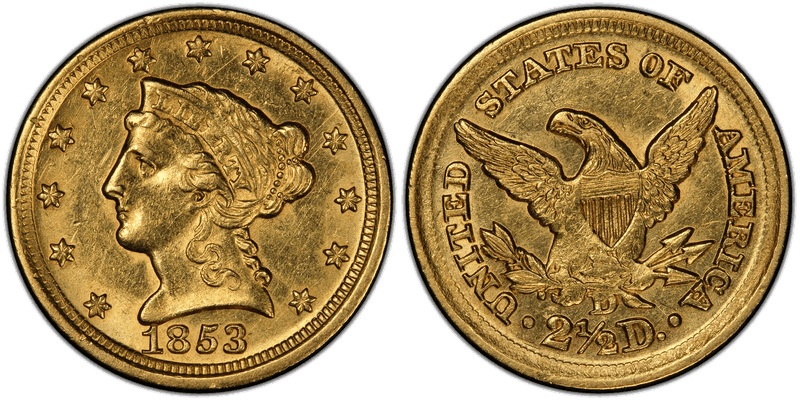
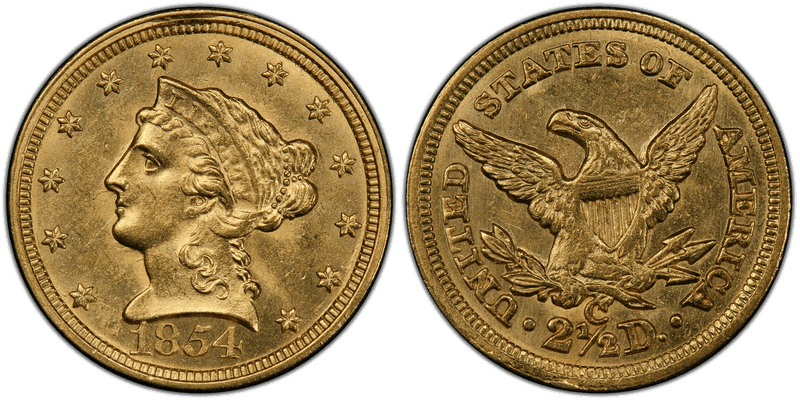
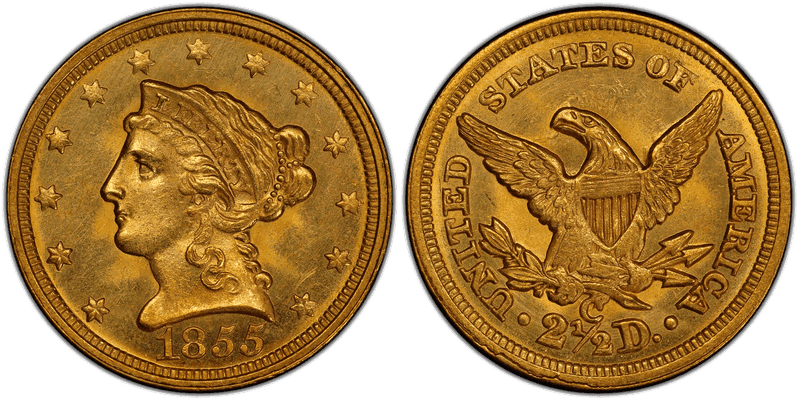
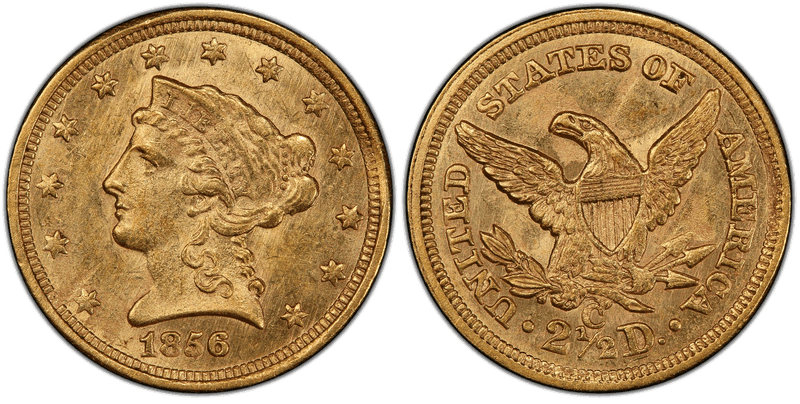
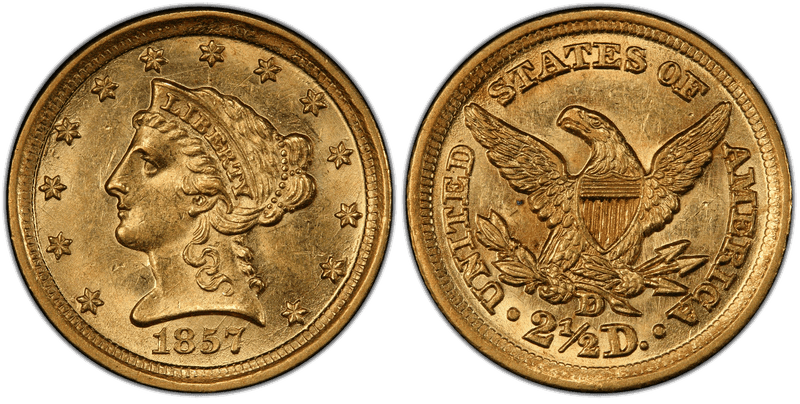
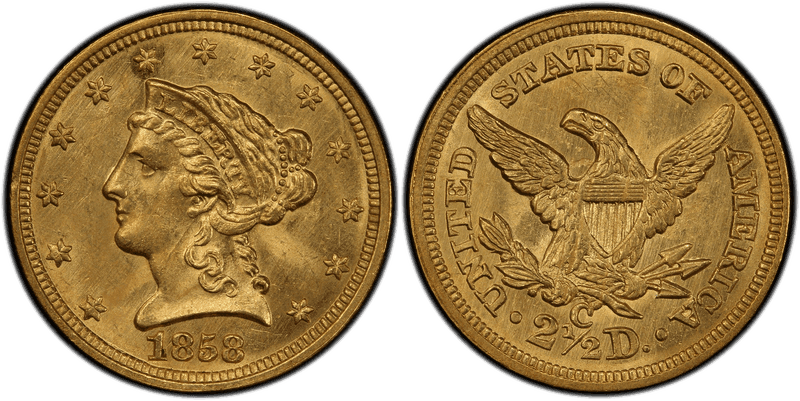
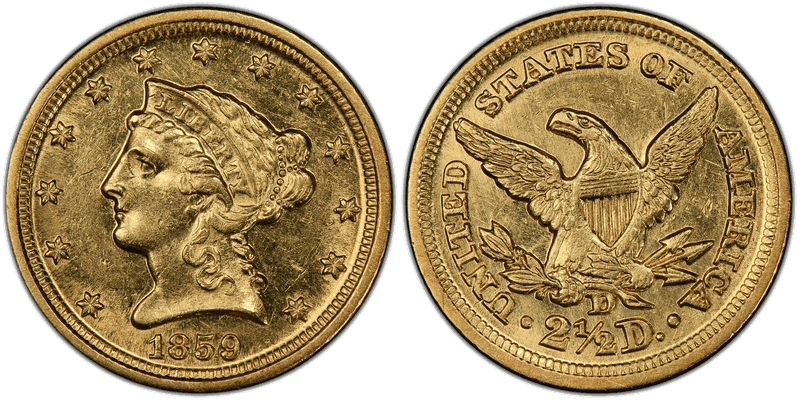
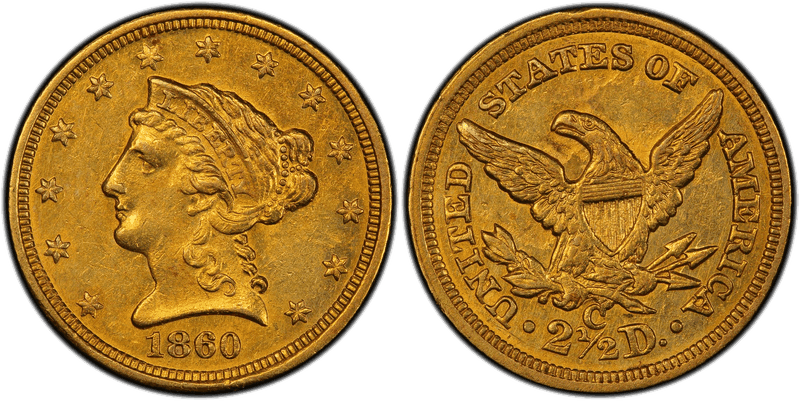
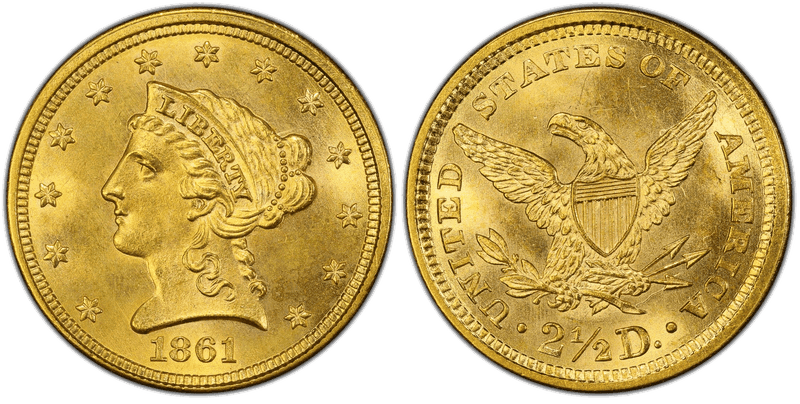
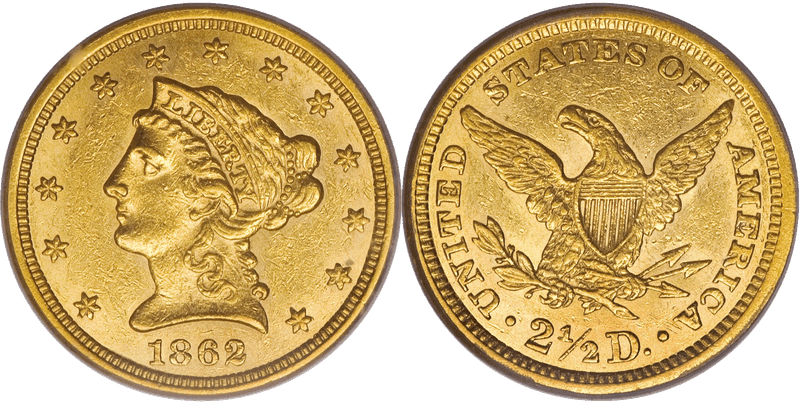
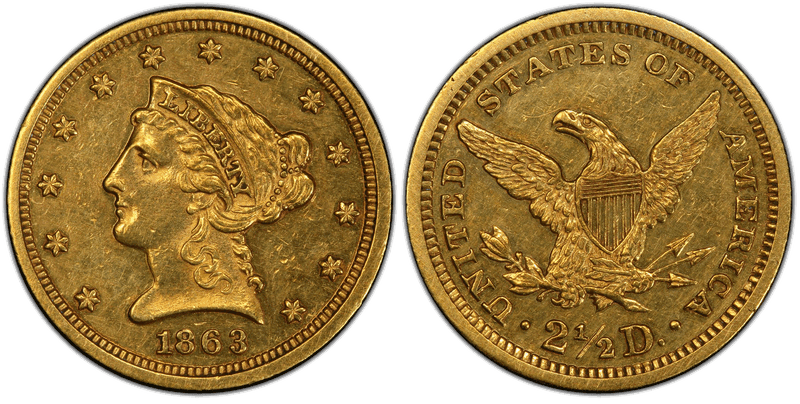

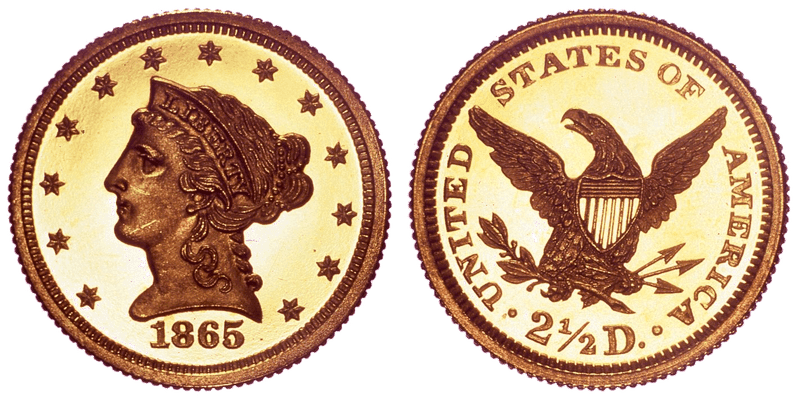
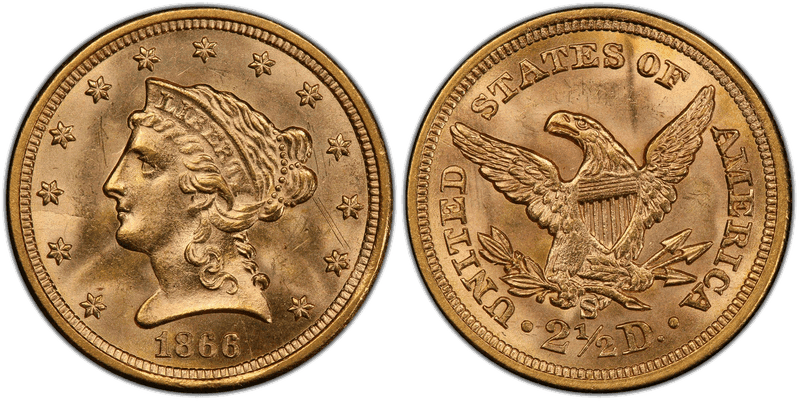
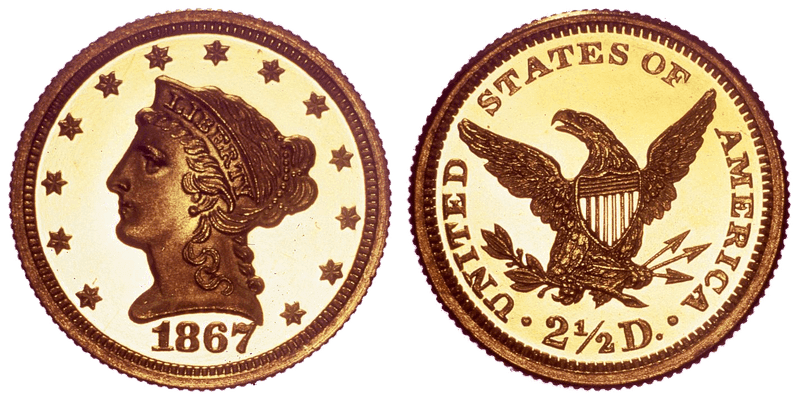
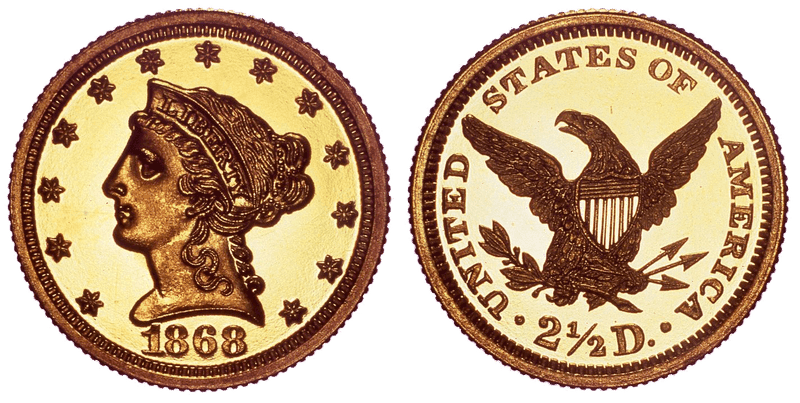
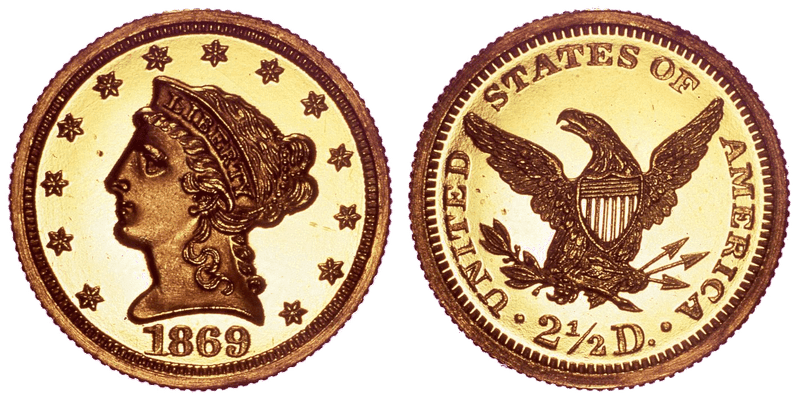
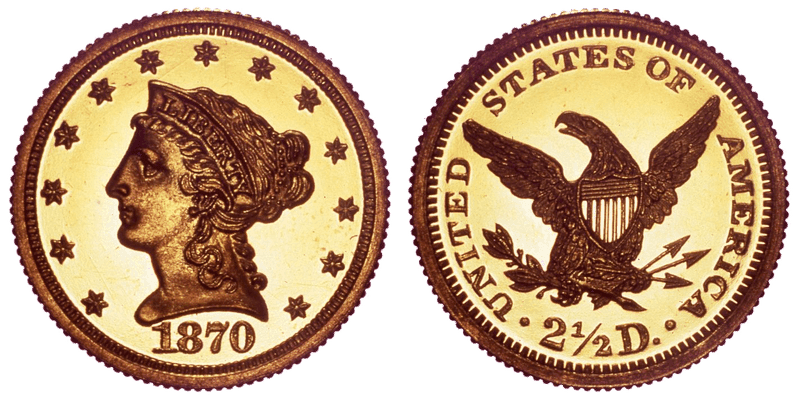
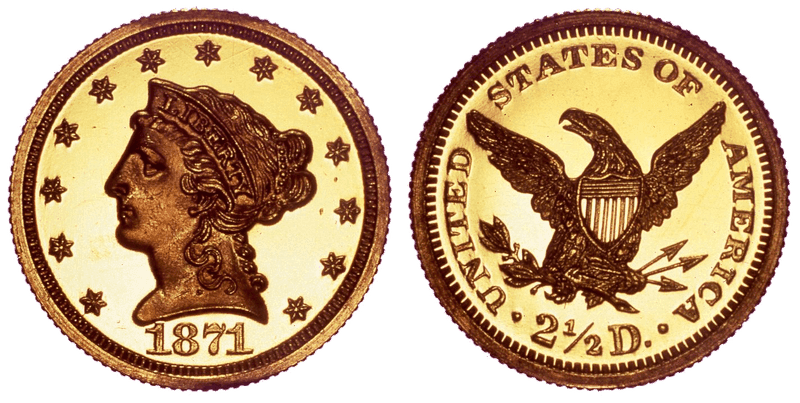
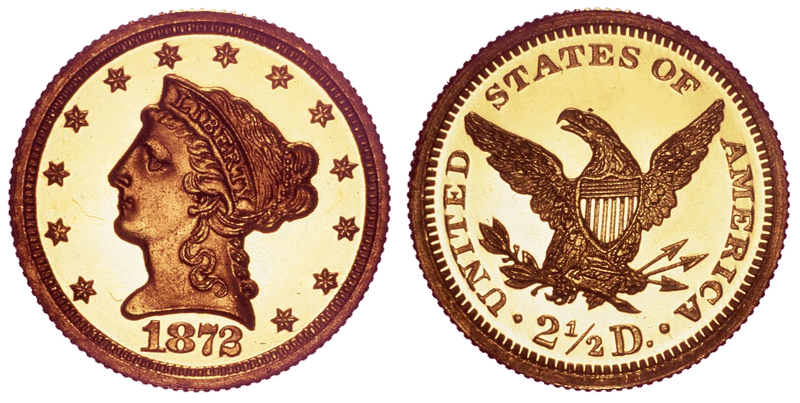
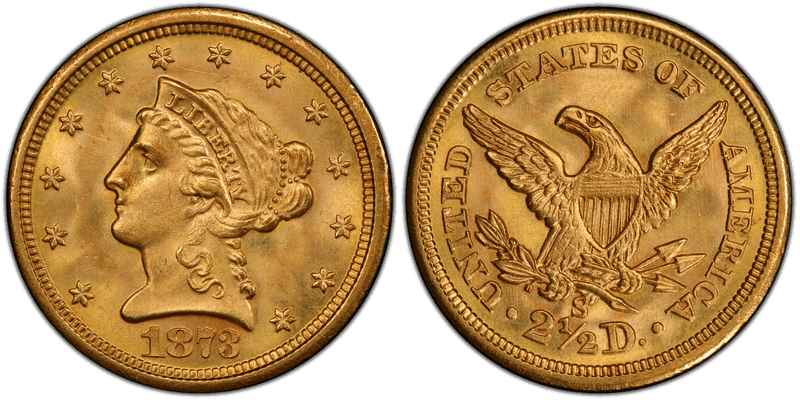

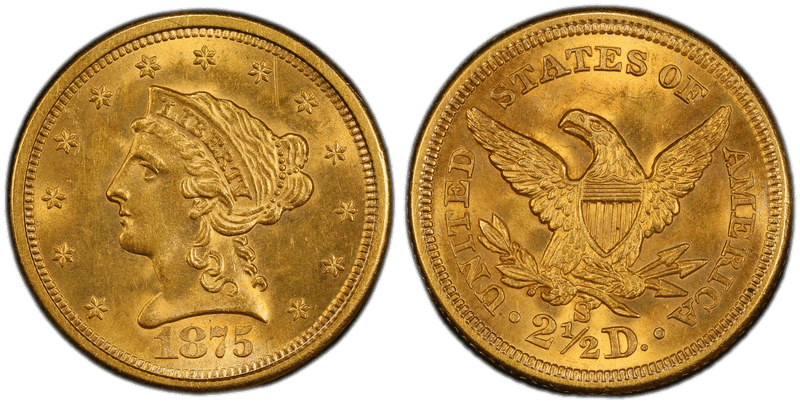
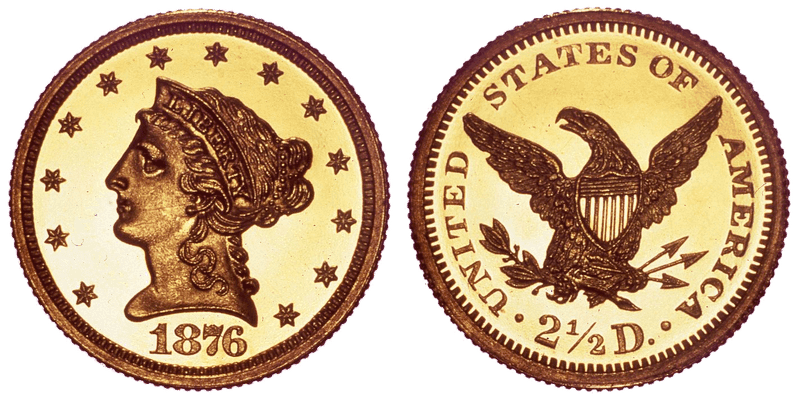
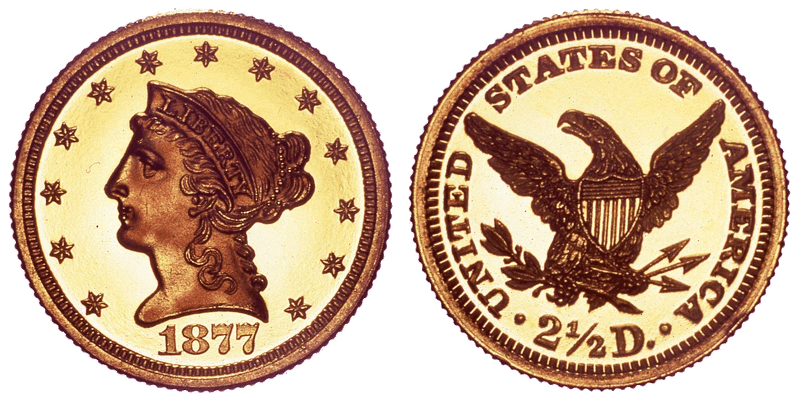
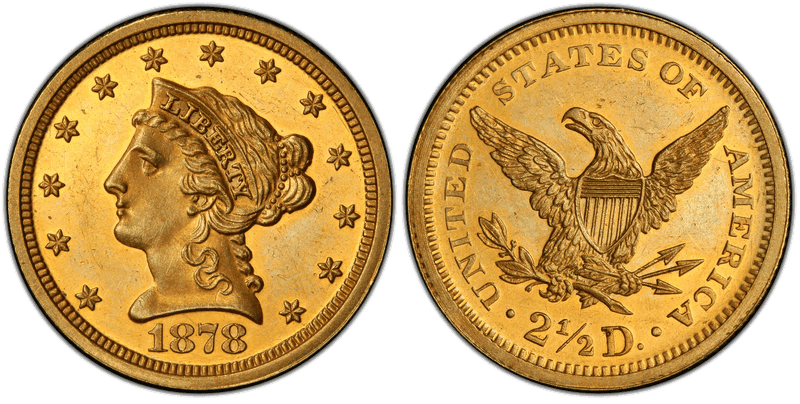
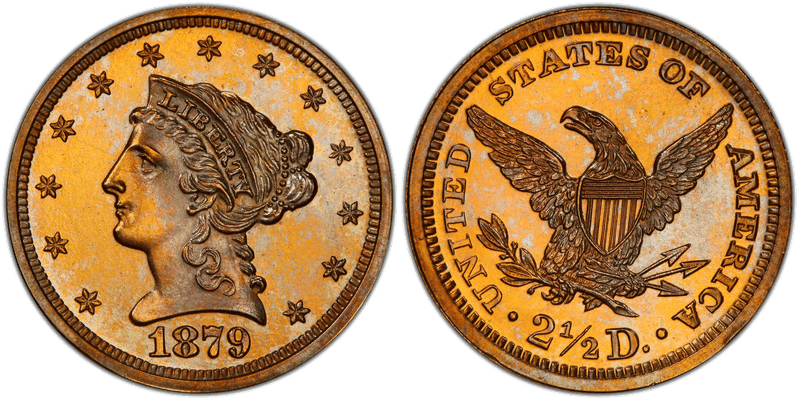
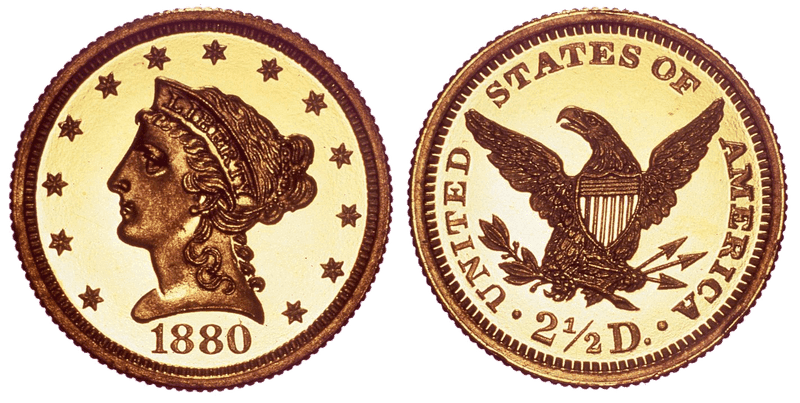
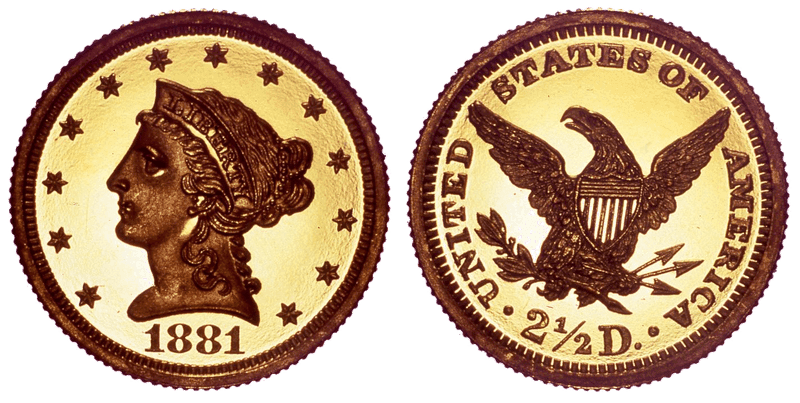
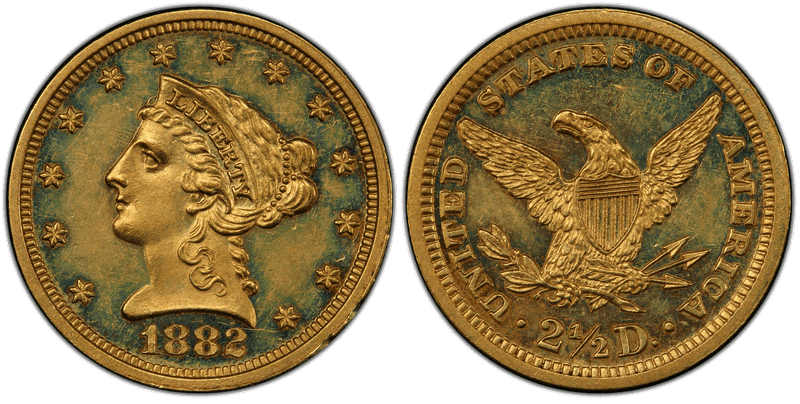
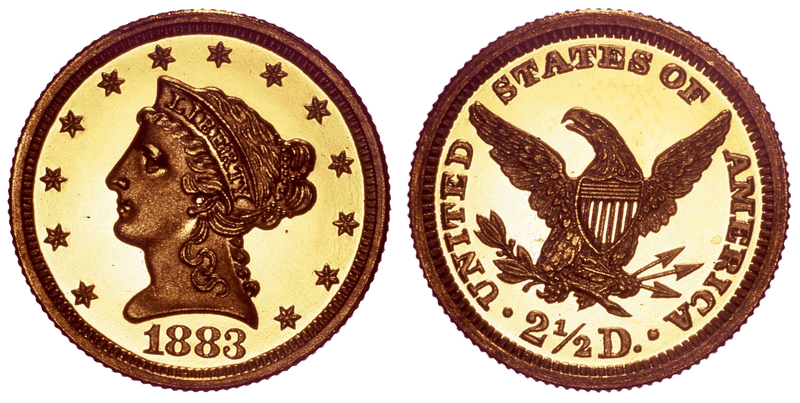
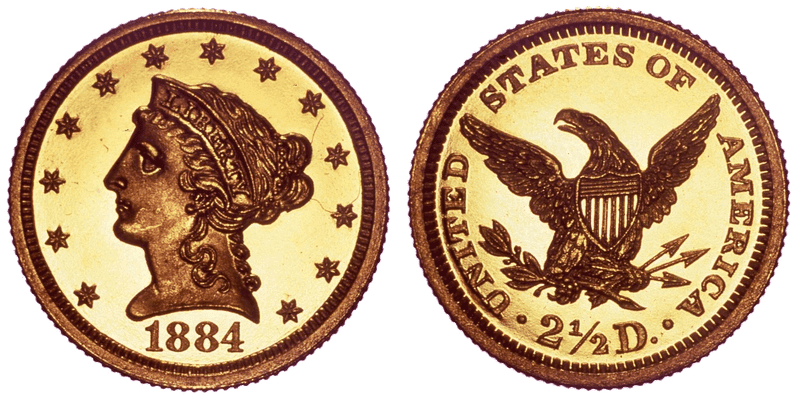
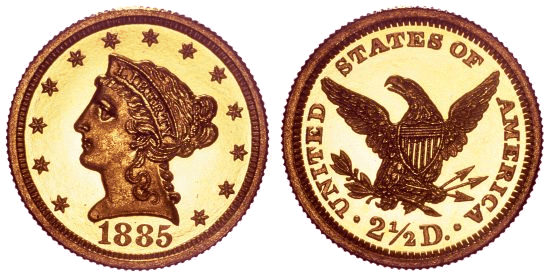
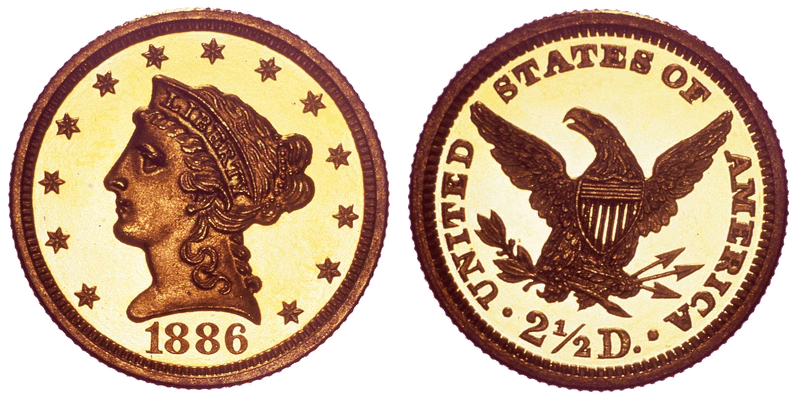
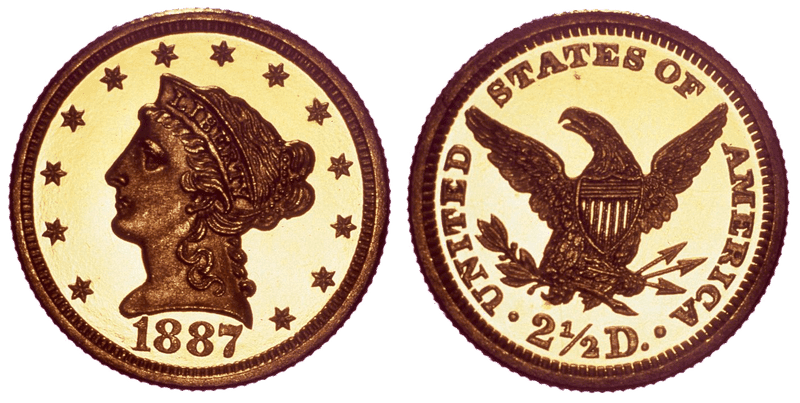
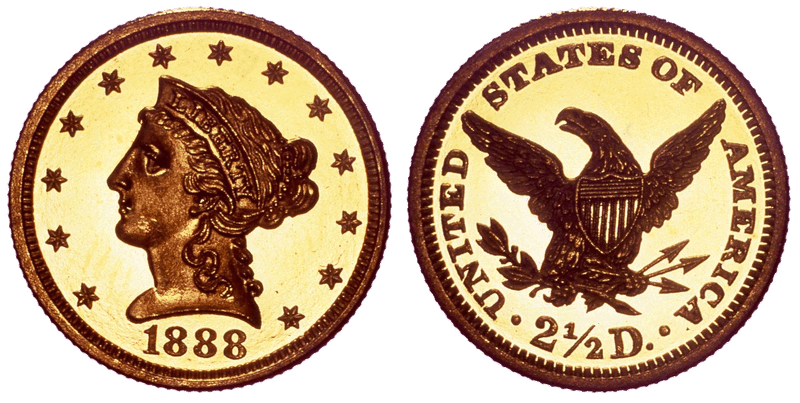
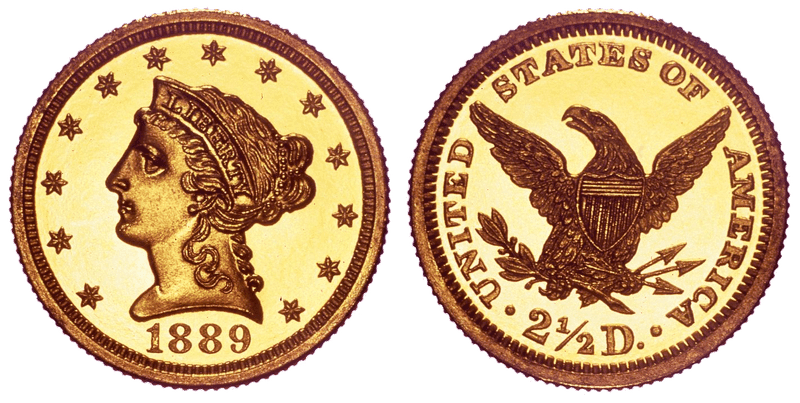
Christian Gobrecht's Liberty Head, often called the Coronet Head, came to the gold coins one denomination at a time: the $10 eagle in 1838, the half eagle in 1839 and the quarter eagle in 1840. On the $2.50 piece it replaced William Kneass's Classic Head.
The groundwork was laid in 1834. Gold had become worth more than the face value of the coins, which were being hoarded or melted rather than spent. The Coinage Act of June 28, 1834, in force from August 1, lightened the quarter eagle from 67.5 to 64.5 grains, about 4.18 grams, and lowered its fineness from .9167 to .8992. In 1837 the standard was rounded to 90% gold, and the Liberty Head coins were struck at that weight and fineness for their whole run.
Congress had also opened branch mints in Charlotte, North Carolina, and Dahlonega, Georgia, to coin gold from the Southern mines where it was dug, and a third branch in New Orleans. All three made Liberty Head quarter eagles from 1840: New Orleans until 1857, Dahlonega until 1859 and Charlotte until 1860. San Francisco began in 1854, the year it opened, but put most of that year's gold into eagles and double eagles and struck only 246 quarter eagles. It went on making them until 1879. The quarter eagle was never struck at Carson City, and the Denver Mint, which opened in 1906, did not strike this design.
The California Gold Rush left its own mark on the series. In 1848 California's military governor, Colonel R. B. Mason, sent a shipment of the new gold to Secretary of War William L. Marcy; Q. David Bowers puts it at 228 ounces. In a December 8 letter to Mint Director Robert M. Patterson, Marcy suggested that it be coined into quarter eagles carrying a mark that set them apart. The Mint punched CAL. into the reverse above the eagle, apparently while each coin still sat in the die, and about 1,389 were made. Some collectors count them as the first American commemorative coins.
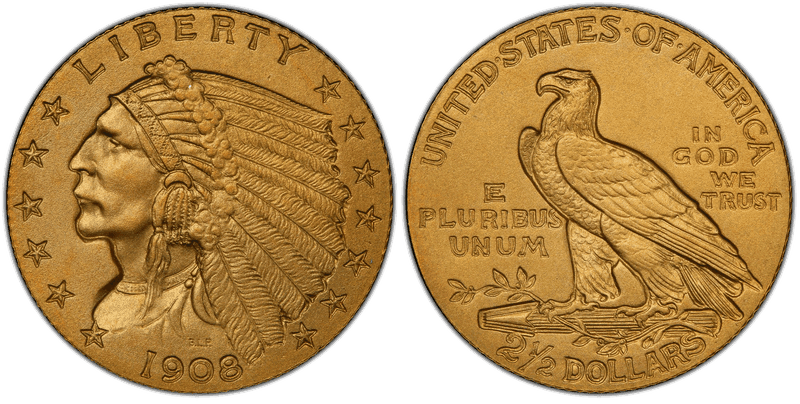
The Civil War closed the Charlotte and Dahlonega mints in 1861 and drove gold out of circulation. Philadelphia's quarter eagle output fell from more than 1.2 million in 1861 to 98,508 in 1862, and in 1863 it struck only 30 proofs. Philadelphia's mintages stayed small through much of the 1870s and 1880s, down to 400 coins in 1875 and 640 in 1881. CoinWeek notes that some of these low-mintage 1880s dates are easier to find than their figures suggest, because many came back from hoards in Europe. The design ended in 1907. In 1908 Bela Lyon Pratt's Indian Head quarter eagle, with its design sunk into the surface, took its place.