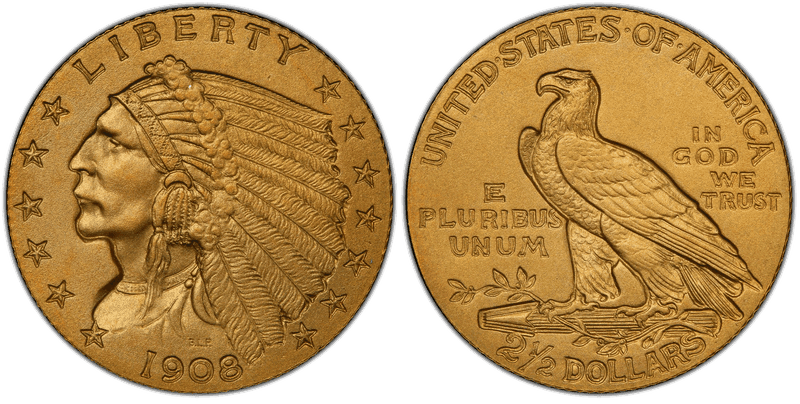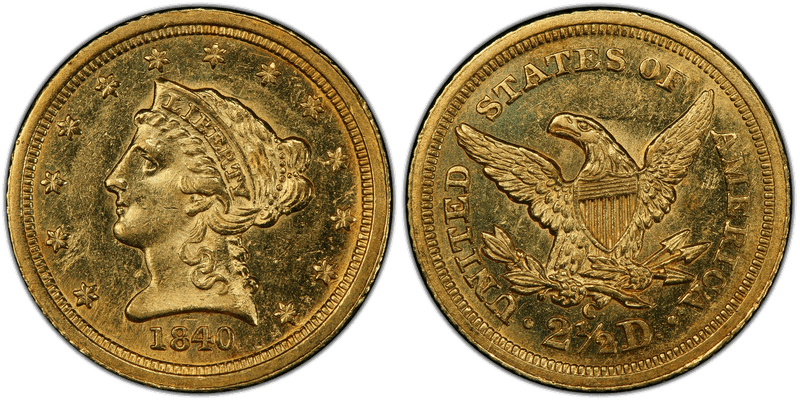
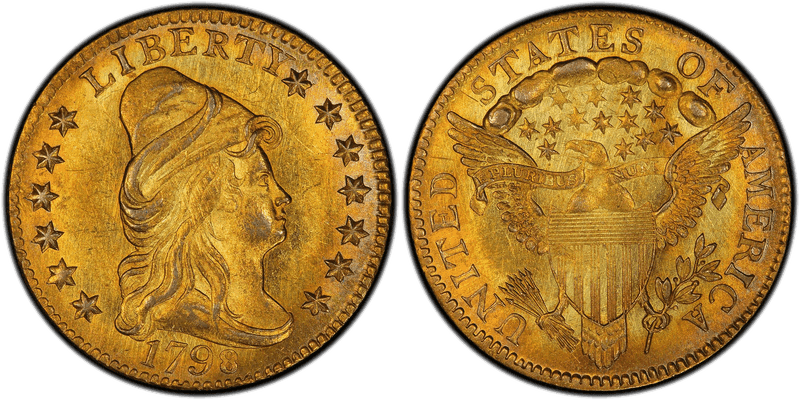
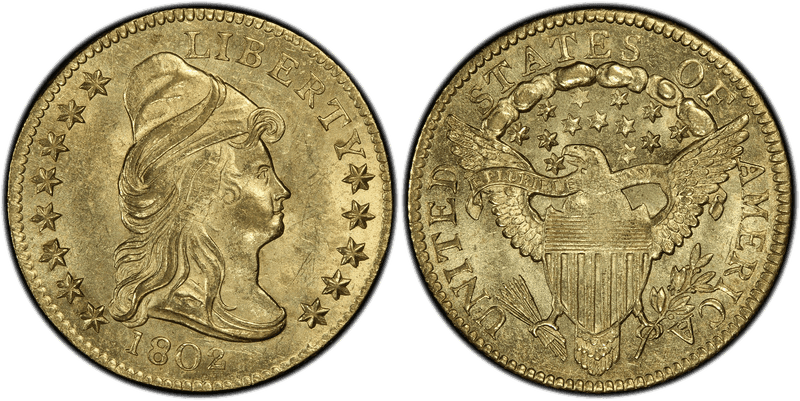
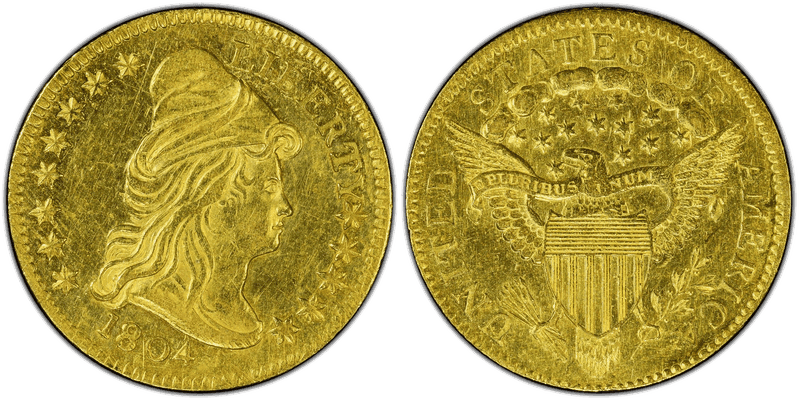
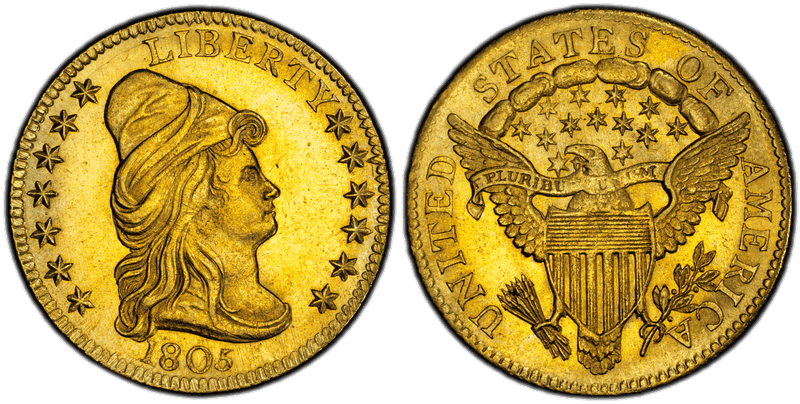
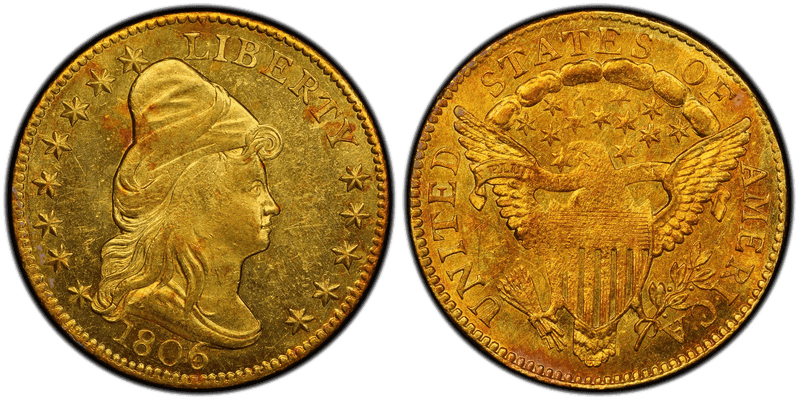
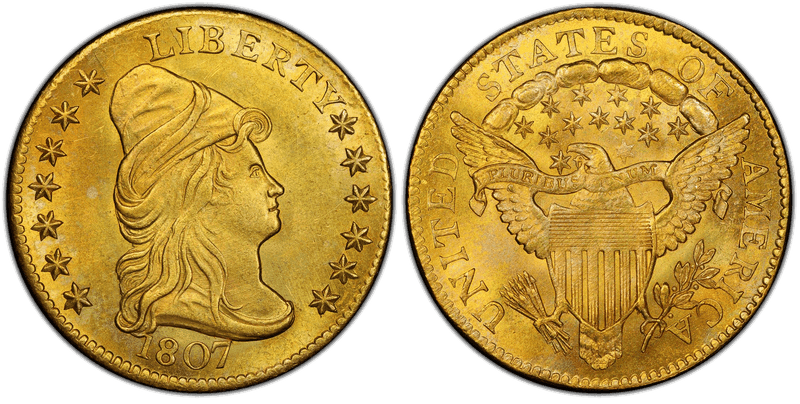
Capped Bust to Right Quarter Eagles 1796-1807

Coin Series
Capped Bust to Right Quarter Eagles 1796-1807 series coin

About This Series

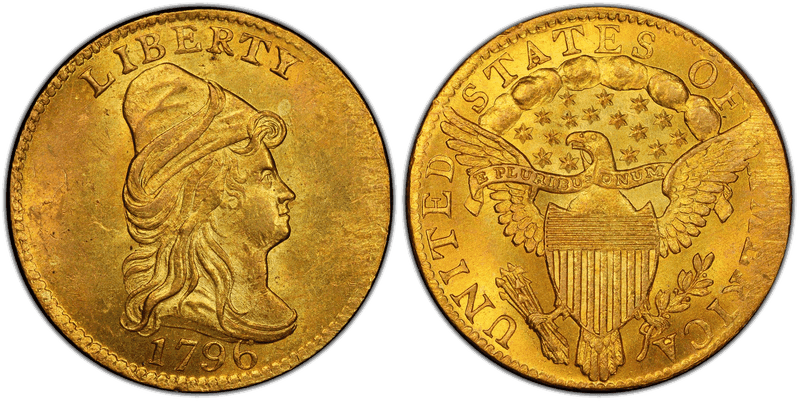
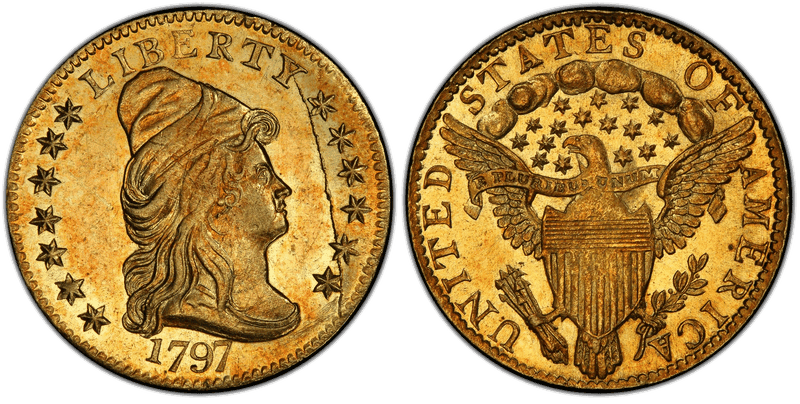
Inaugurating the $2.50 gold denomination that would endure for over a century, the Capped Bust to Right Quarter Eagle was among the first gold coins from the Philadelphia Mint. Robert Scot engraved Liberty wearing a turban-like cap facing right, paired throughout the series with a Heraldic Eagle reverse. The 1796 issue was struck in two varieties, No Stars (963, by Walter Breen's grouping of two deliveries) and With Stars (432). Production gaps characterize the series, reflecting limited demand for this denomination when larger gold coins handled most transactions. Both 1806 quarter eagles are overdates, 1806/4 and 1806/5, most easily told apart by the obverse stars: eight left and five right on the 1806/4, seven and six on the 1806/5. The 1796 No Stars obverse and the With Stars obverse used from 1796 onward are collected as two distinct types.

From NumisDex News

Series Information

Production Years
1796-1807
Composition
91.7% Gold, 8.3% Silver and Copper

Browse by Base(8 bases)

Showing all 8 listings

History

The Coinage Act of 1792 named three gold coins after the eagle, the ten-dollar piece, and gave the smallest of them, the quarter eagle, a value of $2.50, a weight of 67.5 grains and a fineness of .9167. Gold coinage had to wait until the officers handling bullion could post the bonds the law required; Congress lowered the amounts in 1794, and the first half eagles and eagles followed in 1795. Quarter eagles came last. The first 66 were delivered on September 21, 1796, and another 897 on December 8, all from obverse dies with no stars around Liberty. A third obverse, with sixteen stars, struck the 432 coins delivered on January 14, 1797.

No document names the designer. The portrait is the capped bust Robert Scot had placed on the gold coins of 1795, and the dies were probably his work, though Wikipedia notes that engraver John Smith Gardner may have cut the reverse. That reverse was new: instead of the small eagle on the first eagles and half eagles, the quarter eagle carried a heraldic eagle adapted from the Great Seal, a year before the eagle adopted the same design. Like the other gold of the period it shows no mark of value.

Depositors of gold wanted larger coins, so the quarter eagle was made only now and then, in lots of a few hundred to a few thousand. Walter Breen thought banks such as the Bank of Pennsylvania ordered them occasionally and then kept them in their vaults. Coinage was not tied to the calendar: some coins struck in 1799 carry the date 1798, none were made in 1800 or 1801, and coins struck in 1803 still bear the date 1802. Output peaked with 6,812 coins dated 1807. The next year John Reich, hired by Mint Director Robert Patterson in 1807, gave the quarter eagle a new design.

Much of this coinage did not survive. As gold rose in value against silver, coins worth more as metal than at face were exported and melted, a process that continued into the early 1830s.

How to Identify It

Obverse. Liberty faces right in a soft cap that is often mistaken for a turban, with LIBERTY above and the date below. The first 1796 dies have no stars. Later dies have stars arranged in several ways: sixteen, eight on each side, on the 1796 With Stars coins; thirteen thereafter, seven left and six right on 1797, 1805, the 1806/5 and 1807, six and seven on 1798, and eight and five on 1802, 1804 and the 1806/4.

Reverse. A heraldic eagle with a shield on its breast holds arrows and an olive branch, with E PLURIBUS UNUM on a ribbon in its beak and clouds and stars above. UNITED STATES OF AMERICA runs around the border. There is no denomination.

Edge. Reeded.

Mint mark. None. Every coin was struck at Philadelphia.

Die marriages. Each pairing of dies has a Bass-Dannreuther (BD) number from John Dannreuther's study of early gold. NGC counts thirteen marriages for the whole design.

Things that cause confusion.

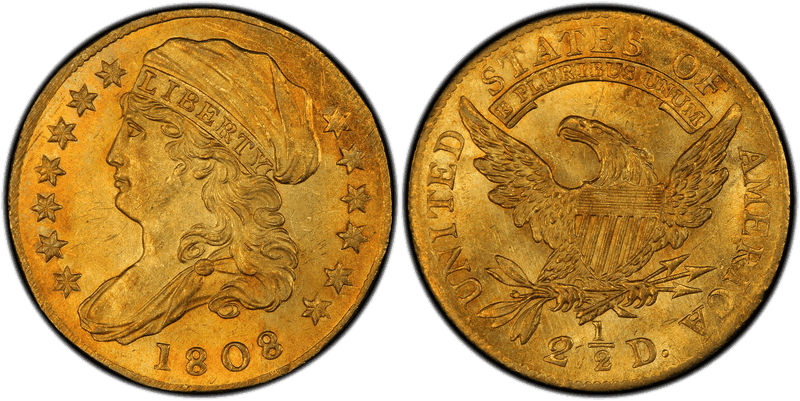
  • The 1808 quarter eagle. John Reich's one-year design shows Liberty facing left, and its reverse has the denomination 2 1/2 D.
  • Close Date or Wide Date (1798). On the Close Date obverse the 8 stands clear of the bust; on the Wide Date it touches the drapery. The two use different reverses as well.
  • Stars on the reverse. The 1804 coins come with either 13 or 14 stars above the eagle, so count them before calling a coin.

Key Dates and Varieties

  • 1796 No Stars: the first quarter eagles, 963 by the usual figure, which is Walter Breen's combination of the September and December deliveries (BD-1 and BD-2).
  • 1796 With Stars: the 432 coins of the January 14, 1797 delivery, BD-3, with sixteen obverse stars.
  • 1797: 427 struck, with thirteen obverse stars and sixteen on the reverse.
  • 1798 Close Date and Wide Date: two die pairs sharing a recorded total of 1,094.
  • 1802: 3,035 struck, all from one obverse that is usually described as 2 over 1. Dannreuther doubts that a 1 lies under the 2.
  • 1804 13 Star Reverse and 14 Star Reverse: 3,327 struck in all. How they divide is not recorded; Breen suggested 1,003 with 13 stars and Dannreuther as few as 250.
  • 1805: 1,781 struck.
  • 1806 overdates: the 1806/4, stars eight and five, 1,136 struck; and the 1806/5, stars seven and six, 480 struck.
  • 1807: 6,812 struck, the last year of the design.

In Our Catalog

2 errors and varieties are listed for this series. Browse them by type:

Recently added

    Mintages

    Capped Bust to Right Quarter Eagles 1796-1807 mintages by year and mint, taken from each coin's page in our catalog. Each figure opens that coin's page, which lists its varieties and errors. A dash means no figure was recorded. Where one issue was struck in more than one type, each type is listed.

    Composition and Gold Content

    • Weight: 4.37 grams (67.5 grains)
    • Composition: .9167 gold (22 carat); the rest copper and silver
    • Gold content: about 0.129 troy ounce
    • Diameter: about 20 mm
    • Edge: reeded
    • Designer: Robert Scot (the reverse possibly by John Smith Gardner)

    FAQ

    Why do some 1796 quarter eagles have no stars?

    The first two 1796 obverse dies were cut without stars around Liberty, and no record explains why. Those No Stars coins were delivered in September and December 1796. A third obverse with sixteen stars, eight on each side, followed, and its 432 coins were delivered on January 14, 1797.

    Did any early quarter eagle have the small eagle reverse used on the first eagles and half eagles?

    No. Every quarter eagle from 1796 to 1807 carries the heraldic eagle based on the Great Seal. In 1860 Mint Director James Ross Snowden wrote that the first issue matched the eagle of the time, but CoinWeek points out that no small eagle quarter eagle is known and the No Stars and With Stars coins share a reverse die.

    Is the 1802 quarter eagle an overdate?

    It is usually called 1802/1, and every 1802 quarter eagle comes from the same obverse die. John Dannreuther doubts the label, noting that most researchers now attribute the mark under the 2 to a defective punch or a die break rather than to a 1.

    How many quarter eagles were made with this design?

    The recorded figures add up to 19,487 coins over eight dates, from 427 dated 1797 to 6,812 dated 1807. Some of them were struck in a later year than the date they carry; coins dated 1798 were still being made in 1799, and coins dated 1802 in 1803.

    How much gold is in a Capped Bust to Right quarter eagle?

    Each coin weighs 4.37 grams (67.5 grains) at .9167 fine, about 0.129 troy ounce of pure gold. The rest of the alloy is copper and silver.

    ↑ Back to the coins: every year, mint, variety and error

    Explore Other Denominations

    Collector Essentials

    Tools and references for building and protecting your coin collection.

    As an Amazon Associate, NumisDex earns from qualifying purchases.