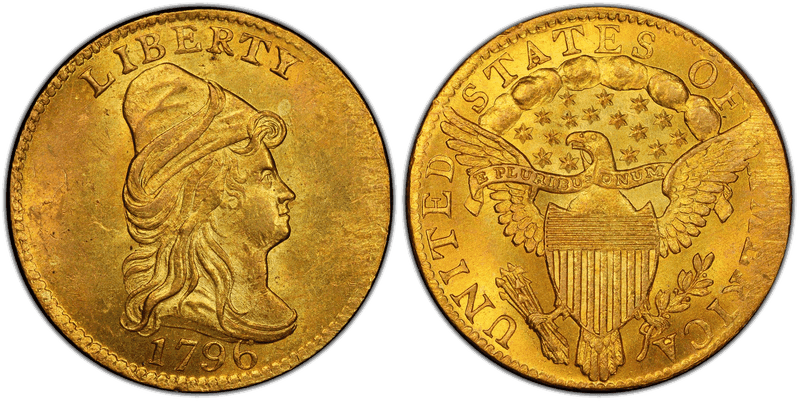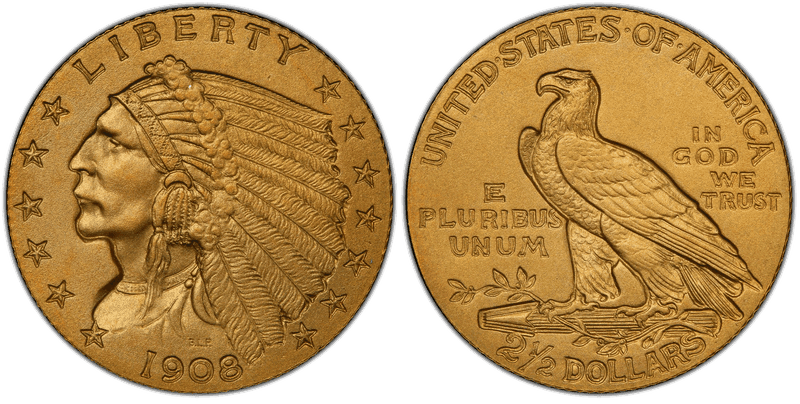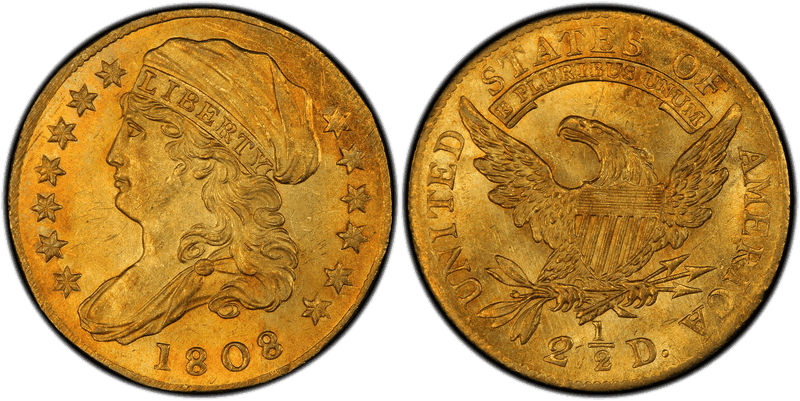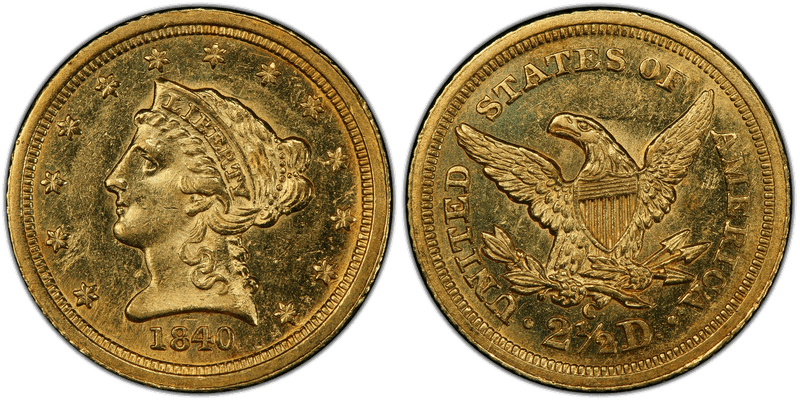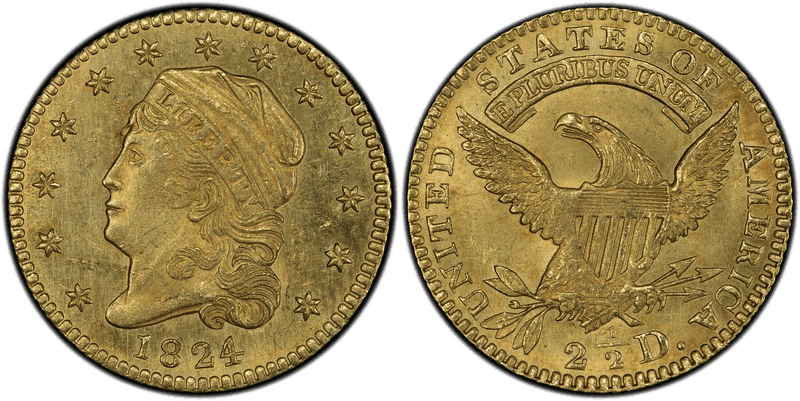
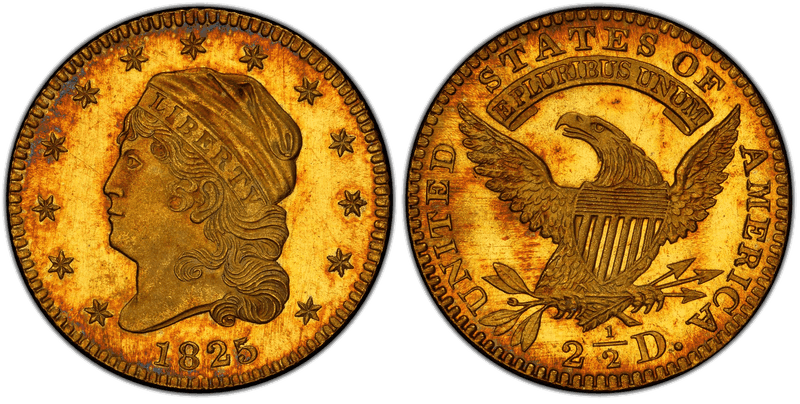
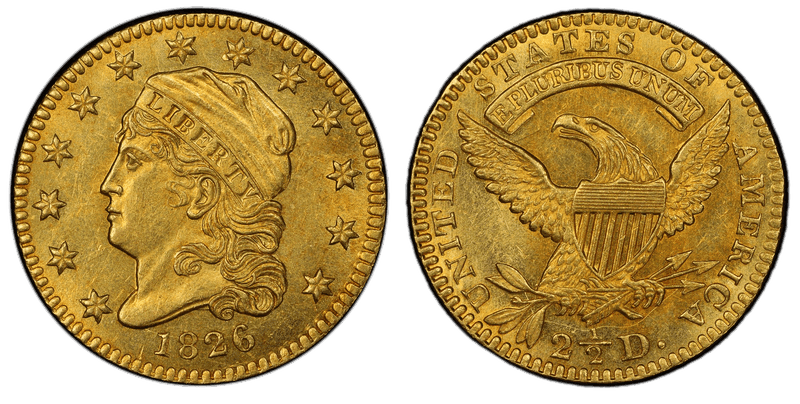
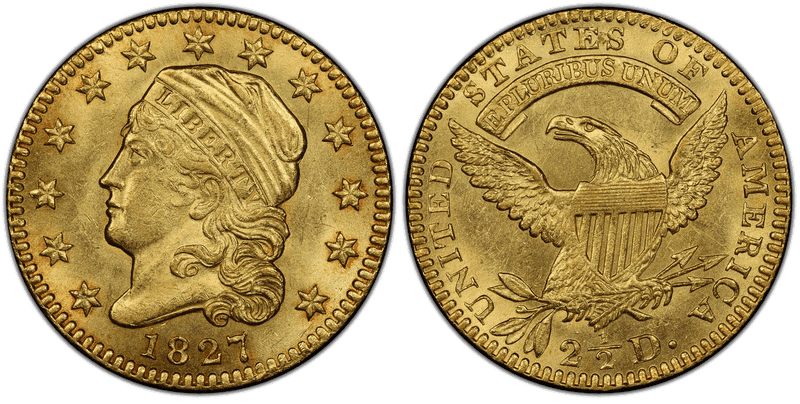
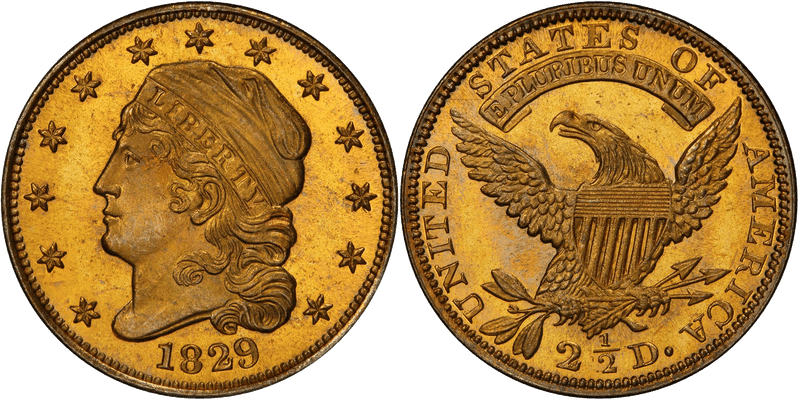
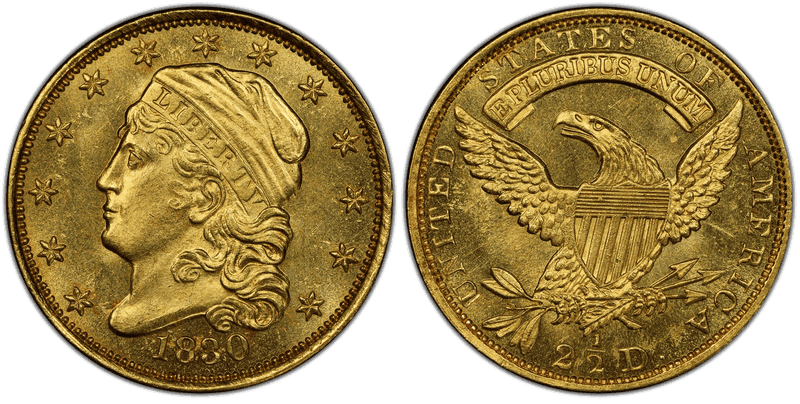
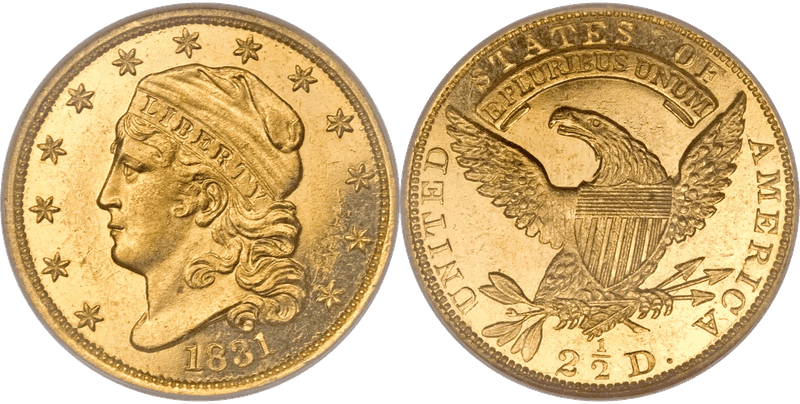
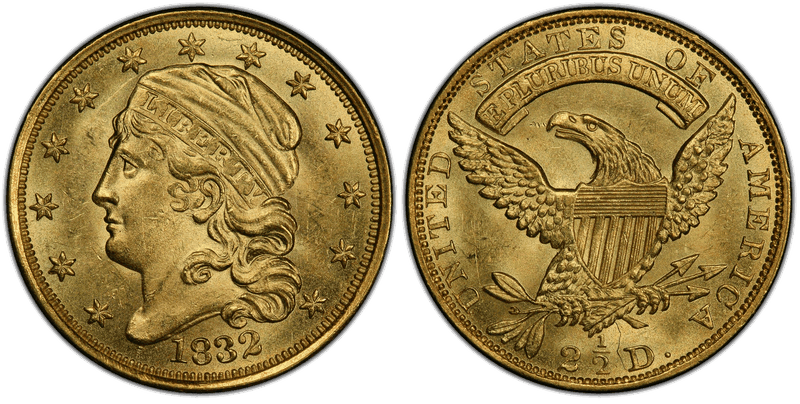

After 1808 the Mint made no quarter eagles for twelve years. Gold left the country during and after the War of 1812, and depositors who did bring gold to the Mint asked mostly for half eagles. In 1821 banks asked for quarter eagles again; CoinWeek suggests that a small but steady supply of Southern gold, mined in and around the Cherokee lands of Georgia and the Carolinas, may have played a part. For the new coin Chief Engraver Robert Scot took John Reich's capped portrait of 1808, made it smaller, cut away the bust, and set thirteen stars all around the head. He kept Reich's reverse with minor changes. The coin was also smaller than before, about 18.5 mm.
Coinage came in small, irregular lots: 6,448 in 1821, none in 1822 or 1823, then 2,600 in 1824 from an 1821 die re-dated by cutting a 4 over the 1, and between 760 and 4,434 in each year through 1827. Scot died in 1823, and his successor, William Kneass, refined the design. When quarter eagles were struck again in 1829, after none in 1828, the letters, stars and date figures were smaller and the coin measured about 18.2 mm. CoinWeek credits the change to a collar introduced at the Mint in 1828, which fixed the diameter, applied the reeding and raised the rim; some specialists argue that collars of this kind had been used long before.
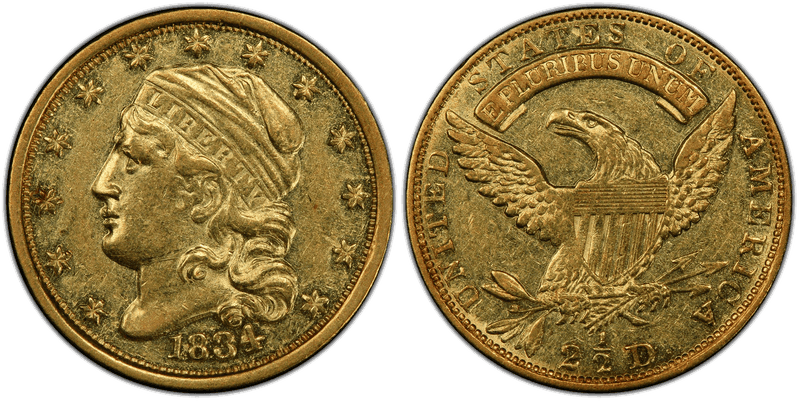
The coins rarely circulated. Gold was worth more against silver abroad than the American legal ratio allowed, and a quarter eagle held more than $2.50 in gold, about $2.66 by 1834. Bullion dealers bought them for export and melting, along with the half eagles. The Coinage Act of June 28, 1834 ended the problem by lowering the weight of gold coins from August 1. Most of the 4,000 quarter eagles dated 1834, struck before the change, remained at the Mint and were melted, and Kneass's Classic Head design took their place.