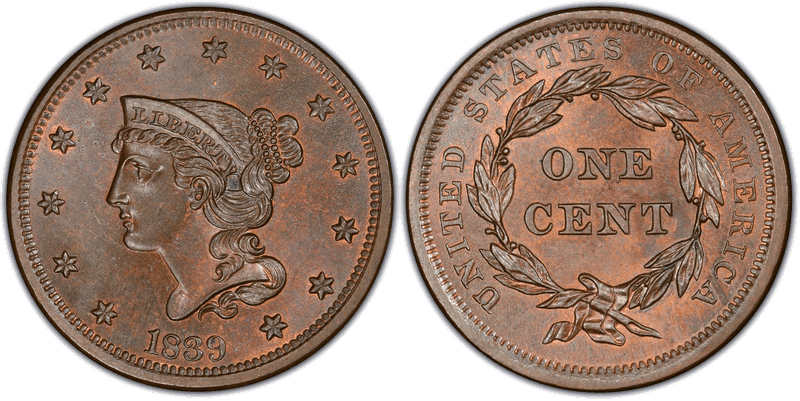
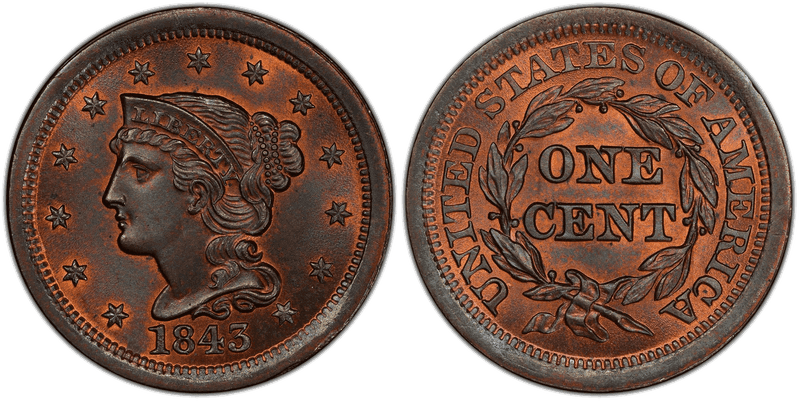
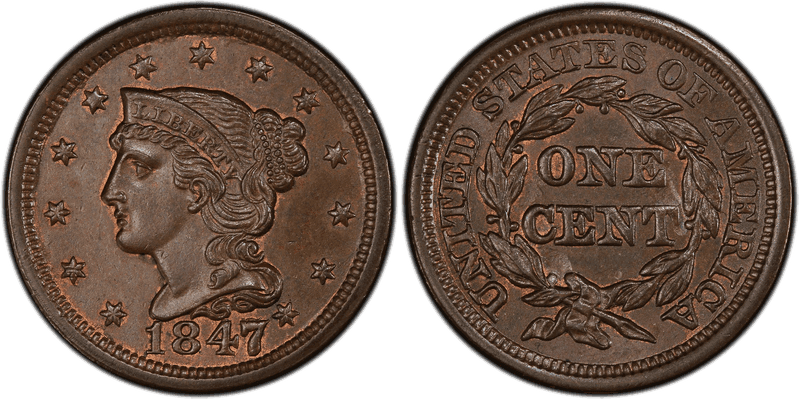
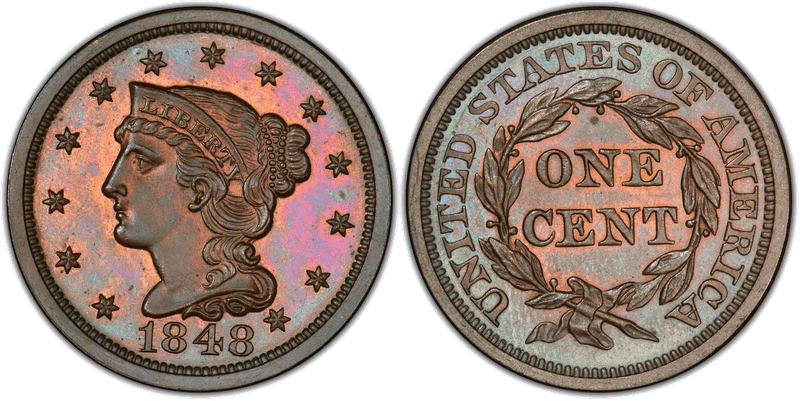
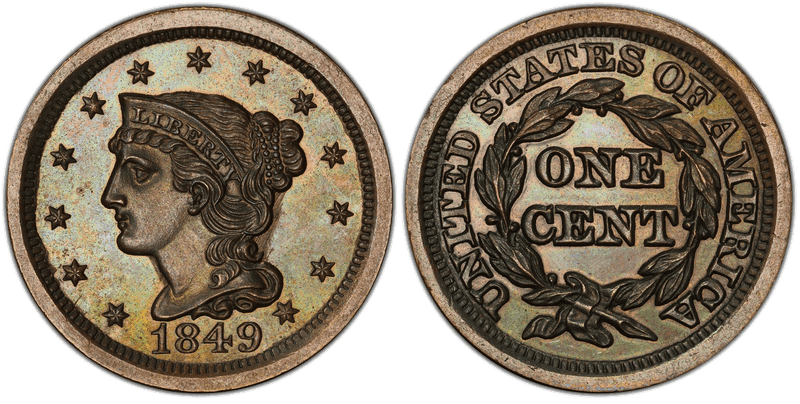
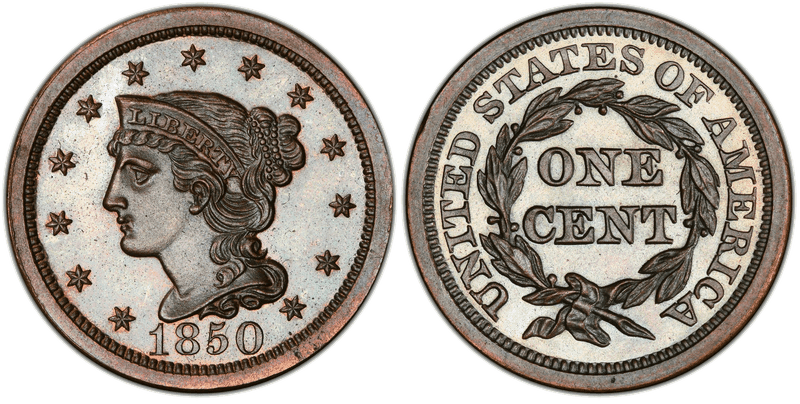
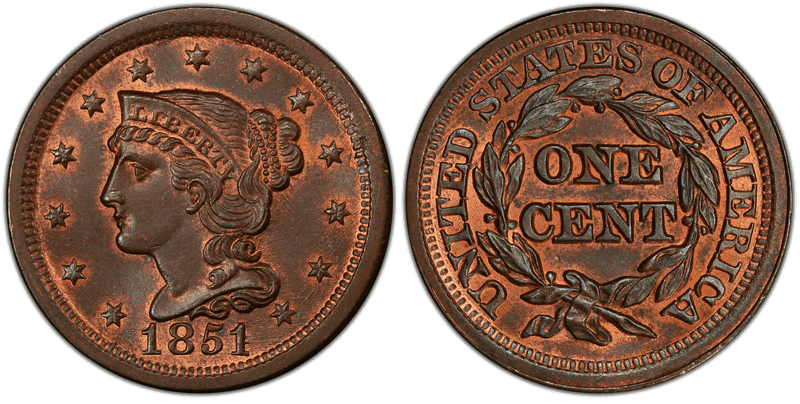
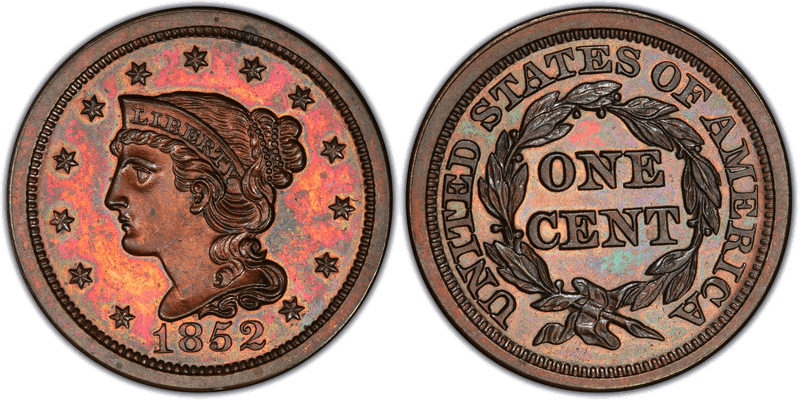
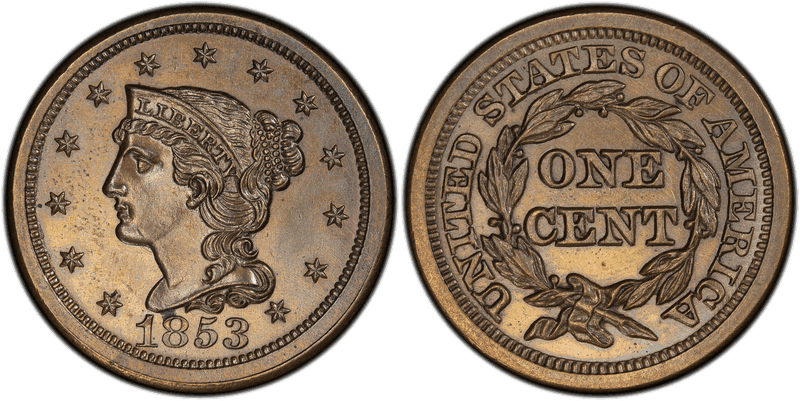
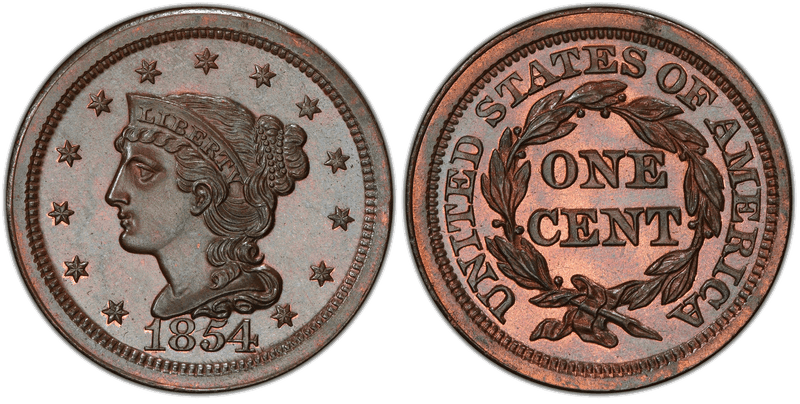
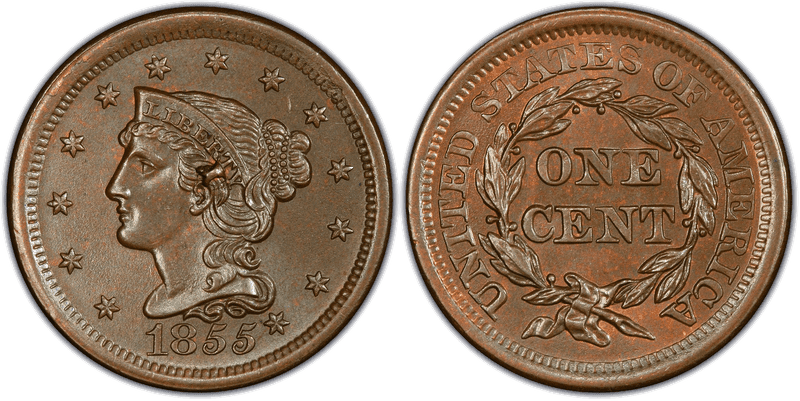
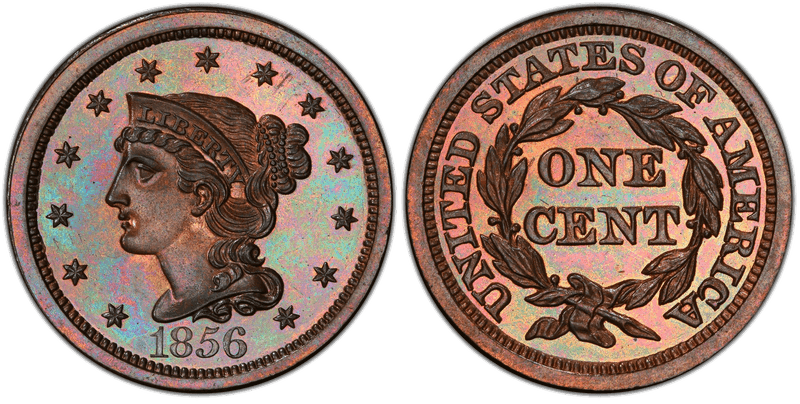
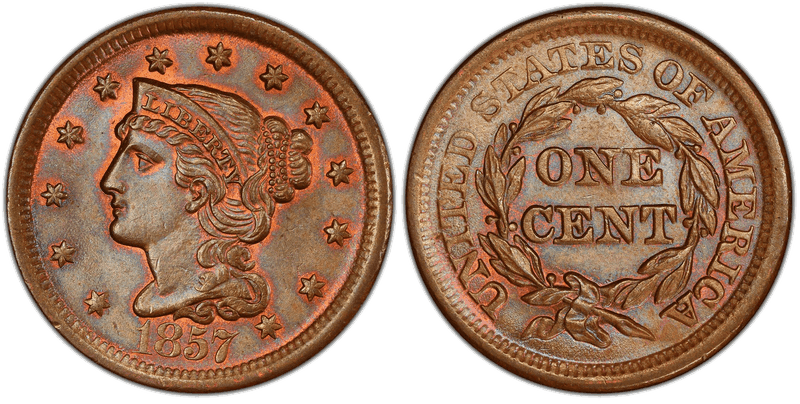
Christian Gobrecht reworked the cent portrait several times between 1835 and 1839, and NGC counts five different heads on cents dated 1839 alone. The last of them, used on a single 1839 die pair, is the first Braided Hair cent: Liberty with a braid across the top of her head instead of loose hair. CoinWeek notes that the portrait is thought to follow the figure of Venus in Benjamin West's painting Omnia Vincit Amor. Earlier 1839 heads belong to the Modified Matron Head series.
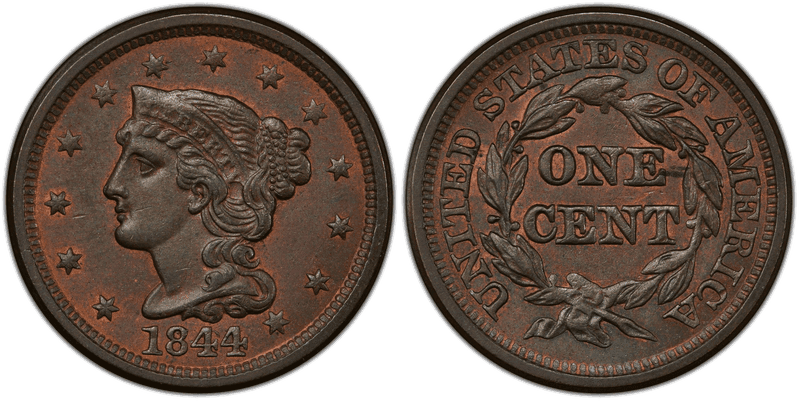
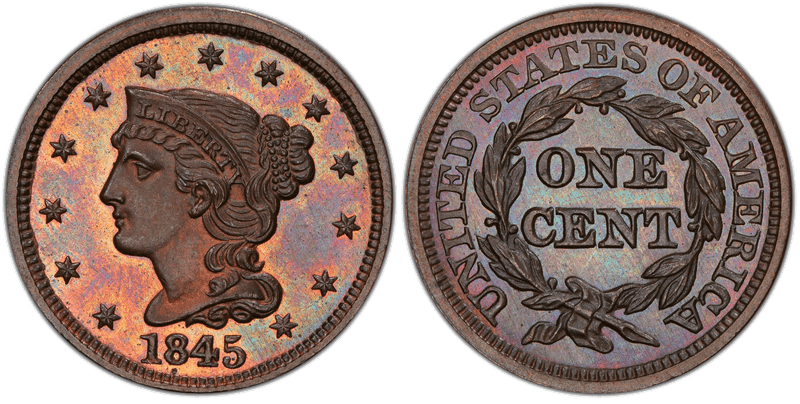
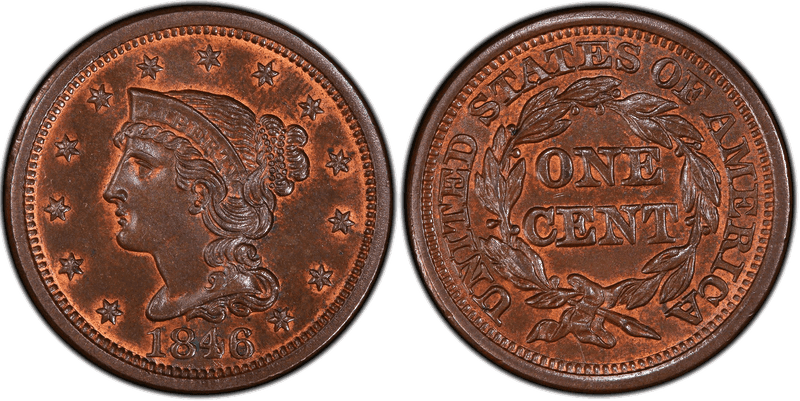
This first version, the Petite Head, leans forward. In 1843 Gobrecht enlarged it and set it more upright, the Mature Head, and paired it with a reverse with larger letters. From 1844 to the end of the series the design stayed the same, and the varieties collectors seek are mostly mistakes in punching the date.
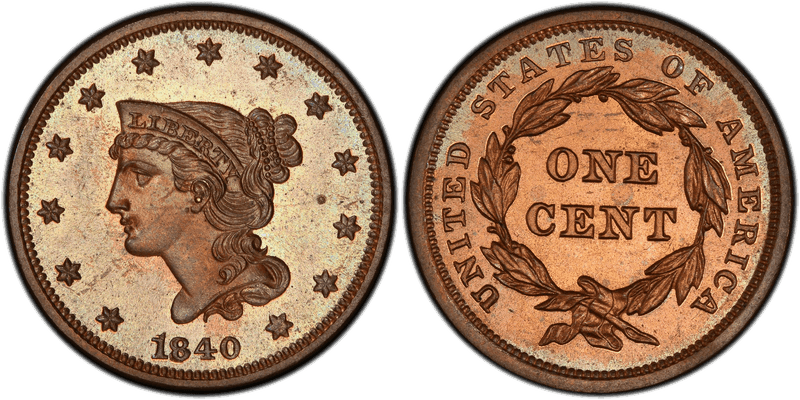
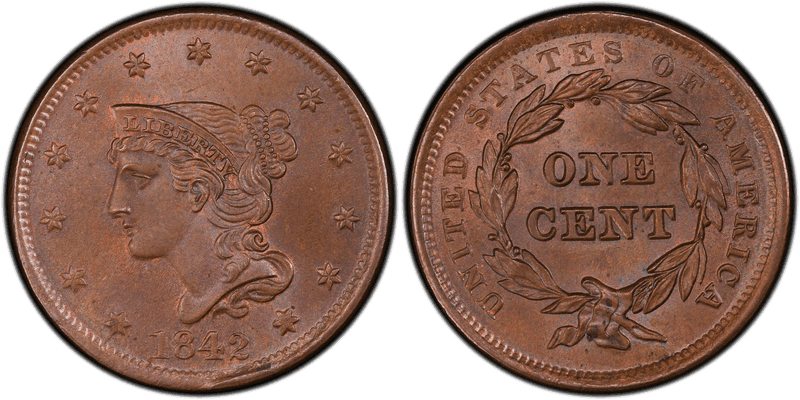
As before, the Mint reported its cents by calendar year. For 1840 and 1842, when two date sizes were used, Walter Breen divided the reported totals between them from the Mint's delivery records, on the assumption that one size was used before the other. NGC ties the 9,889,707 cents struck in 1851 to the hoarding of silver coins after the California gold discoveries, which left cents to carry more of the small change. Dies were worked hard, and cents of 1849 in particular often show chips and cuds from failing dies.
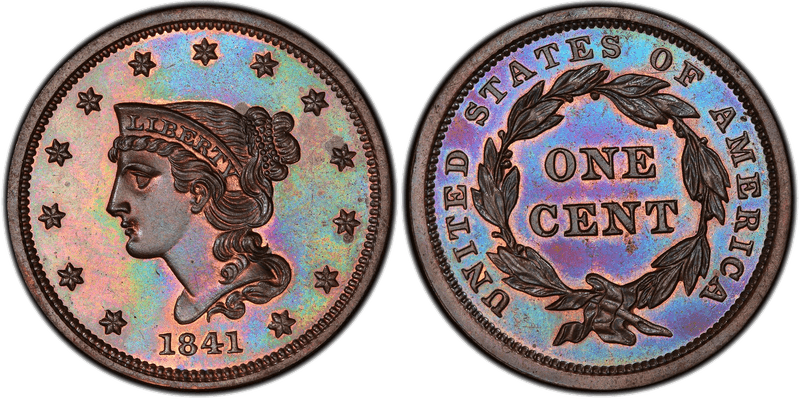
Proofs were made in small numbers, and many may not be as old as they look. For most dates of the 1840s every known proof comes from a die pair never used for circulating coins, and the 1844 to 1849 proofs share one reverse die in the same state. NGC concludes they were probably struck together years later for collectors.
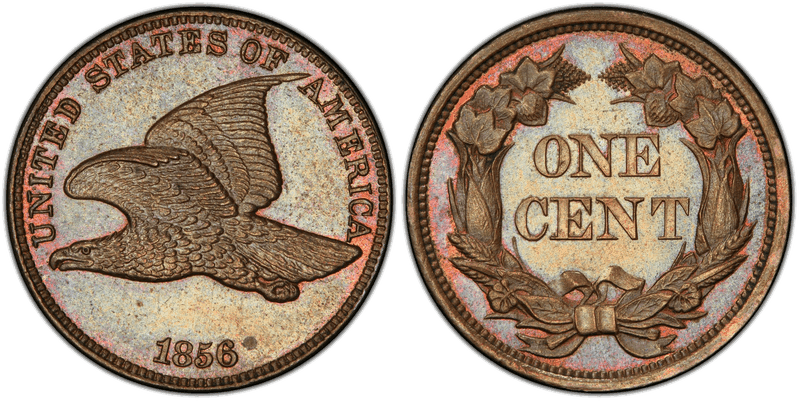
By the 1850s the large cent cost more than a cent to make, and the public disliked it. The Mint tried smaller trial pieces through the early 1850s, and the Act of February 21, 1857 replaced the large cent with the copper-nickel Flying Eagle cent and ended the half cent. Once the small cent appeared that spring, the Mint destroyed its stock of old cents.