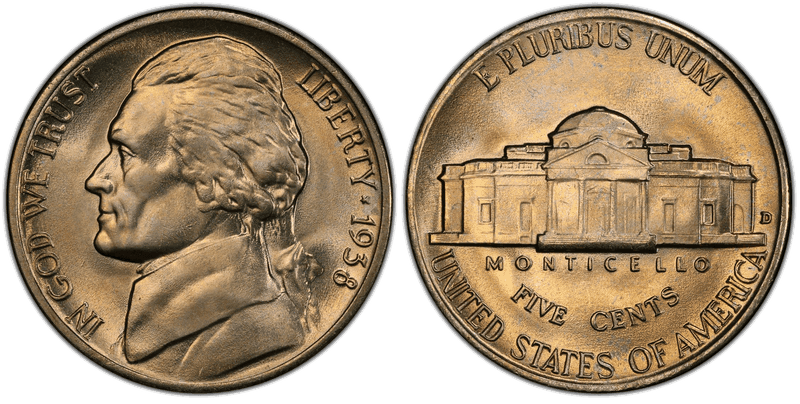
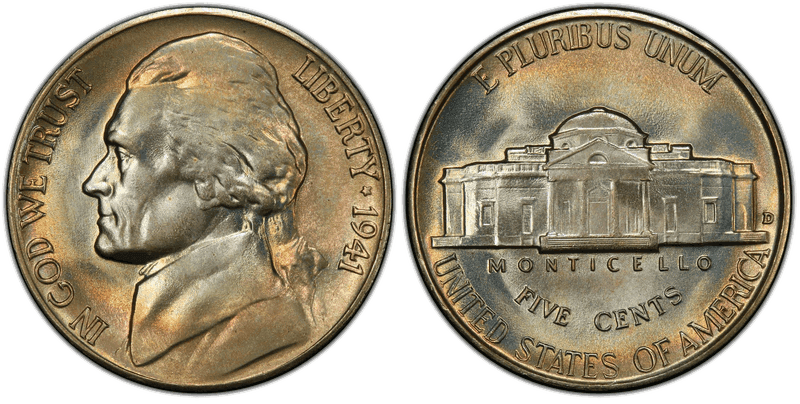
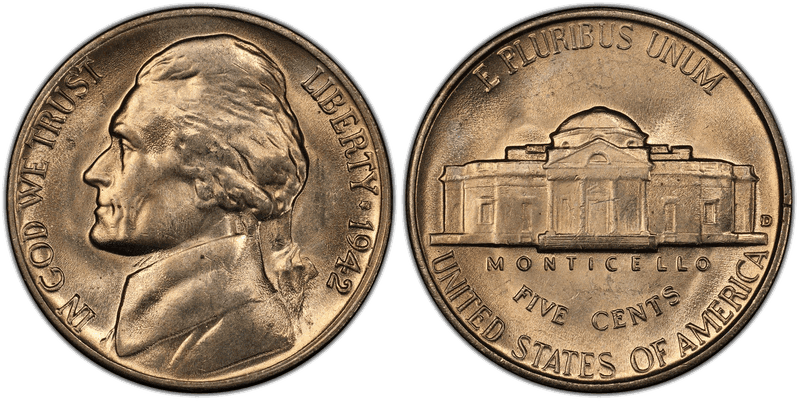
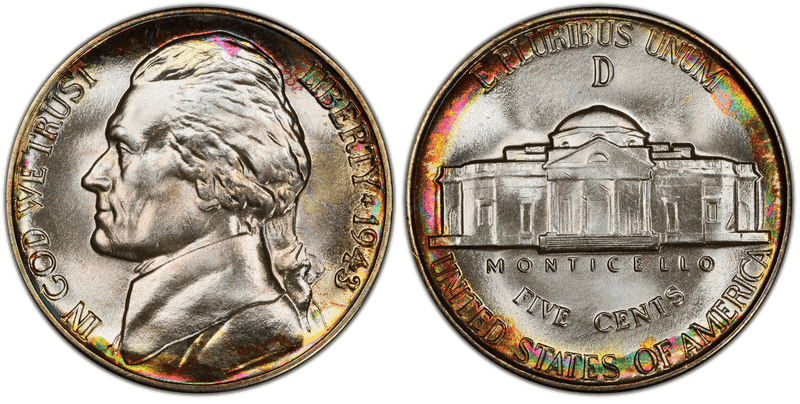
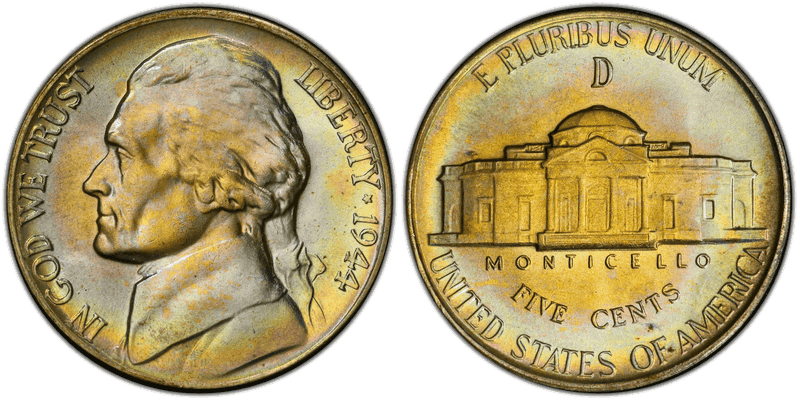
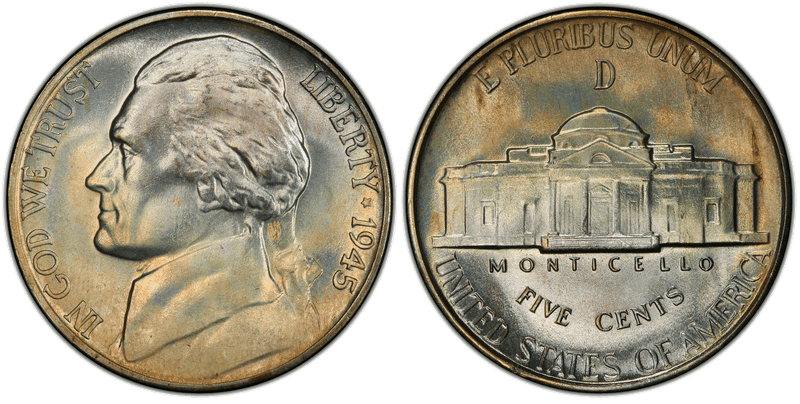
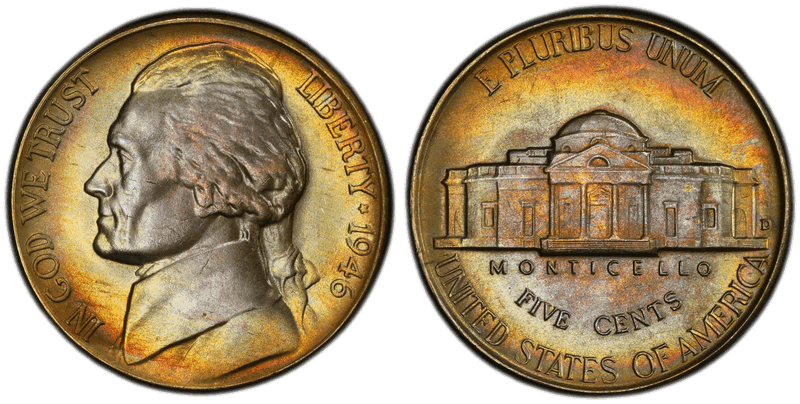
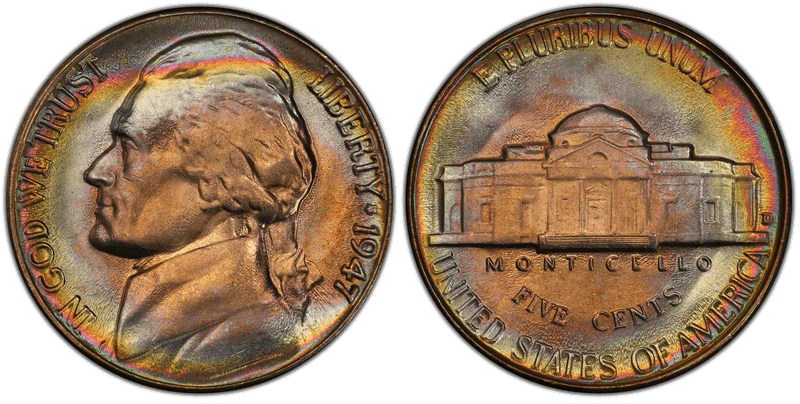
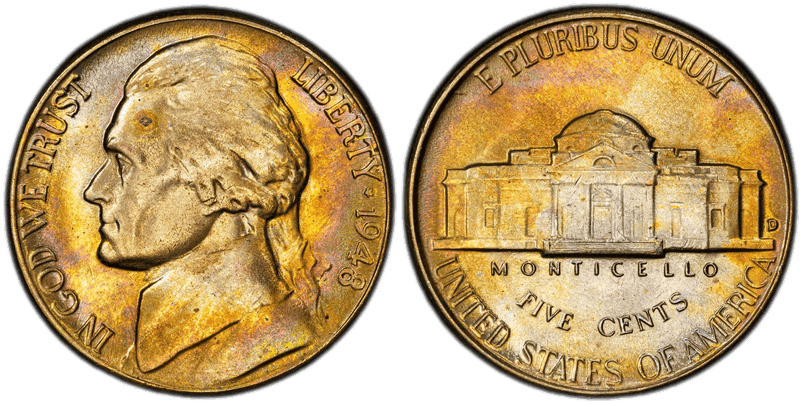
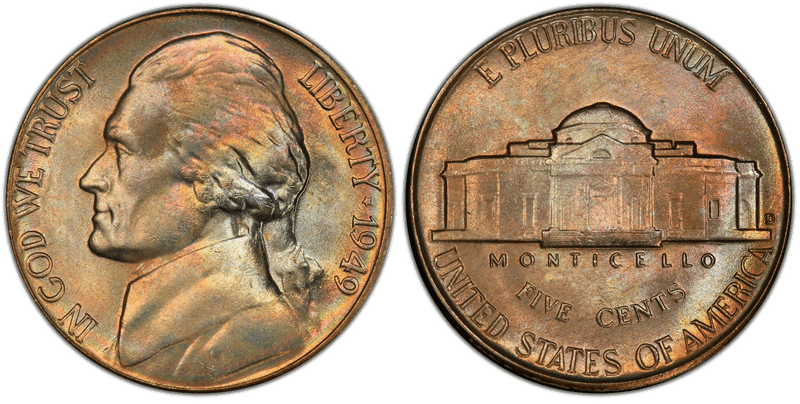
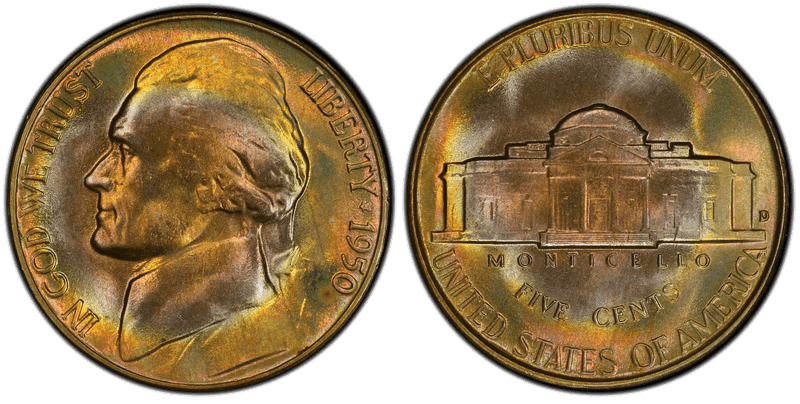
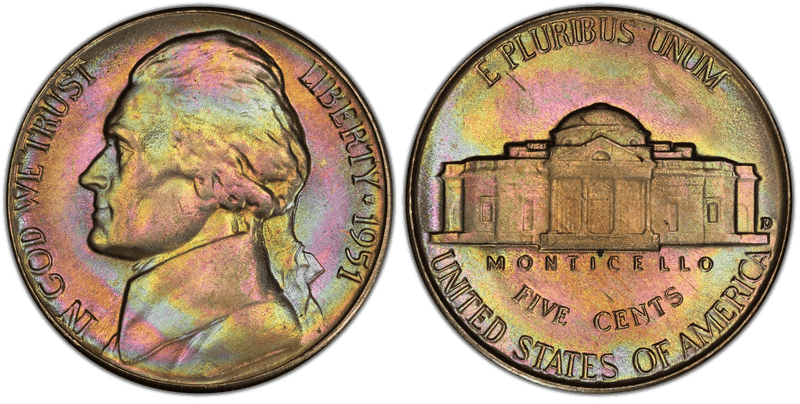
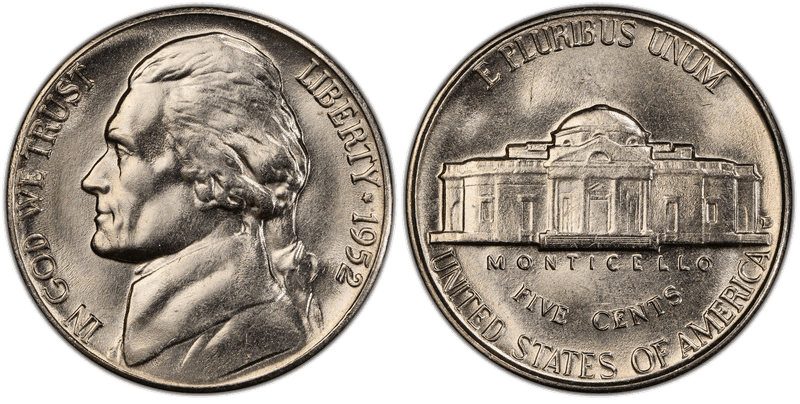
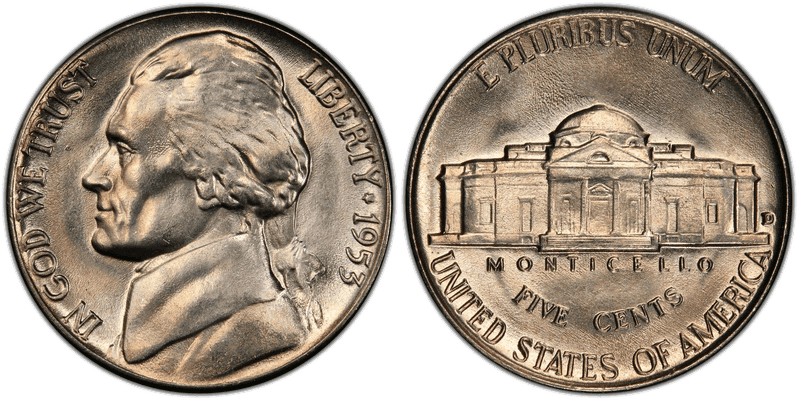
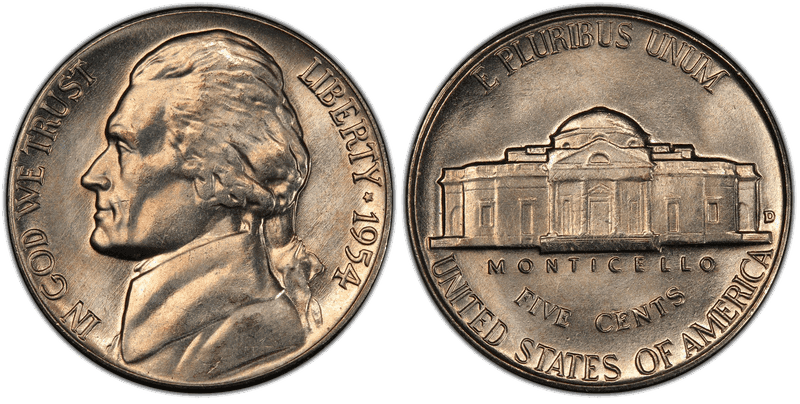
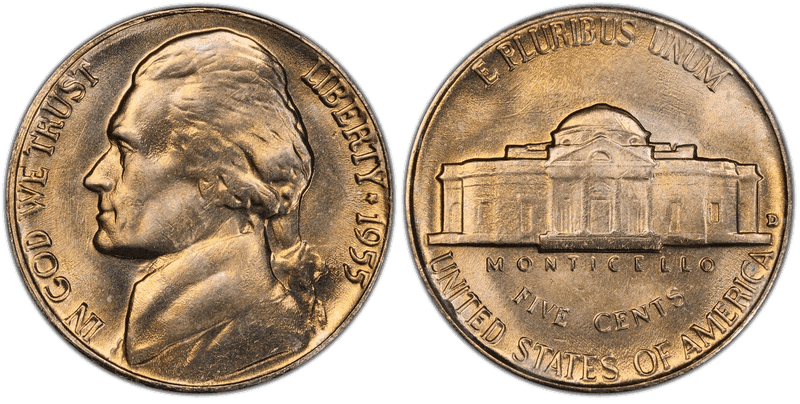

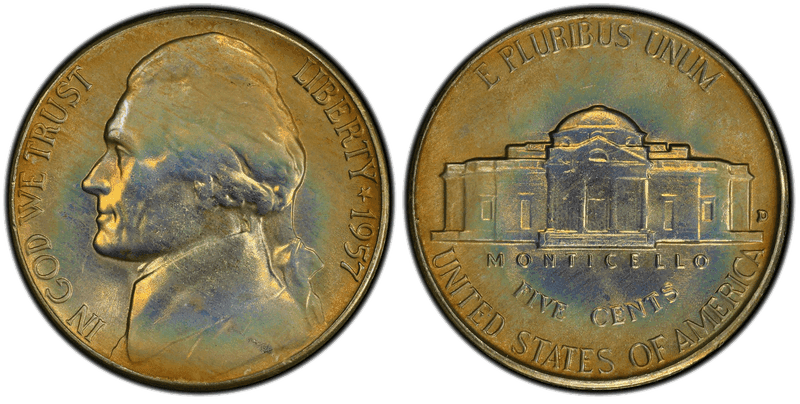
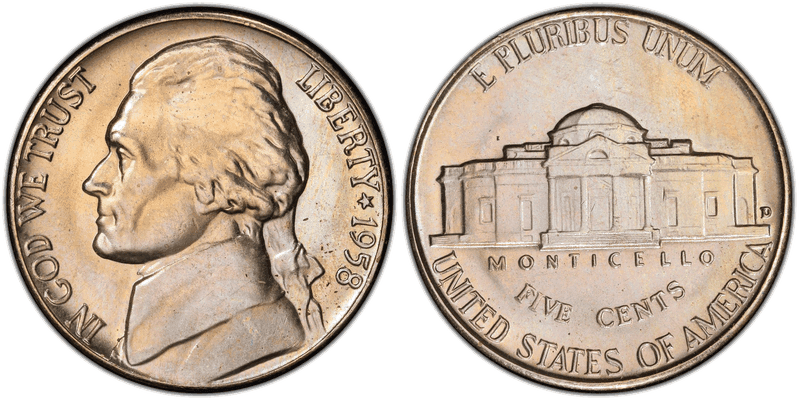
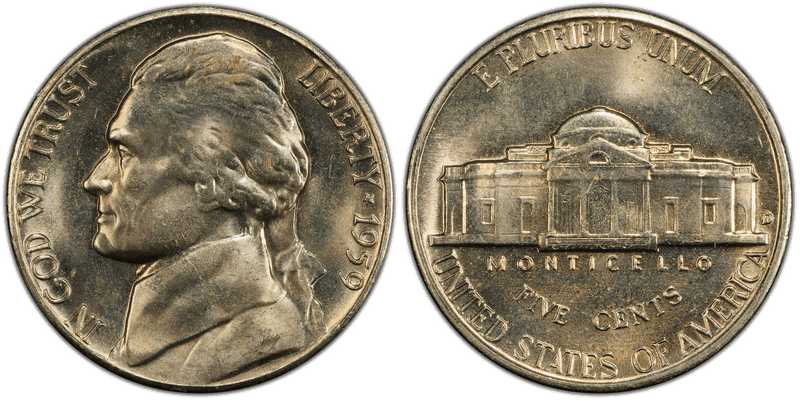
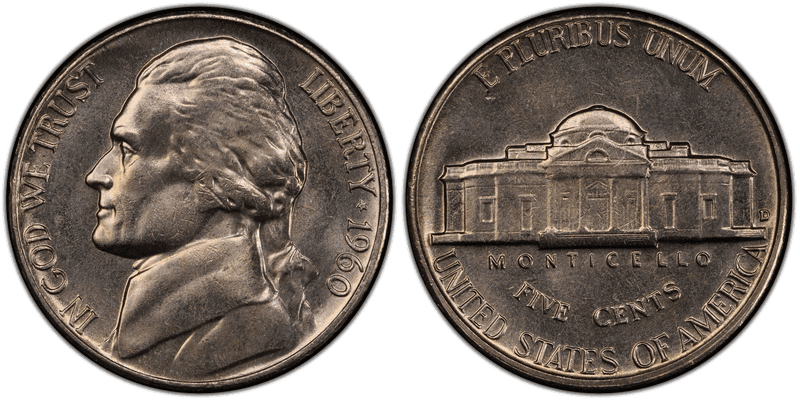
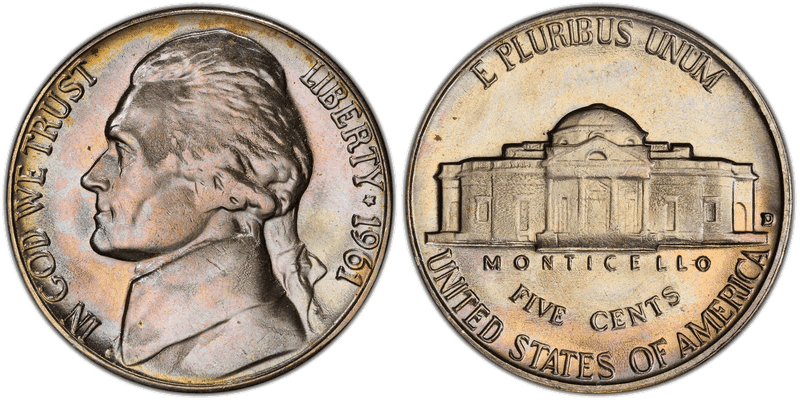
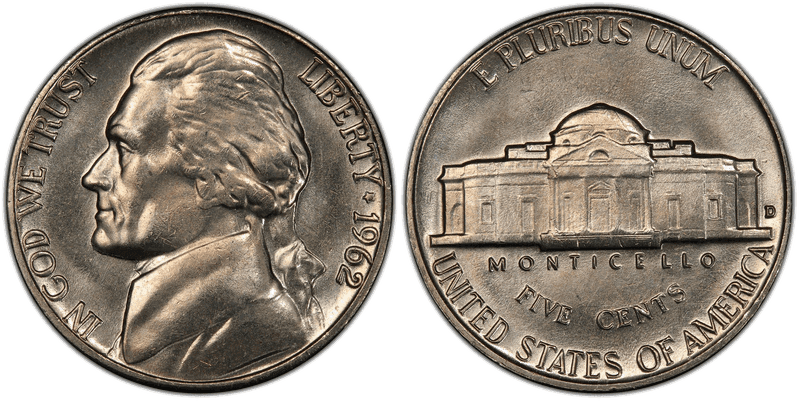
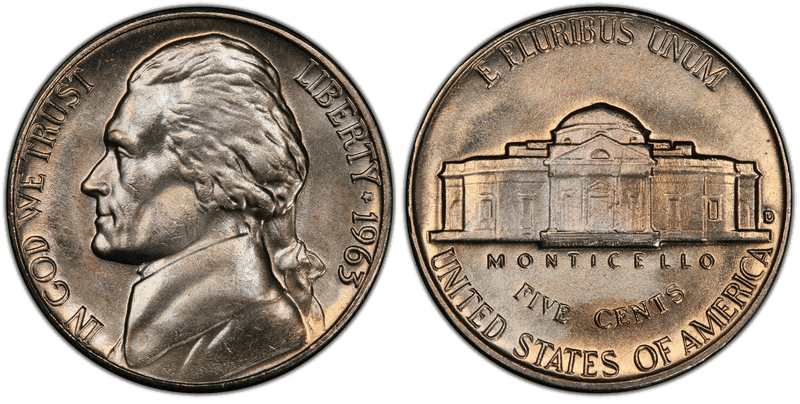
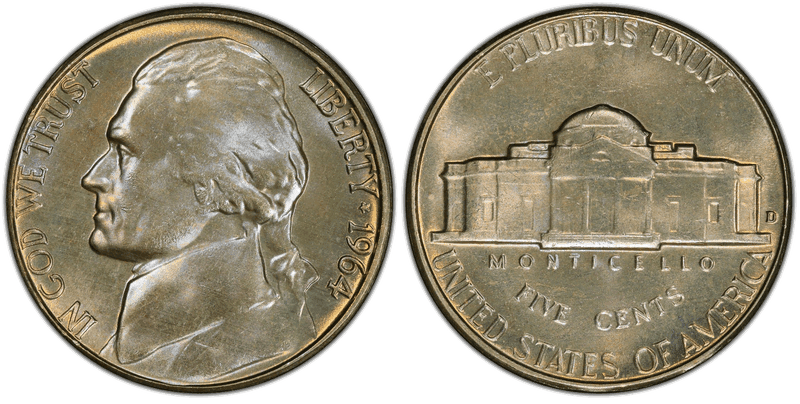
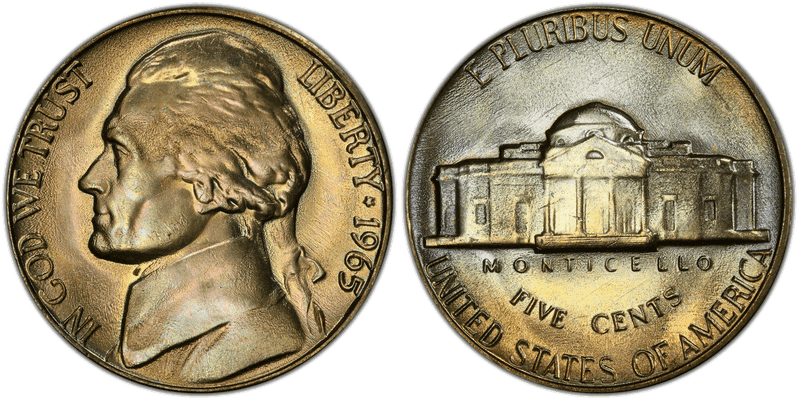
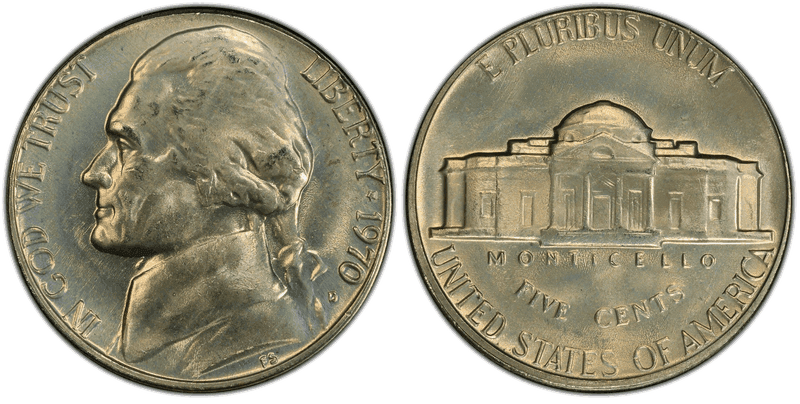
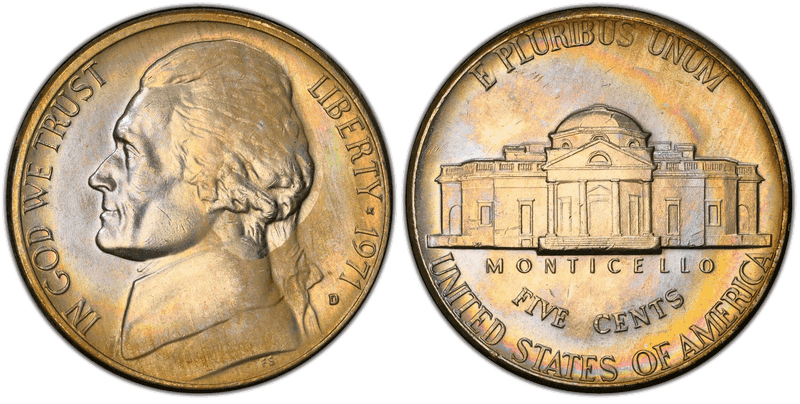
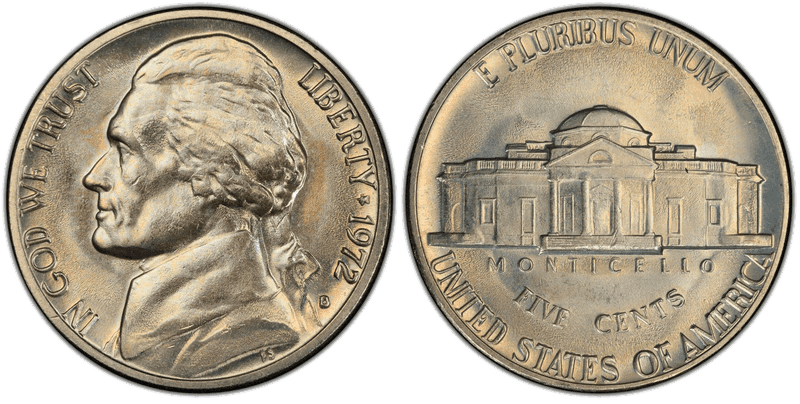
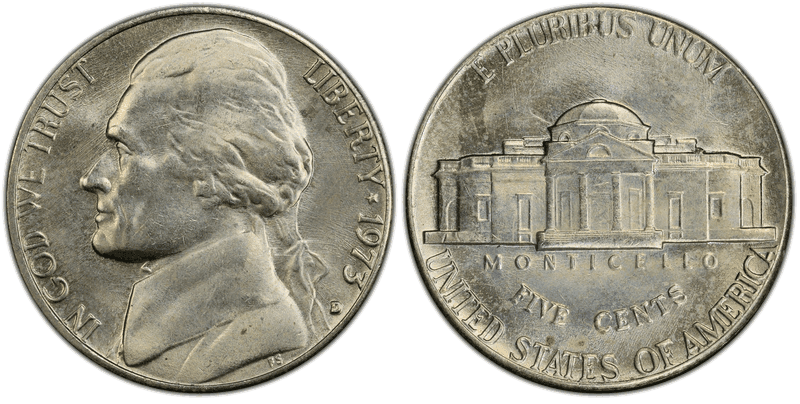
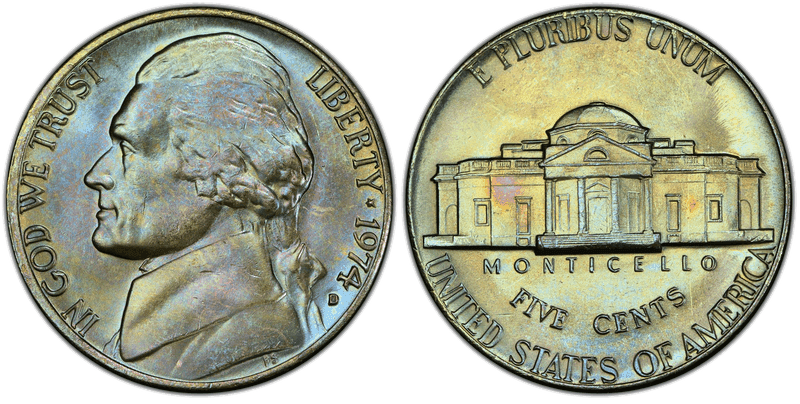
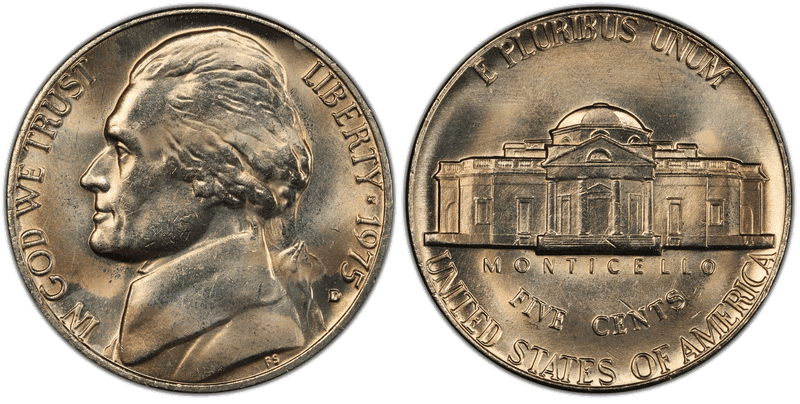
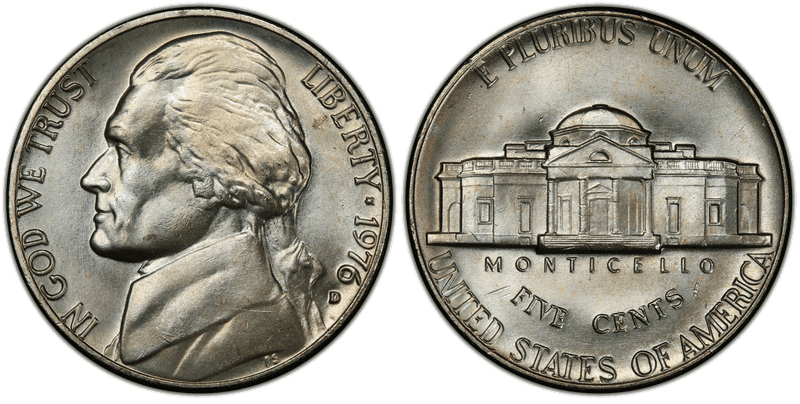
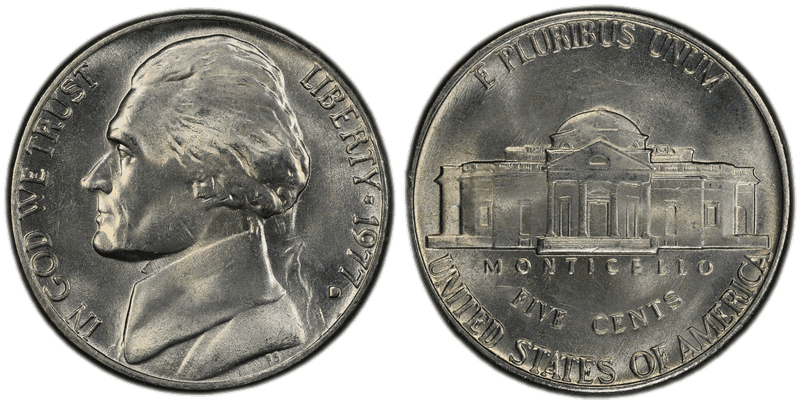
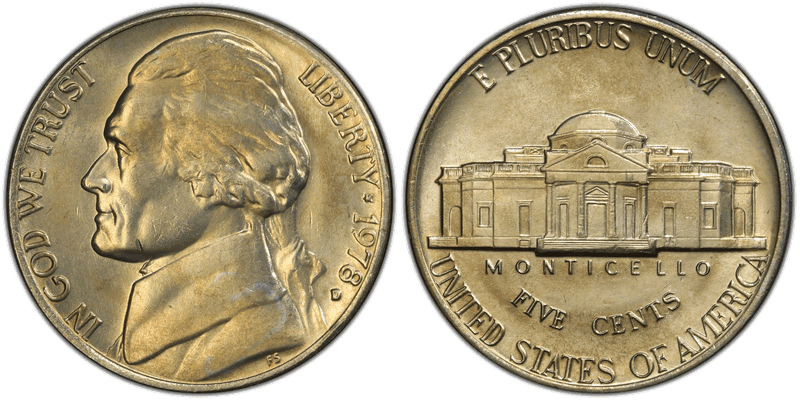
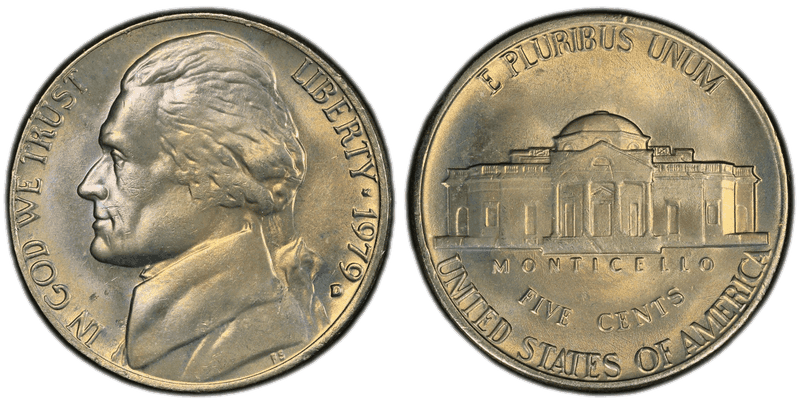
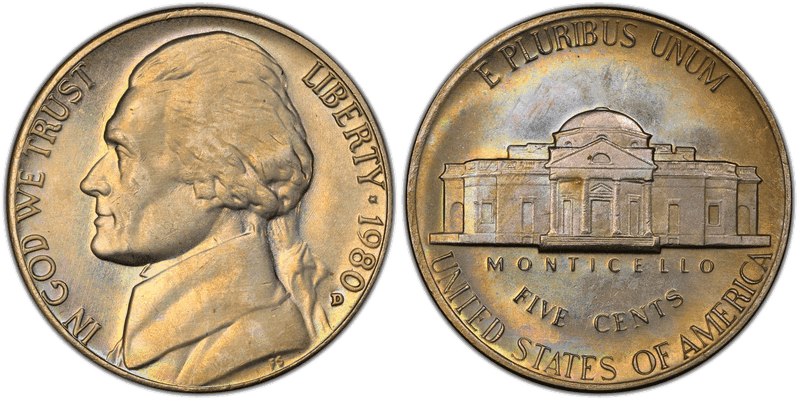
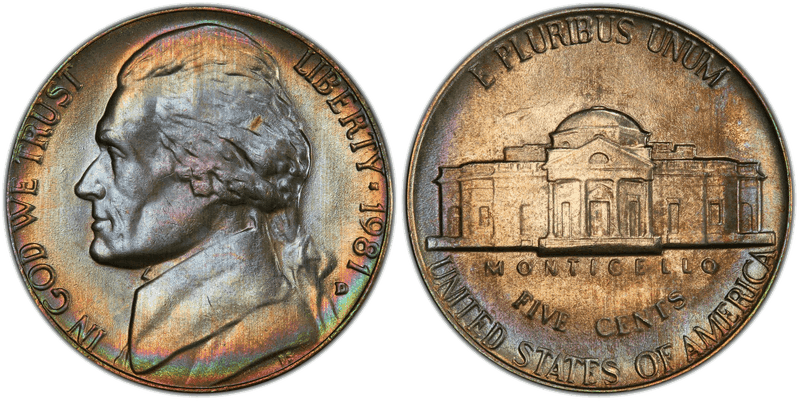
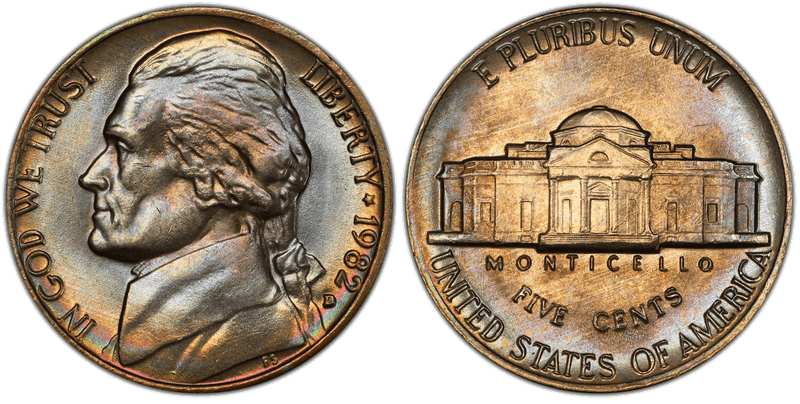
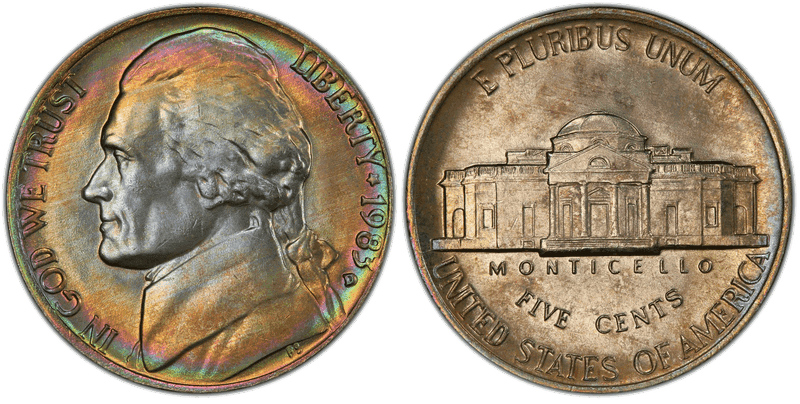
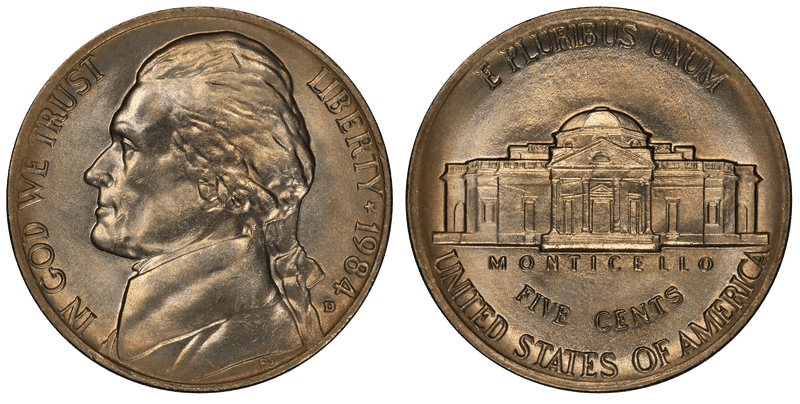
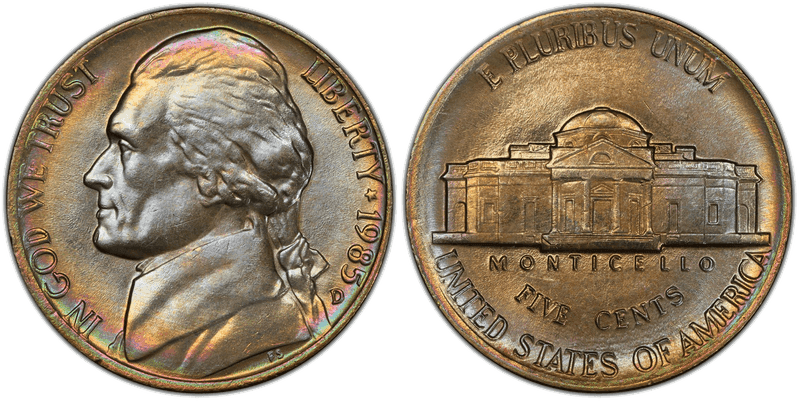
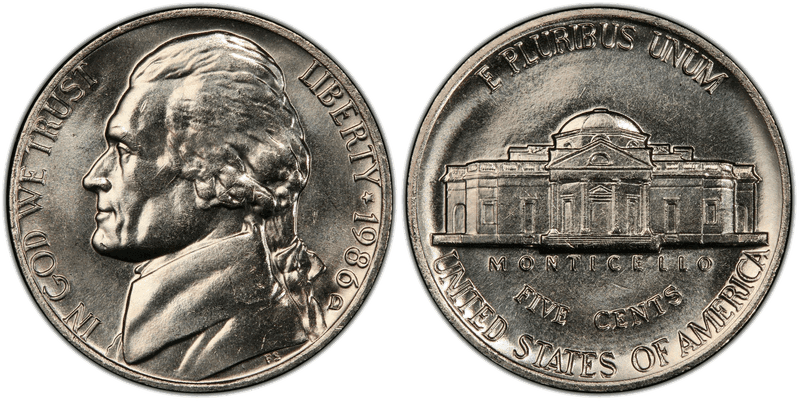
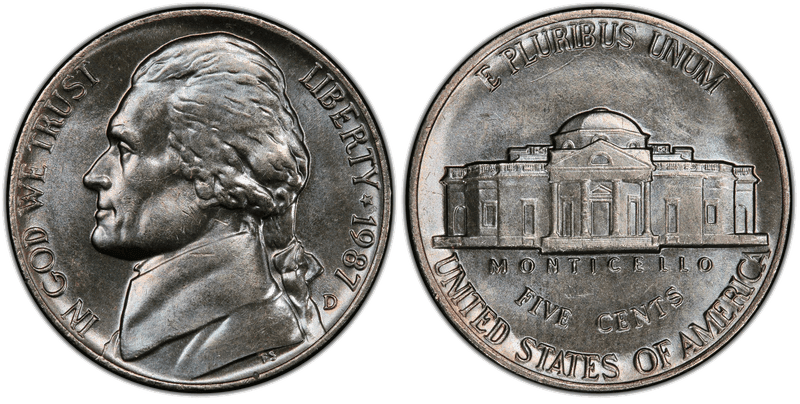
The Buffalo nickel had run the 25 years the law required before a design could be replaced, and the Treasury held an open contest for a nickel honoring Thomas Jefferson. The winner, who took the $1,000 prize, was Felix Schlag, a sculptor born in Frankfurt in 1891 who had moved to the United States in 1929. The Mint counts about 390 entries (search). It was the only coin Schlag ever designed.
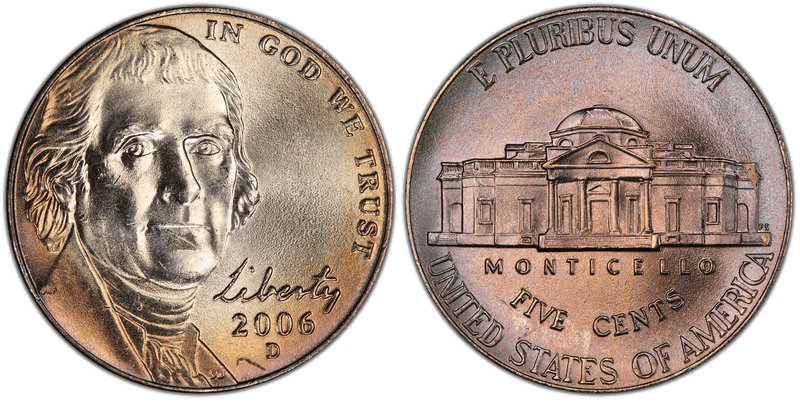
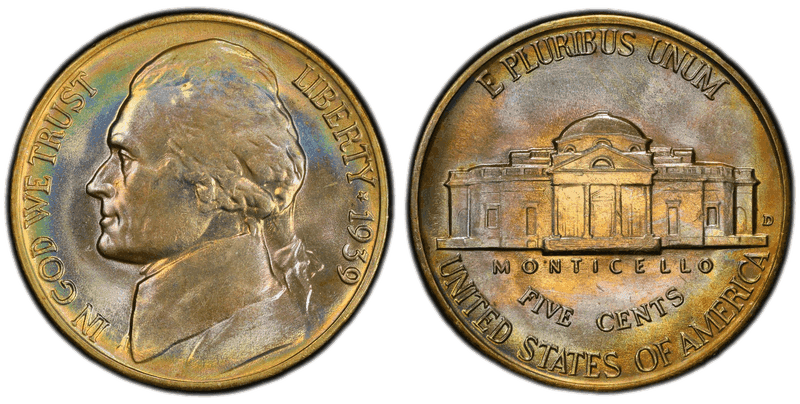
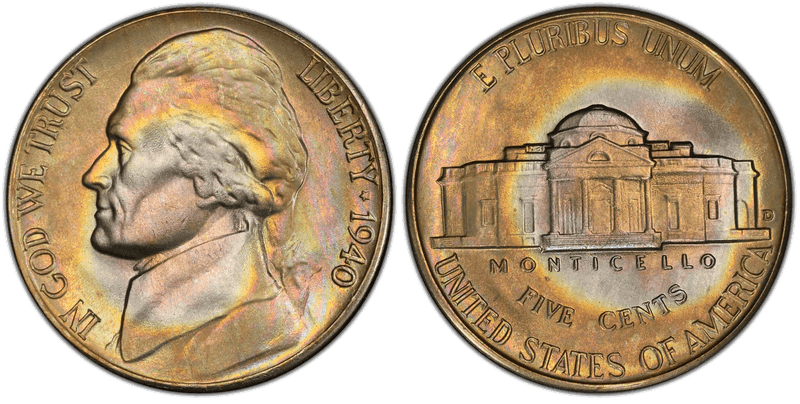
His design was not approved as submitted. Schlag had shown Monticello from an angle, with trees beside it. The Commission of Fine Arts asked for a plain head-on view and different lettering, and the Mint had the word MONTICELLO added under the building. Schlag finished the revisions in July 1938, striking began that fall, and the coins were scarce in circulation until late that year. Early in 1939 the Mint recut the reverse hub to sharpen the steps and portico, so 1939 coins from all three mints, and the 1940 proofs, come with either the old or the new reverse.
In the spring of 1942 copper-nickel nickel production stopped, because nickel was needed for the war. From the last months of 1942 through 1945 the coin was struck in 56% copper, 35% silver and 9% manganese; NGC says the mix was picked because it still worked in vending machines and turnstiles. The Mint expected to pull these coins after the war, so it gave them an oversize mint mark above Monticello's dome, and Philadelphia's coins carried a P, a first on any U.S. coin. The prewar alloy came back in 1946.
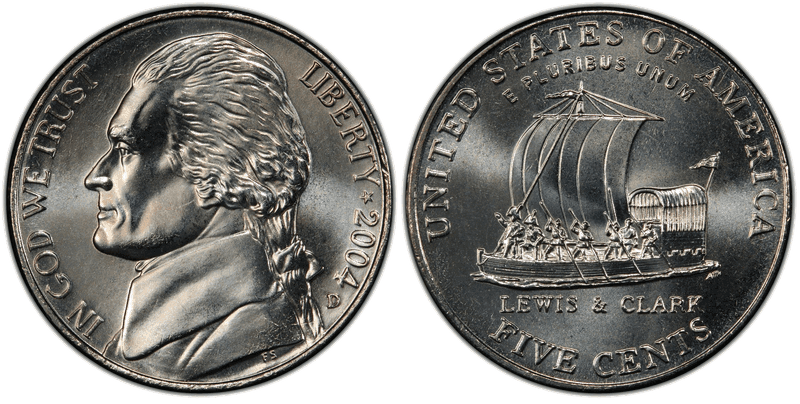
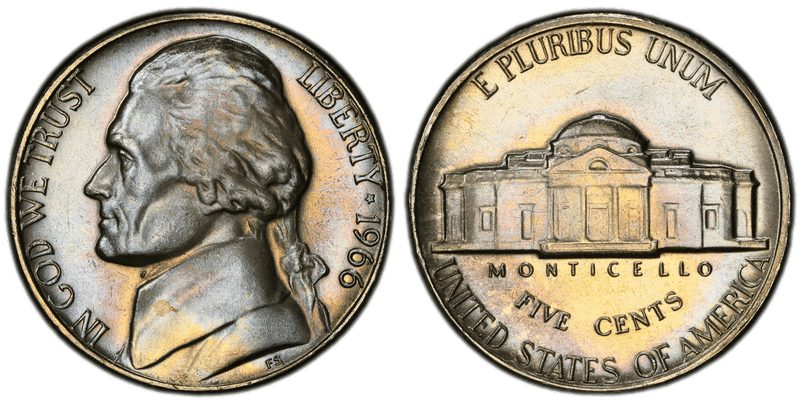
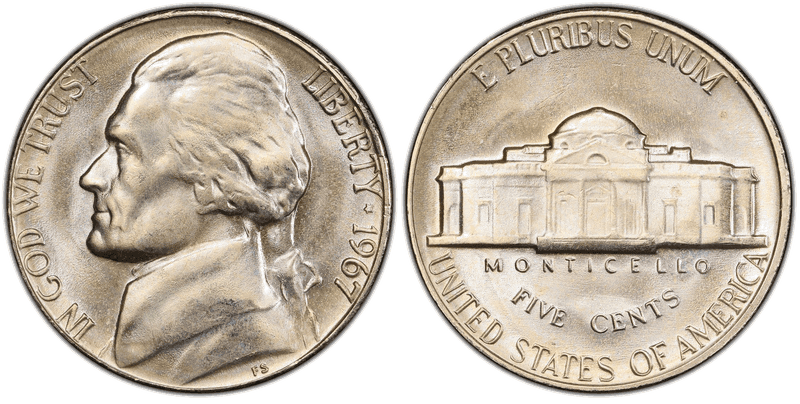
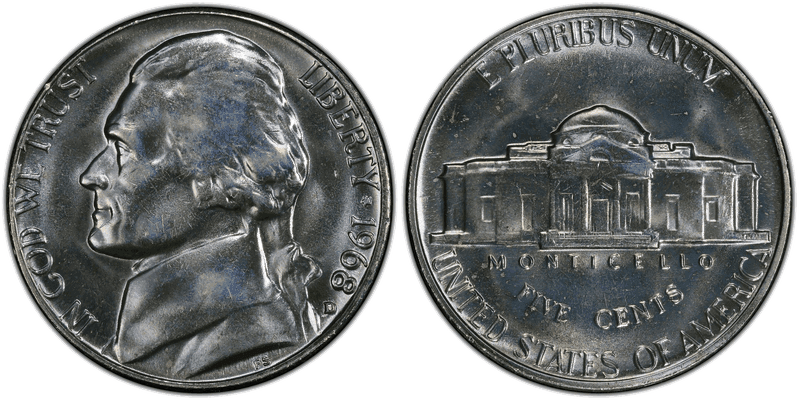
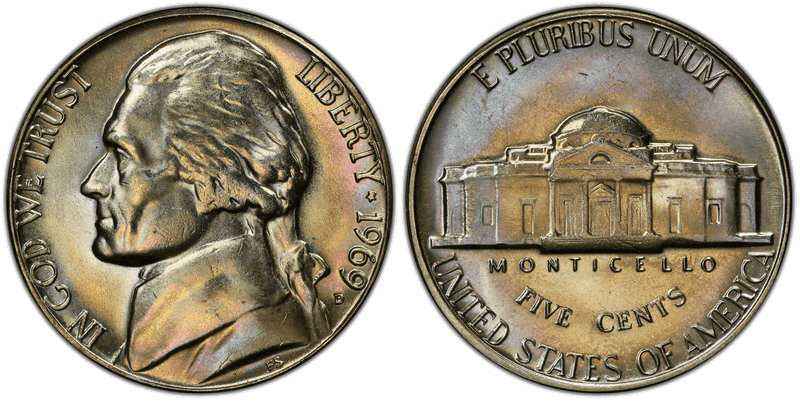
A coin shortage in the 1960s brought more changes. The 1964 date was frozen, and NGC reports that more than two-thirds of the 1964-D nickels were struck in 1965. Coins dated 1965 to 1967 carry no mint mark. In 1966 the Mint added Schlag's initials, FS, under the bust. Mint marks returned in 1968, now on the obverse, and from 1971 San Francisco struck only proofs. The design ran through 2003; the Westward Journey reverses replaced it in 2004.