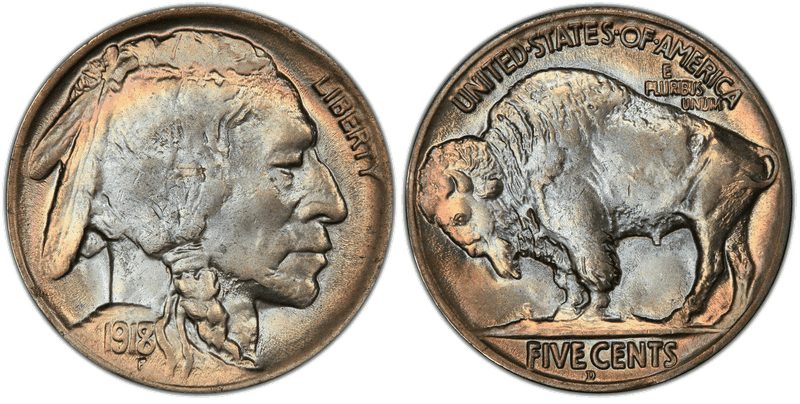
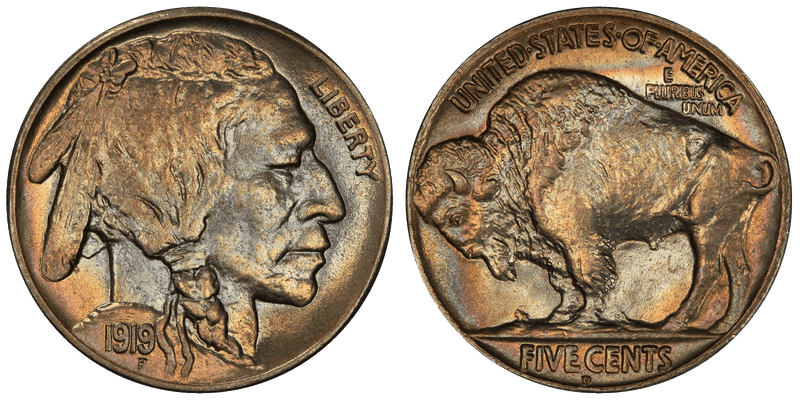
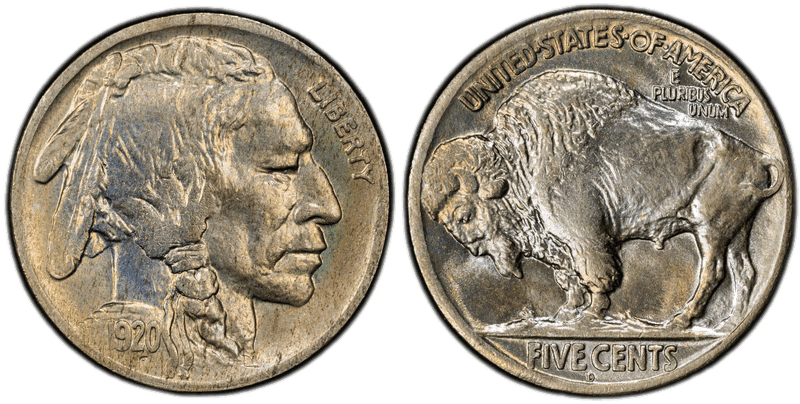
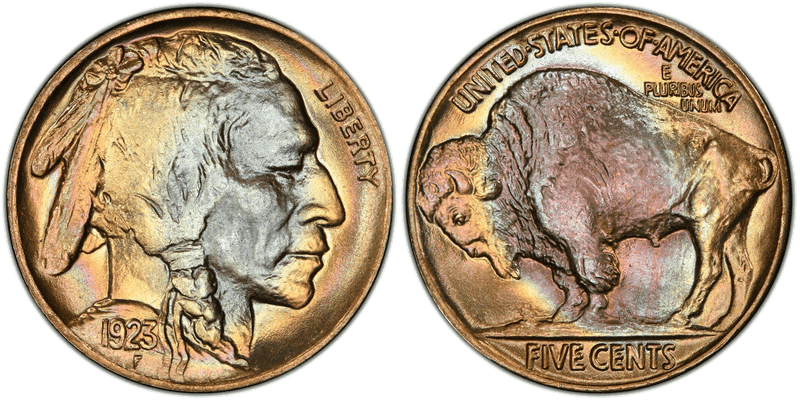
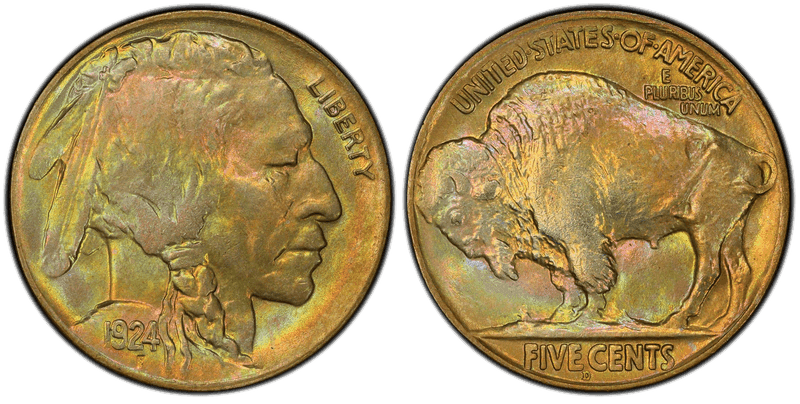
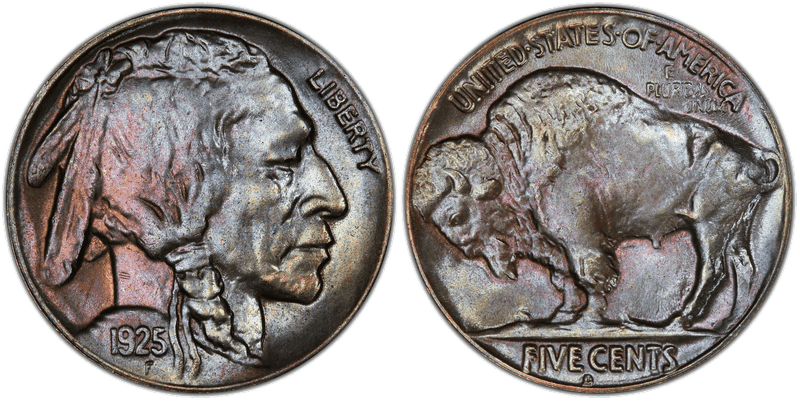
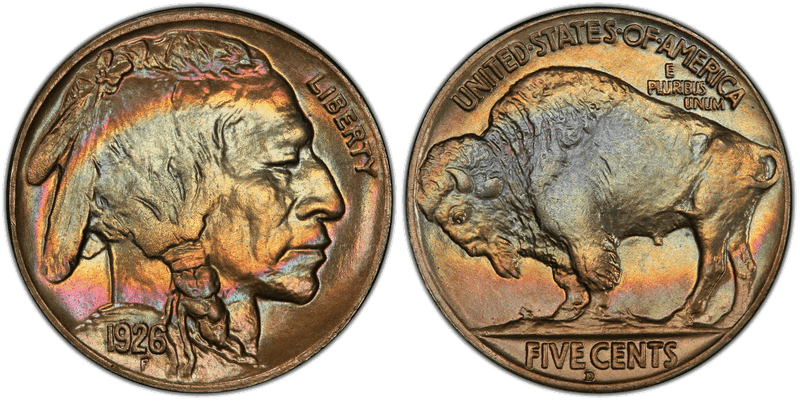
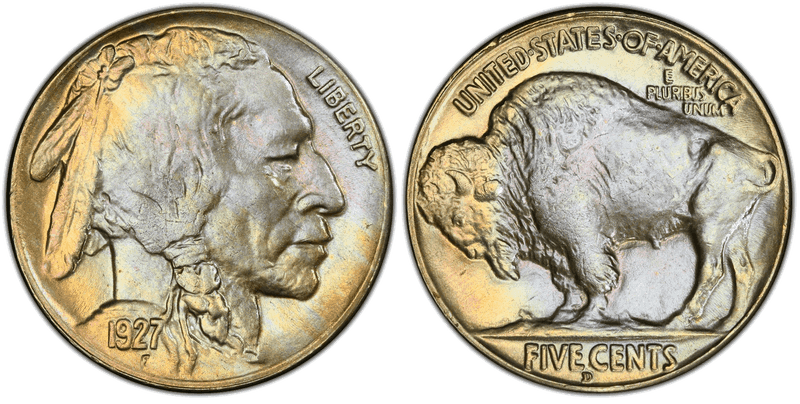
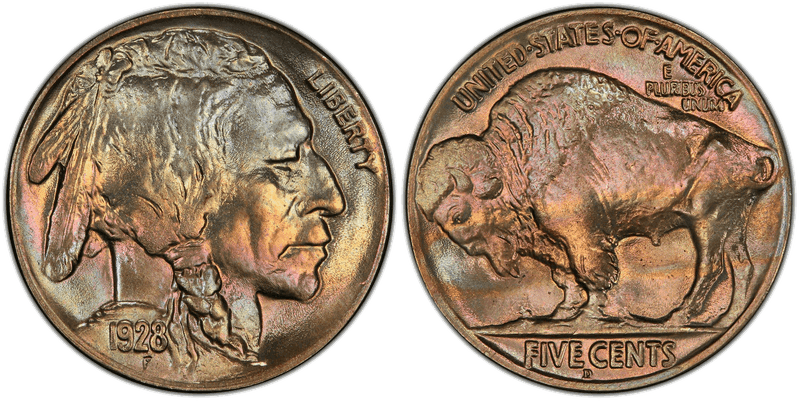
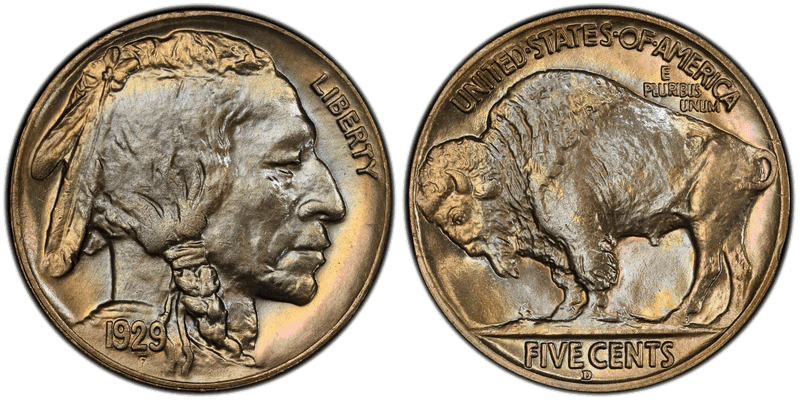
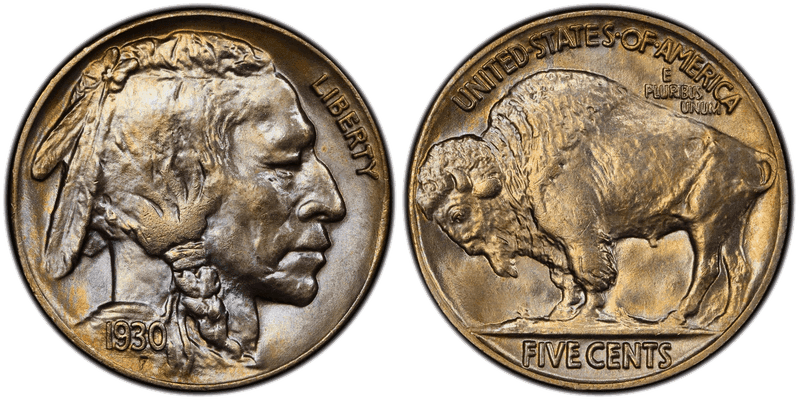
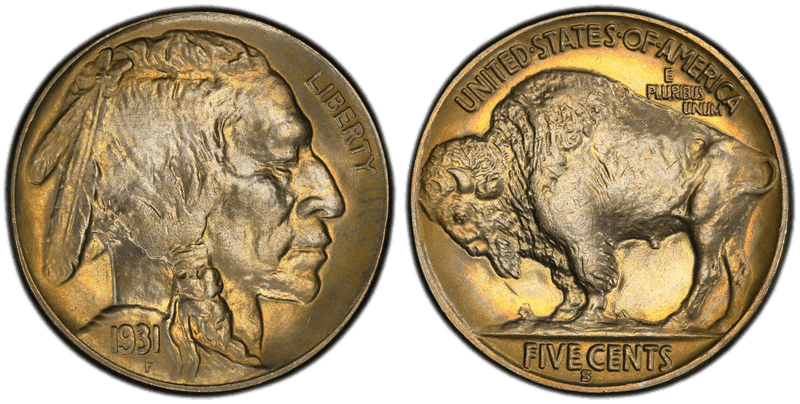
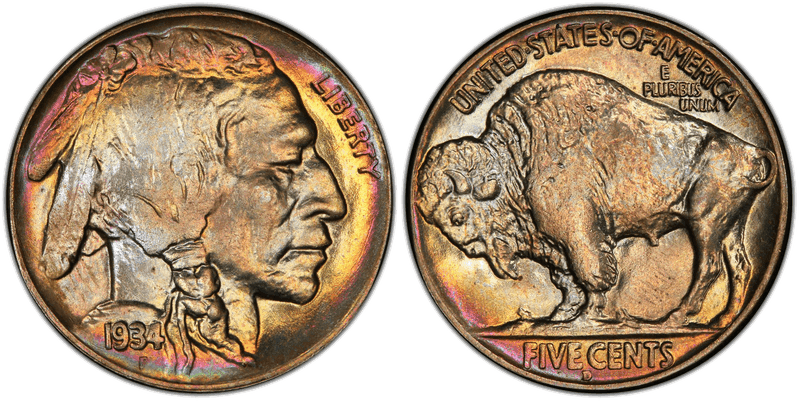
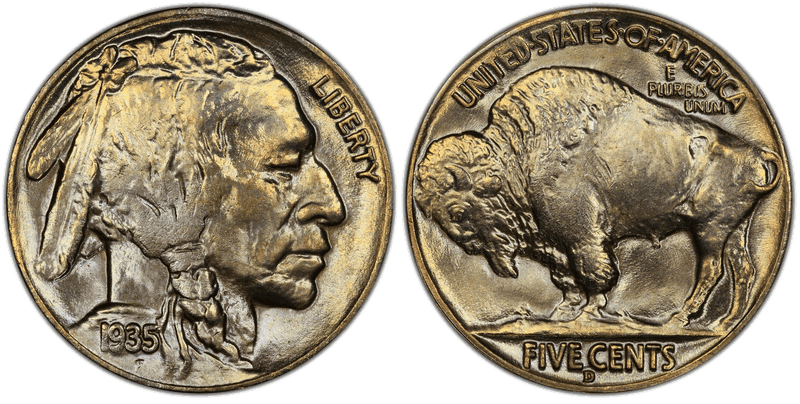
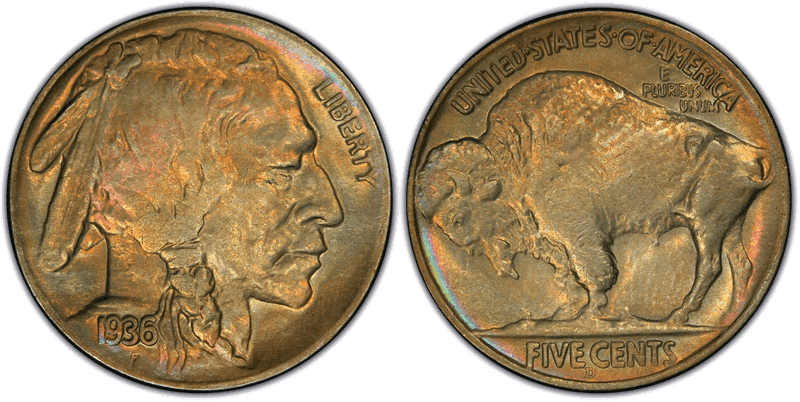
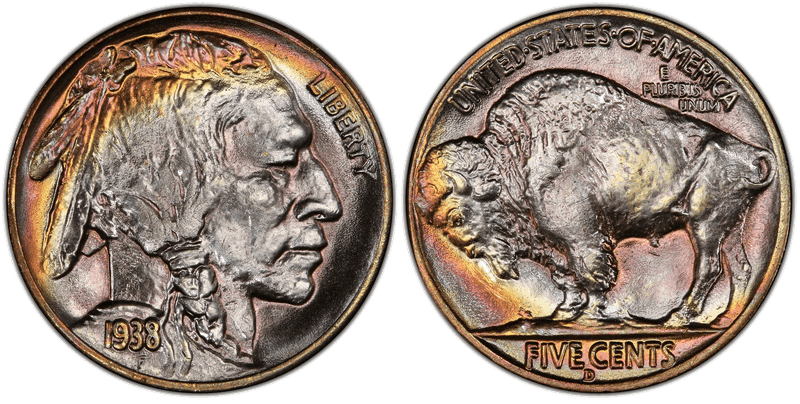
Buffalo Nickels 1913-1938

Coin Series
Buffalo Nickels 1913-1938 series coin

About This Series

James Earle Fraser's Buffalo nickel stands as one of the most distinctively American coin designs ever produced, combining a composite portrait that Fraser said drew on Iron Tail (Lakota) and Two Moons (Cheyenne) and a third subject whose identity is disputed, with an American bison traditionally identified as Black Diamond of the Central Park Zoo. The design debuted in two types in 1913: the Type 1 features the bison standing on a raised mound, while the Type 2 places it on a flat plain with the denomination recessed below, because FIVE CENTS on the Type 1 mound wore away quickly. Despite this modification, dates on Buffalo nickels wore smooth quickly in circulation, creating vast numbers of dateless examples that still surface in quantity today. The 1913-S Type 2, with just 1,209,000 struck, is the key date among business strikes, while the spectacular 1918/7-D overdate and the famous three-legged 1937-D — whose missing front leg is usually blamed on heavy die polishing, a cause NGC disputes — are among the most sought-after 20th-century U.S. coin varieties. The 1931-S, about 1.2 million pieces, was the only Buffalo nickel struck in 1931, and no nickels were made at all in 1932 or 1933. Struck in 75% copper and 25% nickel at 21.2mm and 5.0 grams, over 1.2 billion Buffalo nickels were produced between 1913 and 1938. The design's powerful imagery of the American West has made it an enduring cultural icon beyond numismatics.

From NumisDex News

Series Information

Production Years
1913-1938
Composition
75% Copper, 25% Nickel

Browse by Base(23 bases)

Showing all 23 listings

History

James Earle Fraser designed both sides of the Buffalo nickel. The Liberty Head nickel it replaced had passed the 25 years the Mint Act of 1890 required before a redesign. Fraser described the portrait as a composite of three chiefs who had posed for him. The bison was most likely Black Diamond, a resident of New York's Central Park menagerie in 1911. Chief Engraver Charles Barber adapted the models for production, and Philadelphia struck the first pieces on February 17, 1913.

The design wore badly from the start. By April 1913 circulated coins were visibly flattened, and the raised FIVE CENTS, which critics had called too shallow, was wearing away fast. Barber reworked the reverse that year, producing the Type 2; PCGS, quoting the specialist David Lange, places the start of Type 2 coinage in May 1913. The date was left as it was, raised on the shoulder, and it became the series' lasting flaw. By the time collectors began assembling Buffalo nickels by date and mint in the mid-1930s, most 1914-D coins had already worn dateless.

A refined obverse hub sharpened LIBERTY from 1916 on. In 1938, the final year, only the Denver Mint struck Buffalo nickels; the Jefferson nickel followed later that year.
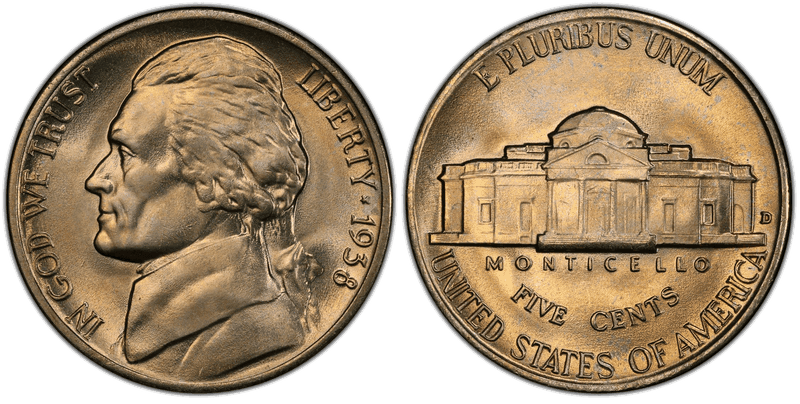
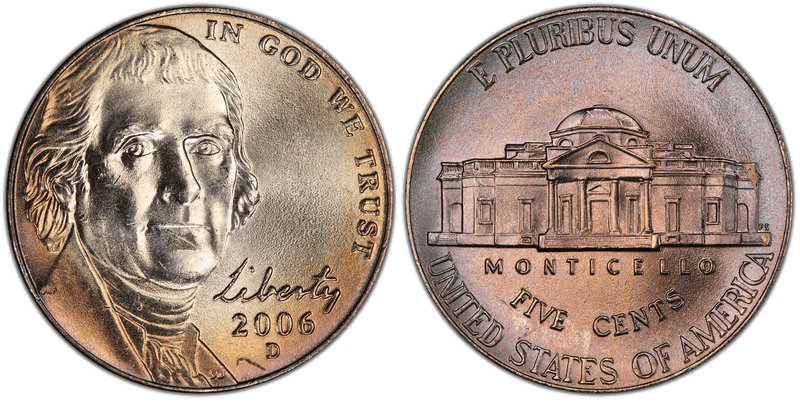
How to Identify It

The obverse shows a Native American facing right, with LIBERTY near the rim in front of the face. The date is raised on the shoulder, and a small F for Fraser sits just below it. The reverse shows a bison facing left, with UNITED STATES OF AMERICA arched above, E PLURIBUS UNUM in small letters under it, and FIVE CENTS at the bottom.

Mint mark. The mint mark is on the reverse, centered directly below FIVE CENTS, in the narrow band between the denomination and the rim. D is Denver, S is San Francisco, and Philadelphia used no letter. It is in the same place on Type 1 and Type 2 coins. On a worn coin, check that spot with a loupe before calling it Philadelphia.

Type 1 and Type 2 (1913 only). Look at what the bison is standing on:

  • Type 1: a raised, uneven mound, with FIVE CENTS lettered in relief on the mound itself.
  • Type 2: a flat ground line, with FIVE CENTS in a recessed space below it. Barber also softened some detail in the portrait and the bison when he made the change.

Every Buffalo nickel dated 1914 or later uses the Type 2 reverse. The public expected Type 1 coins to be recalled and saved them, while Type 2 coins went into circulation, which is why the 1913-D and 1913-S Type 2 are the scarcer types.

Dateless coins. The mint mark and reverse type survive long after the date is gone. Acid restorers can raise a ghost of the date, but they etch the coin, which then cannot receive a numerical grade.

Not varieties. On many early dates the shallowest feather near the neck was polished off the die. NGC treats these "two-feather" coins as die states and does not attribute them.

Key Dates and Varieties

  • 1913-S Type 2: 1,209,000 struck. NGC ranks it third-lowest in mintage for the series. It went straight into circulation, largely ignored, and is one of the hardest coins in the set in any grade.
  • 1913-D Type 2: a long-recognized semi-key, since nobody saved the revised design.
  • 1914/3: the sources disagree on this one. USA Coin Book lists it as a variety. NGC says the overdate was on a working hub, so it shows up faintly, and slightly differently, on several dies, and NGC no longer recognizes it.
  • 1916 Doubled Die Obverse: strong doubling shows on the date, the feathers and the hair ribbon. It was not reported until the 1960s, and NGC estimates roughly 300 are known in all grades.
  • 1918/7-D: one obverse die received hub impressions dated 1917 and 1918 and was then used at Denver. Its first recorded sale was at auction in 1930, so few were saved new. As the die wore it developed a crack running from the hair just above the knot down onto the cheek.
  • 1921-S: 1,557,000 struck; scarce worn and rare in Mint State.
  • 1924-S: 1,437,000 struck.
  • 1926-S: 970,000 struck, the lowest regular-issue figure in the series. The coins went straight into circulation, and NGC doubts more than a few hundred remain in Mint State.
  • 1931-S: 1,200,000 struck, but only 194,000 of them in January. The coins sat in vaults until 1935, and speculators saved so many that the date is common in Mint State.
  • 1935 Doubled Die Reverse: one of several reverse doubled dies NGC notes for the date.
  • 1936-D 3-1/2 Legs: listed as a variety by USA Coin Book.
  • 1937-D 3 Legs: one of the bison's front legs is almost entirely missing. First reported in 1939, it is a late die state rather than a separate die. Sources disagree on the cause: the usual account is polishing to remove clash marks, while NGC argues a badly worn die pair was repolished to smooth its eroded fields. Genuine coins show erosion at the back of the neck and a row of tiny raised lumps under the belly (faint on low grades). Most fakes are four-legged coins with the leg tooled away, so look for a polished patch below the bison. The three-legged share of Denver's 17,826,000 nickels for 1937 is not recorded.
  • 1938-D/S: several S-marked reverse dies were overpunched with a D when Denver became the only mint striking the design. Discovered in 1961; thousands survive, many uncirculated, because 1938-D rolls were hoarded.

Mintages

Buffalo Nickels 1913-1938 mintages by year and mint, taken from each coin's page in our catalog. Each figure opens that coin's page, which lists its varieties and errors. A dash means no figure was recorded. Where one issue was struck in more than one type, each type is listed.

Composition and Silver Content

  • Composition: 75% copper, 25% nickel. Buffalo nickels contain no silver.
  • Weight: 5.0 grams
  • Diameter: 21.2 mm
  • Edge: plain, with no reeding or lettering

These apply to every date and both types. The 35% silver five-cent pieces of World War II carry Felix Schlag's Jefferson design, not the Buffalo design.

FAQ

Is a Buffalo nickel silver?

No. Every Buffalo nickel from 1913 to 1938 is 75% copper and 25% nickel, with no silver in it at all. The silver "war nickels" of the 1940s are Jefferson nickels, a later design by Felix Schlag.

Where is the mint mark on a Buffalo nickel?

On the reverse (the bison side), centered just below the words FIVE CENTS and above the rim. A D means Denver and an S means San Francisco. Philadelphia coins have no mint mark. The position is the same on both 1913 types.

What is the difference between a 1913 Type 1 and Type 2 Buffalo nickel?

Look at the ground under the bison. On Type 1 the animal stands on a raised mound, and FIVE CENTS is raised on the face of that mound. On Type 2 the mound is cut down to a flat line, and FIVE CENTS sits in a recessed space beneath it. The Mint made the change within months of release because the raised denomination was wearing off.

Why do so many Buffalo nickels have no date?

The date is raised on the Native American's shoulder, one of the highest points of the design, and the Mint never protected it. NGC notes that circulating coins could lose the date entirely within 15 to 20 years. Acid date restorers can bring a faint date back, but they etch the coin, and such pieces cannot receive a numerical grade.

Which Buffalo nickels are the key dates?

The low-mintage San Francisco issues lead the list, above all the 1913-S Type 2, 1921-S, 1924-S and 1926-S. The three famous varieties, the 1916 doubled die obverse, the 1918/7-D overdate and the 1937-D three-legged bison, are the most sought after. The 1931-S has a low mintage but is common in Mint State because speculators saved it.

↑ Back to the coins: every year, mint, variety and error

Explore Other Denominations

Collector Essentials

Tools and references for building and protecting your coin collection.

As an Amazon Associate, NumisDex earns from qualifying purchases.