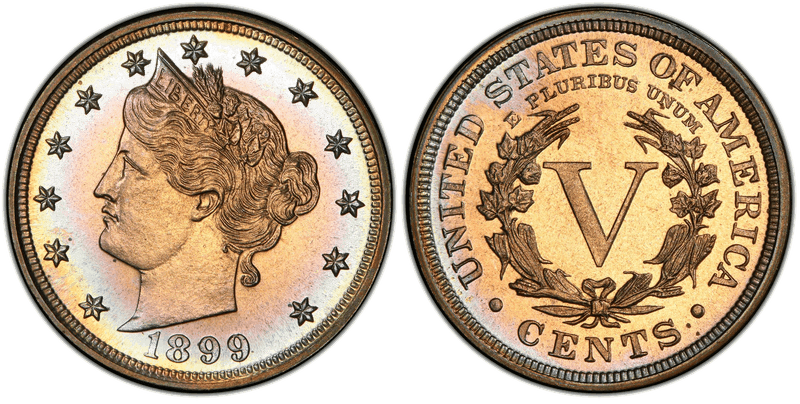


Chief Engraver Charles E. Barber designed the Liberty Head nickel to replace James B. Longacre's Shield nickel, which had been struck since 1866. Barber's coin was meant as one member of a matching family of minor coins, with the cent, three-cent piece and five-cent piece sharing one portrait and marked I, III and V. Only the five-cent piece was adopted. NGC dates the first strikes to January 30, 1883, with release two days later; CoinWeek gives February 1 for the start of production.
The first design left out the word CENTS. Mint and Treasury officials had approved it that way, reasoning that the big V, the coin's size and its plain rim made the value clear. Within days, newspapers carried stories of swindlers gold-plating the new nickels and passing them as five-dollar gold pieces, which were about the same size. NGC thinks the scale of the fraud was overstated, and CoinWeek suggests the Secret Service's objections did more to force a change. The Treasury Secretary ordered a revision: CENTS went across the bottom of the reverse, and E PLURIBUS UNUM was shrunk and moved above the wreath. The public, expecting the CENTS-less coins to be recalled, hoarded them, which is why the No CENTS nickel is now the easiest Liberty nickel to find in Mint State.
The design then ran with only small changes until 1912. Demand for nickels fell in the mid-1880s: coinage stopped early in 1885, after fewer than 1.5 million had been struck, and did not restart until late in 1886. A 1906 law allowed the Denver and San Francisco Mints to strike minor coins, and in 1912 both made nickels for the first time. San Francisco struck all of its 238,000 in four days at the end of December.
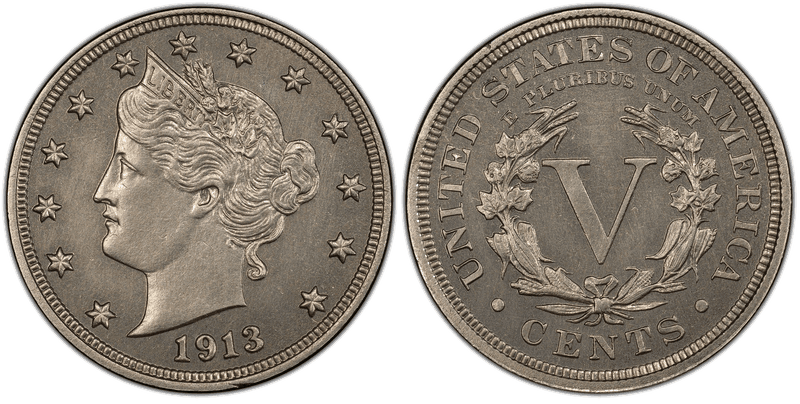
The Buffalo nickel replaced the design in 1913. On December 13, 1912, the Mint Director told Philadelphia to strike no 1913 nickels until the new design was approved. Even so, five 1913-dated Liberty Head proofs exist, struck from genuine dies without authorization. They came to light in 1920 through Samuel W. Brown, who had worked at the Mint; NGC says an advertisement offering to buy such coins had been placed the year before as a cover story. All five later belonged to the collector Edward H. R. Green before being sold off individually.