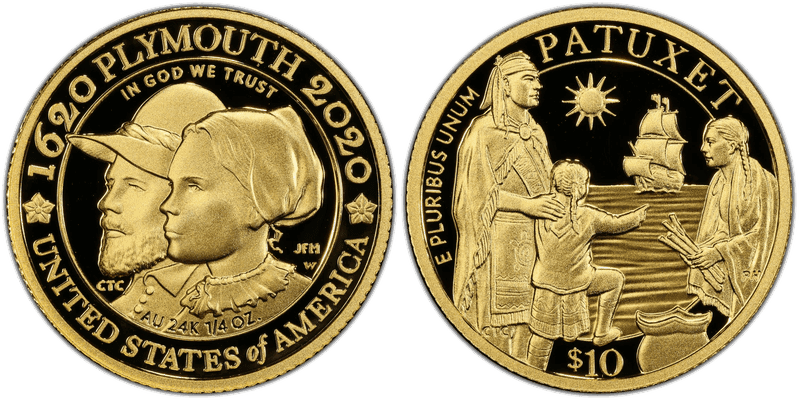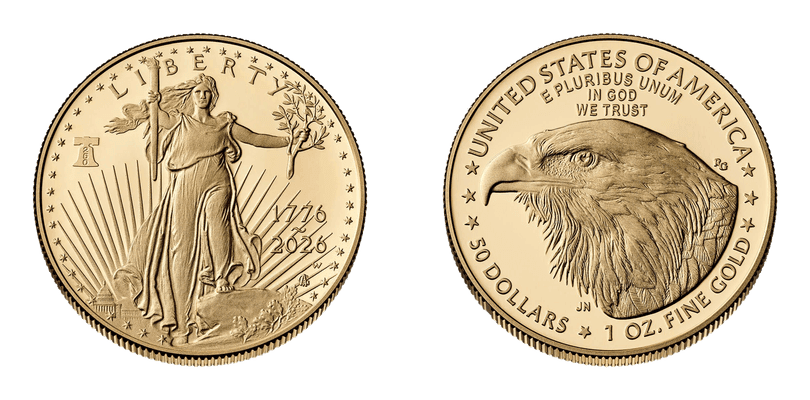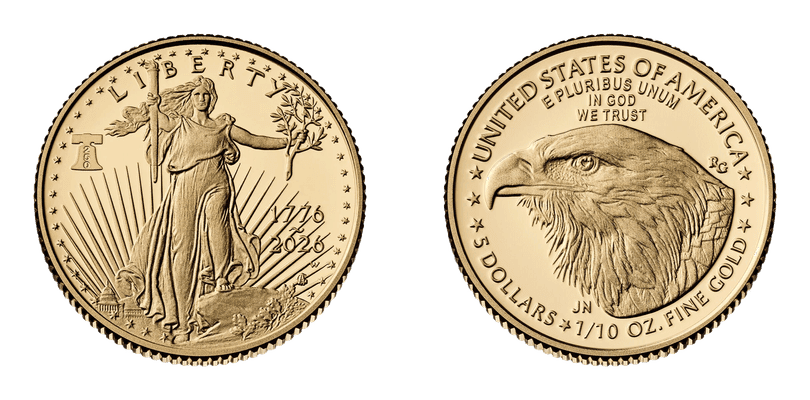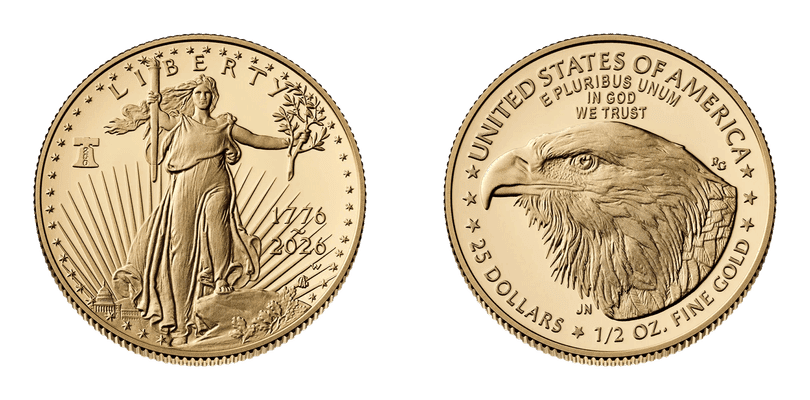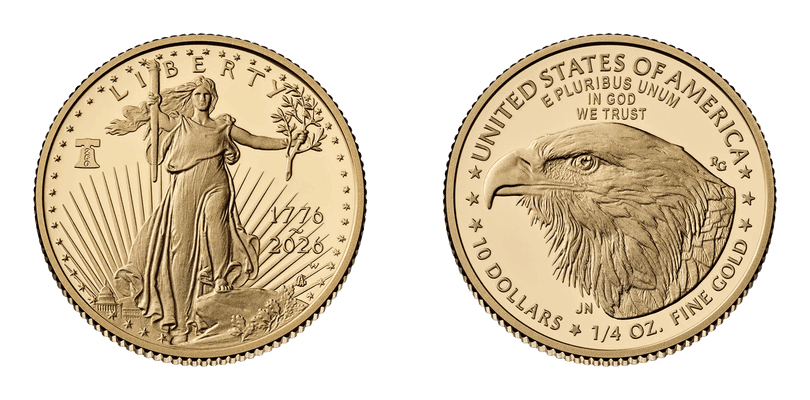
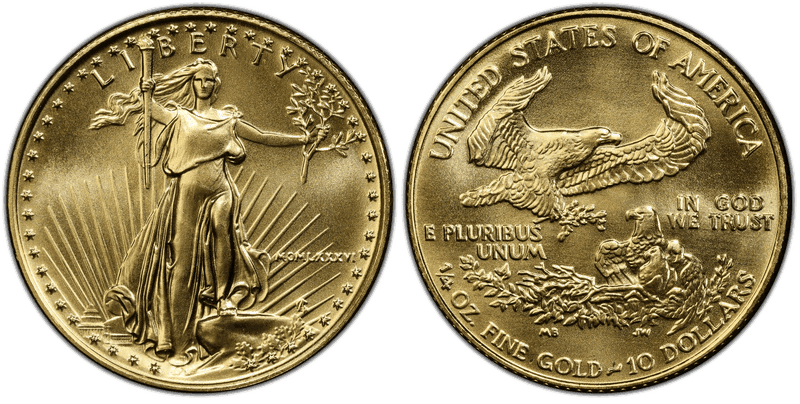
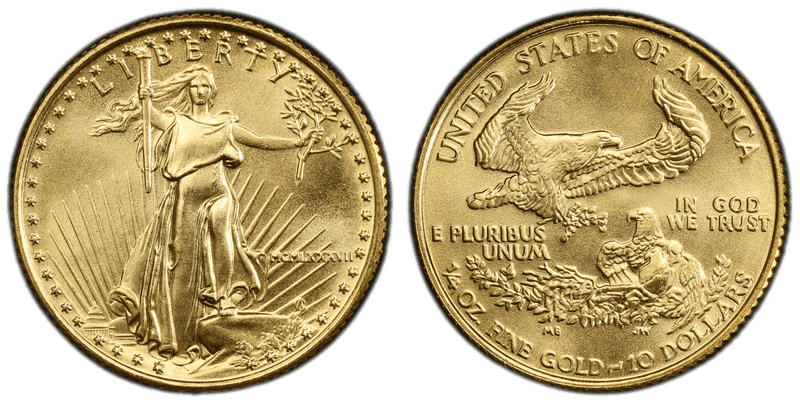
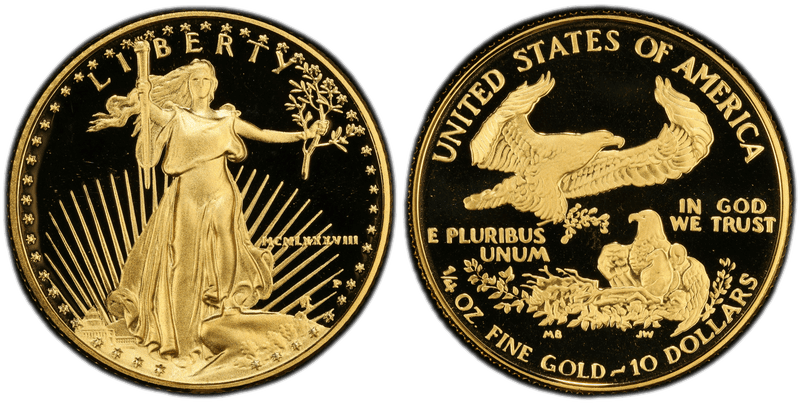
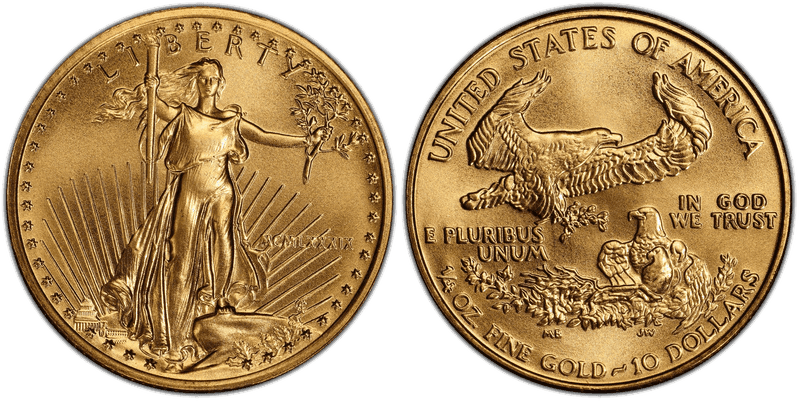
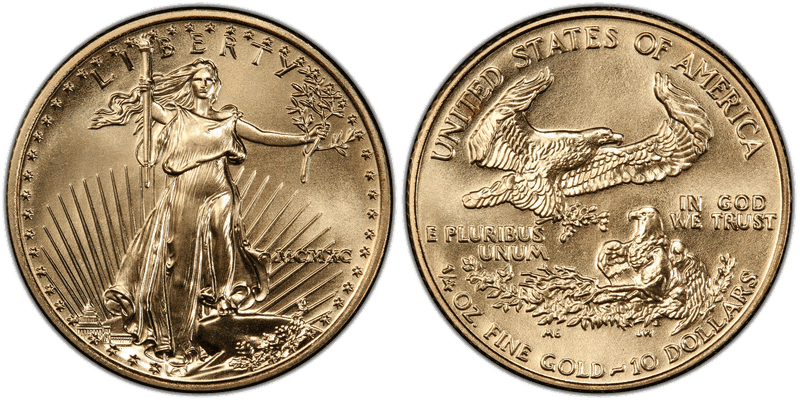
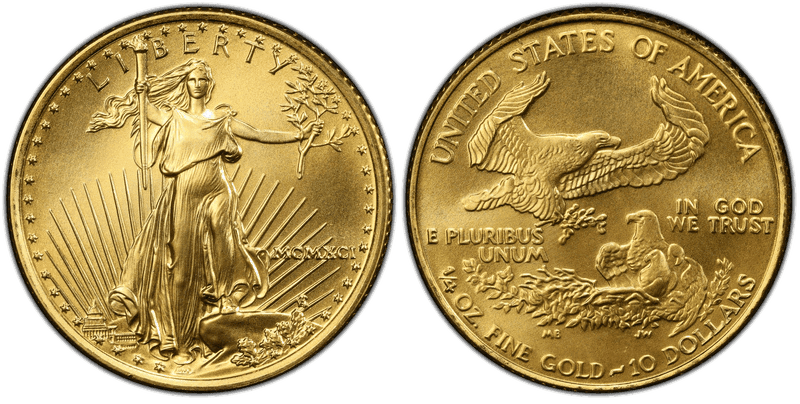
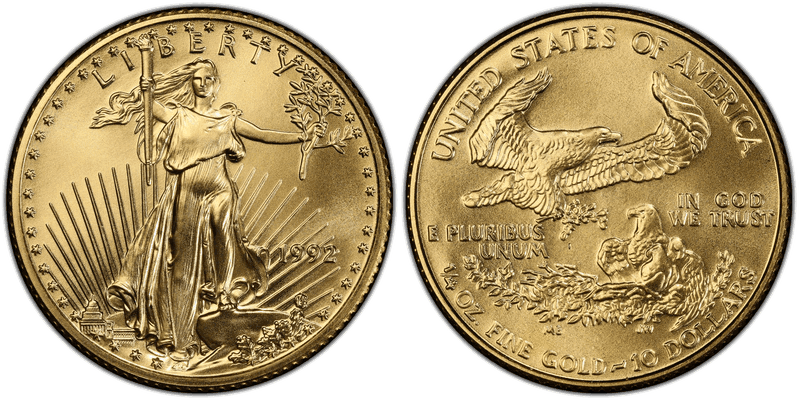
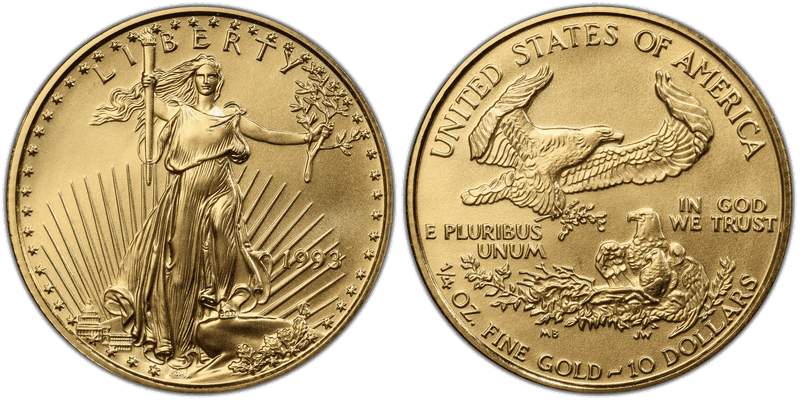
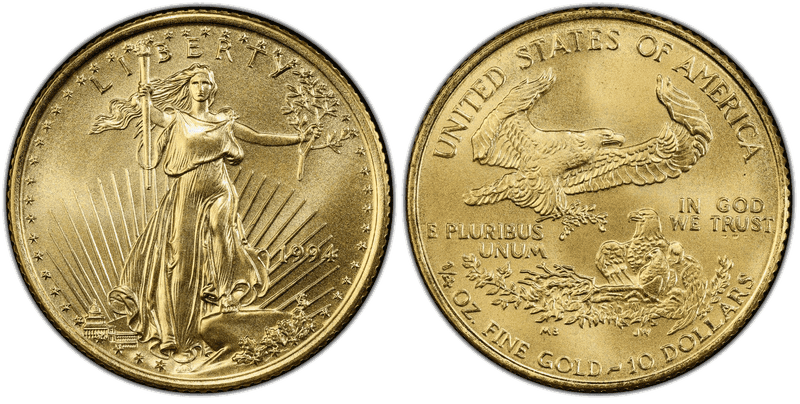
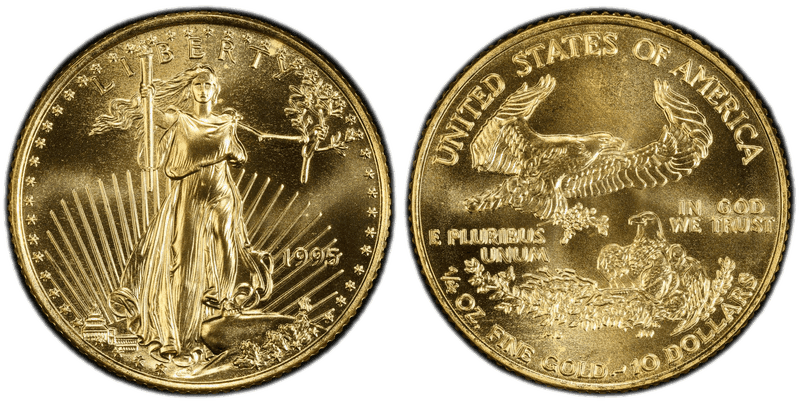
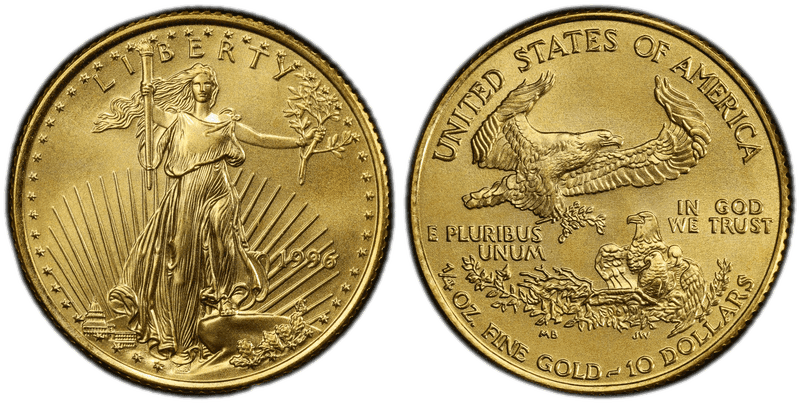
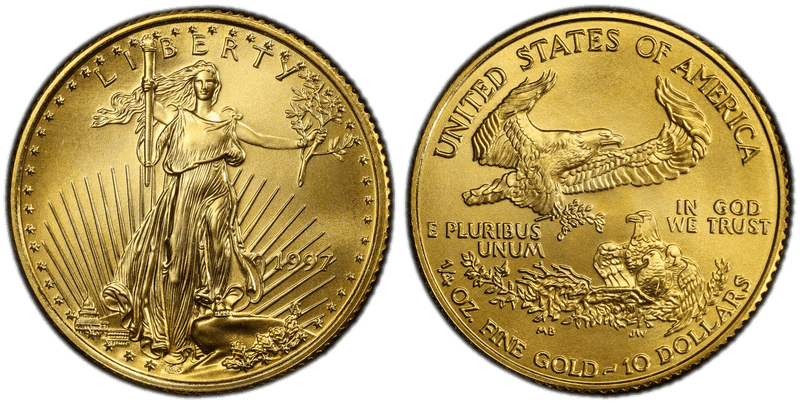
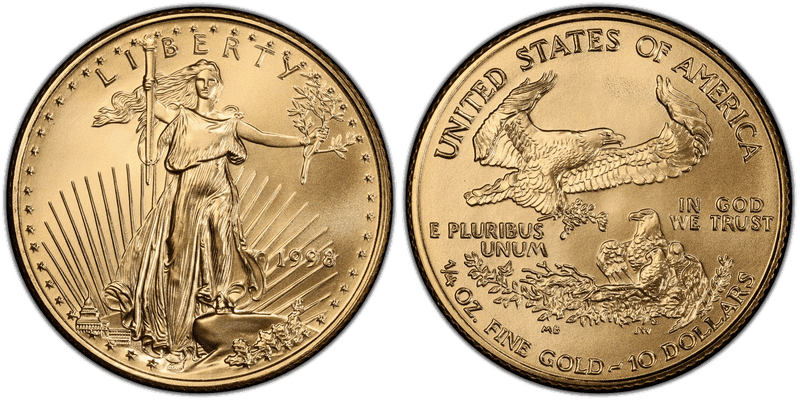
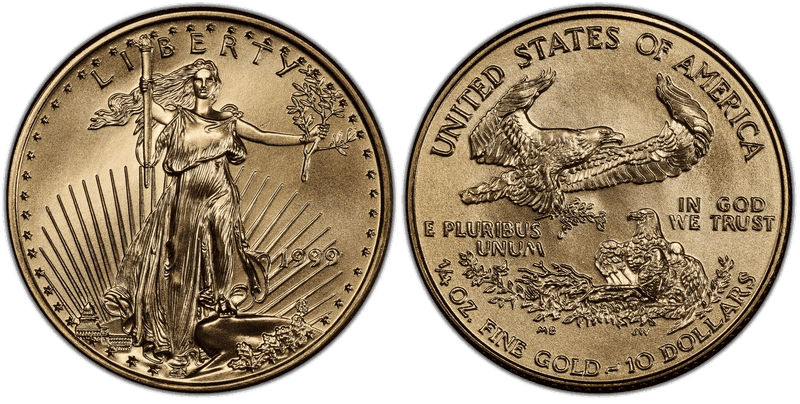
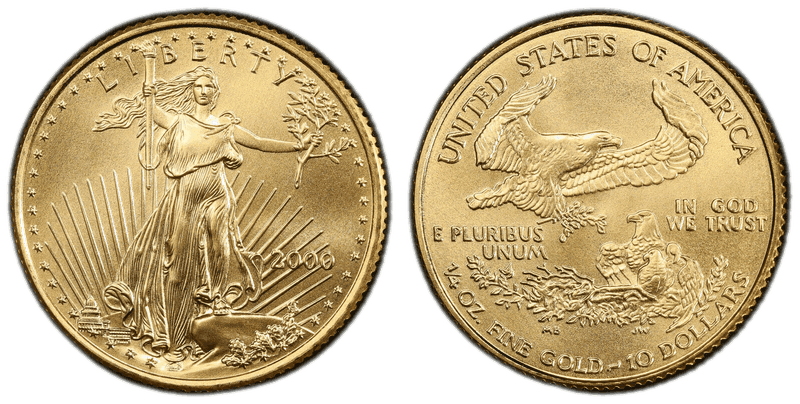
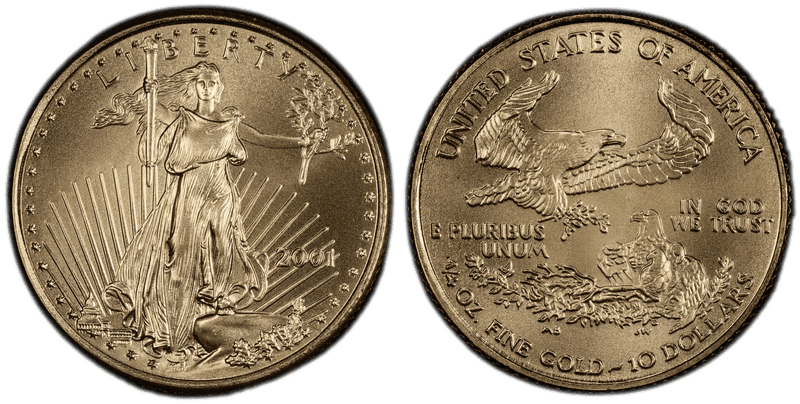
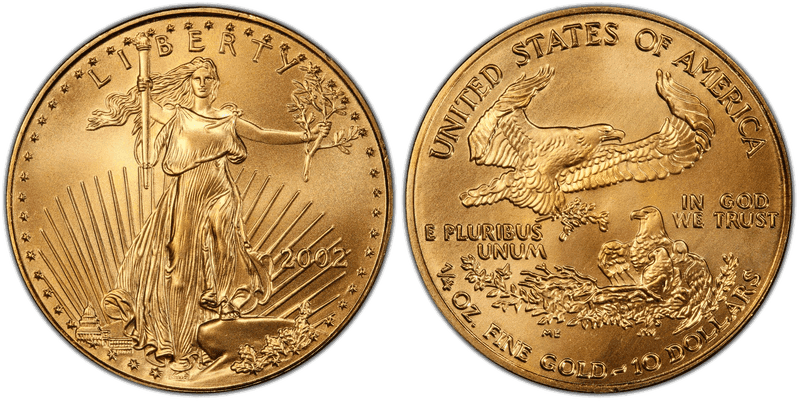
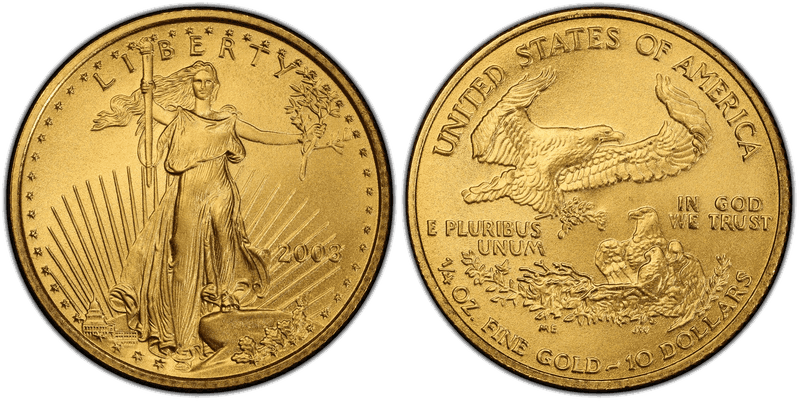
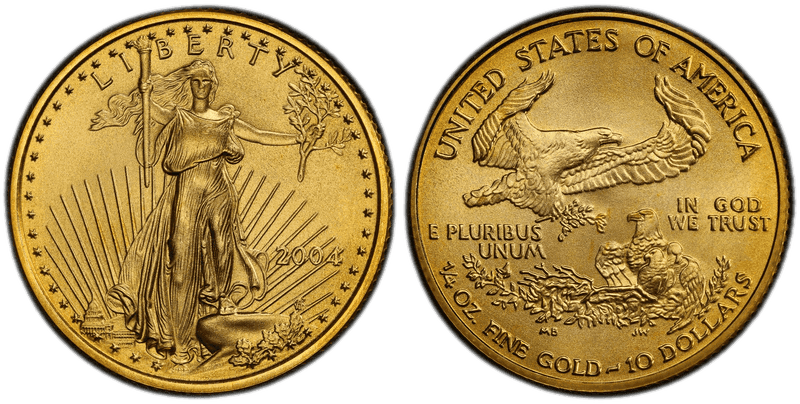
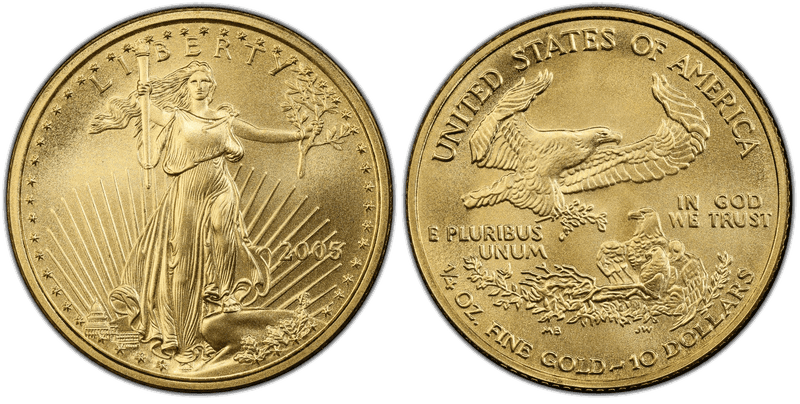
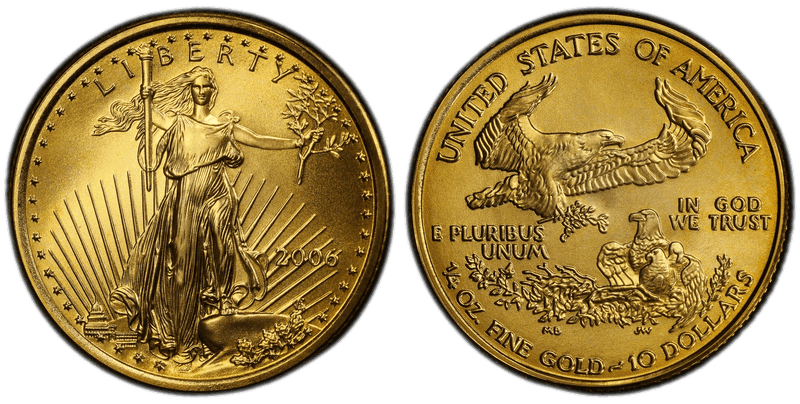
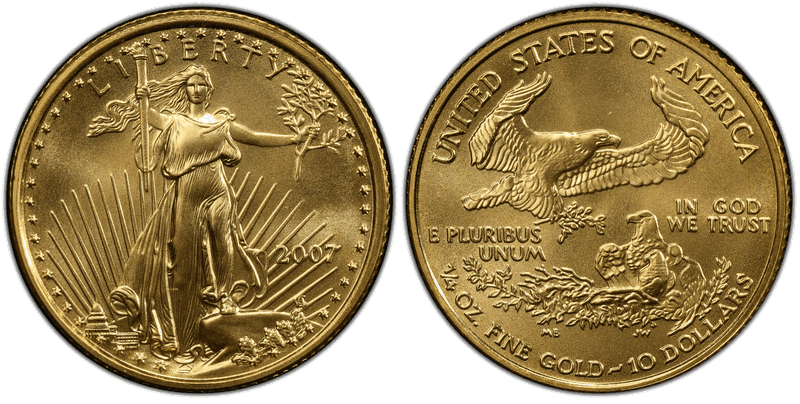
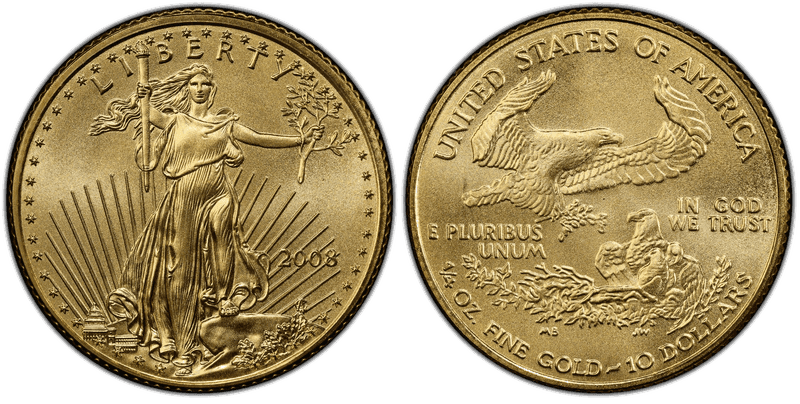
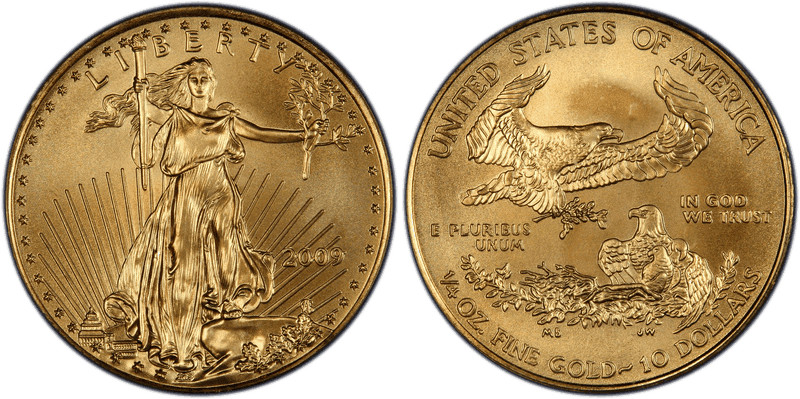
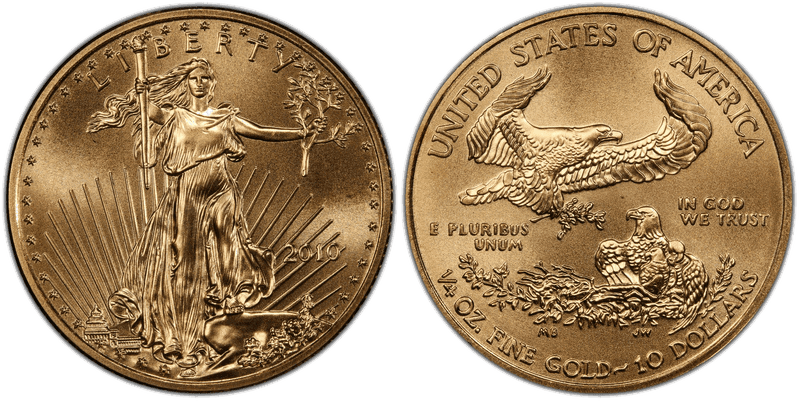
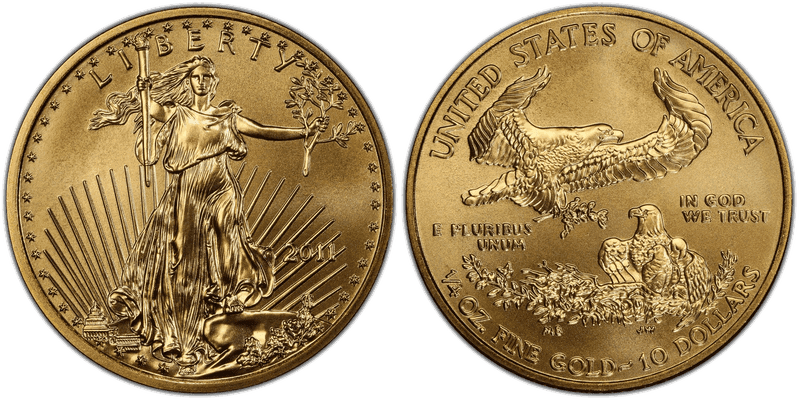
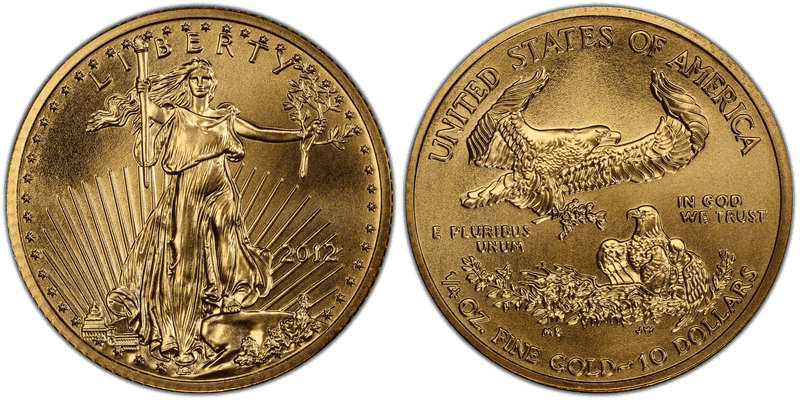
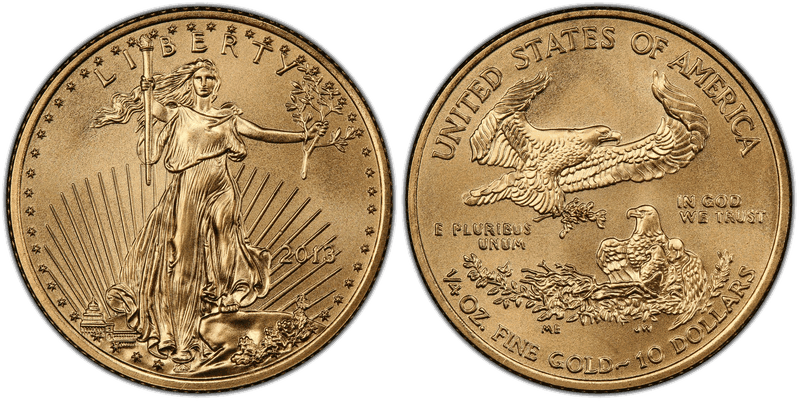
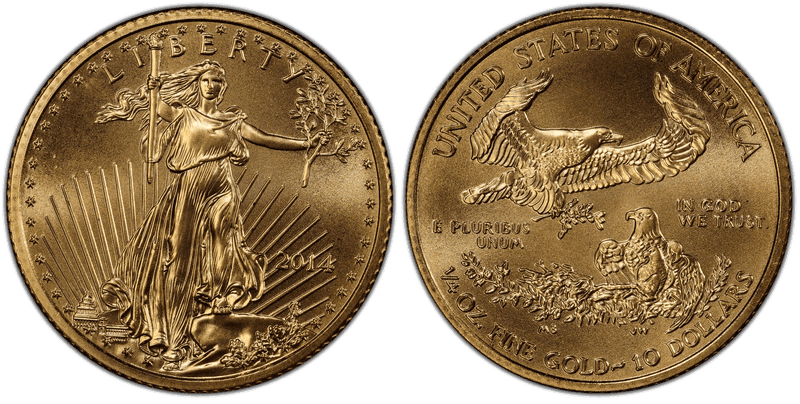
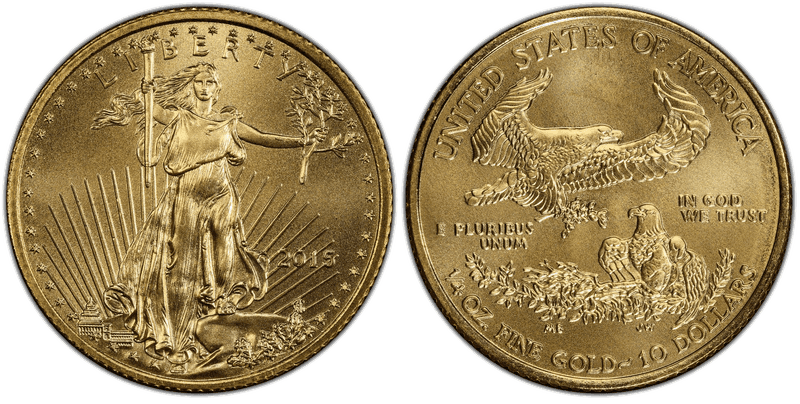
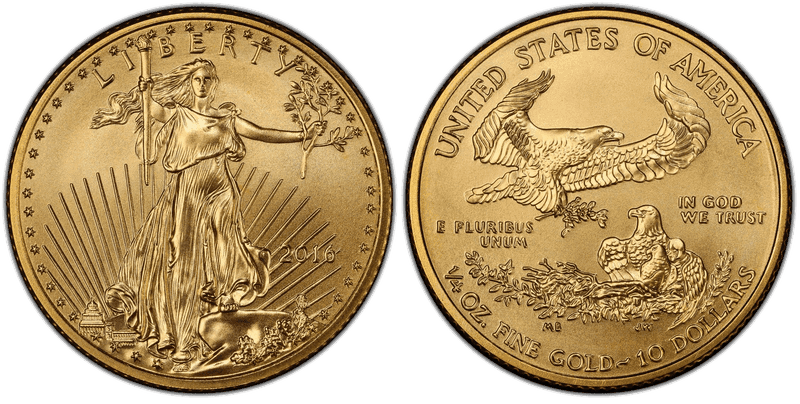
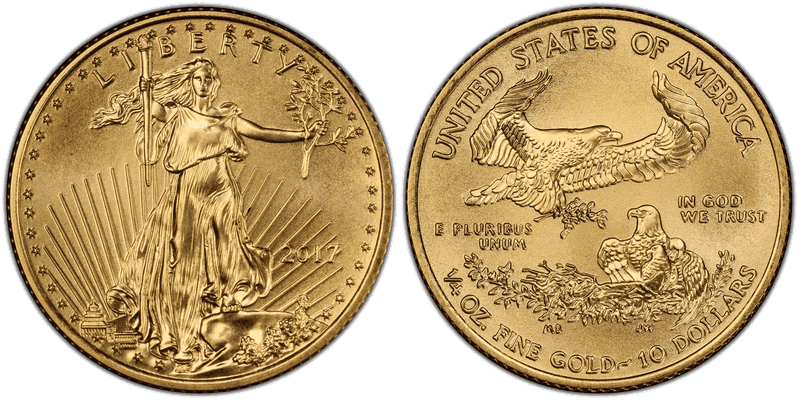
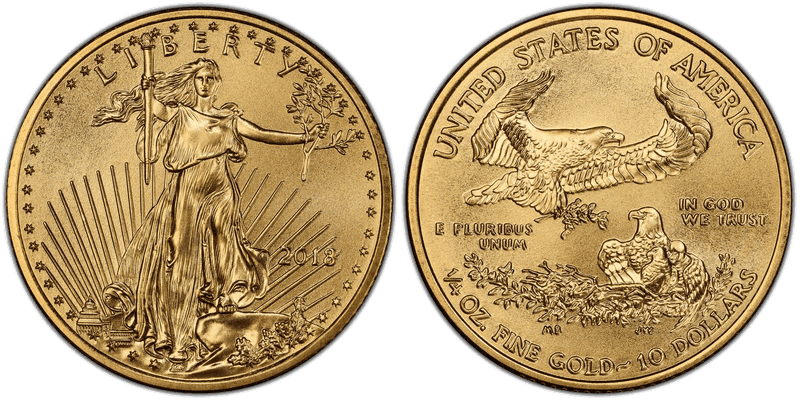
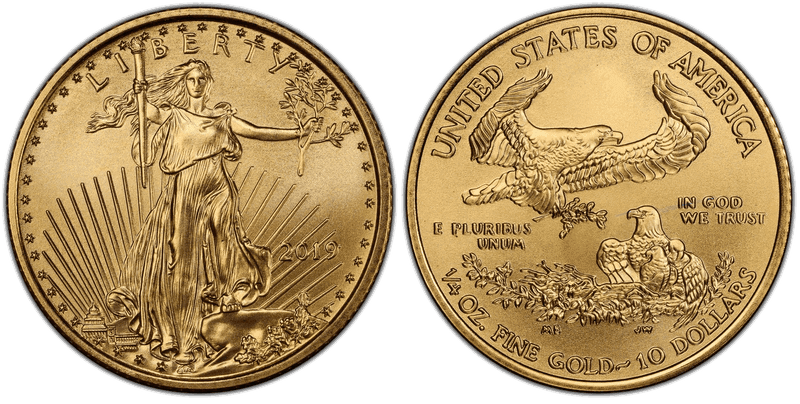
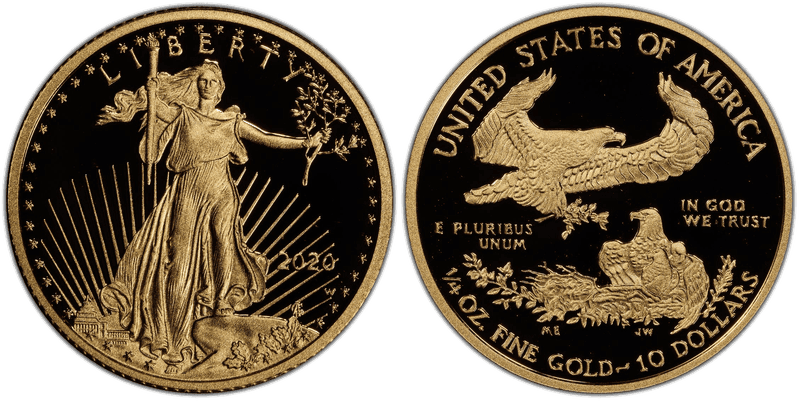
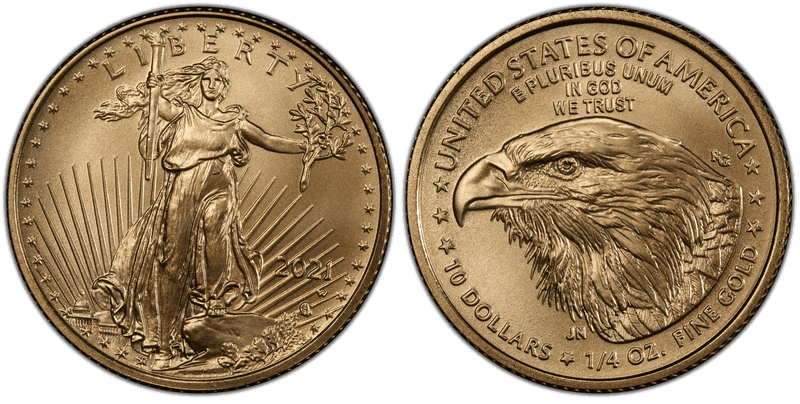
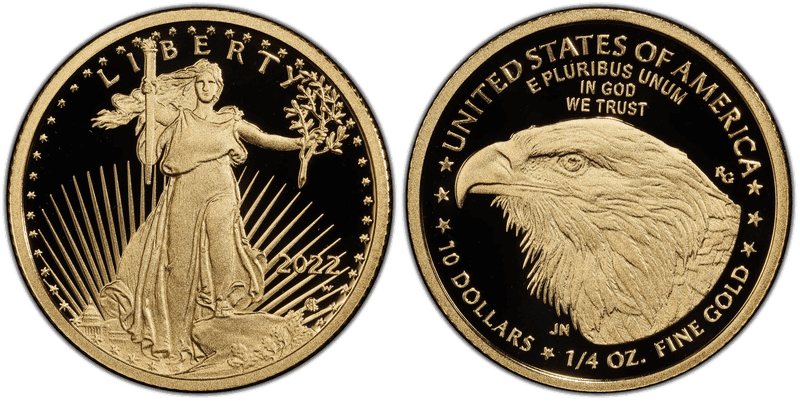
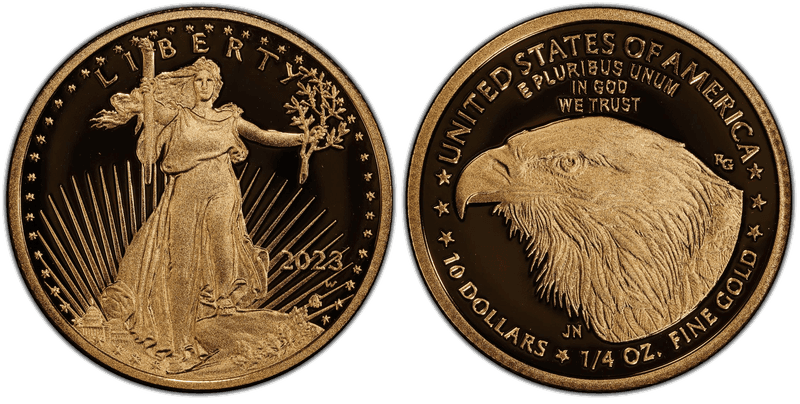
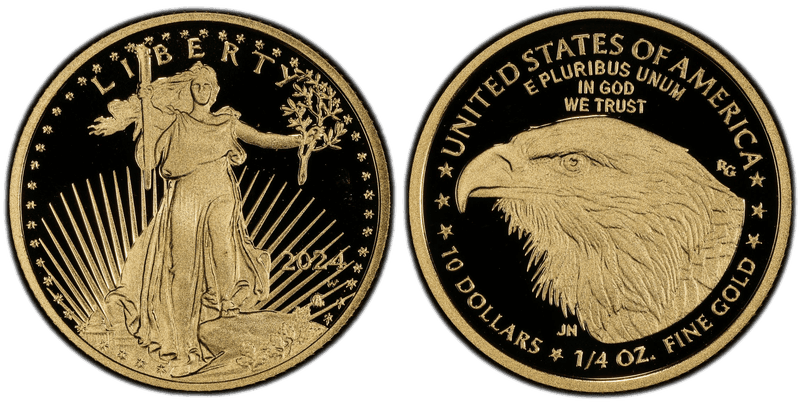
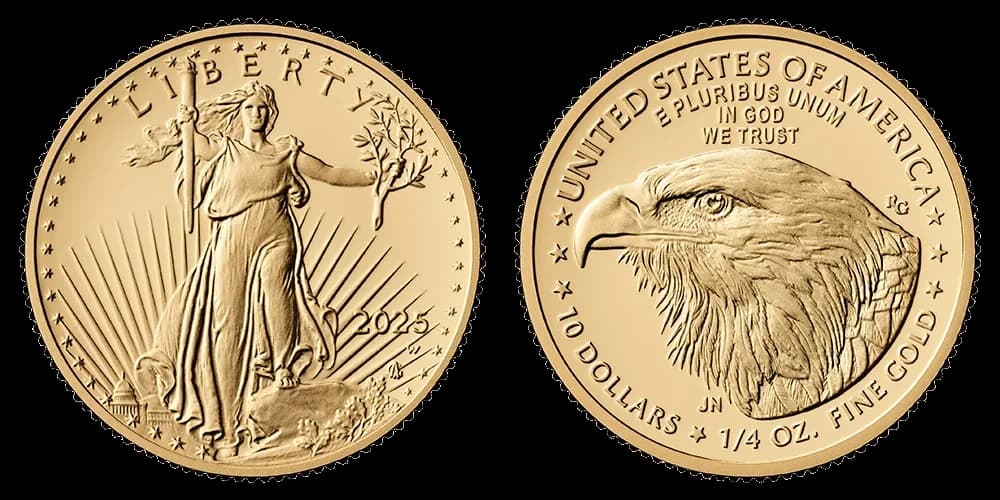
The $10 American Gold Eagle holds a quarter-ounce of gold and is one of the four sizes created by the Gold Bullion Coin Act of 1985. Senator J. James Exon's bill passed both houses by voice vote and became Public Law 99-185 on December 17, 1985. It wrote the coin's size into the coinage law, 22.0 mm and 8.483 grams with one-fourth troy ounce of fine gold, and asked for reeded edges, a set of inscriptions, and gold newly mined in the United States. The Treasury could not sell any of the new coins before October 1, 1986.
Because the pre-1933 ten-dollar gold coin was also called an eagle, collectors and dealers usually name this one by its weight, the quarter-ounce Gold Eagle. Its ten-dollar denomination is out of step with the other three sizes, whose face values follow their gold content. The law priced the coins by their gold plus the Mint's costs, not by face value, and bullion coins reach the public only through the Mint's authorized purchasers, who buy them from the Mint in bulk and resell them. The collector coins, proofs and the burnished coins of 2006-2008, are sold by the Mint itself.