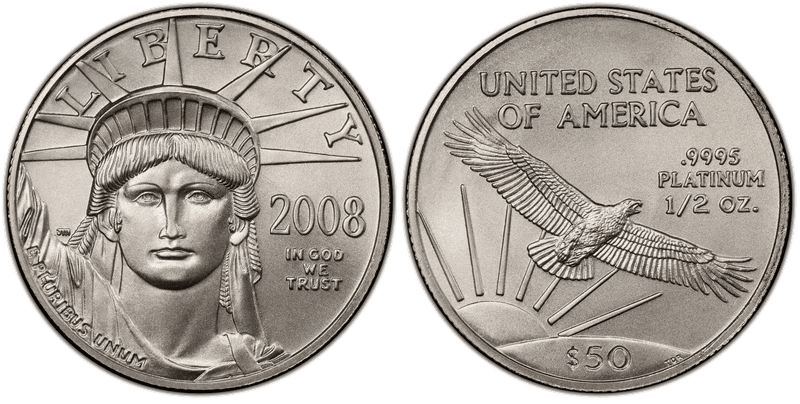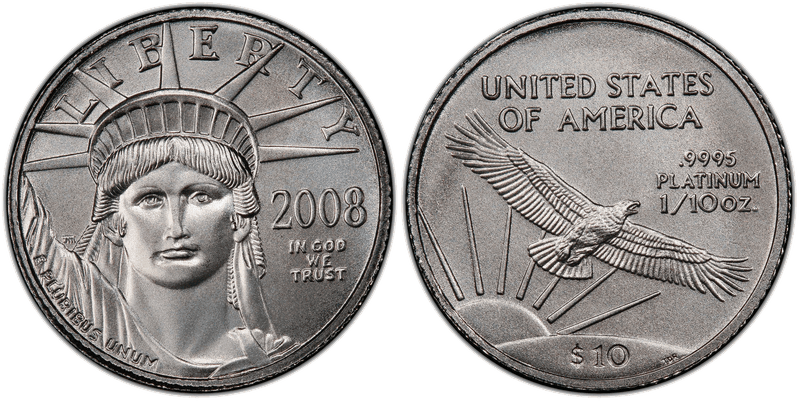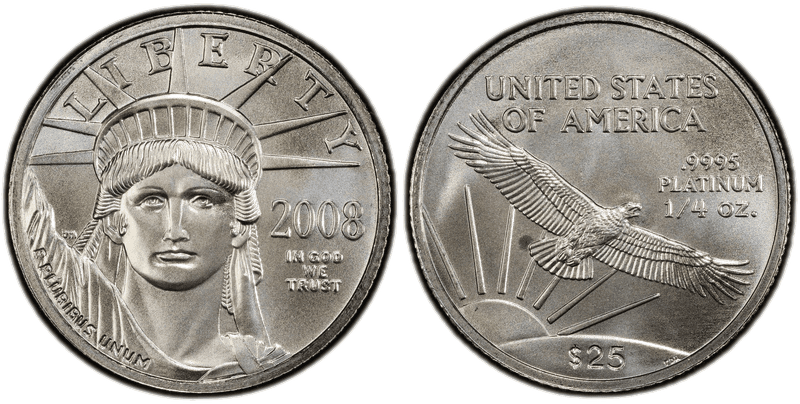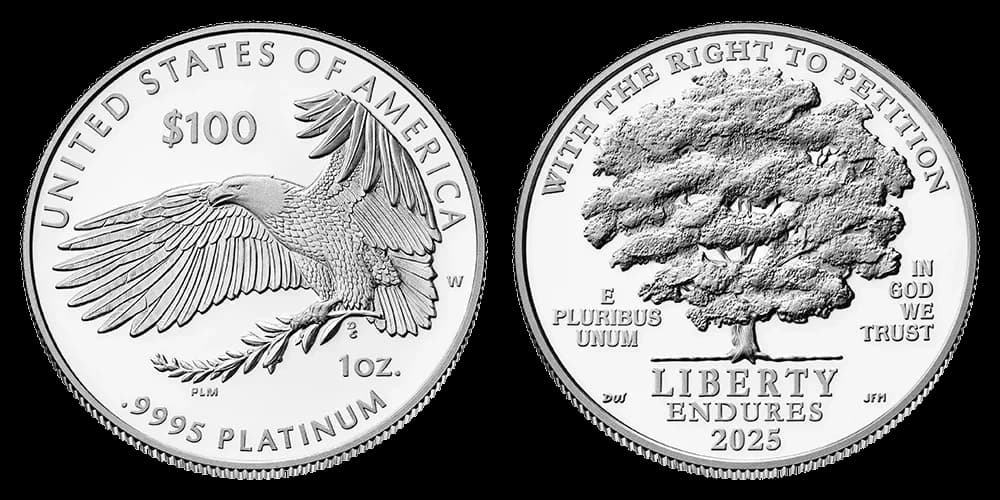
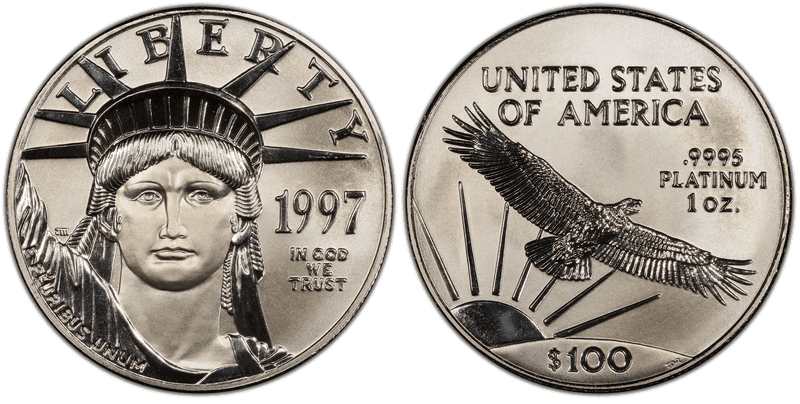
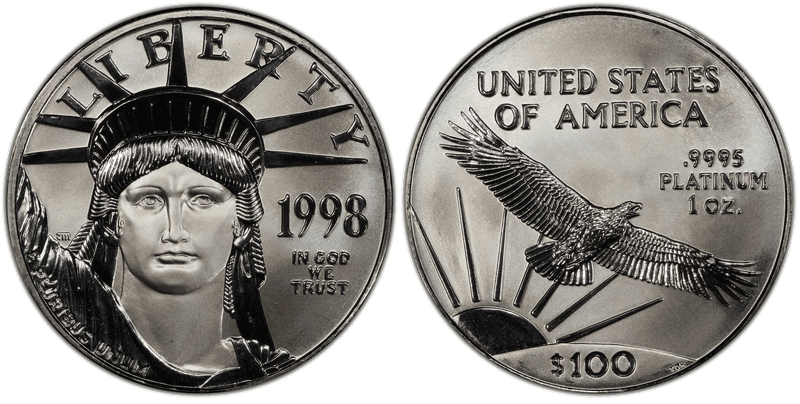
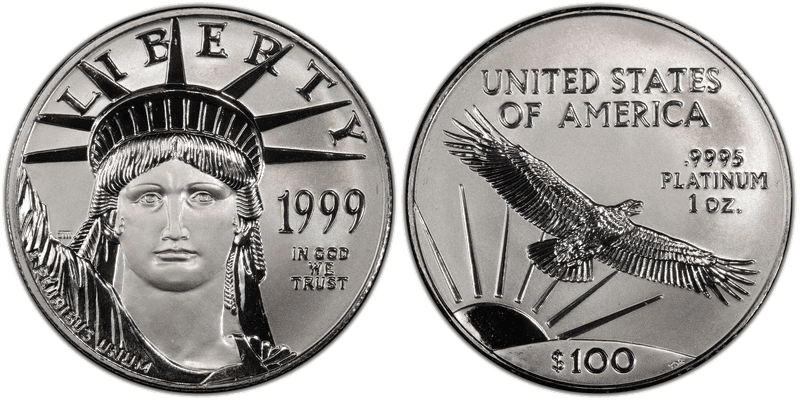
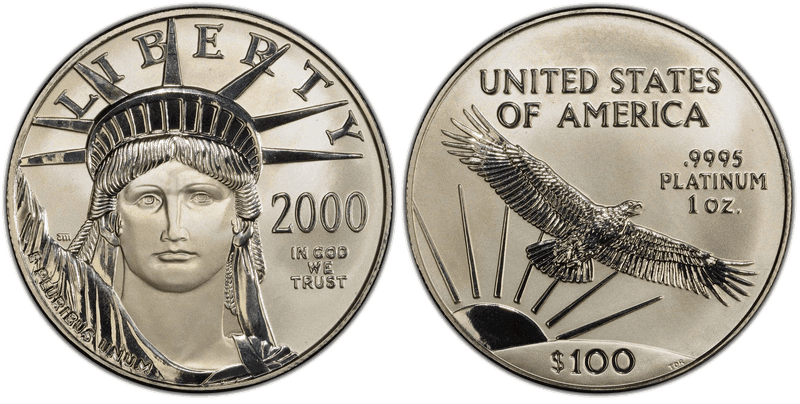
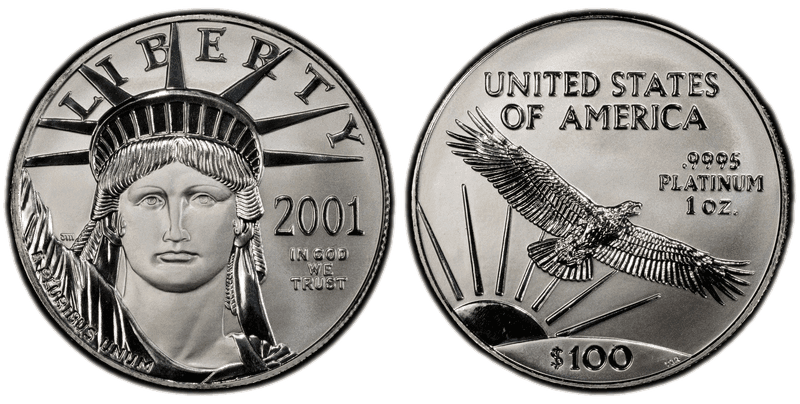
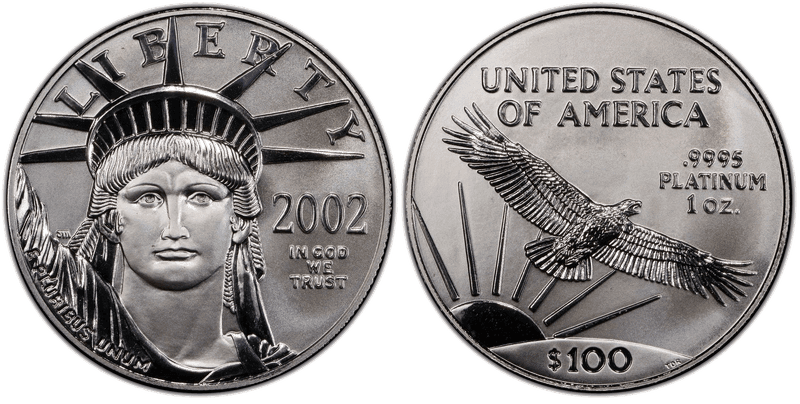
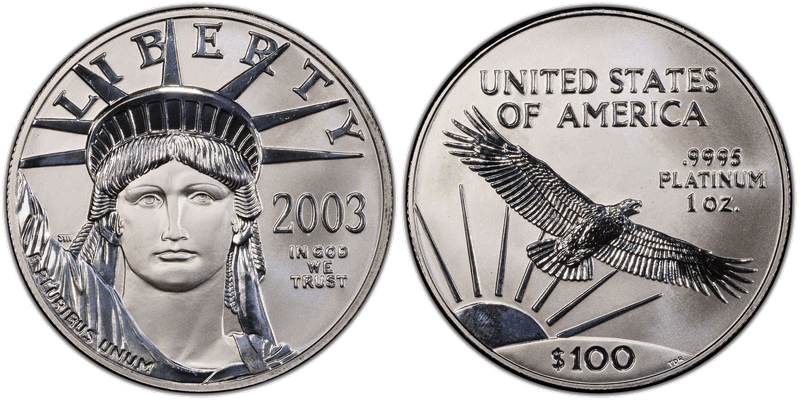
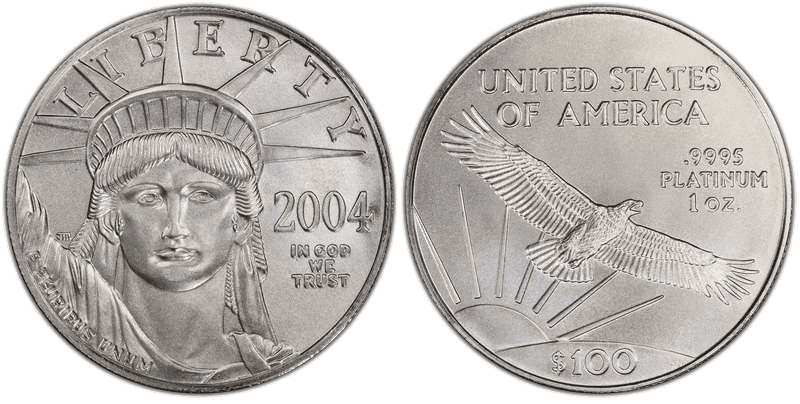
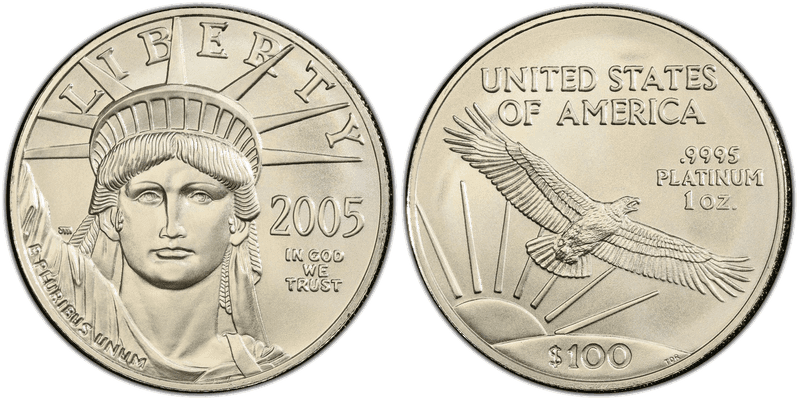
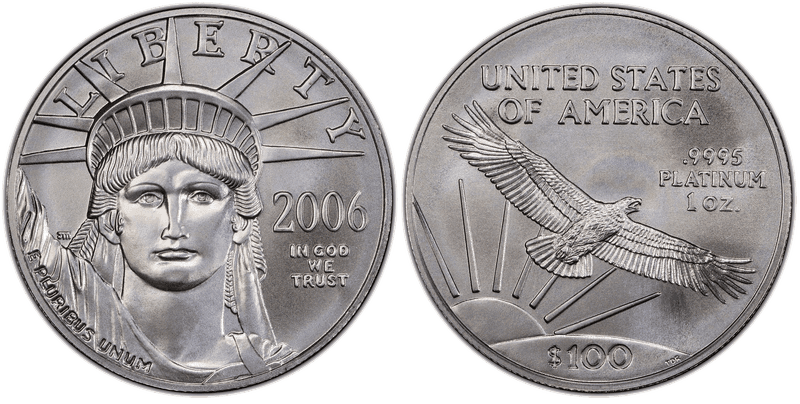
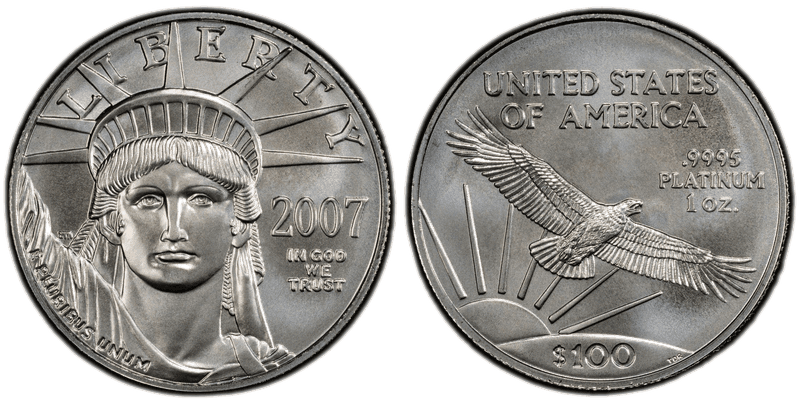
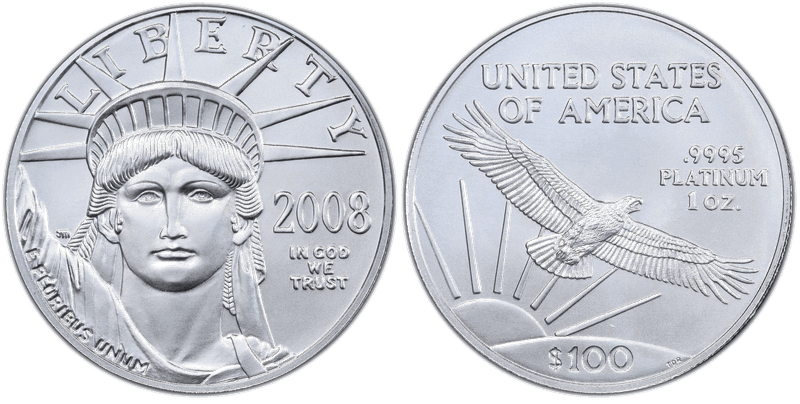
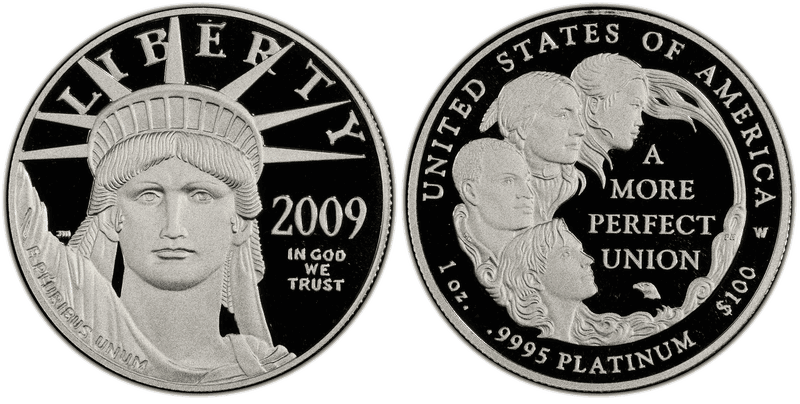
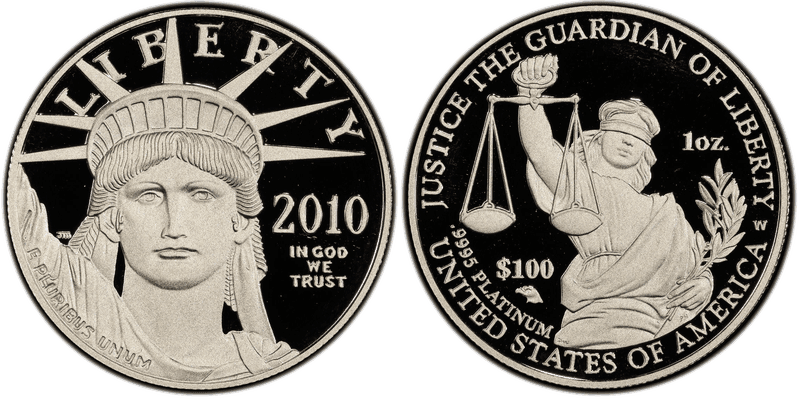
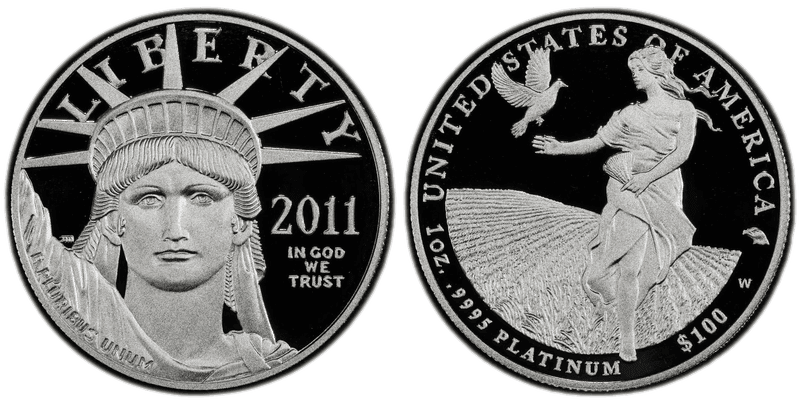
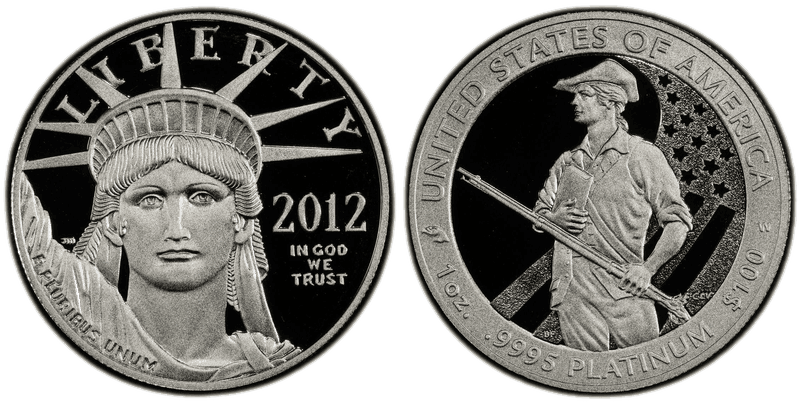
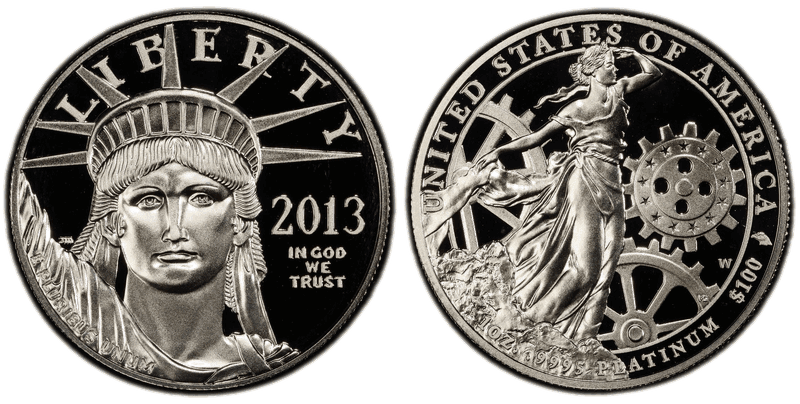
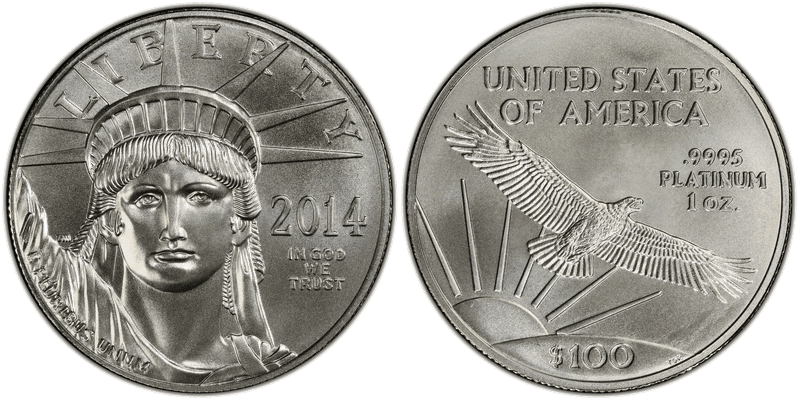
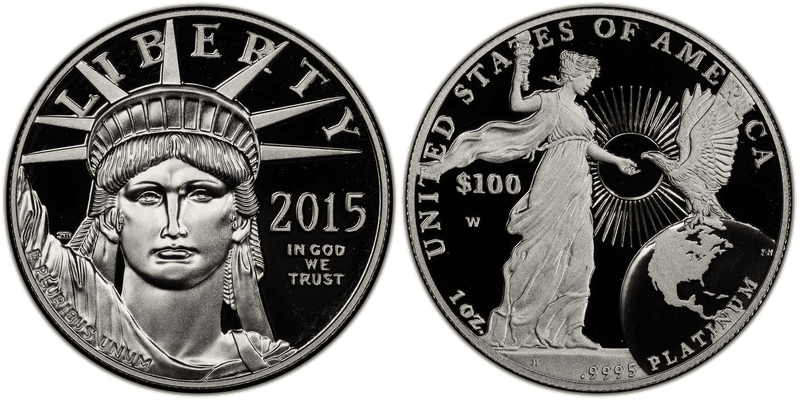
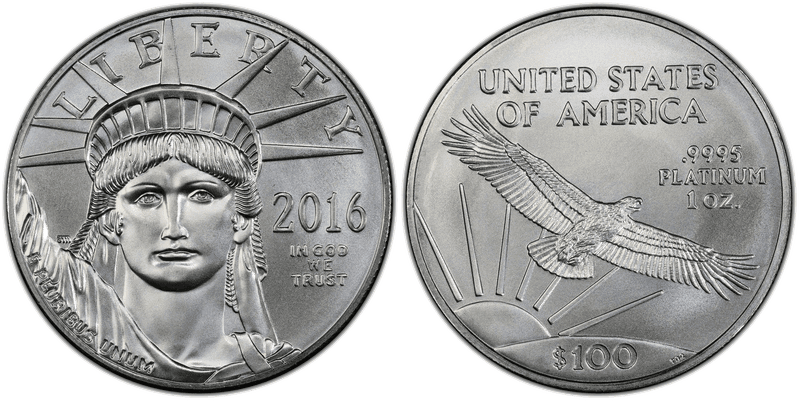
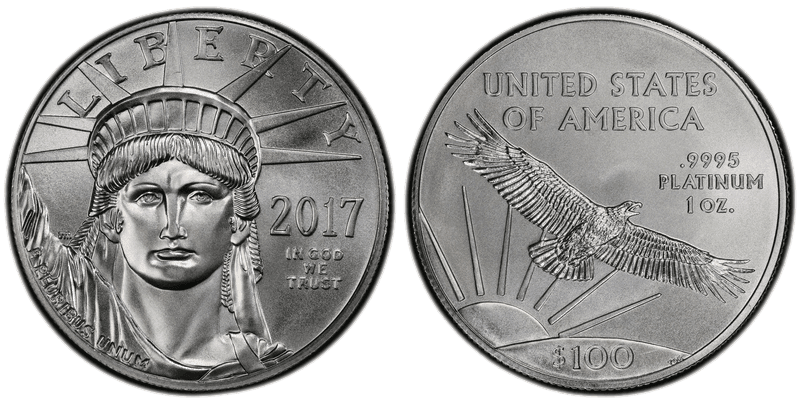
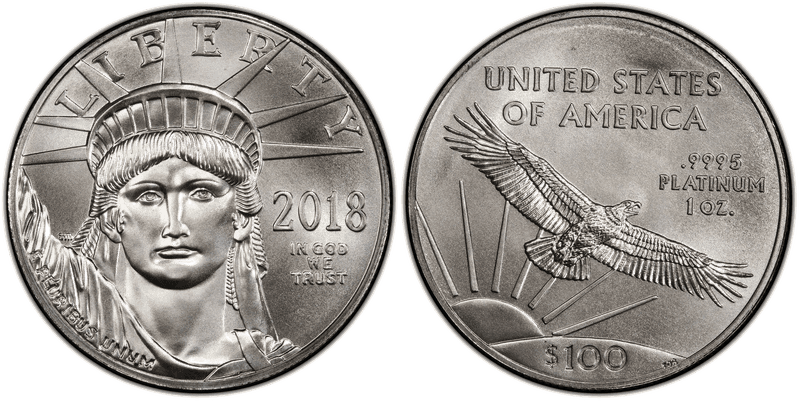
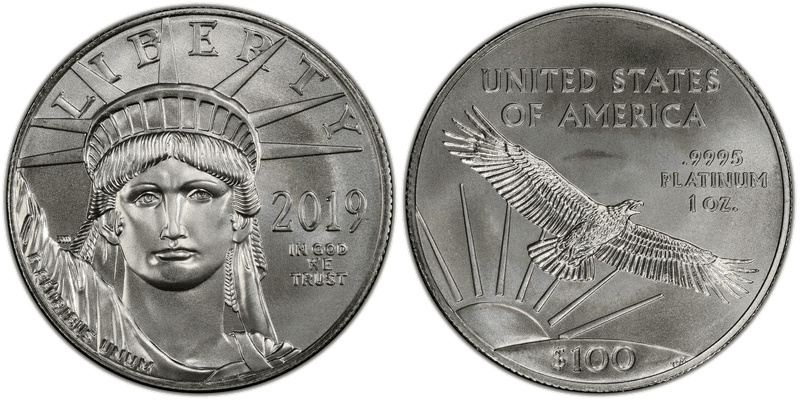
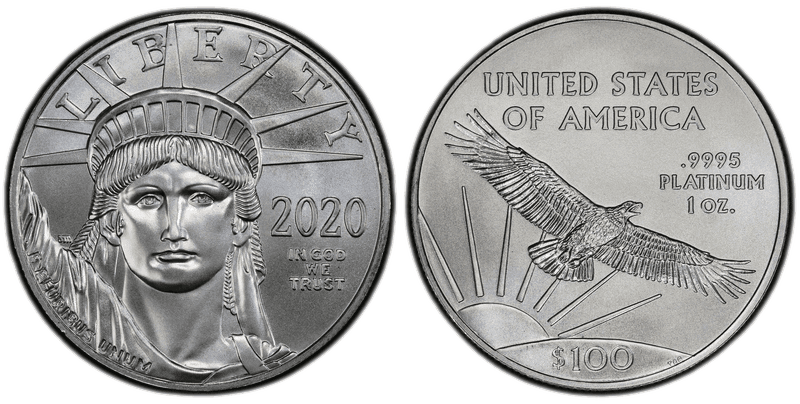
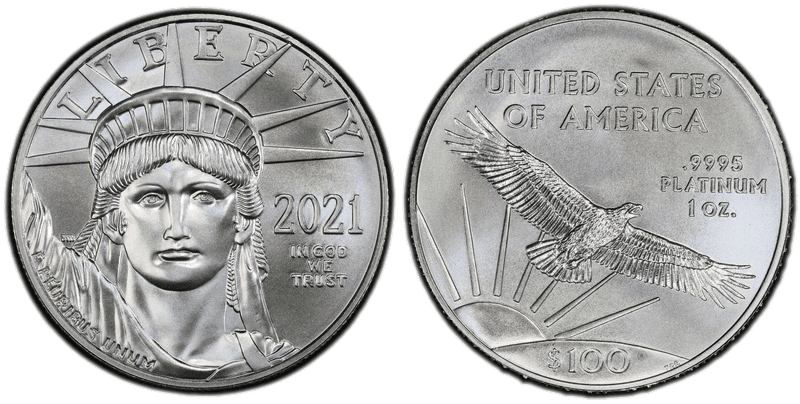
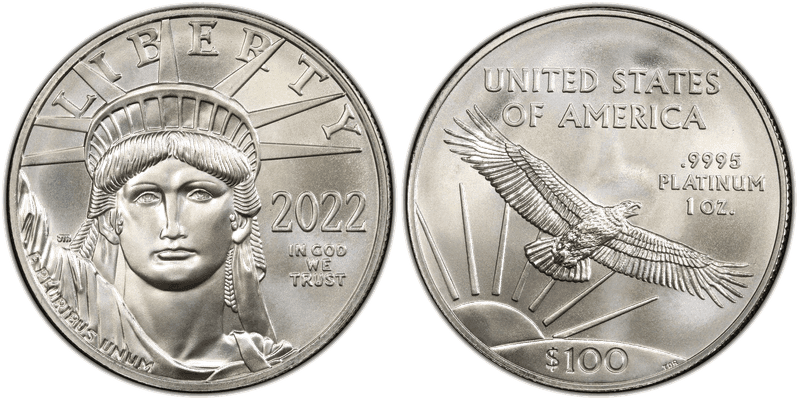
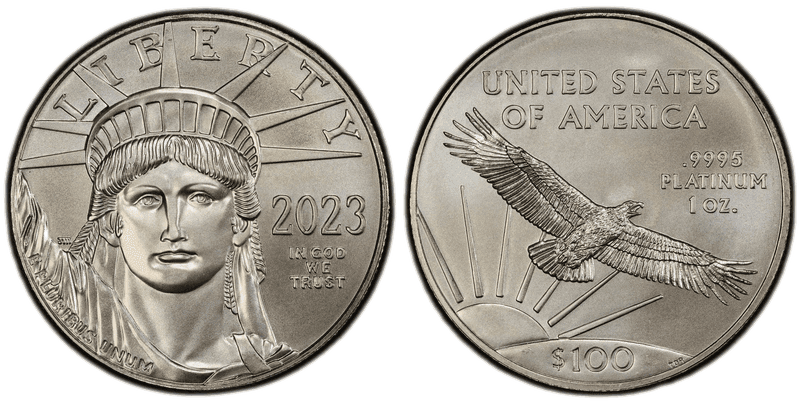
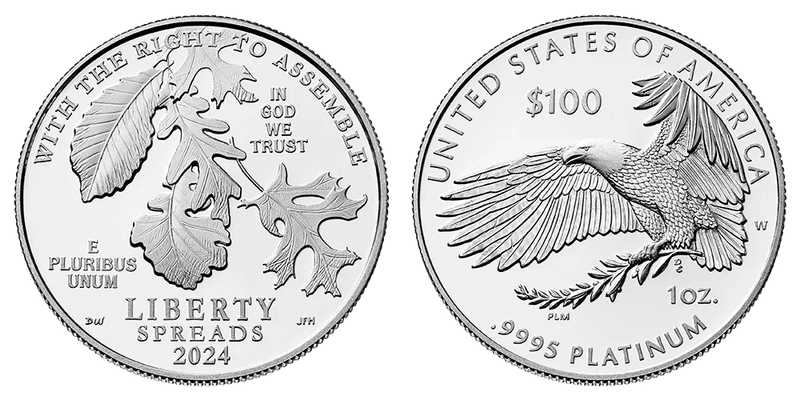
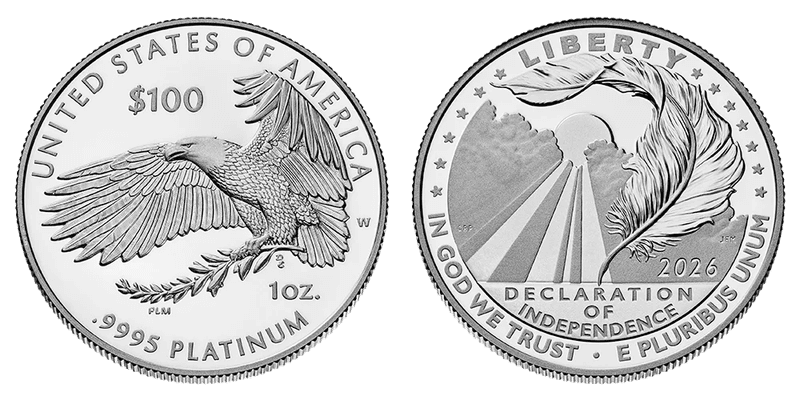
The American Platinum Eagle began in 1995, when Mint Director Philip N. Diehl, the American Numismatic Association's president David L. Ganz and Jacques Luben of Platinum Guild International set out to get a platinum coin authorized, according to Wikipedia. Congress gave the authority in Public Law 104-208, signed September 30, 1996, which added subsection (k) to 31 U.S.C. 5112. Unlike the gold and silver eagle laws, it fixes no design or size. The Secretary of the Treasury may strike platinum bullion and proof coins in whatever specifications, designs, varieties and denominations the Secretary prescribes.
The first proofs went on sale June 6, 1997, and bullion coins followed that September. Each year's one-ounce coin comes in two main versions. The bullion coin is sold in bulk to the Mint's authorized purchasers, who resell it to the public, so its annual figure is the Mint's sales to those dealers. The proof is sold by the Mint directly to collectors.
The one-ounce coin is the only size still made. Tenth-, quarter- and half-ounce coins were struck alongside it from 1997 through 2008 (see the tenth-ounce, quarter-ounce and half-ounce guides). The bullion coin has had gaps. The Mint sold none from 2009 through 2013, offered it again in 2014, and skipped 2015, when it put its limited supply of platinum blanks into the proof. Sales resumed in 2016.