
The Susan B. Anthony dollar failed partly because it looked like a quarter. The United States $1 Coin Act of 1997 tried to fix that: the next dollar had to be golden in color, with a distinctive edge and features that made it easy to tell by sight and touch. Treasury Secretary Robert Rubin set up an advisory committee, which in June 1998 recommended Sacagawea, the Lemhi Shoshone interpreter and guide of the Lewis and Clark expedition.
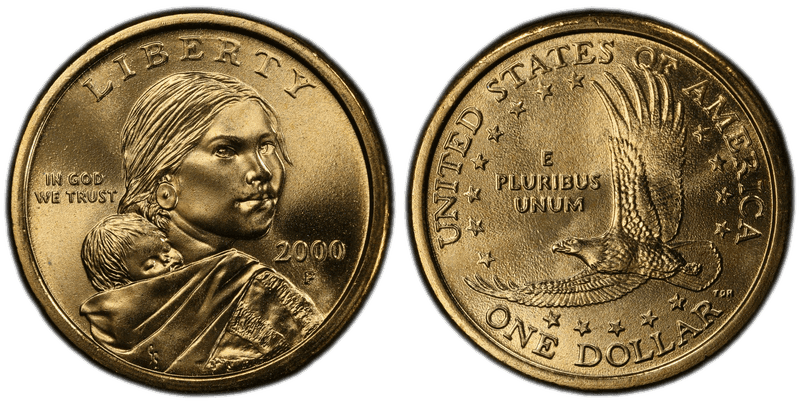
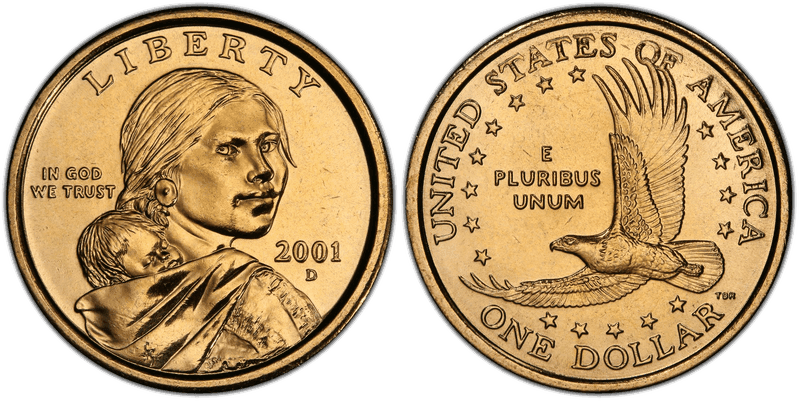
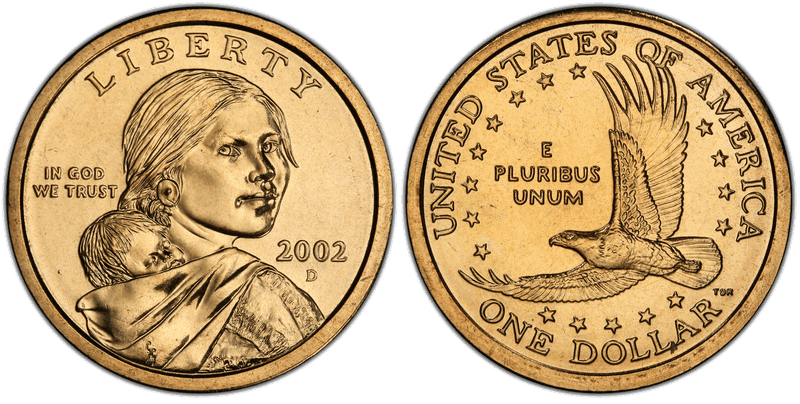
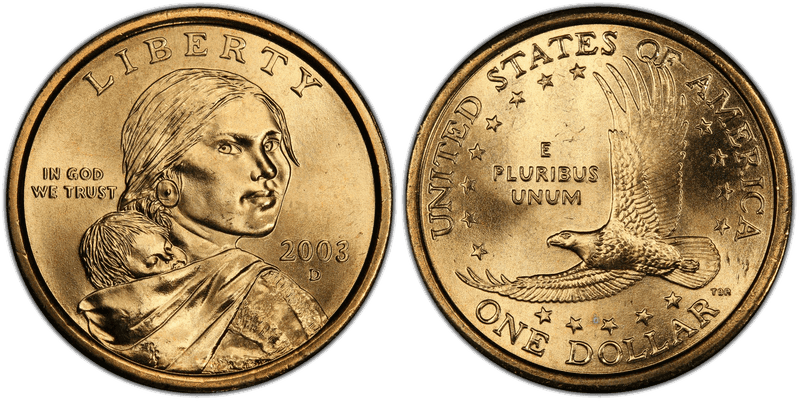
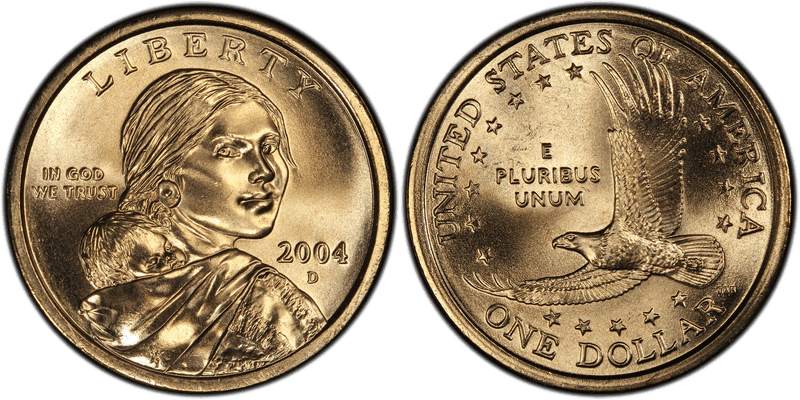
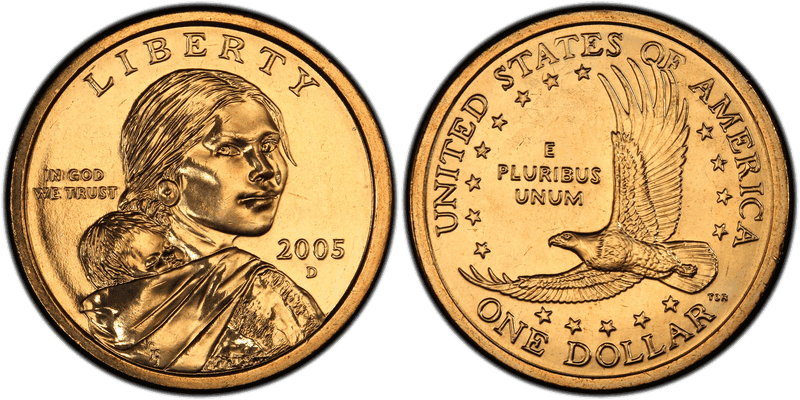
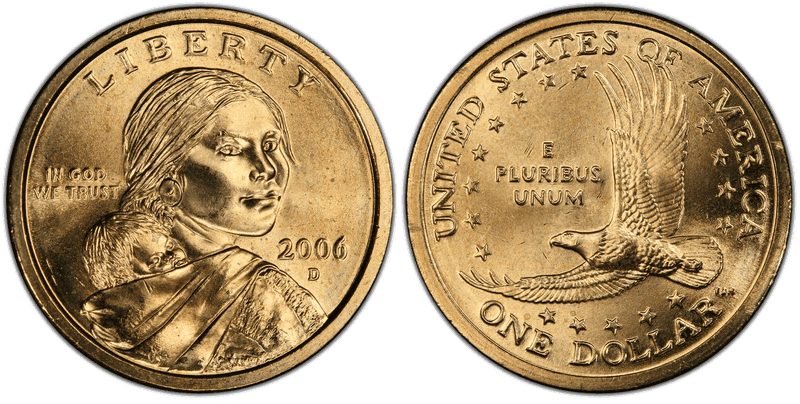
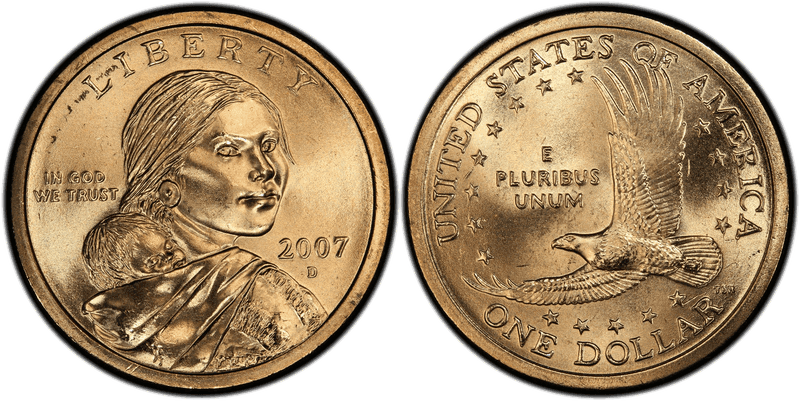
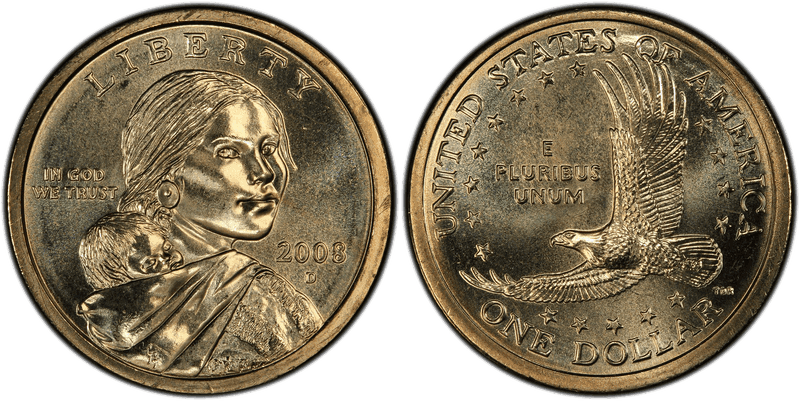
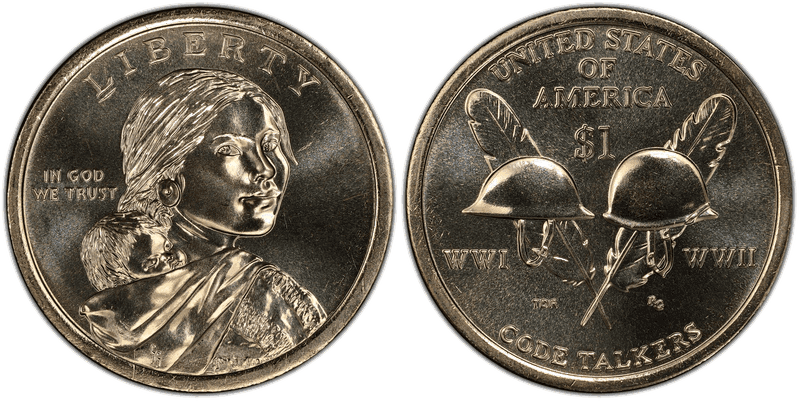
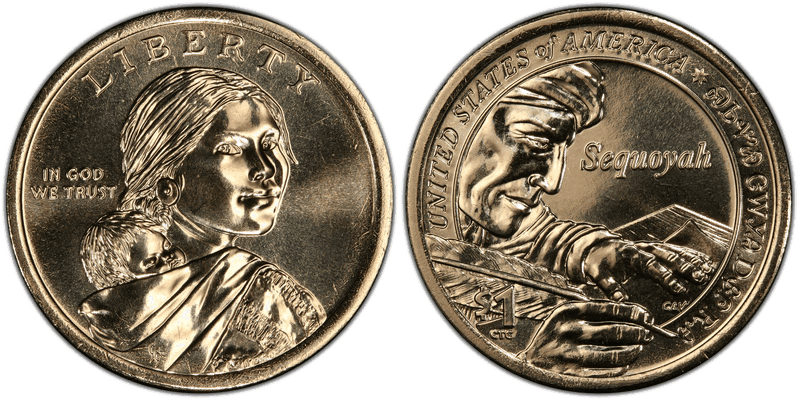
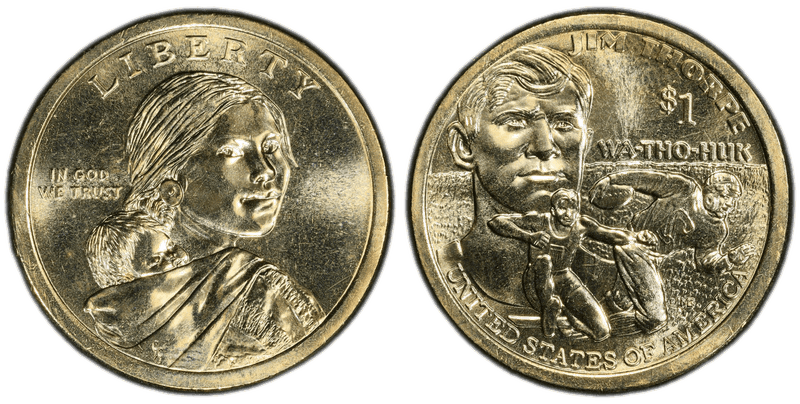
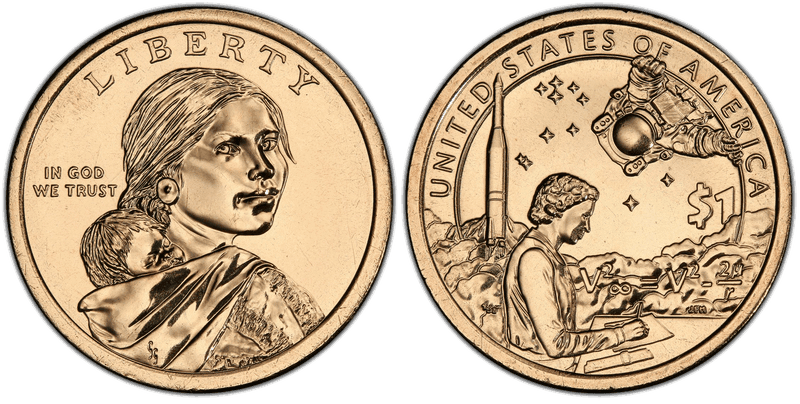
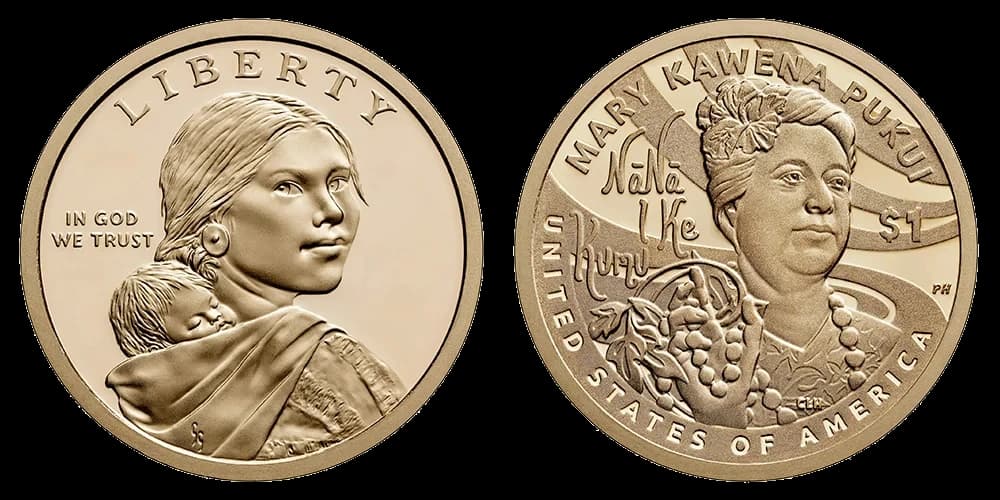
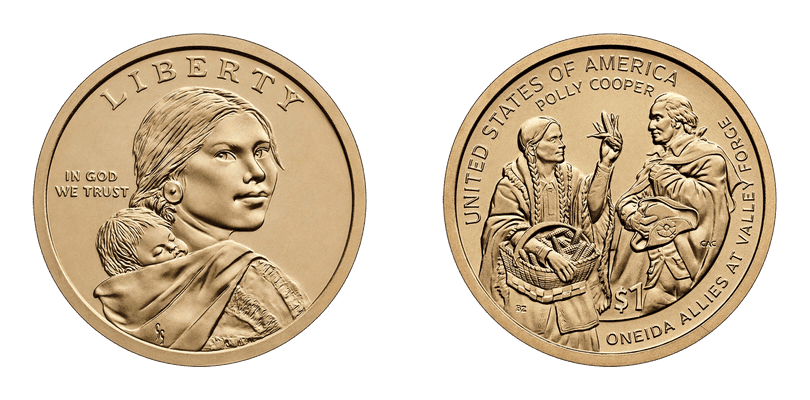
Sculptor Glenna Goodacre's obverse shows her with her baby son, Jean Baptiste, on her back. No portrait of Sacagawea exists, so Goodacre used a modern Shoshone woman, Randy'L He-dow Teton, as her model. Mint sculptor-engraver Thomas D. Rogers Sr. designed the reverse: an eagle in flight inside a ring of 17 stars, one for each state when Lewis and Clark set out.
The coin went into circulation on January 27, 2000, backed by advertising and by deals with Walmart and General Mills. Philadelphia and Denver struck 1,286,056,000 dollars dated 2000. Demand faded fast; CoinWeek blames the Treasury's decision to keep printing the $1 note. Output fell to about 133 million the next year. CoinWeek notes that a Sacagawea dollar found in change today will most likely be dated 2000 or 2001.
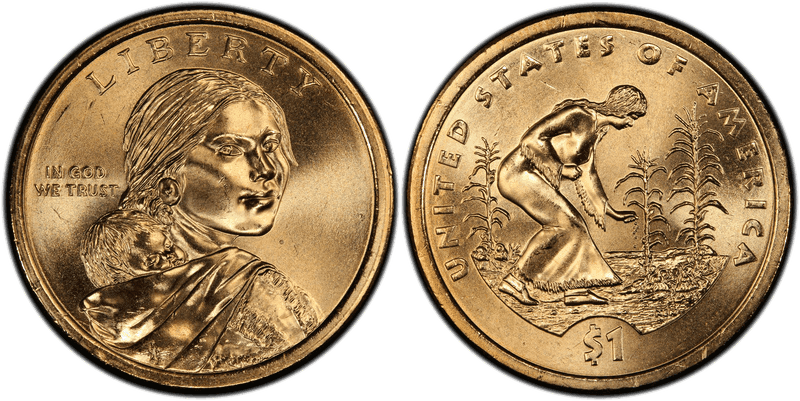
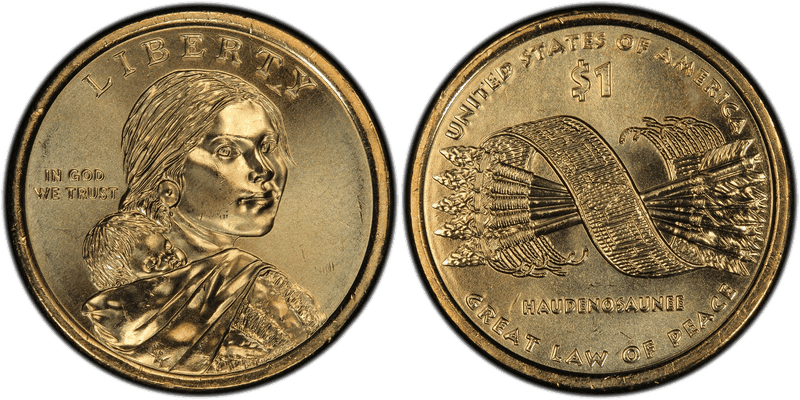
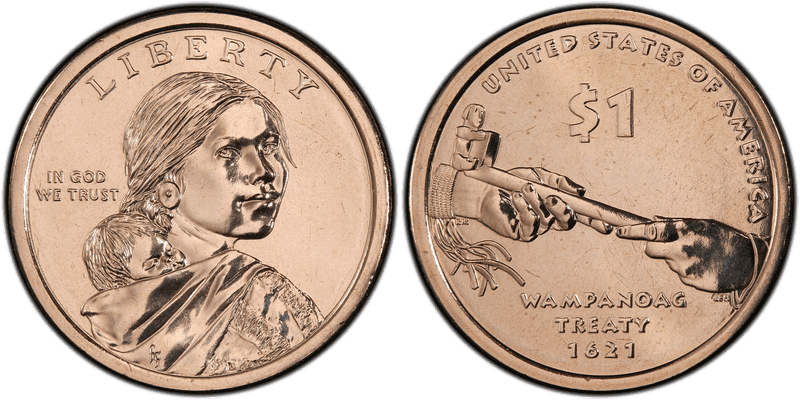
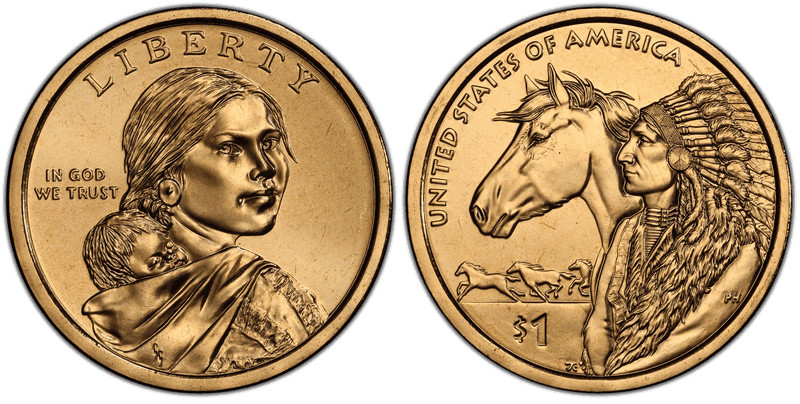
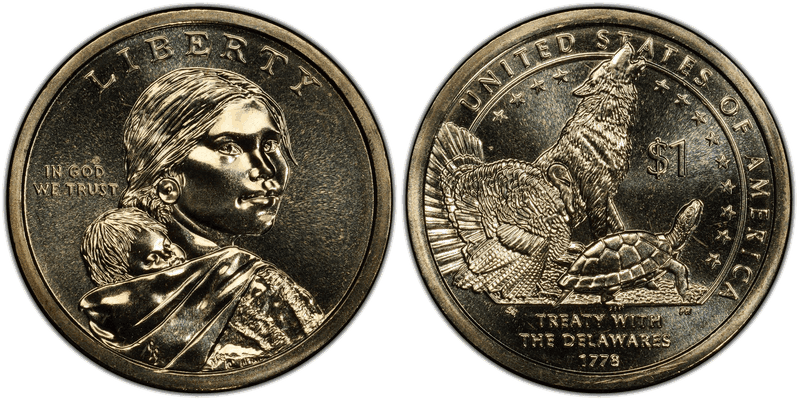
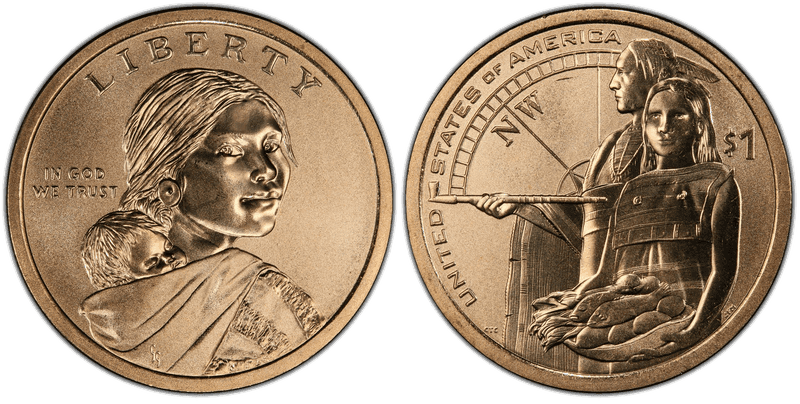
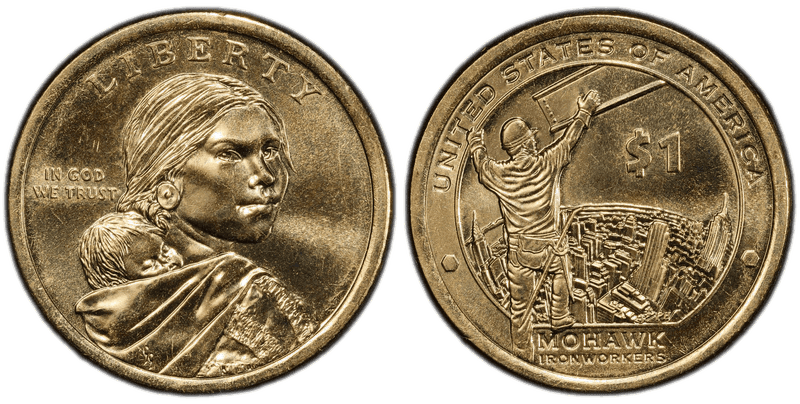
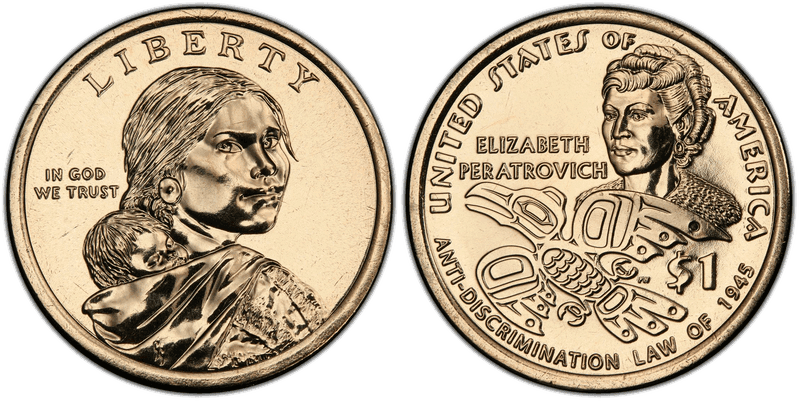
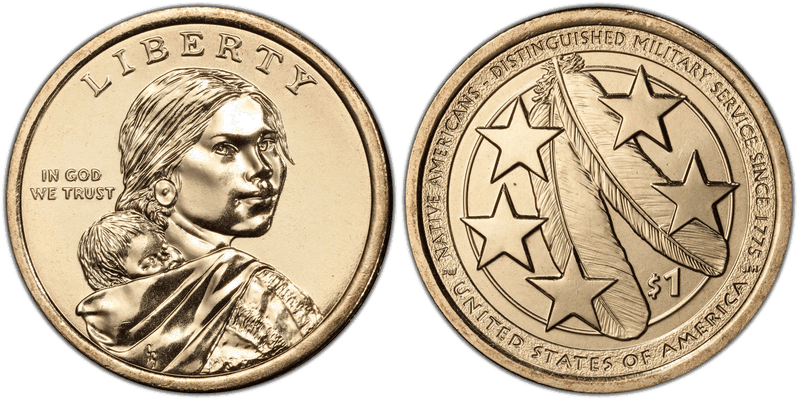
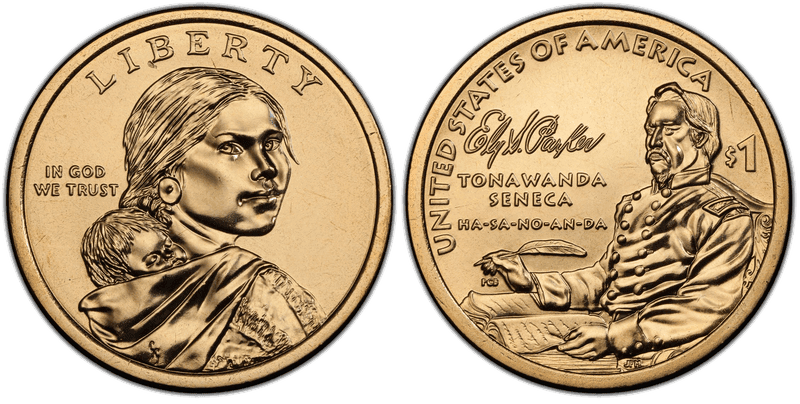
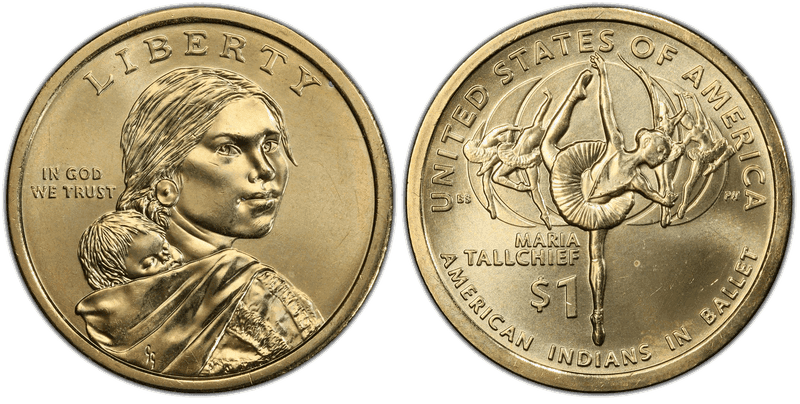
The Native American $1 Coin Act, signed September 20, 2007, kept Goodacre's obverse and called for a new reverse each year honoring a Native American contribution. It also required that at least 20% of all dollar coins carry the Sacagawea design. The first new reverse, the Three Sisters, was released on January 17, 2009. After the Presidential dollars also failed to circulate, the Mint cut dollar production to what collectors buy, and dollars dated after 2011 have been made for numismatic sale (search).