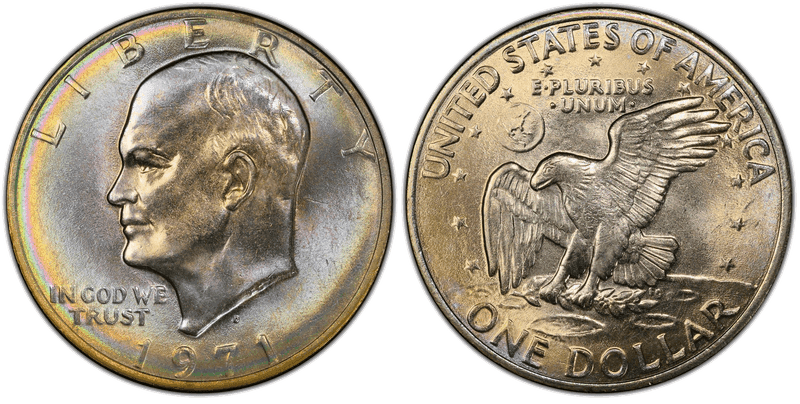
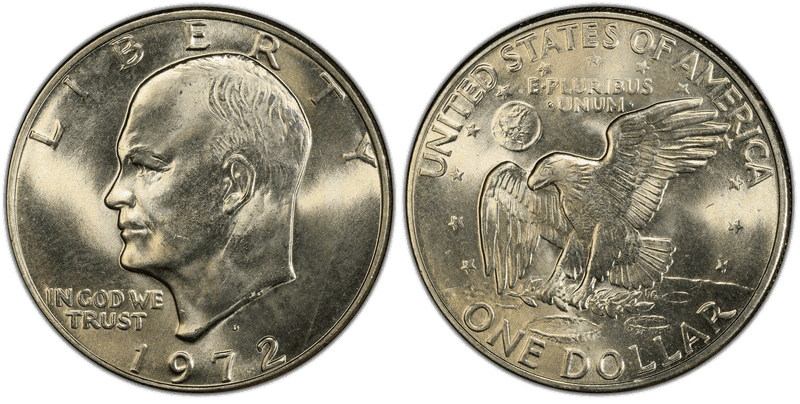
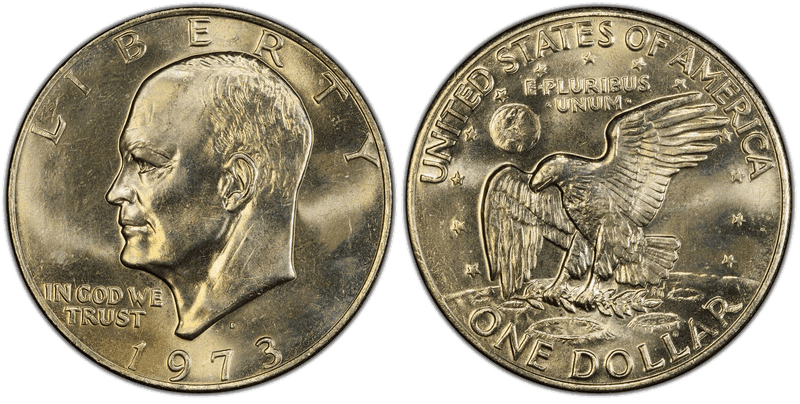
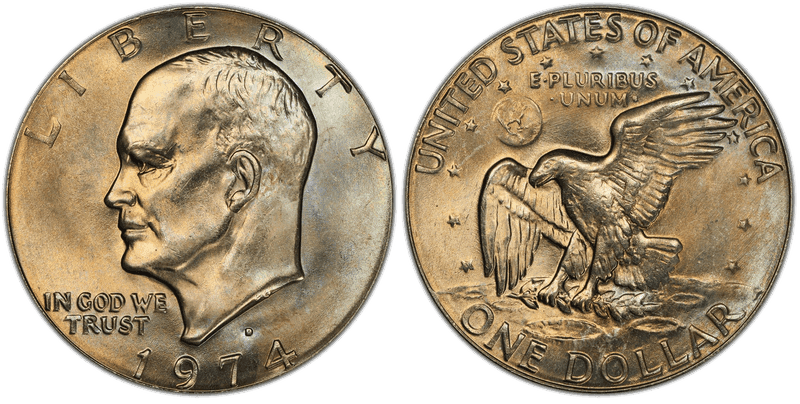
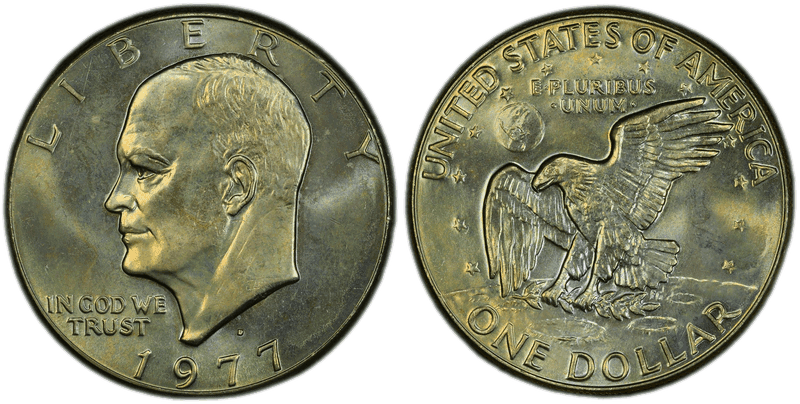
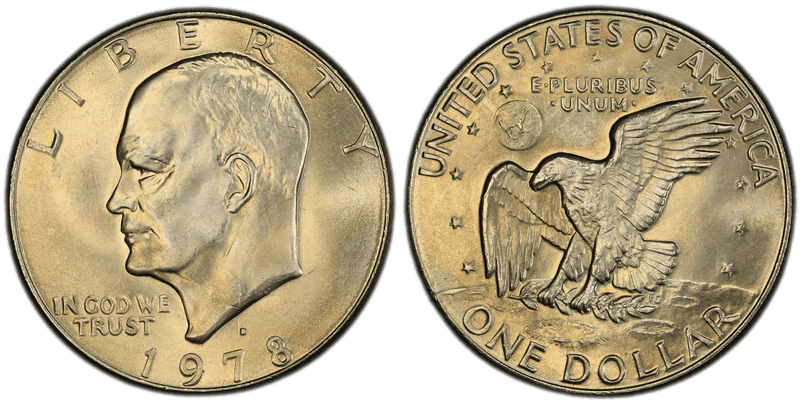
Dwight D. Eisenhower died in March 1969, and Apollo 11 landed on the Moon that July. That October, Representative Bob Casey of Texas proposed one dollar coin to honor both. After more than a year of debate, Congress approved it in Title II of Public Law 91-607, signed December 31, 1970. It set a clad dollar for circulation and allowed up to 150 million 40% silver dollars for collectors, using 25.5 million ounces of silver from the national stockpile. It also named the designs: Eisenhower's likeness and the eagle of Apollo 11 landing on the Moon.
Chief Engraver Frank Gasparro designed both sides, adapting the reverse from the mission insignia drawn by astronaut Michael Collins. Philadelphia ran trial strikes in January 1971, Denver began production in February, and San Francisco held a first-strike ceremony on March 31. Gasparro kept revising the dies through 1971 and 1972, partly because the State Department thought the eagle looked hostile. CoinWeek also notes that part of the profit from the silver coins went to Eisenhower College in New York, which closed in 1983.
San Francisco sold the silver coins to collectors on mail orders: uncirculated pieces in a blue envelope ("blue Ikes") and proofs in a brown box ("brown Ikes"). Nevada's casinos, which had lost the old silver dollars their slot machines used, took the clad coins in quantity. In the East the coins were available at banks but seldom seen in change. Dollars were left out of the 1971 and 1972 mint sets. In 1973 the Philadelphia and Denver coins went only into mint sets.
Dollars struck in 1975 and 1976 carry the dual date 1776-1976 and Dennis R. Williams's Liberty Bell reverse; see 1976 Bicentennial coins. The Moon-landing reverse returned in 1977, and the series ended with the 1978 coins.