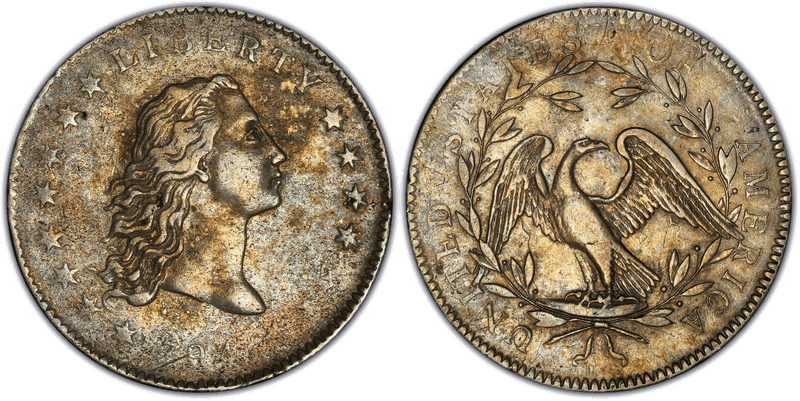
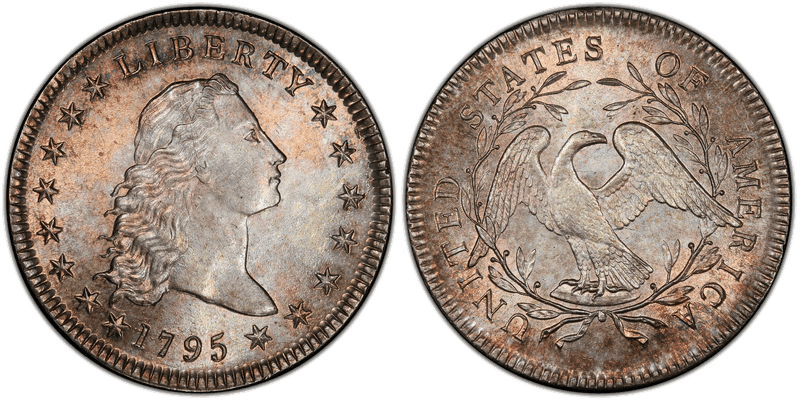
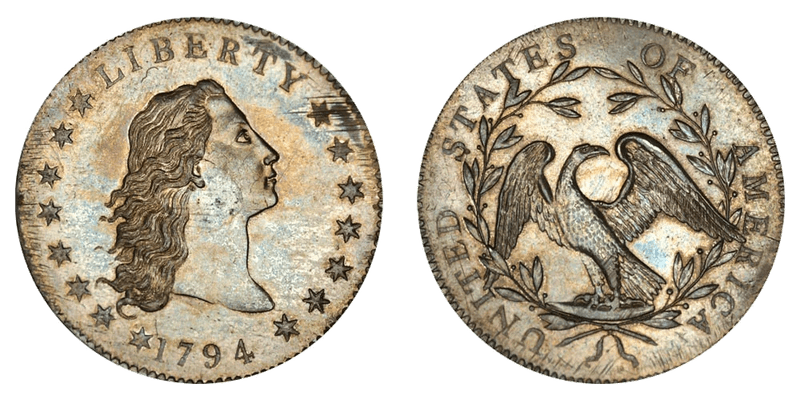
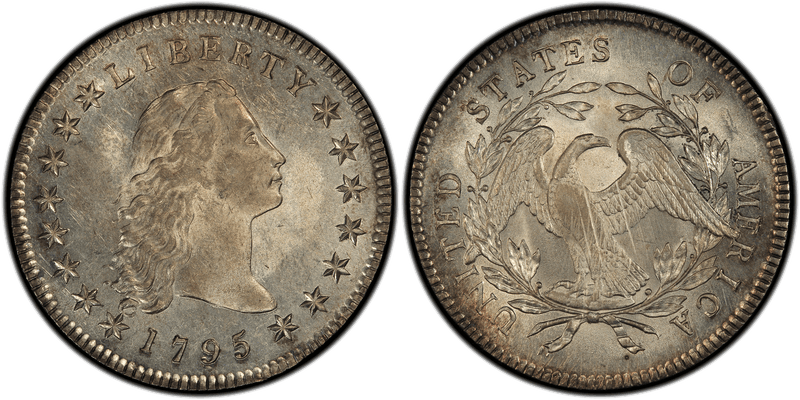
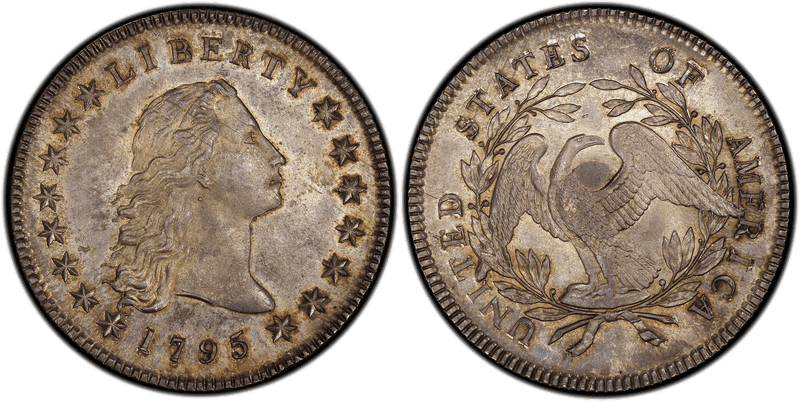
The Coinage Act of 1792 made the silver dollar the unit of the nation's money, sized to match the Spanish dollar then in everyday use. The law set its weight at 416 grains, 26.96 grams, in an alloy of 1,485 parts silver to 1,664, about .8924 fine. Silver coinage had to wait two years, until the Mint's chief coiner and assayer could post the bonds the law required.
Robert Scot prepared the design in 1794: a portrait of Liberty with loose, flowing hair, and an eagle on the reverse. Officials asked for a wreath around the eagle and moved the statement of value to the edge, where a Castaing machine lettered each blank before striking. After copper test strikes, fifteen stars were added to the obverse. Assayer Albion Cox, finding the legal alloy hard to work and prone to darken, used a .900 alloy at the full legal weight instead. That was contrary to the law, and it cost depositors about one percent of their silver until a new director, Elias Boudinot, restored the legal standard on October 28, 1795.
The first dollars were struck on October 15, 1794, from silver deposited by the Mint's director, David Rittenhouse. The only press available was a hand-powered screw press meant for half dollars, and it could not strike a coin this large properly. The Mint accepted 1,758 of about 2,000 struck, and those it accepted are typically weak on one side. Dollar coinage then stopped until a larger press was ready in May 1795.
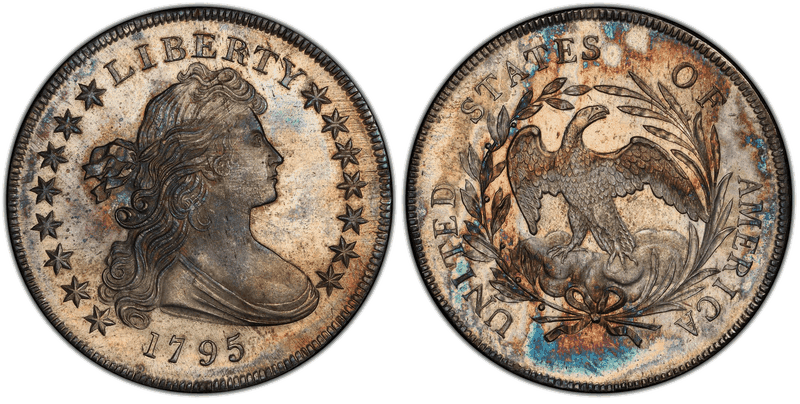
Coinage in 1795 was much larger. The Mint reported 203,033 dollars for the year, but in the autumn the Draped Bust design replaced the Flowing Hair, and the two were not counted separately. Planchets were often adjusted by hand: overweight blanks were filed down, leaving parallel marks, and some underweight blanks received a silver plug set into the center before striking.