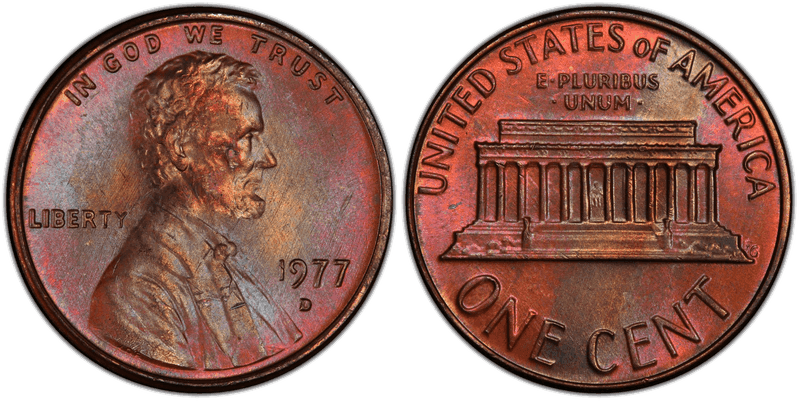
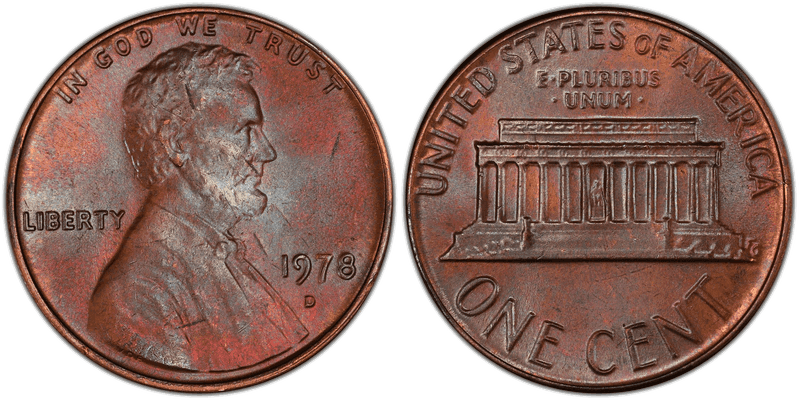
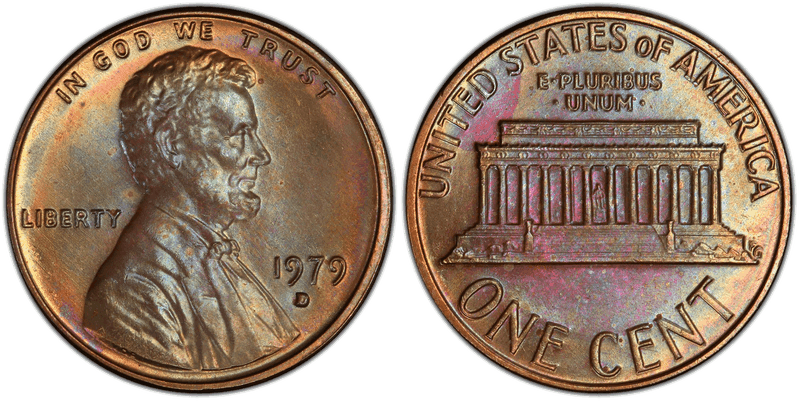
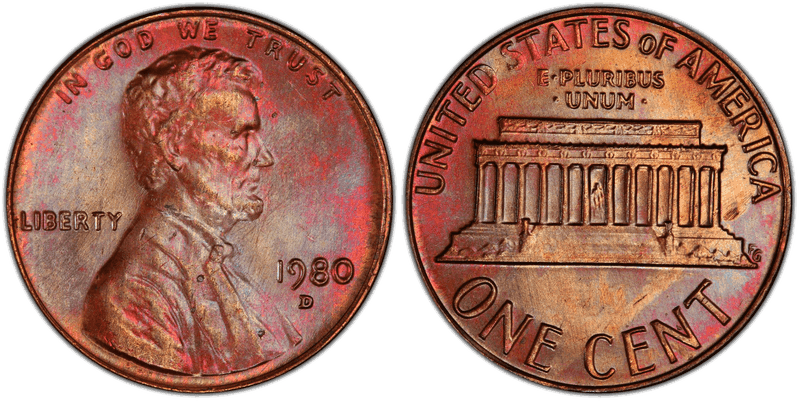
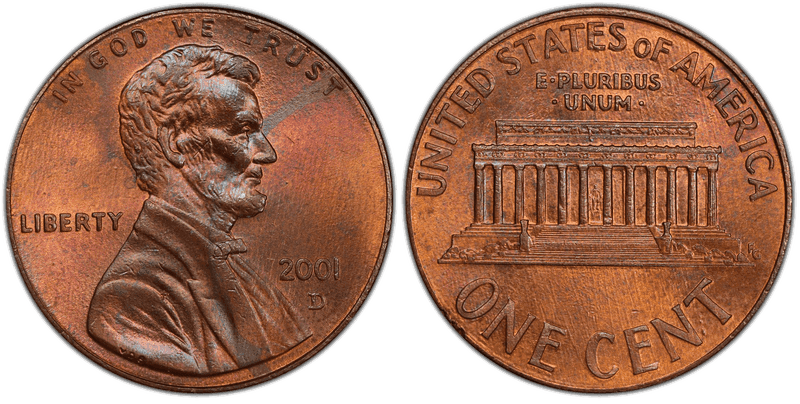
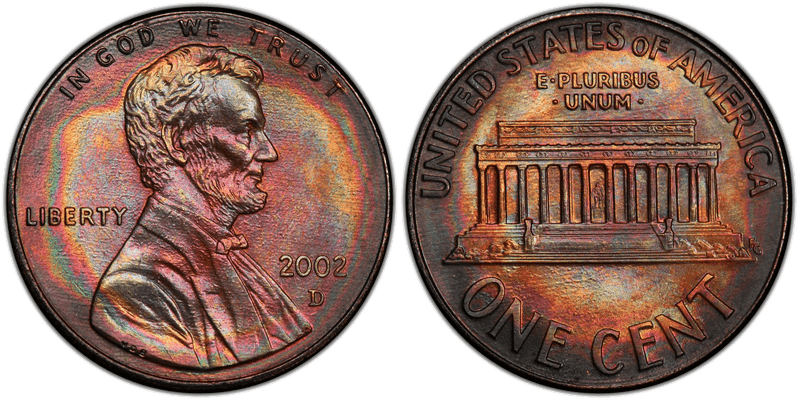
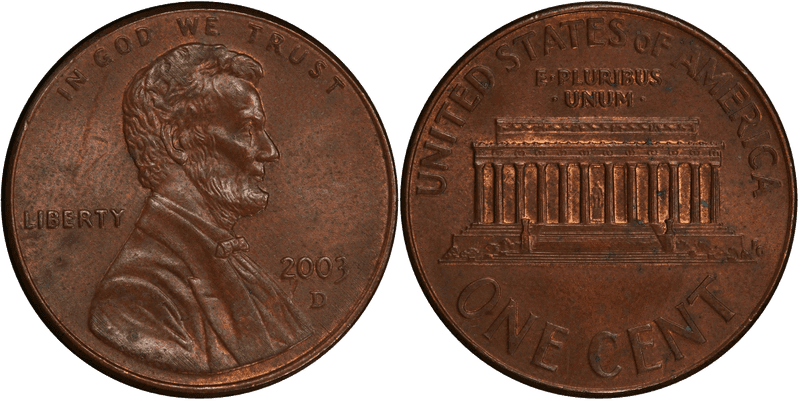
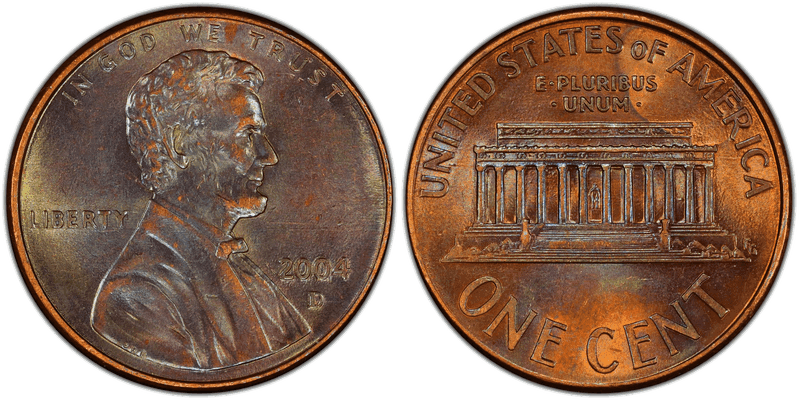
Lincoln Memorial Cents 1959-2008

Coin Series
Lincoln Memorial Cents 1959-2008 series coin

About This Series

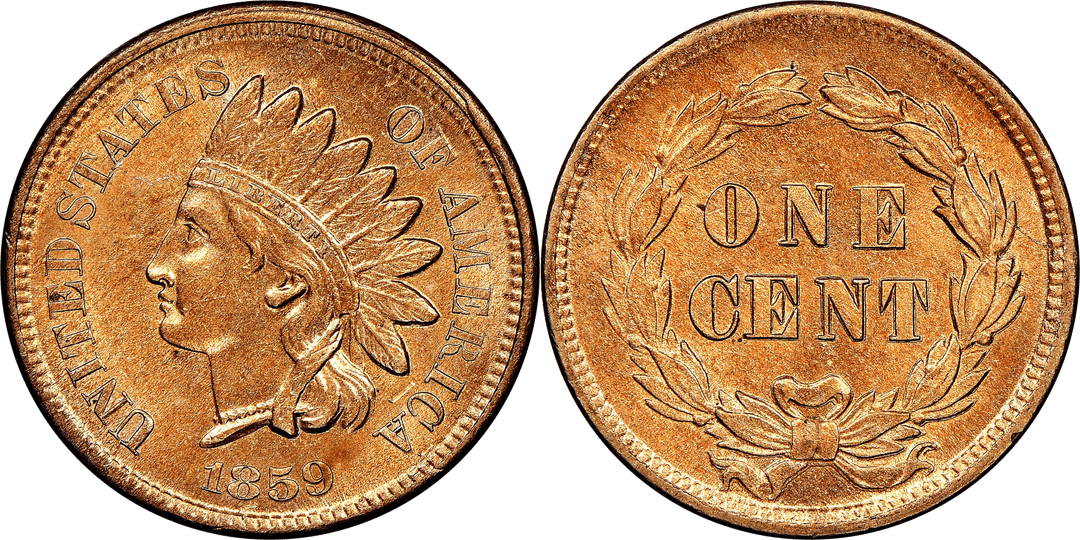
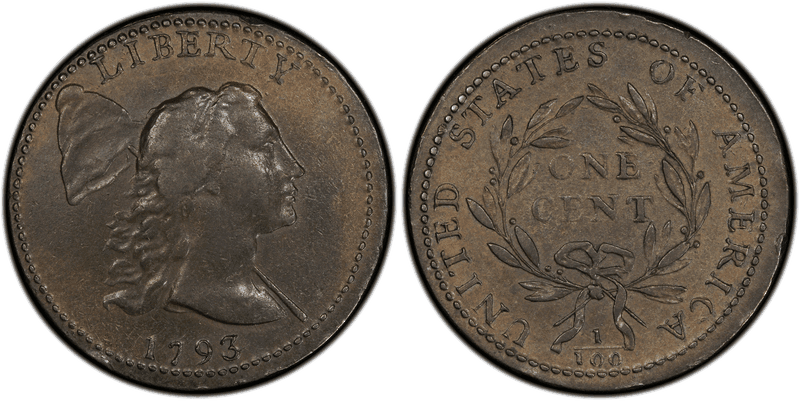
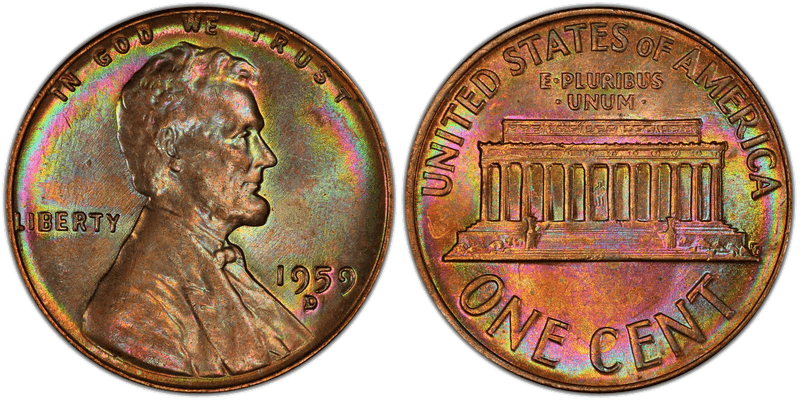
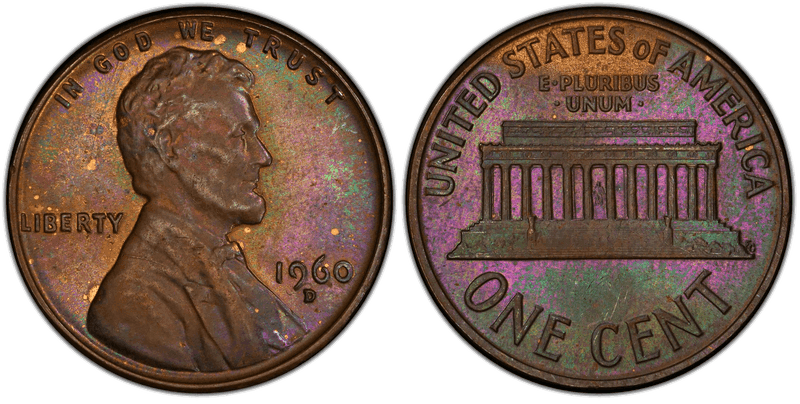
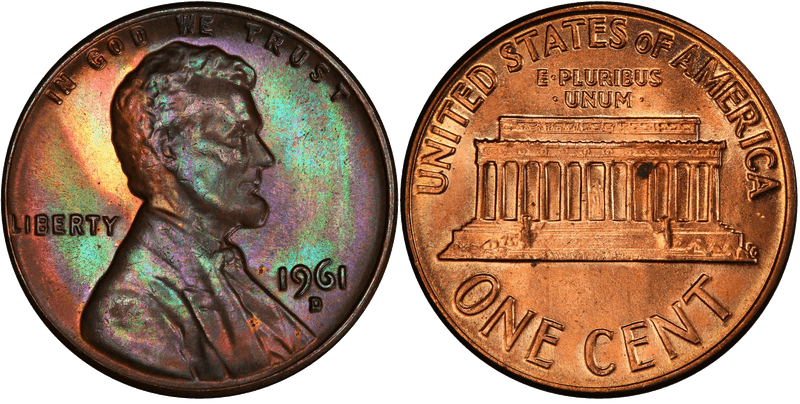
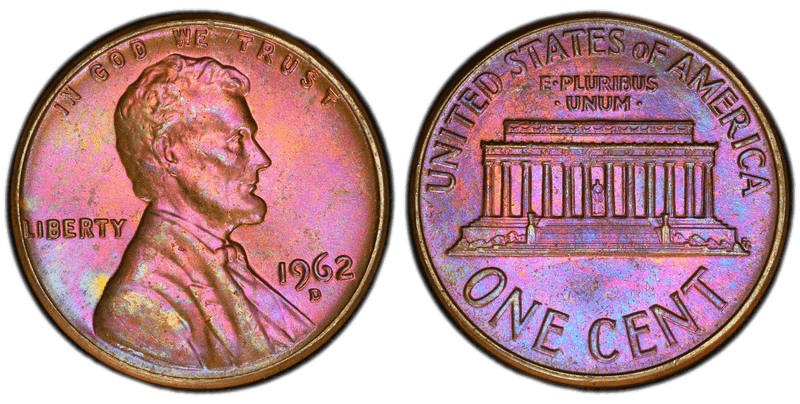
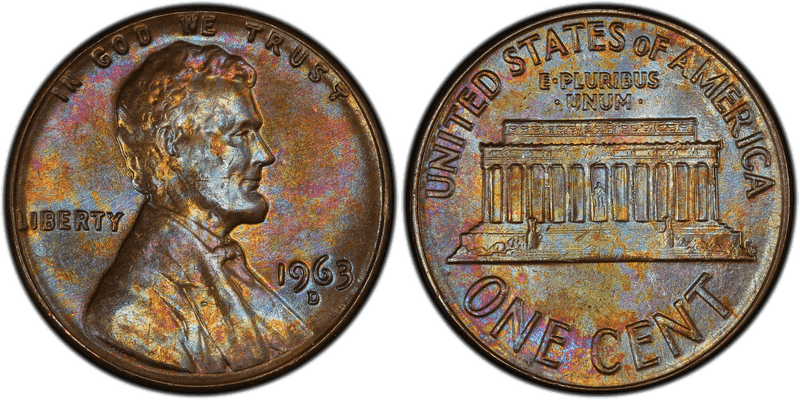
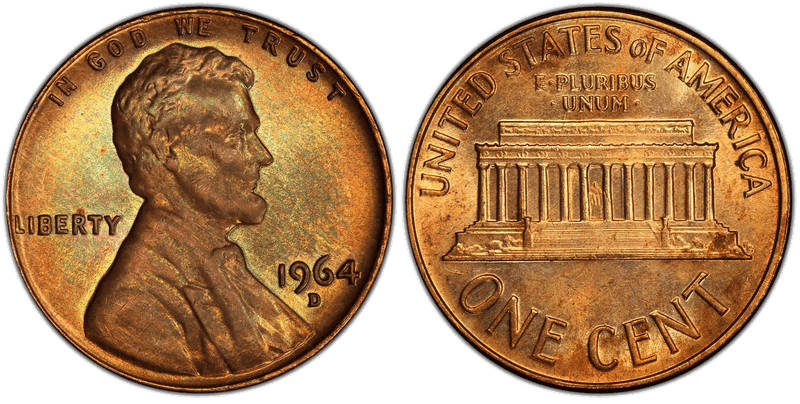
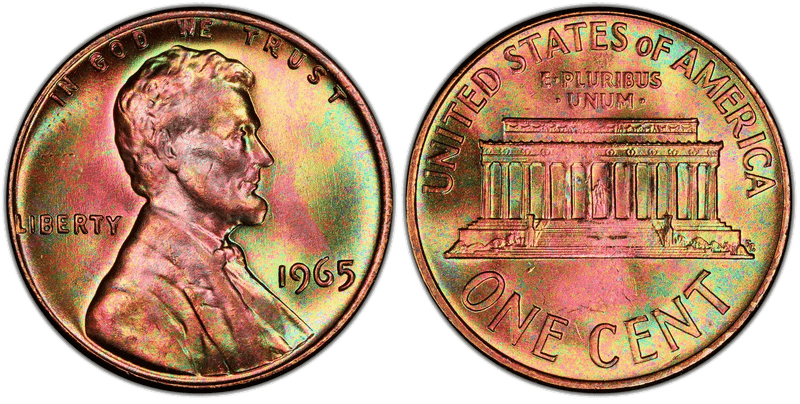
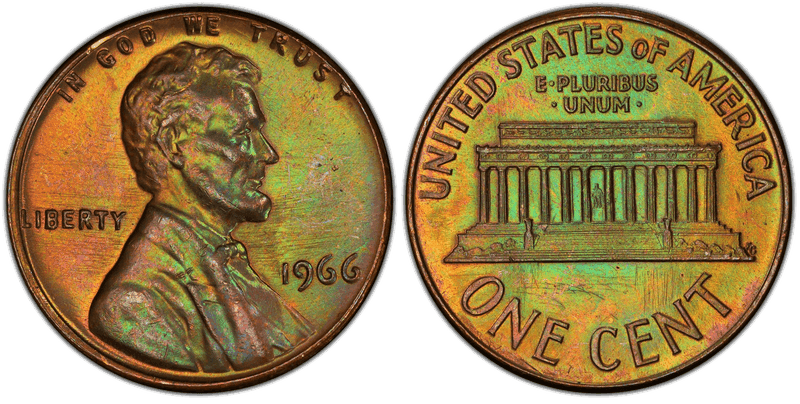
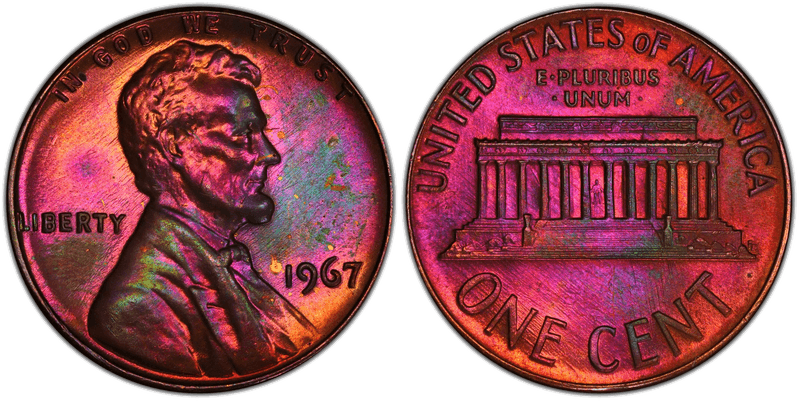
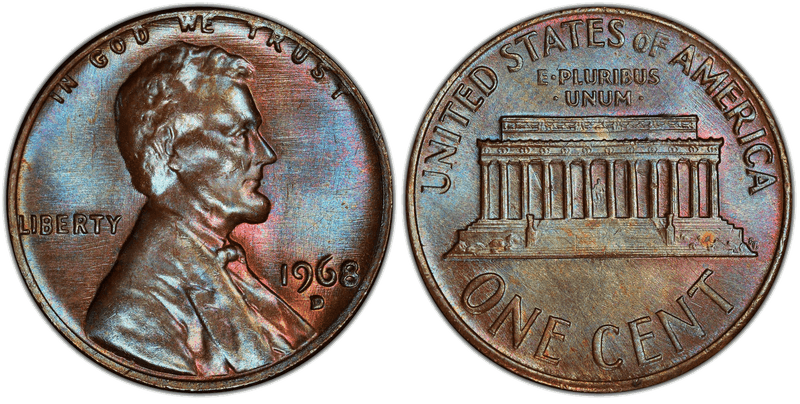
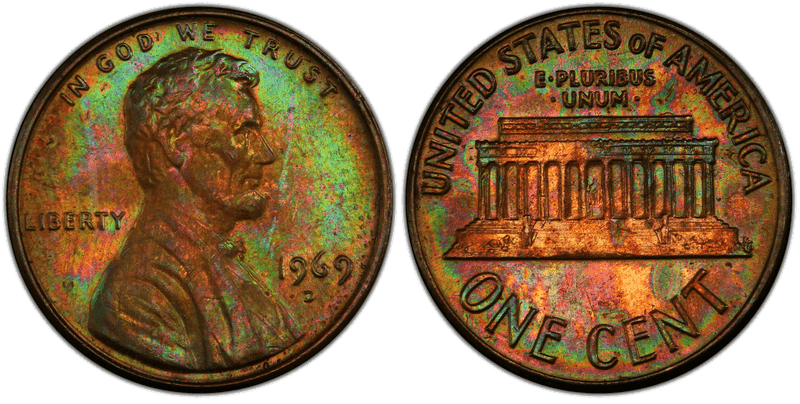
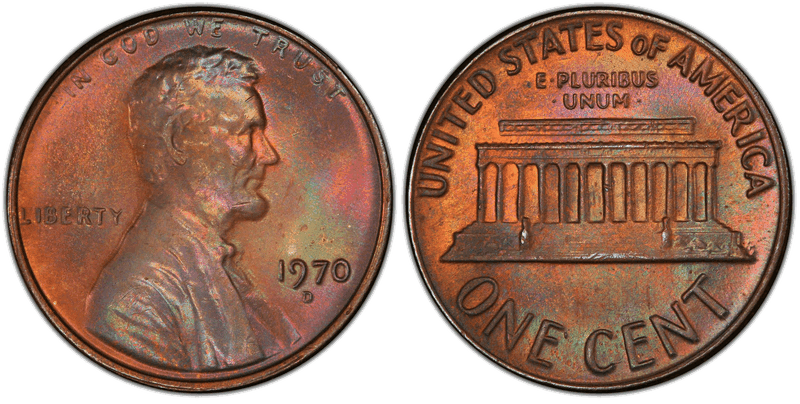
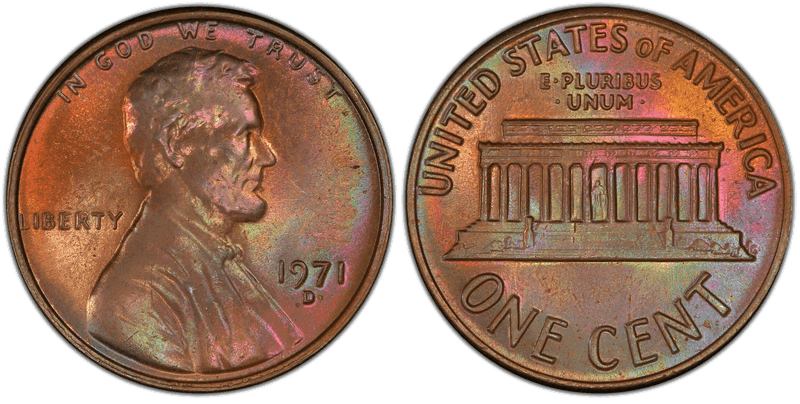
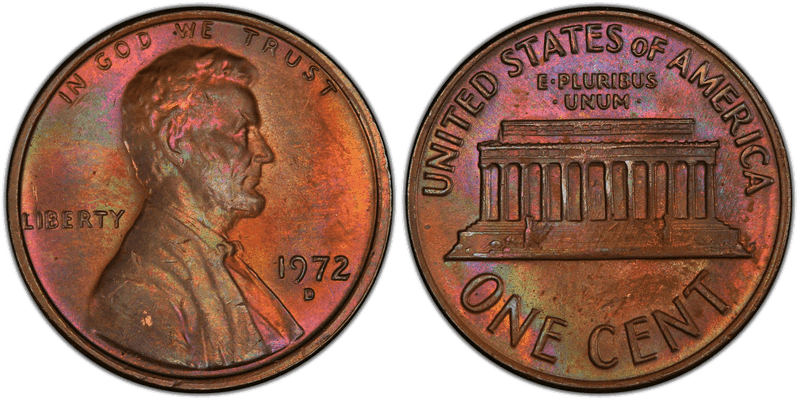
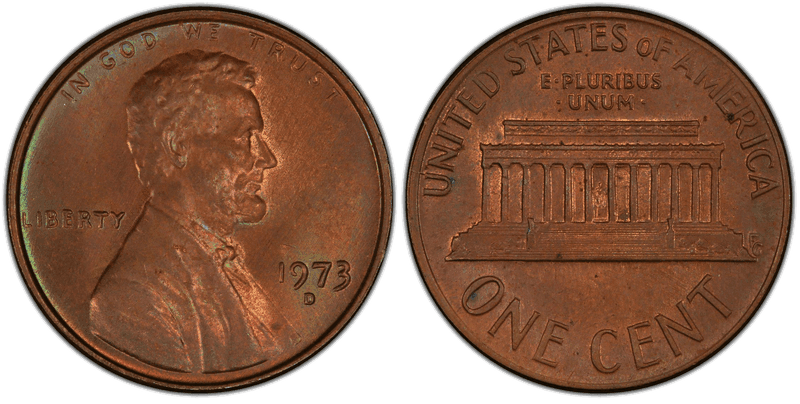
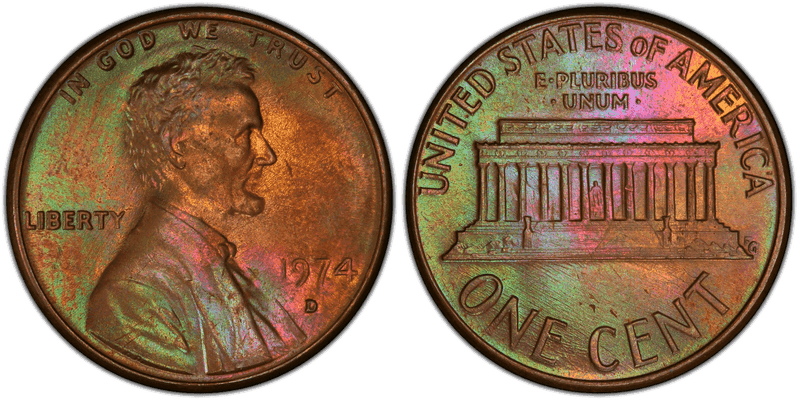
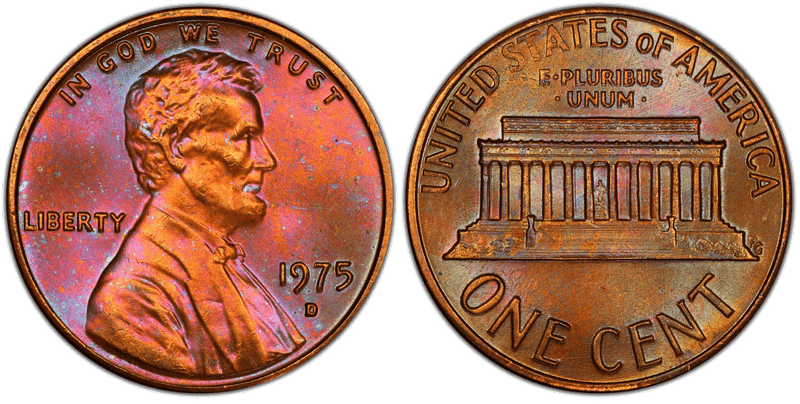
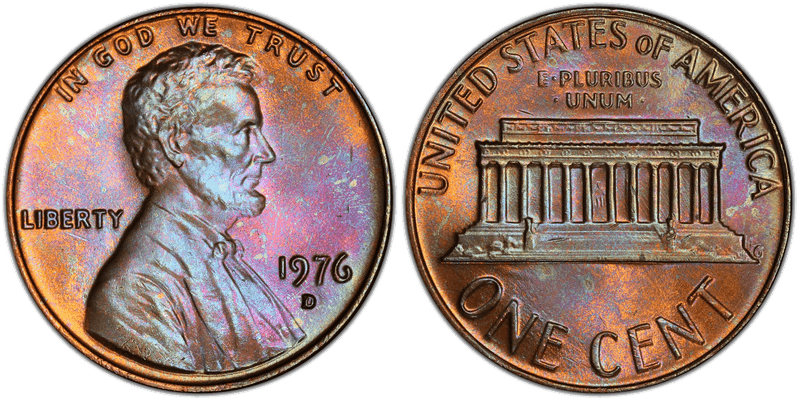
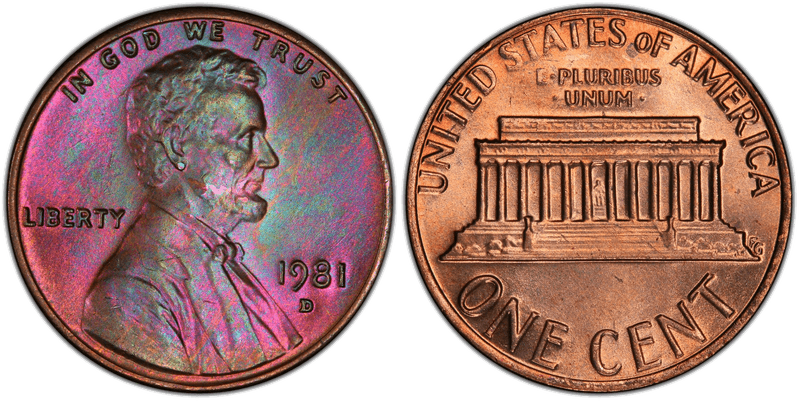
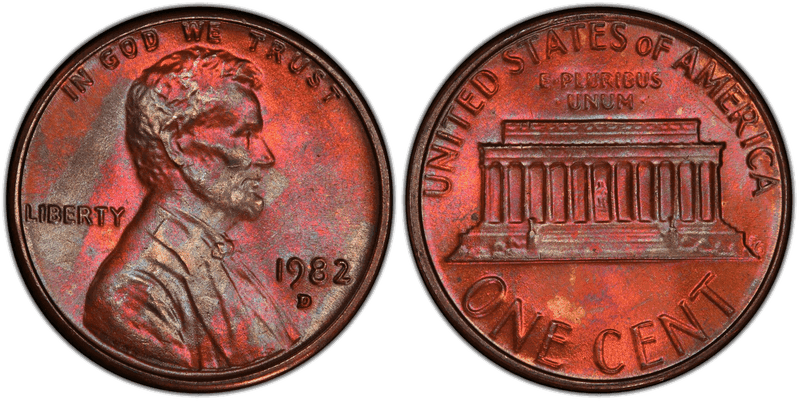
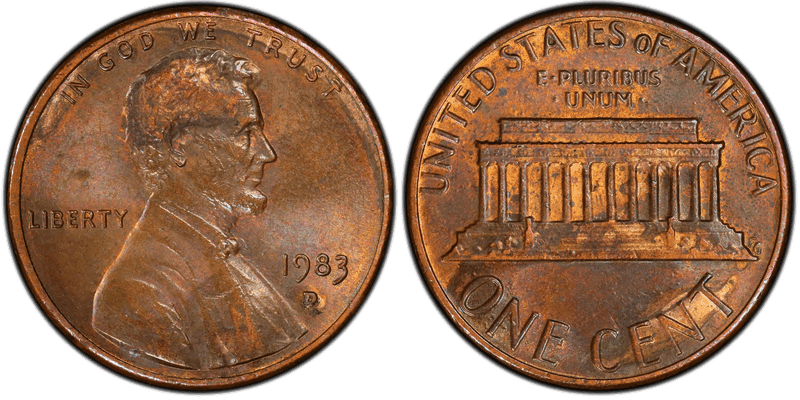
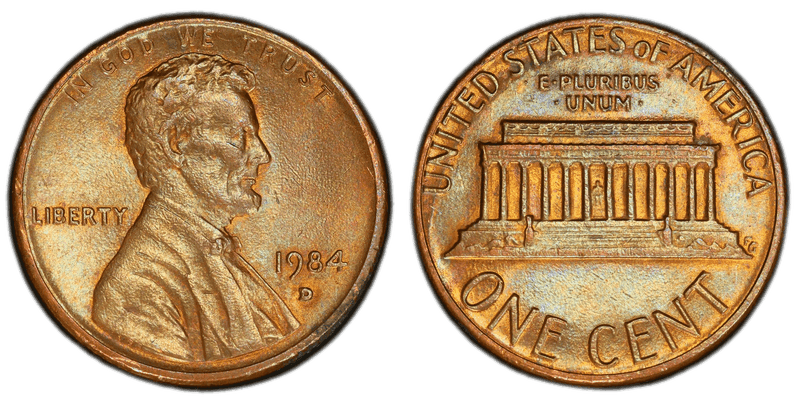
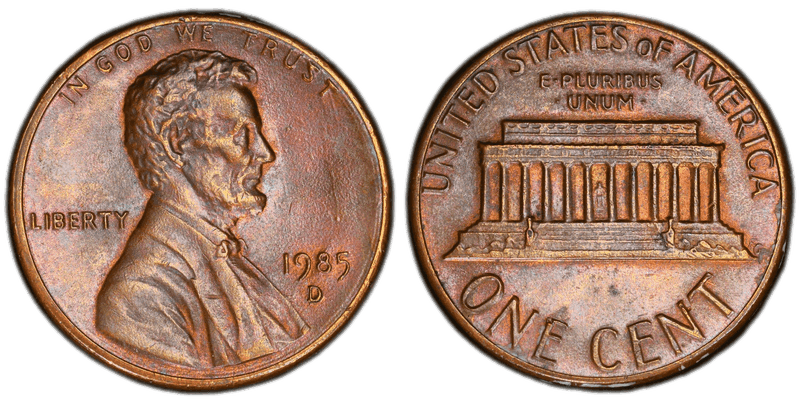
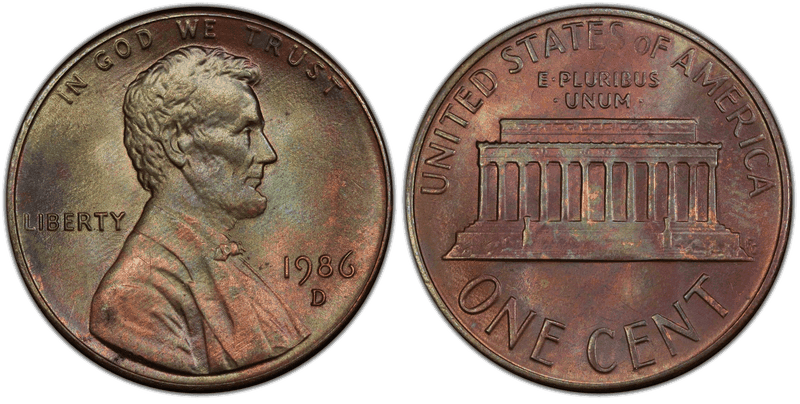
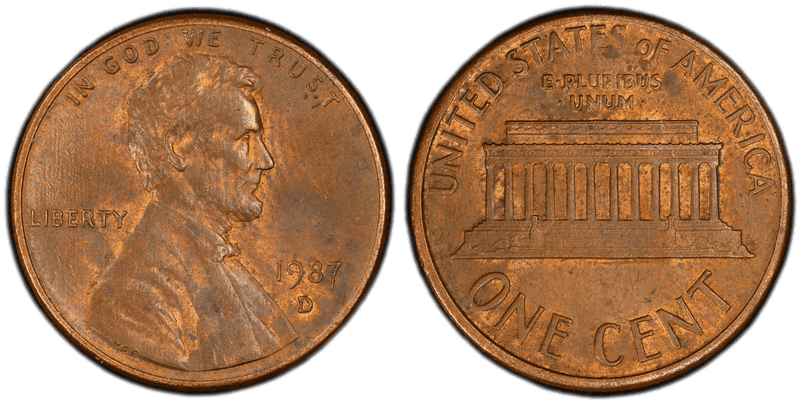
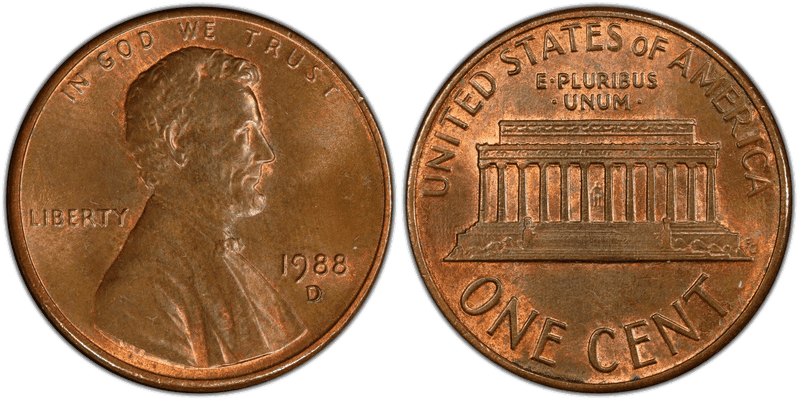
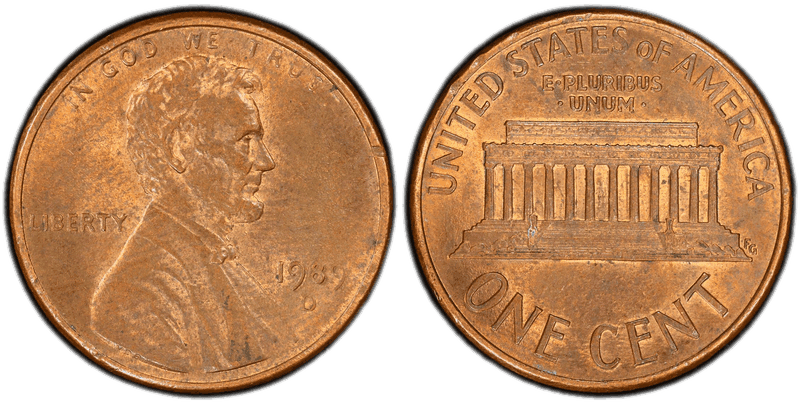
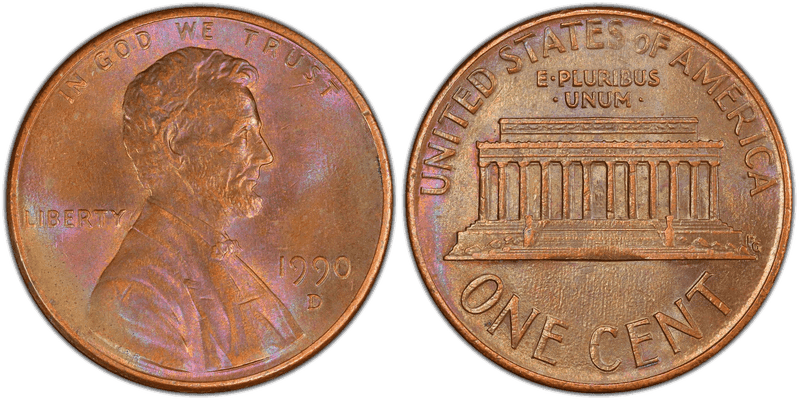
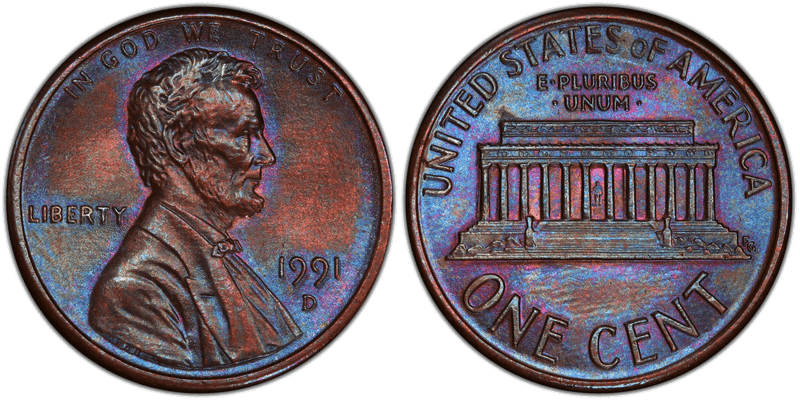
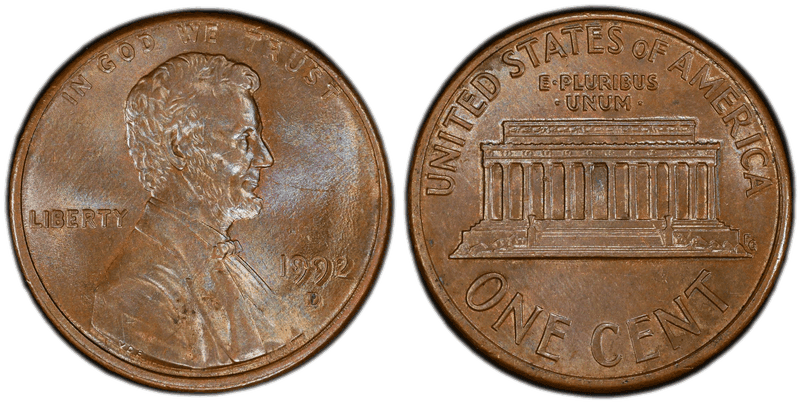
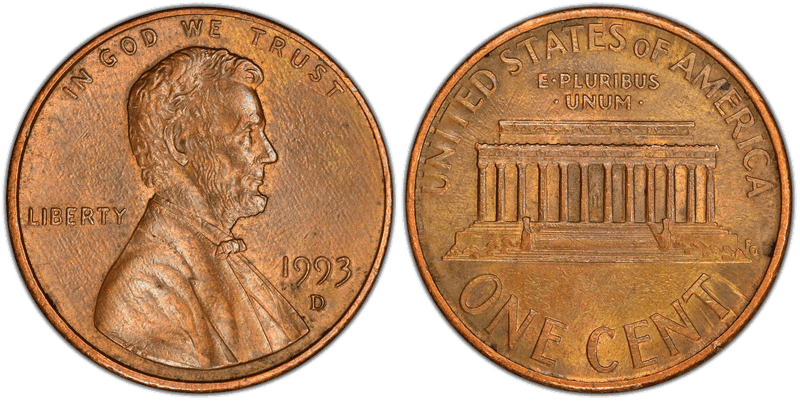
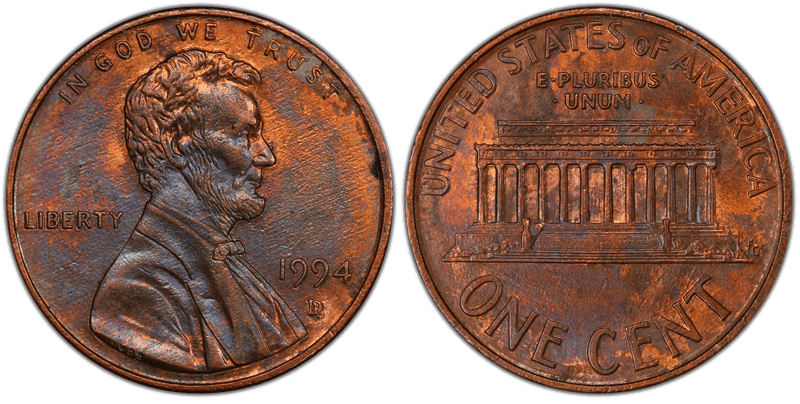
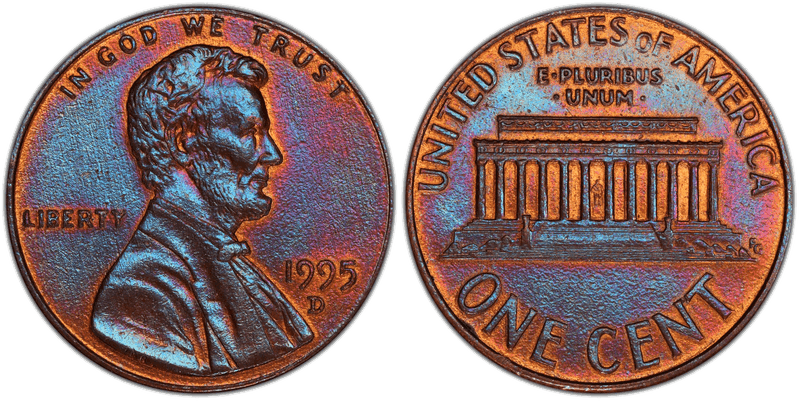
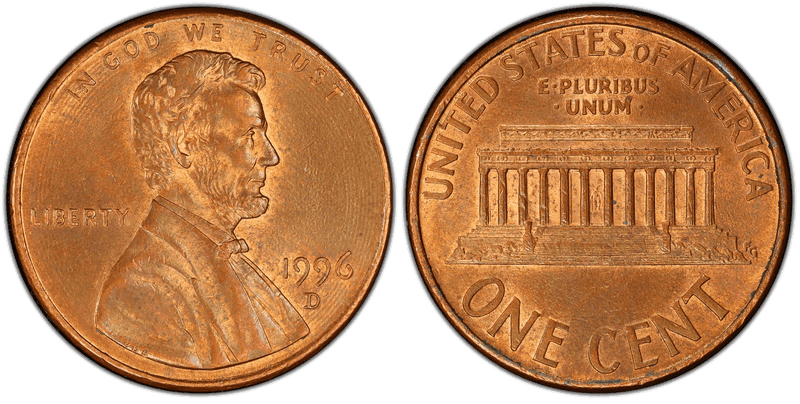
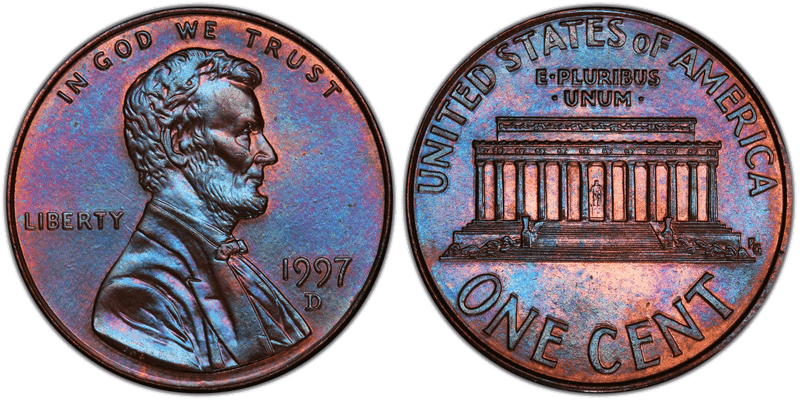
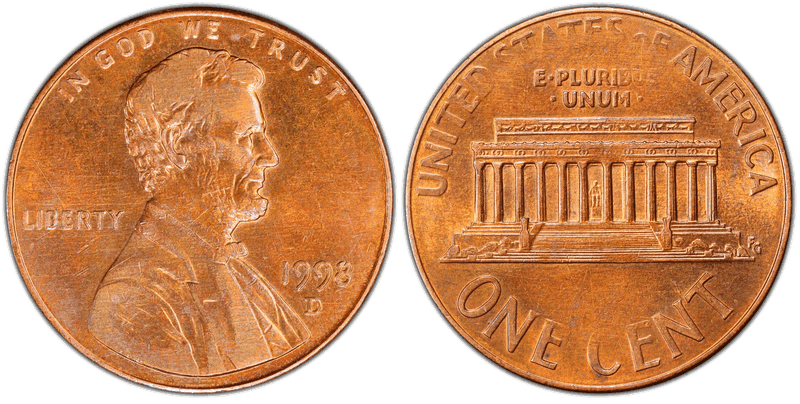
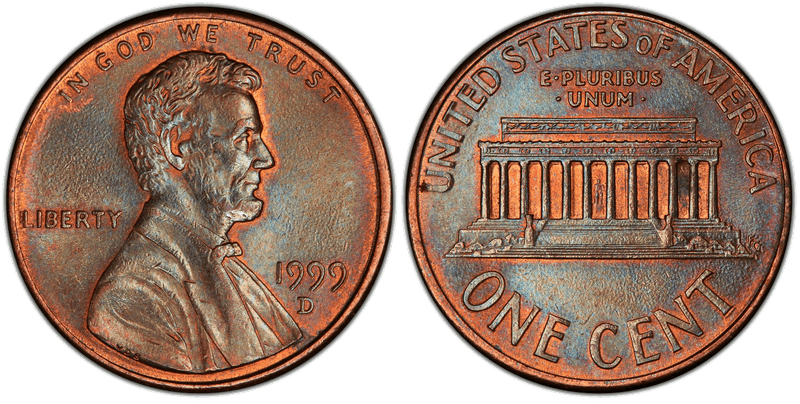
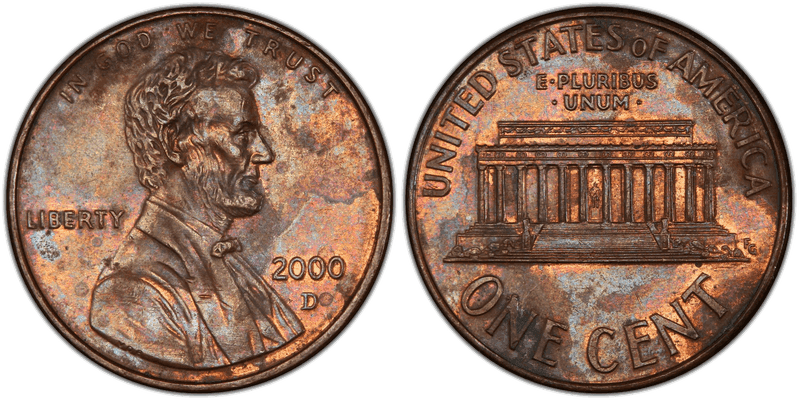
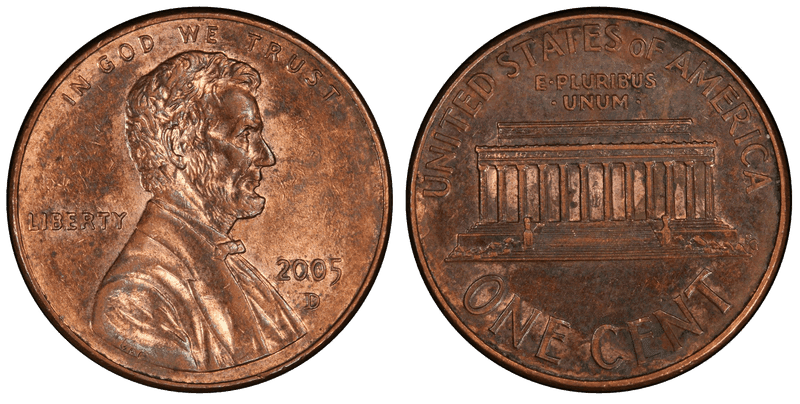
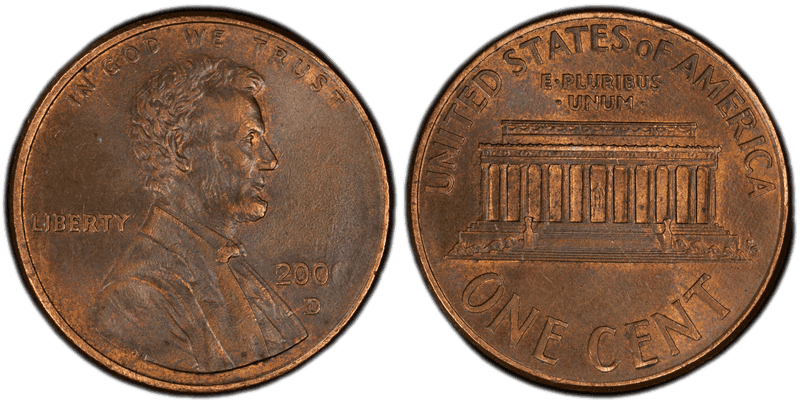
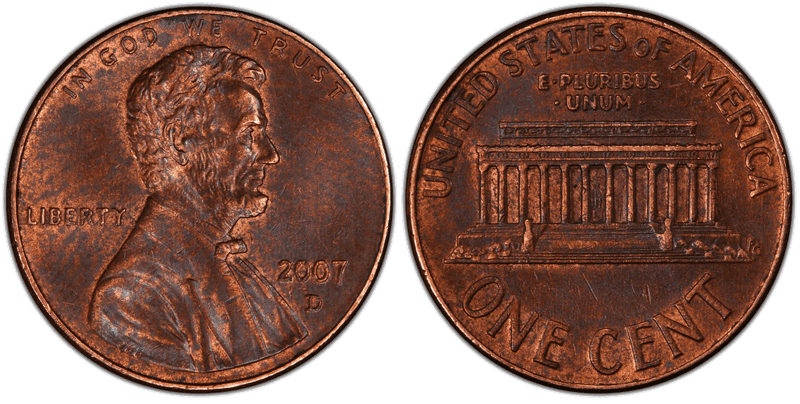
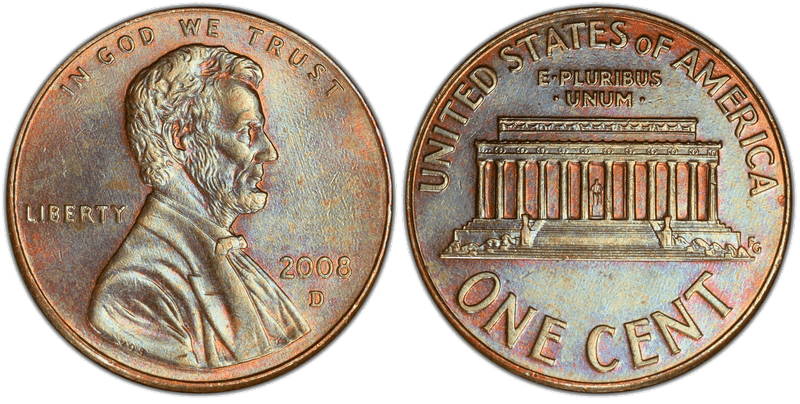
Debuting on Lincoln's 150th birthday, Frank Gasparro's Lincoln Memorial reverse replaced the wheat ears design, creating a fifty-year run producing billions of cents across Philadelphia, Denver, and San Francisco. The obverse retained Victor David Brenner's beloved Lincoln portrait. Gasparro's reverse shows the Memorial from the front with a tiny image of Daniel Chester French's seated statue between the columns, so Lincoln appears on both sides of the coin. A landmark compositional change occurred in mid-1982: the 95% copper alloy (bronze until tin was dropped in 1962, brass afterward) gave way to copper-plated zinc (97.5% zinc) to combat rising copper costs. The 1982 transitional year produced seven distinct collectible types across both compositions and date sizes. Varieties include the 1960 Small Date/Large Date pairs, the 1972 doubled die obverse with dramatic doubling on IN GOD WE TRUST, the 1969-S doubled die, and the 1990 No S proof, struck from a die that never received its S. Copper-alloy cents weigh 3.11 grams and copper-plated zinc cents 2.5 grams; all measure 19.05 mm.

From NumisDex News

Series Information

Production Years
1959-2008
Designer
Victor David Brenner (obverse), Frank Gasparro (reverse)
Composition
Bronze (1959-62), brass (1962-82), copper-plated zinc (1982-2008)
Diameter
19.05mm
Edge
Plain

Browse by Base(51 bases)

1959 Lincoln Cent
BaseVerified

1959 Lincoln Cent

3 Strike Types
161 Error Listings
1960 Lincoln Cent
BaseVerified

1960 Lincoln Cent

9 Strike Types
357 Error Listings
1961 Lincoln Cent
BaseVerified

1961 Lincoln Cent

3 Strike Types
116 Error Listings
1962 Lincoln Cent
BaseVerified

1962 Lincoln Cent

3 Strike Types
119 Error Listings
1963 Lincoln Cent
BaseVerified

1963 Lincoln Cent

3 Strike Types
157 Error Listings
1964 Lincoln Cent
BaseVerified

1964 Lincoln Cent

4 Strike Types
155 Error Listings
1965 Lincoln Cent
BaseVerified

1965 Lincoln Cent

2 Strike Types
16 Error Listings
1966 Lincoln Cent
BaseVerified

1966 Lincoln Cent

2 Strike Types
36 Error Listings
1967 Lincoln Cent
BaseVerified

1967 Lincoln Cent

2 Strike Types
25 Error Listings
1968 Lincoln Cent
BaseVerified

1968 Lincoln Cent

4 Strike Types
52 Error Listings
1969 Lincoln Cent
BaseVerified

1969 Lincoln Cent

5 Strike Types
63 Error Listings
1970 Lincoln Cent
BaseVerified

1970 Lincoln Cent

7 Strike Types
284 Error Listings
1971 Lincoln Cent
BaseVerified

1971 Lincoln Cent

6 Strike Types
89 Error Listings
1972 Lincoln Cent
BaseVerified

1972 Lincoln Cent

5 Strike Types
132 Error Listings
1973 Lincoln Cent
BaseVerified

1973 Lincoln Cent

4 Strike Types
43 Error Listings
1974 Lincoln Cent
BaseVerified

1974 Lincoln Cent

6 Strike Types
52 Error Listings
1975 Lincoln Cent
BaseVerified

1975 Lincoln Cent

3 Strike Types
34 Error Listings
1976 Lincoln Cent
BaseVerified

1976 Lincoln Cent

3 Strike Types
21 Error Listings
1977 Lincoln Cent
BaseVerified

1977 Lincoln Cent

3 Strike Types
21 Error Listings
1978 Lincoln Cent
BaseVerified

1978 Lincoln Cent

3 Strike Types
22 Error Listings
1979 Lincoln Cent
BaseVerified

1979 Lincoln Cent

4 Strike Types
17 Error Listings
1980 Lincoln Cent
BaseVerified

1980 Lincoln Cent

3 Strike Types
51 Error Listings
1981 Lincoln Cent
BaseVerified

1981 Lincoln Cent

4 Strike Types
30 Error Listings
1982 Lincoln Cent
BaseVerified

1982 Lincoln Cent

9 Strike Types
147 Error Listings
1983 Lincoln Cent
BaseVerified

1983 Lincoln Cent

4 Strike Types
296 Error Listings
1984 Lincoln Cent
BaseVerified

1984 Lincoln Cent

4 Strike Types
158 Error Listings
1985 Lincoln Cent
BaseVerified

1985 Lincoln Cent

3 Strike Types
113 Error Listings
1986 Lincoln Cent
BaseVerified

1986 Lincoln Cent

3 Strike Types
81 Error Listings
1987 Lincoln Cent
BaseVerified

1987 Lincoln Cent

3 Strike Types
93 Error Listings
1988 Lincoln Cent
BaseVerified

1988 Lincoln Cent

3 Strike Types
160 Error Listings
1989 Lincoln Cent
BaseVerified

1989 Lincoln Cent

3 Strike Types
166 Error Listings
1990 Lincoln Cent
BaseVerified

1990 Lincoln Cent

4 Strike Types
50 Error Listings
1991 Lincoln Cent
BaseVerified

1991 Lincoln Cent

3 Strike Types
60 Error Listings
1992 Lincoln Cent
BaseVerified

1992 Lincoln Cent

5 Strike Types
54 Error Listings
1993 Lincoln Cent
BaseVerified

1993 Lincoln Cent

3 Strike Types
157 Error Listings
1994 Lincoln Cent
BaseVerified

1994 Lincoln Cent

3 Strike Types
160 Error Listings
1995 Lincoln Cent
BaseVerified

1995 Lincoln Cent

4 Strike Types
162 Error Listings
1996 Lincoln Cent
BaseVerified

1996 Lincoln Cent

3 Strike Types
128 Error Listings
1997 Lincoln Cent
BaseVerified

1997 Lincoln Cent

3 Strike Types
190 Error Listings
1998 Lincoln Cent
BaseVerified

1998 Lincoln Cent

5 Strike Types
256 Error Listings
1999 Lincoln Cent
BaseVerified

1999 Lincoln Cent

5 Strike Types
331 Error Listings
2000 Lincoln Cent
BaseVerified

2000 Lincoln Cent

4 Strike Types
179 Error Listings
2001 Lincoln Cent
BaseVerified

2001 Lincoln Cent

3 Strike Types
190 Error Listings
2002 Lincoln Cent
BaseVerified

2002 Lincoln Cent

3 Strike Types
97 Error Listings
2003 Lincoln Cent
BaseVerified

2003 Lincoln Cent

3 Strike Types
164 Error Listings
2004 Lincoln Cent
BaseVerified

2004 Lincoln Cent

3 Strike Types
170 Error Listings
2005 Lincoln Cent
BaseVerified

2005 Lincoln Cent

5 Strike Types
205 Error Listings
2006 Lincoln Memorial Cent
BaseVerified

2006 Lincoln Memorial Cent

5 Strike Types
213 Error Listings
2007 Lincoln Cent
BaseVerified

2007 Lincoln Cent

5 Strike Types
88 Error Listings
2008 Lincoln Cent
BaseVerified

2008 Lincoln Cent

5 Strike Types
61 Error Listings

History

Lincoln's portrait had been on the cent for fifty years when the Treasury changed the other side. The White House announced the new reverse in December 1958, and the coins went out on Lincoln's 150th birthday, February 12, 1959. Frank Gasparro won an internal Mint contest with his view of the Lincoln Memorial in Washington. Victor David Brenner's 1909 portrait stayed on the obverse. The design it replaced, and the cent's earlier history, are covered on the Lincoln Wheat cent page.

The first change came almost at once. Early 1960 dies used a small date, and the Mint found that the center of the 0 tended to break and fill, so it cut a new master with larger figures. Collectors noticed, and sealed bags of 1960 Small Date cents changed hands for many times face value until the fad collapsed in 1964.

In 1962 the alloy changed quietly: an Act of September 5, 1962 let the Mint drop tin, and the cent became brass. Then came the coin shortage. Mint Director Eva Adams blamed collectors in part, so cents dated 1965, 1966 and 1967 carry no mint mark, though Philadelphia, Denver and San Francisco all struck them. There were no proofs in those years; the Mint sold Special Mint Sets instead. Mint marks and San Francisco proofs returned in 1968.

Copper prices drove the next two changes. In 1973 the Mint struck more than a million and a half aluminum cents dated 1974 and tested bronze-clad steel, but the plan died in Congress, opposed by vending machine makers and by doctors who warned that aluminum would not show on an X-ray if a child swallowed one. When copper climbed again, the Mint switched to copper-plated zinc. Philadelphia struck the first zinc cents on January 7, 1982, and Denver followed on October 21, so 1982 cents come in both metals.

The Presidential $1 Coin Act of 2005 required four new reverses for Lincoln's bicentennial, which ended the Memorial design after 2008. Its successors are the 2009 Bicentennial cents and the Union Shield cent.
How to Identify It

Design. Lincoln faces right on the obverse, with IN GOD WE TRUST above, LIBERTY to the left and the date to the right. The reverse shows the front of the Lincoln Memorial, with Gasparro's initials, FG, beside the building.

Mint mark. The mint mark is below the date.

DatesWhat you will see
1959–1964D for Denver; no letter for Philadelphia, including the proofs
1965–1967No mint mark on any cent, whichever facility struck it
1968–2008D for Denver, S for San Francisco; no letter for Philadelphia

Philadelphia never used a P on these cents. West Point (1974-1986) and San Francisco in some later years also struck cents with no letter, so a cent without a mark could come from any of three places. After 1974 a cent with an S is a proof.

Things that cause confusion.

  • Small and Large Dates. Besides 1960, the Large and Small Date styles matter in 1970-S, where the Small Date has a level 7 and 0, and in 1982, where a new obverse hub brought slimmer date figures.
  • Close AM and Wide AM. Through 1992 every cent had the A and M of AMERICA well apart. From 1993 business strikes have them almost touching, and from 1994 proofs went back to the wide spacing. Coins struck with the wrong reverse are listed below.
  • The 1959-D wheat reverse. One 1959-D cent with the old wheat reverse is known. The Secret Service twice judged it genuine, but PCGS concluded in 1993 that it was struck from fabricated dies and will not certify it. Lincoln Cent Resource reports a sale at $31,050 in 2010.

Key Dates and Varieties

  • 1969-S Doubled Die Obverse: bold doubling on the date and mottoes but none on the S. Because counterfeit 1969 doubled dies were already circulating, the Secret Service seized the first genuine coins in 1970, and some were destroyed before the variety was accepted.
  • 1970-S Doubled Die Obverse, found on the Large Date coin, and the 1971 Doubled Die Obverse.
  • 1972 Doubled Die Obverse: a wide spread on the date and both mottoes, plain without a glass.
  • 1983 Doubled Die Reverse: doubled ONE CENT and UNITED STATES OF AMERICA, from the first full year of zinc.
  • 1984 Doubled Die Obverse, the "doubled ear", and the 1995 Doubled Die Obverse, with doubling on LIBERTY. Many 1995 coins were saved soon after the discovery.
  • The 1982 types. NGC names seven circulation types: Philadelphia Large and Small Date in each metal, and Denver Large Date in copper alloy and Large and Small Date in zinc. See the 1982 year page. Two Denver Small Date cents struck in the copper alloy are known, which NGC treats as errors on leftover planchets.
  • 1990 No S proof: a die without its S was prepared and used as a proof die. The Mint destroyed 145 it caught.
  • Close and Wide AM. The 1992 and 1992-D Close AM cents got the new reverse early. The 1998, 1999 and 2000 Wide AM cents were struck with the proof-style reverse, and the 1998-S and 1999-S Close AM proofs reverse that mistake.
  • Special Mint Sets. NGC gives 2,360,000 sets for 1965, 2,261,583 for 1966 and 1,863,344 for 1967, all made at San Francisco.
  • 1974 aluminum: an experiment, not a released coin, and treated as government property. One is in the Smithsonian.

Mintages

Lincoln Memorial Cents 1959-2008 mintages by year and mint, taken from each coin's page in our catalog. Each figure opens that coin's page, which lists its varieties and errors. A dash means no figure was recorded. Where one issue was struck in more than one type, each type is listed.

YearPDSP SatinD SatinProofSMS
1959
1960
1961
1962
1963
1964
1965
1966
1967
1968
1969
1970
1971
1972
1973
1974
1975
1976
1977
1978
1979
1980
1981
1982
1983
1984
1985
1986
1987
1988
1989
1990
1991
1992
1993
1994
1995
1996
1997
1998
1999
2000
2001
2002
2003
2004
2005
2006
2007
2008

Composition and Silver Content

1959 to 19621962 to 19821982 to 2008
Metalbronze: 95% copper, 5% tin and zincbrass: 95% copper, 5% zinc, no tincopper-plated zinc: 97.5% zinc, 2.5% copper
Weight3.11 grams3.11 grams2.5 grams
Diameter19.05 mm19.05 mm19.05 mm
Edgeplainplainplain

The cent was never made of silver. Bronze and brass cents cannot be told apart by eye; NGC doubts even the color differences reported for the earlier tin-free cents of 1944-46. The 1982 switch is the one that matters to collectors: copper-alloy and zinc cents of that year share every date style, so only weight separates them. A copper-alloy cent weighs 3.11 grams and a zinc cent 2.5 grams. USA Coin Book lists the 1982-S proofs only in the copper alloy.

FAQ

How do I tell if a 1982 penny is copper or zinc?

Weigh it. The old copper alloy (95% copper, 5% zinc) weighs 3.11 grams, and the new copper-plated zinc cent weighs 2.5 grams, so a scale reading to a tenth of a gram settles it. Both kinds were struck in 1982, in Large Date and Small Date styles, at Philadelphia and Denver. NGC counts seven circulation types in all; there was no Denver Small Date in the copper alloy except for two known error coins.

What is the 1969-S doubled die penny?

A San Francisco cent struck from a doubled obverse die, with the date, LIBERTY and IN GOD WE TRUST strongly doubled but not the S, which was punched into the die later. Counterfeit 1969 doubled dies were being made at the time, so the Secret Service seized the first genuine coins found in 1970, and some were destroyed before the variety was accepted. Stack's Bowers has estimated 40 to 50 survivors.

What is the 1972 doubled die penny?

A Philadelphia cent whose obverse die was doubled, so the date and both mottoes show a wide, easy-to-see spread. CoinWeek notes that references list as many as nine 1972 doubled die obverses, but Die 1 is the famous one. Flat, shelf-like doubling is machine doubling, made during the strike, and carries little or no premium.

What is a 1992 Close AM penny?

Look at the A and M of AMERICA on the reverse. Business strikes through 1992 should have the letters well apart (Wide AM); from 1993 they almost touch (Close AM). A few 1992 and 1992-D cents were struck with the new Close AM reverse a year early. The initials FG sit farther from the building on a Close AM, which is the easier check.

What is a 1990 No S proof penny?

A 1990 proof cent struck at San Francisco from a die that never received its S mint mark; CoinWeek says a die meant for business strikes was processed as a proof die. A collector reported the first one on July 18, 1990, in a proof set, and the Mint said 145 had been found and destroyed. CoinWeek reports that PCGS has graded 238.

Is a 1974 aluminum penny legal to own?

No. More than a million and a half aluminum cents dated 1974 were struck in 1973 for a change of metal that was never adopted, and the Mint recalled the samples it had handed to members of Congress. The pieces are treated as government property and can be seized by the Secret Service. One is in the Smithsonian; a 1974-D found in 2014 was surrendered to the Mint in 2016.

↑ Back to the coins: every year, mint, variety and error

Explore Other Denominations

Collector Essentials

Tools and references for building and protecting your coin collection.

As an Amazon Associate, NumisDex earns from qualifying purchases.