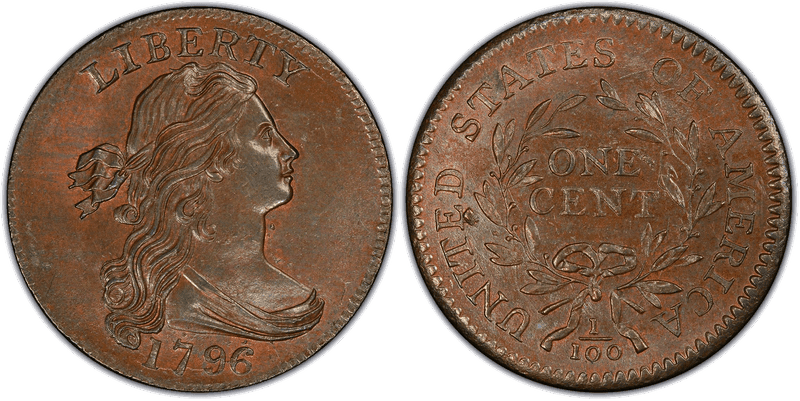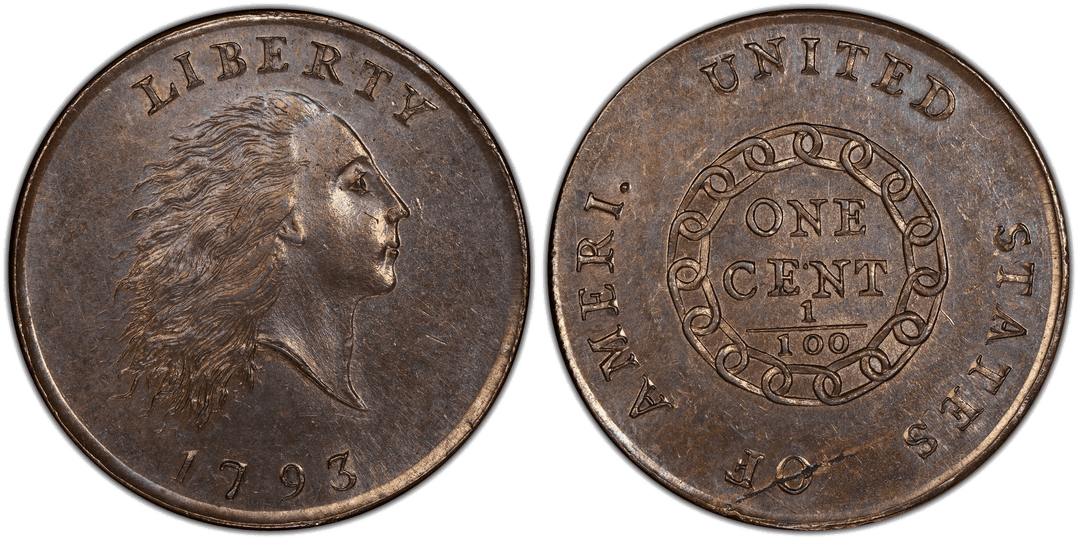
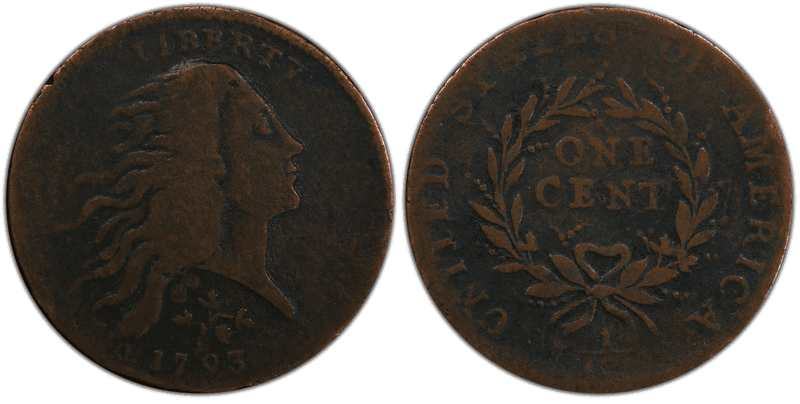
Flowing Hair Wreath Cents 1793

Coin Series
Flowing Hair Wreath Cents 1793 series coin

About This Series

Replacing the controversial chain reverse after barely a month of production, the 1793 Wreath cent introduced a more artistically refined design while retaining the flowing hair Liberty portrait that defined the Mint's earliest large cent production. The new reverse shows a wreath tied with a bow; who engraved it is uncertain (Walter Breen suggested Birch and Adam Eckfeldt, R. W. Julian credited Henry Voigt), and 63,353 were delivered before this type too gave way to the Liberty Cap design later in 1793. The varieties include the Vine and Bars edge, the Lettered Edge reading ONE HUNDRED FOR A DOLLAR, and the Strawberry Leaf, of which four are known. Struck in copper on 26-28mm planchets weighing approximately 13.48 grams, these coins represent the second chapter of the United States Mint's inaugural year of production. Sheldon's Early American Cents numbers the Wreath cent die pairings S-5 to S-11, with further NC numbers. The Wreath cent's improved aesthetics demonstrated the young Mint's responsiveness to public criticism — a pattern of design evolution that would continue throughout American coinage history.

From NumisDex News

Series Information

Composition
Copper

Browse by Base(1 base)

Showing all 1 listings

Strike Types & Varieties(3)

History

The Chain cent drew complaints almost as soon as it appeared, and Mint Director David Rittenhouse answered with a new design. The Wreath cent kept the idea of a Liberty head with flowing hair, now in higher relief, and replaced the chain with a wreath around ONE CENT. Under Liberty's bust, above the date, it added a small sprig of leaves, a device found on no other United States coin.

Who cut the dies is not settled. Joseph Wright and Robert Scot had not yet been hired. Walter Breen thought the work was shared by the engraver known only as Birch and by Adam Eckfeldt; R. W. Julian credited the chief coiner, Henry Voigt, with some help from Eckfeldt.

Coinage began on April 4, 1793. On April 19 the Mint's rolling mills broke down and the supply of blanks ran out, and striking did not resume until summer. Between April 9 and July 17 Voigt delivered 63,353 Wreath cents in nine batches. The first coins had the vine and bars edge of the Chain cents; later in the run the Mint switched to an edge lettered ONE HUNDRED FOR A DOLLAR. During the summer Joseph Wright joined the Mint as engraver, and his Liberty Cap design ended the Wreath type within months.

The plant in the wreath has puzzled collectors for more than a century. Breen read it as a composite: leaves like laurel, three-part leaves that may stand for cotton, and sprays of berries or florets.
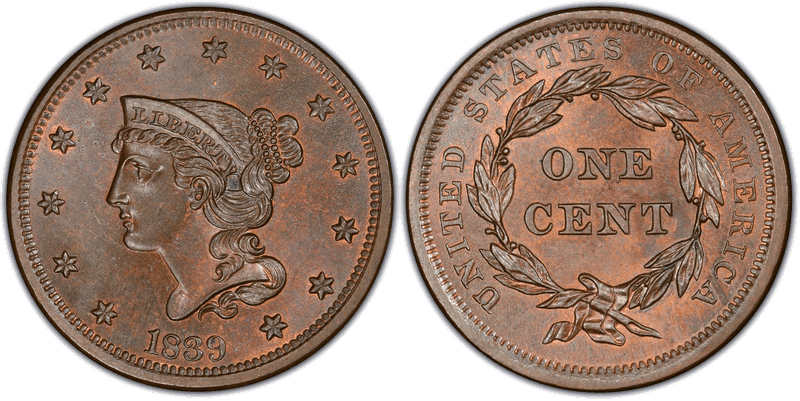
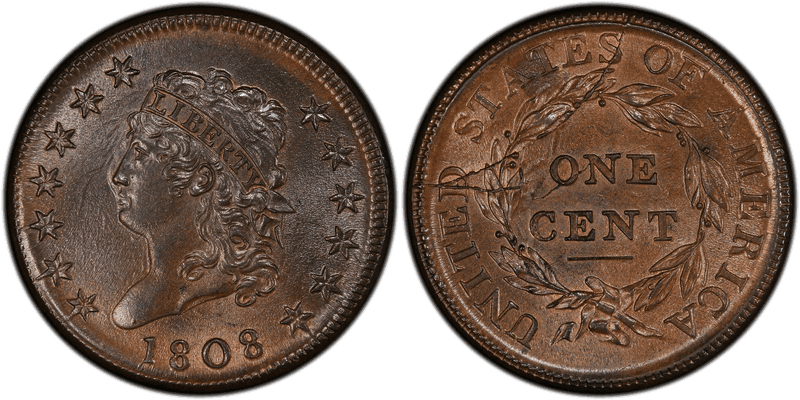
How to Identify It

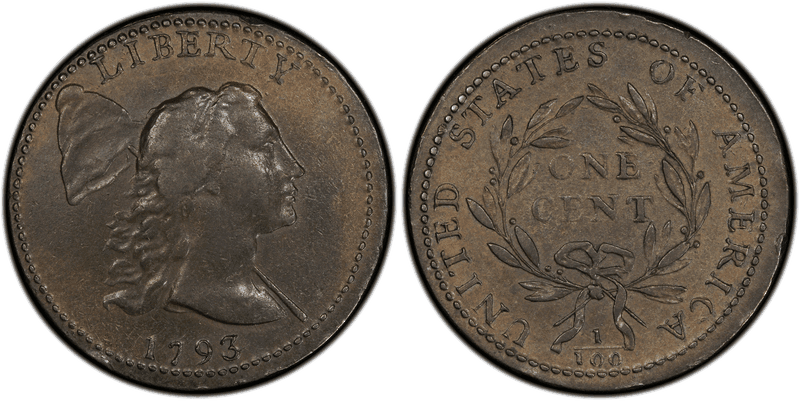
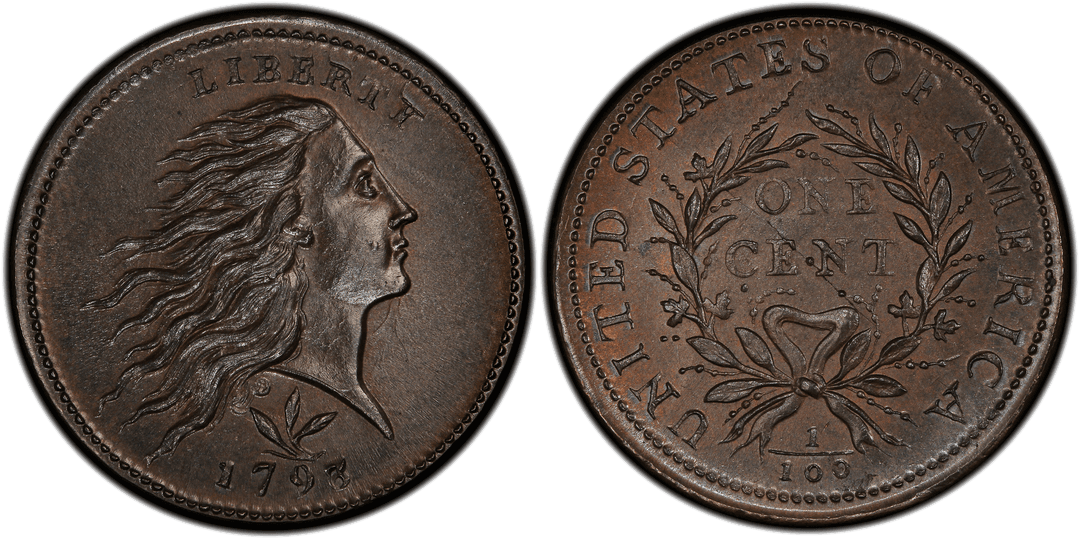
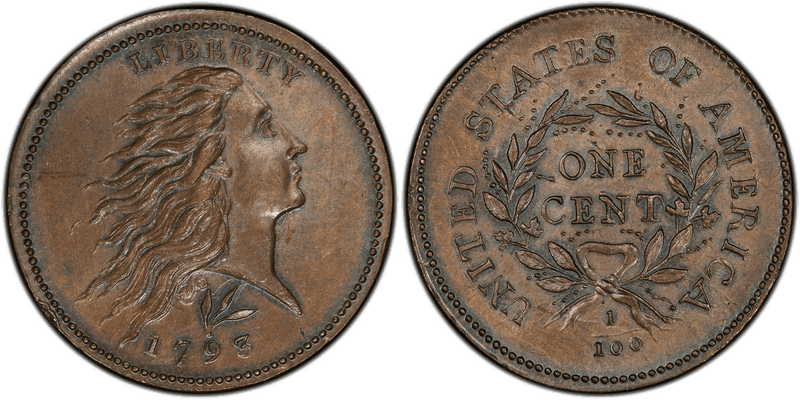
Obverse. Liberty faces right with long hair in separate pointed locks. LIBERTY is above; below the bust is a sprig of leaves, then the date 1793. A beaded border runs inside a raised rim. The sprig differs on every obverse die.

Reverse. A wreath tied with a bow surrounds ONE CENT, with the fraction 1/100 below the bow and UNITED STATES OF AMERICA around the edge, all inside a beaded border.

Edge. Vine and bars on most coins; lettered ONE HUNDRED FOR A DOLLAR on the last die pair, followed by one or two small leaves.

Mint mark. None. Every large cent was struck at Philadelphia.

Key Dates and Varieties

The Wreath cent was struck only in 1793. Collectors sort it by edge and by Sheldon number.

VarietySheldonHow to tell it
Vine and Bars edgeS-5 to S-11a, and NC numbersEdge of vines and bars, as on the Chain cents.
Lettered edgeS-11b, S-11cEdge reads ONE HUNDRED FOR A DOLLAR, followed by two leaves (S-11b) or one (S-11c). NGC knows one die pair.
Strawberry LeafNC-2, NC-3The sprig is a cluster of trefoils with a small blossom. Four known, all with vine and bars edges; John Kleeberg considers them contemporary counterfeits.

The 63,353 figure covers all of them. Breen also records a few prooflike pieces struck on polished blanks when the design began, for presentation.

In Our Catalog

3 errors and varieties are listed for this series. Browse them by type:

Recently added

Mintages

Flowing Hair Wreath Cents 1793 mintages by year and mint, taken from each coin's page in our catalog. Each figure opens that coin's page, which lists its varieties and errors. A dash means no figure was recorded. Where one issue was struck in more than one type, each type is listed.

YearP
1793

Composition

  • Composition: copper, mostly from scrap copper bought by the Mint
  • Weight: 13.48 grams standard
  • Diameter: about 26 to 28 mm (NGC); Breen gives 27 mm as normal, with coins from 26 to 28.5 mm
  • Edge: vine and bars, or lettered ONE HUNDRED FOR A DOLLAR

FAQ

How many 1793 Wreath cents were made?

The Mint delivered 63,353 Wreath cents between April and July 1793. How that total divides among the edge types and die pairs was not recorded.

What is the difference between the vine and bars edge and the lettered edge?

The first Wreath cents carried the same vine and bars edge as the Chain cents. Partway through production the Mint changed to an edge lettered ONE HUNDRED FOR A DOLLAR, which continued on the Liberty Cap cents. NGC knows a single die pair with the lettered edge, in two edge versions, S-11b and S-11c.

What is the Strawberry Leaf cent?

A Wreath cent whose sprig above the date is made of trefoil leaves and a small blossom instead of the usual leaves. Four are known, all well worn. They come from one obverse die paired with two reverses, Sheldon NC-2 and NC-3, and all have the vine and bars edge. John Kleeberg has argued that they are contemporary counterfeits rather than Mint products.

Who designed the Wreath cent?

It is not certain. Walter Breen thought the dies were the work of the engraver known only as Birch together with Adam Eckfeldt; R. W. Julian credited Henry Voigt with some help from Eckfeldt. NGC lists the dies as engraved by Voigt.

How can I tell a Wreath cent from a Chain cent?

Look for the small sprig of leaves between Liberty's bust and the date, which no other United States coin has, and for the wreath on the reverse in place of the chain. Wreath cents also have a beaded border, while Chain cents have a plain raised rim.

↑ Back to the coins: every year, mint, variety and error

Explore Other Denominations

Collector Essentials

Tools and references for building and protecting your coin collection.

As an Amazon Associate, NumisDex earns from qualifying purchases.