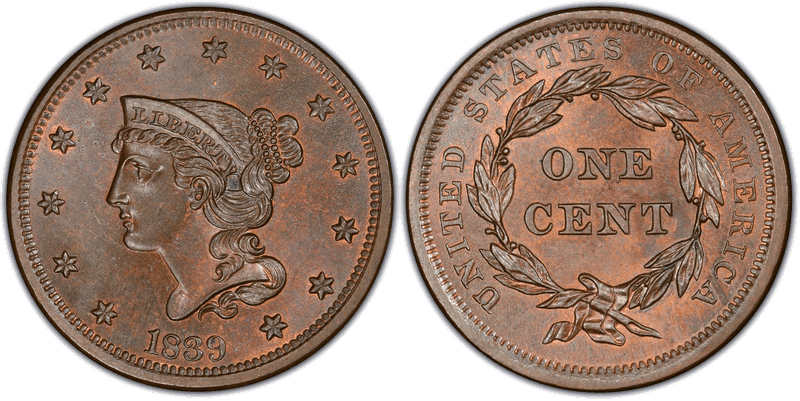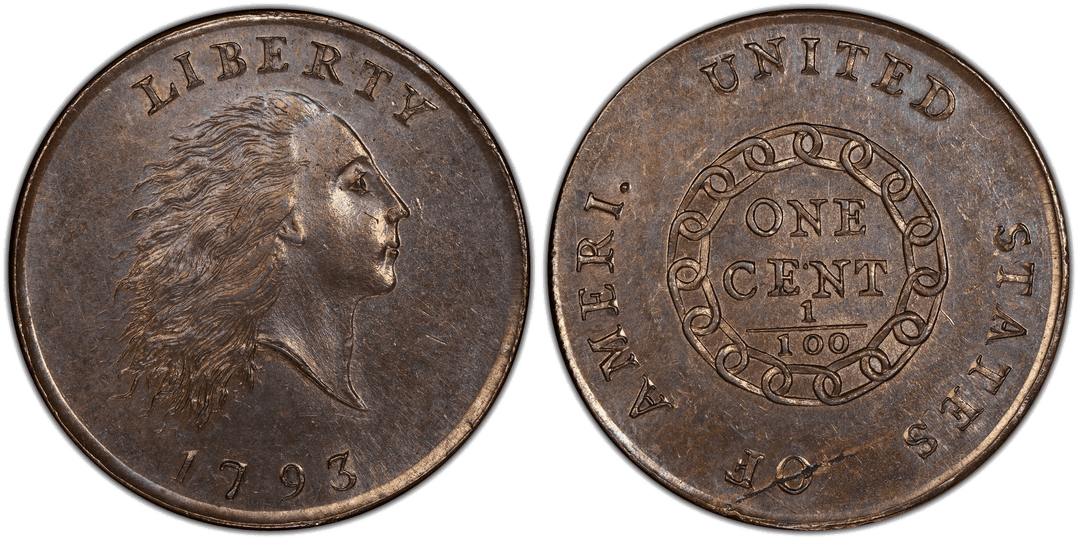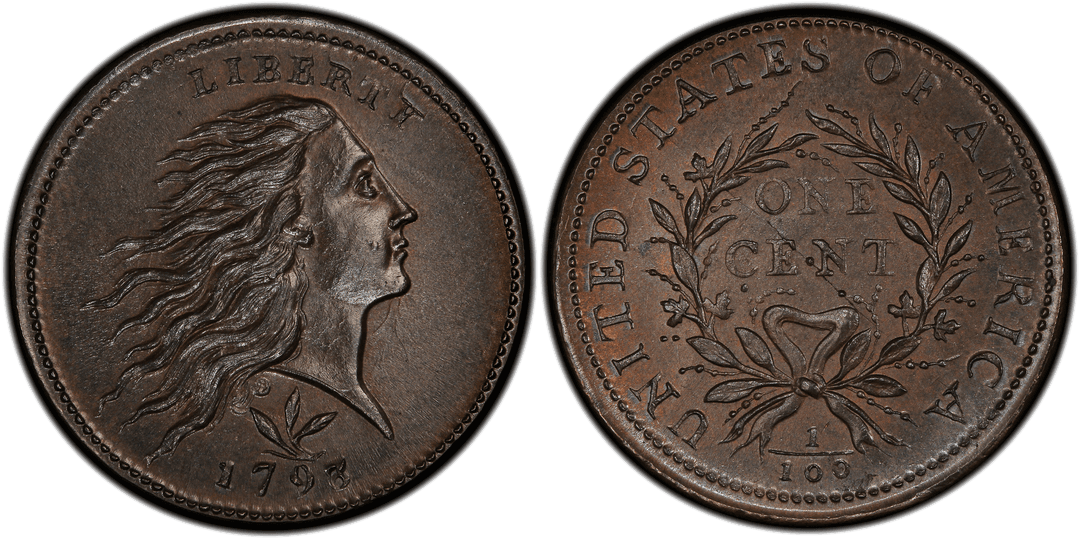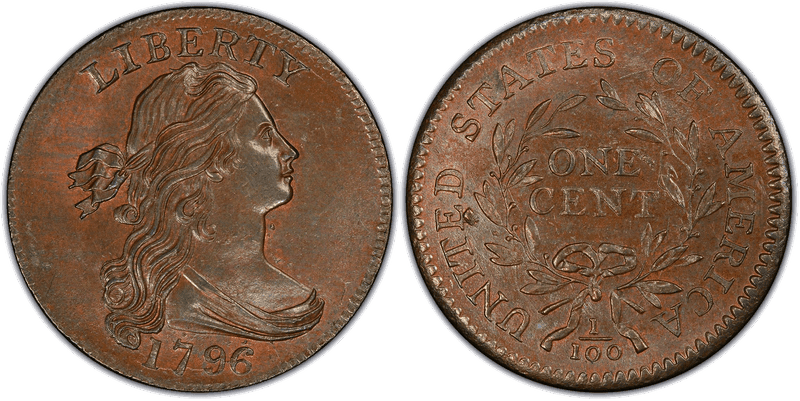
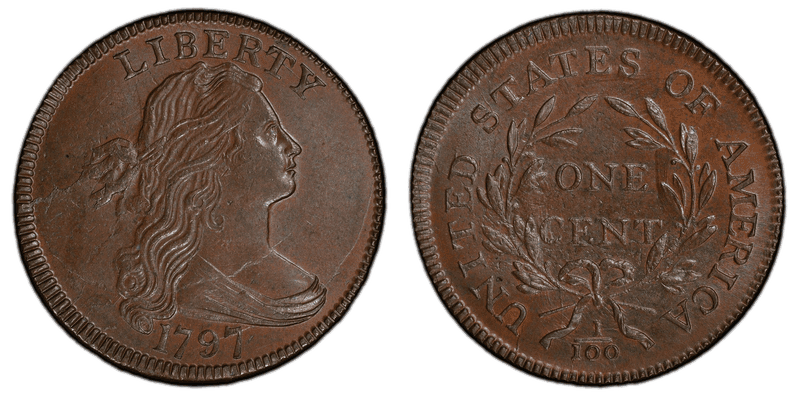
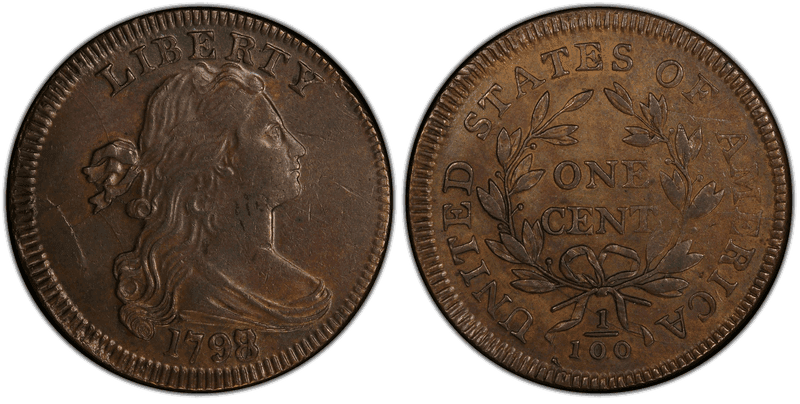
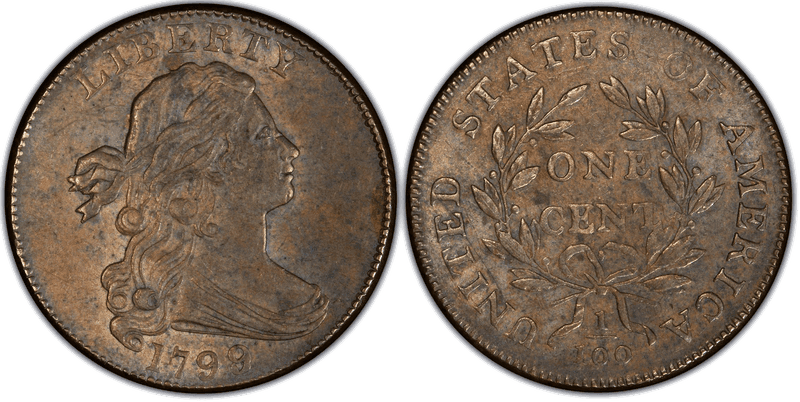
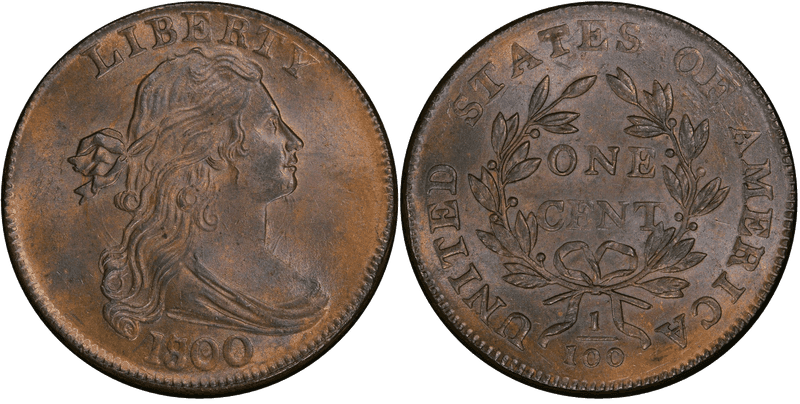
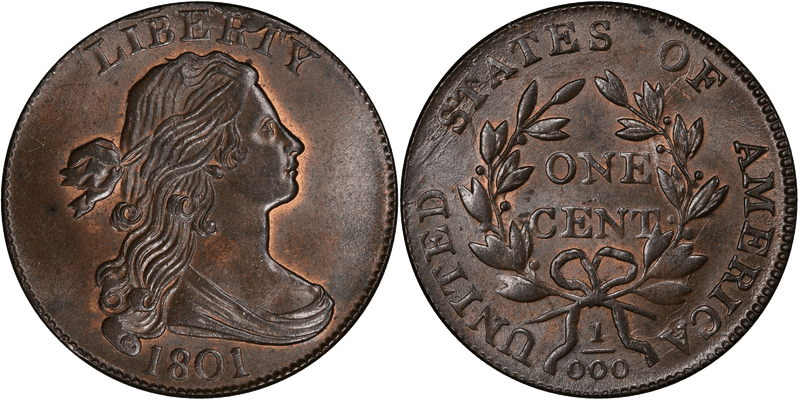
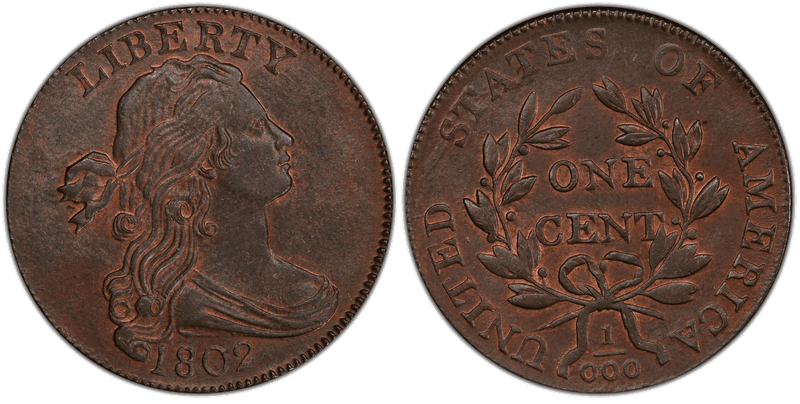
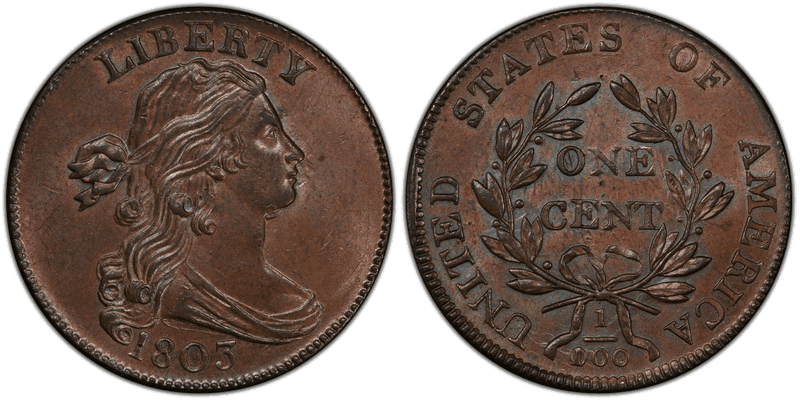
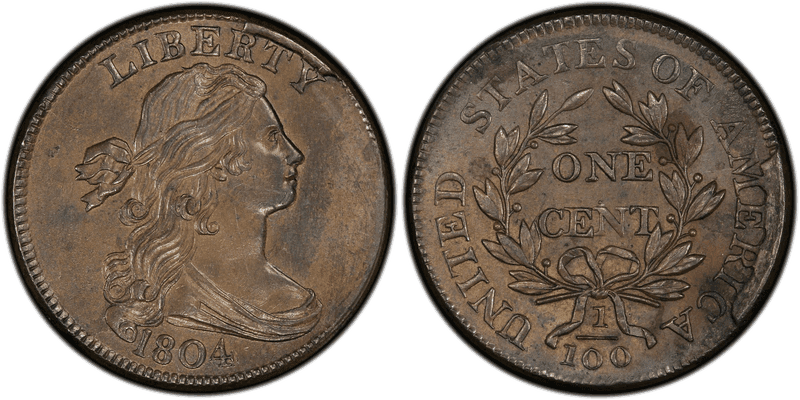
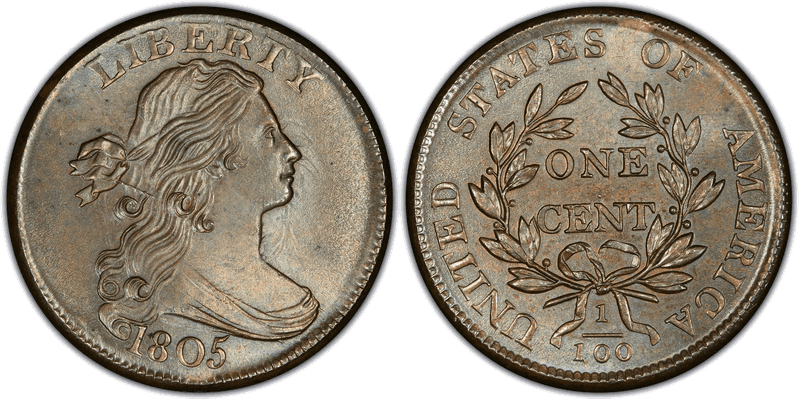
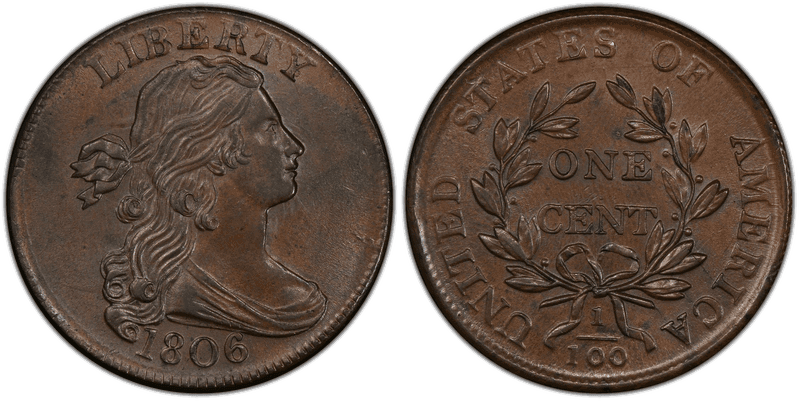
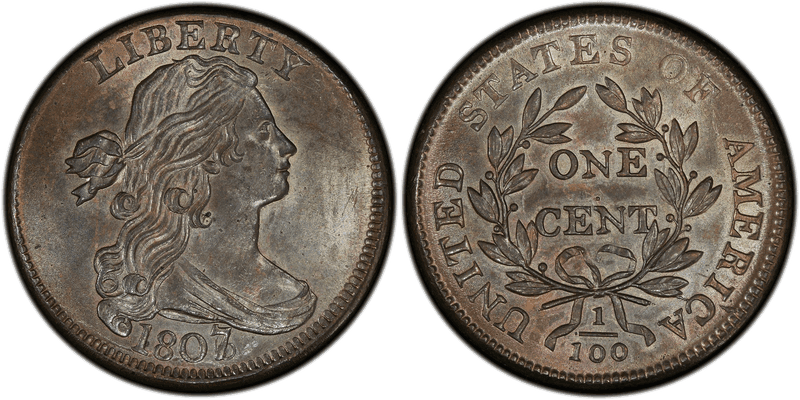
In 1795 the new Mint director, Henry William DeSaussure, set out to replace Robert Scot's Flowing Hair design. According to a family tradition published decades later, the portrait painter Gilbert Stuart supplied a drawing of Liberty, and the socialite Ann Willing Bingham was his model. Walter Breen's encyclopedia repeats the story but records that historians including R. W. Julian doubt much of it, calling the model's name highly speculative. What is certain is that Scot's Draped Bust portrait appeared first on the silver dollar in 1795 and reached the cent in the middle of 1796.
Scot's Liberty faces right, her hair loose behind and tied with a ribbon, a drape across her bust. In its first year the new cent was paired with three styles of reverse wreath, and collectors name each after the year it was standard: the Reverse of 1794, of 1795 and of 1797. The 1797 style became the norm and stayed in use until 1807.
The first shipment of ready-made cent blanks from Matthew Boulton's works in England reached Philadelphia on August 28, 1797. The Mint director was delighted with their quality, and the Mint went on buying Boulton blanks for decades. A group of bright red 1796 and 1797 cents on these blanks, the Nichols Find, came onto the market around 1863 and supplies many of the high-grade coins seen today.
Mintage figures for these years are by calendar year, not by date on the coin. Dies were often used for as long as they lasted, whatever year they bore, so cents dated 1798 were still being struck in 1799, and most cents struck in 1804 were dated 1803. Several of the date figures quoted today are modern reconstructions, and the sources sometimes disagree.
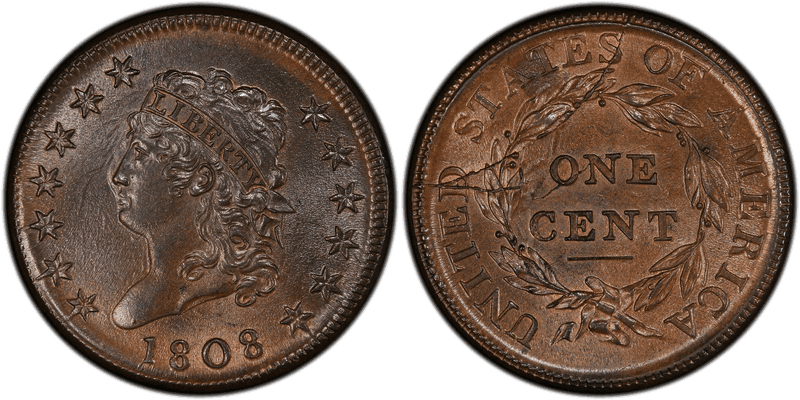
Dies were also made in batches and dated as needed, which explains the many overdates, from 1798/7 to 1807/6. John Reich's Classic Head design replaced the Draped Bust in 1808.