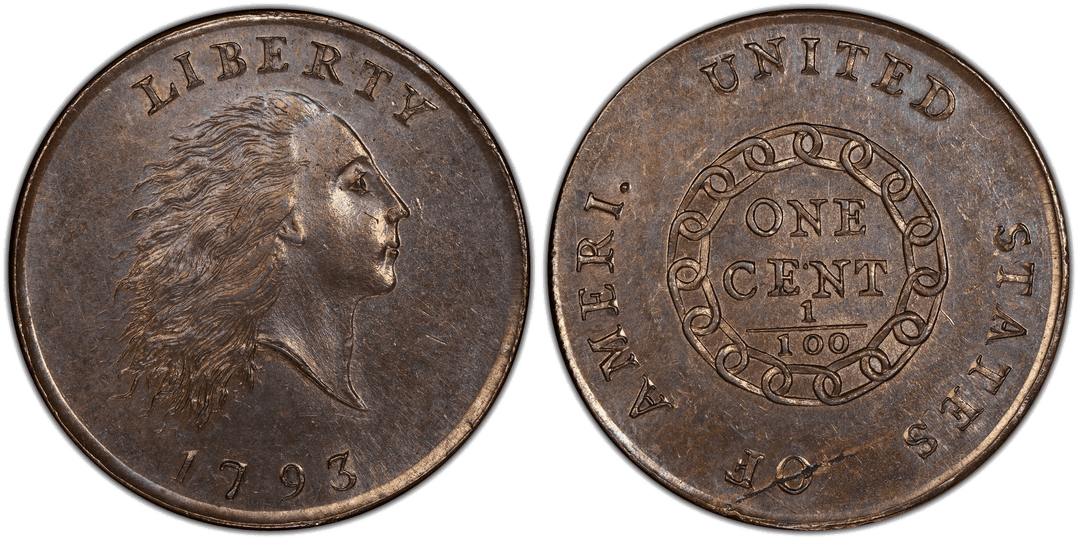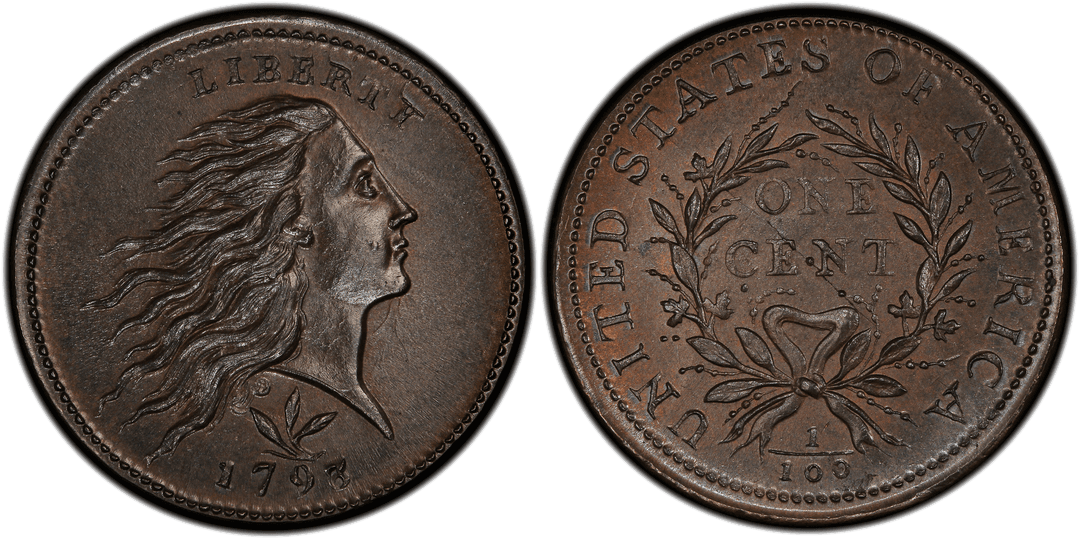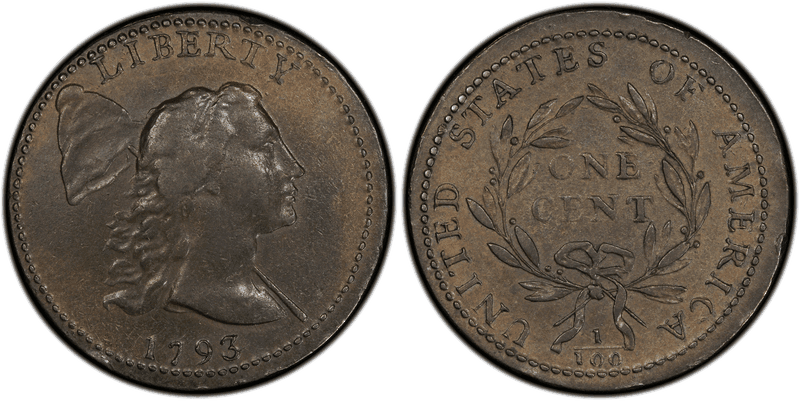
In the summer of 1793 the Mint finally hired an engraver, the portrait painter Joseph Wright. His first task was a device punch for the cent, so that the head could be sunk into every working die instead of being drawn by hand. Wright modeled his Liberty on Augustin Dupré's LIBERTAS AMERICANA medal, turned to face right, with a liberty cap on a pole behind her head. The reverse wreath was simpler than the Wreath cent's, and the blanks were made a little wider.
Yellow fever reached Philadelphia that August. Wright caught it and died in mid-September, probably without seeing a single cent struck from his dies. On September 18 the coiner delivered 11,056 Liberty Cap cents, the whole coinage of the type for 1793; within hours the Mint closed for the epidemic, and it struck no more cents until January 10, 1794.
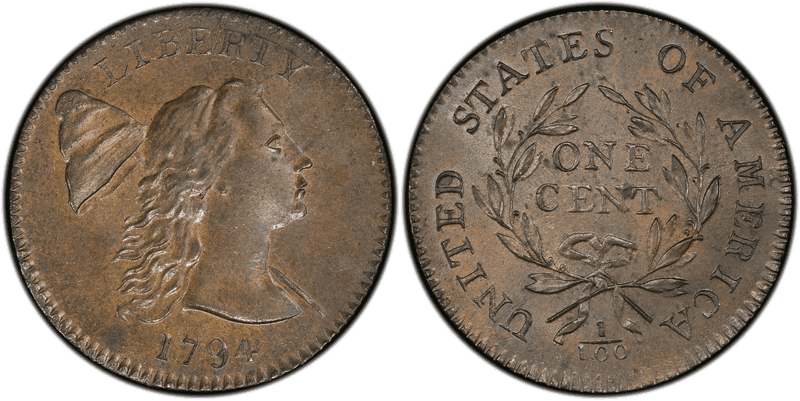
Robert Scot, Wright's successor, made the cents of 1794. The Mint struck 918,521 that year, mostly on plate copper imported from Taylor & Bailey of London. Three portrait styles appear on 1794 dies, and Scot's engraving department also produced oddities such as the Starred Reverse and a die without the fraction bar.
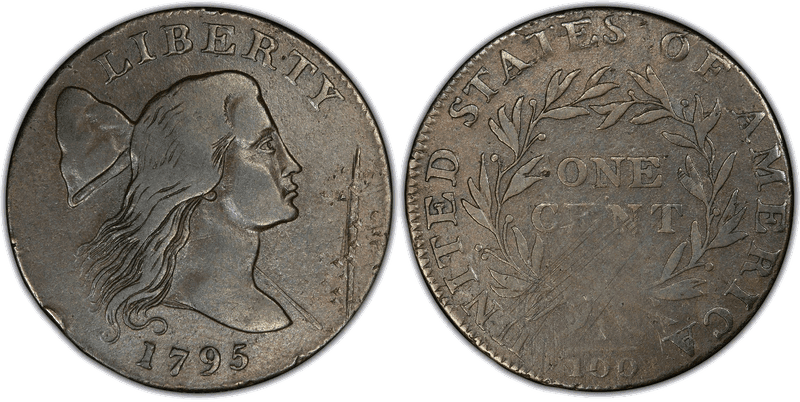
In 1795 the Mint gave most of its attention to silver and gold, and Scot's assistant John Smith Gardner is credited with the cent head used on every 1795 obverse. The first 37,000 cents of 1795, delivered on October 27, were struck at the old 208-grain standard with lettered edges. Copper had become so dear that each cent cost more than a cent to make, and in late December President Washington cut the weight to 168 grains under the Act of March 3, 1795. The lighter cents had plain edges.
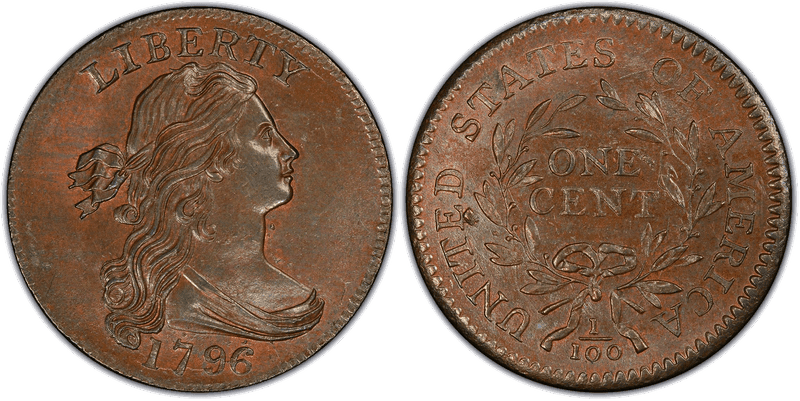
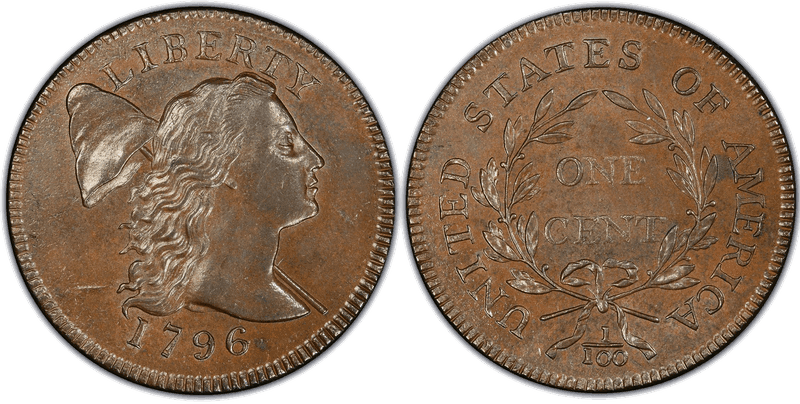
Scot cut new, higher-relief heads for 1796, and 109,825 Liberty Cap cents were delivered in April and May of that year. They wore down quickly. By midsummer the Draped Bust design had replaced the Liberty Cap on the cent.