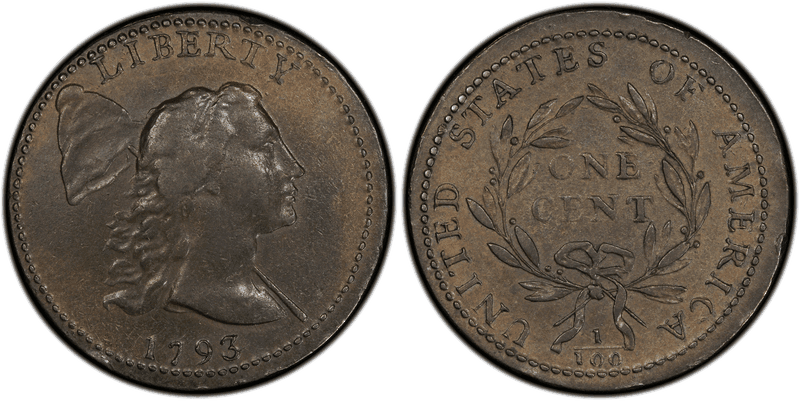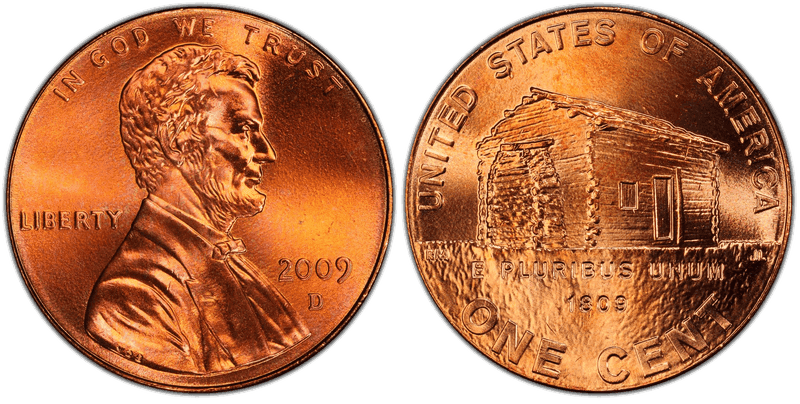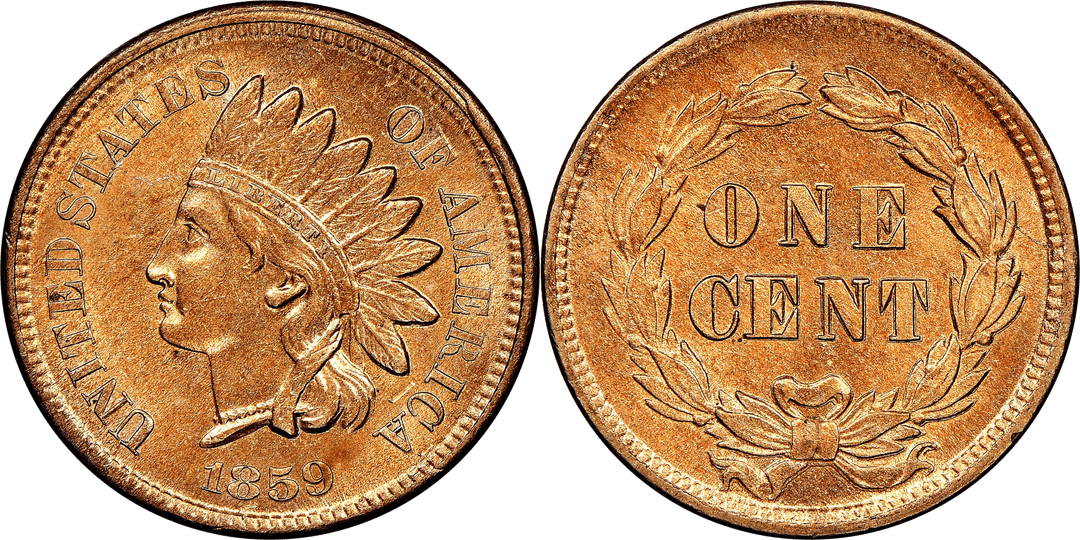
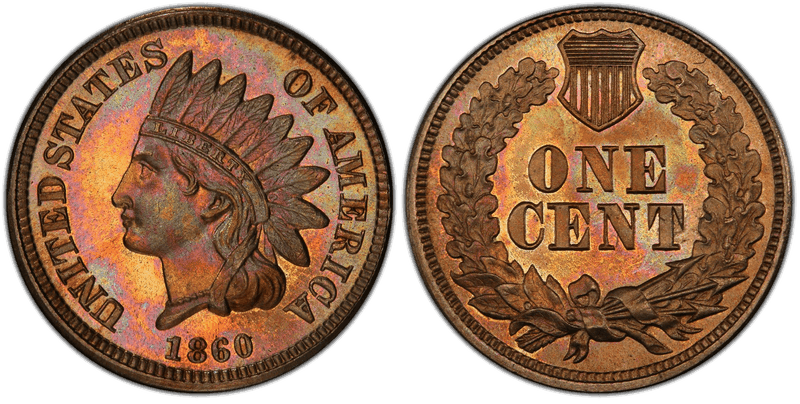
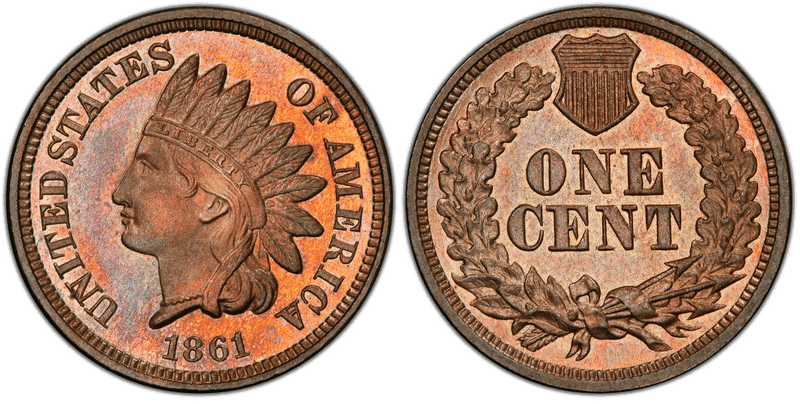
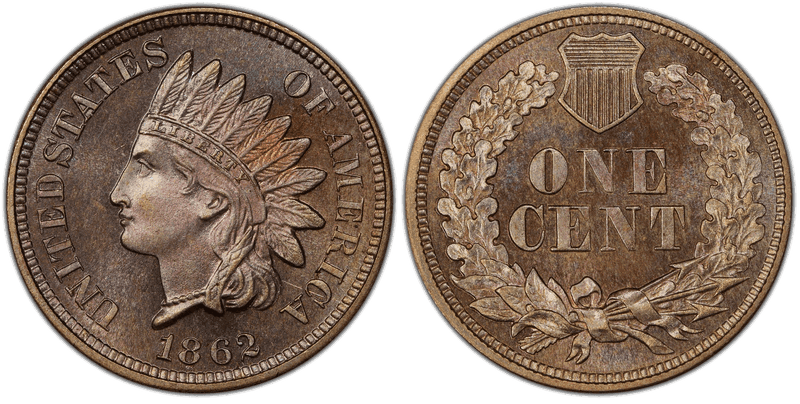
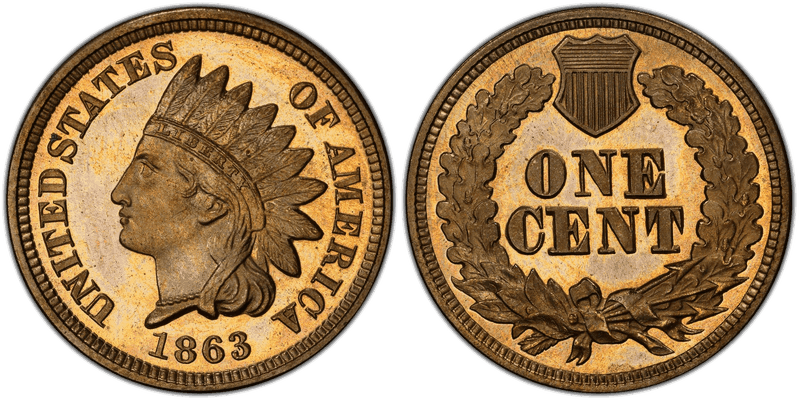
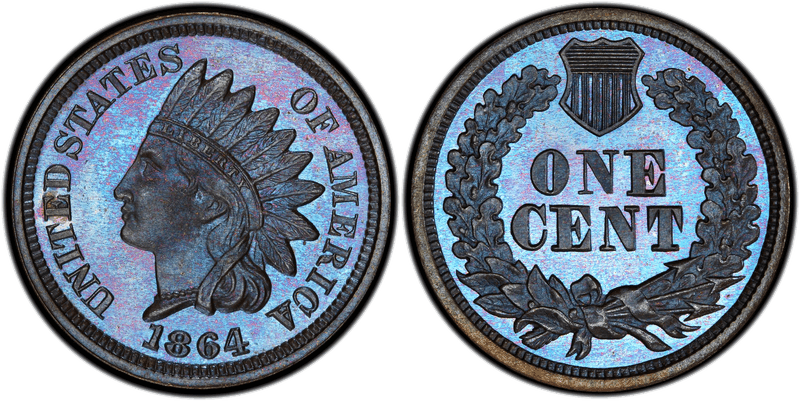
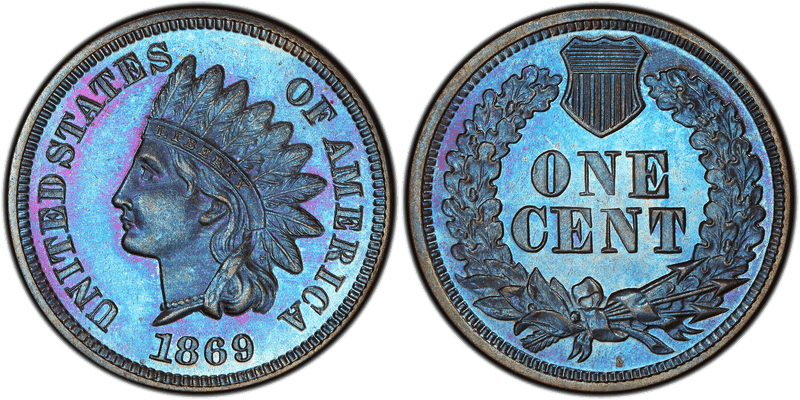
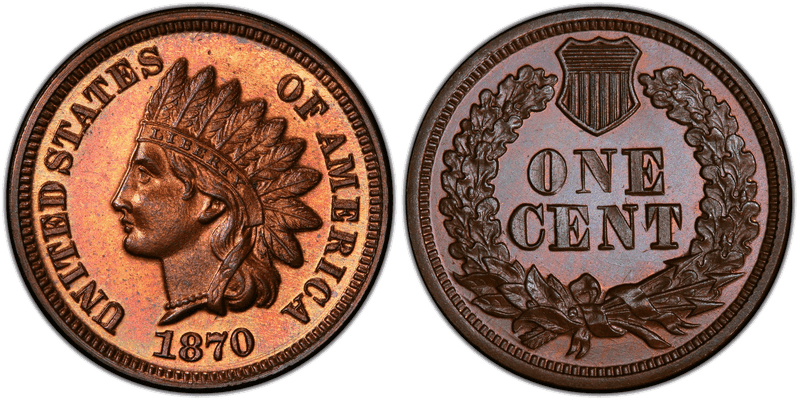
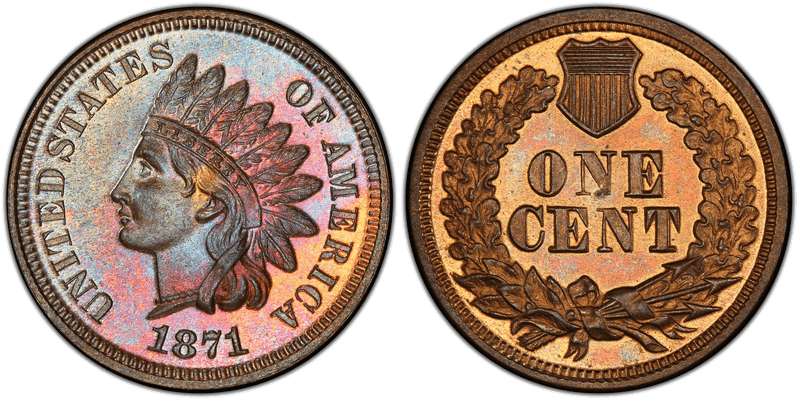
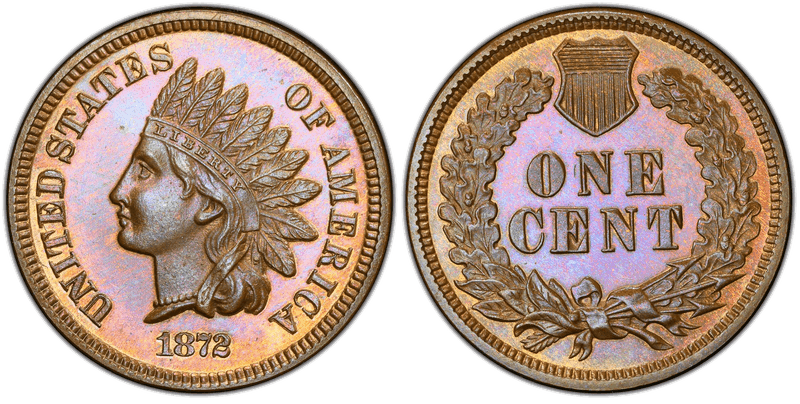
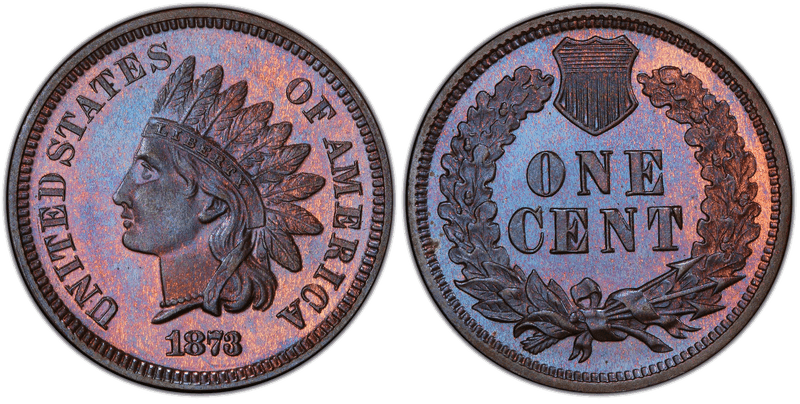
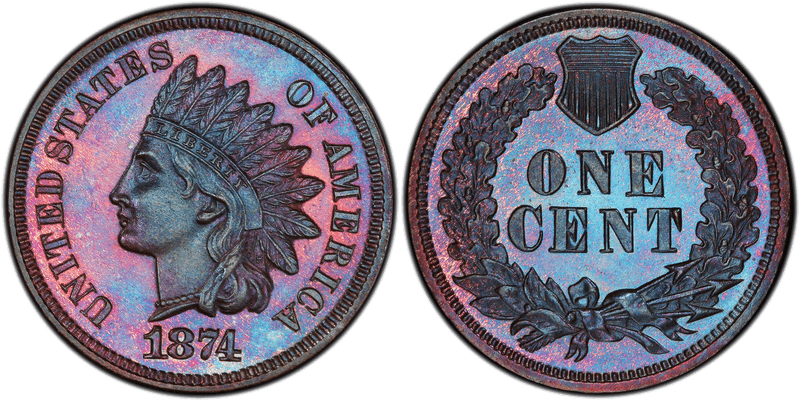
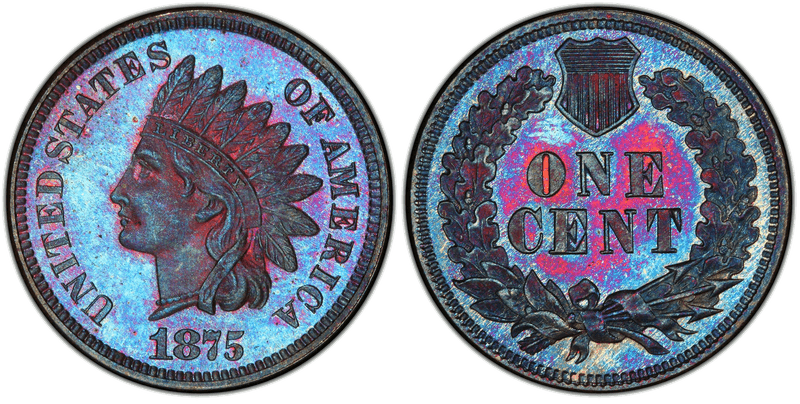
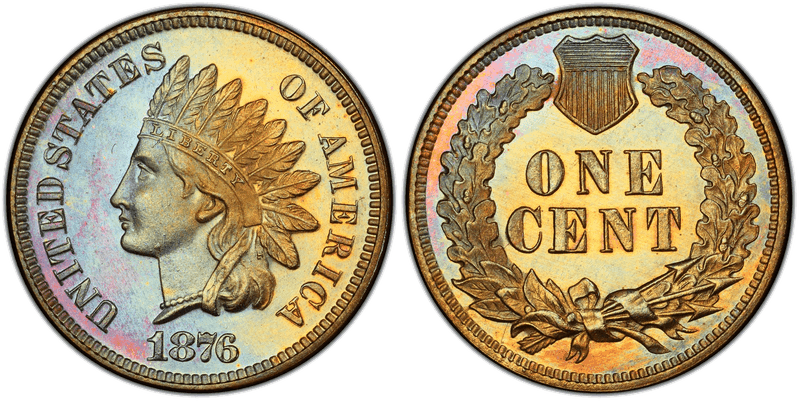
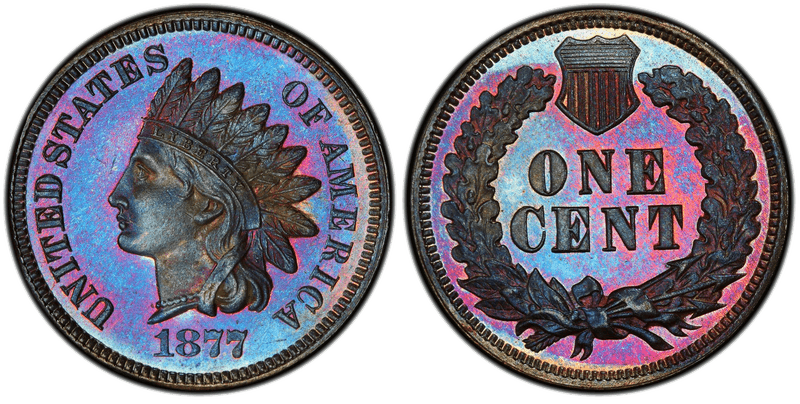
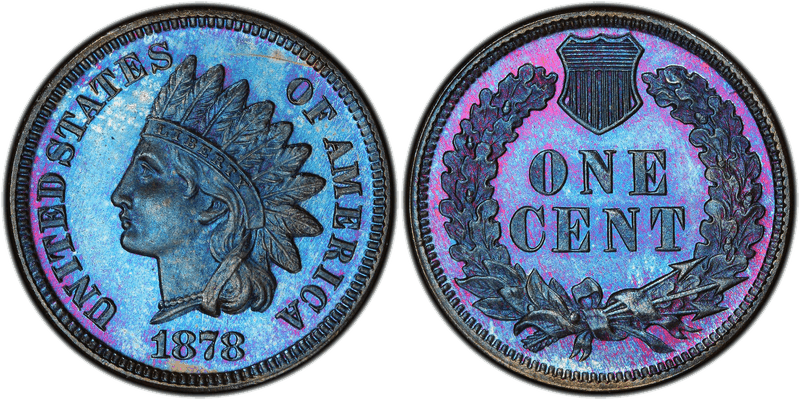
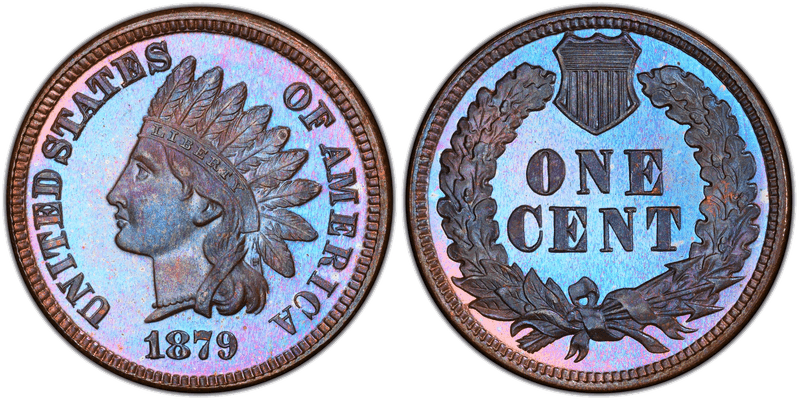
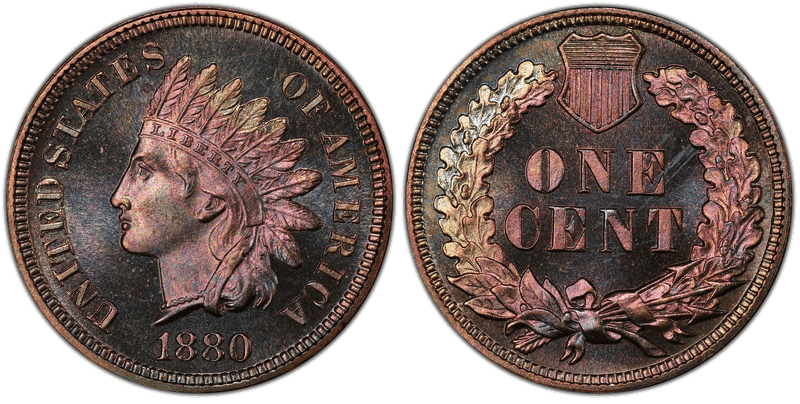
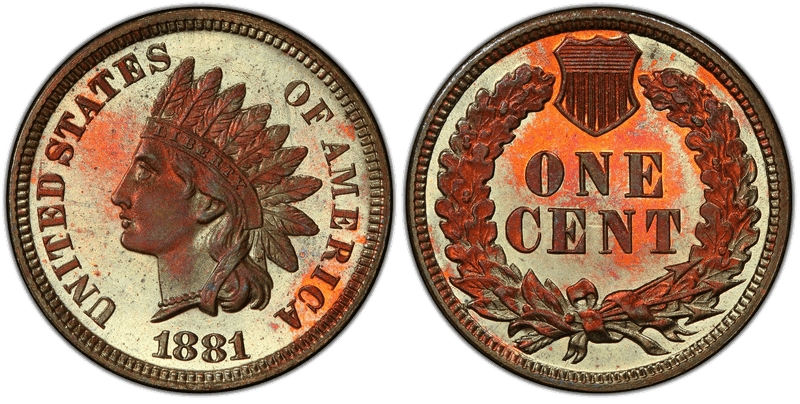
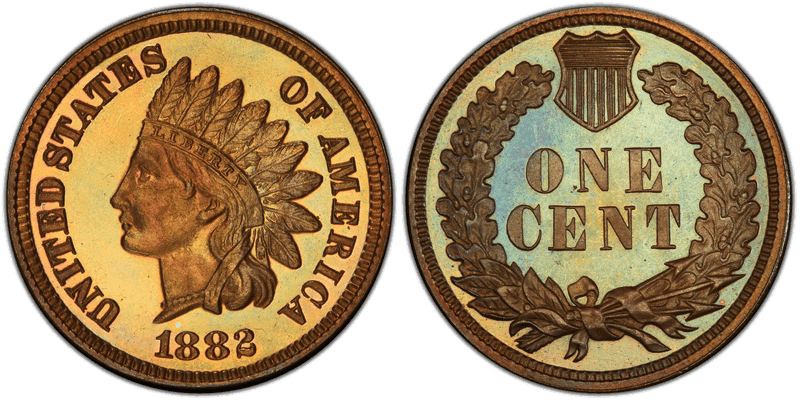
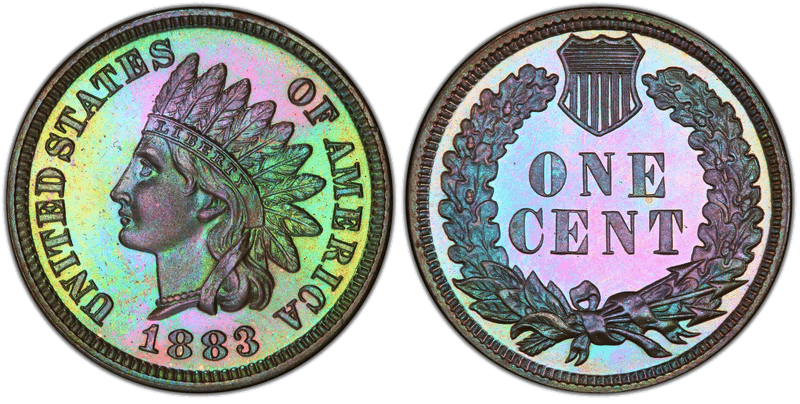
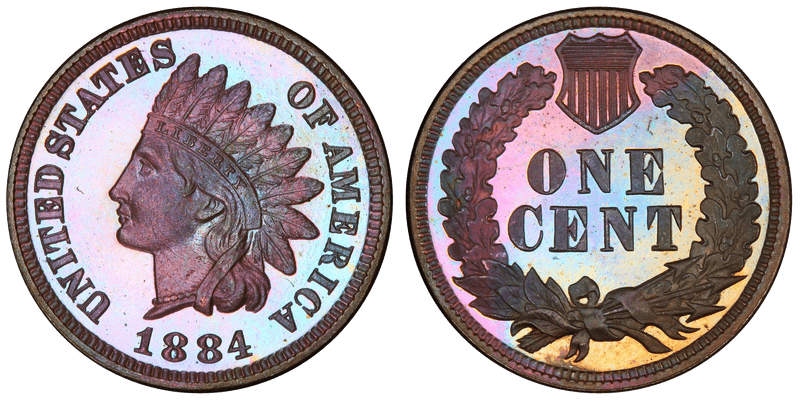
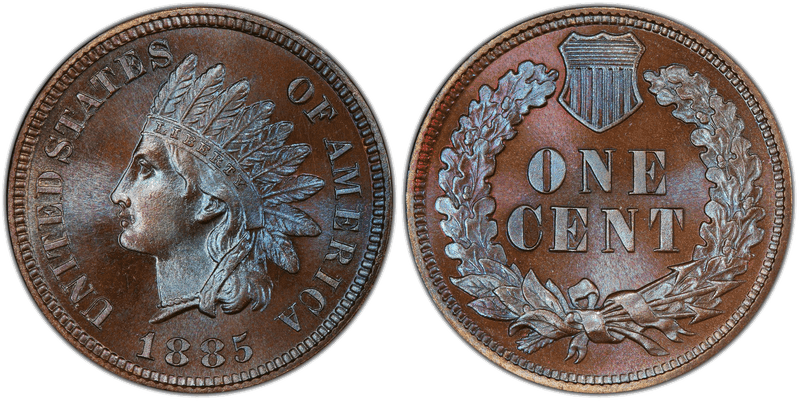
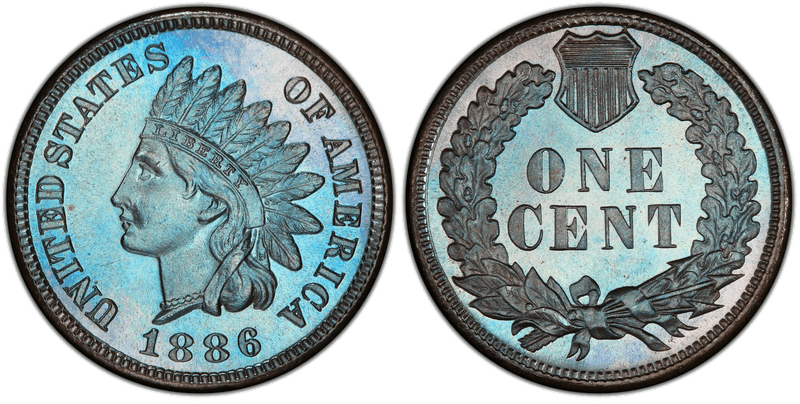
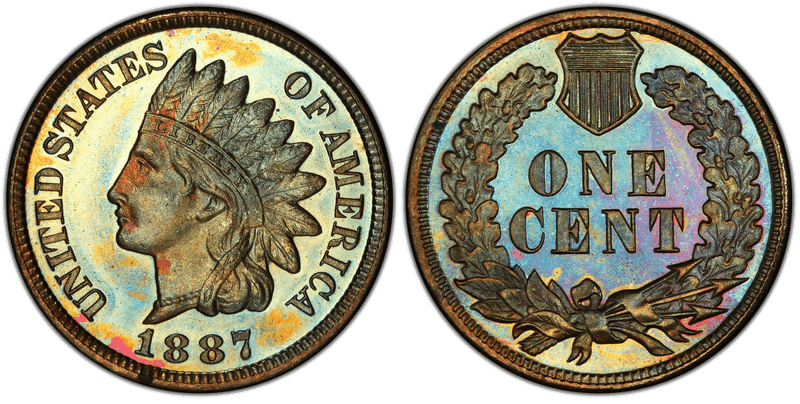
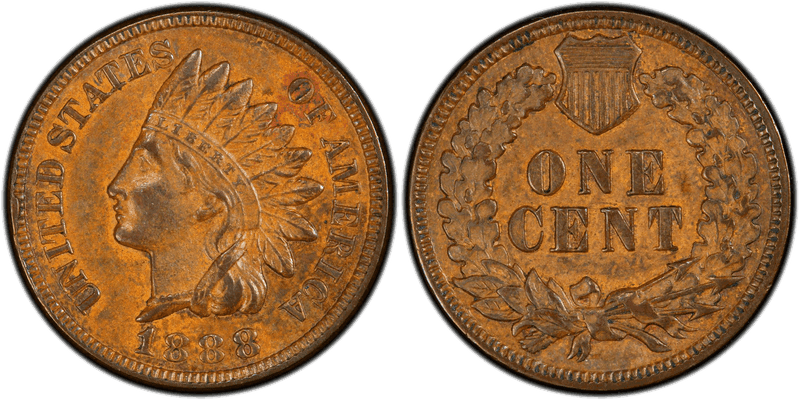
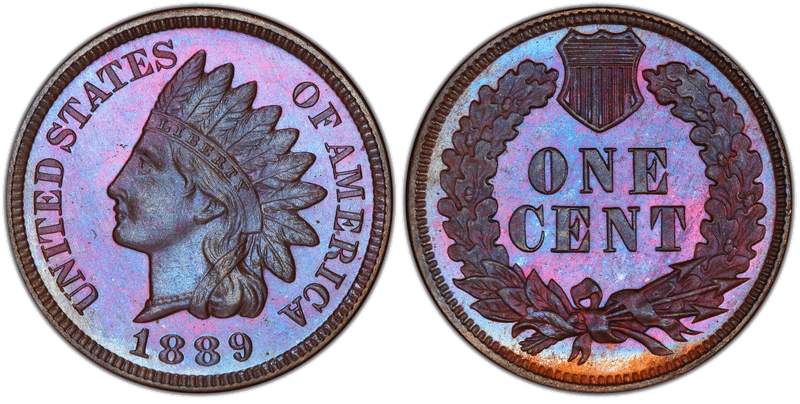
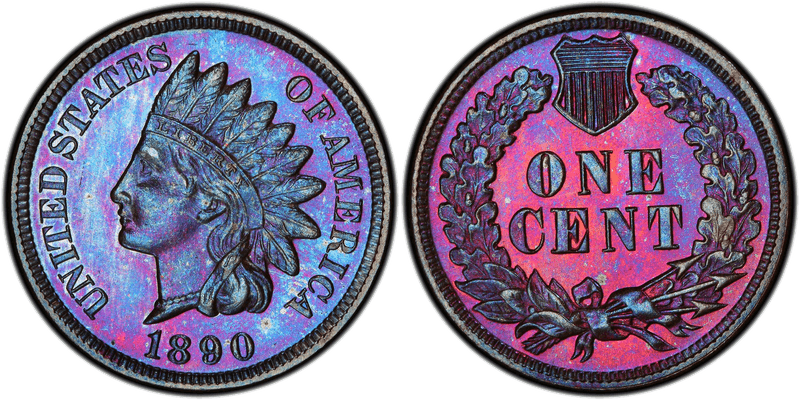
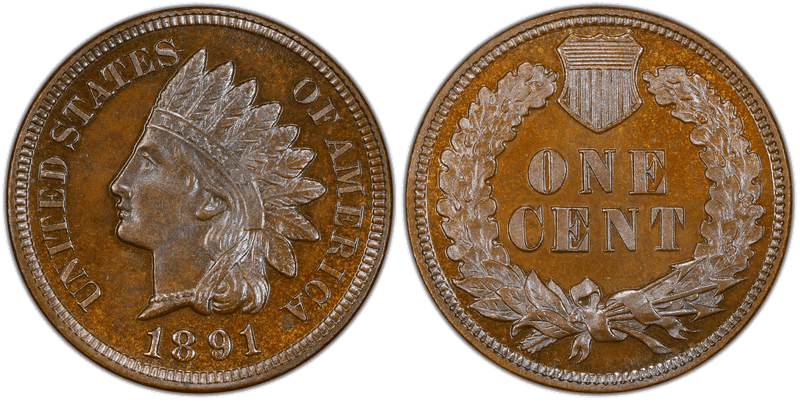
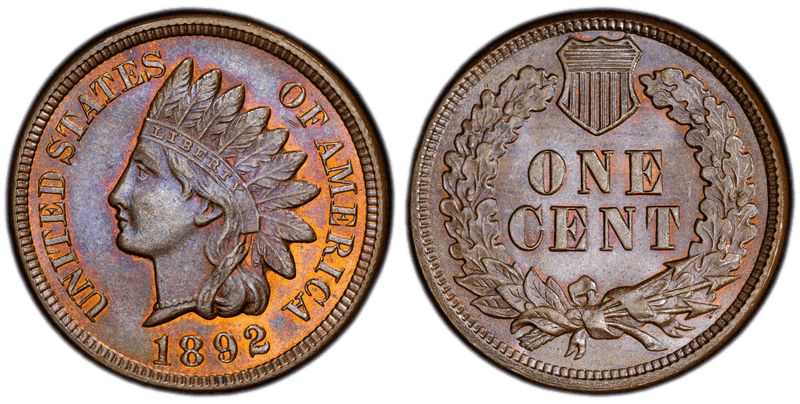
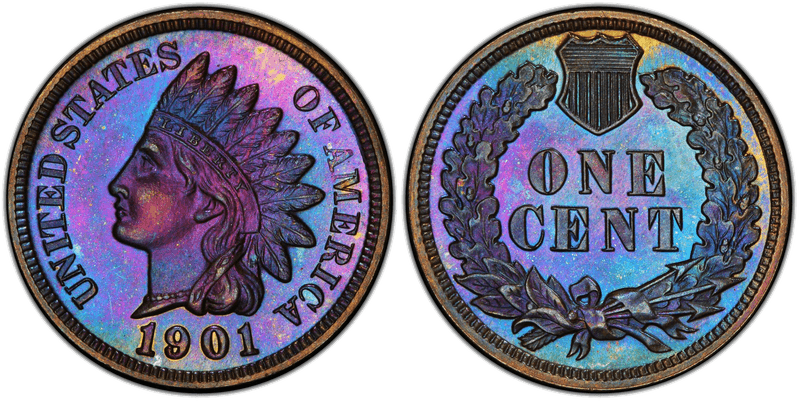
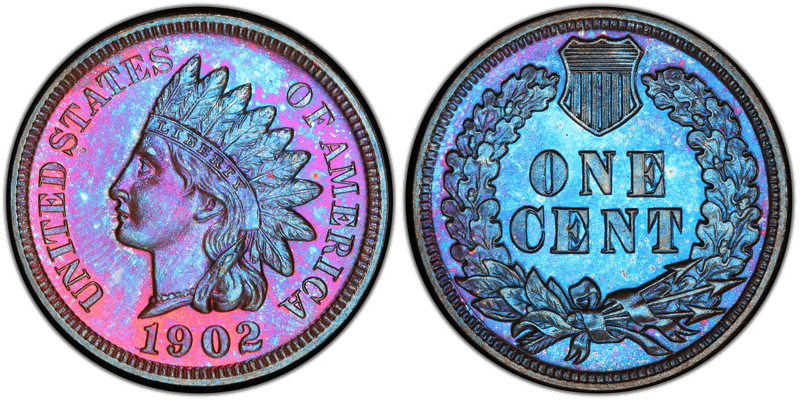
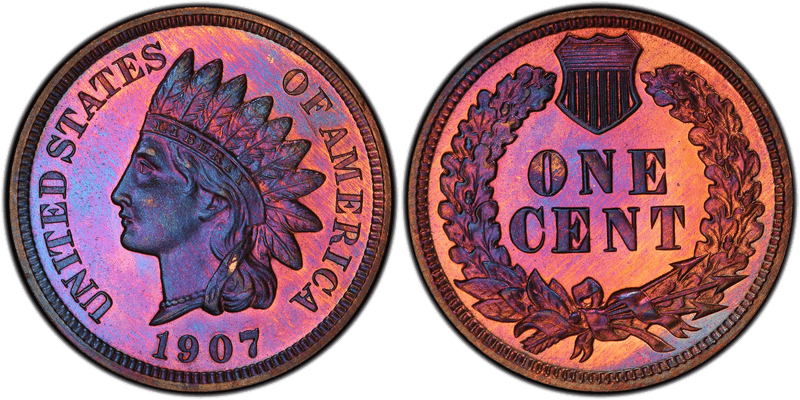
Indian Head Cents 1859-1909

Coin Series
Indian Head Cents 1859-1909 series coin

About This Series

For half a century, James B. Longacre's portrait of Liberty wearing a Native American feathered headdress defined the American cent, becoming one of the most recognizable and beloved designs in U.S. coinage history. A long-repeated story holds that Longacre's daughter Sarah posed for the portrait, but Longacre himself described the profile as derived from the Venus Accroupie, a classical statue then on display in Philadelphia. The series underwent a pivotal compositional transition in 1864, shifting from copper-nickel (which proved difficult to strike and hard on dies) to a lighter bronze planchet. The Act of April 22, 1864 set the bronze cent at 48 grains, close to the weight of the private Civil War tokens that had filled the gap while copper-nickel cents were hoarded. The 1877 stands as the undisputed key date with just 852,500 struck during an economic depression, while the 1909-S, with 309,000 struck before production stopped early that year, commands strong premiums. Notable varieties include the 1869/9 repunched date and the 1873 Doubled LIBERTY doubled die, and the popular 1864 L-on-ribbon variety marking Longacre's initial on the design. Struck at 19mm diameter across 51 years of production, Indian Head cents circulated through the Civil War, Reconstruction, the Gilded Age, and into the Progressive Era. The series was supplanted by Victor David Brenner's Lincoln cent in 1909, ending Longacre's legacy design. Collectors can pursue the series by date, mintmark, and the extensive Snow die variety catalog, making Indian Heads one of the most versatile and rewarding denomination series in American numismatics.

From NumisDex News

Series Information

Production Years
1859-1909
Designer
James Barton Longacre
Composition
88% Copper, 12% Nickel (1859-1864); 95% Copper, 5% Tin and Zinc (1864-1909)
Diameter
19mm
Edge
Plain

Browse by Base(51 bases)

1859 Indian Head Cent
BaseVerified

1859 Indian Head Cent

4 Strike Types
8 Error Listings
1860 Indian Head Cent
BaseVerified

1860 Indian Head Cent

4 Strike Types
1 Error Listing
1861 Indian Head Cent
BaseVerified

1861 Indian Head Cent

2 Strike Types
8 Error Listings
1862 Indian Head Cent
BaseVerified

1862 Indian Head Cent

2 Strike Types
23 Error Listings
1863 Indian Head Cent
BaseVerified

1863 Indian Head Cent

2 Strike Types
47 Error Listings
1864 Indian Head Cent
BaseVerified

1864 Indian Head Cent

6 Strike Types
51 Error Listings
1865 Indian Head Cent
BaseVerified

1865 Indian Head Cent

3 Strike Types
31 Error Listings
1866 Indian Head Cent
BaseVerified

1866 Indian Head Cent

2 Strike Types
12 Error Listings
1867 Indian Head Cent
BaseVerified

1867 Indian Head Cent

3 Strike Types
12 Error Listings
1868 Indian Head Cent
BaseVerified

1868 Indian Head Cent

2 Strike Types
8 Error Listings
1869 Indian Head Cent
BaseVerified

1869 Indian Head Cent

2 Strike Types
7 Error Listings
1870 Indian Head Cent
BaseVerified

1870 Indian Head Cent

2 Strike Types
12 Error Listings
1871 Indian Head Cent
BaseVerified

1871 Indian Head Cent

2 Strike Types
6 Error Listings
1872 Indian Head Cent
BaseVerified

1872 Indian Head Cent

2 Strike Types
7 Error Listings
1873 Indian Head Cent
BaseVerified

1873 Indian Head Cent

4 Strike Types
5 Error Listings
1874 Indian Head Cent
BaseVerified

1874 Indian Head Cent

2 Strike Types
6 Error Listings
1875 Indian Head Cent
BaseVerified

1875 Indian Head Cent

2 Strike Types
8 Error Listings
1876 Indian Head Cent
BaseVerified

1876 Indian Head Cent

2 Strike Types
3 Error Listings
1877 Indian Head Cent
BaseVerified

1877 Indian Head Cent

2 Strike Types
1878 Indian Head Cent
BaseVerified

1878 Indian Head Cent

2 Strike Types
4 Error Listings
1879 Indian Head Cent
BaseVerified

1879 Indian Head Cent

2 Strike Types
3 Error Listings
1880 Indian Head Cent
BaseVerified

1880 Indian Head Cent

2 Strike Types
5 Error Listings
1881 Indian Head Cent
BaseVerified

1881 Indian Head Cent

2 Strike Types
3 Error Listings
1882 Indian Head Cent
BaseVerified

1882 Indian Head Cent

2 Strike Types
5 Error Listings
1883 Indian Head Cent
BaseVerified

1883 Indian Head Cent

2 Strike Types
7 Error Listings
1884 Indian Head Cent
BaseVerified

1884 Indian Head Cent

2 Strike Types
4 Error Listings
1885 Indian Head Cent
BaseVerified

1885 Indian Head Cent

2 Strike Types
5 Error Listings
1886 Indian Head Cent
BaseVerified

1886 Indian Head Cent

4 Strike Types
5 Error Listings
1887 Indian Head Cent
BaseVerified

1887 Indian Head Cent

3 Strike Types
21 Error Listings
1888 Indian Head Cent
BaseVerified

1888 Indian Head Cent

3 Strike Types
9 Error Listings
1889 Indian Head Cent
BaseVerified

1889 Indian Head Cent

2 Strike Types
6 Error Listings
1890 Indian Head Cent
BaseVerified

1890 Indian Head Cent

2 Strike Types
9 Error Listings
1891 Indian Head Cent
BaseVerified

1891 Indian Head Cent

2 Strike Types
5 Error Listings
1892 Indian Head Cent
BaseVerified

1892 Indian Head Cent

2 Strike Types
10 Error Listings
1893 Indian Head Cent
BaseVerified

1893 Indian Head Cent

2 Strike Types
7 Error Listings
1894 Indian Head Cent
BaseVerified

1894 Indian Head Cent

3 Strike Types
3 Error Listings
1895 Indian Head Cent
BaseVerified

1895 Indian Head Cent

2 Strike Types
5 Error Listings
1896 Indian Head Cent
BaseVerified

1896 Indian Head Cent

2 Strike Types
3 Error Listings
1897 Indian Head Cent
BaseVerified

1897 Indian Head Cent

2 Strike Types
4 Error Listings
1898 Indian Head Cent
BaseVerified

1898 Indian Head Cent

2 Strike Types
5 Error Listings
1899 Indian Head Cent
BaseVerified

1899 Indian Head Cent

2 Strike Types
6 Error Listings
1900 Indian Head Cent
BaseVerified

1900 Indian Head Cent

2 Strike Types
4 Error Listings
1901 Indian Head Cent
BaseVerified

1901 Indian Head Cent

2 Strike Types
4 Error Listings
1902 Indian Head Cent
BaseVerified

1902 Indian Head Cent

2 Strike Types
6 Error Listings
1903 Indian Head Cent
BaseVerified

1903 Indian Head Cent

2 Strike Types
6 Error Listings
1904 Indian Head Cent
BaseVerified

1904 Indian Head Cent

2 Strike Types
3 Error Listings
1905 Indian Head Cent
BaseVerified

1905 Indian Head Cent

2 Strike Types
13 Error Listings
1906 Indian Head Cent
BaseVerified

1906 Indian Head Cent

2 Strike Types
8 Error Listings
1907 Indian Head Cent
BaseVerified

1907 Indian Head Cent

2 Strike Types
7 Error Listings
1908 Indian Head Cent
BaseVerified

1908 Indian Head Cent

3 Strike Types
4 Error Listings

History

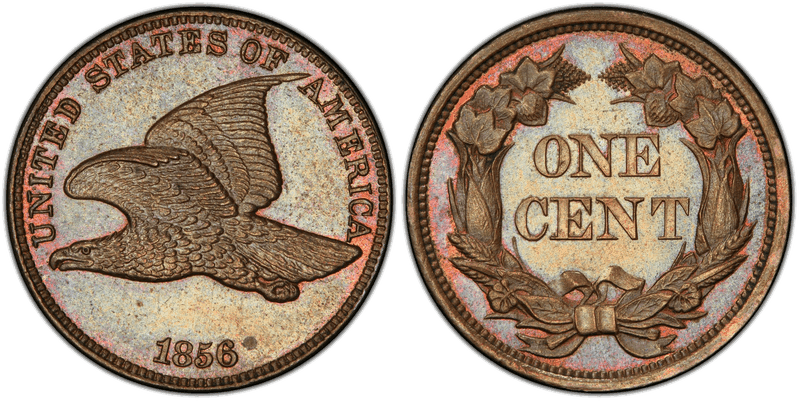
Mint engraver James B. Longacre designed the Indian Head cent to replace the Flying Eagle cent, which had struck up poorly. After a run of patterns dated 1858, the new design went into production in 1859. Longacre kept the obverse and reverse high points from lining up, and the coin struck far better.

The head is Liberty, not a portrait of a Native American. Longacre added a feathered headdress to a classical profile, and in his own letters he traced it to the Venus Accroupie, a Crouching Venus statue then on show in Philadelphia. The well-known story that his young daughter Sarah posed for it is doubtful, because the same adult head appears in his sketchbooks from years earlier.

The reverse changed after one year. The 1859 cent has a laurel wreath with no shield. From 1860 to the end of the series in 1909, the reverse shows an oak wreath with a small shield at the top.

The Civil War brought the biggest change. People hoarded the copper-nickel cents, and private copper tokens worth far less than a cent filled the gap. Congress took the hint, and the Act of April 22, 1864 replaced copper-nickel with a lighter bronze cent like those tokens. More than 13 million copper-nickel cents dated 1864 were struck before the switch, and nearly 40 million bronze ones after it. Late that year Longacre's initial, L, was added to the ribbon, and it stayed there through 1909 (search).

A glut of cents and an 1871 law letting the Treasury redeem excess cents kept mintages low from 1869 into the 1870s. Mid-1886 the obverse hub was revised, giving two types for that date. A 1906 law let the branch mints strike minor coins, and San Francisco made its first cents in November 1908. Its 1909 run stopped early in the year, and the Lincoln cent replaced the design that summer.
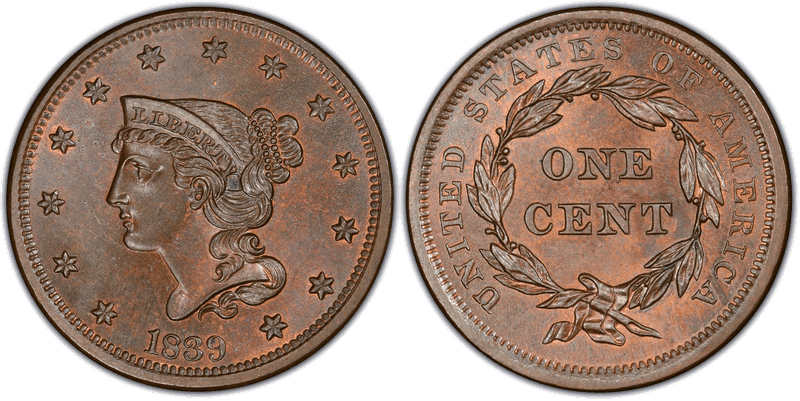
How to Identify It

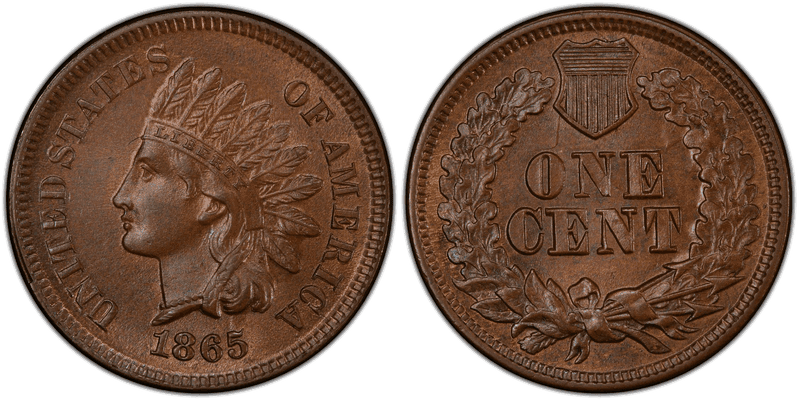
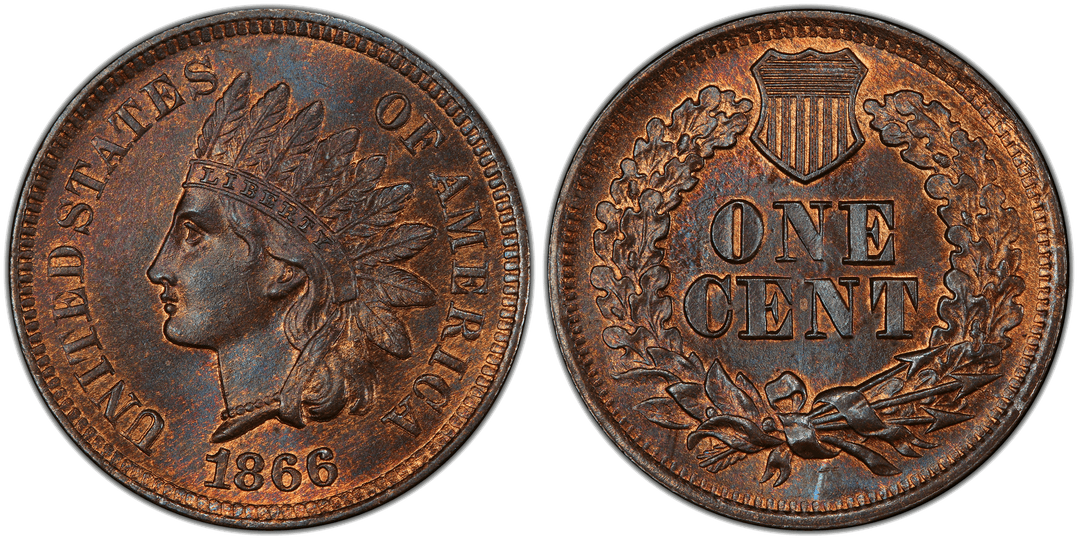
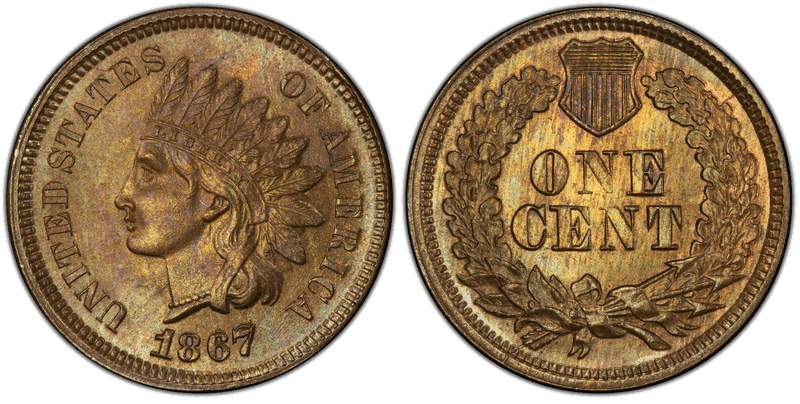
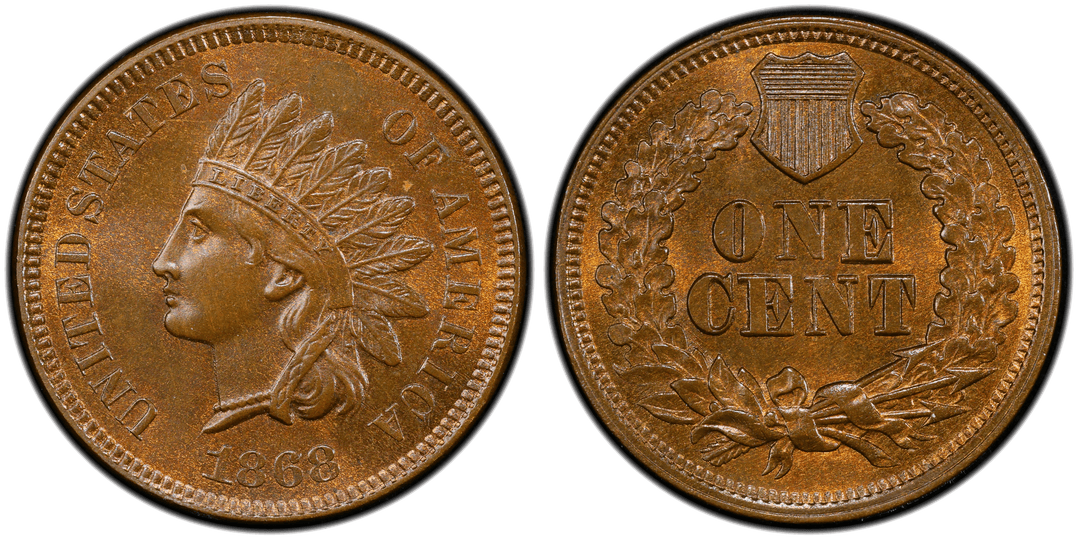
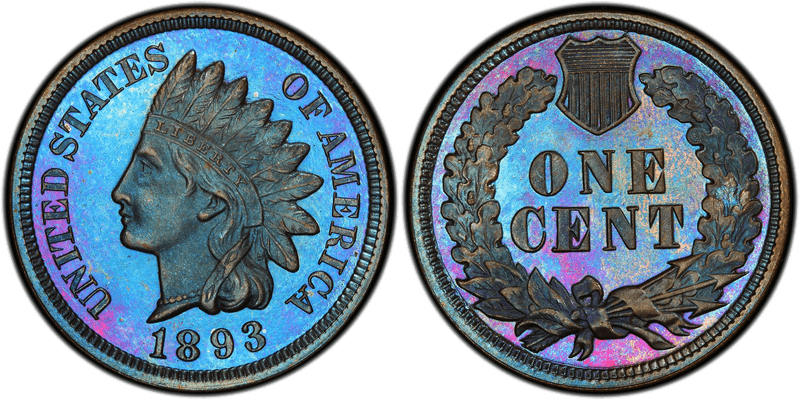
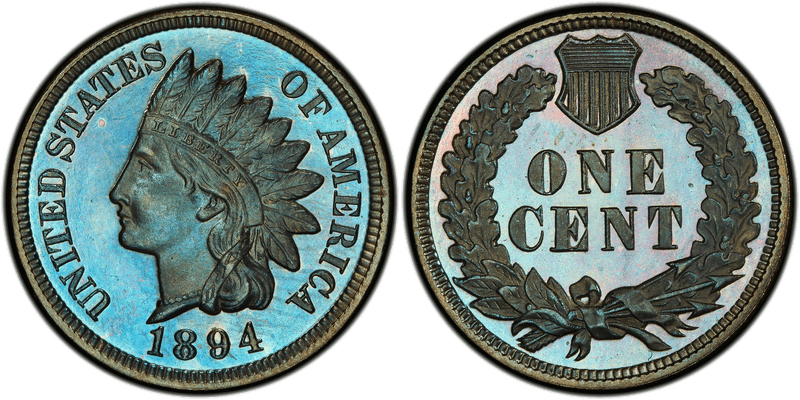
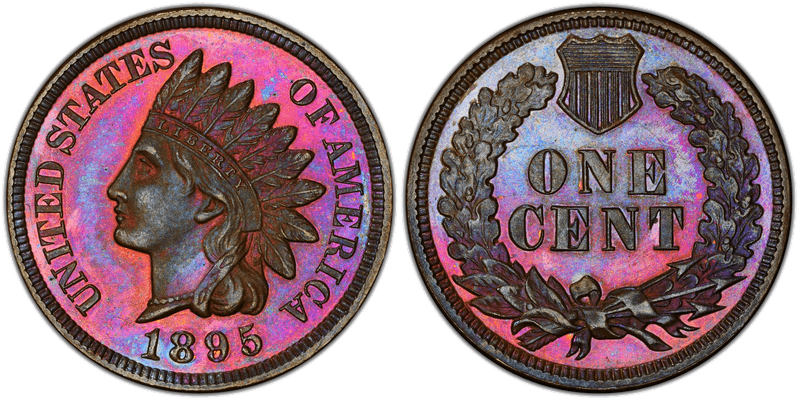
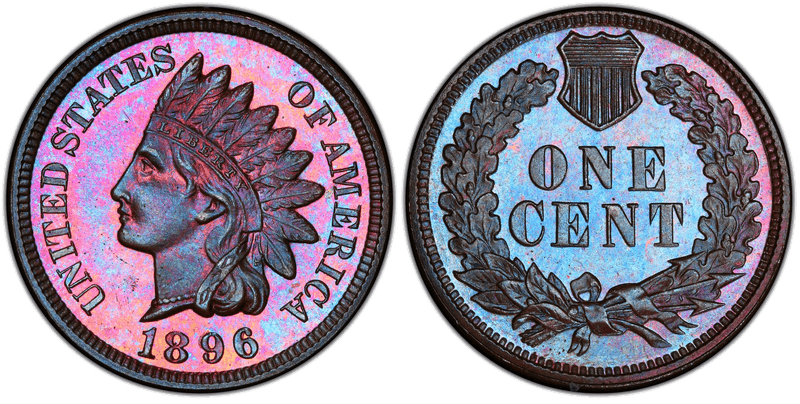
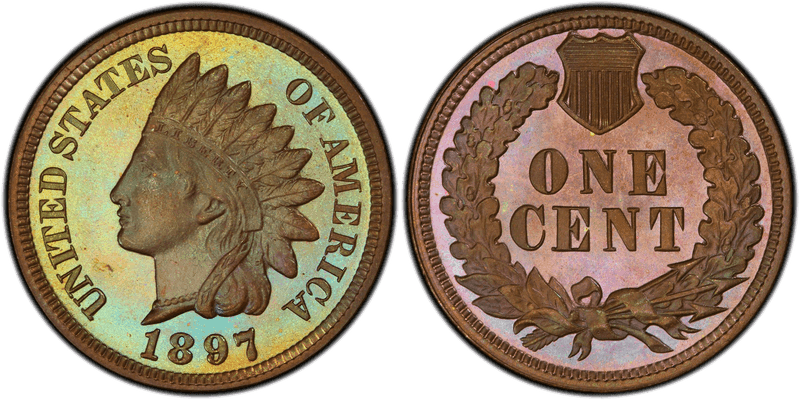
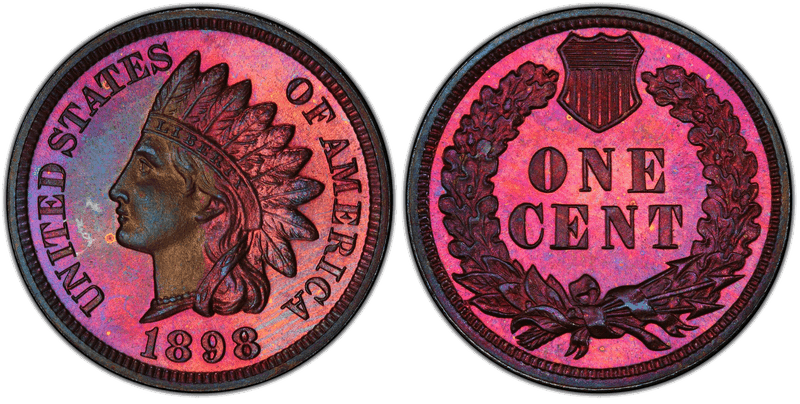
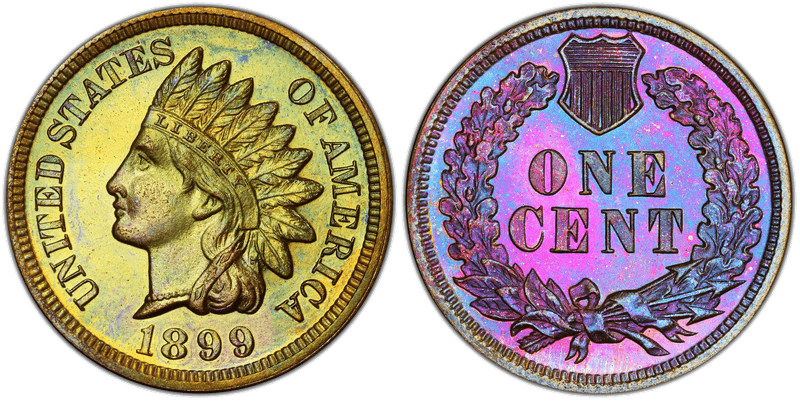
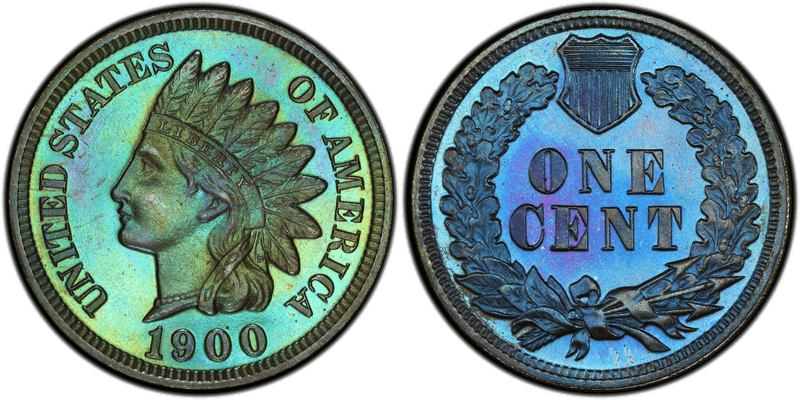
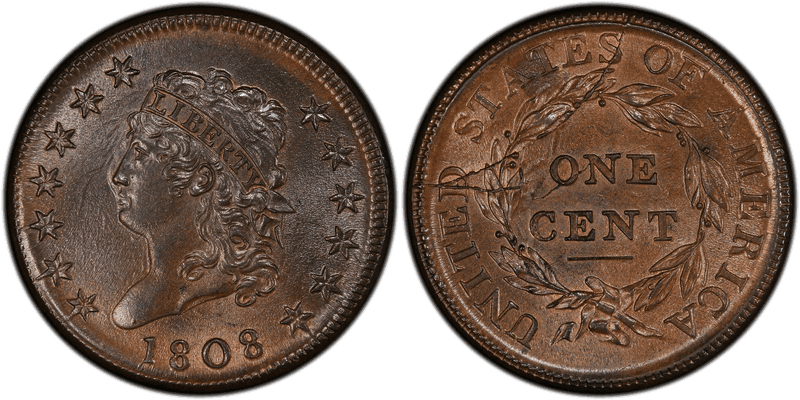
Obverse. Liberty faces left in a feathered headdress, with LIBERTY on the headband. UNITED STATES OF AMERICA runs around the edge and the date is at the bottom.

Reverse. ONE CENT is centered inside the wreath:

  • 1859 only: a laurel wreath with no shield.
  • 1860 to 1909: an oak wreath with a small shield at the top.

Mint mark. Only the 1908-S and 1909-S carry one, an S on the reverse at the bottom, under the ribbon that ties the wreath. All other dates are from Philadelphia and have no mint mark. Because the 1909-S is valuable, check for an S that has been added to a 1909 Philadelphia cent.

Copper-nickel or bronze. Dates from 1859 to 1863 are copper-nickel; 1865 to 1909 are bronze. An 1864 can be either, so weigh it: copper-nickel is 4.67 grams, bronze 3.11 grams.

The L on the ribbon. On cents from later 1864 onward, a tiny L, turned on its side, sits on the ribbon beside the lowest feather. On worn 1864 coins, look at the tip of the bust as well: the L coins have a pointed tip, while most 1864 bronze cents without the L have a rounded one.

1886 types. On Type 1 the lowest feather points between the I and C of AMERICA. On Type 2, after the lettering was moved, it points between the C and the last A.

Key Dates and Varieties

  • 1877: 852,500 struck, and NGC calls it by far the rarest date in terms of coins that survive. Only two obverse dies and one reverse are known, so some researchers doubt the official figure.
  • 1909-S: 309,000 struck before production stopped early in 1909. Collectors saved it from the start, so worn coins are the real rarity. Altered dates are common.
  • 1908-S: 1,115,000 struck, San Francisco's first cents.
  • 1869, 1871 and 1872: 6,420,000, 3,929,500 and 4,042,000 struck. The 1871 and 1872 also come with the shallow-N "Reverse of 1869."
  • 1869/9: a repunched date catalogued as FS-301 (Snow-3). NGC warns that Snow-4 looks almost the same and is often misattributed.
  • 1864 L on Ribbon: the bronze cents with Longacre's initial, a minority of the 39,233,714 bronze cents dated 1864. The proof version is a great rarity: Rick Snow counts nine originals and 11 restrikes.
  • 1864 copper-nickel: 13,740,000 struck in the last months before bronze.
  • 1860 Pointed Bust: a few 1860 dies were still made from the 1859 bust with its pointed tip.
  • 1873 Closed 3 and Doubled LIBERTY: the Closed 3 logotype was quickly replaced because the 3 looked like an 8. Estimates of its share range from about 250,000 (Bowers) to 1,002,000 (Breen). The famous doubled die obverse, FS-101 (Snow-1), is a Closed 3 coin.
  • 1886 Type 2: the minority type of 1886.
  • 1888/7: an 1888 date over 1887, very rare near Mint State and one of the most wanted Indian cent varieties.
  • 1894/94: the whole date punched twice, FS-301 (Snow-1).

Collectors attribute these die varieties by their Snow numbers, from Rick Snow's guides to Flying Eagle and Indian cents, and by Cherrypickers' Guide (FS) numbers.

Mintages

Indian Head Cents 1859-1909 mintages by year and mint, taken from each coin's page in our catalog. Each figure opens that coin's page, which lists its varieties and errors. A dash means no figure was recorded. Where one issue was struck in more than one type, each type is listed.

Composition

1859 to early 18641864 to 1909
Metalcopper-nickel: 88% copper, 12% nickelbronze: 95% copper, 5% tin and zinc
Weight4.67 grams3.11 grams
Diameter19 mm19 mm
Edgeplainplain

Indian Head cents contain no silver. The size never changed, so the weight is the quickest test for an 1864 coin.

FAQ

Where is the mint mark on an Indian Head cent?

Only two dates have one, the 1908-S and 1909-S. The S is on the reverse, at the bottom, under the ribbon that ties the wreath. Every other Indian Head cent was struck at Philadelphia and has no mint mark.

What are the Indian Head cent key dates?

The 1877 (852,500 struck) and the 1909-S (309,000) are the keys, followed by the 1908-S, 1869, 1871 and 1872. The best-known varieties are the 1864 with L on the ribbon, the 1869/9, the 1873 Doubled LIBERTY, the 1888/7 overdate and the 1894/94.

Is my Indian Head cent copper-nickel or bronze?

Check the date first. Cents dated 1859 to 1863 are copper-nickel, and those dated 1865 to 1909 are bronze. An 1864 can be either, so weigh it on a scale that reads hundredths of a gram. Copper-nickel cents weigh 4.67 grams and bronze cents 3.11 grams, while the diameter is the same.

What is an Indian Head cent with an L on the ribbon?

Late in 1864, engraver James B. Longacre added his initial, a small L turned on its side, to the ribbon beside the lowest feather of the headdress. It stayed on the design to the end of the series (search), so it matters only on 1864 cents, where the L coins are a bronze minority worth a premium. The L wears away easily, but the L coins also have a pointed tip to the bust.

Who is on the Indian Head cent?

Liberty, not a real Native American. Longacre put a feathered headdress on a classical female head, and in his own letters he described the profile as taken from the Venus Accroupie (Crouching Venus) statue. The popular story that his daughter Sarah posed for it is not supported.

What is the difference between a 1886 Type 1 and Type 2 Indian Head cent?

Midway through 1886 the obverse was revised and the lettering moved. On Type 1 the lowest feather of the headdress points between the I and C of AMERICA; on Type 2 it points between the C and the last A. Type 2 coins are the minority and bring a premium.

↑ Back to the coins: every year, mint, variety and error

Explore Other Denominations

Collector Essentials

Tools and references for building and protecting your coin collection.

As an Amazon Associate, NumisDex earns from qualifying purchases.