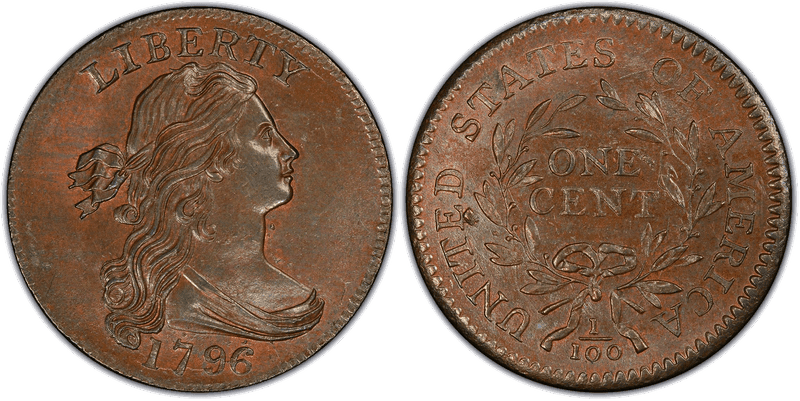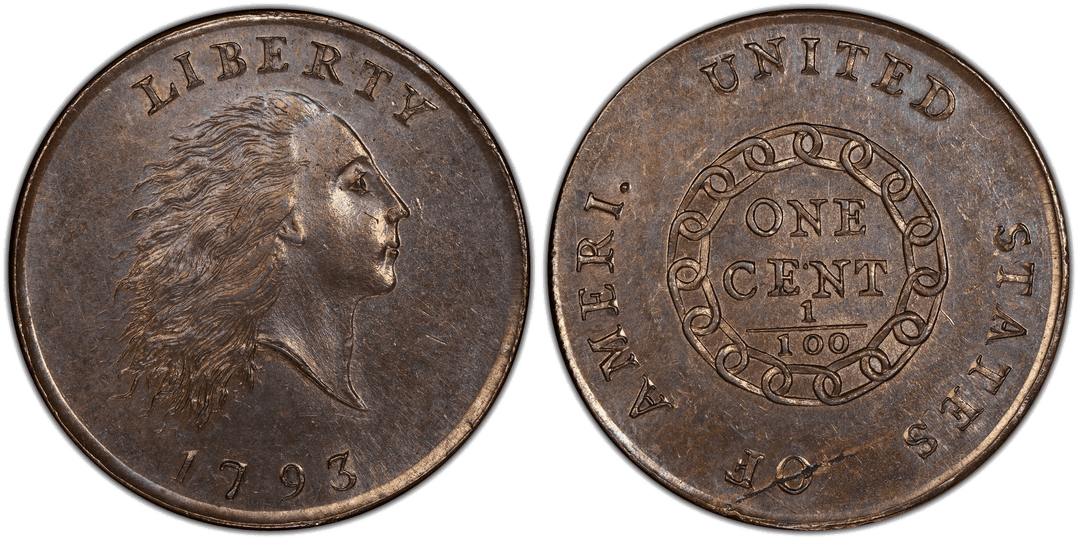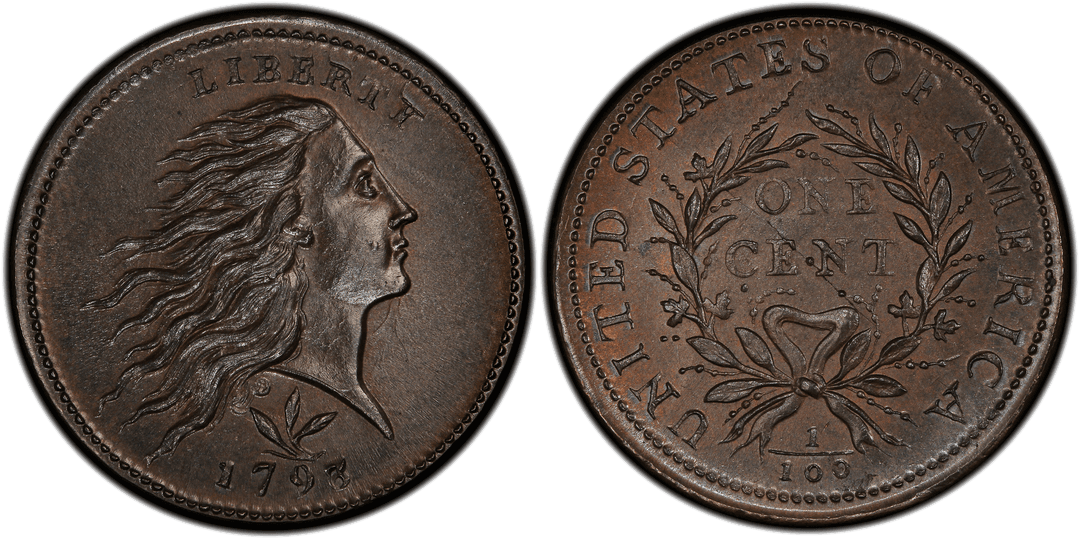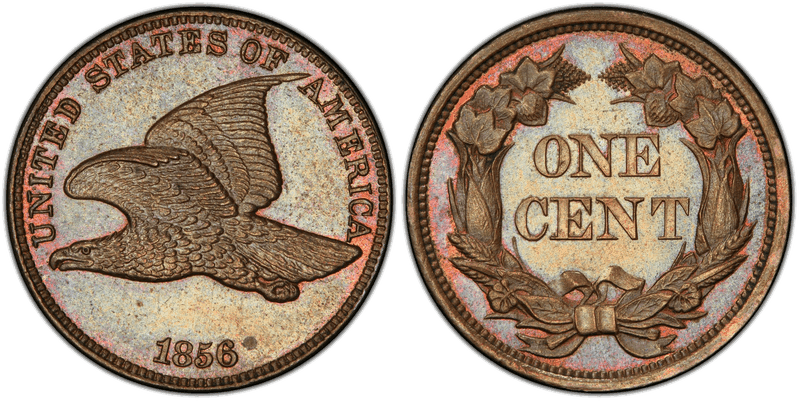
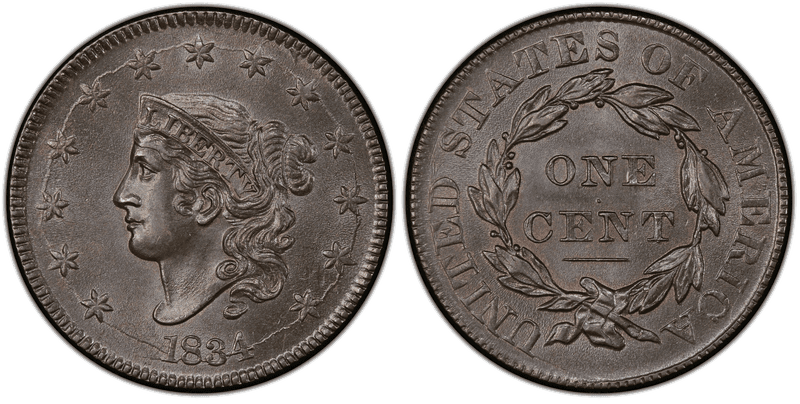
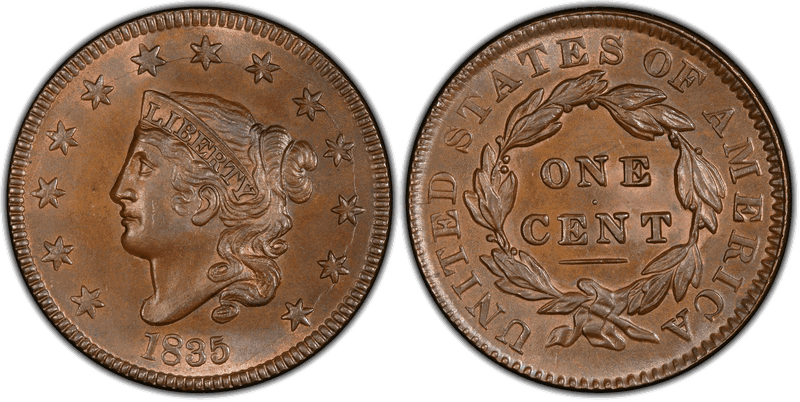
Matron Head Coronet Head Cents 1816-1835

Coin Series
Matron Head Coronet Head Cents 1816-1835 series coin

About This Series

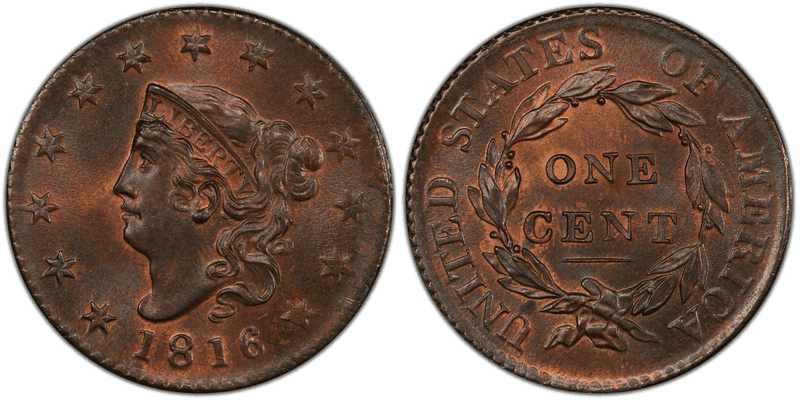
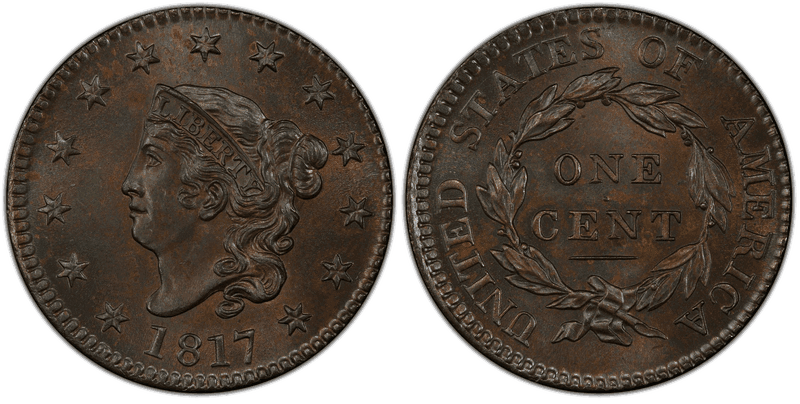
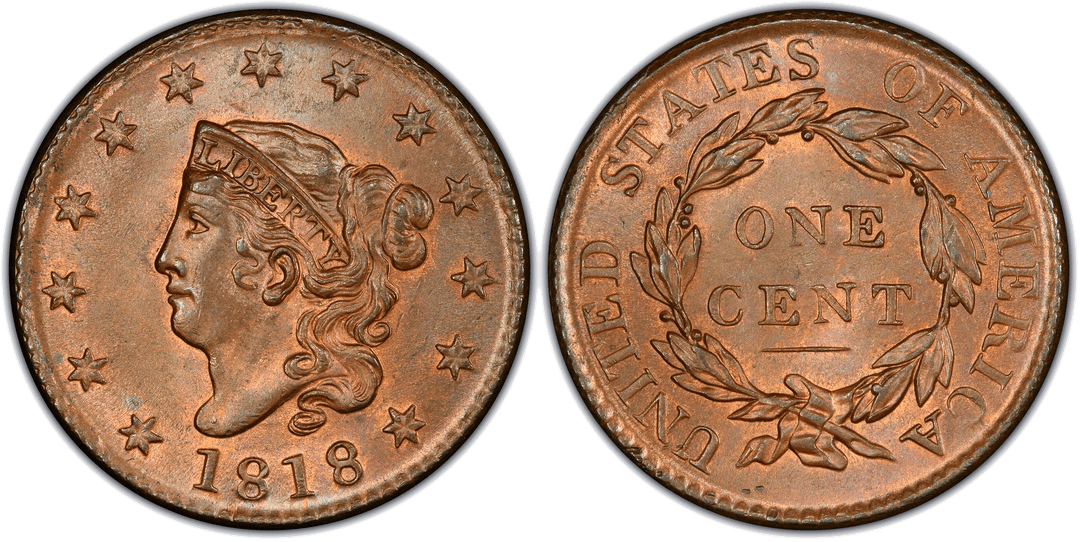
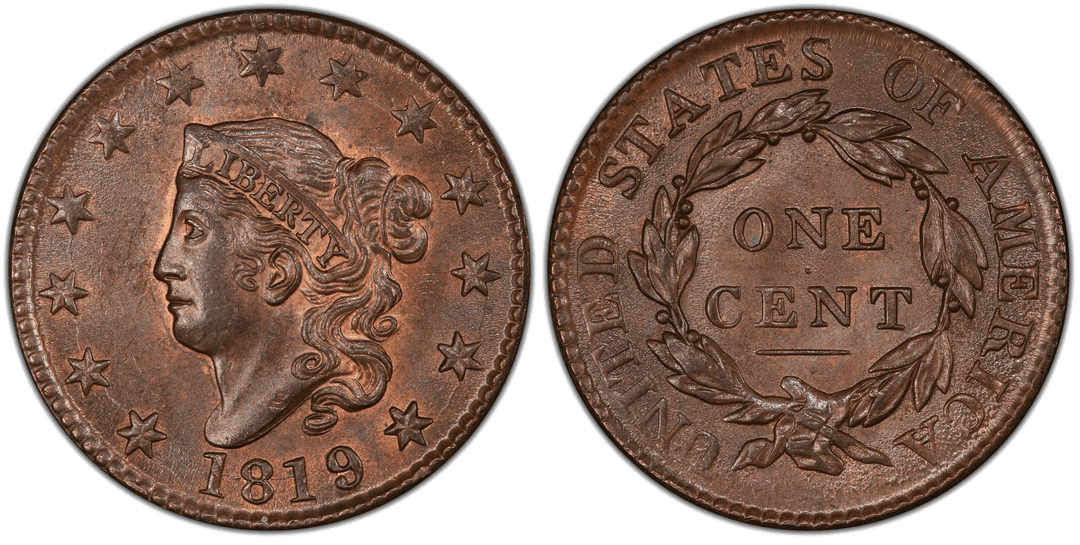
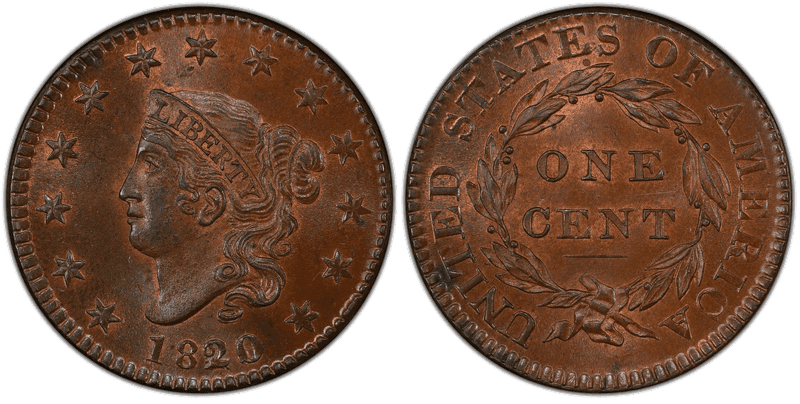
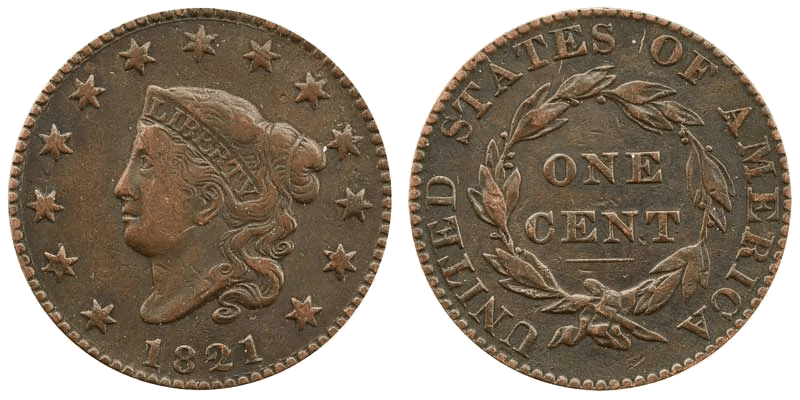
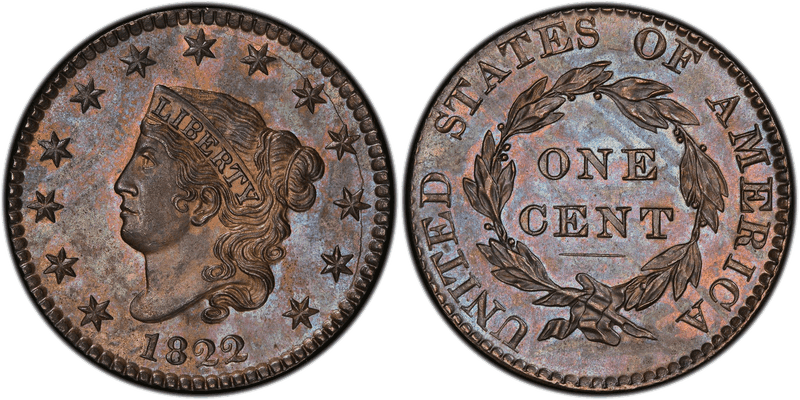
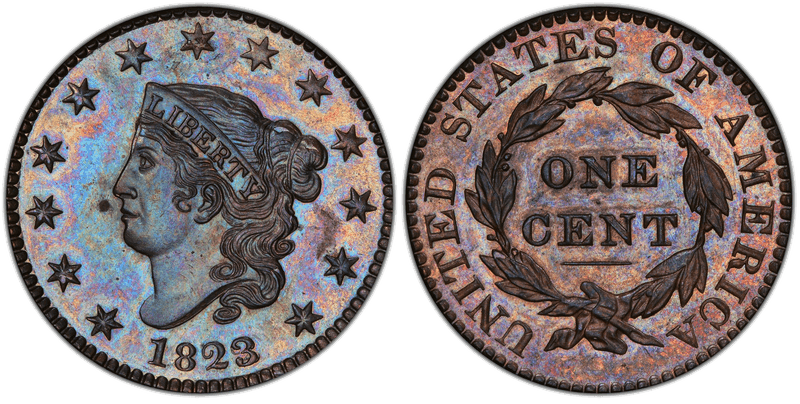
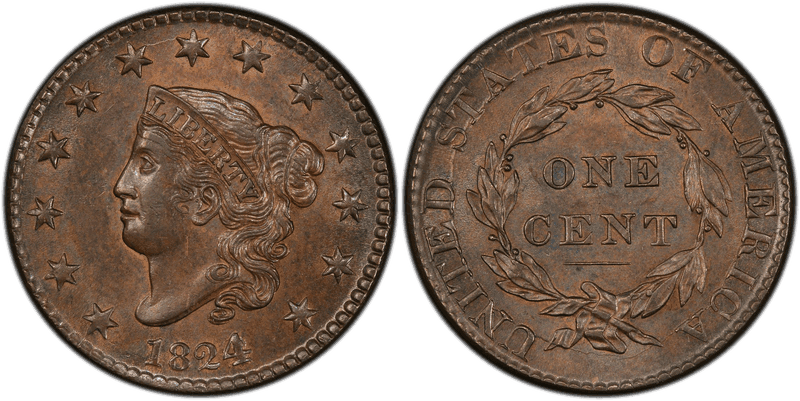
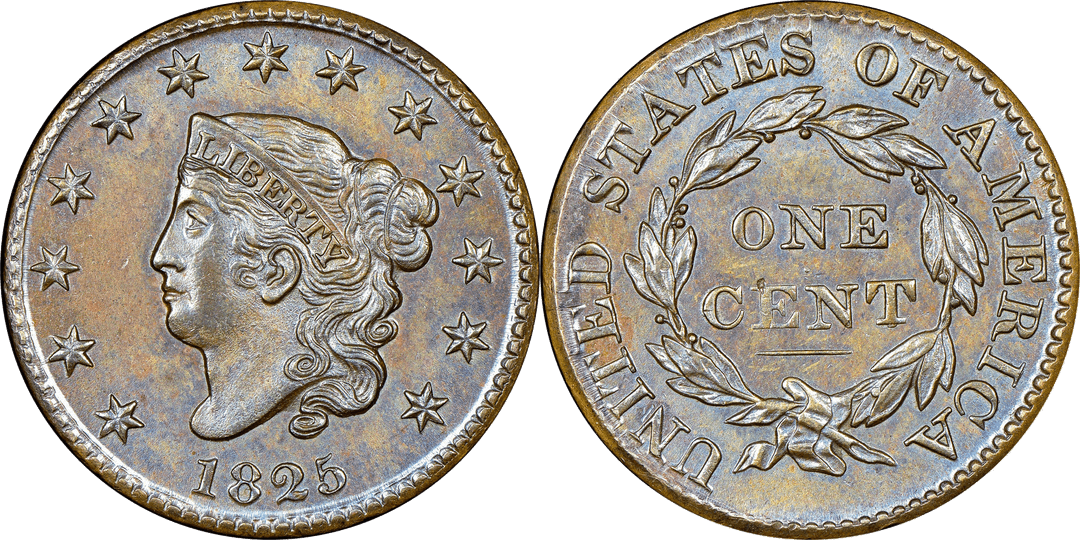
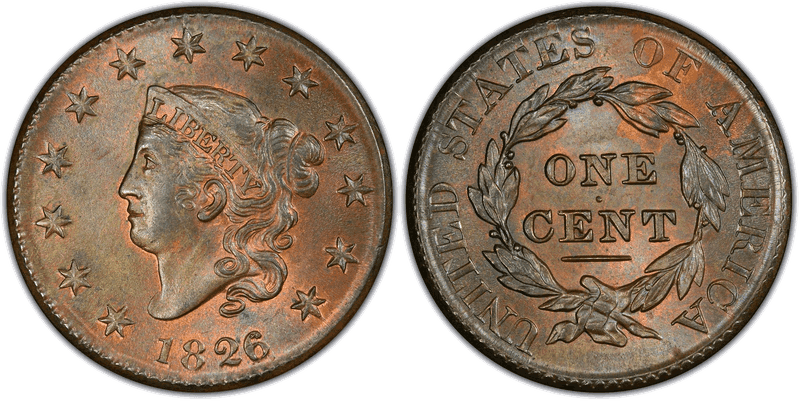
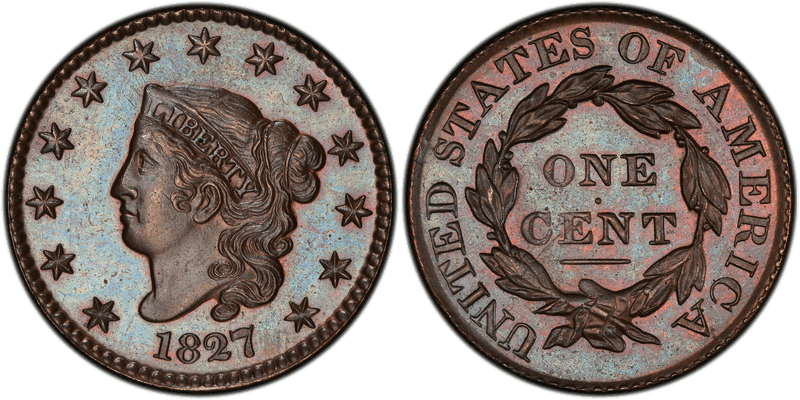
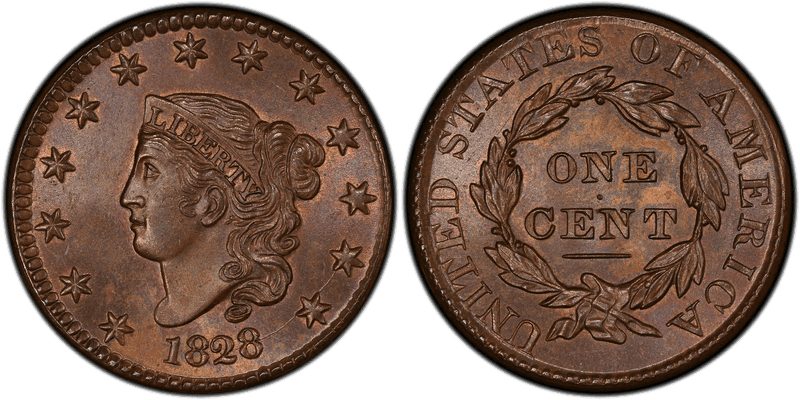
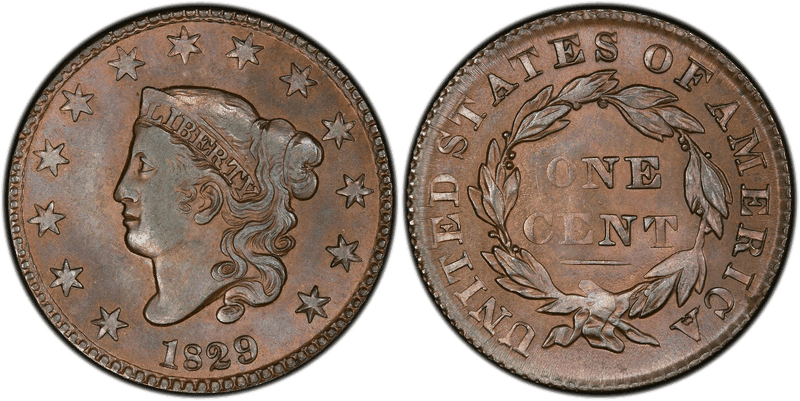
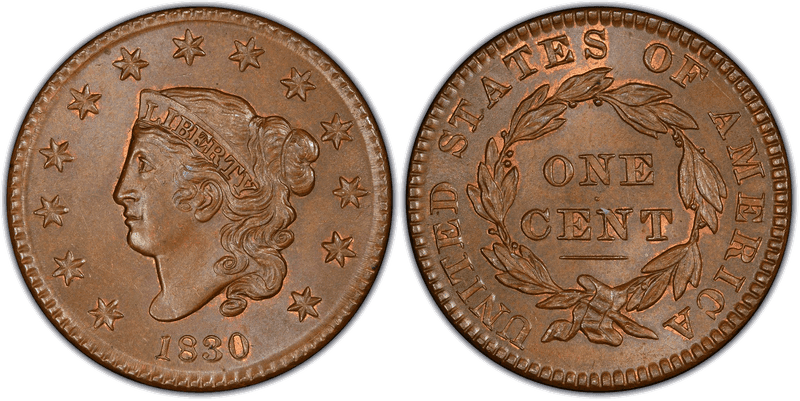
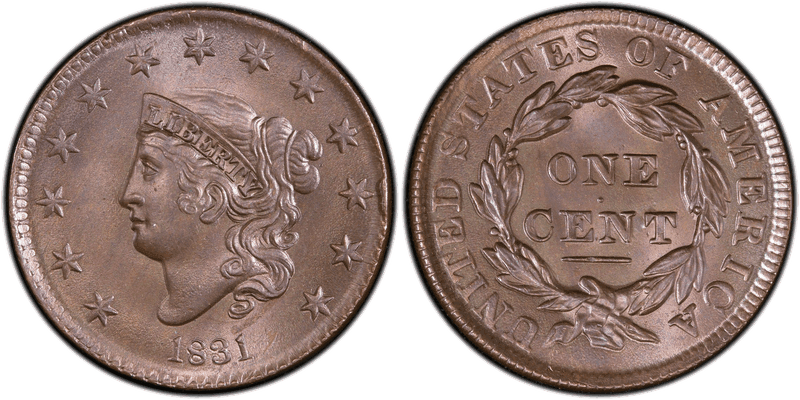
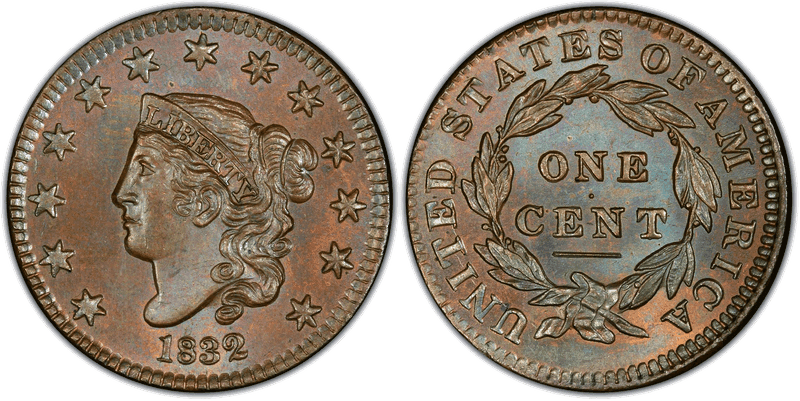
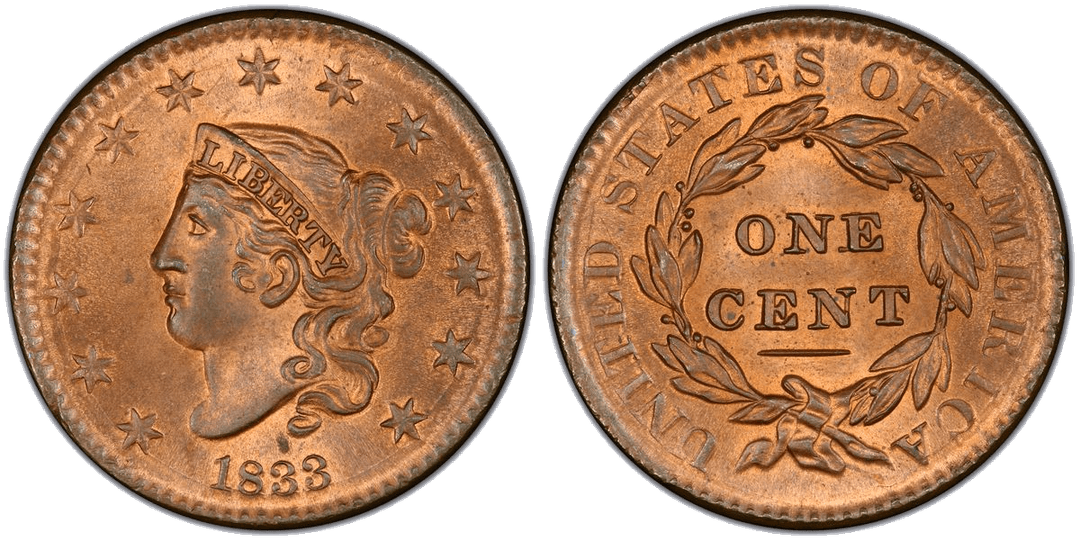
Bridging the gap between earliest large cent designs and the mature Coronet series, the Matron Head features a Liberty portrait, usually credited to Robert Scot, wearing a coronet inscribed LIBERTY, with hair styled in the mature fashion that inspired the type's name. The reverse displays a wreath encircling ONE CENT. These large copper coins — approximately 28 mm diameter and 10.9 grams — circulated extensively throughout the eastern United States as the primary small-denomination coin. The Newcomb reference catalogs extensive die varieties, identifying scores of distinct die combinations that make this a fertile field for variety enthusiasts. No mintage was recorded for cents dated 1823, and the 1823/2 overdate was struck from a die first dated 1822. Produced exclusively at Philadelphia during a period of significant national growth — the Erie Canal opened, the first passenger railroad began service, and the country expanded westward. Well-preserved examples display attractive chocolate brown or red-brown surfaces that showcase the design's classical lines.

Series Information

Production Years
1816-1835

Browse by Base(20 bases)

Showing all 20 listings

History

During the War of 1812 the Mint could not get the ready-made copper blanks it bought from Matthew Boulton in England. The last shipment before the war reached Philadelphia in April 1812, and the final cents struck on it were delivered in October 1814. New blanks arrived in the fall of 1815, but Bill Eckberg's research suggests the 465,500 cents made from them were still dated 1814. No large cent bears the date 1815, the only gap between 1793 and 1857.

The next delivery of cents came on December 20, 1816, with a new design. Liberty now faced left with a coronet inscribed LIBERTY, ringed by stars. Collectors call it the Matron Head, or the Coronet type. Robert Scot, the chief engraver, is usually given the credit, though the historian R. W. Julian believes John Reich made it.

As with earlier cents, the mintage figures count coins delivered in a calendar year, whatever date the dies carried. No cents at all were recorded for 1823, the 1827 total may include coins dated 1826, and so few dies are known for 1832 that some of that year's cents must carry other dates.

Many Mint State cents of 1816 to 1820 that survive today come from the Randall Hoard, a group of new cents that John Swan Randall offered around 1869. The usual story places it in a keg under a Georgia railroad platform, but in an 1870 letter Randall wrote only that he bought the coins from a Georgia merchant. The hoard's 1818 N-10 and 1820 N-13 cents are easy to spot by a ring of die cracks running through the stars and the date.

The Mint also struck small numbers of proofs for collectors. The bronzed proofs of 1829 may have been made for the laying of the cornerstone of the new Mint building that year, and many 1831 proofs were polished on the obverse only.

Christian Gobrecht joined the Mint as second engraver in 1835, while Chief Engraver William Kneass was disabled by a stroke. Partway through 1835 a slimmer portrait, the Head of 1836, replaced the old one. Those coins form the Modified Matron Head series, which ran until the Braided Hair cent of 1839.
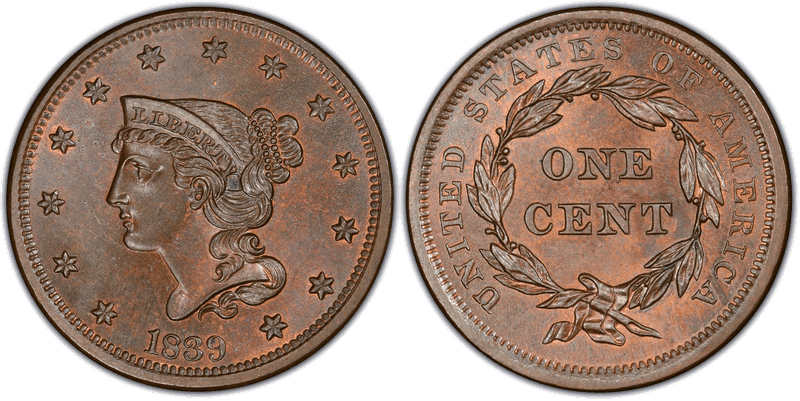
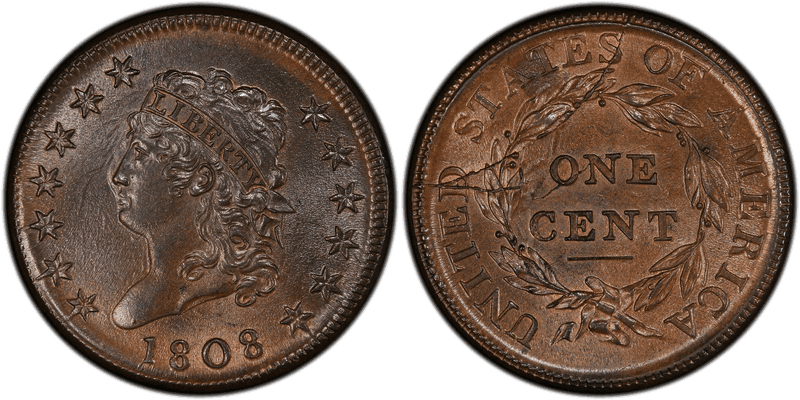
How to Identify It

Obverse. Liberty faces left, wearing a coronet inscribed LIBERTY. Stars circle the border, normally 13, and the date is below.

Reverse. ONE CENT inside a wreath, with UNITED STATES OF AMERICA around it.

Mint mark. None. Every large cent was struck at the Philadelphia Mint.

Letter sizes, 1829 to 1834. The reverse lettering changed size over these years. Large Letters dies, the style of the 1820s, were used alongside a new Medium Letters style, which some catalogs call Small Letters. Cents dated 1833 all have Medium Letters, but one 1834 die pair, N-6, went back to Large Letters.

1834 and 1835. The 8 in the date, the stars and the reverse letters each come in more than one size, and the cents are named by the combination, such as Large 8, Small Stars, Medium Letters.

Newcomb numbers. Each pairing of dies has an N-number from Howard R. Newcomb's United States Copper Cents 1816-1857 (1944), such as N-16. Specialists collect the series by these numbers.

Key Dates and Varieties

  • 1817 15 Stars: one obverse, N-16, has 15 stars in place of 13. The stars were crowded when punched, and two more were added to fill the gap. Other 1817 cents have the normal 13 stars.
  • 1819/8: N-1 and N-2 are both overdates with a Large Date. The 8 under the 9 is plain on N-1 but hard to see on N-2, which is listed as the 1819/(8) Large Date. All other 1819 dies have the Small Date.
  • 1820/19: three overdates. On N-1, a Large Date die, only a 1 shows under the 0, because the last digit had been left off when the die was made. N-2 and N-3 have the Small Date and show two earlier digits. Other 1820 cents come with a Large Date or a Small Date.
  • 1823 and 1823/2: only two die pairs, the normal date (N-2) and the overdate (N-1). No mintage was recorded for 1823, and NGC thinks the coins were struck in 1824.
  • 1823 restrike: made outside the Mint around 1860 or later from two discarded, rusted dies, the obverse of 1823 N-2 and a reverse of 1813. A few were struck in silver.
  • 1824/2: a single overdated obverse, used with two reverses (N-1 and N-5).
  • 1826/5: N-8 only. The 5 is clear on early die states and fades into what looks like die damage on later ones, and some specialists doubt it is an overdate at all.
  • 1828 date sizes: every 1828 die has the Large Narrow Date except N-10, the Small Wide Date.
  • Large Letters, 1829 to 1832: 1829, 1830, 1831 and 1832 come with either letter size. In 1830 only N-6 has the Medium Letters, and in 1832 only N-3 has the Large Letters.
  • 1834: N-1 and N-2 are the Small 8 (search); others combine a Large 8 with small stars or large stars. N-6 is the only business strike with the Large Letters reverse; a proof-only pair, N-7, also has it.
  • 1835: the old portrait comes with a Large 8 and Large Stars or a Small 8 and Small Stars. The rest of the year's cents have Gobrecht's Head of 1836.
  • 1829 bronzed proofs: N-6 proofs struck on blanks coated with bronzing powder to give them an even brown finish.

In Our Catalog

21 errors and varieties are listed for this series. Browse them by type:

Recently added

Mintages

Matron Head Coronet Head Cents 1816-1835 mintages by year and mint, taken from each coin's page in our catalog. Each figure opens that coin's page, which lists its varieties and errors. A dash means no figure was recorded. Where one issue was struck in more than one type, each type is listed.

Composition

  • Composition: copper. The Mint's cents contain no silver; the only silver pieces are the 1823 restrikes made outside the Mint.
  • Weight: 10.89 grams
  • Diameter: about 28 mm. PCGS lists 28.00 mm and NGC 28 to 29 mm; the nominal size was 1 1/8 inches (28.57 mm).
  • Edge: plain

FAQ

Why are there no 1815 large cents?

The War of 1812 cut the Mint off from its supplier of ready-made cent blanks, Matthew Boulton's works in England, and the last prewar shipment arrived in April 1812. Cents were struck again late in 1815 once new blanks came, but Bill Eckberg, following research by Ronald Manley, argues they were probably struck from dies dated 1814, so no cent carries the 1815 date. It is the only year from 1793 to 1857 without one. Cents that seem to read 1815 are altered from other dates.

What is a Newcomb number on a large cent?

An attribution number for one pairing of an obverse die and a reverse die of a given year, such as N-16 for the 1817 cent with 15 stars. The numbers come from Howard R. Newcomb's United States Copper Cents 1816-1857, published in 1944, and collectors of these cents still sort them by it.

How many 1823 cents were made?

No one knows. The Mint recorded no cents for 1823, and NGC says the coins were probably struck in 1824. Large cent researcher John Wright thought it could have run to several hundred thousand. Only two die pairings exist, the 1823/2 overdate (N-1) and the normal date (N-2).

What is an 1823 restrike cent?

A piece made outside the Mint around 1860 or later, after two cracked and rusted dies had been sold off as scrap steel. It pairs the obverse of 1823 N-2 with a reverse die of 1813, a different reverse from the ones used on genuine 1823 cents. A smaller number were struck in silver; Walter Breen counted 12 or more.

Is the 1817 cent with 15 stars an error?

Yes, an error made by the engraver. The stars were punched too close together, and NGC suggests two extra stars were added to fill the space. PCGS points out that it has nothing to do with the number of states, which was 18 by 1817. It is the N-16 die pairing.

Who designed the Matron Head cent?

Chief Engraver Robert Scot is usually credited, and PCGS and NGC both list him. Mint historian R. W. Julian thinks John Reich did the work, and Eckberg notes that Reich was still at the Mint when the design changed late in 1816, so the question is open.

↑ Back to the coins: every year, mint, variety and error

Explore Other Denominations

Collector Essentials

Tools and references for building and protecting your coin collection.

As an Amazon Associate, NumisDex earns from qualifying purchases.