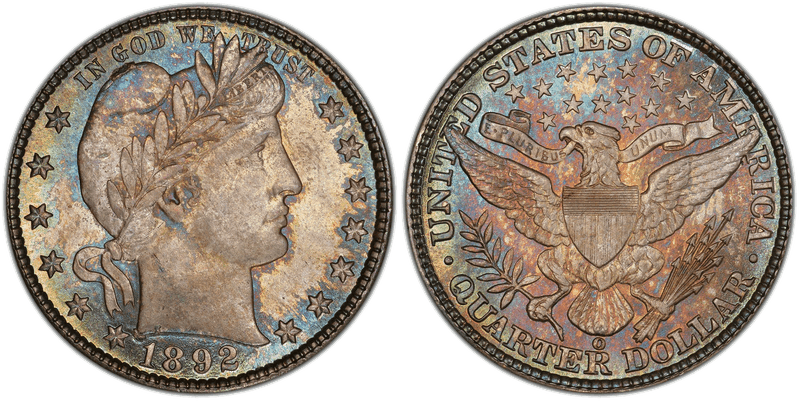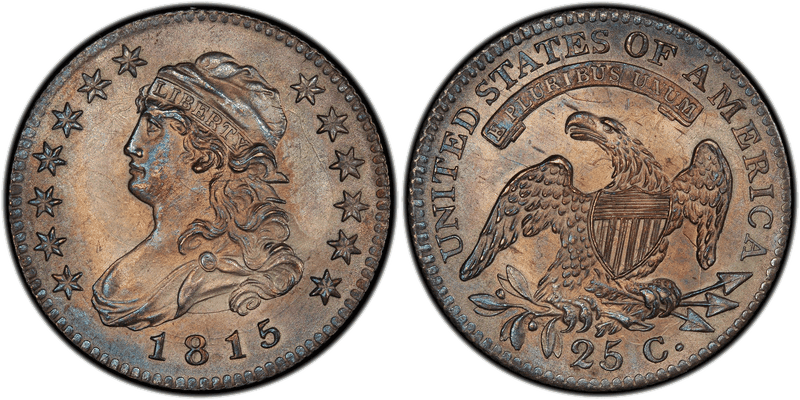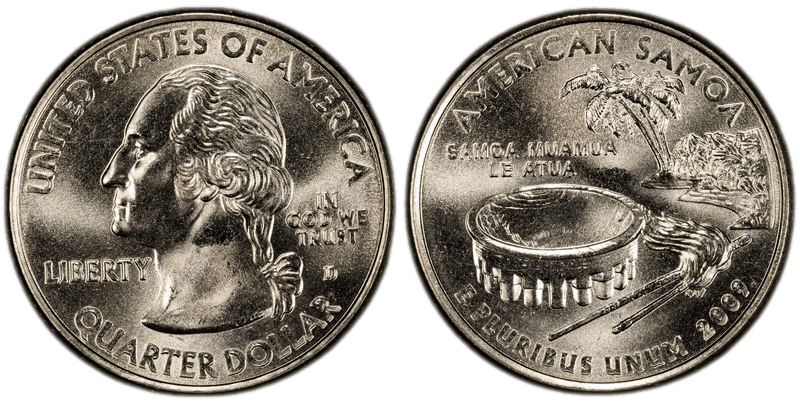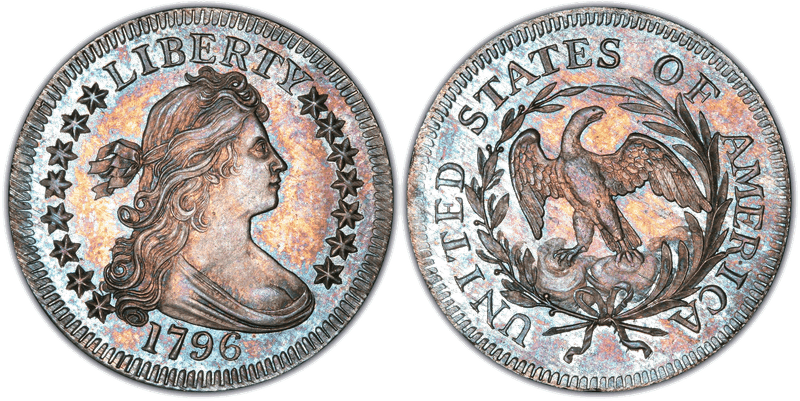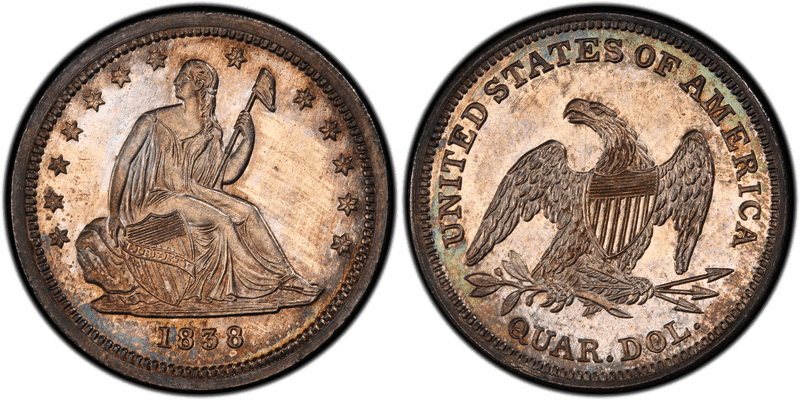
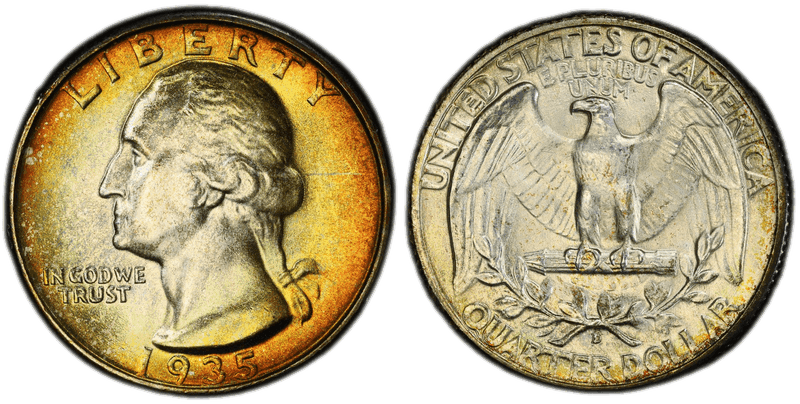
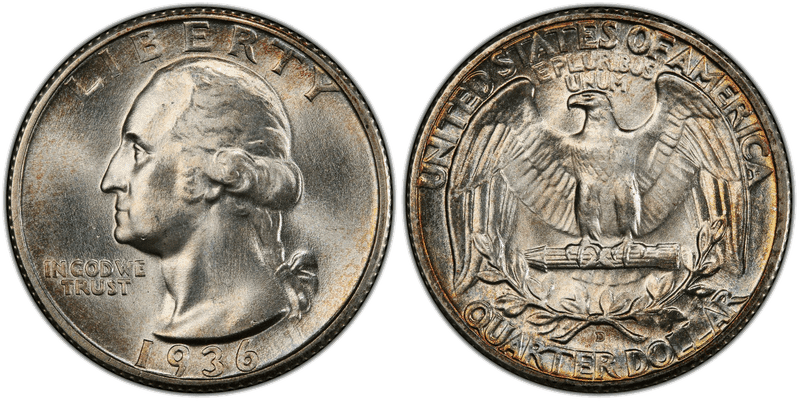
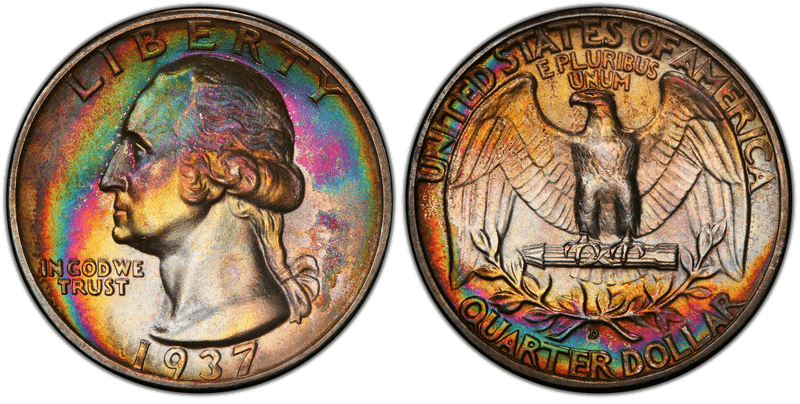
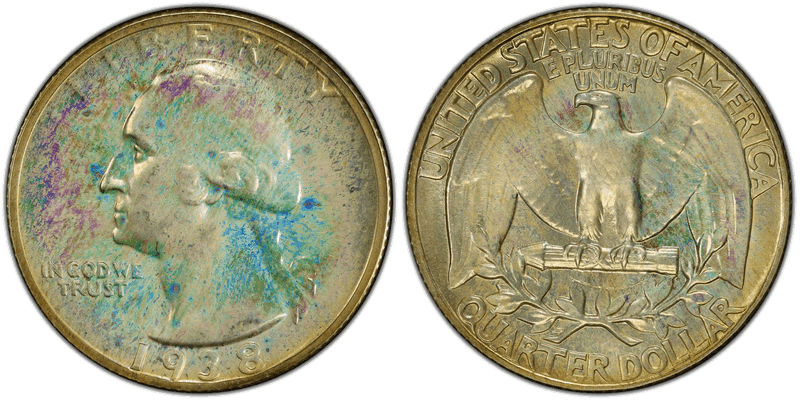
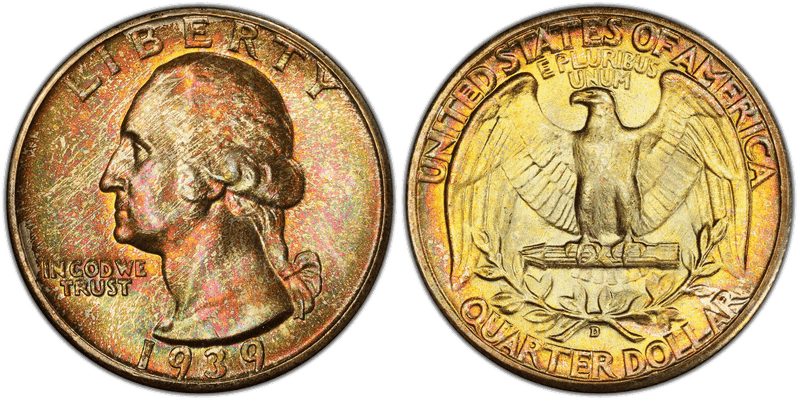
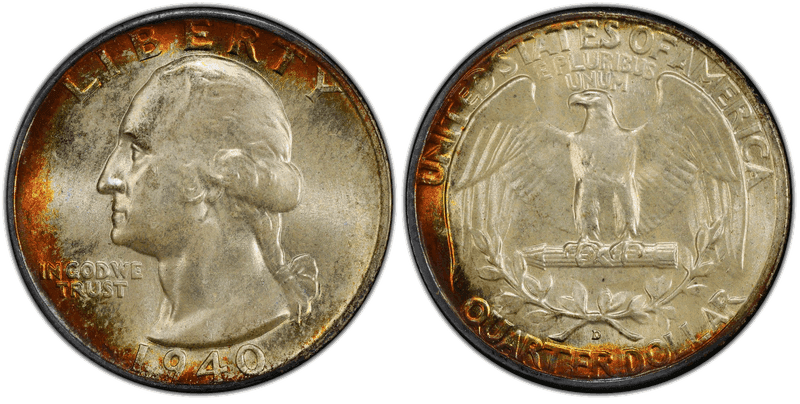
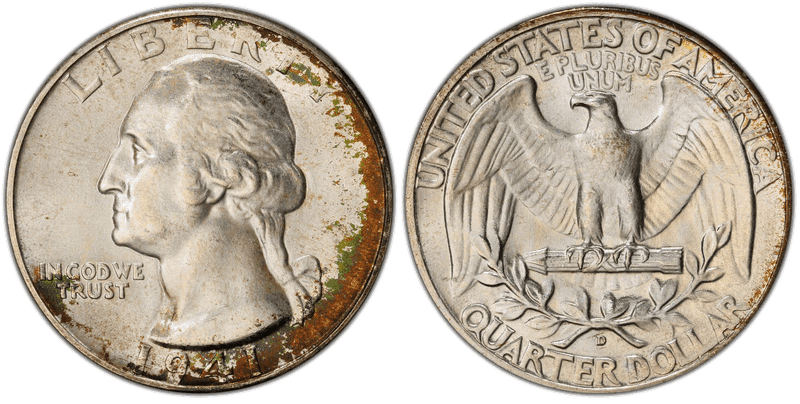
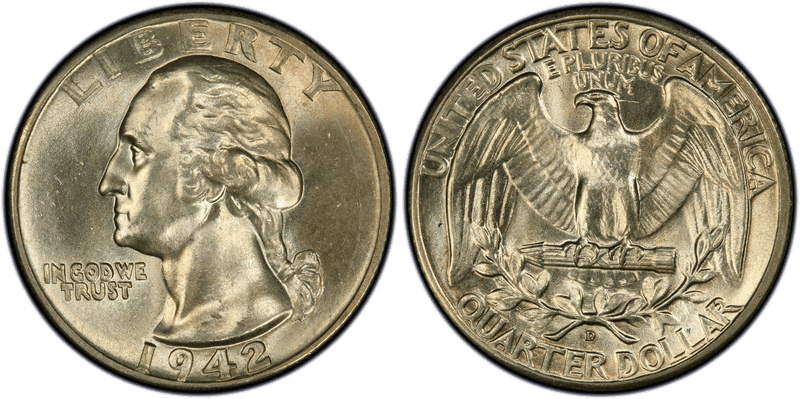
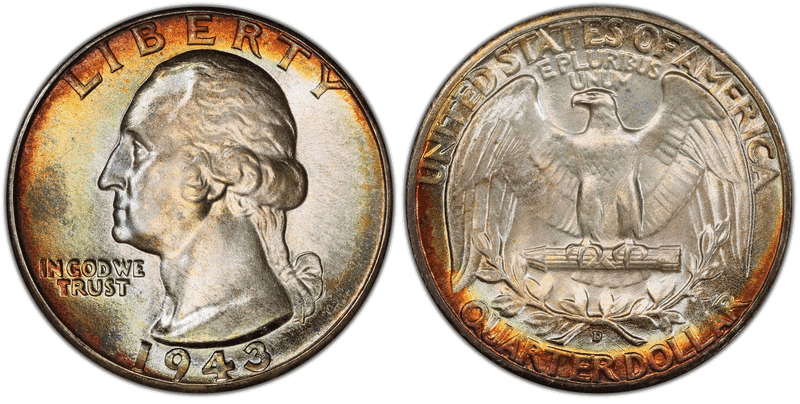
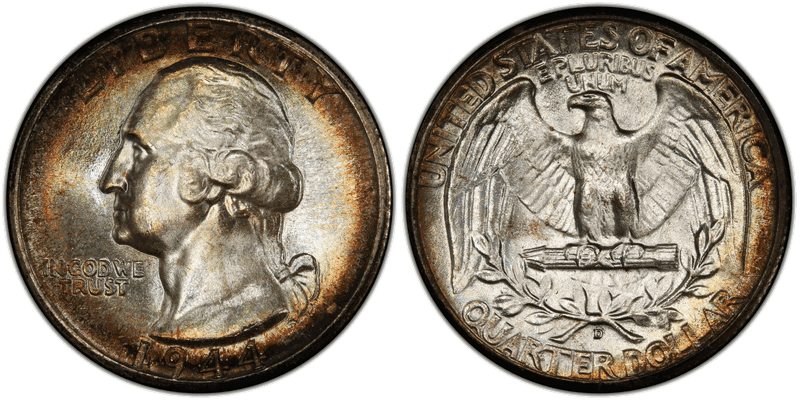
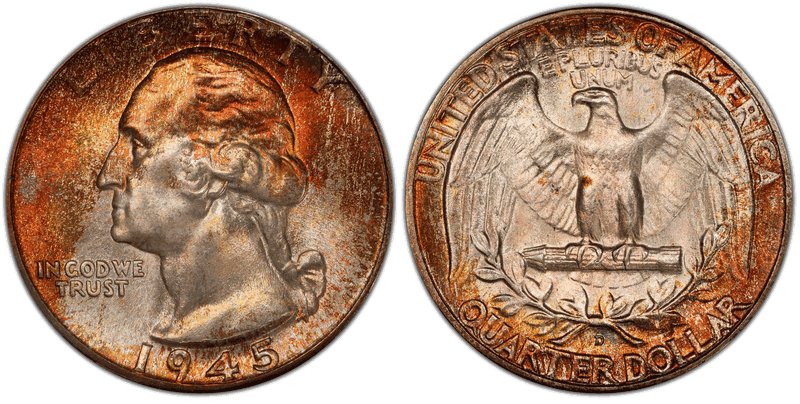
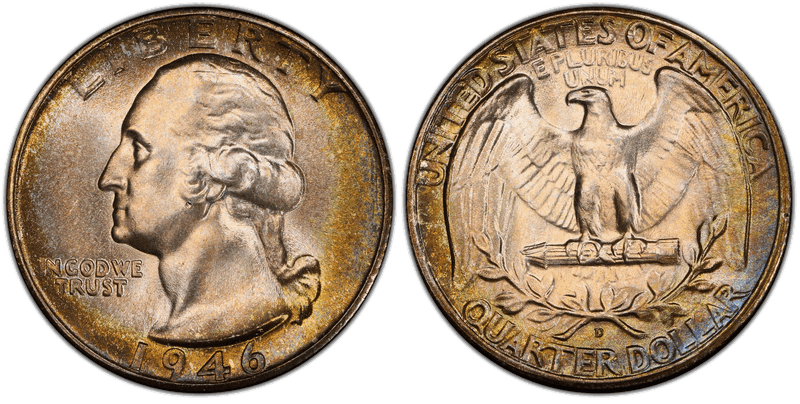
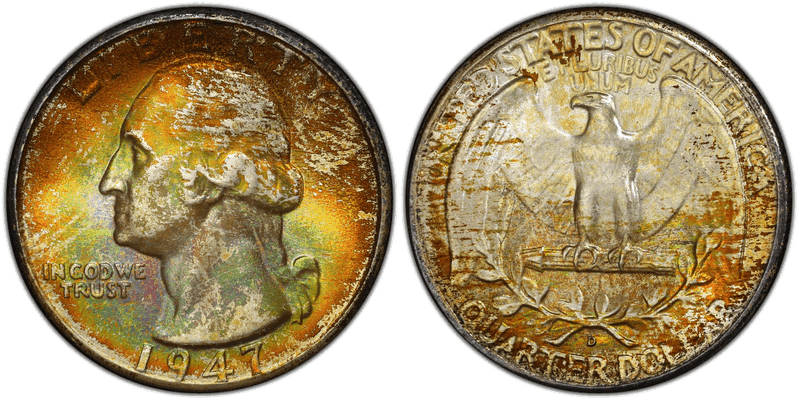
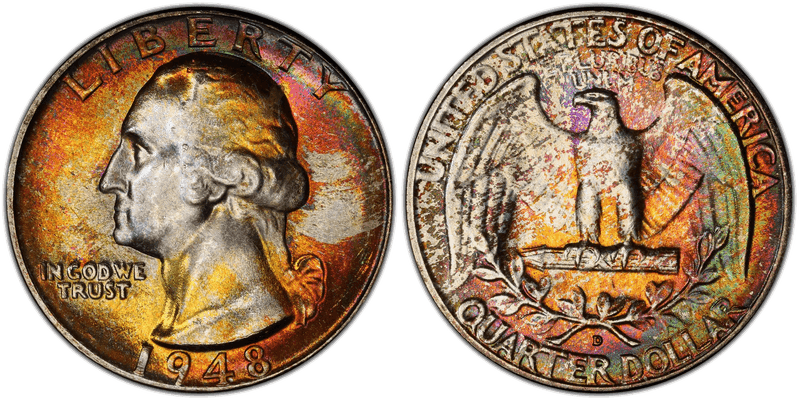
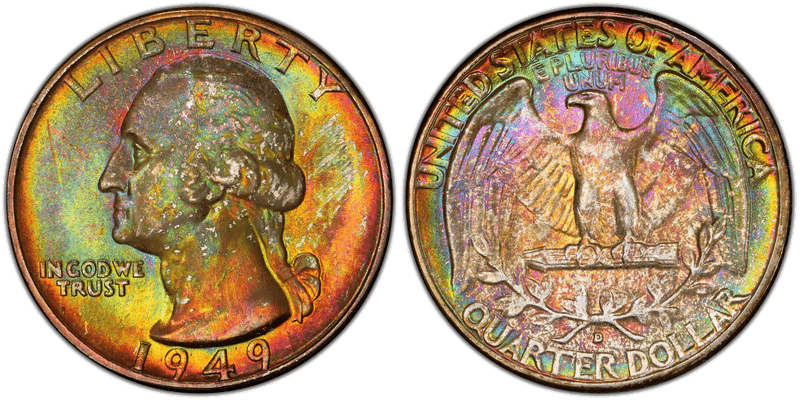
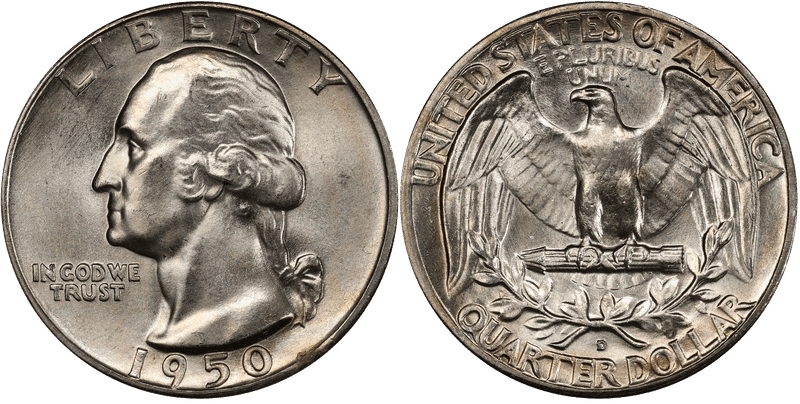
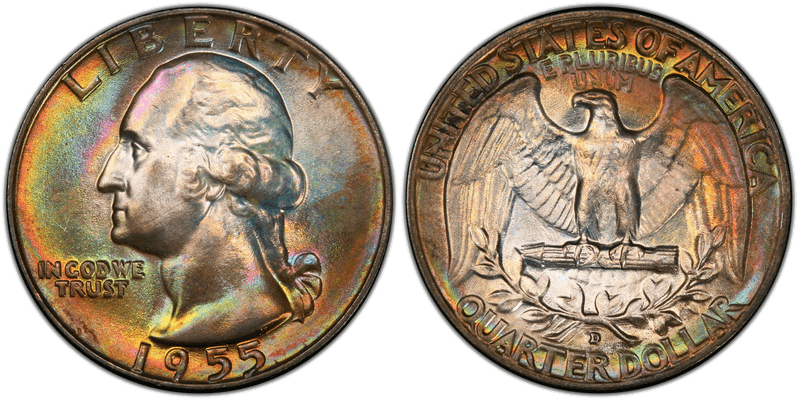
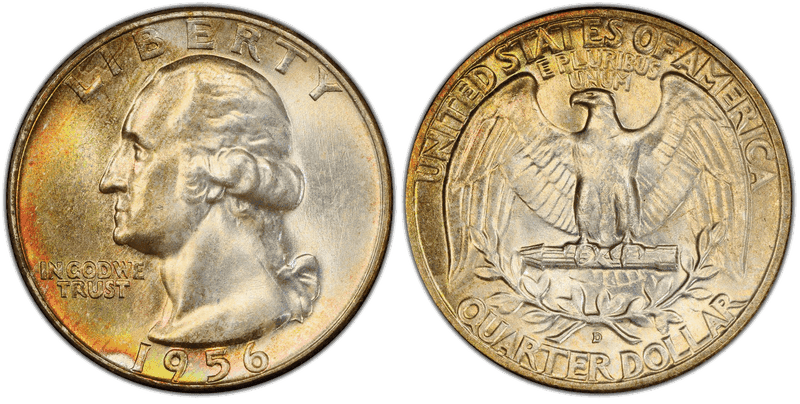
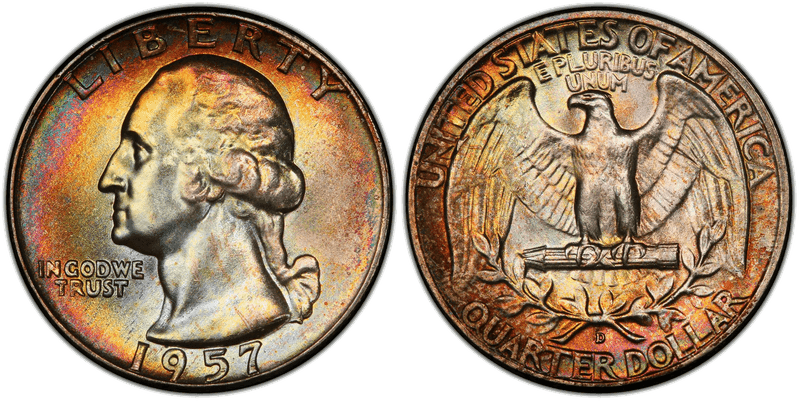
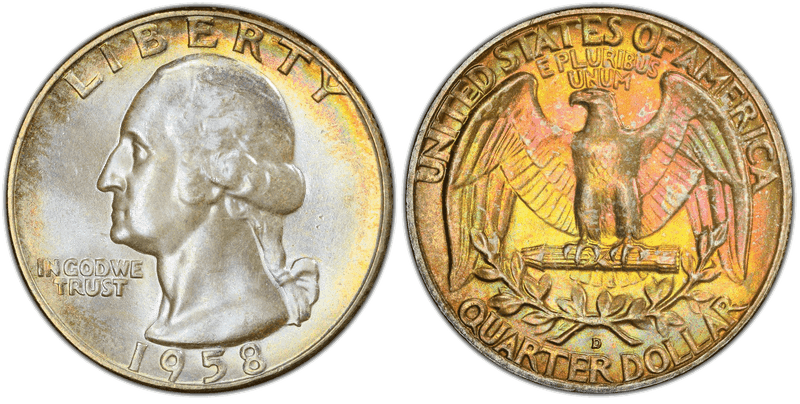
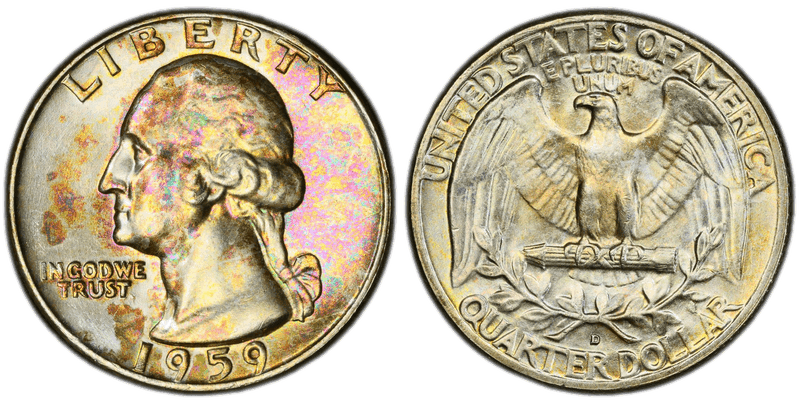
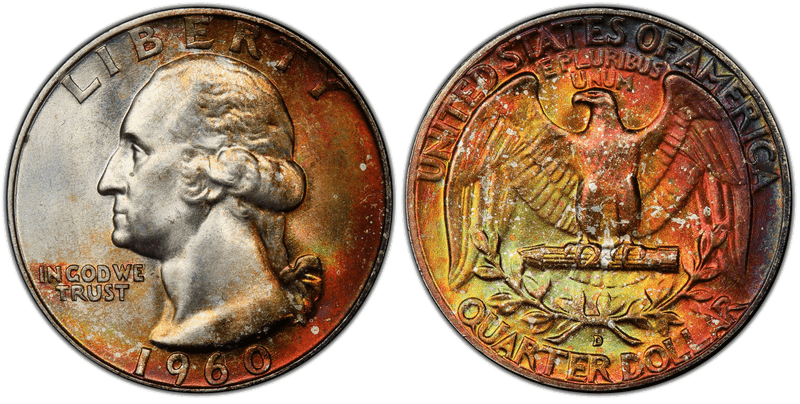
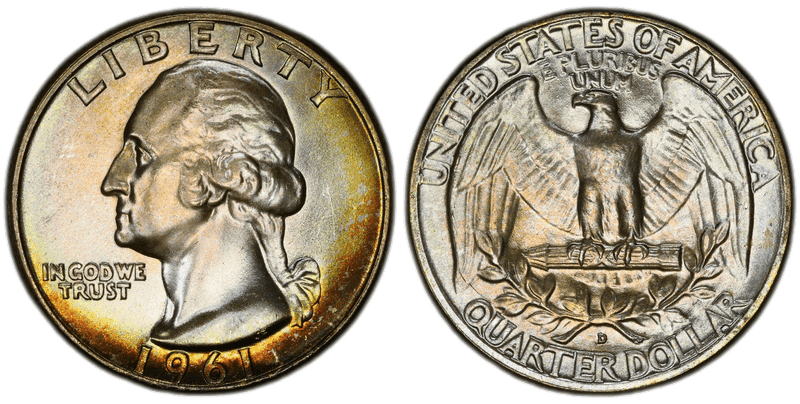
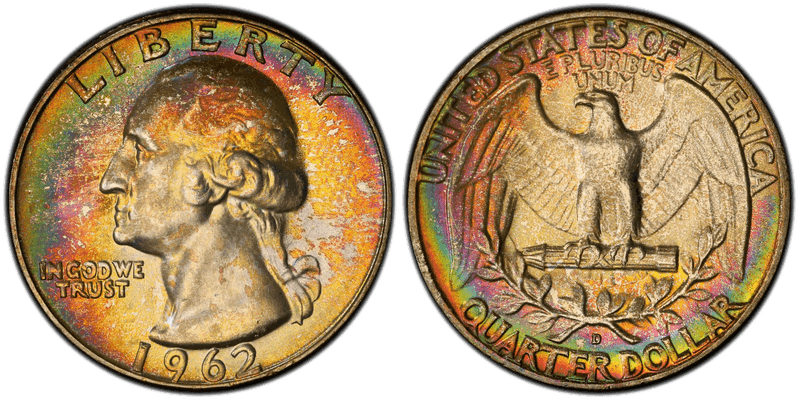
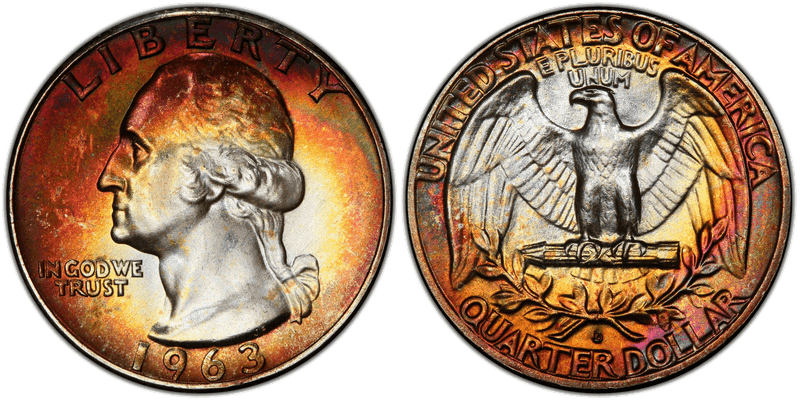
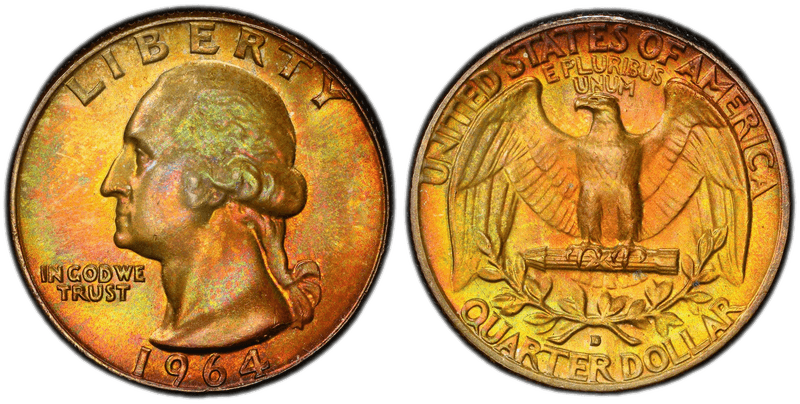
Washington Silver Quarters 1932-1964

Coin Series
Washington Silver Quarters 1932-1964 series coin

About This Series

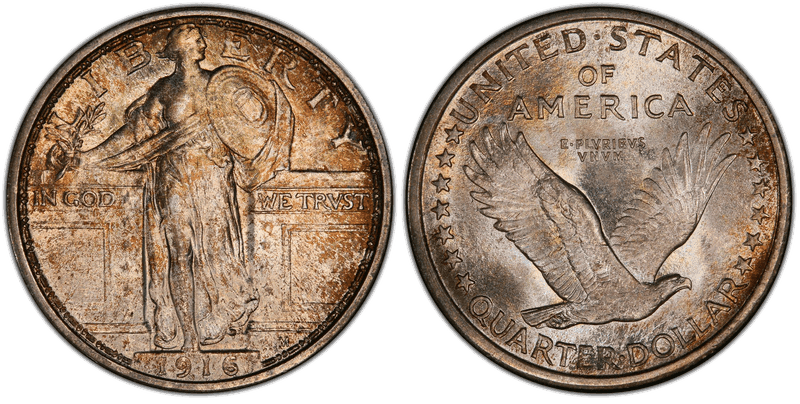
John Flanagan's portrait of George Washington debuted in 1932 for the bicentennial of Washington's birth, replacing the Standing Liberty design under a 1931 act of Congress. Sources differ on what was intended: NGC describes the 1932 coin as meant to be a one-year commemorative, while a 1931 House committee memorandum said the design would replace the Standing Liberty quarter for good. Flanagan's portrait stayed on the quarter through 2021. The 1932-D (436,800 struck) and 1932-S (408,000 struck) are the series' twin key dates, both produced in modest quantities during the depths of the Great Depression and commanding strong premiums in all grades. No quarters were struck at all in 1933, reflecting the economic crisis, and the denomination resumed in 1934. These 90% silver quarters (6.25 grams of .900 fine silver at 24.3mm diameter) circulated as workhorses of American commerce through the Depression, World War II, and the postwar boom, finally giving way to copper-nickel clad composition after 1964. The reverse, an eagle with outspread wings perched on a bundle of arrows above two olive branches, remained essentially unchanged throughout the silver era. Collectors pursue the series by date, mintmark, and condition, with many 1930s-1940s issues genuinely scarce in gem uncirculated grades. The Washington quarter's silver era represents the denomination's golden age — the period when these coins carried intrinsic precious metal value alongside their face value.

From NumisDex News

Series Information

Production Years
1932-1964
Designer
John Flanagan
Composition
90% Silver, 10% Copper
Weight
6.25g
Diameter
24.3mm
Edge
Reeded

Browse by Base(32 bases)

1932 Washington Quarter
BaseVerified

1932 Washington Quarter

3 Strike Types
5 Error Listings
1934 Washington Quarter
BaseVerified

1934 Washington Quarter

5 Strike Types
29 Error Listings
1935 Washington Quarter
BaseVerified

1935 Washington Quarter

3 Strike Types
16 Error Listings
1936 Washington Quarter
BaseVerified

1936 Washington Quarter

4 Strike Types
27 Error Listings
1937 Washington Quarter
BaseVerified

1937 Washington Quarter

5 Strike Types
25 Error Listings
1938 Washington Quarter
BaseVerified

1938 Washington Quarter

3 Strike Types
12 Error Listings
1939 Washington Quarter
BaseVerified

1939 Washington Quarter

4 Strike Types
54 Error Listings
1940 Washington Quarter
BaseVerified

1940 Washington Quarter

4 Strike Types
60 Error Listings
1941 Washington Quarter
BaseVerified

1941 Washington Quarter

4 Strike Types
87 Error Listings
1942 Washington Quarter
BaseVerified

1942 Washington Quarter

5 Strike Types
73 Error Listings
1943 Washington Quarter
BaseVerified

1943 Washington Quarter

5 Strike Types
144 Error Listings
1944 Washington Quarter
BaseVerified

1944 Washington Quarter

3 Strike Types
93 Error Listings
1945 Washington Quarter
BaseVerified

1945 Washington Quarter

3 Strike Types
98 Error Listings
1946 Washington Quarter
BaseVerified

1946 Washington Quarter

3 Strike Types
73 Error Listings
1947 Washington Quarter
BaseVerified

1947 Washington Quarter

3 Strike Types
29 Error Listings
1948 Washington Quarter
BaseVerified

1948 Washington Quarter

3 Strike Types
18 Error Listings
1949 Washington Quarter
BaseVerified

1949 Washington Quarter

2 Strike Types
12 Error Listings
1950 Washington Quarter
BaseVerified

1950 Washington Quarter

6 Strike Types
22 Error Listings
1951 Washington Quarter
BaseVerified

1951 Washington Quarter

4 Strike Types
28 Error Listings
1952 Washington Quarter
BaseVerified

1952 Washington Quarter

4 Strike Types
26 Error Listings
1953 Washington Quarter
BaseVerified

1953 Washington Quarter

4 Strike Types
17 Error Listings
1954 Washington Quarter
BaseVerified

1954 Washington Quarter

4 Strike Types
20 Error Listings
1955 Washington Quarter
BaseVerified

1955 Washington Quarter

3 Strike Types
10 Error Listings
1956 Washington Quarter
BaseVerified

1956 Washington Quarter

3 Strike Types
27 Error Listings
1957 Washington Quarter
BaseVerified

1957 Washington Quarter

3 Strike Types
22 Error Listings
1958 Washington Quarter
BaseVerified

1958 Washington Quarter

3 Strike Types
5 Error Listings
1959 Washington Quarter
BaseVerified

1959 Washington Quarter

3 Strike Types
15 Error Listings
1960 Washington Quarter
BaseVerified

1960 Washington Quarter

3 Strike Types
25 Error Listings
1961 Washington Quarter
BaseVerified

1961 Washington Quarter

3 Strike Types
26 Error Listings
1962 Washington Quarter
BaseVerified

1962 Washington Quarter

3 Strike Types
29 Error Listings
1963 Washington Quarter
BaseVerified

1963 Washington Quarter

3 Strike Types
58 Error Listings
1964 Washington Quarter
BaseVerified

1964 Washington Quarter

4 Strike Types
47 Error Listings
Showing all 32 listings

History

The bicentennial of George Washington's birth fell in 1932, and the committee planning it wanted a Washington half dollar, using a medal design by Laura Gardin Fraser. Congress went another way. The Act of March 4, 1931, put Washington on the quarter instead, with a portrait based on Jean-Antoine Houdon's bust of 1785. Treasury Secretary Andrew Mellon then held a new competition and picked models by the New York sculptor John Flanagan, although the Commission of Fine Arts preferred Fraser's work. Mellon's successor, Ogden Mills, let the choice stand, and the new quarter went into circulation on August 1, 1932.

Sources disagree on what Congress intended. NGC describes the 1932 coin as meant to be a one-year commemorative. A House committee memorandum from 1931, however, said the new design would replace the Standing Liberty quarter for good, and newspapers in July 1932 told readers the coin was not a commemorative. Either way, Flanagan's design stayed.

The timing was poor. In the depth of the Depression there was little call for new quarters. Philadelphia struck about 5.4 million, while Denver and San Francisco each made just over 400,000, and no quarters at all are dated 1933. Production resumed in 1934, the year the Mint changed the obverse hub more than once and produced the three motto types collectors look for.

Proof quarters returned in 1936, the first in about twenty years, and were made through 1942. After a wartime pause they came back in 1950 and continued every year to 1964. San Francisco struck no quarters in 1949 and made its last silver quarters for circulation in 1954, so the 1955 to 1964 issues come only from Philadelphia and Denver.

The coin shortage of the early 1960s ended the series in a rush. Congress froze the date at 1964, so Philadelphia struck 1964-dated quarters well into 1965, and San Francisco's assay office added more in 1965 and 1966. Denver struck only 123,801,308 of its 704,135,528 1964-D quarters during 1964 itself. The Coinage Act of 1965 then replaced silver with copper-nickel clad.
How to Identify It

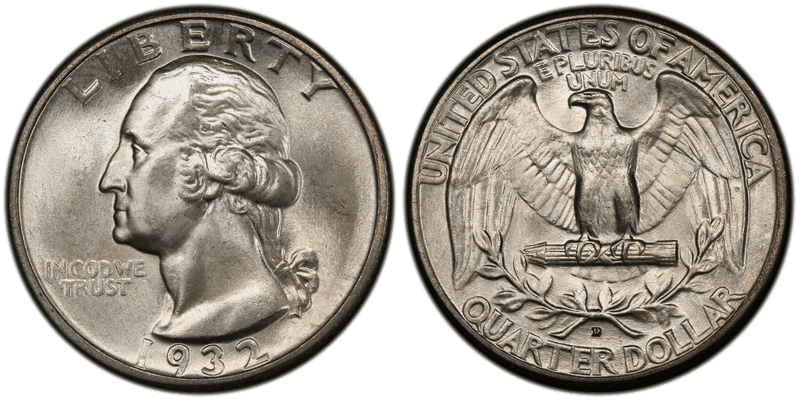
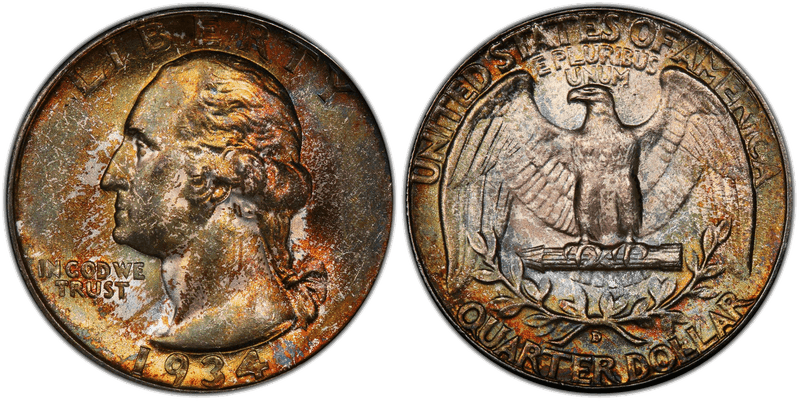
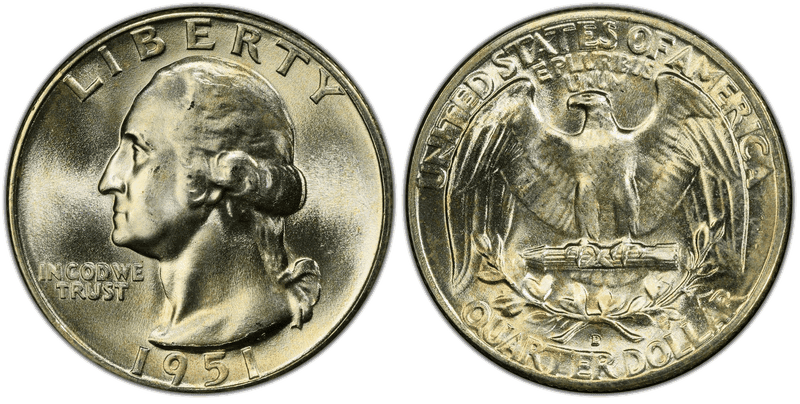
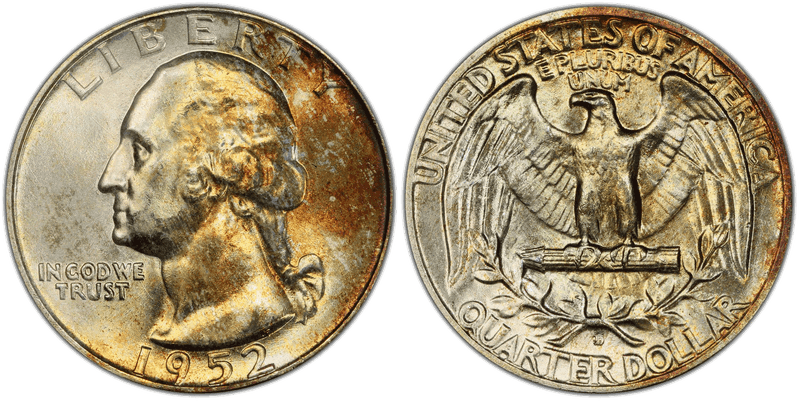
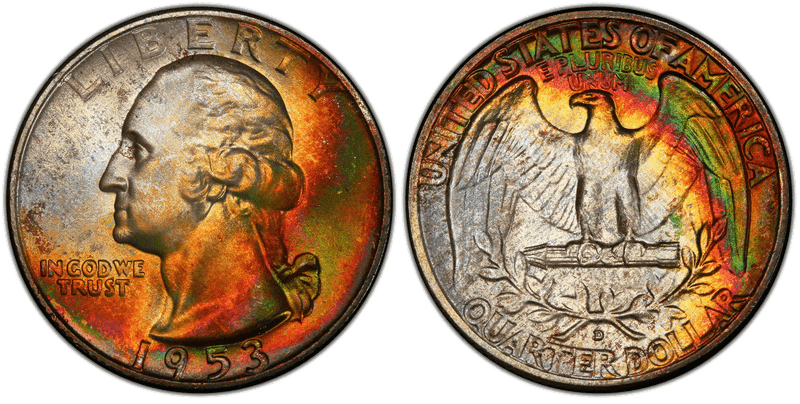
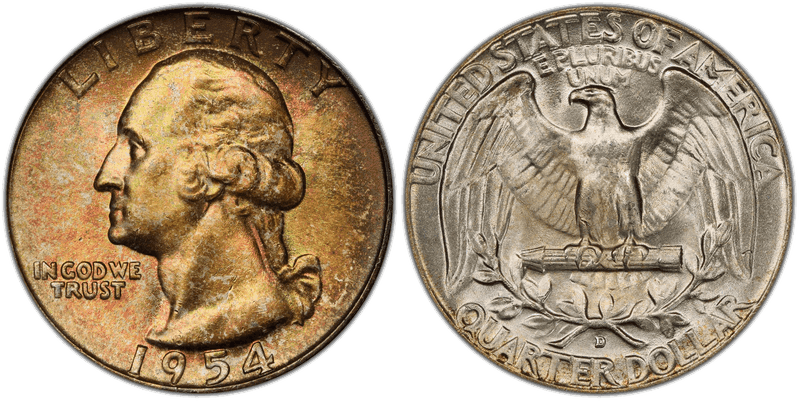
Obverse. Washington's head faces left, adapted from the Houdon bust. LIBERTY runs across the top, IN GOD WE TRUST sits under the chin, and the date is at the bottom. Flanagan's initials are on the truncation of the bust.

Reverse. An eagle with outspread wings stands on a bundle of arrows, with two olive branches below. UNITED STATES OF AMERICA arcs across the top, E PLURIBUS UNUM sits just over the eagle's head, and QUARTER DOLLAR runs along the bottom.

Mint mark. On the reverse, under the eagle, centered between the stems of the olive branches. D is Denver and S is San Francisco. Philadelphia coins carry no letter.

Things that cause confusion.

  • 1934 motto types. Look at the W in WE. On Heavy Motto coins its middle peak stands above the outer strokes; on Medium Motto coins it stops below them. Light Motto letters are thin and shallow, made from the old 1932 hub.
  • Worn reverses. The 1932 reverse had a tall rim, used again only on Light Motto 1934 coins. Later quarters have a low reverse rim, so a worn coin often shows a full obverse and a reverse worn into the lettering. That is normal wear, not a defect.
  • Added mint marks. Philadelphia coins altered to look like a 1932-D or 1932-S are a common fake. NGC notes the genuine 1932-D has only the small D, and added letters are often the wrong style.
  • Type B and Type C reverses. From 1956, Philadelphia put some retired proof reverse dies into regular use. Coins from them show a clear gap between the E and S of STATES. A few 1964-D quarters carry the lower-relief reverse made for the 1965 clad coins.

Key Dates and Varieties

  • 1932-D: 436,800 struck. Most entered circulation around 1934, so worn coins are easy to find and gems are rare.
  • 1932-S: 408,000 struck. A Philadelphia coin with an added S is a common fake, so authentication matters. It turns up a little more often in Mint State than the 1932-D.
  • 1932: 5,404,000 struck. NGC warns of convincing counterfeits from the 1970s with a faint prooflike look.
  • 1934 motto types: Light Motto, Medium Motto and Heavy Motto. Philadelphia struck 31,912,052 quarters that year in all; NGC finds Medium the most common, then Heavy, then Light.
  • 1934 doubled die obverse: strong doubling on the motto of a Medium Motto die.
  • 1937 doubled die obverse: the first of two 1937 doubled obverses, the one that catalogs picture and price.
  • 1942-D doubled die obverse, 1943 doubled die obverse and 1943-S doubled die obverse: wartime dies with strong doubling, each listed and priced on its own.
  • 1950-D/S and 1950-S/D: reverse dies punched with one mint's letter and then the other's.
  • 1936 Proof: 3,837 struck, the first Washington proofs. The 1964 proof run reached 3,950,762.
  • 1964-D transitional reverse: a 1964-D struck with the reverse prepared for the clad coinage.

Mintages

Washington Silver Quarters 1932-1964 mintages by year and mint, taken from each coin's page in our catalog. Each figure opens that coin's page, which lists its varieties and errors. A dash means no figure was recorded. Where one issue was struck in more than one type, each type is listed.

Composition and Silver Content

  • Composition: 90% silver, 10% copper
  • Weight: 6.25 grams
  • Silver content: 5.625 grams, or 0.1808 troy ounce
  • Diameter: 24.3 mm
  • Edge: reeded
  • Designer: John Flanagan

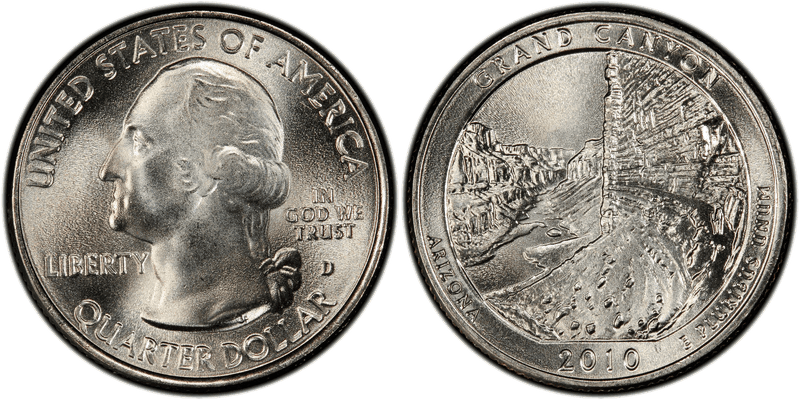
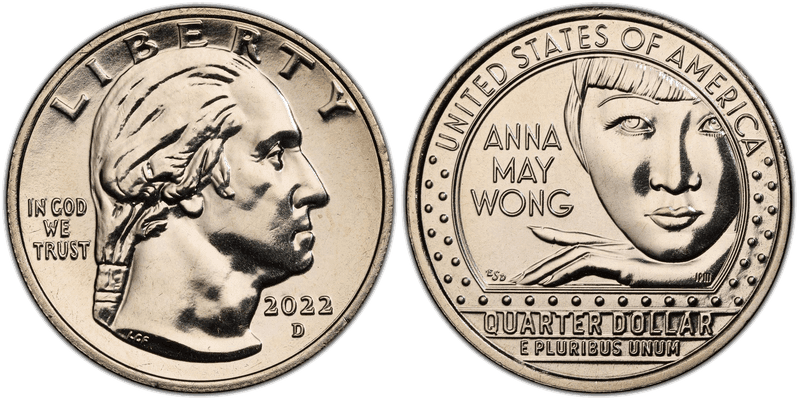
These figures apply to every Washington quarter dated 1932 through 1964, business strikes and proofs alike. Clad quarters from 1965 onward weigh 5.67 grams and contain no silver.

FAQ

Why are the 1932-D and 1932-S quarters worth more?

Denver struck 436,800 and San Francisco 408,000, against 5,404,000 at Philadelphia. NGC explains that the branch mints made only enough for collectors' three-coin sets plus a margin to discourage speculators, and no one foresaw how many collectors would want them a generation later. Both dates are faked by adding a mint mark to a Philadelphia coin, so buy them certified.

Which quarters are silver?

Every Washington quarter dated 1932 through 1964 is 90% silver, including the 1964-dated coins the Mint kept striking into 1965 and 1966. Quarters dated 1965 and later made for circulation are copper-nickel clad, with no silver; the exceptions are collector issues such as silver proofs.

Where is the mint mark on a 1964 quarter?

On the reverse, below the eagle, between the stems of the two olive branches. A D means Denver; Philadelphia quarters of this period have no letter. The mark stayed in that spot from 1932 through 1964 and moved to the obverse when mint marks returned in 1968.

How much silver is in a quarter?

A silver Washington quarter weighs 6.25 grams and is 90% silver, so it holds 5.625 grams, or 0.1808 troy ounce, of pure silver. Clad quarters dated 1965 or later hold none.

What is the 1934 doubled die quarter?

It is a 1934 Philadelphia quarter struck from an obverse die that took two misaligned impressions from the hub. NGC says the doubling shows most plainly on the motto, IN GOD WE TRUST, and that the variety comes on Medium Motto coins. It is listed and priced separately from the regular 1934.

What is the difference between a light motto and a heavy motto 1934 quarter?

The first 1934 dies came from the 1932 hub, whose motto was in low relief and wore away quickly; those coins are the Light Motto. A new hub with sharper, bolder letters made the Heavy Motto, and a third hub made the Medium Motto. NGC's test is the W in WE, whose middle stroke rises above the outer strokes on Heavy Motto coins and stops below them on Medium Motto coins.

↑ Back to the coins: every year, mint, variety and error

Explore Other Denominations

Collector Essentials

Tools and references for building and protecting your coin collection.

As an Amazon Associate, NumisDex earns from qualifying purchases.