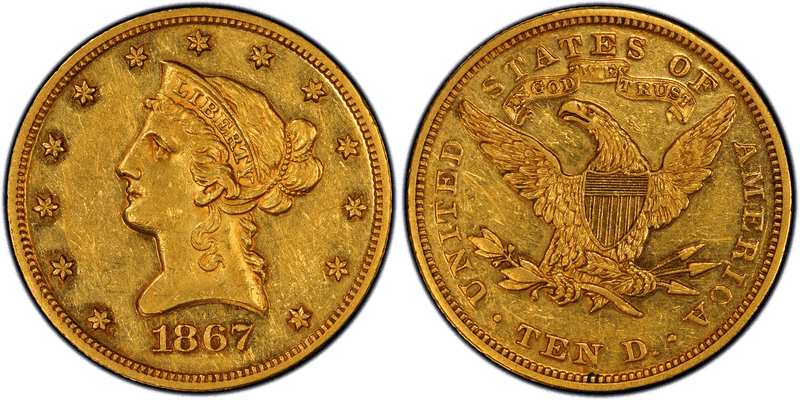
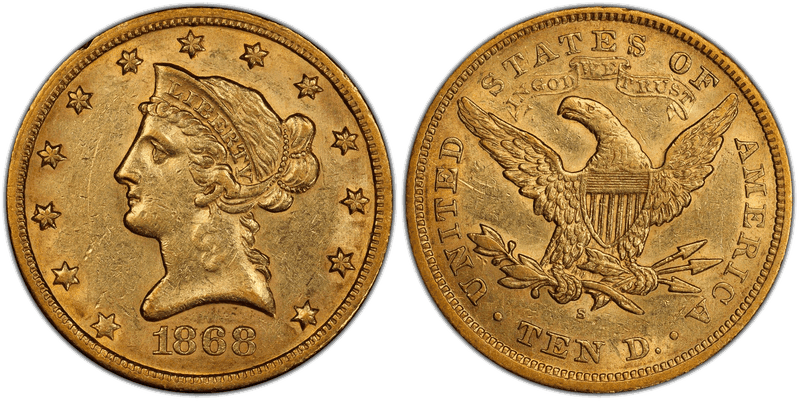
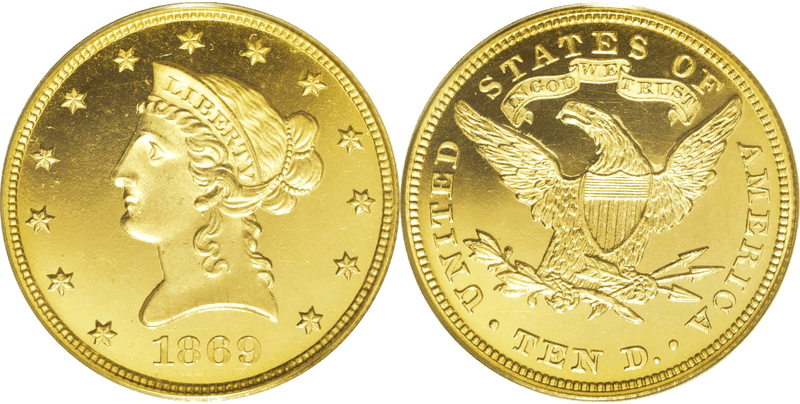
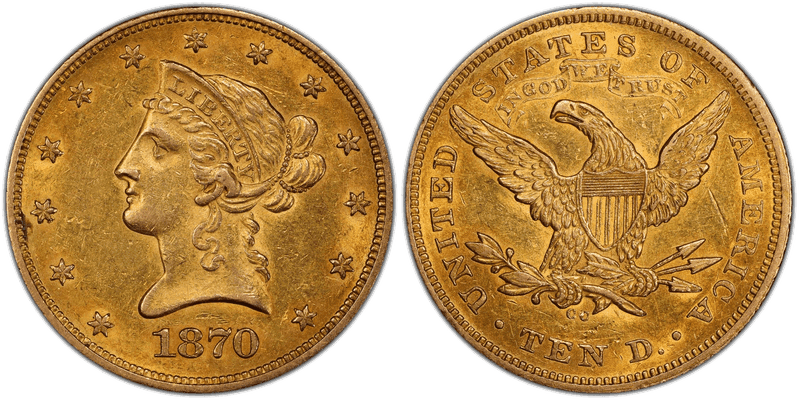
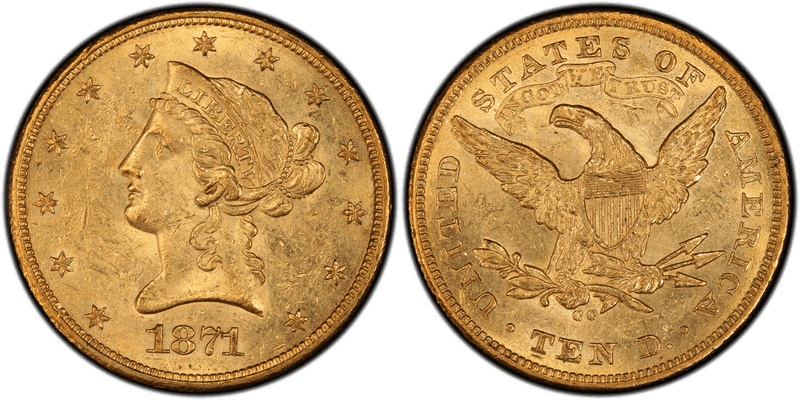
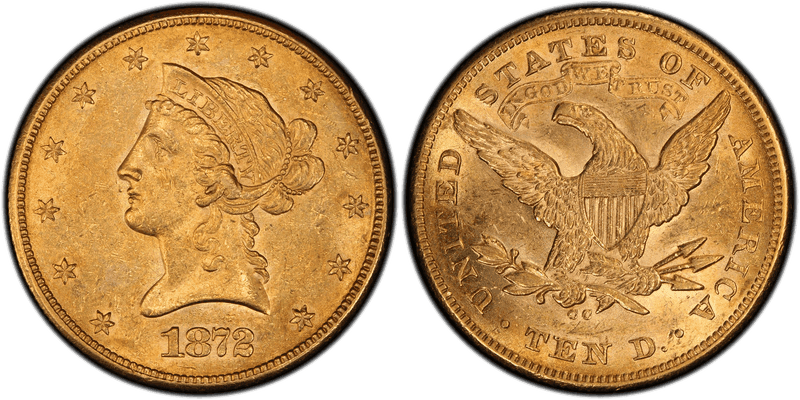
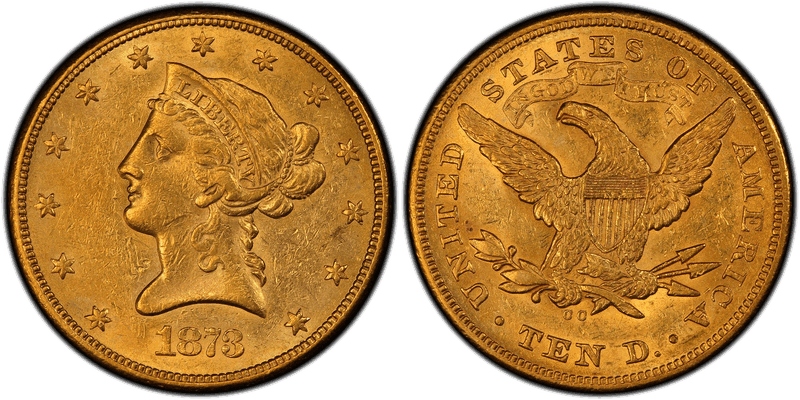
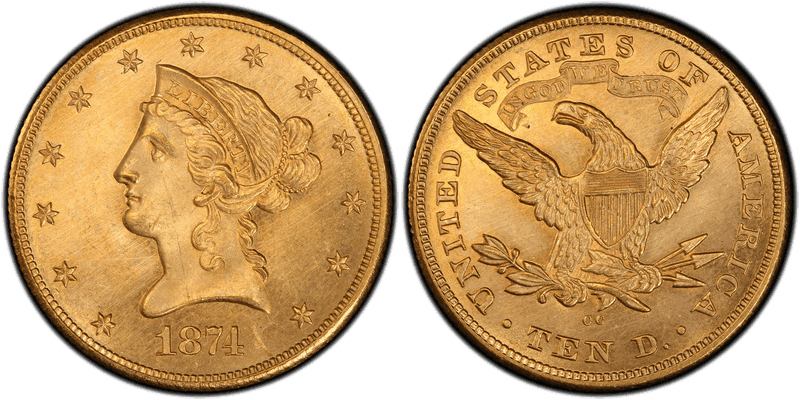
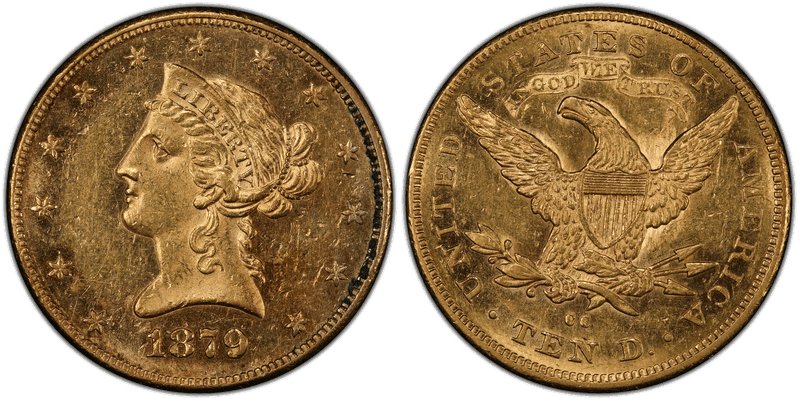
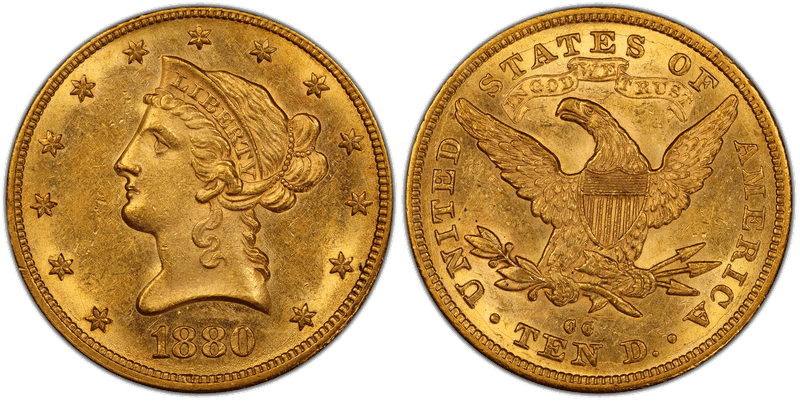
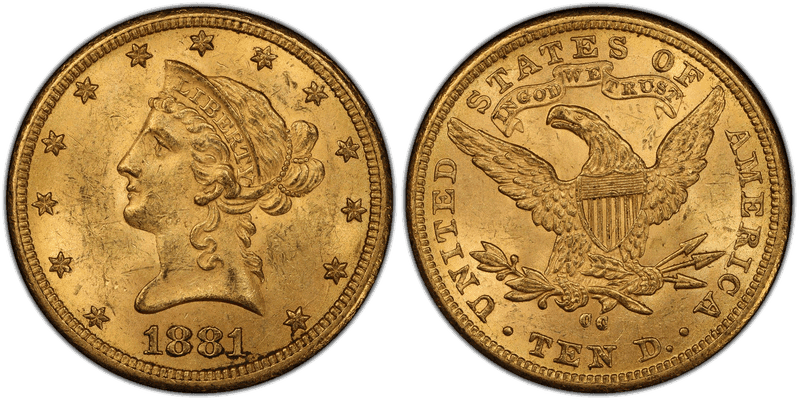
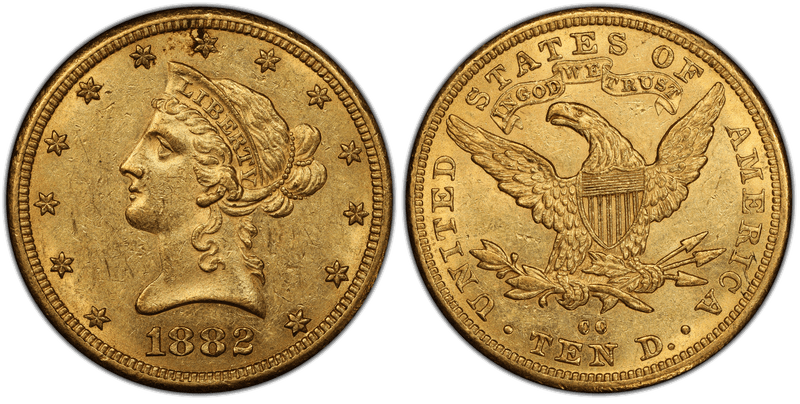
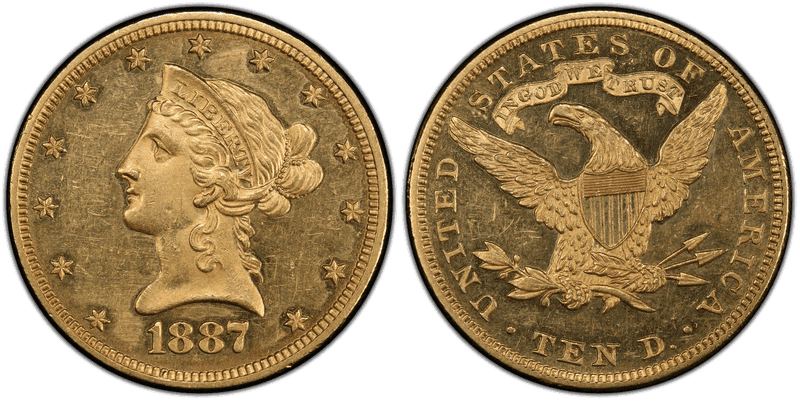
Liberty Head Eagles 1838-1907

Coin Series
Liberty Head Eagles 1838-1907 series coin

About This Series

Spanning seventy years of continuous production, Christian Gobrecht's Liberty Head eagle ($10 gold) witnessed the nation's transformation from an agrarian republic to an industrial world power. Two major subtypes define the series: No Motto (1838-1866), struck before the Civil War prompted the addition of IN GOD WE TRUST, and With Motto (1866-1907), which carried the national maxim on a ribbon above the eagle. Production spread across five mints — Philadelphia, New Orleans (O), San Francisco (S), Carson City (CC), and, in 1906 and 1907, Denver (D) — creating a vast array of date-and-mintmark combinations. The Charlotte and Dahlonega branch mints never struck eagles. The Philadelphia Mint struck 2,521 eagles dated 1858. Struck in .900 fine gold (after 1837) at 16.72 grams on a 27mm planchet, Liberty Head eagles served as the foundation of gold-based commerce during the California Gold Rush, the Civil War, and the Gilded Age. Carson City struck eagles from 1870 to 1893. The series was finally replaced in 1907 by Augustus Saint-Gaudens' Indian Head eagle, ending Gobrecht's seven-decade contribution to American gold coinage.

From NumisDex News

Series Information

Production Years
1838-1907
Designer
Christian Gobrecht
Composition
90% Gold, 10% Copper
Weight
16.72g
Diameter
27mm

Browse by Base(70 bases)

1838 Liberty Head Eagle
BaseVerified

1838 Liberty Head Eagle

2 Strike Types
1839 Liberty Head Eagle
BaseVerified

1839 Liberty Head Eagle

3 Strike Types
1840 Liberty Head Eagle
BaseVerified

1840 Liberty Head Eagle

2 Strike Types
1841 Liberty Head Eagle
BaseVerified

1841 Liberty Head Eagle

3 Strike Types
1842 Liberty Head Eagle
BaseVerified

1842 Liberty Head Eagle

4 Strike Types
1843 Liberty Head Eagle
BaseVerified

1843 Liberty Head Eagle

3 Strike Types
1844 Liberty Head Eagle
BaseVerified

1844 Liberty Head Eagle

4 Strike Types
1845 Liberty Head Eagle
BaseVerified

1845 Liberty Head Eagle

3 Strike Types
1846 Liberty Head Eagle
BaseVerified

1846 Liberty Head Eagle

3 Strike Types
1847 Liberty Head Eagle
BaseVerified

1847 Liberty Head Eagle

3 Strike Types
1848 Liberty Head Eagle
BaseVerified

1848 Liberty Head Eagle

3 Strike Types
1849 Liberty Head Eagle
BaseVerified

1849 Liberty Head Eagle

3 Strike Types
1850 Liberty Head Eagle
BaseVerified

1850 Liberty Head Eagle

4 Strike Types
1851 Liberty Head Eagle
BaseVerified

1851 Liberty Head Eagle

2 Strike Types
1852 Liberty Head Eagle
BaseVerified

1852 Liberty Head Eagle

2 Strike Types
1853 Liberty Head Eagle
BaseVerified

1853 Liberty Head Eagle

3 Strike Types
1854 Liberty Head Eagle
BaseVerified

1854 Liberty Head Eagle

5 Strike Types
1855 Liberty Head Eagle
BaseVerified

1855 Liberty Head Eagle

4 Strike Types
1856 Liberty Head Eagle
BaseVerified

1856 Liberty Head Eagle

4 Strike Types
1857 Liberty Head Eagle
BaseVerified

1857 Liberty Head Eagle

4 Strike Types
1858 Liberty Head Eagle
BaseVerified

1858 Liberty Head Eagle

4 Strike Types
1859 Liberty Head Eagle
BaseVerified

1859 Liberty Head Eagle

4 Strike Types
1860 Liberty Head Eagle
BaseVerified

1860 Liberty Head Eagle

4 Strike Types
1861 Liberty Head Eagle
BaseVerified

1861 Liberty Head Eagle

3 Strike Types
1862 Liberty Head Eagle
BaseVerified

1862 Liberty Head Eagle

3 Strike Types
1863 Liberty Head Eagle
BaseVerified

1863 Liberty Head Eagle

3 Strike Types
1864 Liberty Head Eagle
BaseVerified

1864 Liberty Head Eagle

3 Strike Types
1865 Liberty Head Eagle
BaseVerified

1865 Liberty Head Eagle

4 Strike Types
1866 Liberty Head Eagle
BaseVerified

1866 Liberty Head Eagle

4 Strike Types
1867 Liberty Head Eagle
BaseVerified

1867 Liberty Head Eagle

3 Strike Types
1868 Liberty Head Eagle
BaseVerified

1868 Liberty Head Eagle

3 Strike Types
1869 Liberty Head Eagle
BaseVerified

1869 Liberty Head Eagle

3 Strike Types
1870 Liberty Head Eagle
BaseVerified

1870 Liberty Head Eagle

4 Strike Types
1871 Liberty Head Eagle
BaseVerified

1871 Liberty Head Eagle

4 Strike Types
1872 Liberty Head Eagle
BaseVerified

1872 Liberty Head Eagle

4 Strike Types
1873 Liberty Head Eagle
BaseVerified

1873 Liberty Head Eagle

4 Strike Types
1874 Liberty Head Eagle
BaseVerified

1874 Liberty Head Eagle

4 Strike Types
1875 Liberty Head Eagle
BaseVerified

1875 Liberty Head Eagle

3 Strike Types
1876 Liberty Head Eagle
BaseVerified

1876 Liberty Head Eagle

4 Strike Types
1877 Liberty Head Eagle
BaseVerified

1877 Liberty Head Eagle

4 Strike Types
1878 Liberty Head Eagle
BaseVerified

1878 Liberty Head Eagle

4 Strike Types
1879 Liberty Head Eagle
BaseVerified

1879 Liberty Head Eagle

5 Strike Types
1880 Liberty Head Eagle
BaseVerified

1880 Liberty Head Eagle

5 Strike Types
1881 Liberty Head Eagle
BaseVerified

1881 Liberty Head Eagle

5 Strike Types
1882 Liberty Head Eagle
BaseVerified

1882 Liberty Head Eagle

5 Strike Types
1883 Liberty Head Eagle
BaseVerified

1883 Liberty Head Eagle

5 Strike Types
1884 Liberty Head Eagle
BaseVerified

1884 Liberty Head Eagle

4 Strike Types
1885 Liberty Head Eagle
BaseVerified

1885 Liberty Head Eagle

3 Strike Types
1886 Liberty Head Eagle
BaseVerified

1886 Liberty Head Eagle

3 Strike Types
1887 Liberty Head Eagle
BaseVerified

1887 Liberty Head Eagle

3 Strike Types

History

The eagle, the $10 gold piece, had not been struck since 1804, when the Mint stopped making it because most of the coins were being exported. Laws of 1834 and 1837 cut the eagle's weight from 270 to 258 grains and set gold coins at nine-tenths fine, which left the new coins worth less as metal than as money. In July 1838 the Treasury told Mint Director Robert M. Patterson to resume the denomination.

Christian Gobrecht, then acting as the Mint's engraver, prepared the dies. According to Walter Breen, he took Liberty's head from the Venus in Omnia Vincit Amor, a painting by Benjamin West, and he based the eagle on John Reich's earlier design. Four specimen pieces went to the Treasury Secretary on December 6, 1838, followed by 7,200 coins for circulation. Partway through 1839 the head was reworked, with a new tilt, a new line to the bust and less hair over the ear, and the reverse lettering was made smaller. That second head stayed on the eagle for the rest of the series.

Philadelphia struck eagles every year from 1838 to 1907. New Orleans began in 1841 and struck its last pre-war eagles in 1860. The Civil War closed that mint in 1861, and it struck eagles again in some years from 1879 to 1906. San Francisco joined in 1854, Carson City in 1870, and Denver, which opened in 1906, in the last two years. An Act of March 3, 1865 required the motto IN GOD WE TRUST on every coin large enough to hold it, and from 1866 the eagle carried it on a scroll above the bird.

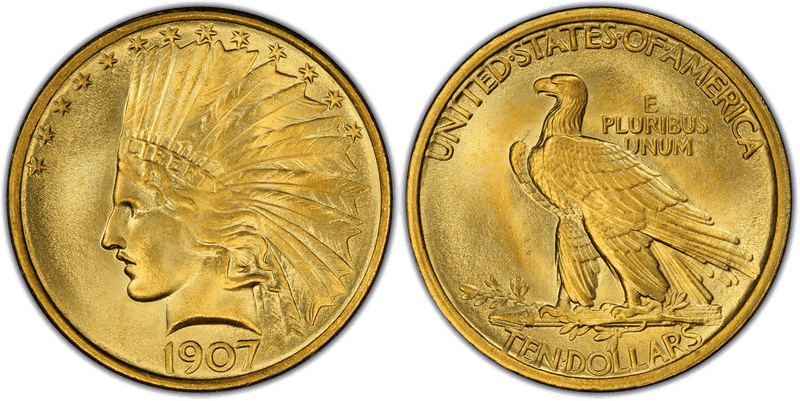
When the steamship Republic went down off Georgia in October 1865, her cargo of about $400,000 in coin was mostly $10 and $20 gold pieces, and salvors found the wreck in 2003. In 1907 the Liberty Head gave way to Augustus Saint-Gaudens's Indian Head eagle.
How to Identify It

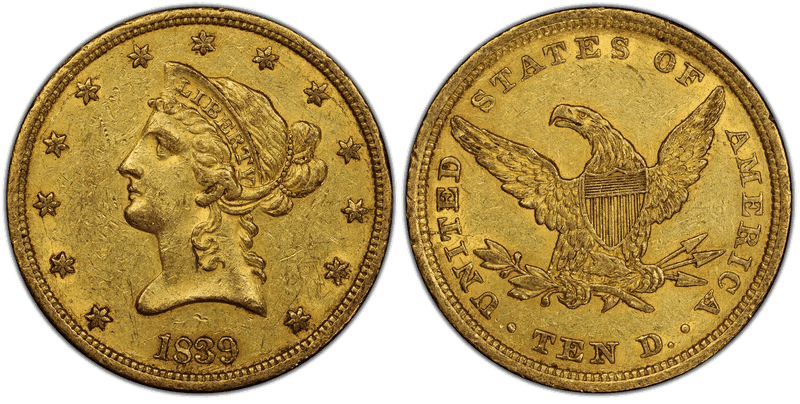
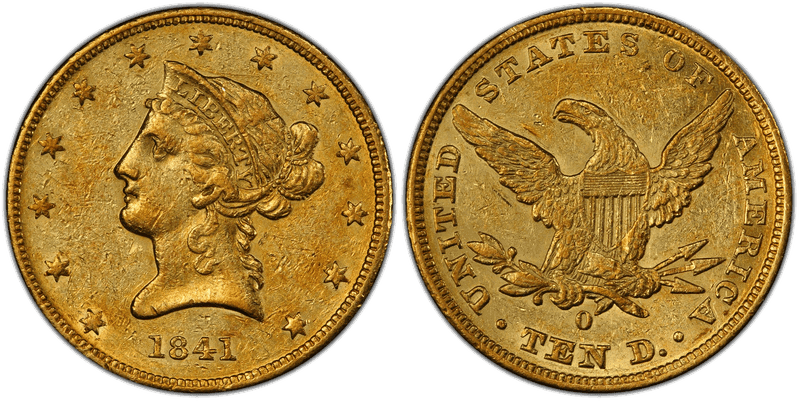
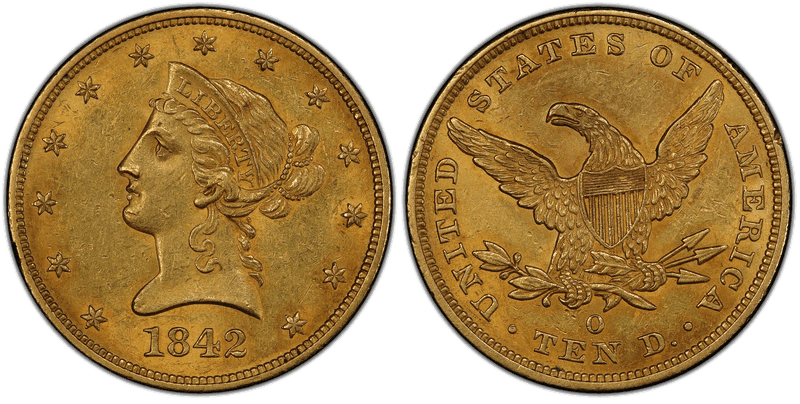
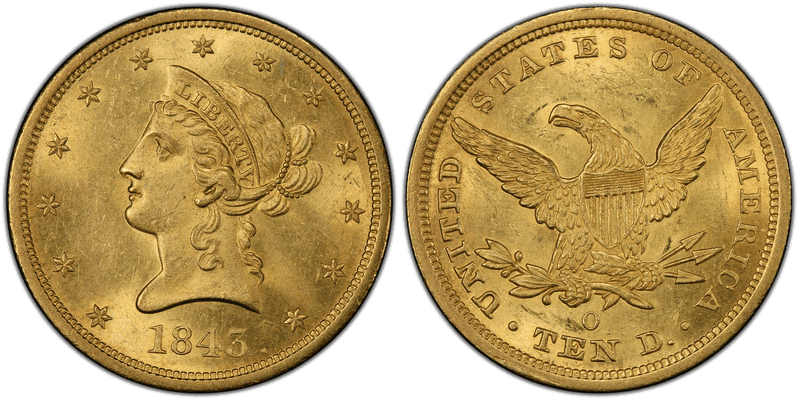
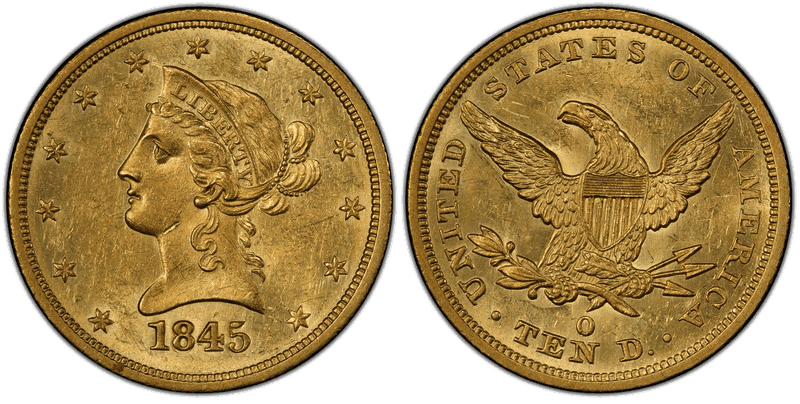
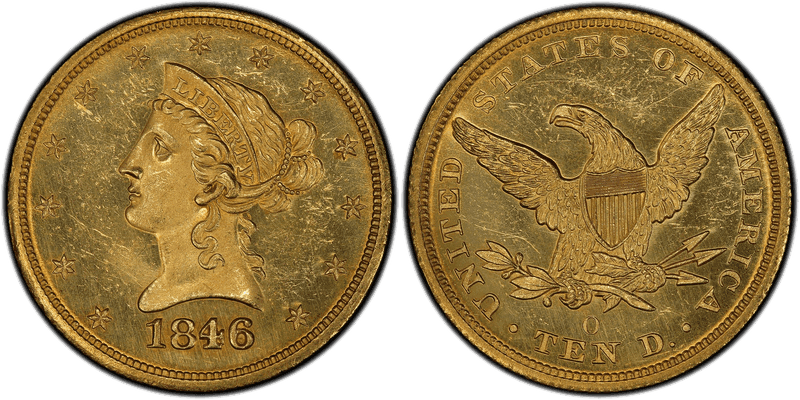
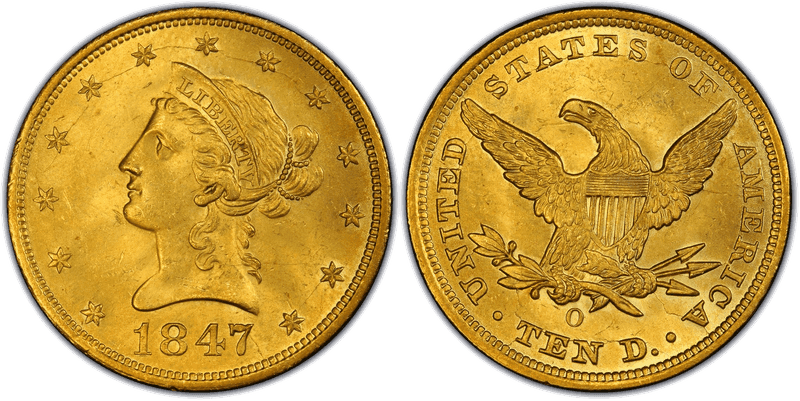
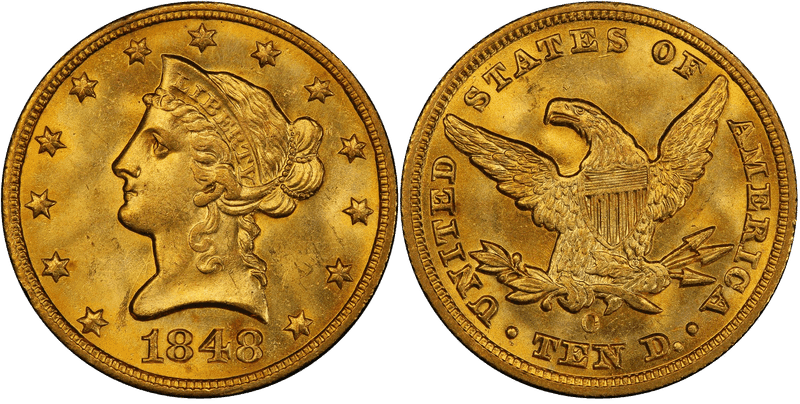
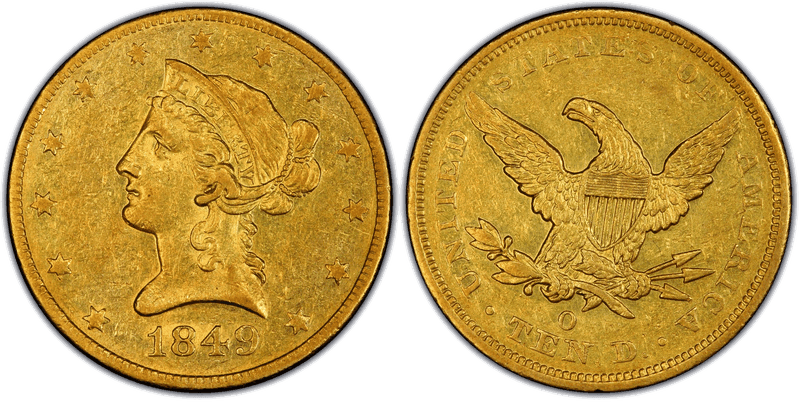
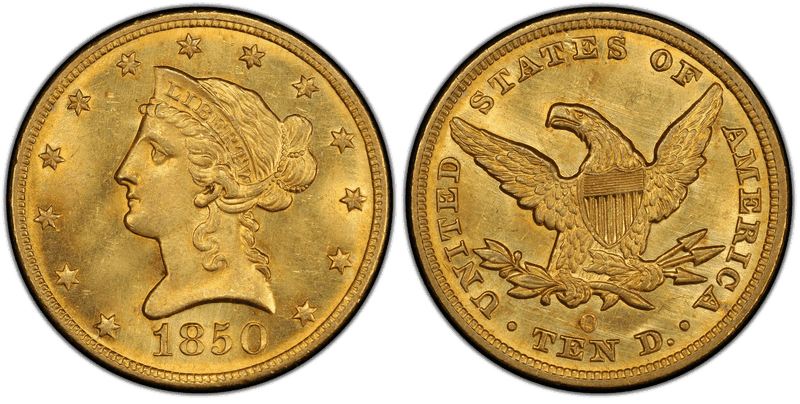
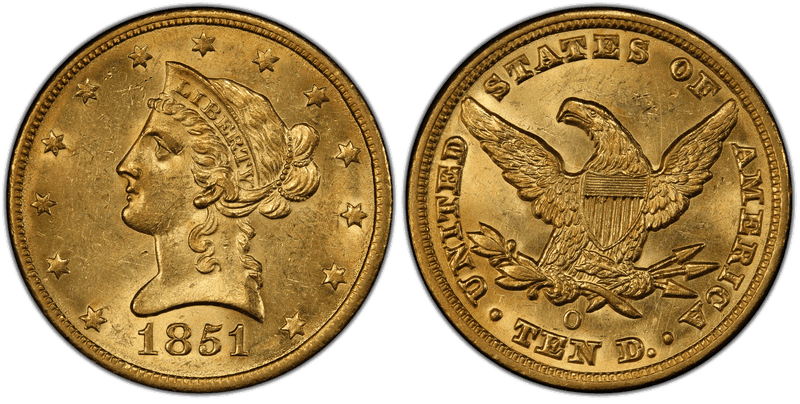
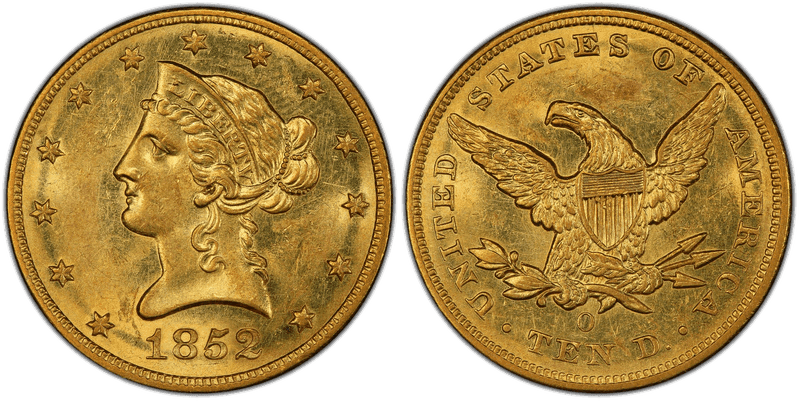
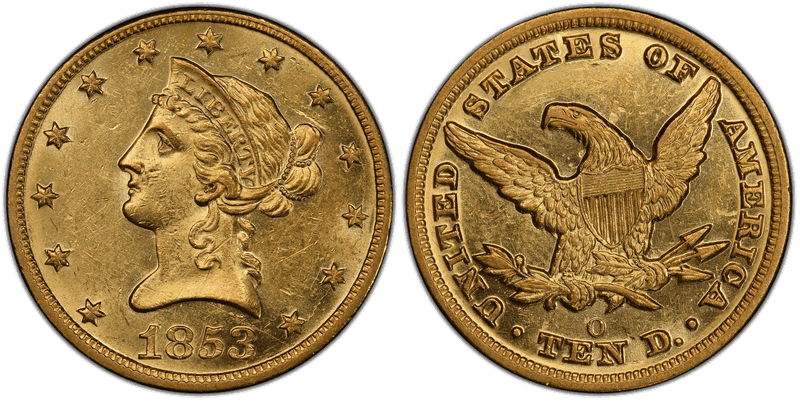
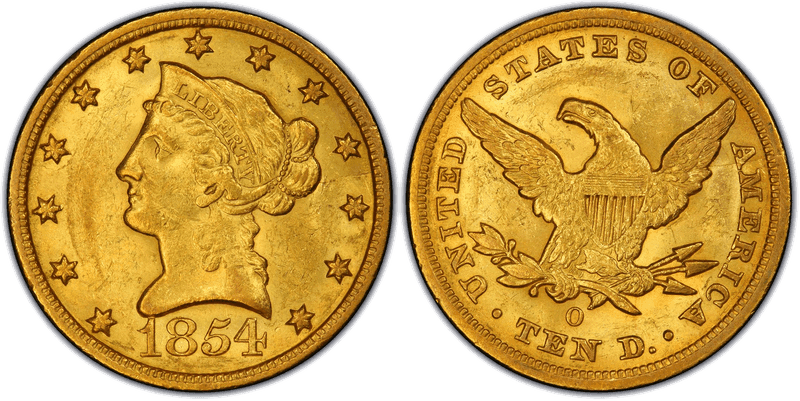
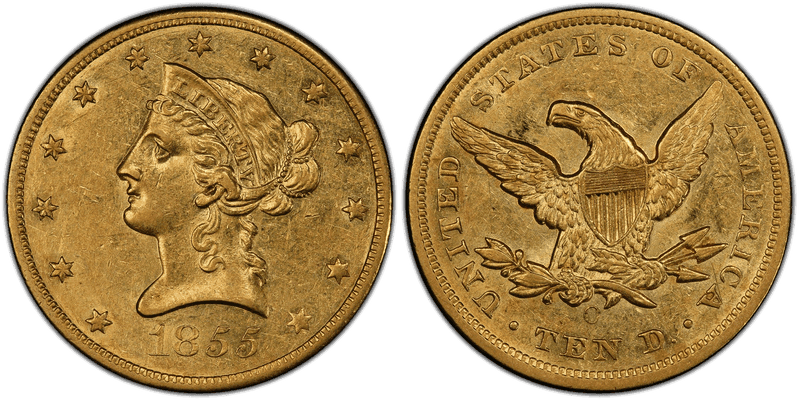
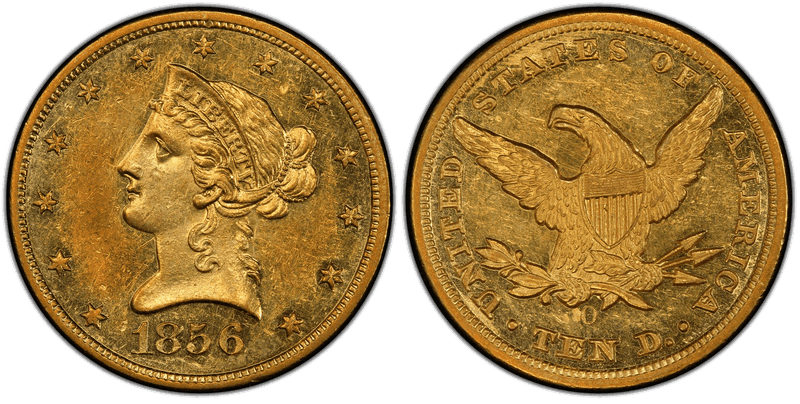
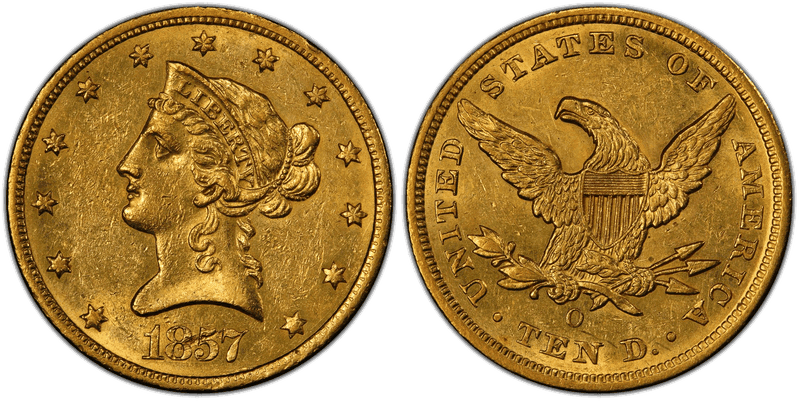
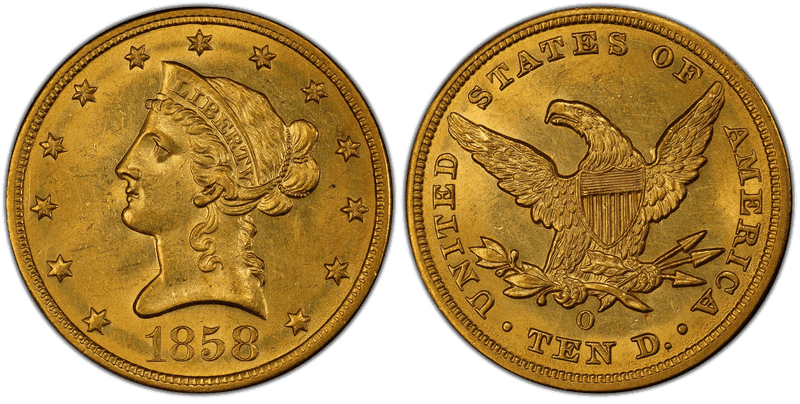
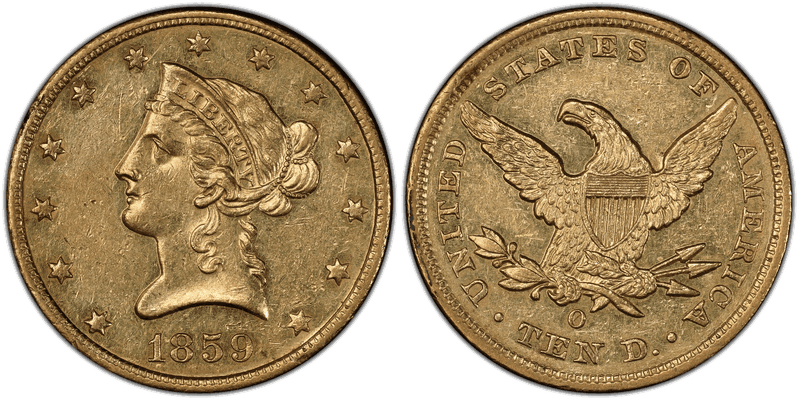
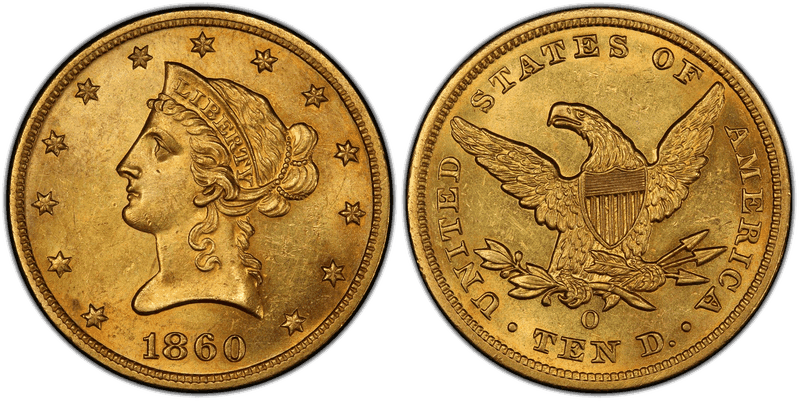
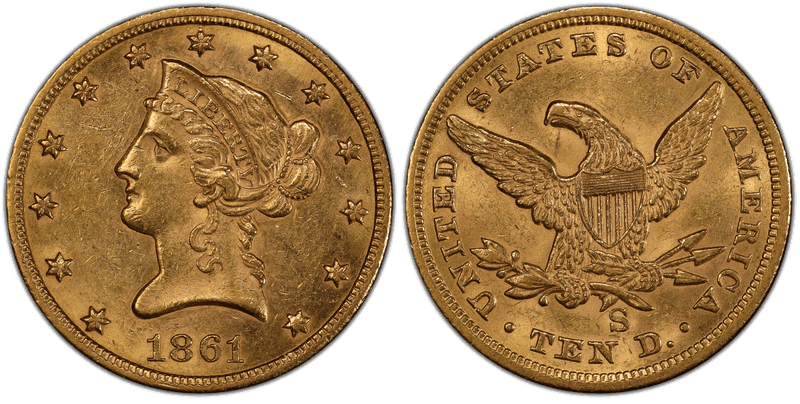
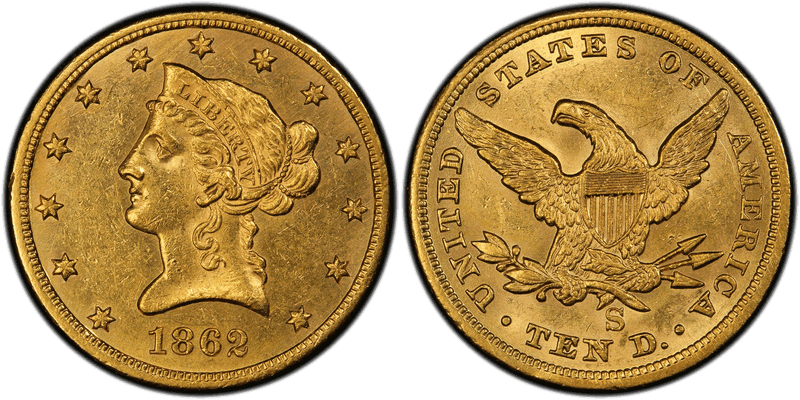
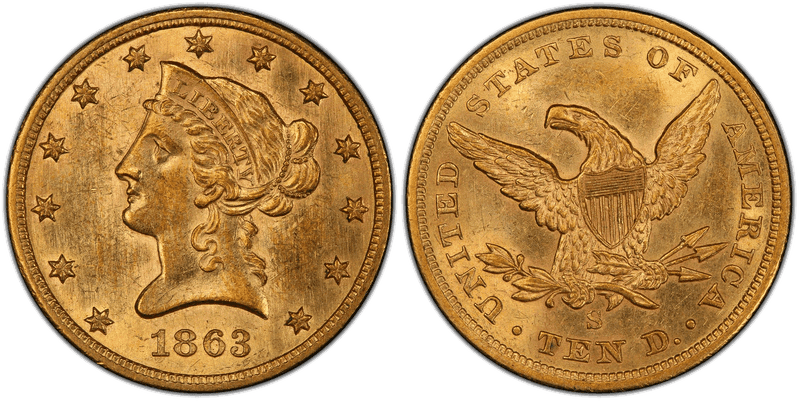
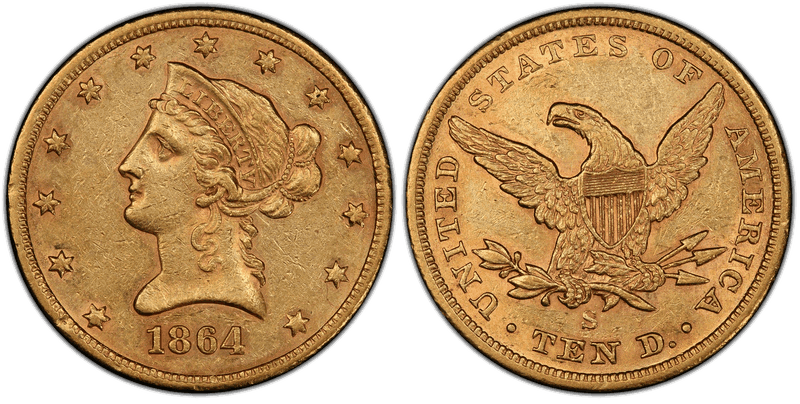
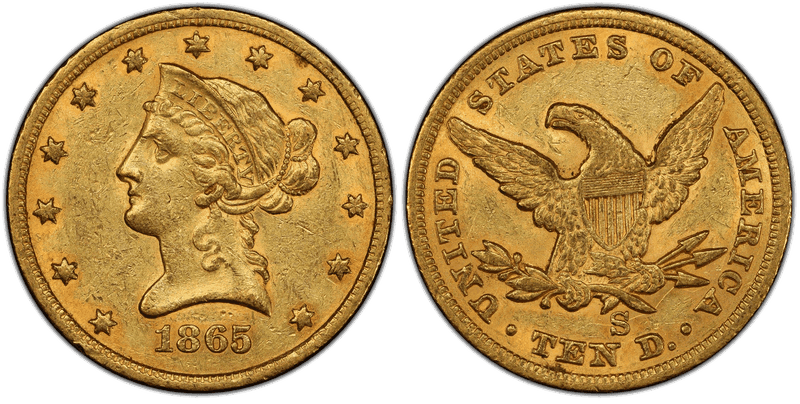
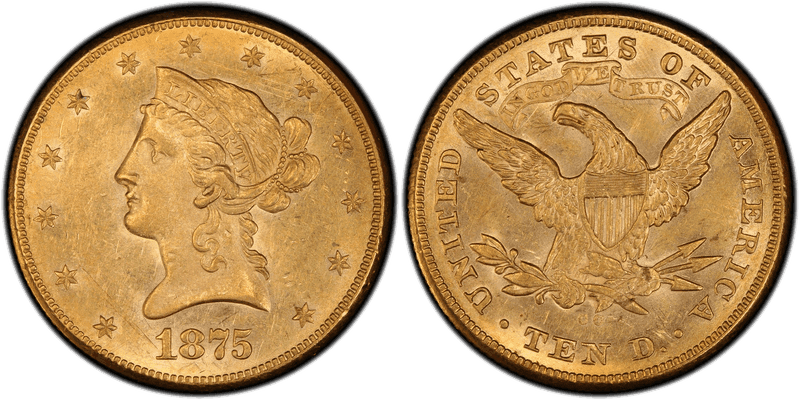
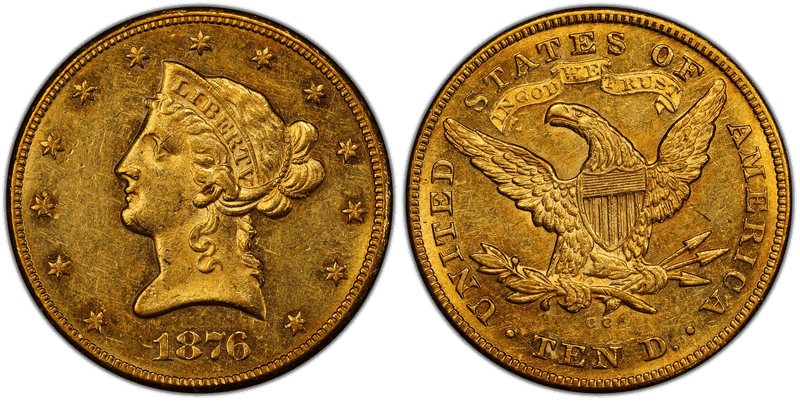
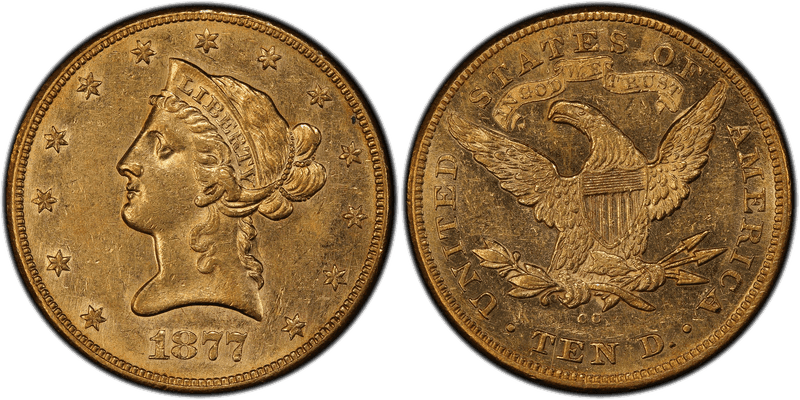
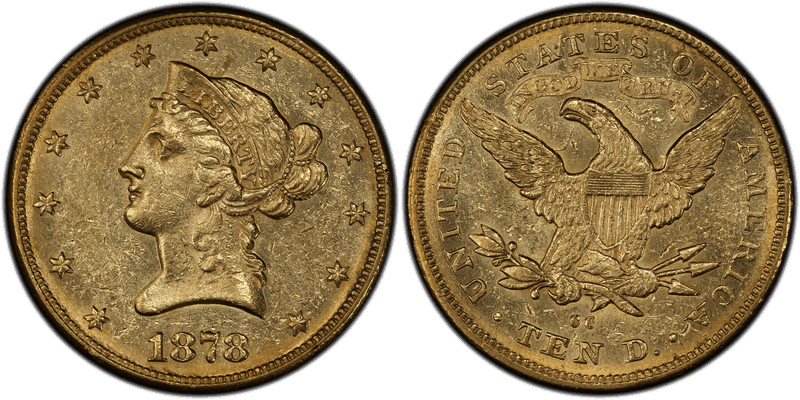
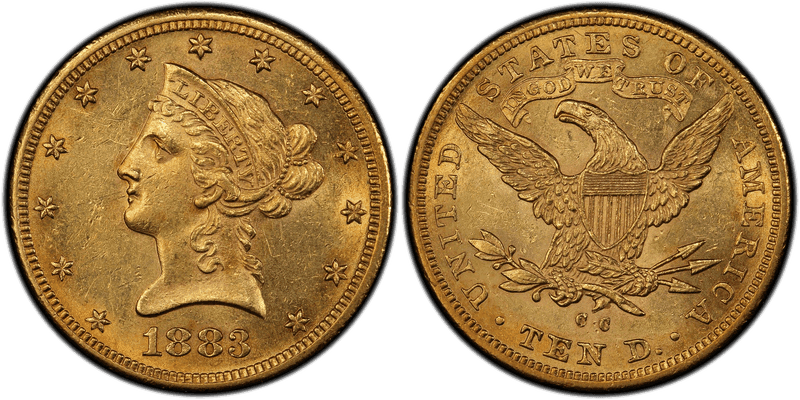
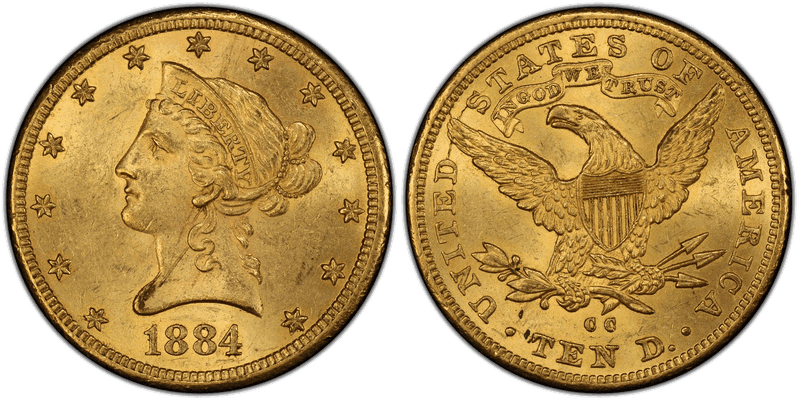
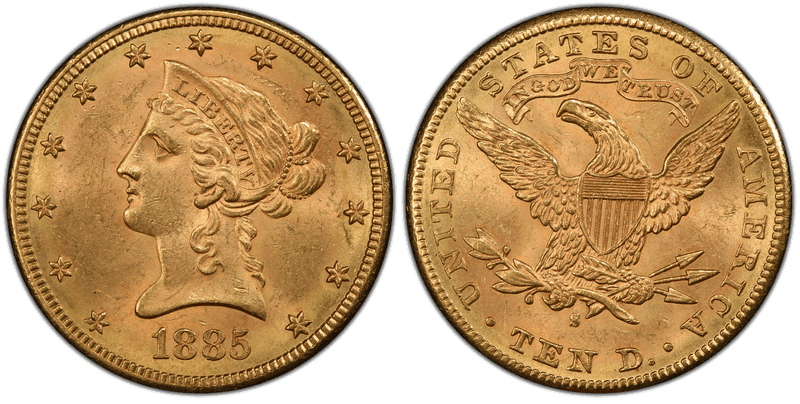
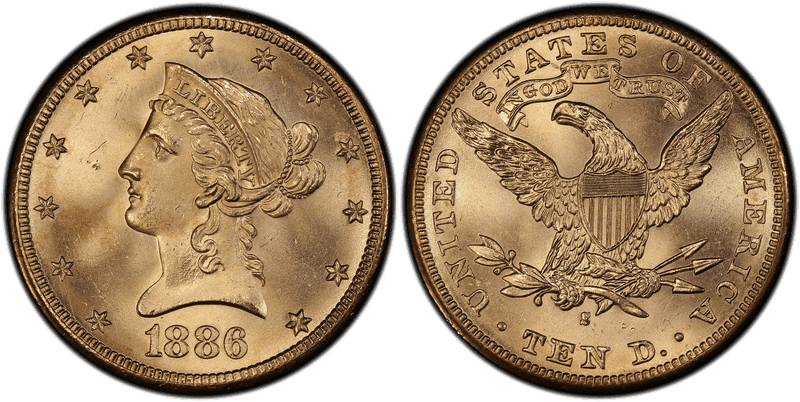
Obverse. Liberty faces left wearing a coronet inscribed LIBERTY, with her hair gathered in a bun. Thirteen stars surround her and the date is below.

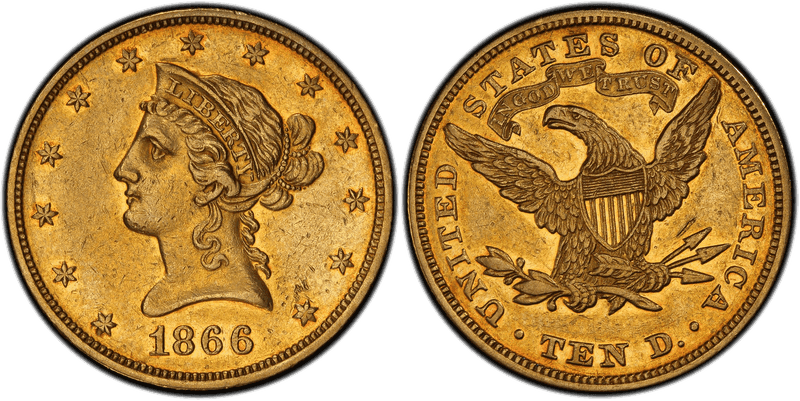
Reverse. An eagle with a shield on its breast holds an olive branch and arrows. UNITED STATES OF AMERICA runs around the top and the value TEN D. sits below the eagle. From 1866 the motto IN GOD WE TRUST is on a scroll above the eagle.

Mint mark. Under the eagle's claws, above TEN D. O, S, CC and D are the branch mints. Philadelphia coins have no letter.

Telling the types apart.

TypeYearsHeadMotto above eagle
Type of 18381838 and early 1839Star 6 directly above the coronet; rounded bustNo
No Motto1839–1866Coronet points at star 6; pointed bustNo
Motto1866–1907As aboveYes

Things that cause confusion.

  • 1839 has two designs. The Type of 1838 (25,801 struck) came first, then the revised head, called the Type of 1840 (12,447). PCGS lists the earlier coin as an 1839/8 overdate (search).
  • 1866-S comes both ways. San Francisco struck 8,500 eagles without the motto and 11,500 with it.
  • Indian Head eagles and bullion Eagles. The Indian Head eagle that followed in 1907 is a different design, and the American Gold Eagle is a modern bullion coin issued since 1986. Neither belongs to this series.

Key Dates and Varieties

  • 1838: 7,200 struck for circulation in the first year, after the four specimens sent to the Treasury.
  • 1839 Type of 1838 (25,801) and 1839 Type of 1840 (12,447): the old and new heads in the same year.
  • 1841-O: 2,500 struck, the first eagles from New Orleans.
  • 1858: 2,521 struck at Philadelphia.
  • 1863: NGC records 1,218 business strikes and 30 proofs, from a Civil War year when gold coinage fell sharply.
  • 1864-S: 2,500 struck. Breen estimated that 10 to 12 survive.
  • 1866-S No Motto (8,500) and 1866-S Motto (11,500): the year of the change at San Francisco.
  • 1870-CC: 5,908 struck, the first eagles from Carson City, which opened on January 6, 1870 and delivered 1,644 of them on February 14. Doug Winter puts the survivors at no more than 30.
  • 1873: 800 business strikes at Philadelphia, plus a Closed 3 proof.
  • 1875: 100 business strikes and 20 proofs. NGC believes only five or six of the business strikes are known.
  • 1879-CC: 1,762 struck.
  • 1879-O: 1,500 struck, the first New Orleans eagles after an 18-year gap.
  • 1883-O: 800 struck.
  • 1844-O proof: a New Orleans proof that first appeared in the Parmelee sale of 1890, passed through the Woodin and Brand collections, and resurfaced in 1994. NGC has graded it PR65 Ultra Cameo.
  • 1906-O (86,895) and 1906-D (981,000): the last New Orleans eagles and the first from Denver.

Date varieties collectors look for include the 1842 Small Date (18,623) and Large Date (62,884), the 1850 Large Date and Small Date, the 1853/2 overdate, the 1854-O Small Date and Large Date, and the 1865-S with 865 over an inverted 186.

In Our Catalog

2 errors and varieties are listed for this series. Browse them by type:

Recently added

    Mintages

    Liberty Head Eagles 1838-1907 mintages by year and mint, taken from each coin's page in our catalog. Each figure opens that coin's page, which lists its varieties and errors. A dash means no figure was recorded. Where one issue was struck in more than one type, each type is listed.

    YearPDOCCSProof
    1838
    1839
    1840
    1841
    1842
    1843
    1844
    1845
    1846
    1847
    1848
    1849
    1850
    1851
    1852
    1853
    1854
    1855
    1856
    1857
    1858
    1859
    1860
    1861
    1862
    1863
    1864
    1865
    1866
    1867
    1868
    1869
    1870
    1871
    1872
    1873
    1874
    1875
    1876
    1877
    1878
    1879
    1880
    1881
    1882
    1883
    1884
    1885
    1886
    1887
    1888
    1889
    1890
    1891
    1892
    1893
    1894
    1895
    1896
    1897
    1898
    1899
    1900
    1901
    1902
    1903
    1904
    1905
    1906
    1907

    Composition and Gold Content

    • Composition: 90% gold, 10% copper
    • Weight: 258 grains (16.72 grams)
    • Gold content: about 0.4838 troy ounce
    • Diameter: 27 mm
    • Edge: reeded
    • Designer: Christian Gobrecht

    Proofs come from Philadelphia, with one exception: the 1844-O proof, the only branch-mint proof eagle in NGC's listings.

    FAQ

    Where is the mint mark on a Liberty Head $10 gold eagle?

    On the reverse, at the bottom, under the eagle's claws and above the value TEN D. You will find O (New Orleans), S (San Francisco), CC (Carson City) or D (Denver, 1906 and 1907 only). Philadelphia eagles have no mint mark.

    How much gold is in a Liberty Head eagle?

    The 1837 standard set the eagle at 258 grains, about 16.72 grams, of 90% gold and 10% copper. That works out to about 0.4838 troy ounce of pure gold in every Liberty Head eagle from 1838 to 1907.

    What is the difference between a No Motto and a Motto Liberty Head eagle?

    Look above the eagle on the reverse. From 1866 a scroll there reads IN GOD WE TRUST, after an 1865 law required the motto on every coin with room for it. Coins without the scroll are No Motto eagles, dated 1838 to 1866. San Francisco struck both kinds in 1866, so an 1866-S can be either.

    What are the key dates for Liberty Head eagles?

    Collectors start with the small mintages. NGC gives 100 business strikes and 20 proofs for the 1875 Philadelphia eagle, 800 for the 1883-O, 1,500 for the 1879-O, 2,500 for the 1864-S and 2,521 for the 1858. The 1870-CC, the first Carson City eagle, had 5,908 struck, and Doug Winter puts the survivors at no more than 30.

    How do I tell an 1838 or early 1839 eagle from the later design?

    Check where Liberty's coronet points. On the first design, used in 1838 and early 1839, the sixth star sits straight above the coronet and the bust ends in a rounded line. On the revised head, introduced later in 1839, the coronet points at the sixth star and the bust is more pointed. Collectors call them the Type of 1838 and the Type of 1840.

    Is a Liberty Head eagle the same as an American Gold Eagle?

    No. The Liberty Head eagle was a circulating $10 gold coin struck from 1838 to 1907. The American Gold Eagle is a bullion coin the Mint has issued since 1986.

    ↑ Back to the coins: every year, mint, variety and error

    Explore Other Denominations

    Collector Essentials

    Tools and references for building and protecting your coin collection.

    As an Amazon Associate, NumisDex earns from qualifying purchases.