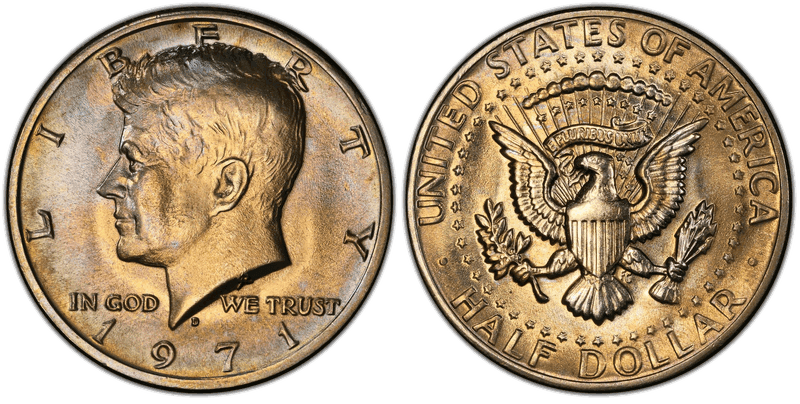
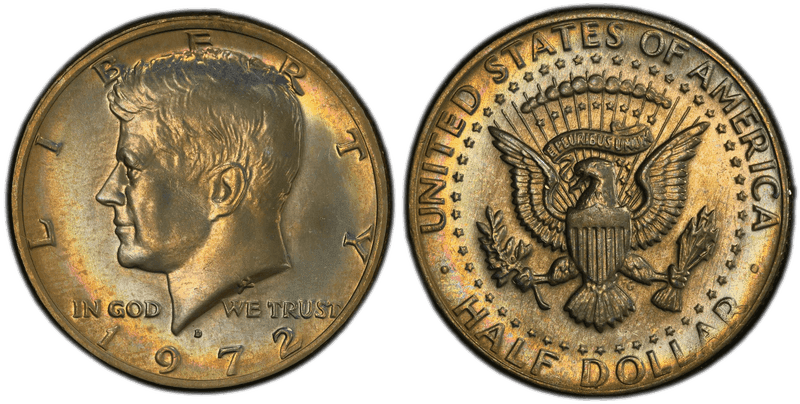
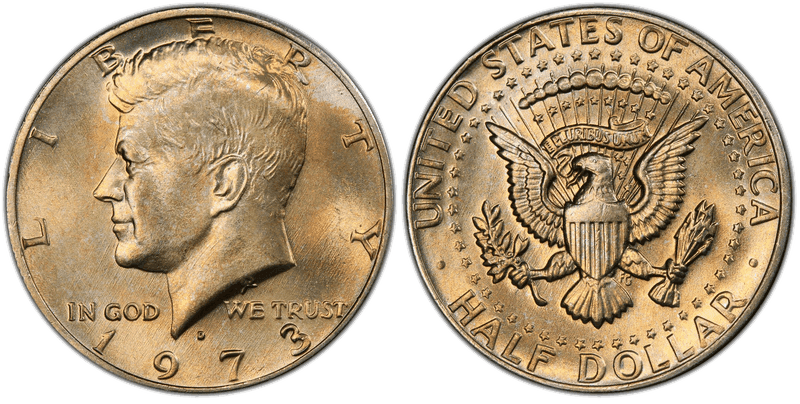
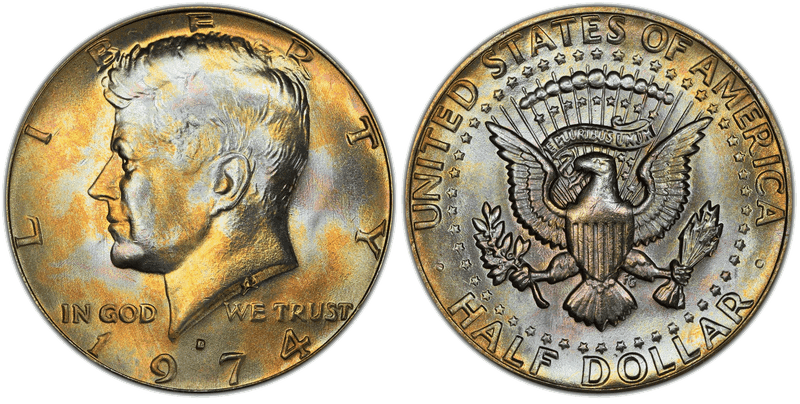
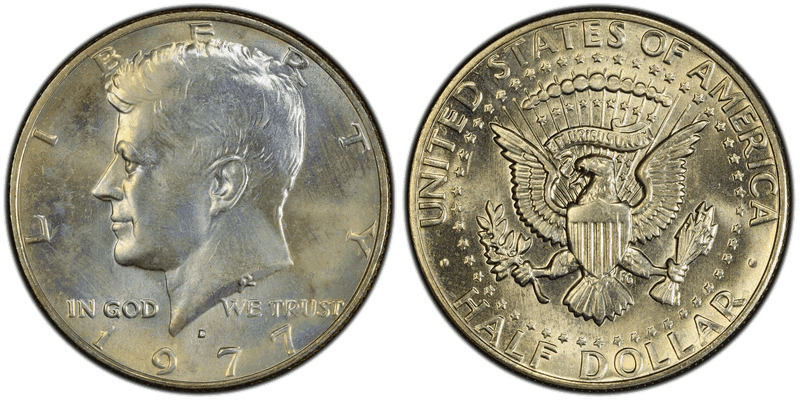
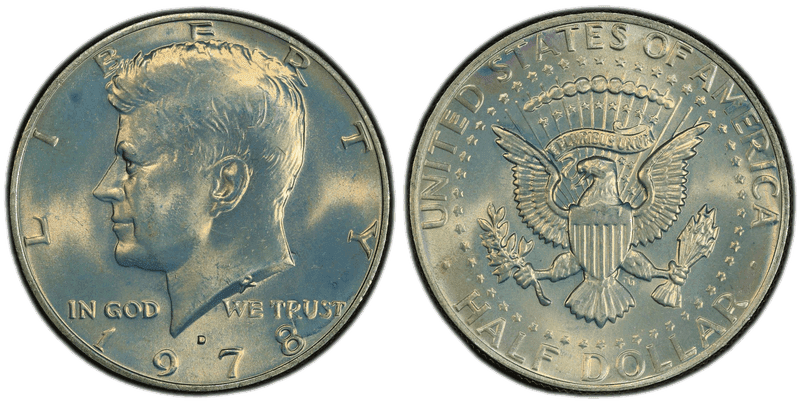
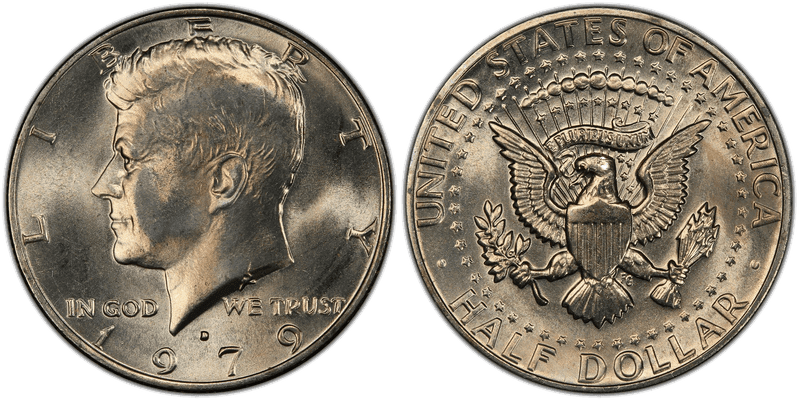
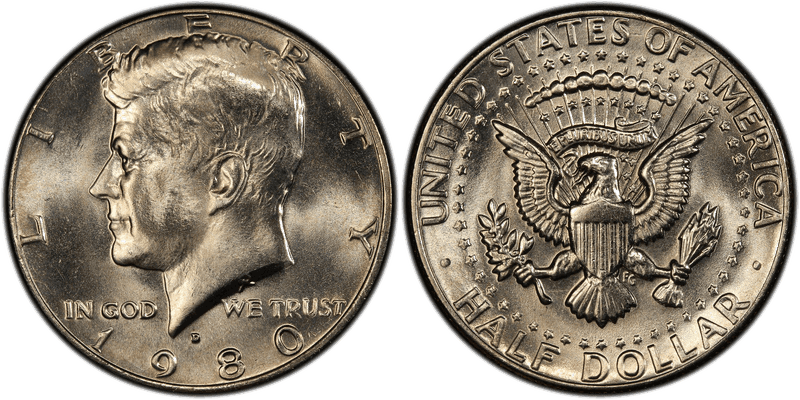
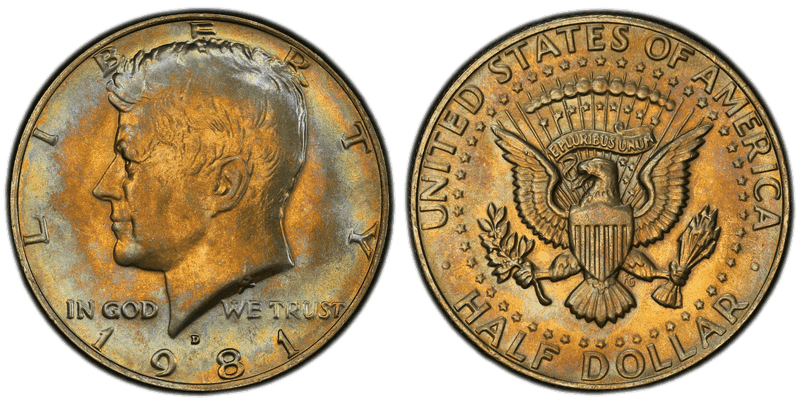
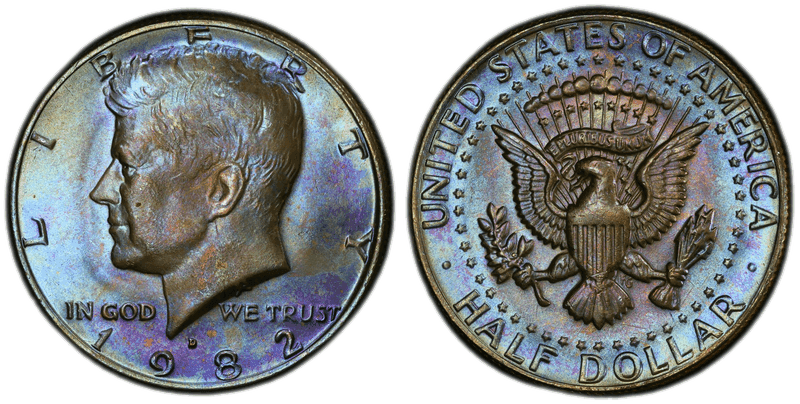
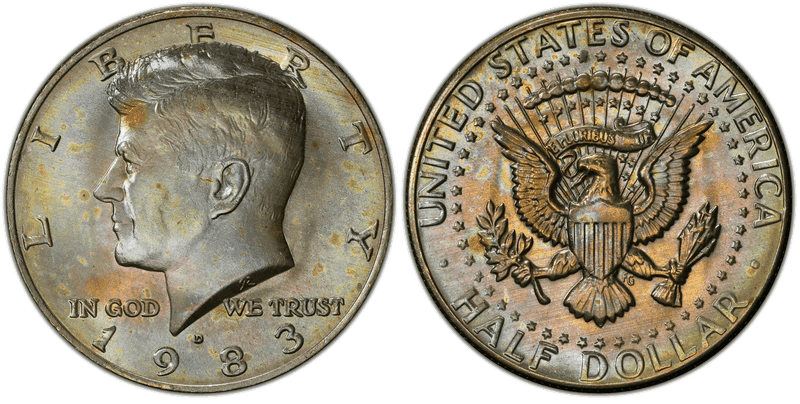
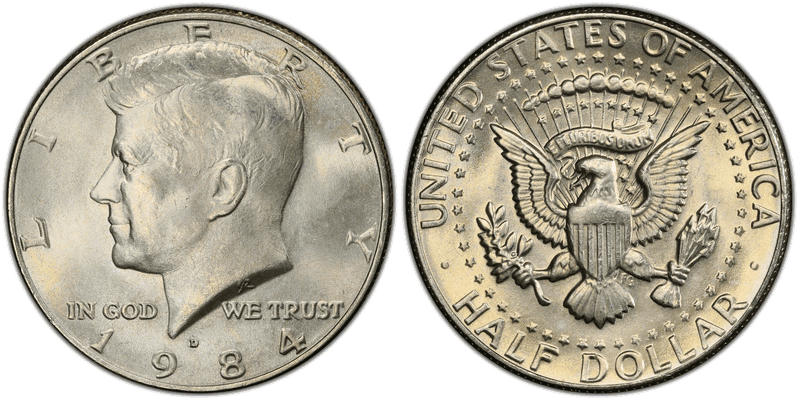
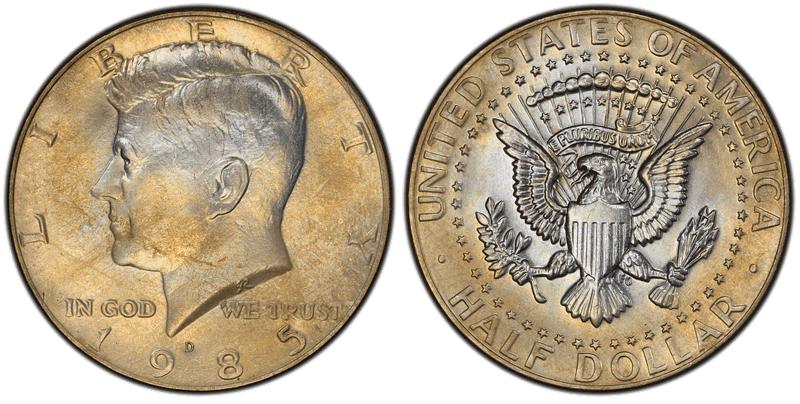
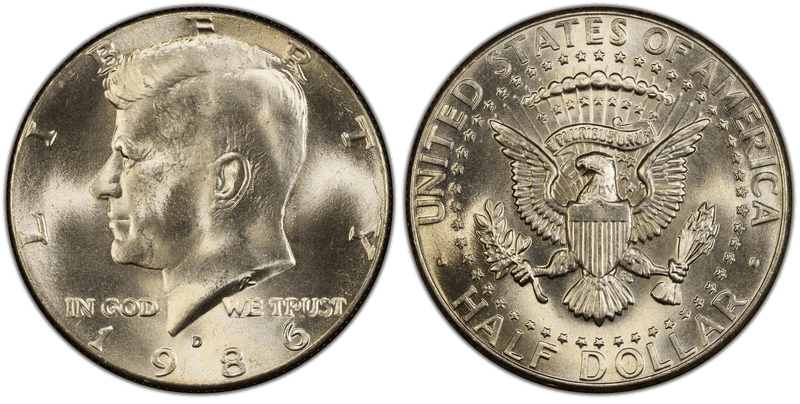
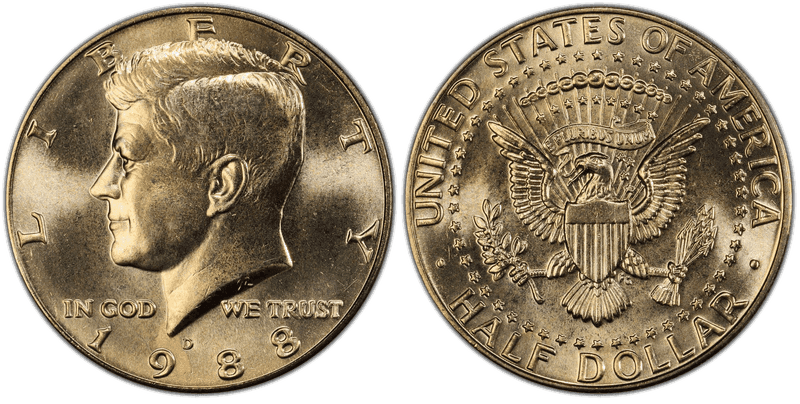
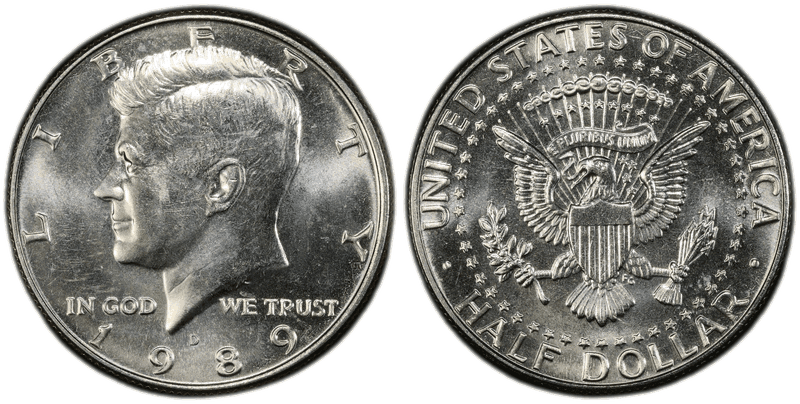
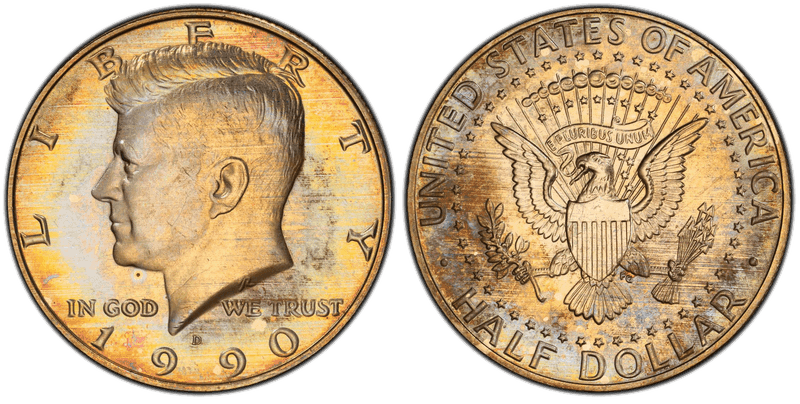
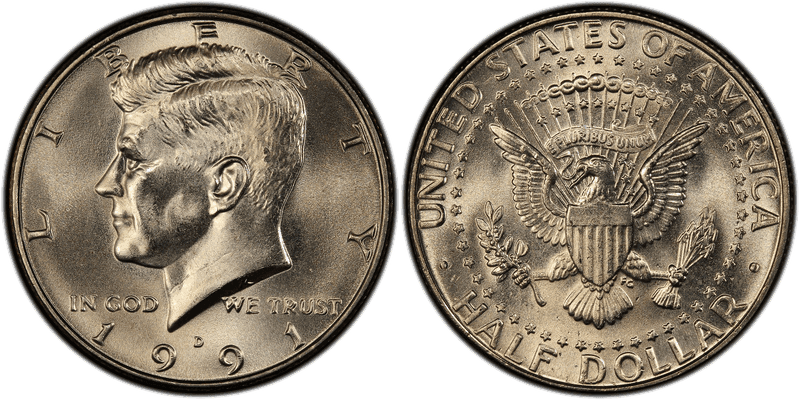
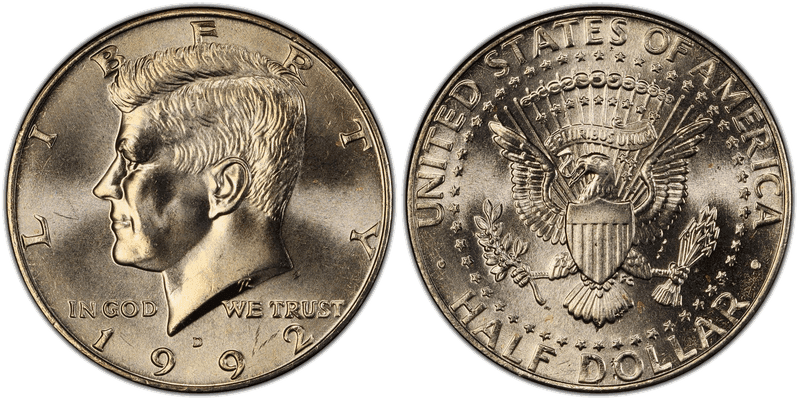
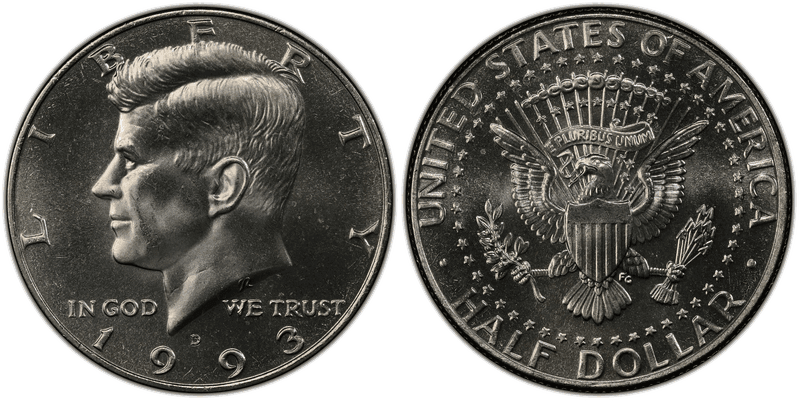
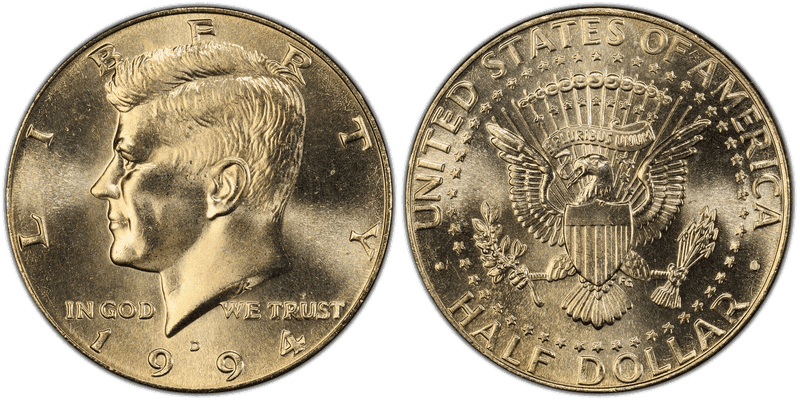
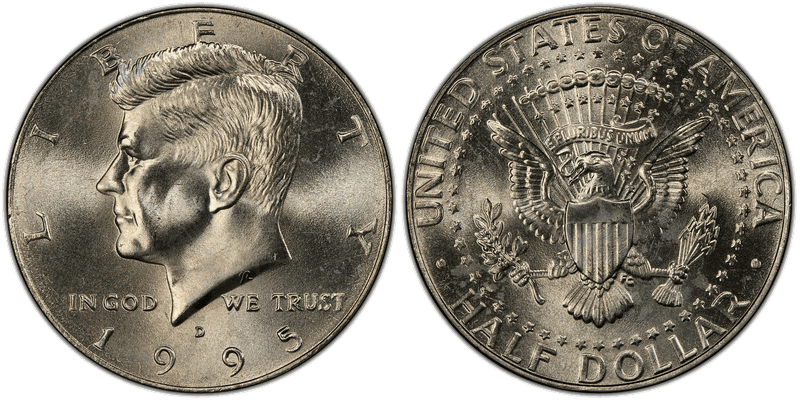
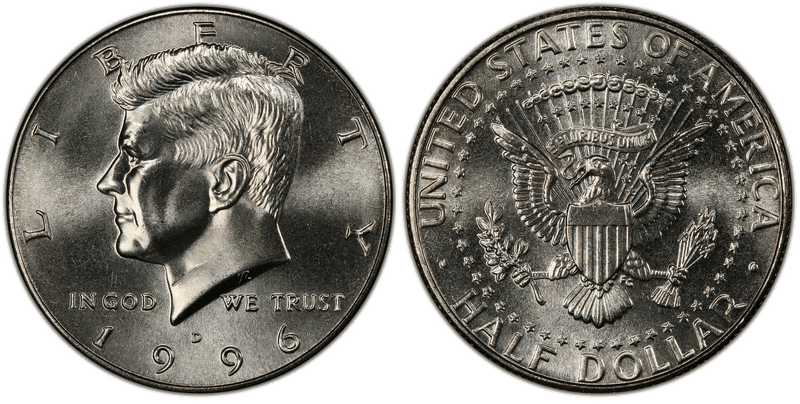
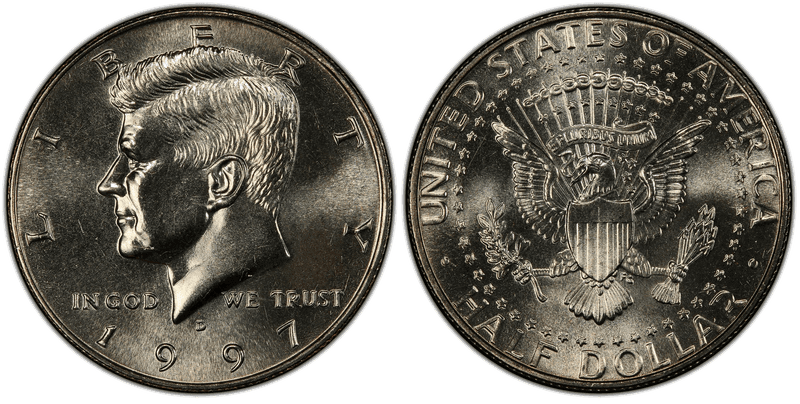
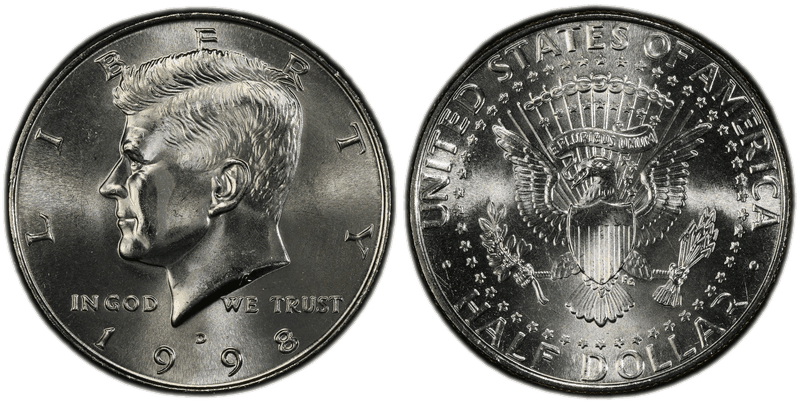
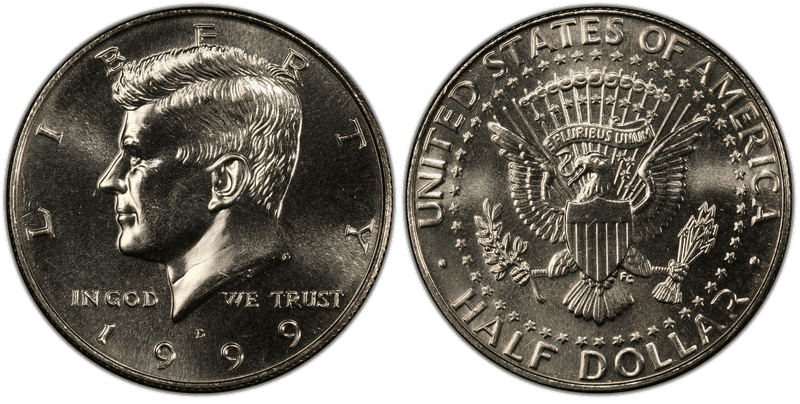
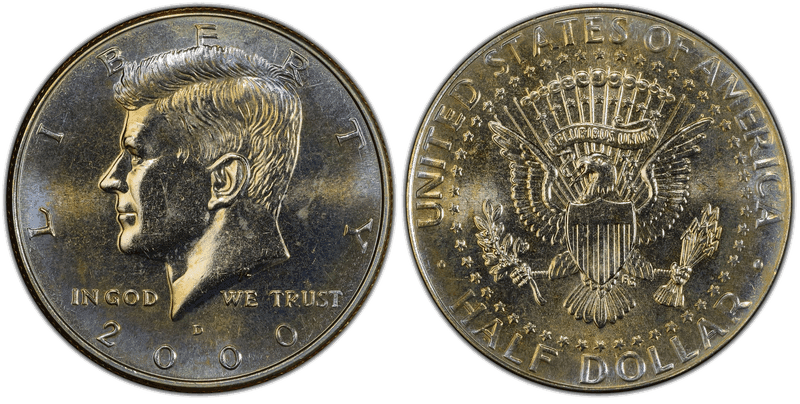
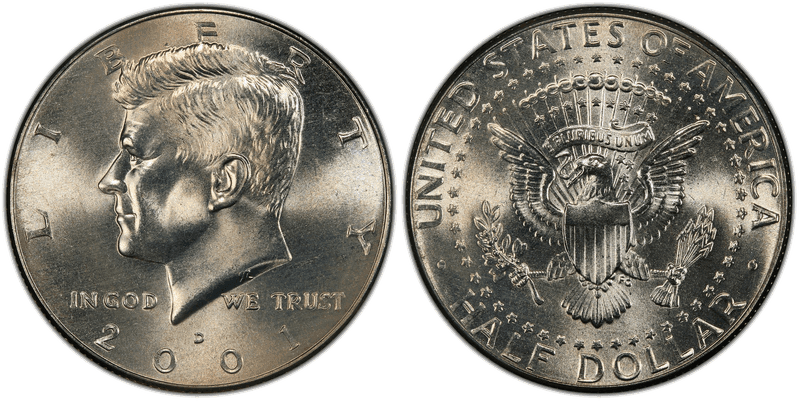
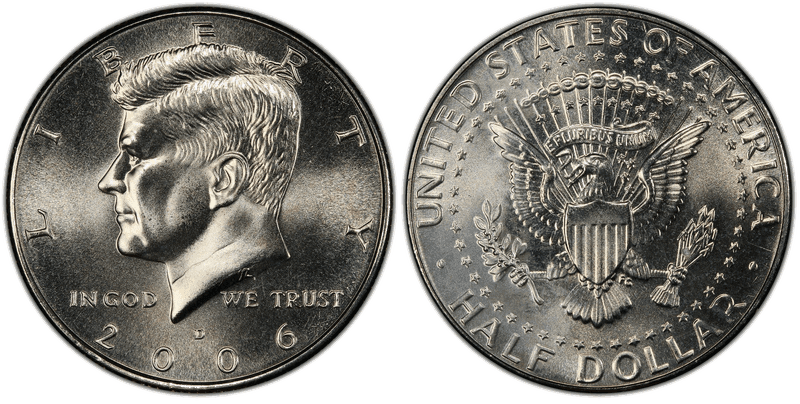
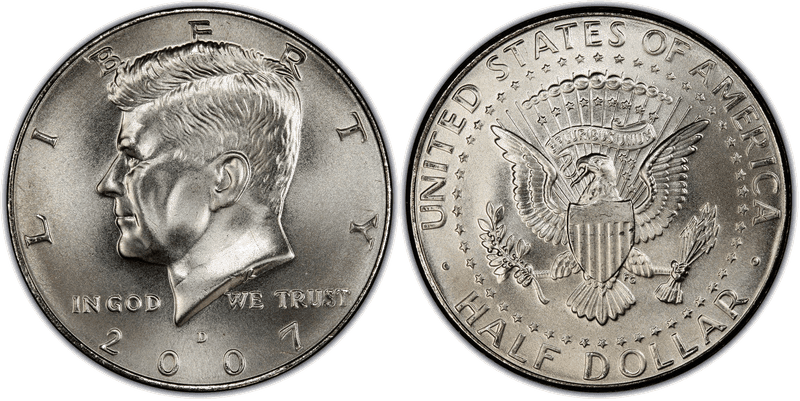
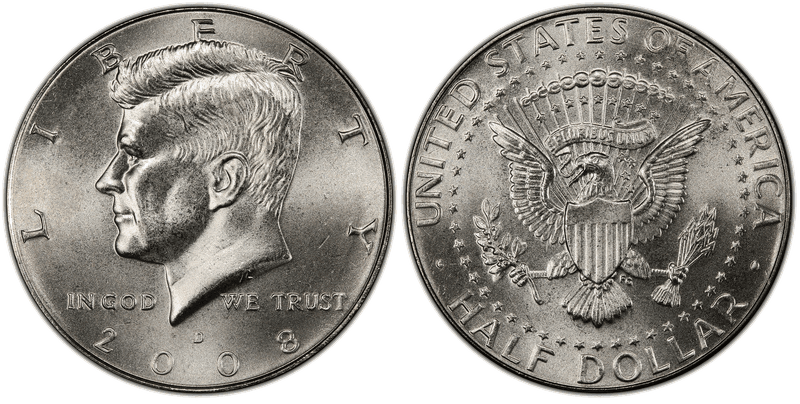
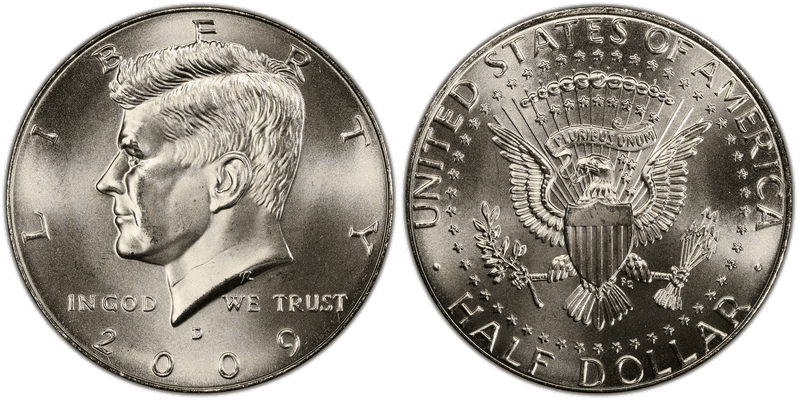
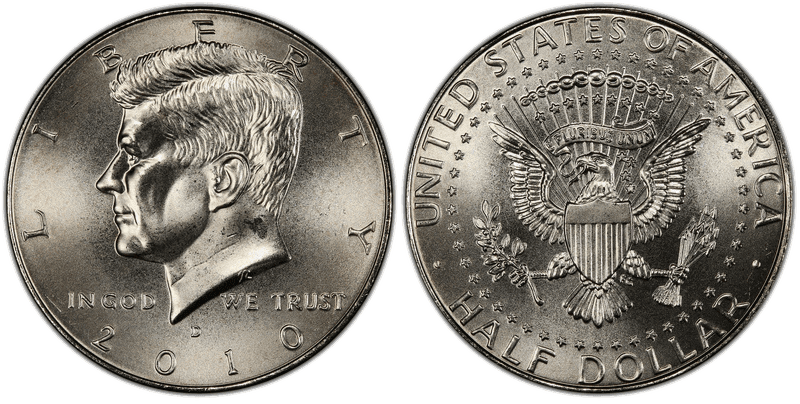
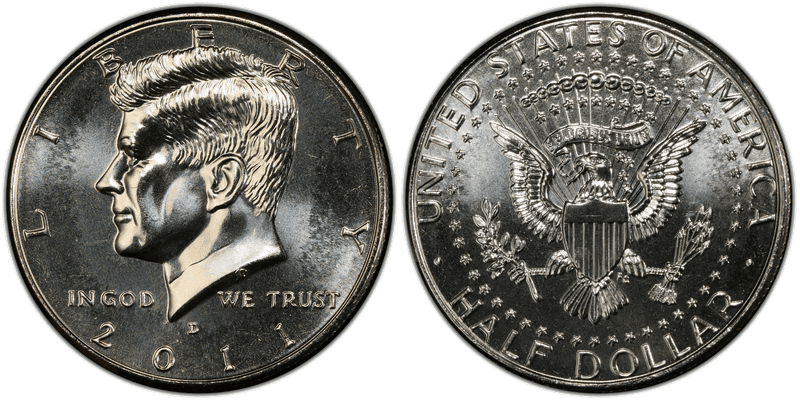
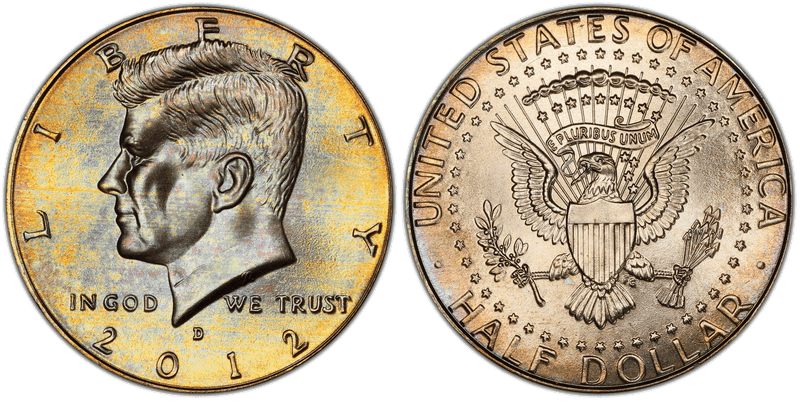
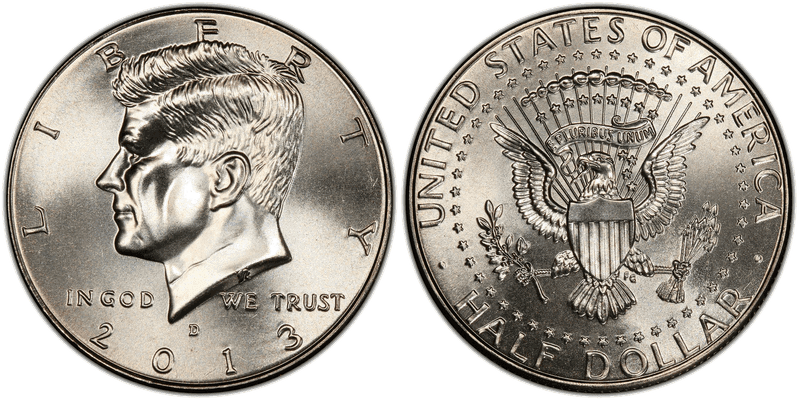
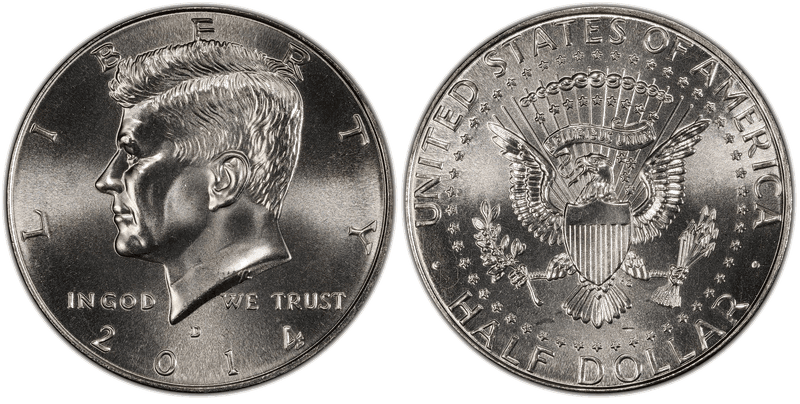
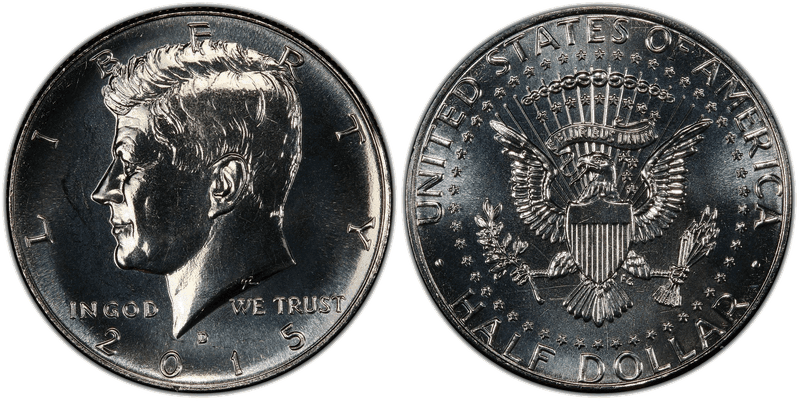
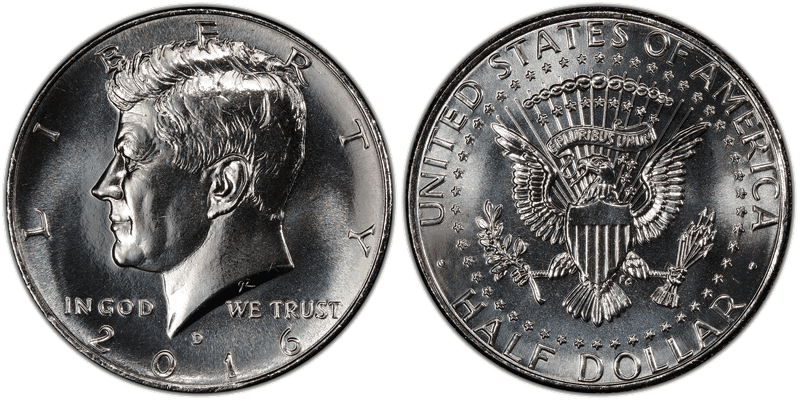
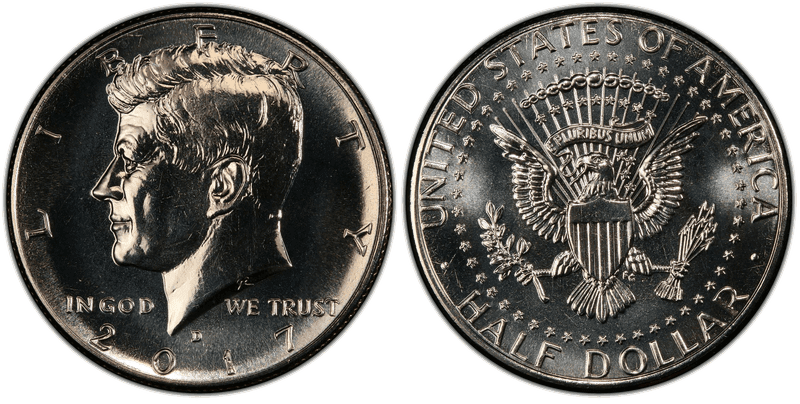
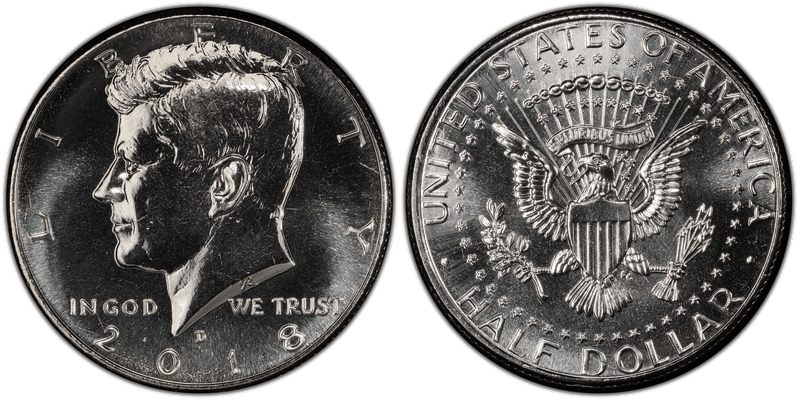
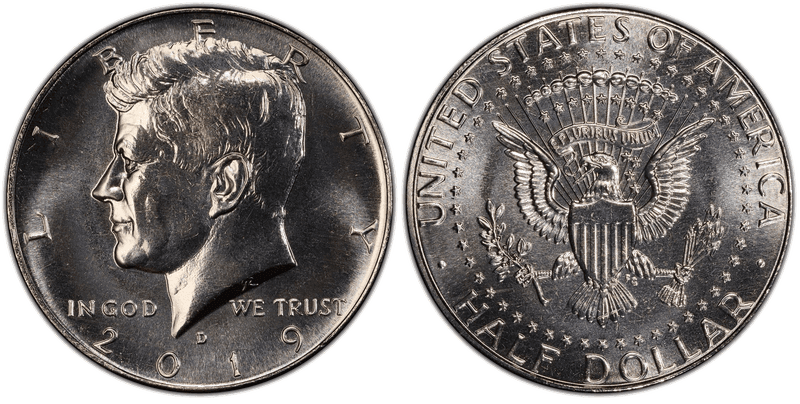
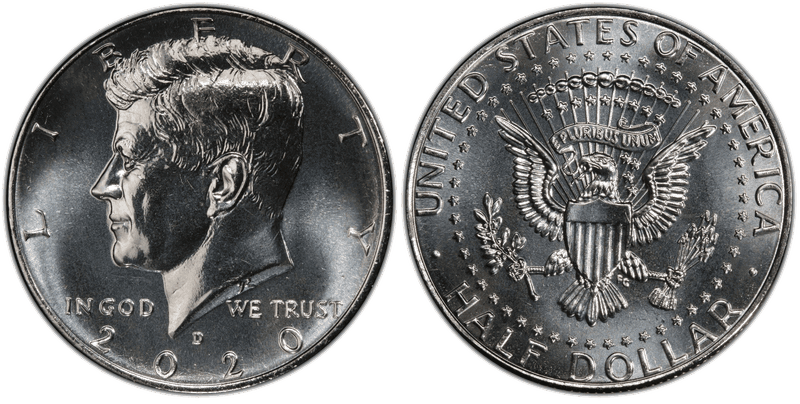
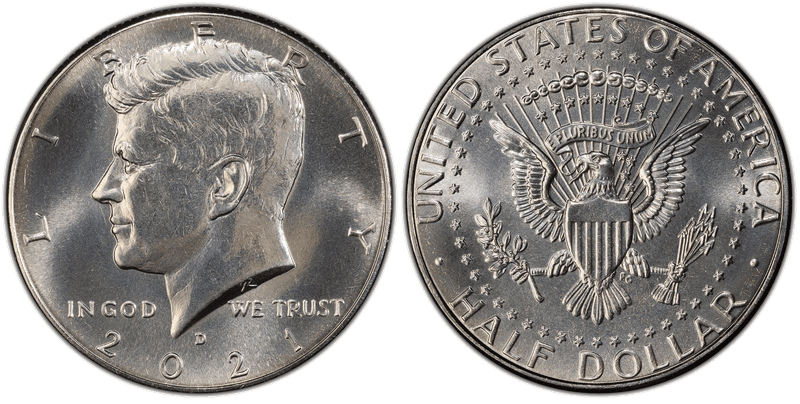
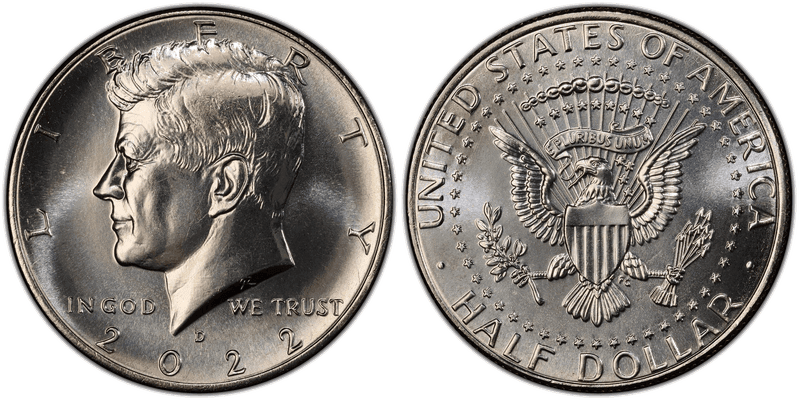
Public Law 91-607, signed on December 31, 1970, took the last silver out of the half dollar. From 1971 the coin has been copper-nickel layers bonded to a pure copper core, weighing 11.34 grams. Every regular 1971 half is clad, including the San Francisco proof. The 40% silver halves that came before are covered on the 1965–1970 page.
There are no halves dated 1975. Public Law 93-127 put the dual date 1776-1976 on halves made for release from July 4, 1975 through the end of 1976, along with a new Independence Hall reverse. Those coins, clad and 40% silver, have their own Bicentennial page. The regular design came back with the 1977 coins.
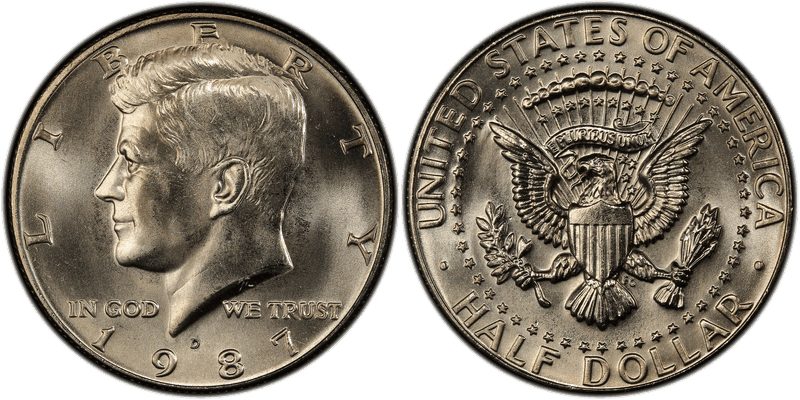
CoinWeek notes that halves had seen little real use in commerce since the 1940s. In 1987 the Mint made none for circulation. The Treasury already had about two years' supply on hand (search), so every 1987 Philadelphia and Denver half went into uncirculated sets.
Silver came back to the series in 1992. Public Law 101-585, signed on November 15, 1990, allowed 90% silver proof sets, and the Mint used its 200th anniversary in 1992 to launch them. Since then San Francisco has struck a silver proof half each year alongside the clad proof. In 1998 it also struck a matte finish silver half, sold only with the Robert F. Kennedy commemorative dollar.
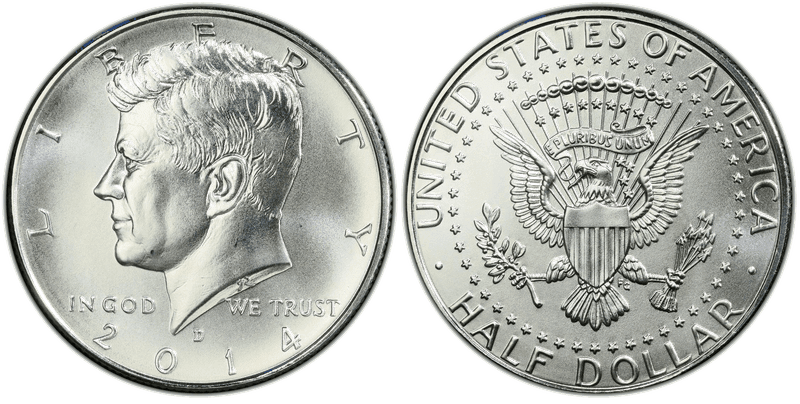
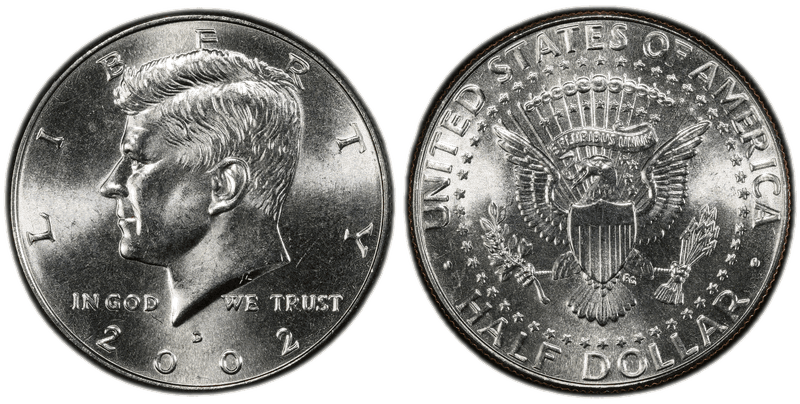
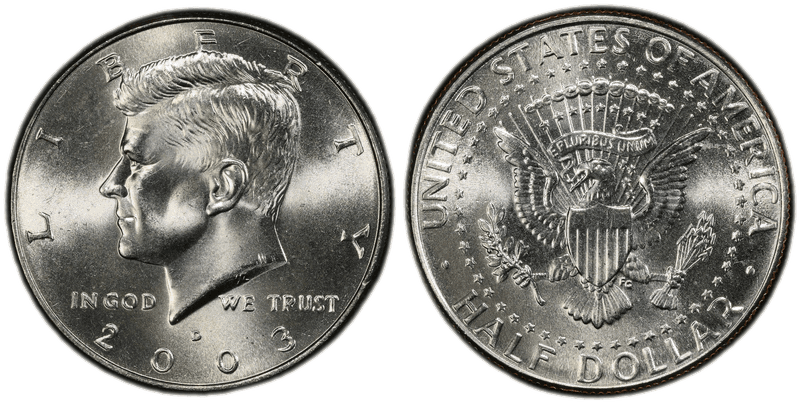
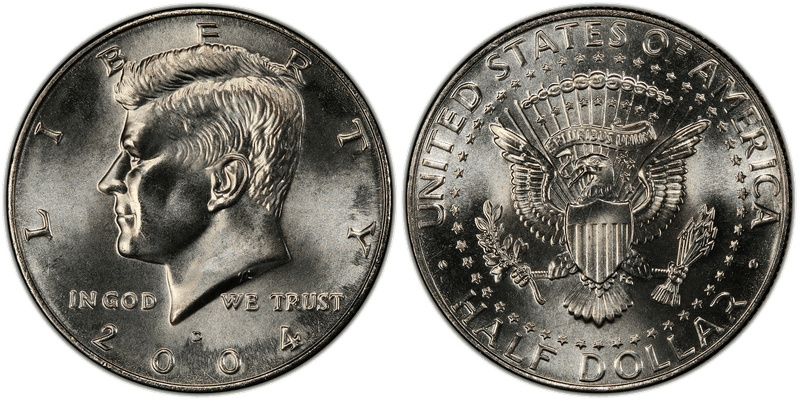
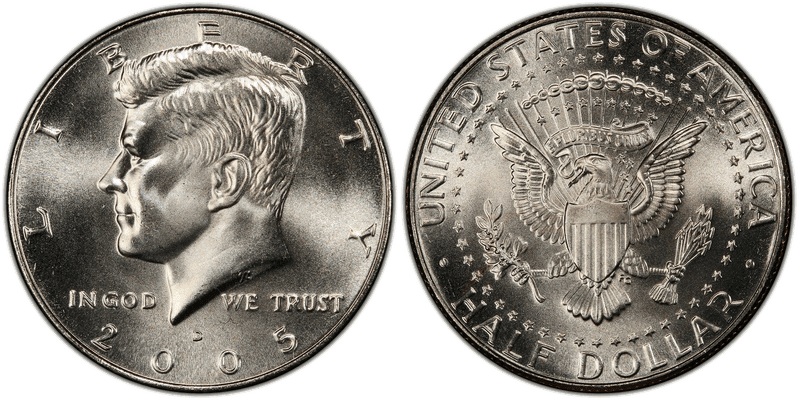
From 2002 the Mint stopped sending halves into circulation. Philadelphia and Denver kept striking them, but sold them to collectors in rolls and bags at a premium. In 2019 the silver proofs changed from 90% to .999 fine silver. In July 2021 the Mint confirmed that the Federal Reserve was ordering circulation-quality halves again, and collectors in the West reported 2021-D rolls in plain "$10 Halves" bank wrappers.