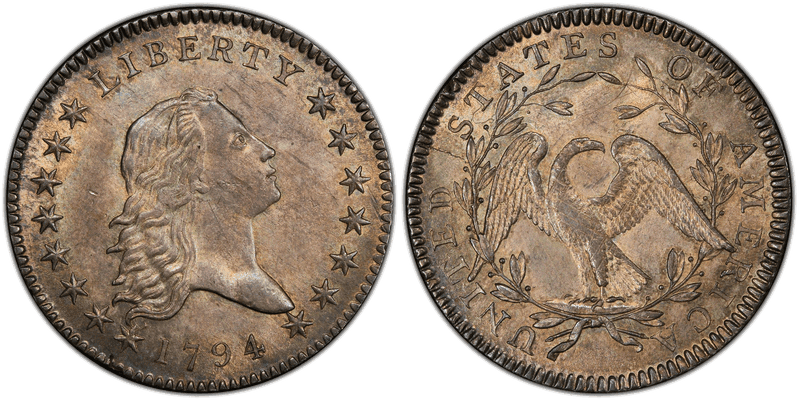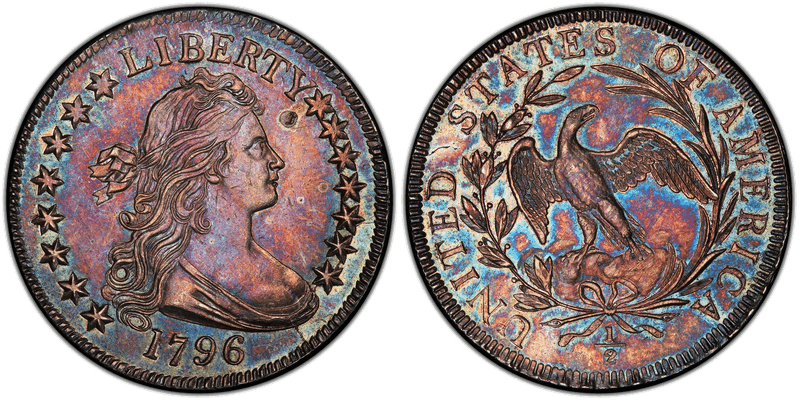
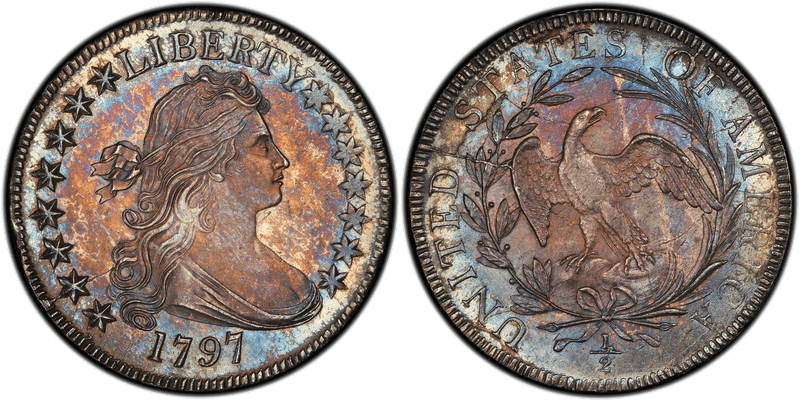
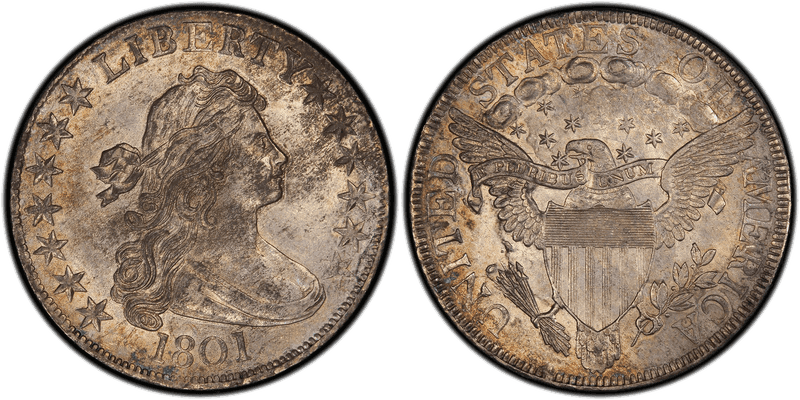
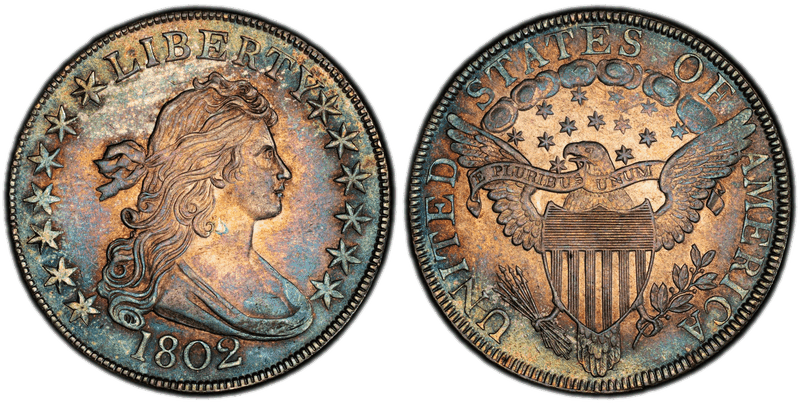
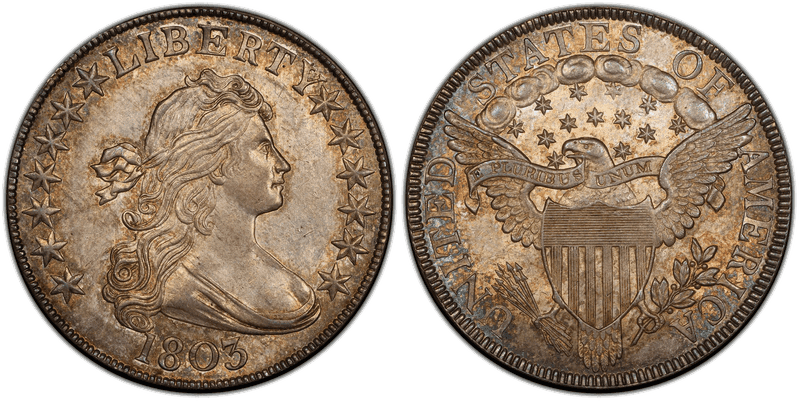
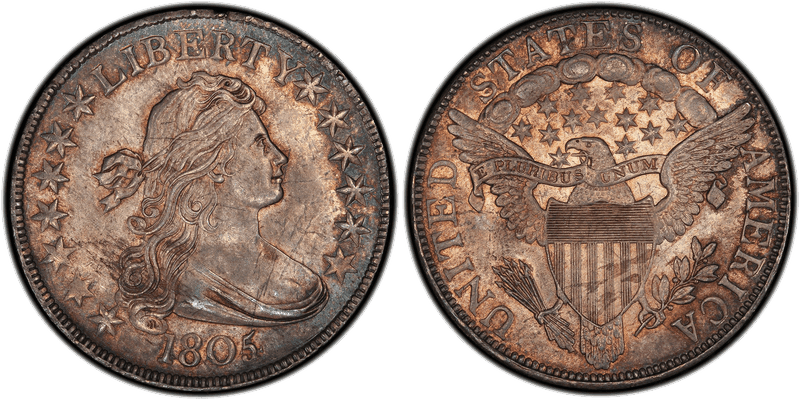
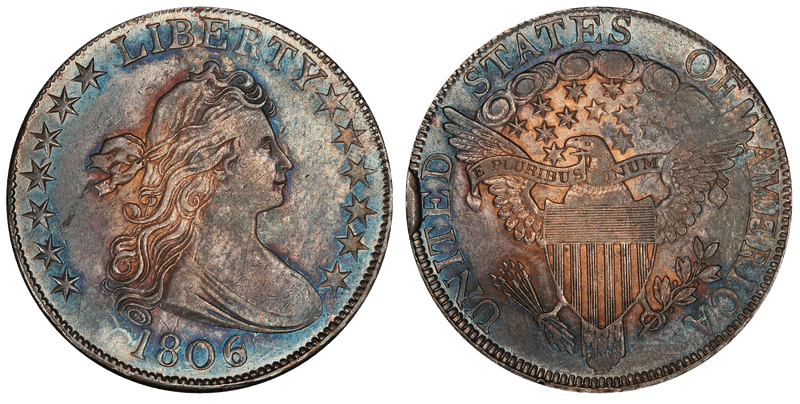

The Draped Bust portrait of Liberty first appeared on the silver dollar in late 1795, and the Mint carried it to the smaller silver coins over the next two years. Who designed it is not recorded. Tradition credits a drawing by Gilbert Stuart, and the Philadelphia socialite Ann Willing Bingham has been suggested as the model, but NGC notes that no document from the period links Stuart to the design. John Eckstein made the plaster models for the dollar, and the Mint's engravers, Robert Scot among them, cut the hubs.
The first Draped Bust half dollars carry the date 1796, but no half dollars were delivered that year. Three deliveries in 1797, on February 28, March 21 and May 26, total 3,918 coins for the dates 1796 and 1797 together. The traditional split credits the first two deliveries, 934 coins, to 1796 and the third, 2,984, to 1797. Steve Tompkins argues that about 1,000 of the May delivery were dated 1796, which would make 1,934 dated 1796 and 1,984 dated 1797. These halves keep a small eagle on the reverse and add the fraction 1/2 under the wreath, which no other denomination of the time carried.
The Mint then struck no half dollars until 1801. Silver depositors asked for dollars, and dollar output reached its peak in these years. When half dollars returned in 1801, they used the heraldic eagle already on the dime, half dime and dollar, modeled on the Great Seal, and the obverse settled at thirteen stars. Mintages stayed small in 1801 and 1802, about 30,000 each, and then grew. Dollar coinage ended in 1804, and depositors turned to the half dollar as the largest silver coin available: 839,576 were delivered in 1806.
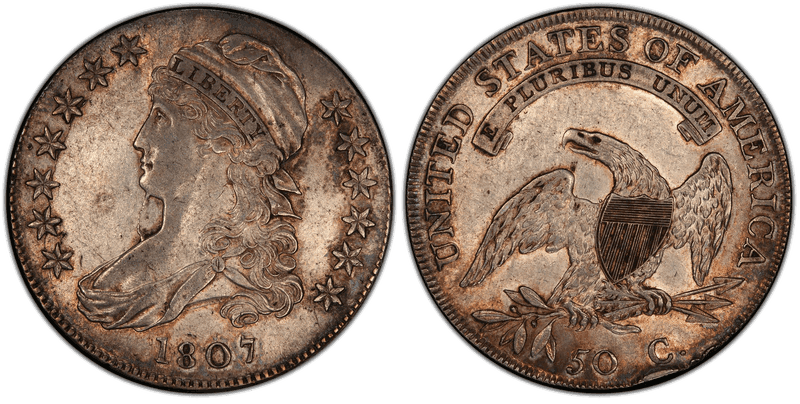
Dies were used until they wore out, whatever date they carried. No half dollars dated 1804 are known; the coins delivered that year came from dies dated 1803, and two obverses prepared for 1804 were later re-dated 1805 over 4. Overdates also appear in 1806, and many 1807 halves are weakly struck. In 1807 the Mint struck both this design and John Reich's new Capped Bust half, without reporting them separately.