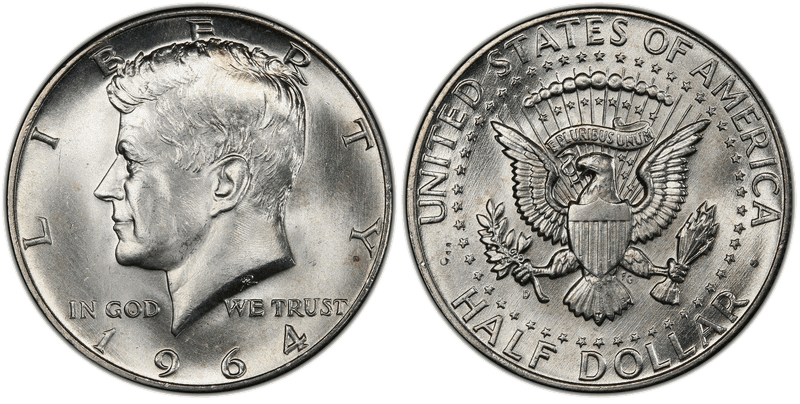
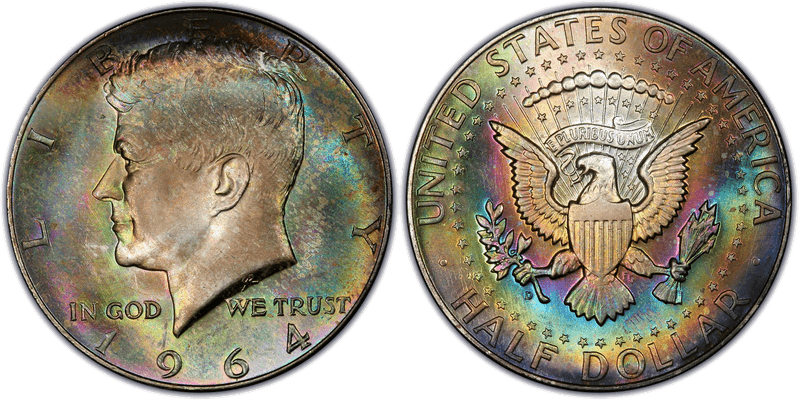
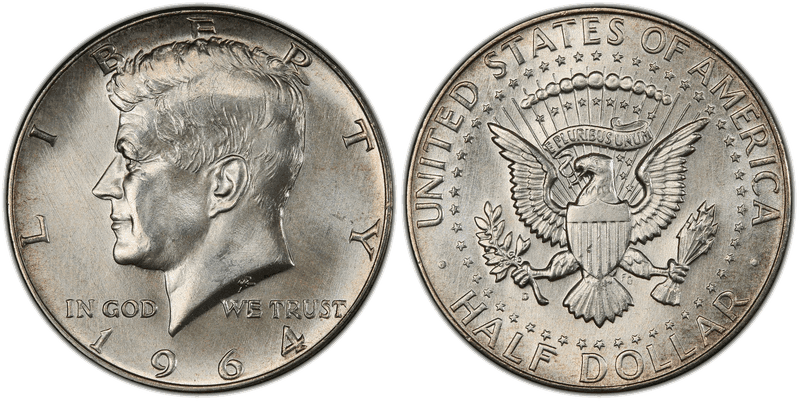
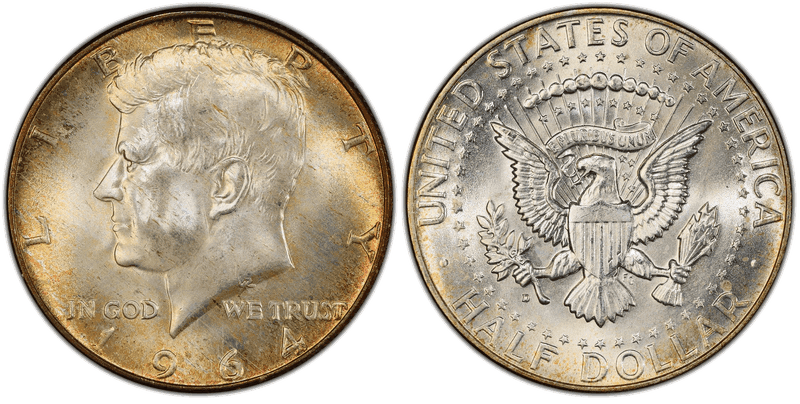

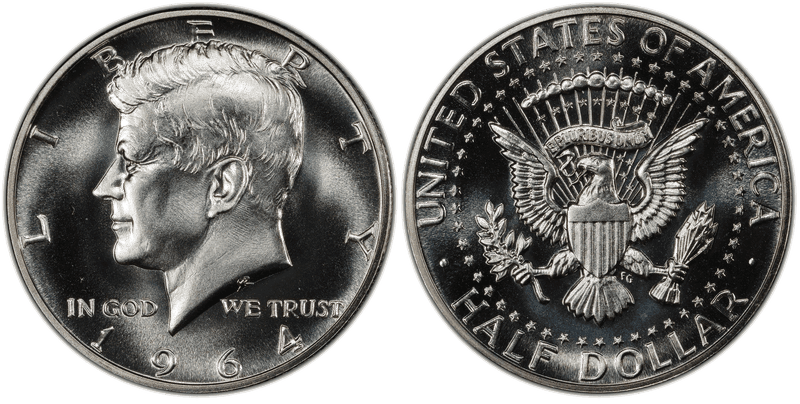
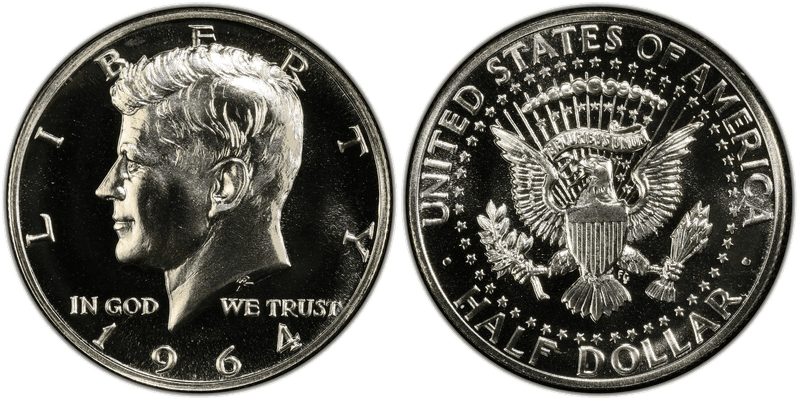

The Kennedy half dollar reached the public on March 24, 1964, about four months after President Kennedy's death. Gilroy Roberts modeled the portrait on the obverse and Frank Gasparro the heraldic eagle on the reverse. NGC calls it the most eagerly awaited coin the Mint had ever made. The new halves vanished almost at once, as collectors, speculators and people who simply wanted a keepsake saved them by the handful and the bag.
The coin arrived at a bad moment for silver. The Treasury was preparing to drop the 90% standard, and Congress froze the date, so 90% halves struck long after 1964 still carry the 1964 date. Philadelphia kept striking 1964-dated halves through 1966: 87,448,004 in 1964, 144,182,000 in 1965 and 41,674,000 in 1966, according to NGC. Denver struck 114,411,608 in 1964 and another 41,793,838 in 1965. The extra output did not keep halves in pocket change: NGC notes that few of these coins stayed in circulation for more than a month or two.
Philadelphia also made 3,950,762 proofs. Proof set sales came close to four million that year, and NGC thinks the Mint could have sold a million more if the coin shortage had not tied up its presses.
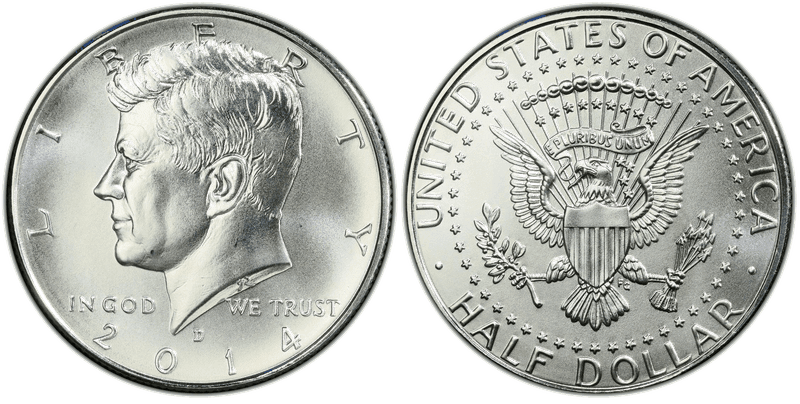
This series page holds the 1964 coins only, the one year the Kennedy half was made in 90% silver for circulation. Later silver halves sit on other pages: the 40% halves of 1965 to 1970, the 40% silver 1776-1976 Bicentennial collector coins, the 90% and later .999 silver proofs from 1992 on the 1971-to-date page, and the silver coins of the 2014 50th Anniversary set.