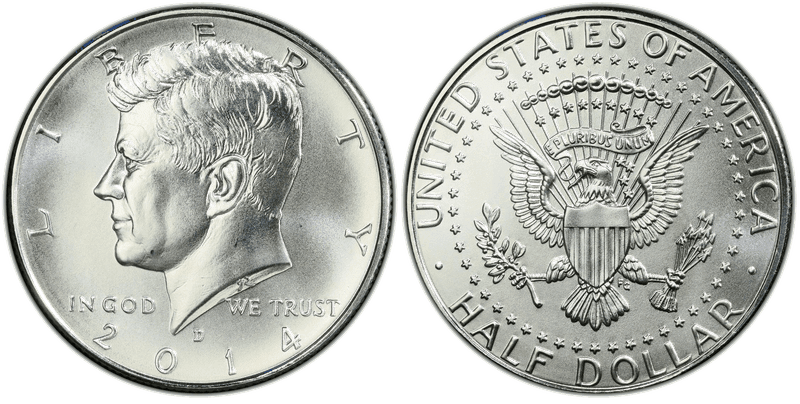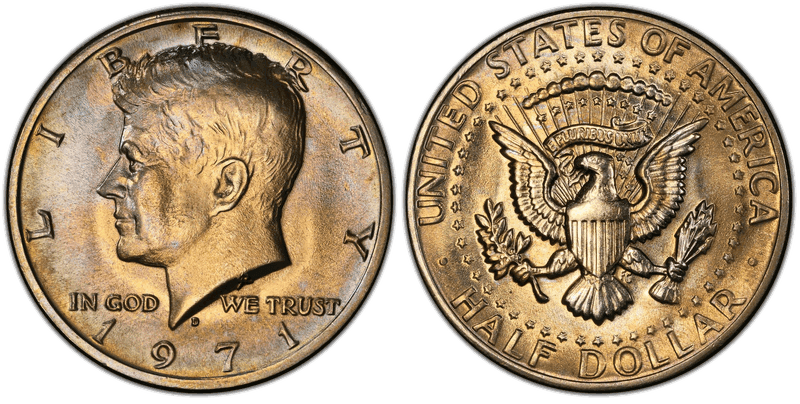
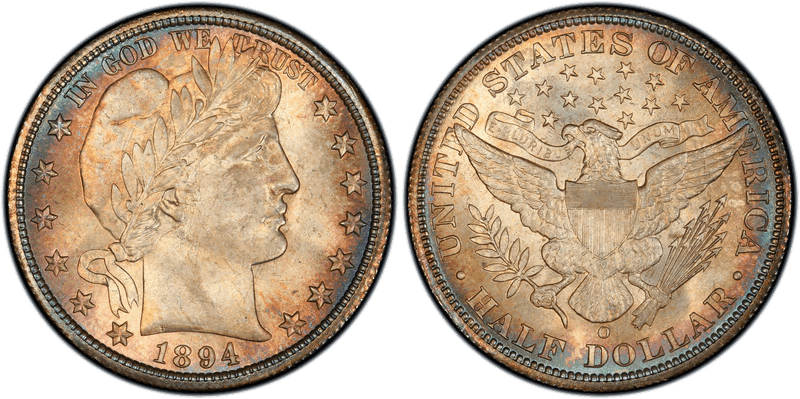
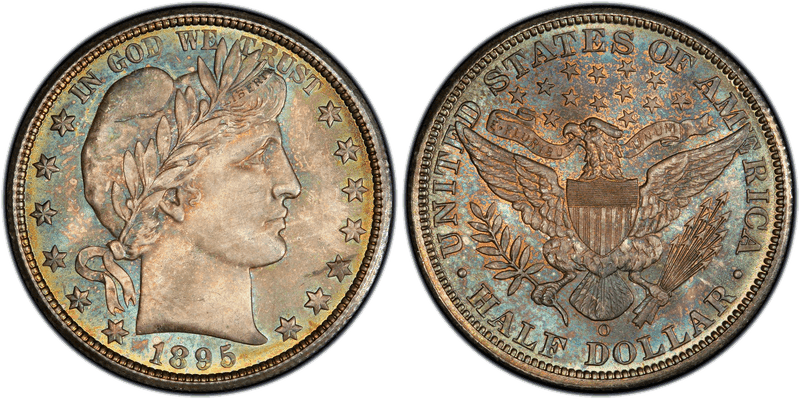
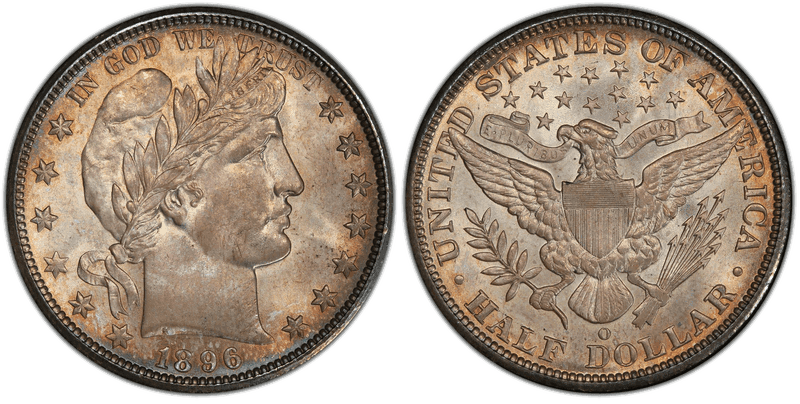
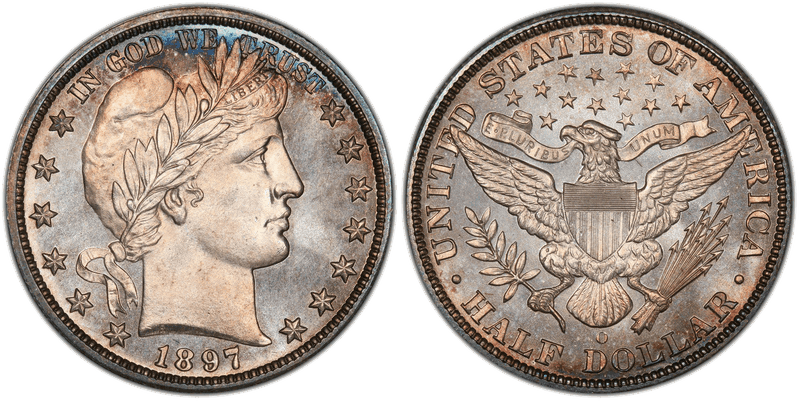
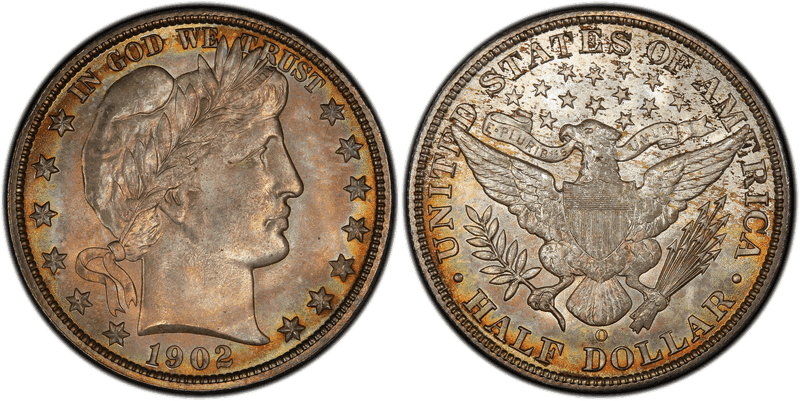
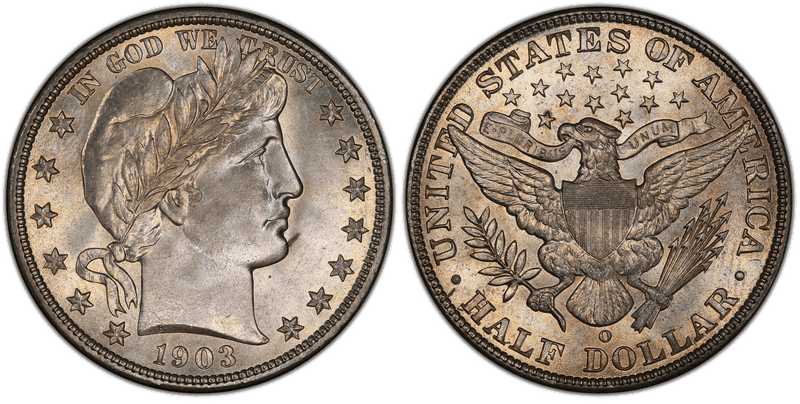
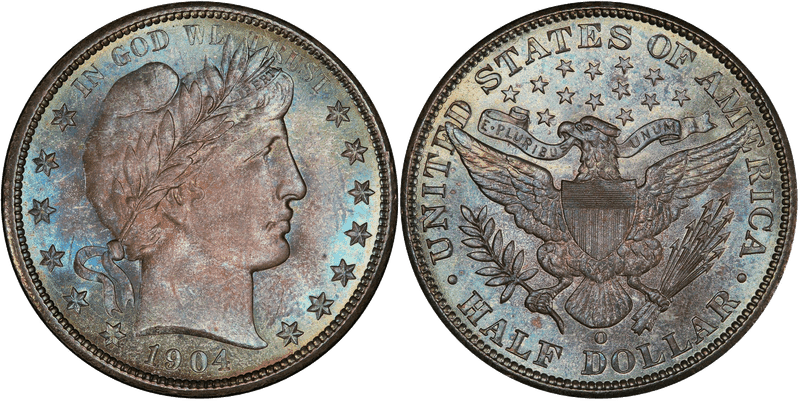
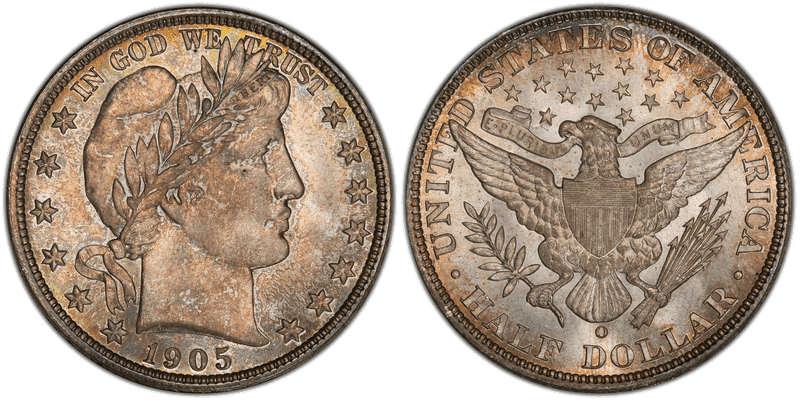
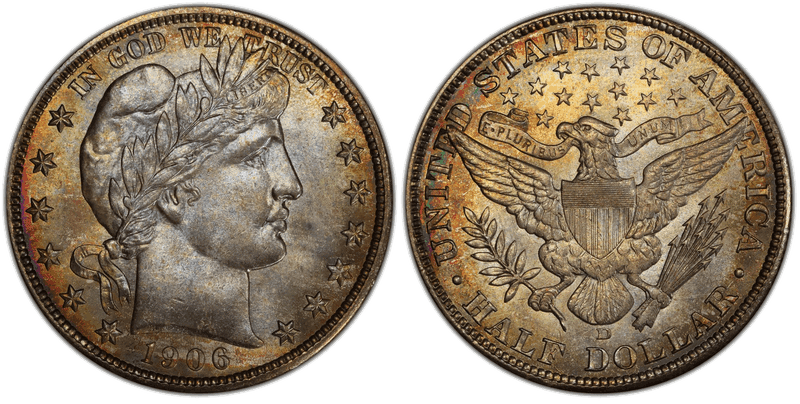
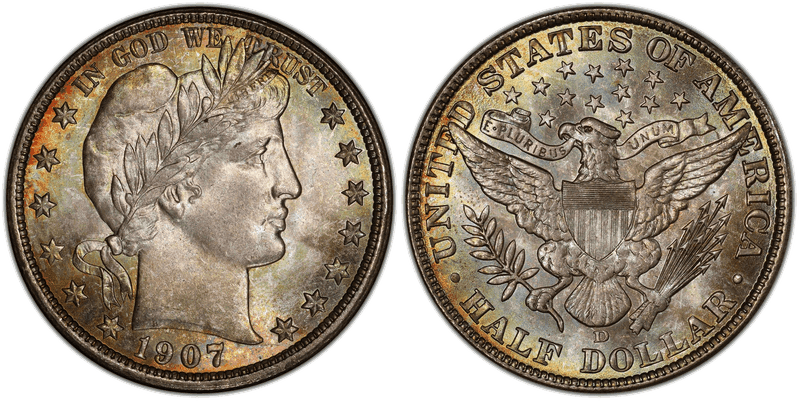
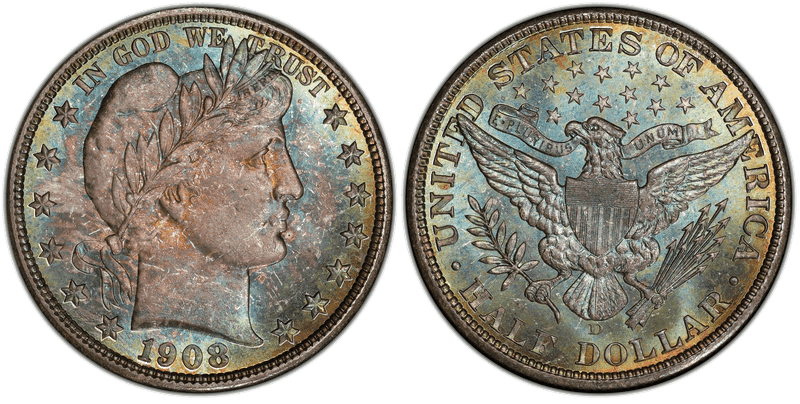
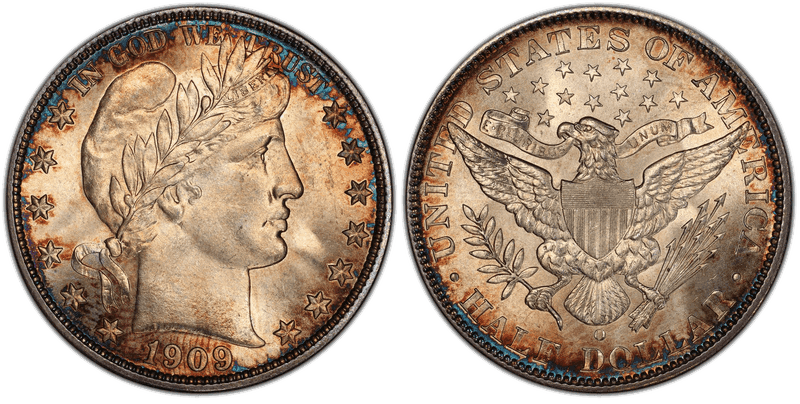
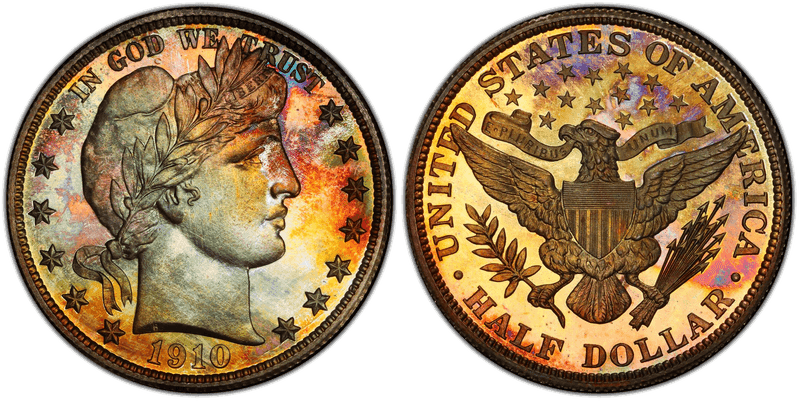
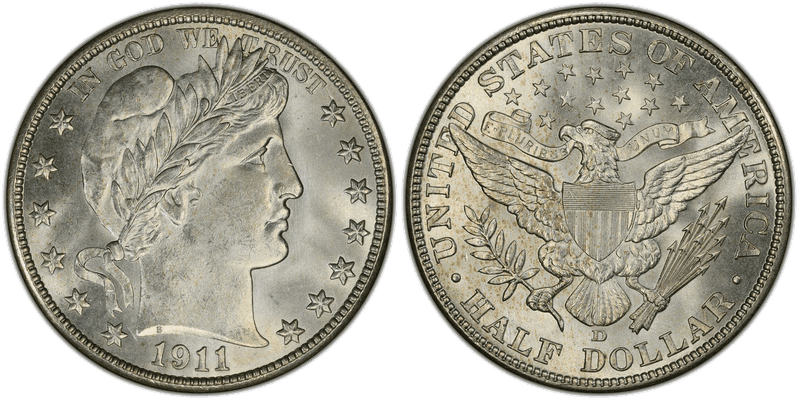
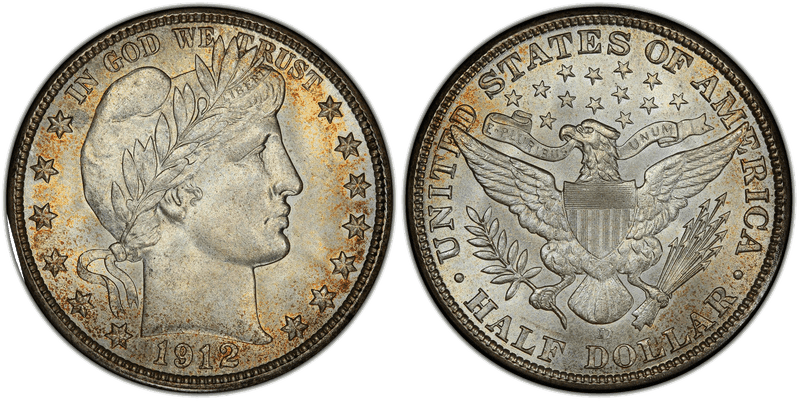
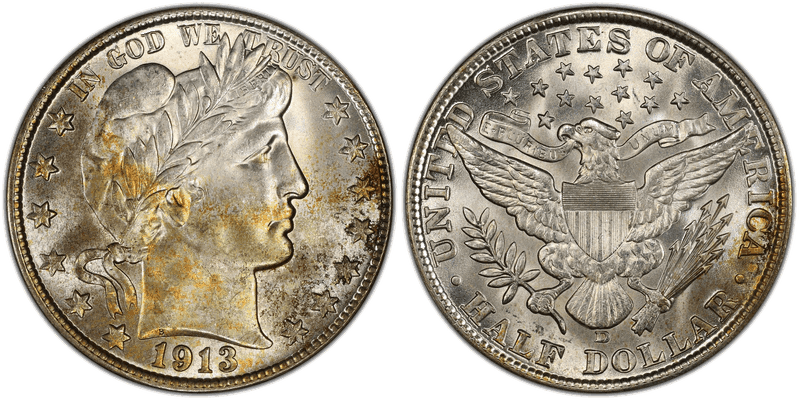
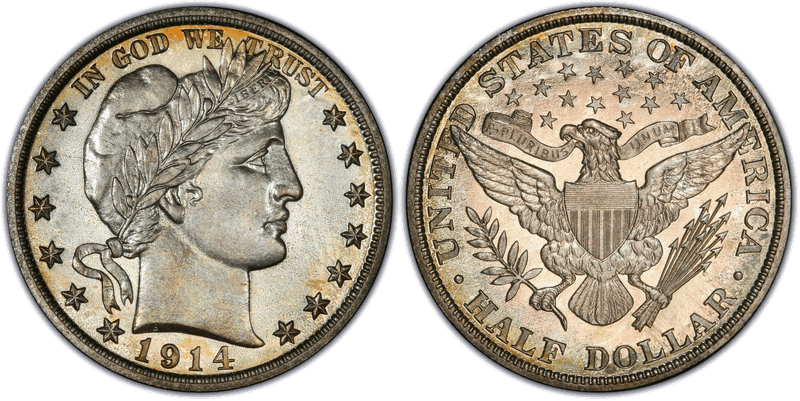
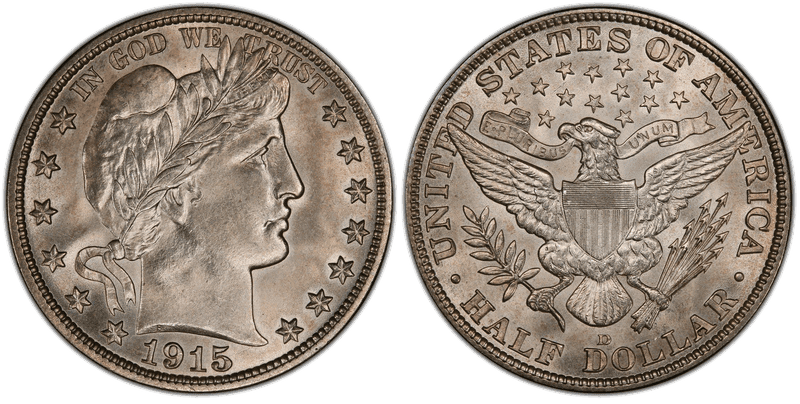
Barber Half Dollars 1892-1915

Coin Series
Barber Half Dollars 1892-1915 series coin

About This Series

As the largest denomination in Charles Barber's unified Liberty Head series, the half dollar provided the most imposing canvas for his design — a Liberty portrait wearing a Phrygian cap wreathed in laurel on the obverse, paired with a heraldic eagle reverse. The 1892-O Micro O variety, where a smaller-than-standard O mintmark punch was used, is the first-year highlight, while the 1892-S and numerous San Francisco and New Orleans dates with low mintages create a challenging set for condition-conscious collectors. The 50-cent piece was critically important in turn-of-the-century commerce — it was the largest silver coin in regular daily use, as silver dollars largely sat in Treasury vaults rather than circulating. Struck in 90% silver at 12.50 grams on a 30.6mm planchet, Barber halves circulated hard, and most survivors are well worn. Many dates from four active mints had mintages under 1 million, ensuring high-grade survivors are uncommon across the series. The Barber half dollar was succeeded by Adolph A. Weinman's Walking Liberty design in 1916. Collectors value Barber halves for the honest wear of genuine commerce recorded in their surfaces.

Series Information

Production Years
1892-1915
Composition
90% Silver, 10% Copper

Browse by Base(24 bases)

Showing all 24 listings

History

The Mint Act of 1890 allowed the Treasury to replace a coin design once it had been in use for 25 years, which made the Liberty Seated dime, quarter and half dollar eligible for change in 1891. The Mint first invited ten leading sculptors to compete. They wanted to be paid for every submission, the Treasury refused, and the Mint opened the competition to anyone. A panel that included Chief Engraver Charles E. Barber and the sculptor Augustus Saint-Gaudens reviewed roughly 300 entries and found none of them usable.

Mint Director Edward Leech then gave the job to Barber himself. His Liberty Head design went on all three denominations, and striking of the new coins began on January 2, 1892. Collectors have called them "Barber" coins ever since, after the engraver rather than the subject.

Half dollars came from four mints: Philadelphia (1892–1915), San Francisco (1892–1915), New Orleans (1892–1909) and Denver (1906–1915). Production stopped after 1915. In 1916 Mint Director Robert W. Woolley invited outside sculptors to replace all three of Barber's designs, and Adolph A. Weinman's Walking Liberty took over the half dollar that year.
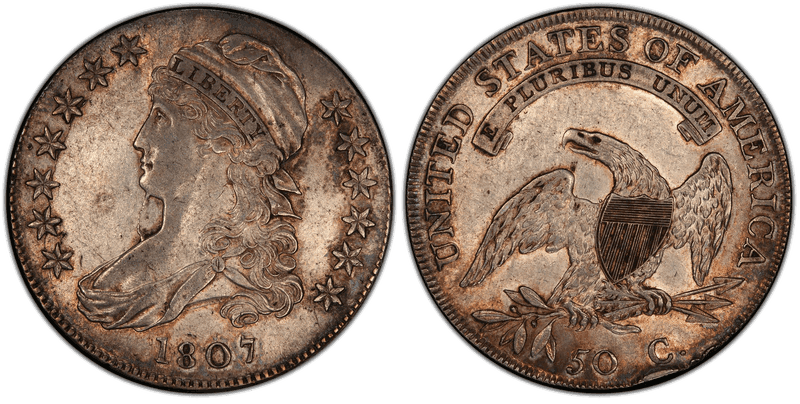
How to Identify It

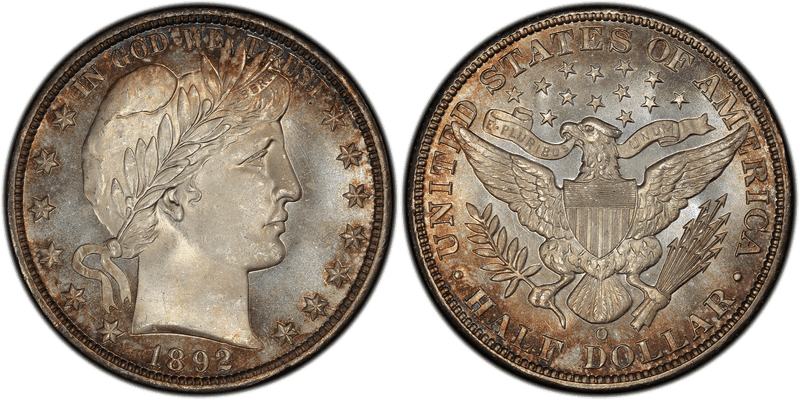
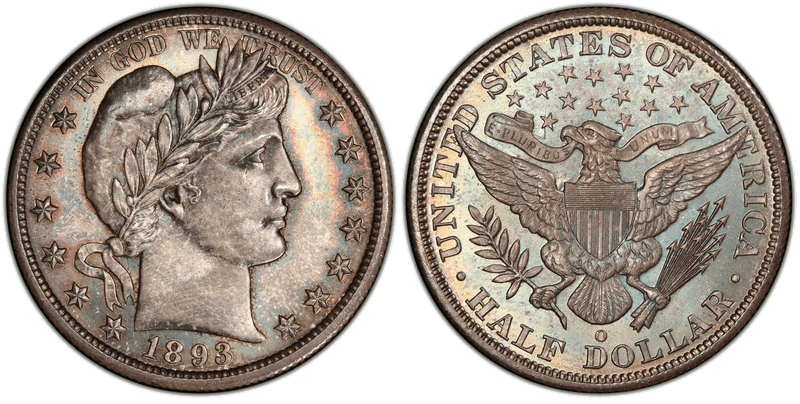
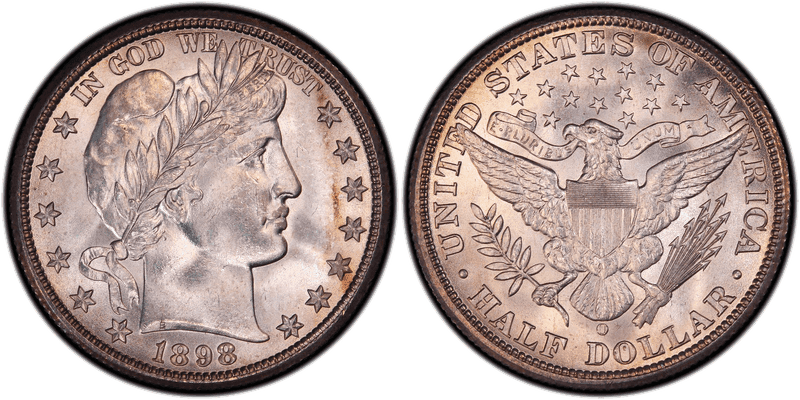
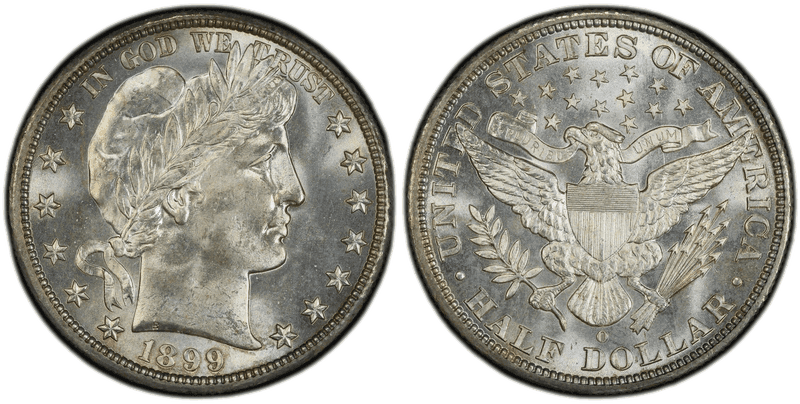
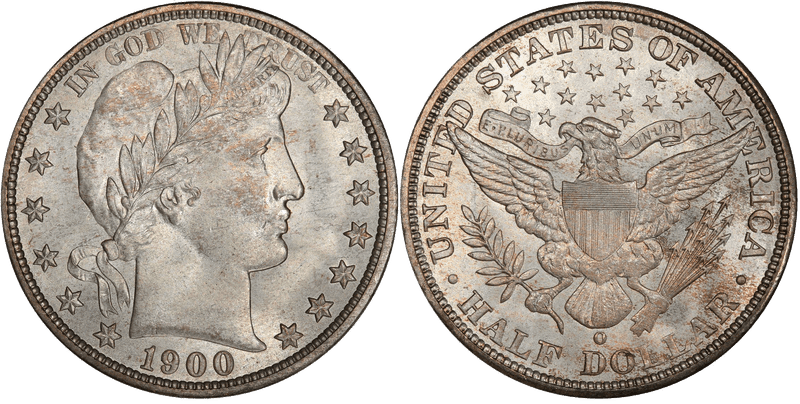
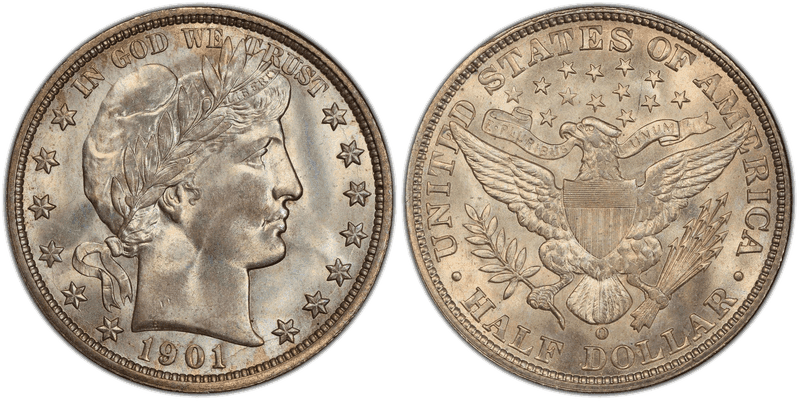
Obverse. Liberty faces right. Her hair is mostly hidden under a cap ringed at its base by a laurel wreath tied with a ribbon at the back, and a narrow headband above her forehead reads LIBERTY. IN GOD WE TRUST runs across the top, the date sits at the bottom, and 13 stars surround the portrait, six on the left and seven on the right. Barber's initial B is small and tucked into the base of the neck.

Reverse. A heraldic eagle spreads its wings, with a shield on its breast, an olive branch in the claw on the viewer's left and a bundle of arrows on the right. A ribbon in its beak carries E PLURIBUS UNUM, and 13 stars fill the space above its head. UNITED STATES OF AMERICA arches over the top, and HALF DOLLAR runs along the bottom.

Mint mark. Look on the reverse directly under the eagle's tail feathers, above the DO of DOLLAR. It will be an O, S or D. A blank spot there means Philadelphia.

Things that cause confusion.

  • The Barber dime, quarter and half share the same Liberty portrait. The half is the largest at 30.6 mm and is the only one that says HALF DOLLAR.
  • New Orleans halves are often softly struck. On the 1897-O, for example, NGC notes weak detail at Liberty's forehead, the wing beside the shield, and the arrow feathers and the claw that holds them. That is a minting trait, not wear.
  • Halves dated 1915 use a date style that looks clearly different from earlier years, which is normal for that year.

Key Dates and Varieties

  • 1892-O Micro O — struck with a smaller O than normal, probably a punch meant for quarters; fewer than 100 had been certified as of mid-2024.
  • 1892-O — 390,000 struck. Many were kept as souvenirs of the new design, so higher grades turn up more often than Good through Very Fine coins, which are very elusive.
  • 1892-S — 1,029,028 struck. Most circulated survivors are heavily worn, and problem-free middle grades are elusive.
  • 1893-S — 740,000 struck and scarce in every grade.
  • 1896-S — elusive in all grades. NGC rates the 1896-O as even tougher.
  • 1897-O — 632,000 struck, never common at any grade, and usually weakly struck.
  • 1897-S — 933,900 struck. NGC ranks it alongside the 1897-O as the hardest coin in the series in the middle circulated grades.
  • 1901-S — 847,044 struck and scarce in every grade, with gems very rare.
  • 1904-S — 553,038 struck. NGC describes it as the long-acknowledged key of the series and says Mint State examples are very rare.
  • 1913 — 188,000 business strikes, the first of three low-mintage Philadelphia years.
  • 1914 — 124,230 business strikes, the lowest mintage in the series.
  • 1915 — 138,000 business strikes. NGC finds it harder to locate than the 1914 in every grade.

Die errors in our catalog include cuds on the 1898, 1902-O and 1903-O, and an atypical die clash on a 1912.

In Our Catalog

4 errors and varieties are listed for this series. Browse them by type:

Recently added

Mintages

Barber Half Dollars 1892-1915 mintages by year and mint, taken from each coin's page in our catalog. Each figure opens that coin's page, which lists its varieties and errors. A dash means no figure was recorded. Where one issue was struck in more than one type, each type is listed.

Composition and Silver Content

  • Composition: 90% silver, 10% copper
  • Weight: 12.5 grams
  • Silver content: 11.25 grams, or 0.3617 troy ounces
  • Diameter: 30.6 mm
  • Edge: reeded
  • Designer: Charles E. Barber (both sides)

Proofs were also struck for collectors. Proof mintages ranged from 1,245 in 1892 down to 380 in 1914.

FAQ

Where is the mint mark on a Barber half dollar?

Turn the coin to the reverse. The mint mark sits under the eagle's tail feathers, just above the letters DO in DOLLAR. You will find O (New Orleans), S (San Francisco) or D (Denver) there; Philadelphia halves have no mint mark at all.

What are the Barber half dollar key dates?

NGC calls the 1904-S the long-acknowledged key of the series and also singles out the 1897-O and 1897-S as among the hardest dates to find. The 1892-O Micro O is the rarest variety, and the low-mintage Philadelphia issues of 1913, 1914 and 1915 round out the list, along with the 1892-O, 1892-S, 1893-S and 1901-S.

Which Barber half dollar has the lowest mintage?

The 1914 Philadelphia half, with 124,230 business strikes, is the lowest of the series. The 1915 (138,000) and 1913 (188,000) Philadelphia issues are next. The highest was 1899 Philadelphia at about 5.5 million.

How much silver is in a Barber half dollar?

Each coin weighs 12.5 grams and is 90% silver, so it holds 0.3617 troy ounces of pure silver.

Who is on the Barber half dollar?

The portrait is Liberty, not a real person. The coin takes its nickname from its designer, Mint Chief Engraver Charles E. Barber, whose initial B appears at the base of Liberty's neck.

↑ Back to the coins: every year, mint, variety and error

Explore Other Denominations

Collector Essentials

Tools and references for building and protecting your coin collection.

As an Amazon Associate, NumisDex earns from qualifying purchases.