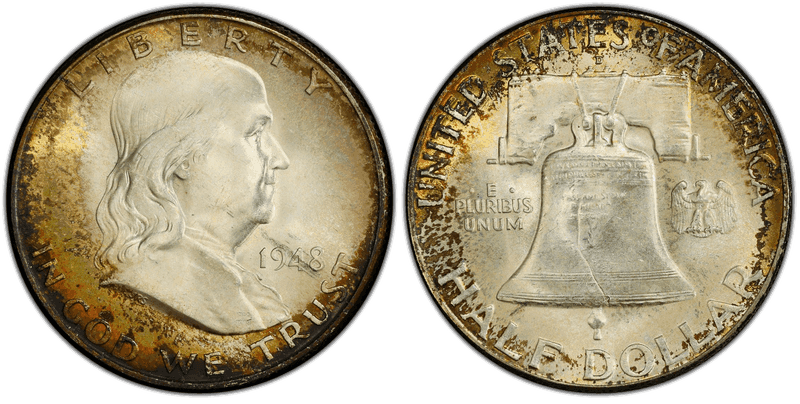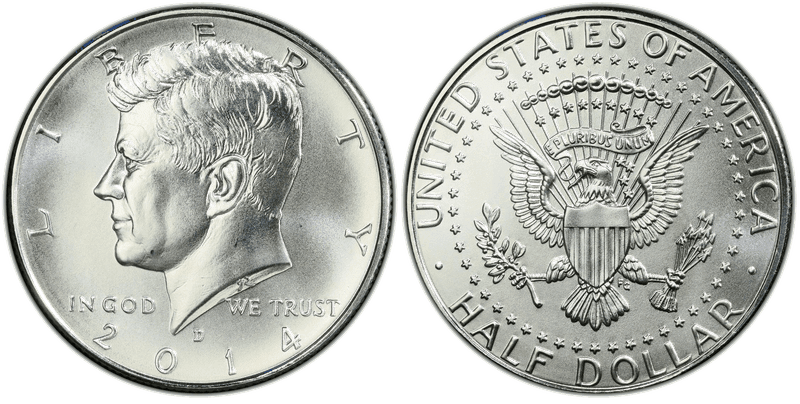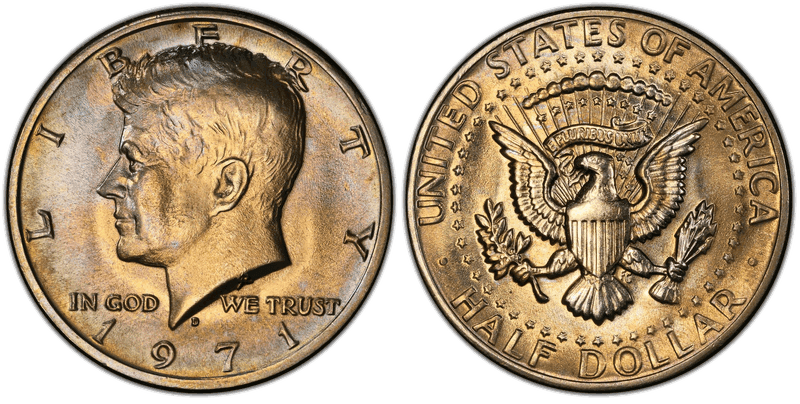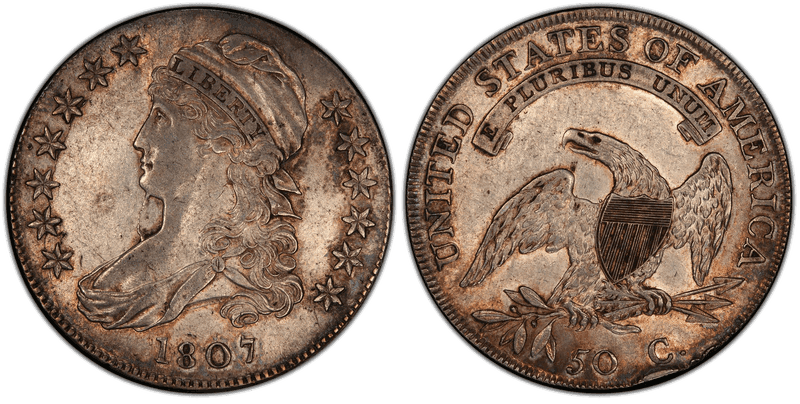
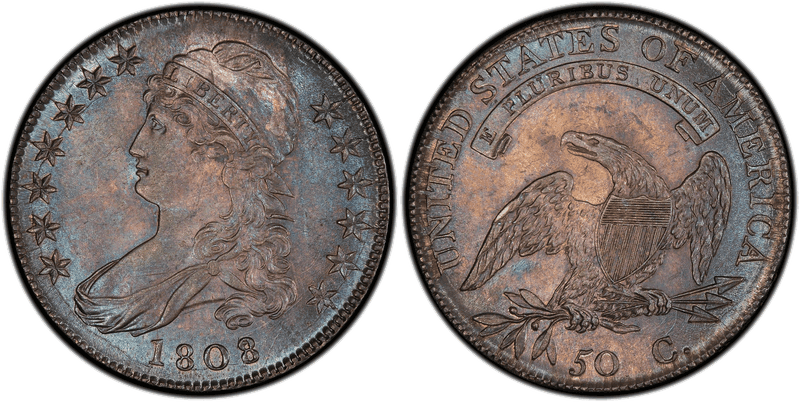
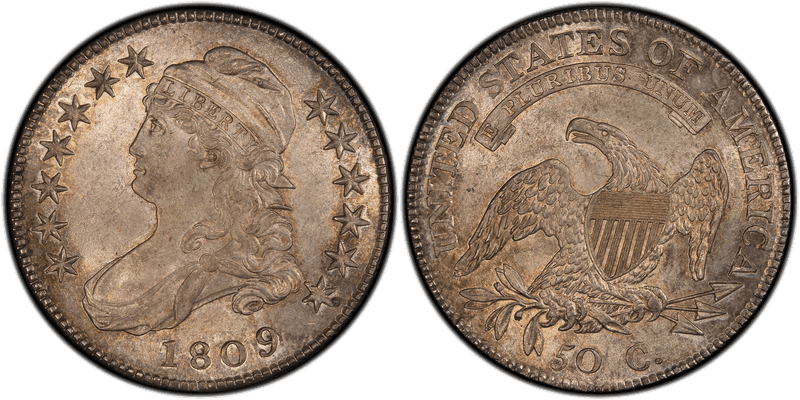
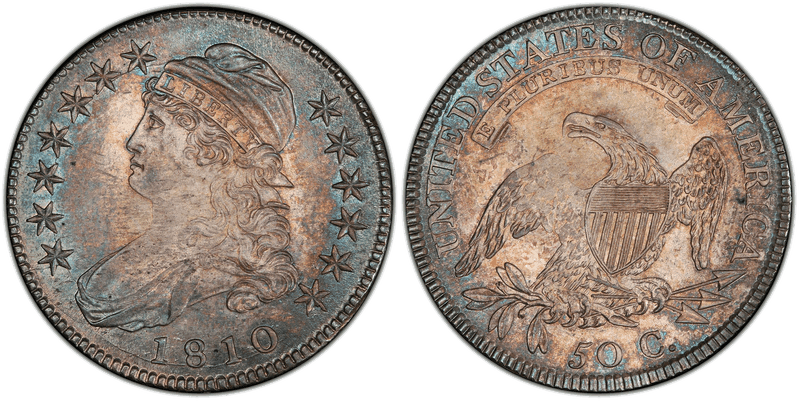
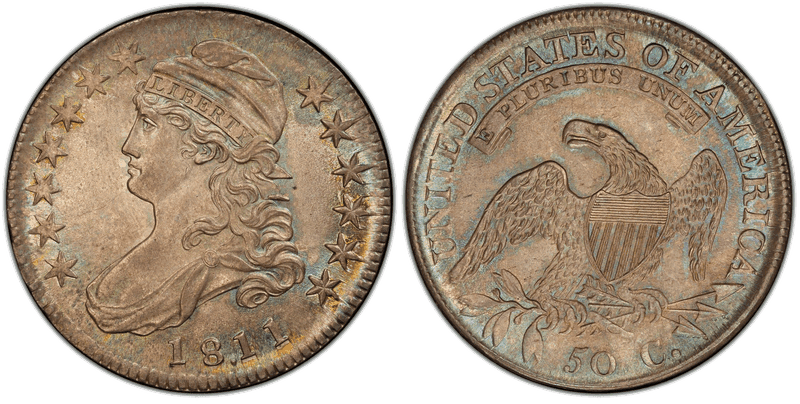
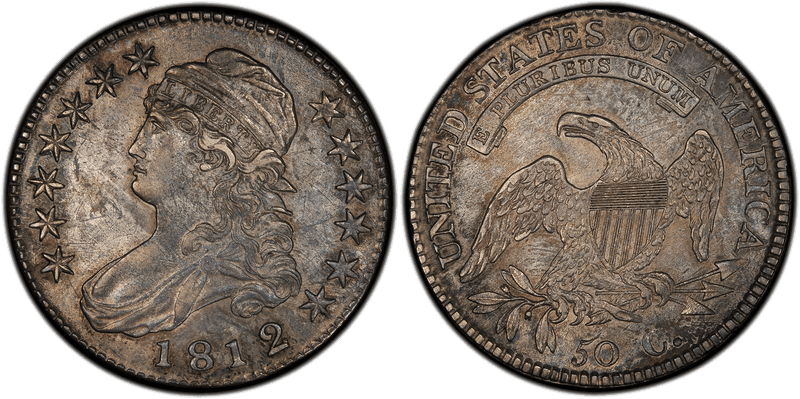
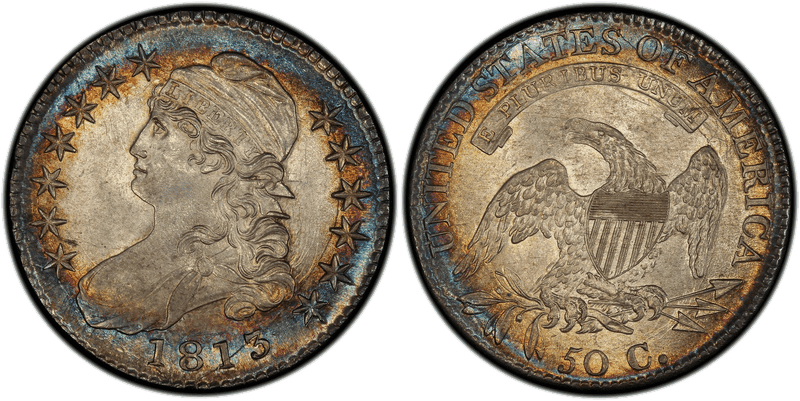
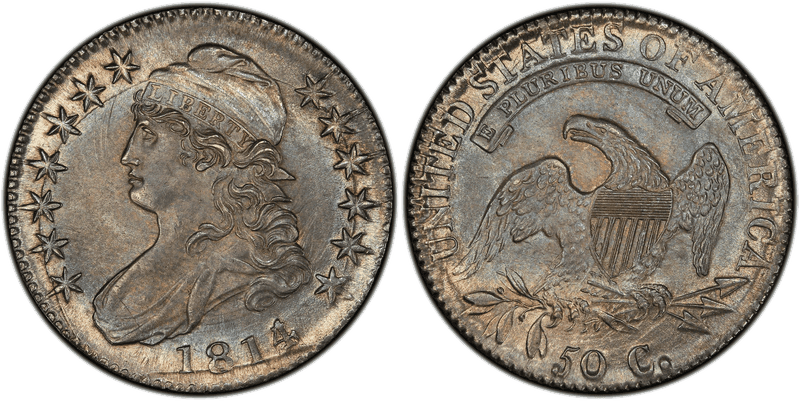
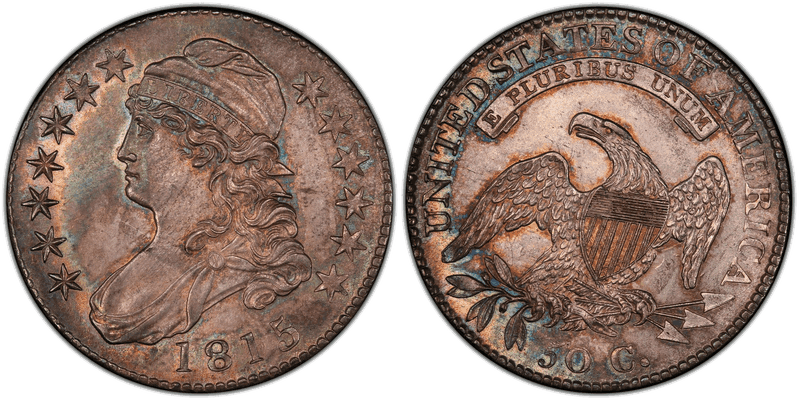
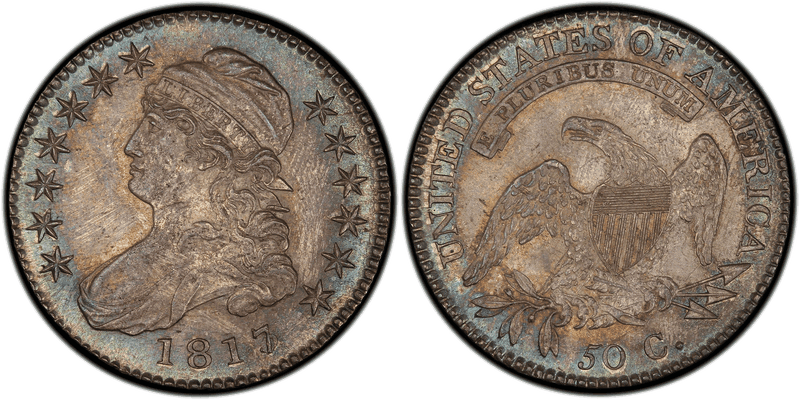
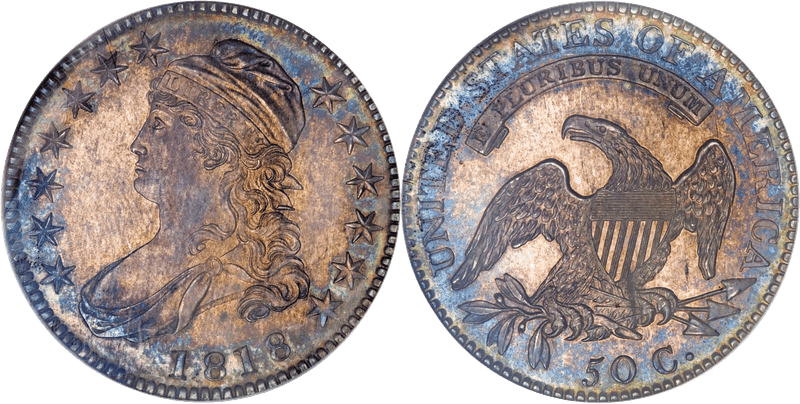
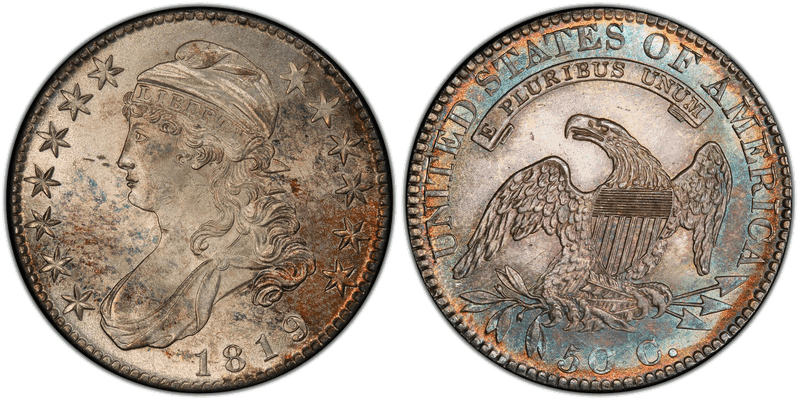
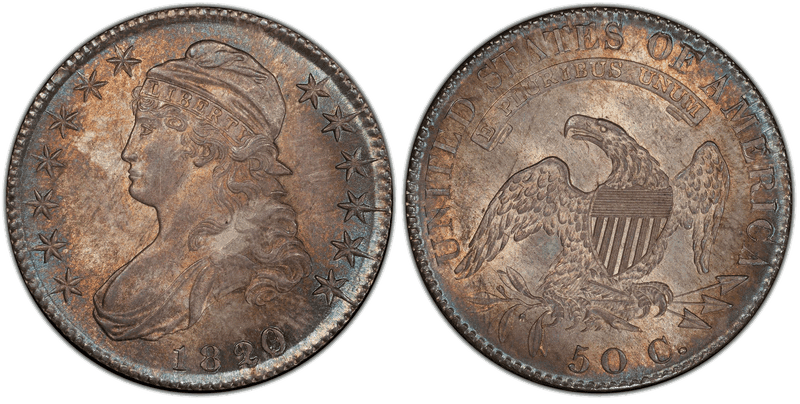

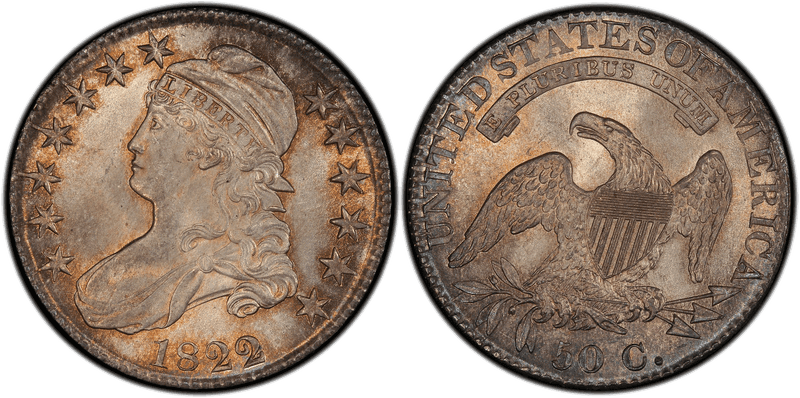
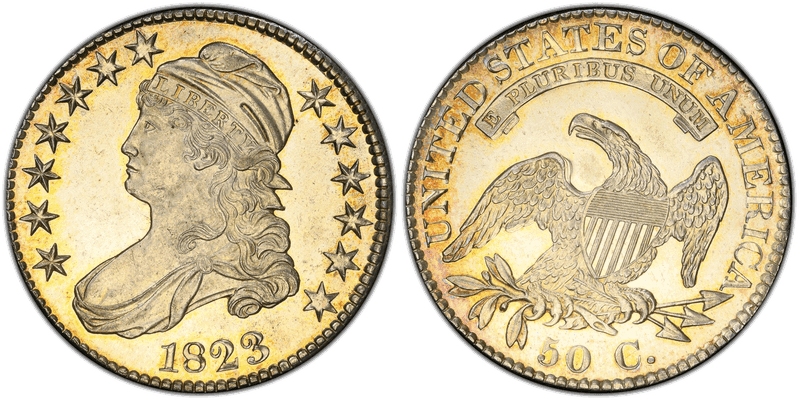
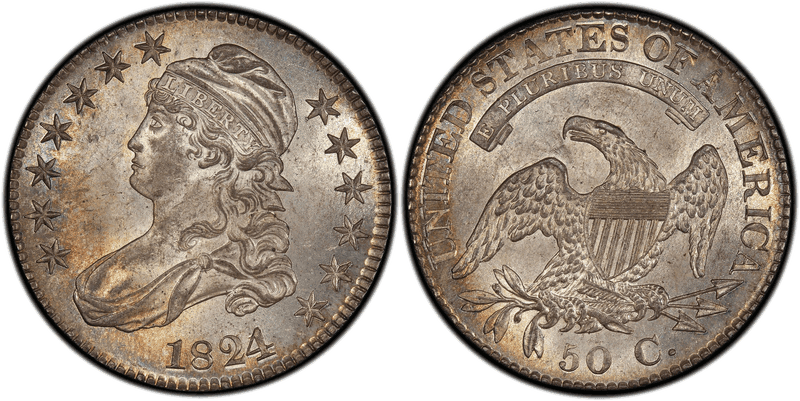
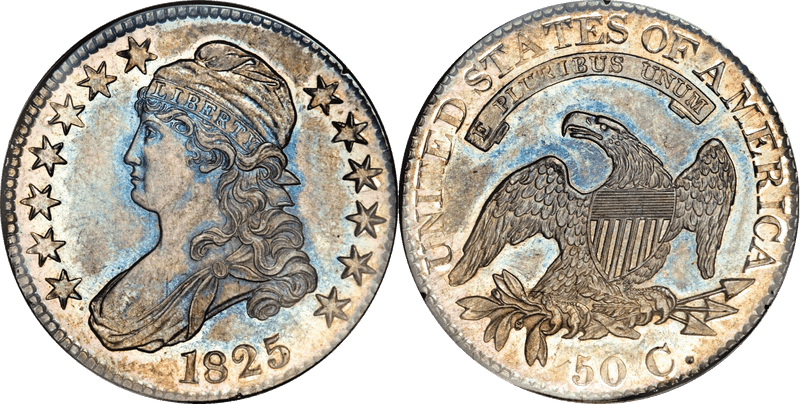

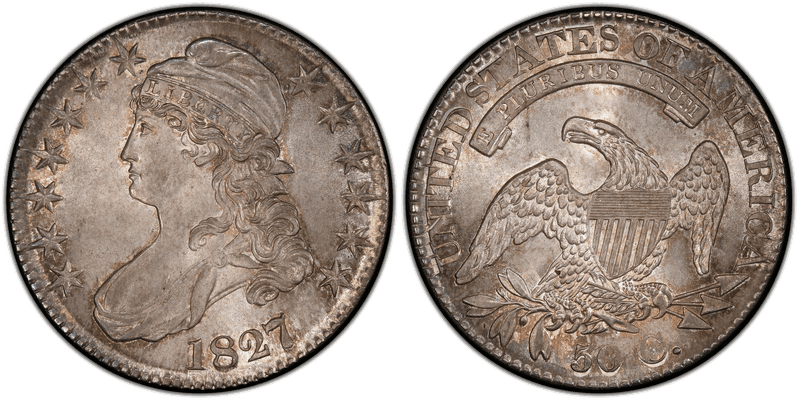
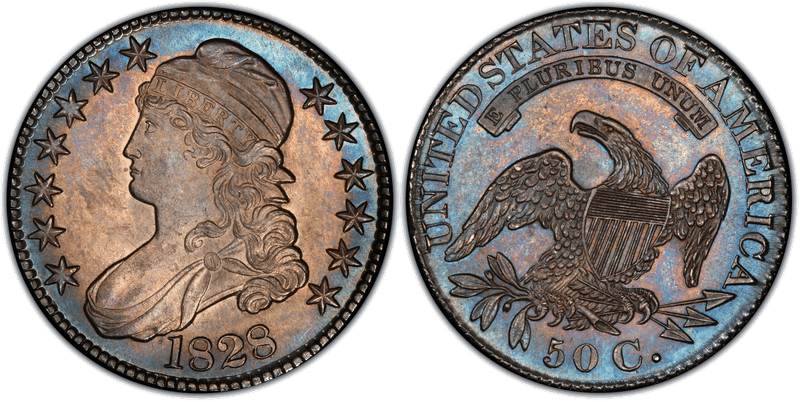
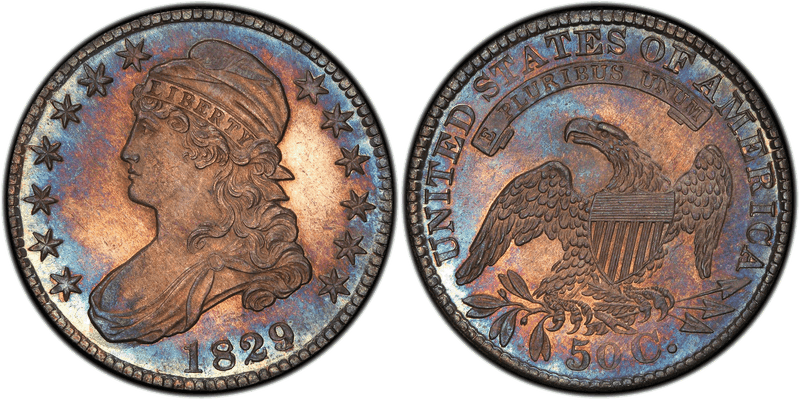
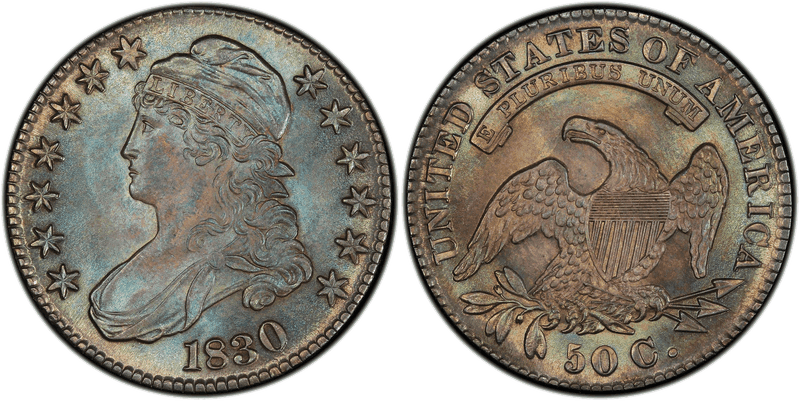
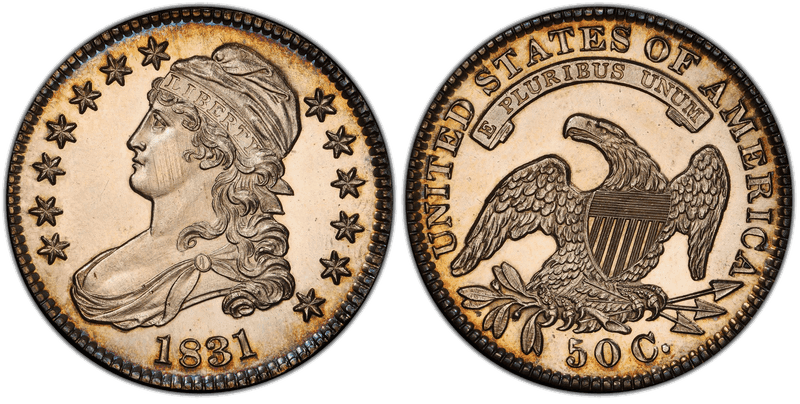
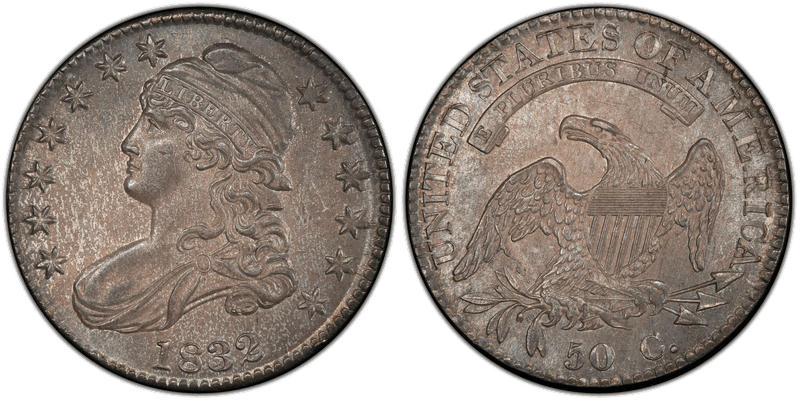
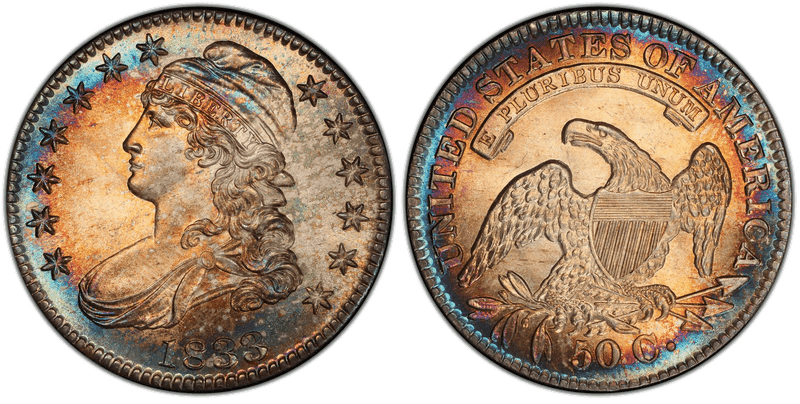
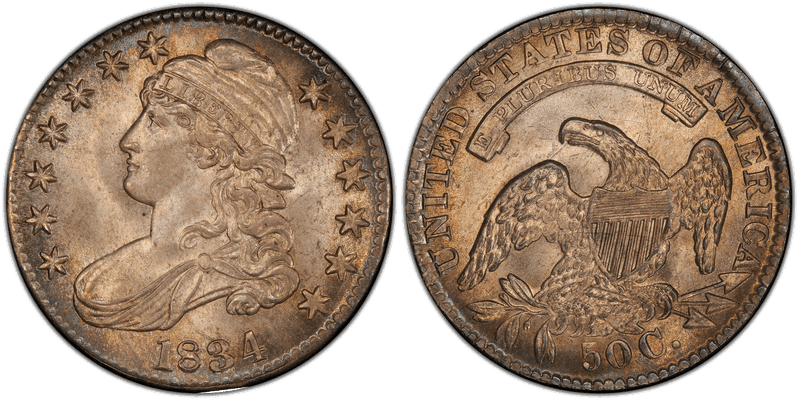
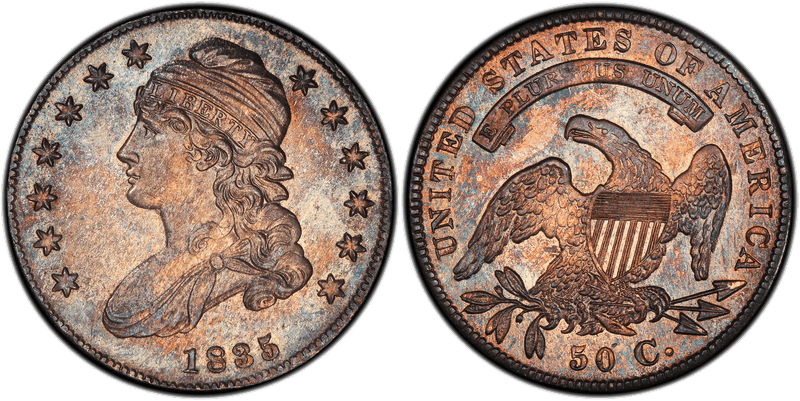

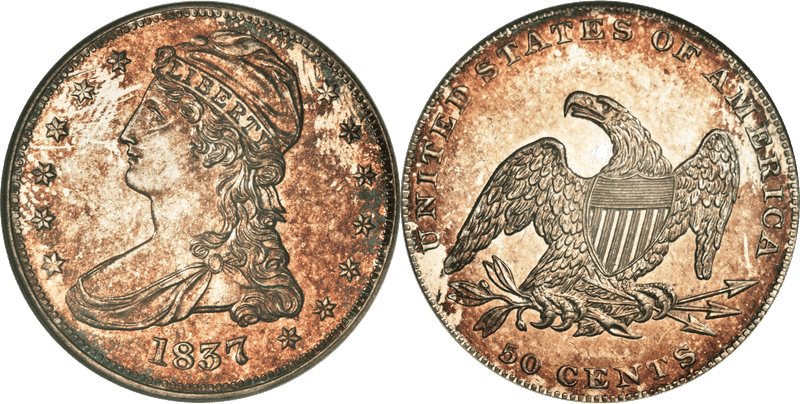
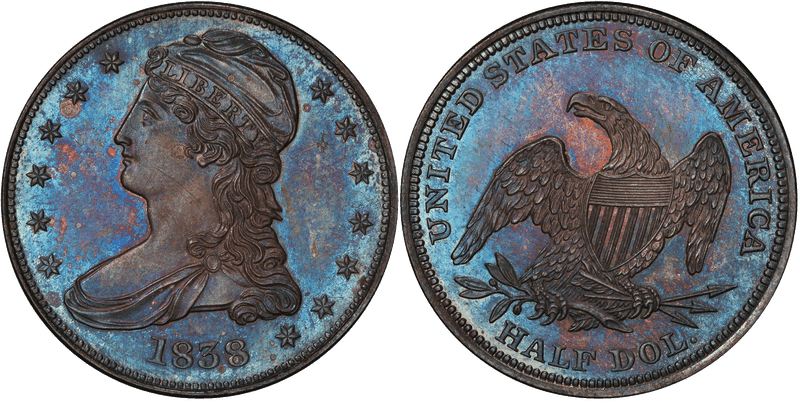

The Capped Bust half dollar was the work of John Reich, a German-born engraver who reached the United States as an indentured servant and was hired at the Mint as second engraver under Robert Scot. His new Liberty went onto the half dollar in 1807, the same year that Scot's Draped Bust half was still being struck. The Mint did not report the two types separately, so the 1807 figure of 750,500 Capped Bust halves is a reconstruction. Reich's portrait was later adapted to the quarter, dime and half dime. Chief Engraver William Kneass later modified the design, and a slimmer, younger-looking bust appeared on the half in 1834.
Half dollars carried much of the country's silver coinage in these years. No silver dollars were struck from 1804 through 1835, and banks held large stocks of halves as backing for their notes. Mintages topped a million in all but a few years, and each year needed many dies: NGC's notes record 50 die marriages for 1827 alone.
The War of 1812 era disturbed the supply of silver. No half dollars were coined during calendar 1815. Early in 1816 the Mint struck 47,150 halves from a single die re-dated from 1812, all of them dated 1815, and delivered them on January 10, 1816. A fire then destroyed the rolling mills, and coinage did not resume until 1817.
Through 1836 the halves were struck without a restraining collar, on planchets whose edges were lettered beforehand. In 1836 the Mint received its first steam-powered press, and on November 8 it struck its first silver coins on it: a new half dollar by Christian Gobrecht, smaller and with a reeded edge formed by a close collar. A law of January 1837 lowered the weight from 13.48 to 13.36 grams and raised the fineness from .8924 to .900. The reverse value changed from 50 CENTS to HALF DOL. in 1838. New Orleans struck the only branch-mint halves of the type in 1838 and 1839, and in 1839 Gobrecht's Seated Liberty half dollar took over.