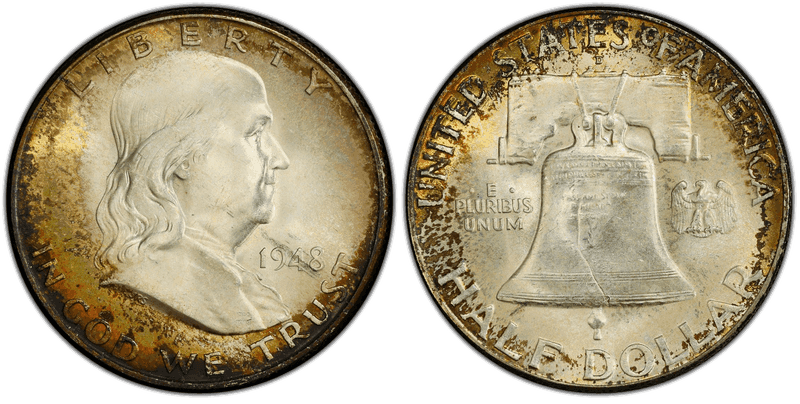
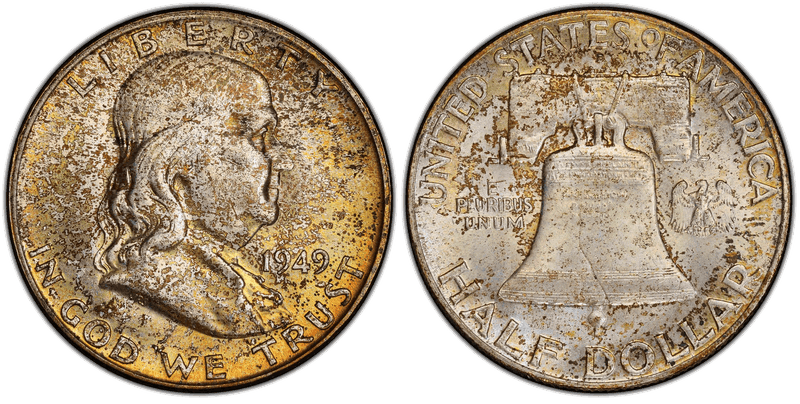
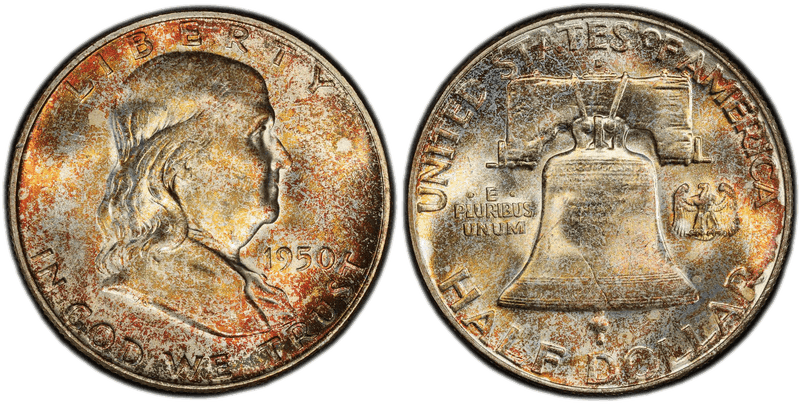

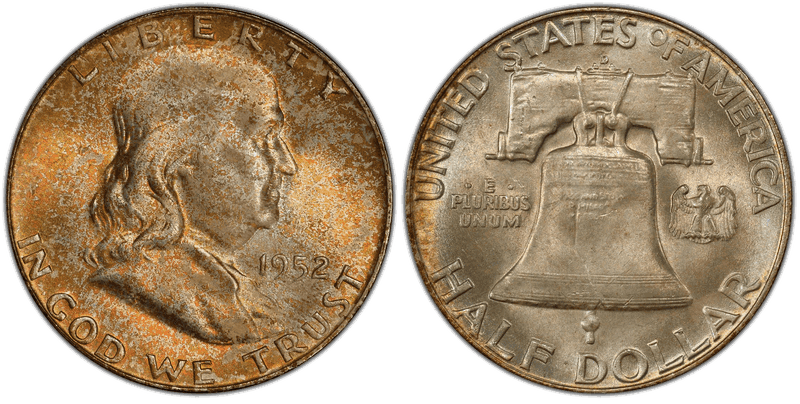
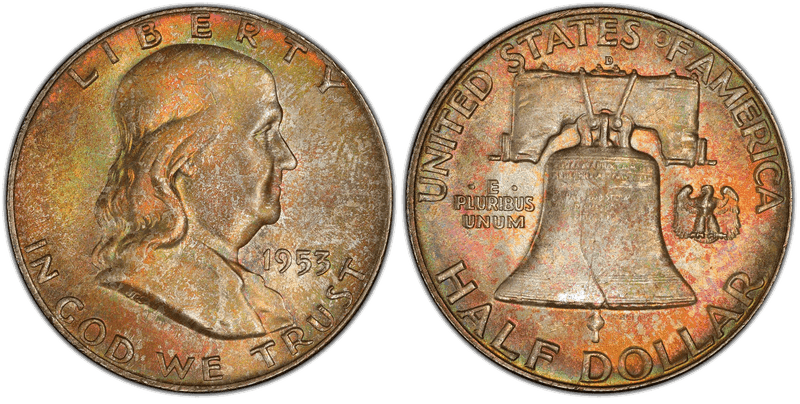
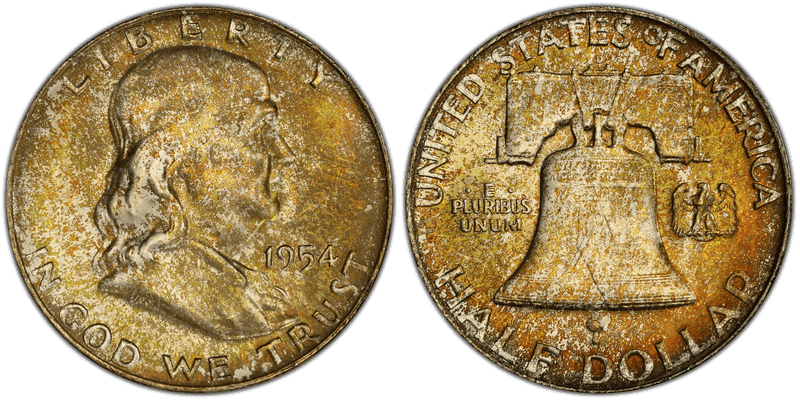
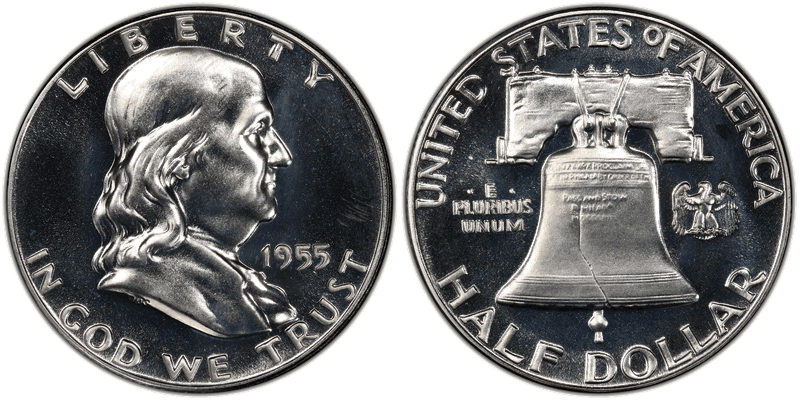
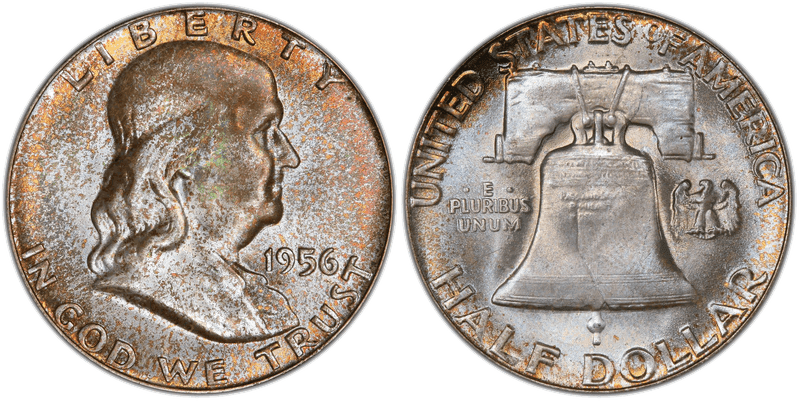
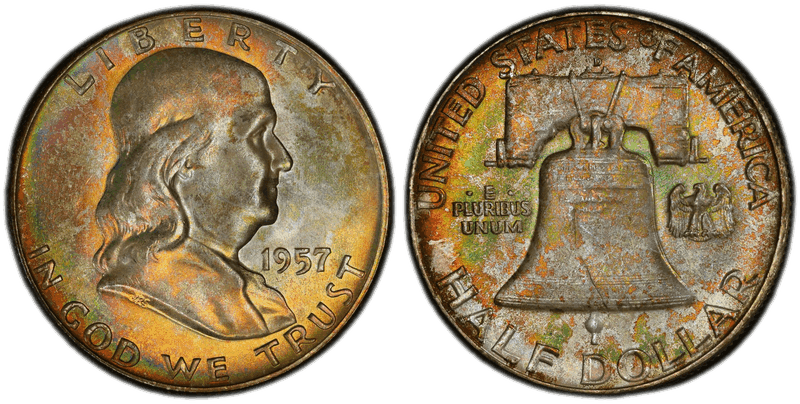
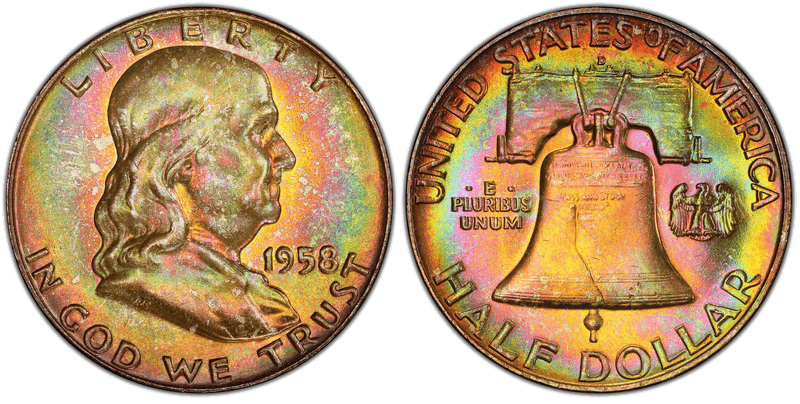
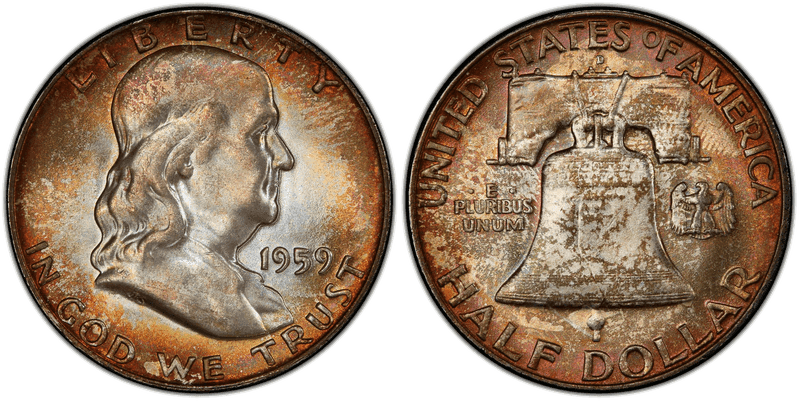
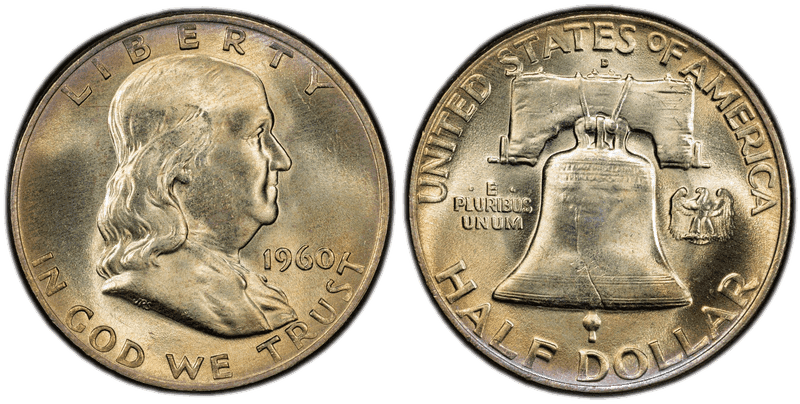
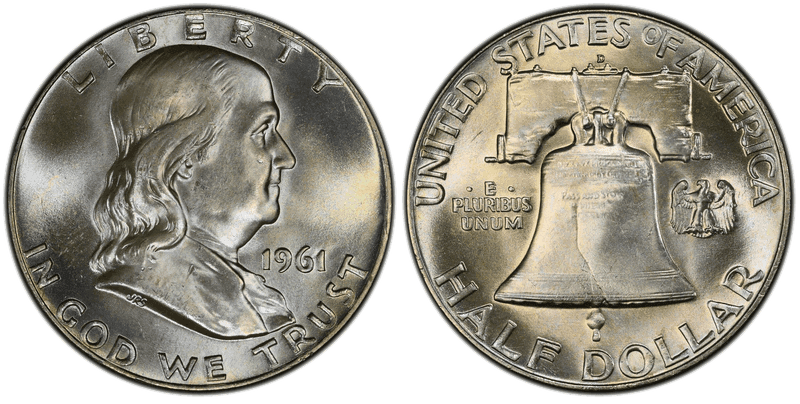
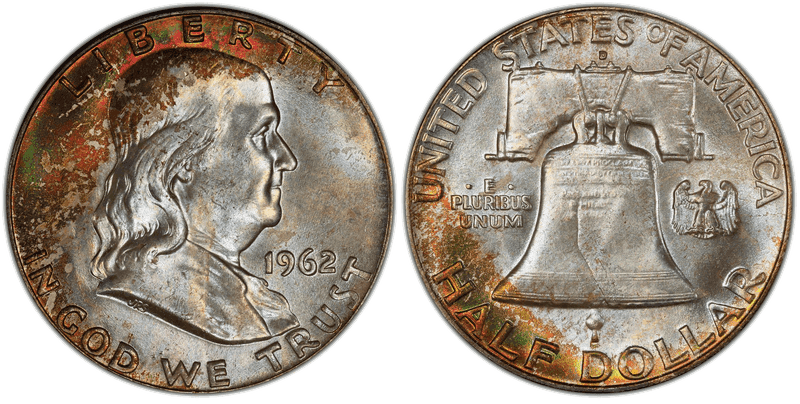
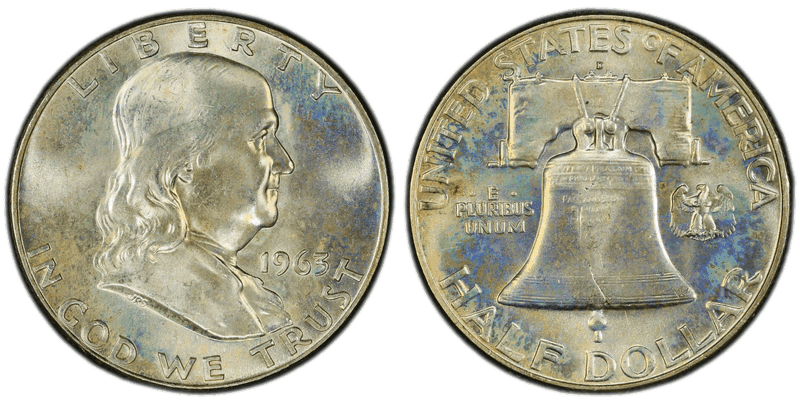
Mint Director Nellie Tayloe Ross was the force behind putting Benjamin Franklin on the half dollar. Chief Engraver John R. Sinnock had already modeled Franklin for a 1933 Mint medal based on Jean-Antoine Houdon's bust, and Ross had him adapt that portrait. For the reverse he reused the Liberty Bell from his own 1926 Sesquicentennial commemorative half. Federal law required an eagle on coins larger than the dime, so a small eagle was placed in the field to the right of the bell.
Sinnock died on May 14, 1947, before the models were finished, and his successor as Chief Engraver, Gilroy Roberts, completed them. The Commission of Fine Arts disliked the designs, including the visible crack in the bell, but its role was only advisory, and Treasury Secretary John Snyder approved the coin anyway. After a preview dinner at the Franklin Institute in Philadelphia on April 29, 1948, the half dollar went on sale the next day. The initials "JRS" on the obverse are Sinnock's.
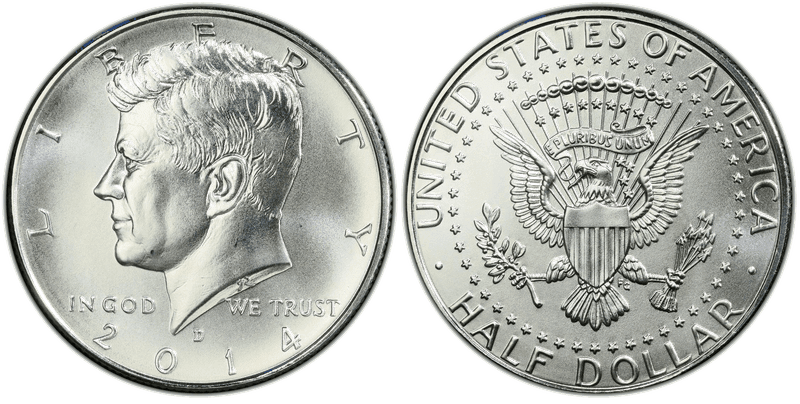
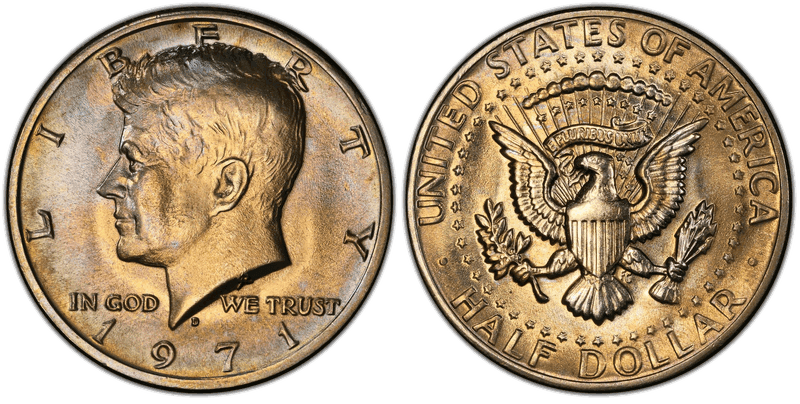
Proof coinage, suspended during World War II, resumed in 1950, so Franklin proofs exist for 1950 through 1963. After President Kennedy's assassination in November 1963, the Franklin was replaced by the Kennedy half dollar beginning in 1964.