
1916 Standing Liberty Quarter
Base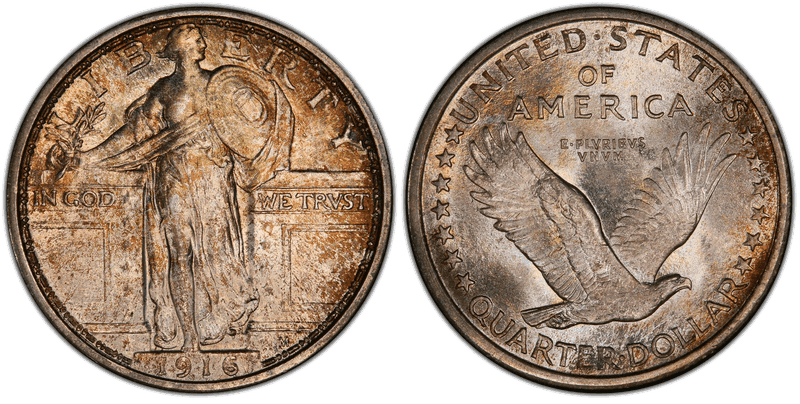
About This Coin
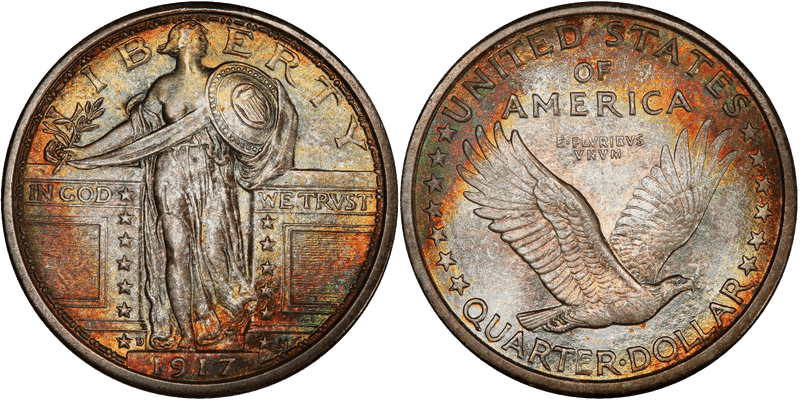
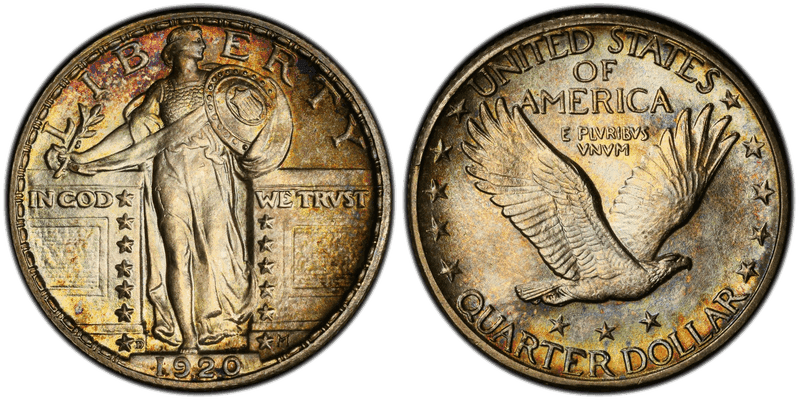
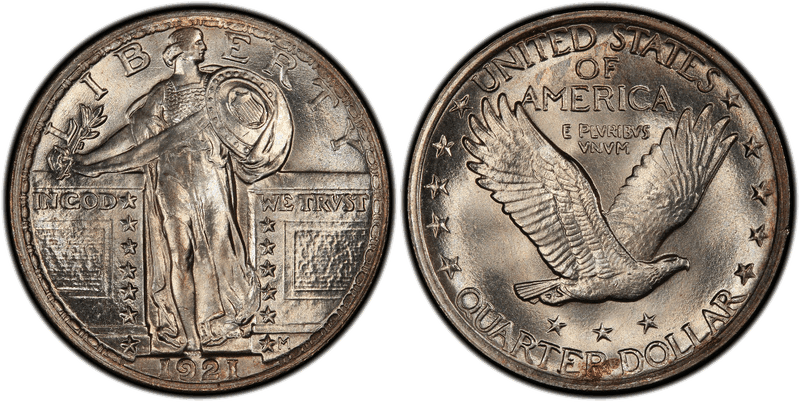
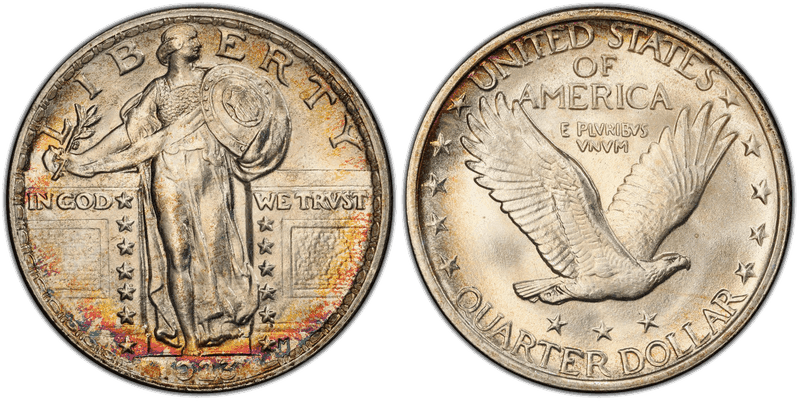
The 1916 Standing Liberty Quarter is a United States quarter from the Standing Liberty Quarters 1916-1930 series. The obverse features Liberty standing in a gateway between two walls, holding an olive branch and a shield, while the reverse displays an eagle in flight. Designed by Hermon A. Mac Neil. Struck in 90% silver, 10% copper, weighing 6.3 grams, 24.3 mm in diameter, with a reeded edge. Hermon MacNeil's Standing Liberty Quarter replaced the Barber design in 1916. The original Type I design (1916-1917) depicted Liberty with an exposed breast, which was covered with chain mail armor in the Type II design (1917-1930). A recessed date was also introduced because the original raised date wore away rapidly. The 1916 Standing Liberty Quarter (mintage 52,000) is one of the most desirable 20th-century coins. Full Head (FH) designation specimens command substantial premiums. How do you distinguish a 1916 Standing Liberty Quarter from a 1917? Hairlines: The 1916 quarter shows a bold, single strand of hair at the back of the head with a tiny feather on top, while the 1917 quarter features a bolder secondary hairline that looks like two distinct pieces of hair. Gown and Foot: On the 1916 quarter, the drapery/gown tightly hugs Liberty's foot all the way down. On the 1917 Type 1, the cloth pulls up and away from the left side of her foot. Border: Liberty's head nearly touches the coin rim on the 1916 issue, whereas the 1917 version adds a distinct border decoration directly above her head. Mints and Markings: The 1916 quarter was struck only at the Philadelphia Mint (no mint mark). The 1917 Type 1 was struck in Philadelphia, Denver (D), and San Francisco (S). Additionally, the dots along the coin's edge on a 1916 quarter appear more like diamonds compared to the dashes and dots on a 1917
Value Estimates
Values as of May 2026 — range across all strike types, reflecting typical grades (G-4 through MS-63). Coins in lower or exceptional grades may fall outside this range.
Specifications
Strike Types & Varieties(1)
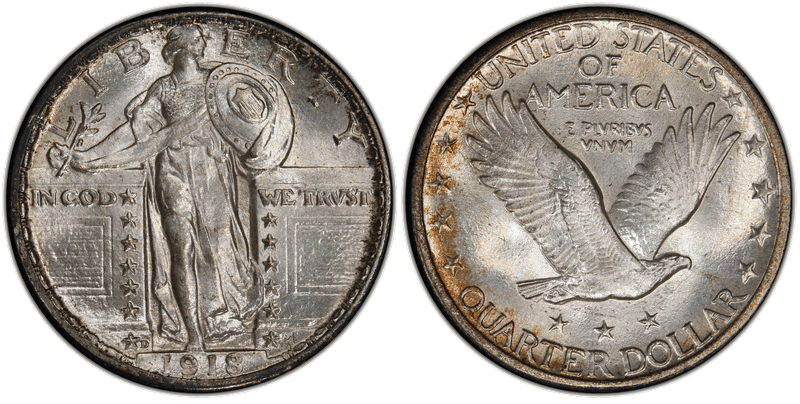
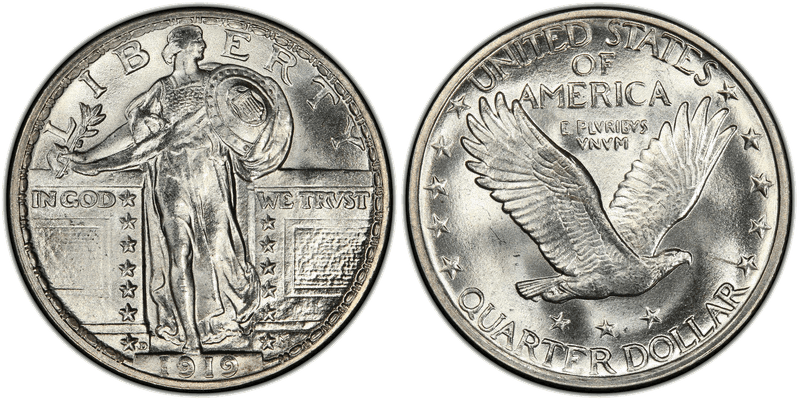
Other Base Coins in This Series
Collector Essentials
Tools and references for building and protecting your coin collection.
10x-20x Jeweler's Loupe
A must-have for examining coin details, mint marks, and surface quality
Red Book — Guide to U.S. Coins
The essential annual reference for U.S. coin values, history, and mintages
Coin Albums & Storage
Archival-quality albums and holders to protect and display your collection
USB Digital Microscope
Capture detailed images for documentation and community submissions
As an Amazon Associate, NumisDex earns from qualifying purchases.