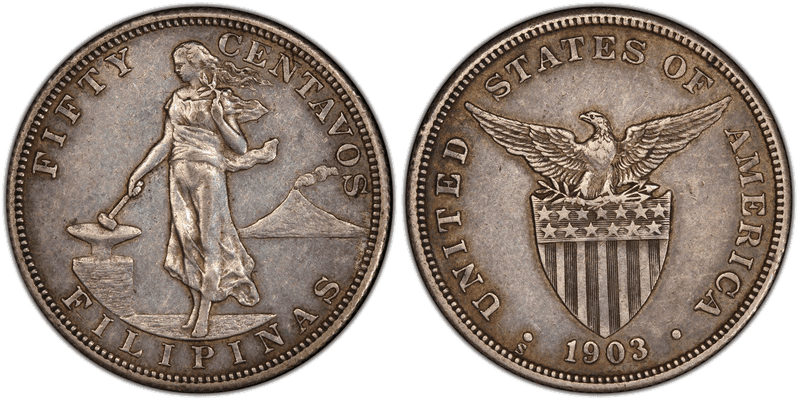
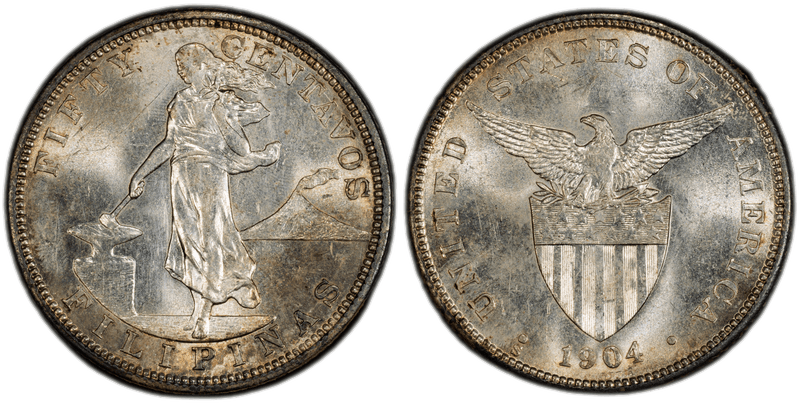
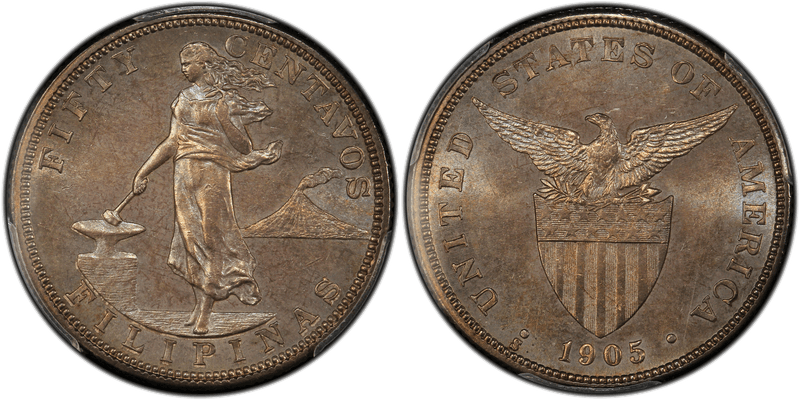
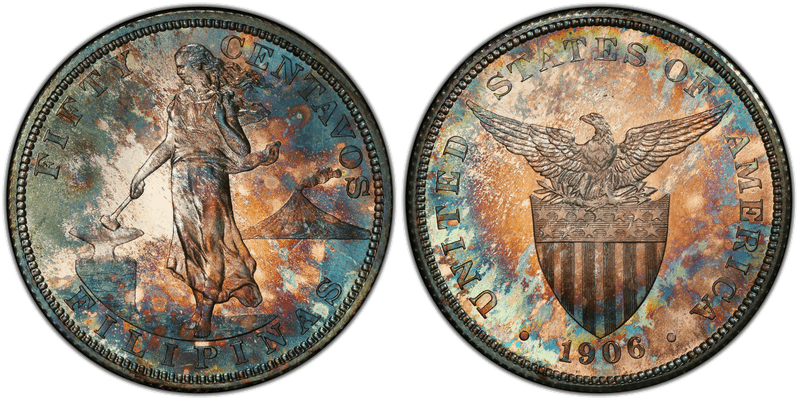
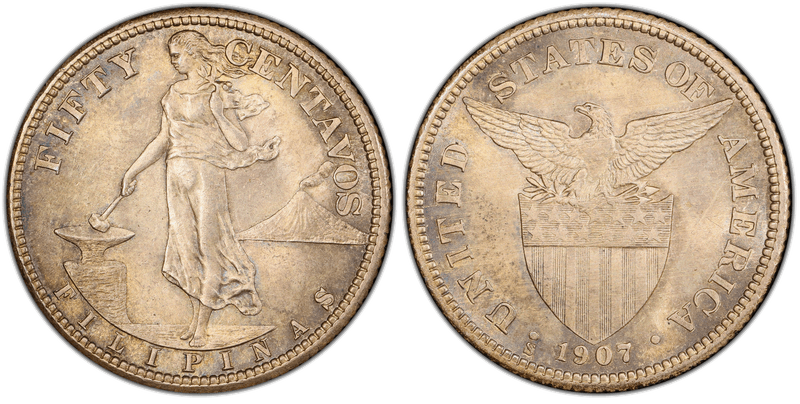
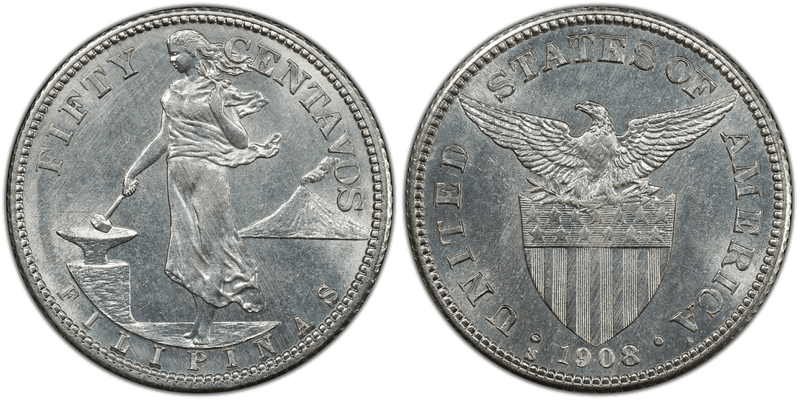
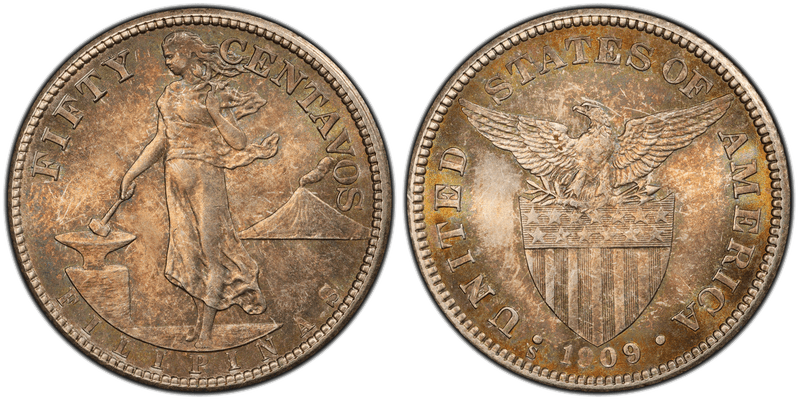
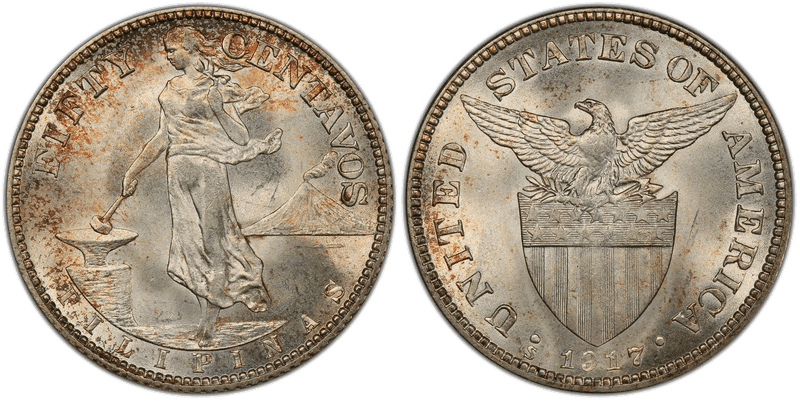
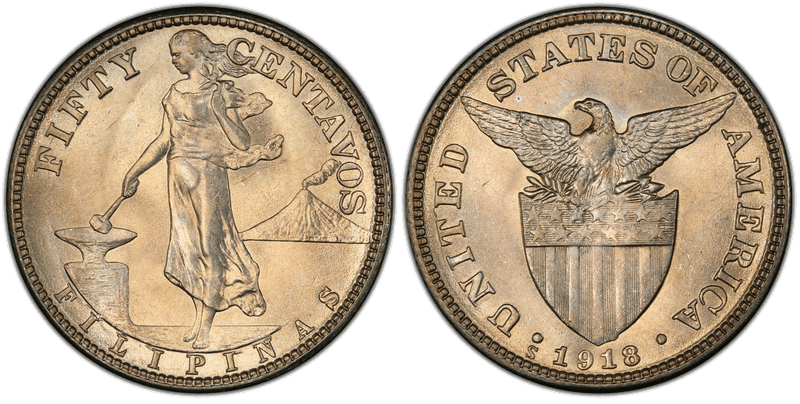
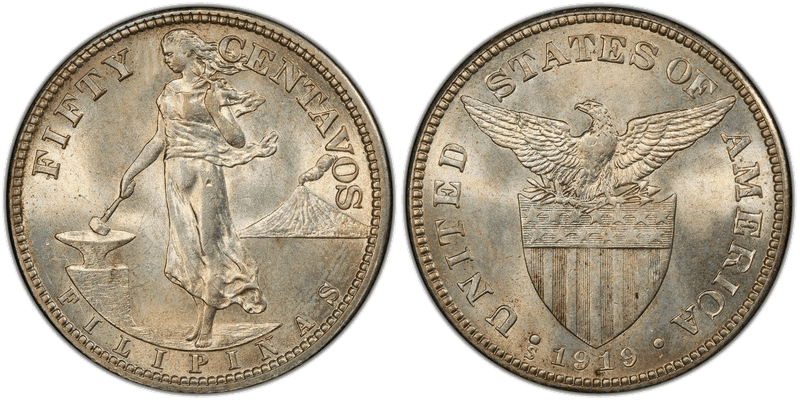
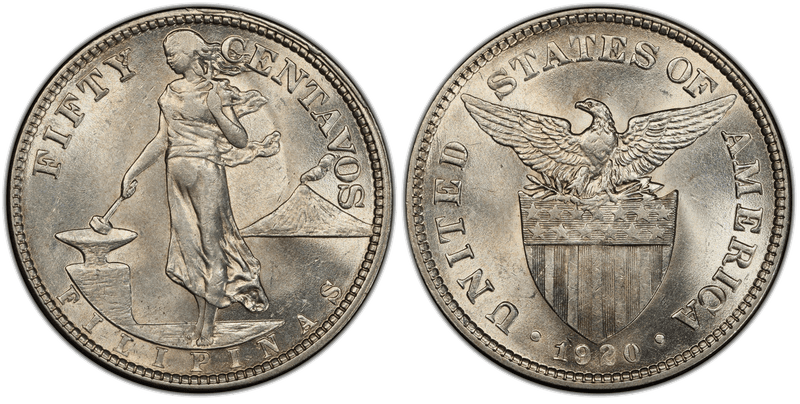
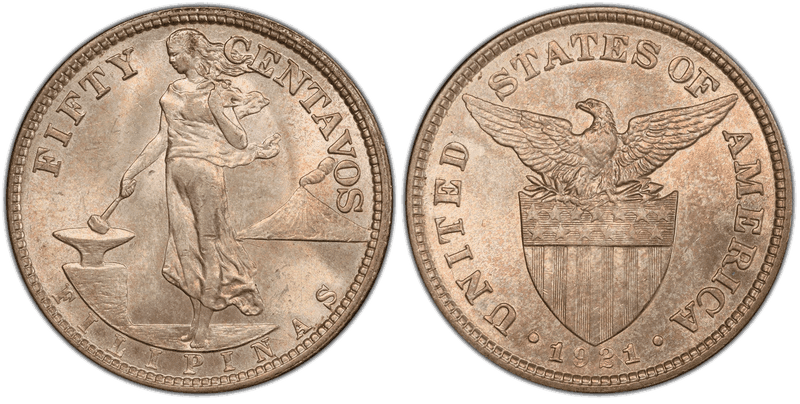
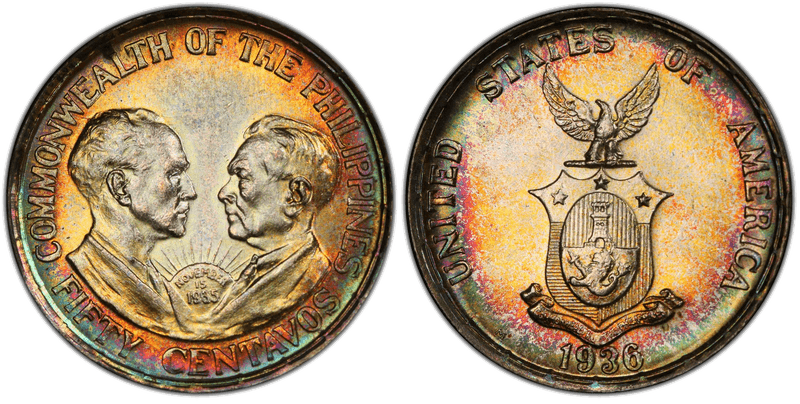
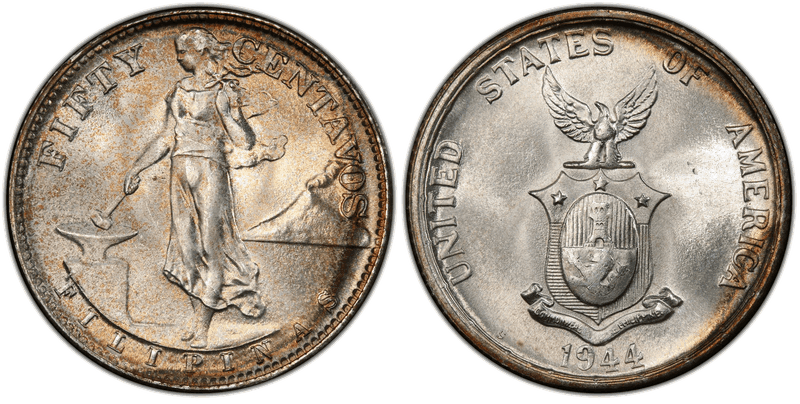
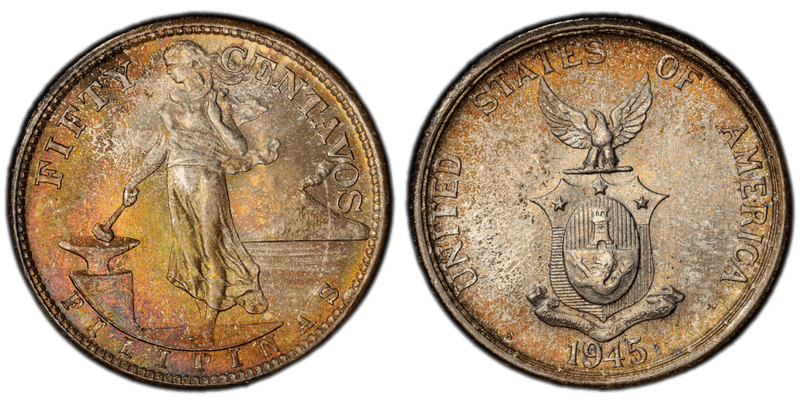
The fifty centavos, half a peso, was the largest of the subsidiary silver coins the United States provided for the Philippine Islands under the act of March 2, 1903. Melecio Figueroa's Filipina hammering at an anvil before the volcano Mayon filled the obverse, with the eagle and shield of the United States on the reverse. Philadelphia struck the first coins in 1903 and San Francisco joined it in 1904; Philadelphia also struck proofs for collectors from 1903 to 1908.
After silver became dearer, a law of June 23, 1906 allowed the islands' government to cut the weight and fineness of its coins, and from 1907 the fifty centavos weighed 10 grams at 75 percent silver and measured 27 millimeters instead of 30. San Francisco struck the reduced coin until 1909 and again from 1917 to 1919, and the new Manila Mint struck it in 1920 and 1921.
The Manila Mint struck one more fifty centavos before the war: the 1936 commemorative for the founding of the Commonwealth, designed by Ambrosio Morales. Its reverse, the arms of the Commonwealth, became the reverse of all regular coins from 1937. In 1944 and 1945, after American forces returned to the islands, San Francisco struck the last fifty centavos of the period, with Figueroa's obverse and the Commonwealth reverse.