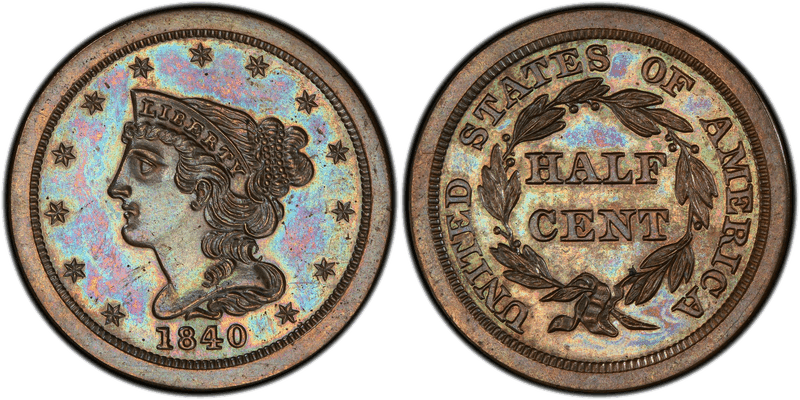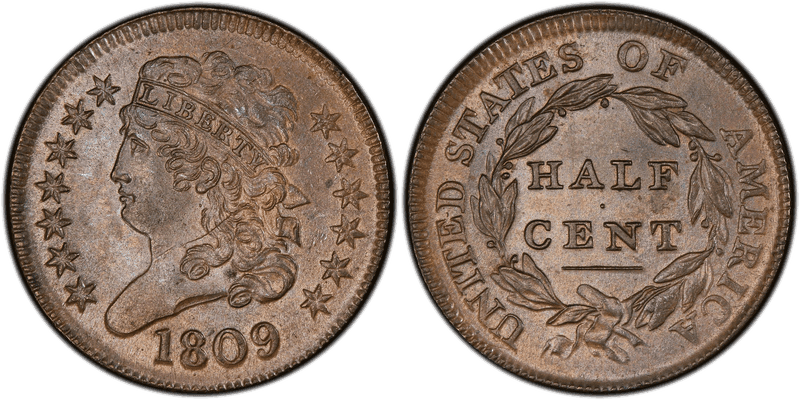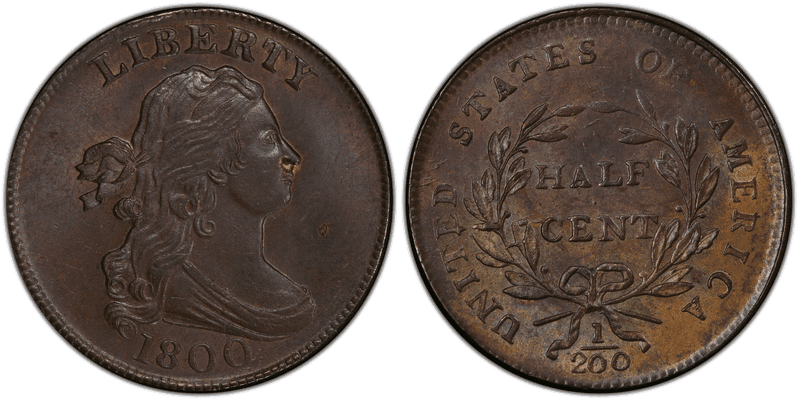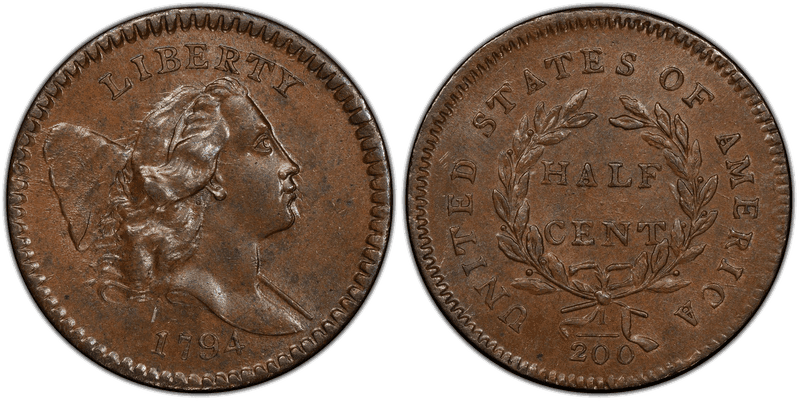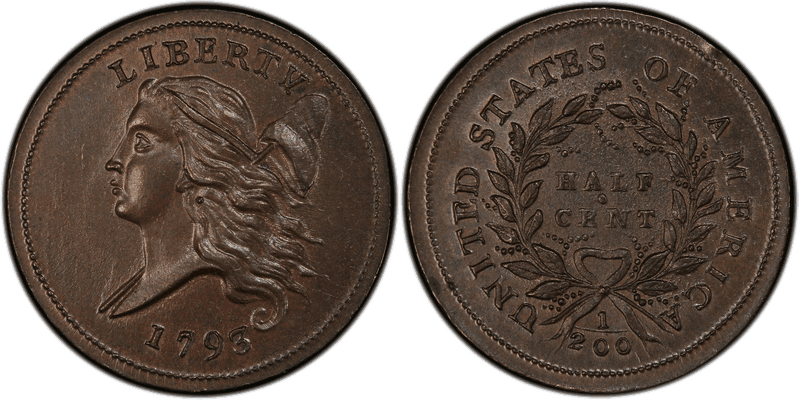
The half cent was the smallest coin the Coinage Act of 1792 authorized: one two-hundredth of a dollar. The 1792 law called for a copper half cent of 132 grains, but an act of January 14, 1793 lowered it to 104 grains, about 6.74 grams, before any were made. Half cents were not legal tender, which in those years was reserved for gold and silver.
The Philadelphia Mint began striking them in July 1793. According to CoinWeek, the first 7,000 were delivered on July 20 and the last were struck on September 17. The published mintage is 35,334. William Eckberg's research, as CoinWeek reports it, subtracts 3,400 cents that were counted in the final delivery, leaving 31,934 half cents.
Who designed the coin is not settled. NGC and CoinWeek say the dies are usually credited to the engraver Henry Voigt; Wikipedia adds Joseph Wright and Adam Eckfeldt as possibilities; and Walter Breen suggested that the Mint director, David Rittenhouse, may have supplied sketches. The portrait follows the Libertas Americana medal, which Augustin Dupré made in Paris at Benjamin Franklin's request.
The design lasted a single year. The engraver Joseph Wright died of yellow fever in September 1793, and the half cents of 1794 came from new dies by Robert Scot, with Liberty turned to face right.