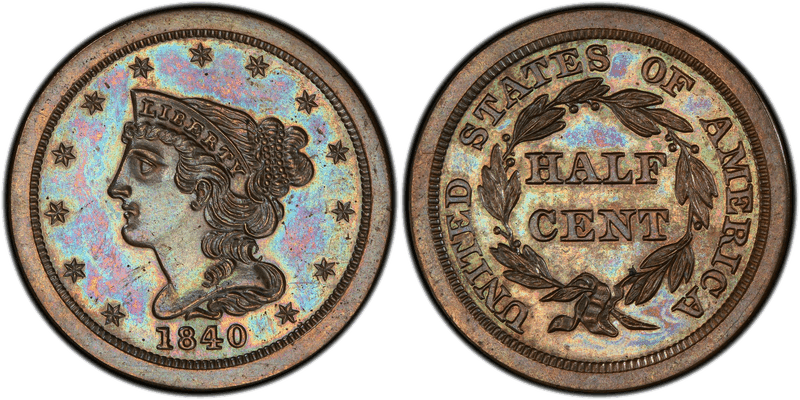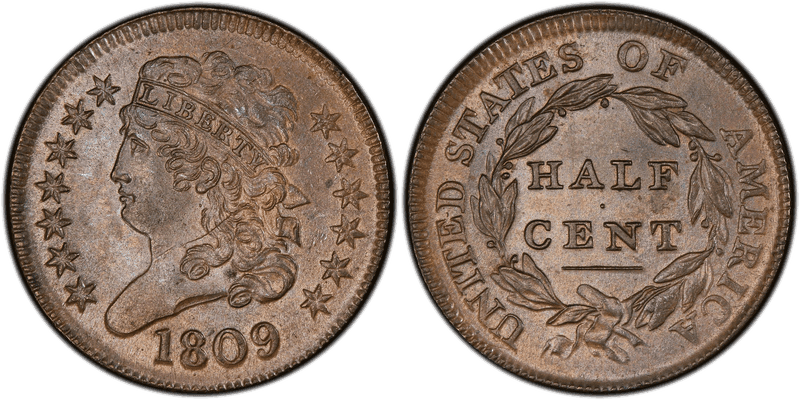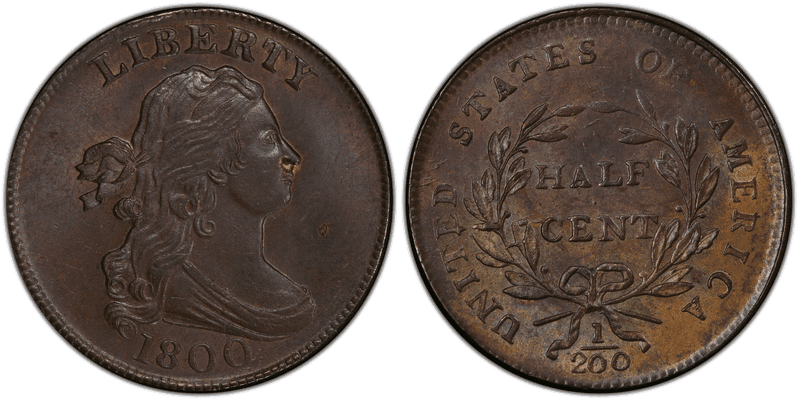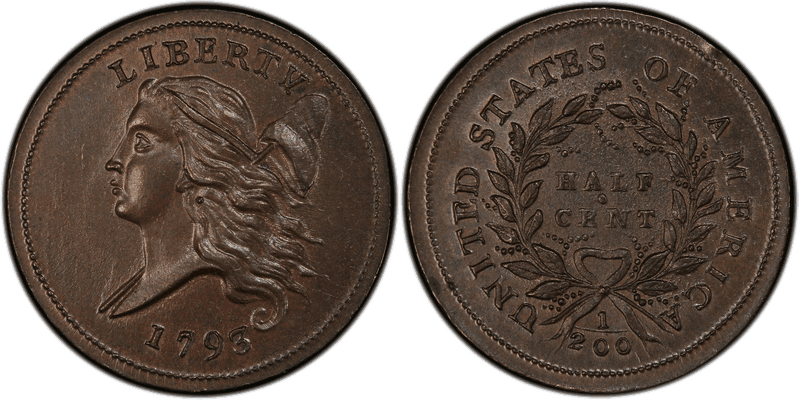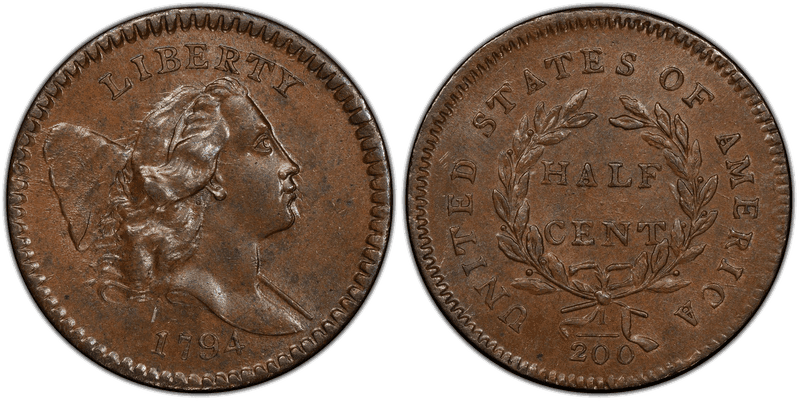
When half cent coinage resumed in 1794, Liberty was turned to face right. NGC says Robert Scot made the new hubs from Joseph Wright's design; CoinWeek describes the change as Scot adapting the 1793 design. The 1794 head is large and in high relief, and NGC divides the year's nine die pairings into a Normal Head group and a High Relief Head group.
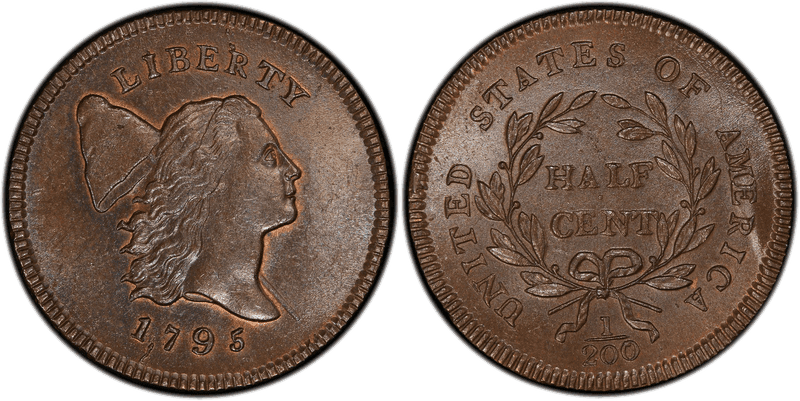
In 1795 the portrait was redone smaller and in lower relief, which made the dies last longer. CoinWeek credits the change to the assistant engraver John Smith Gardner; NGC calls Gardner's part likely but not provable.
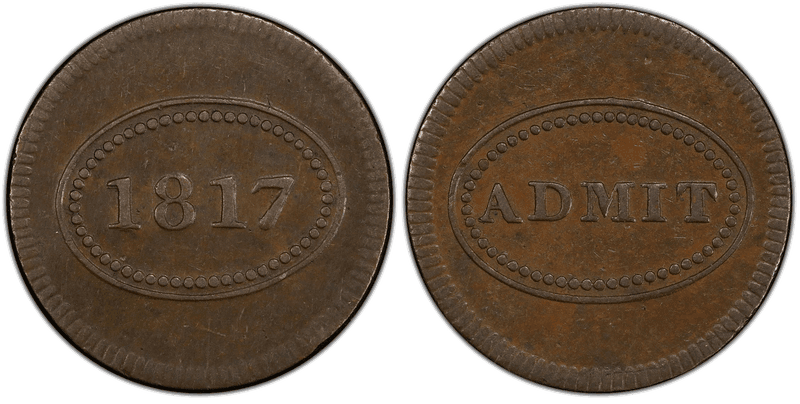
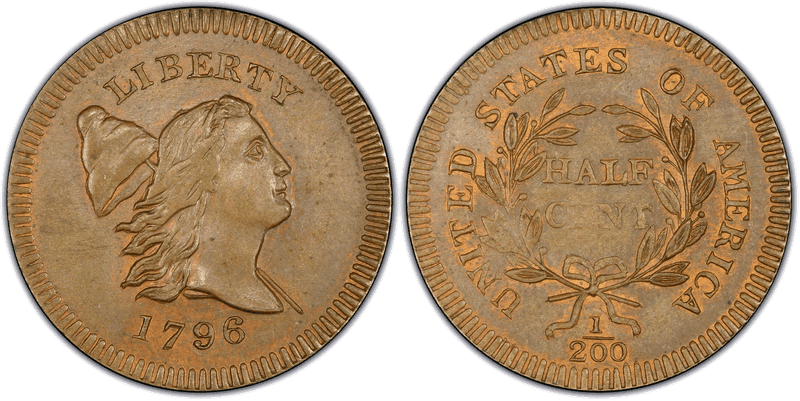
The price of copper also forced a change of weight. An act of March 3, 1795 let the President reduce the copper coins, and Washington's proclamation cut the half cent from 104 to 84 grains with effect from December 27, 1795. The thinner blanks could not take the edge lettering TWO HUNDRED FOR A DOLLAR, so later coins have a plain edge. Copper was hard to come by, and NGC records half cents struck on blanks cut down from spoiled cent planchets or from tokens bought from the New York firm of Talbot, Allum & Lee; traces of the earlier design sometimes show.
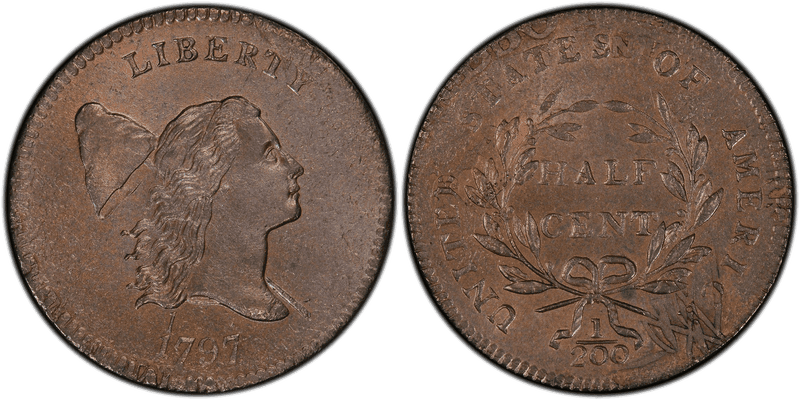
Only 1,390 half cents were delivered for 1796. No dies were dated 1798 or 1799, and according to NGC the 1797 dies were still in use as late as 1800, when the Draped Bust design took over.