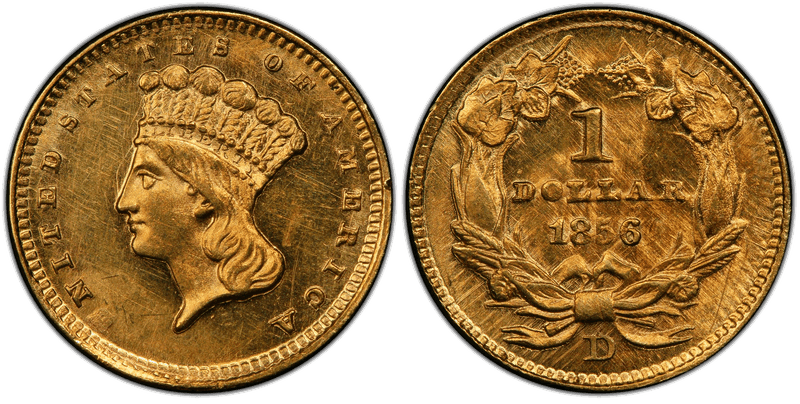
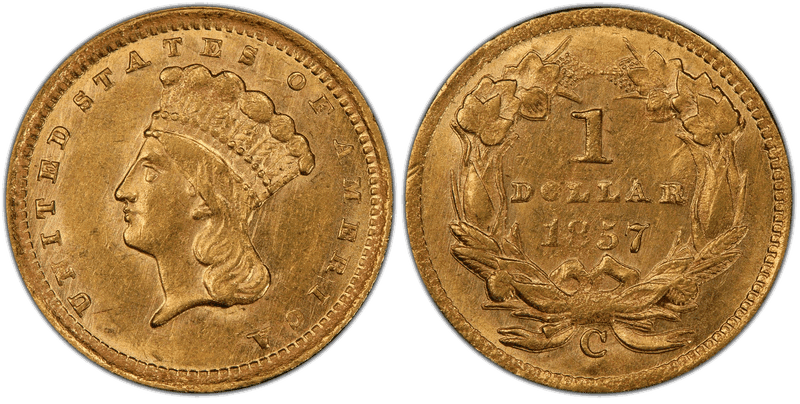
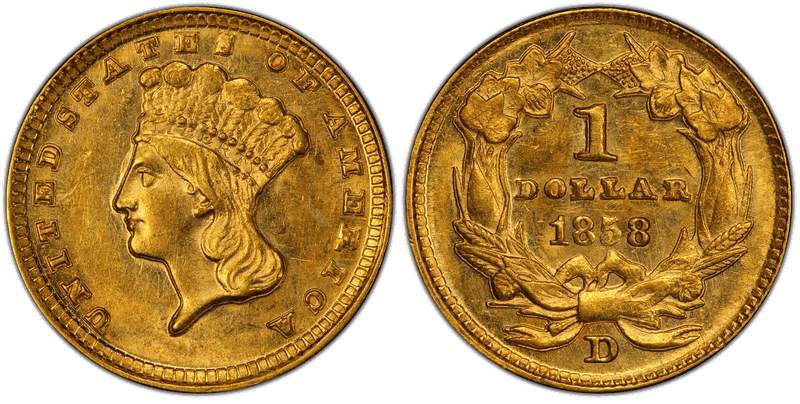
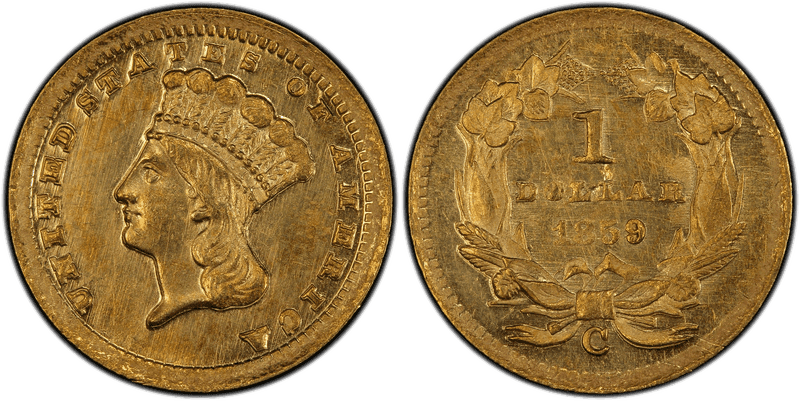
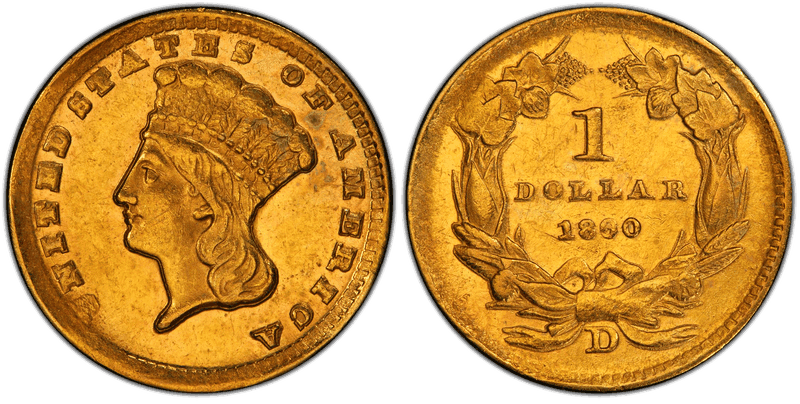
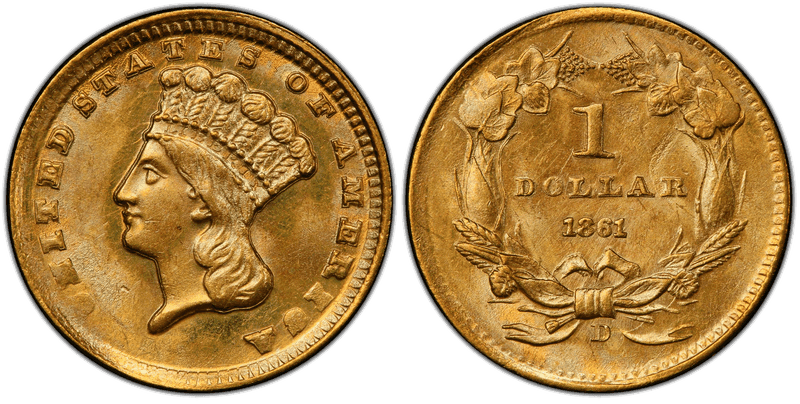
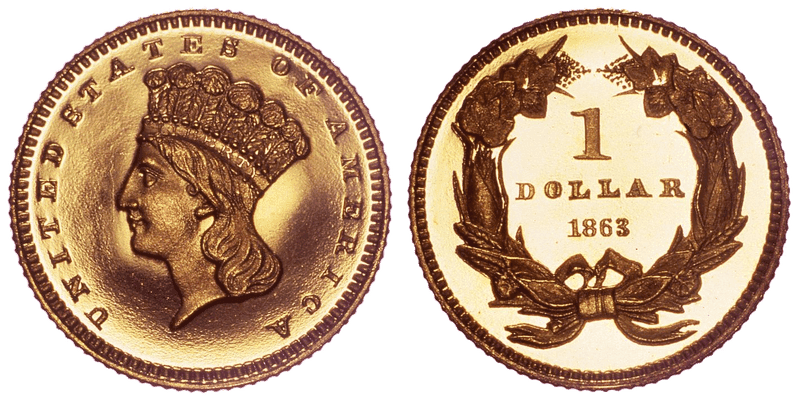
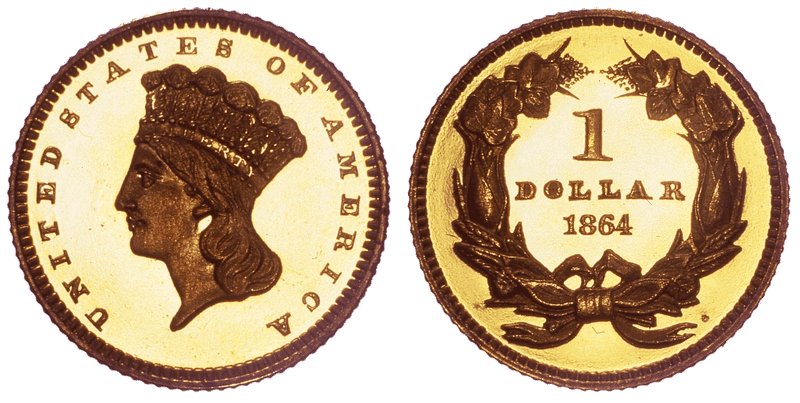
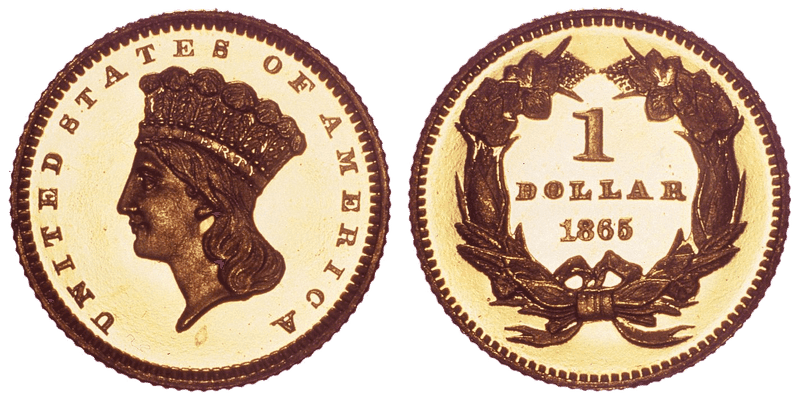
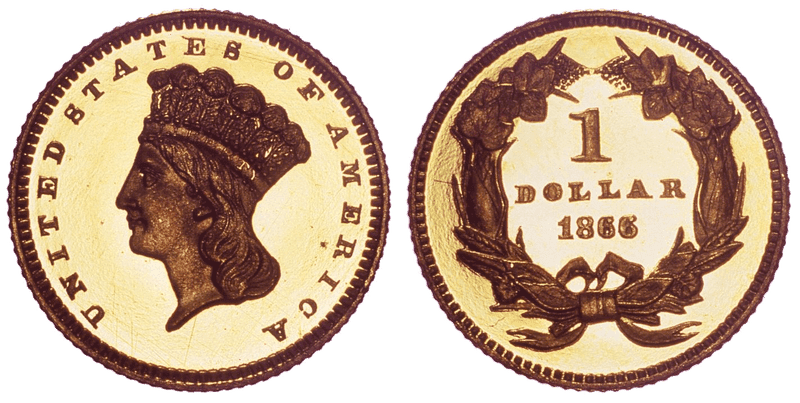
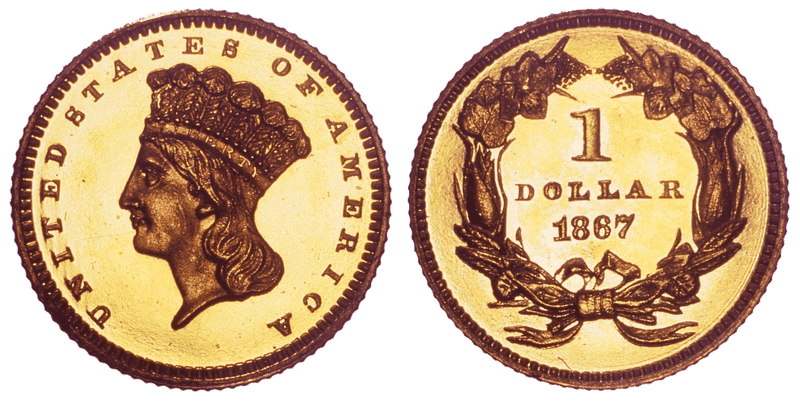
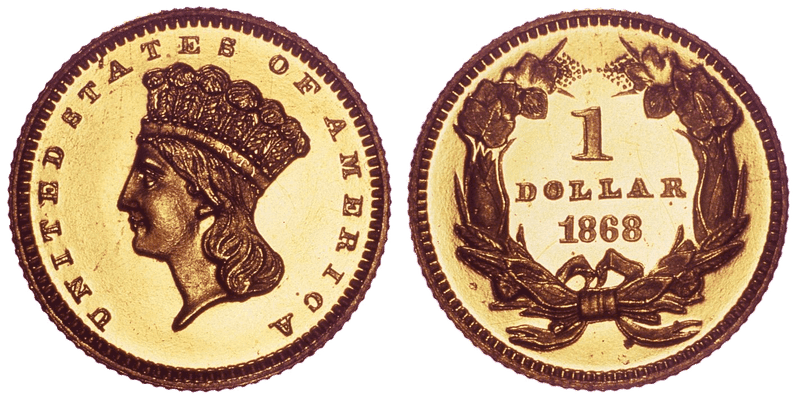
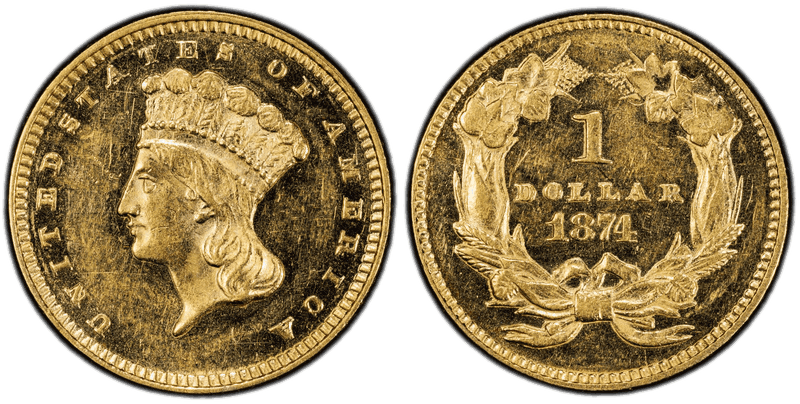
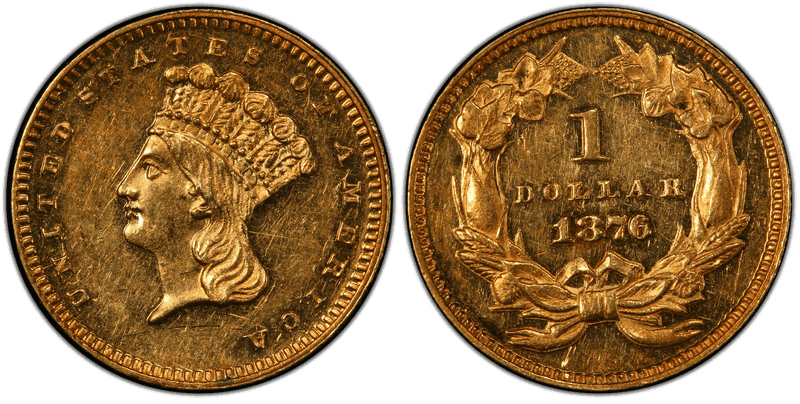
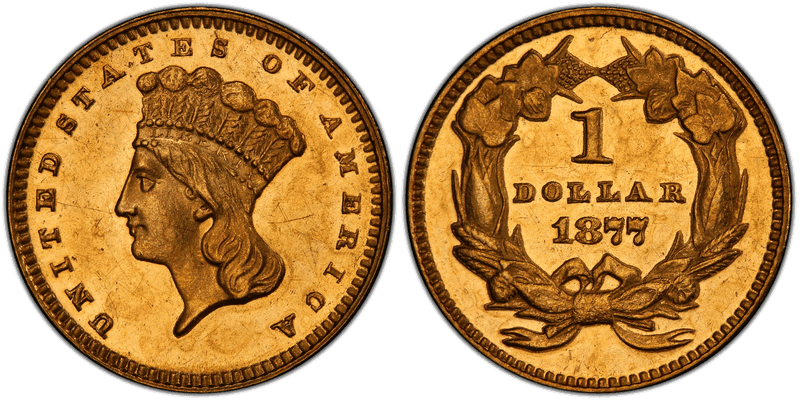
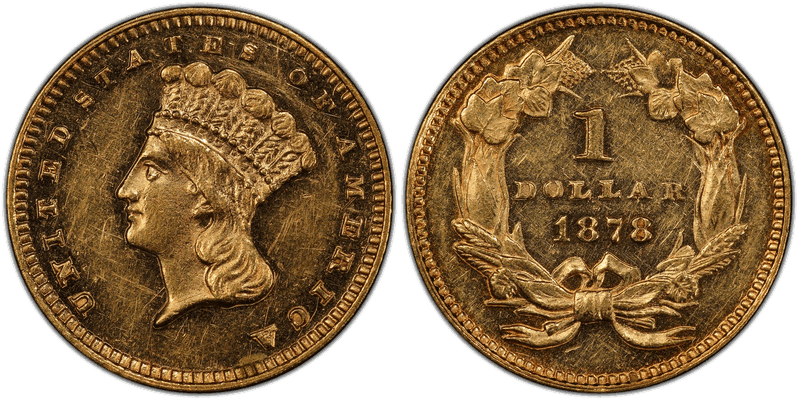
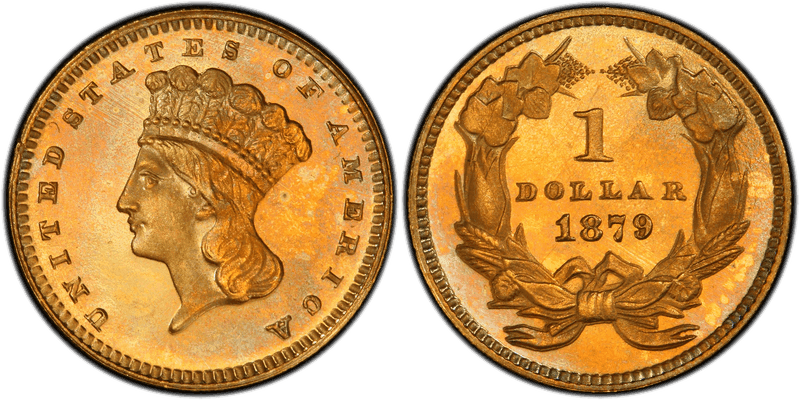
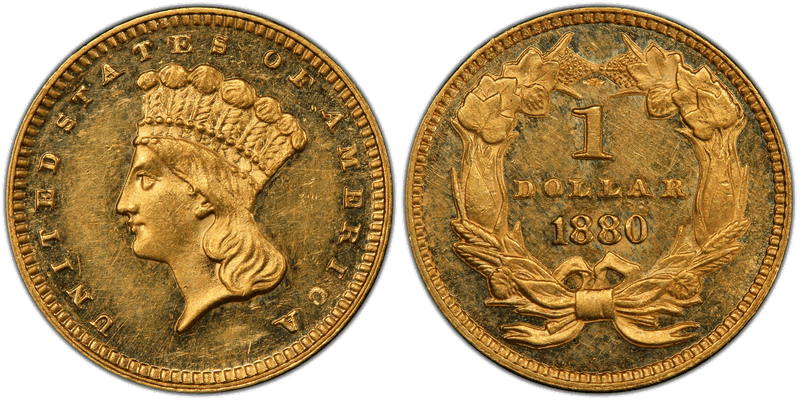
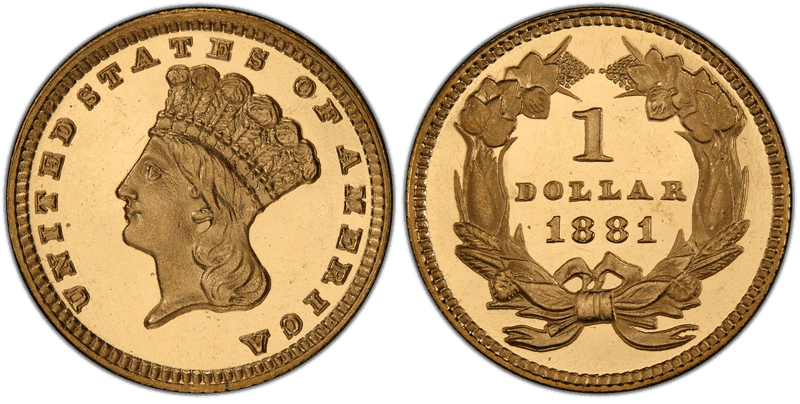
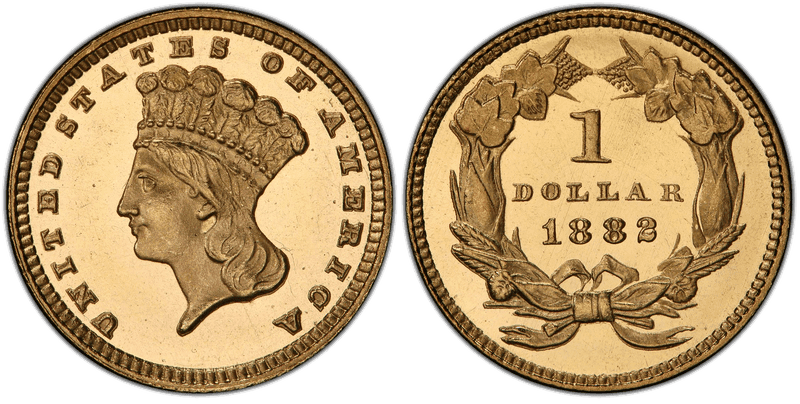
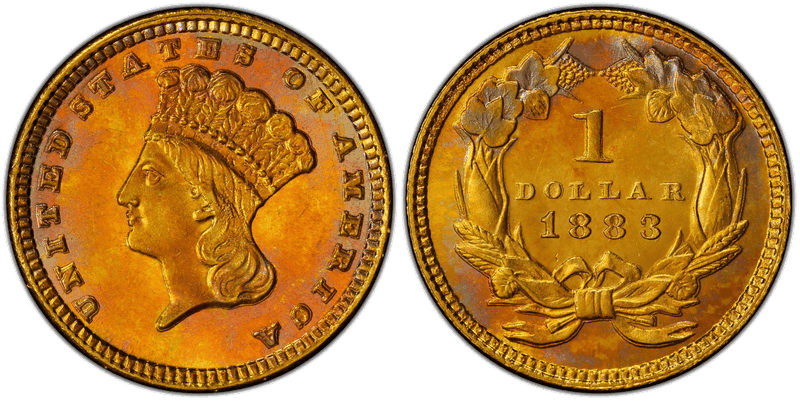
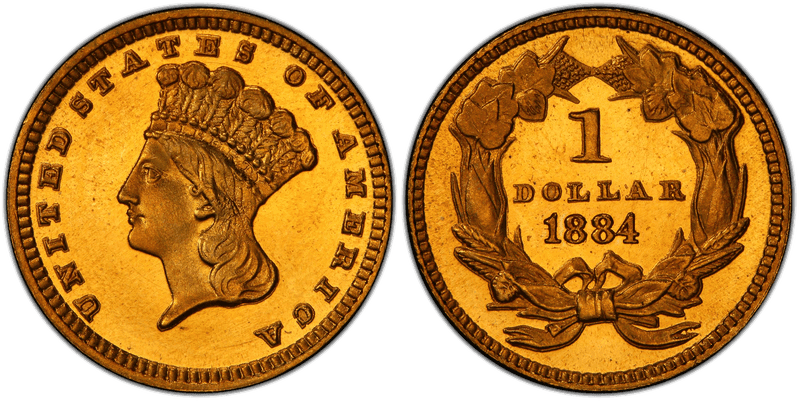
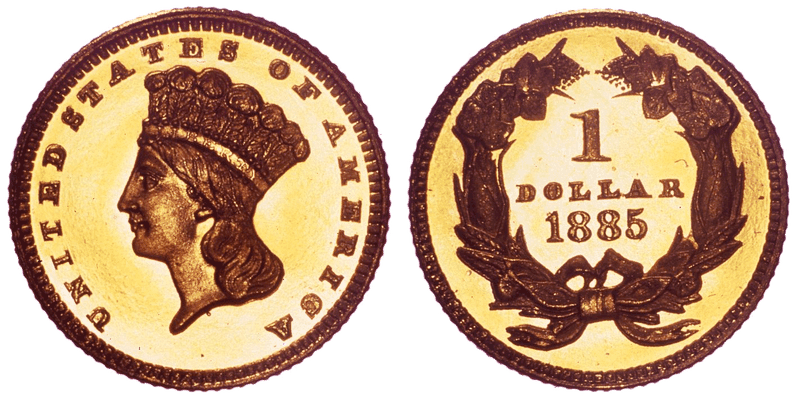
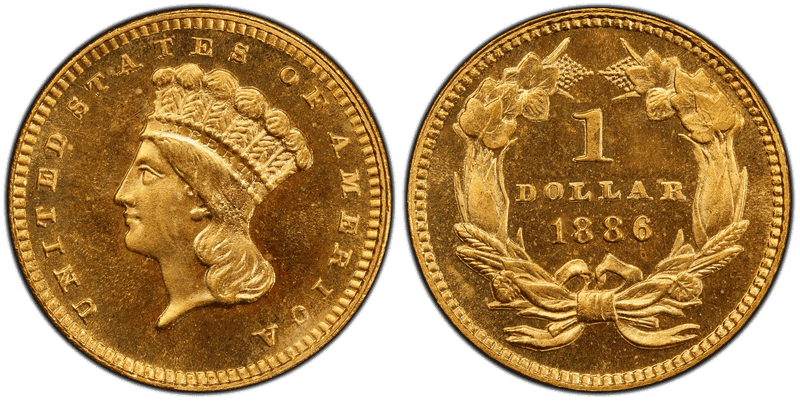
Large Indian Princess Head Gold Dollars 1856-1889

Coin Series
Large Indian Princess Head Gold Dollars 1856-1889 series coin

About This Series

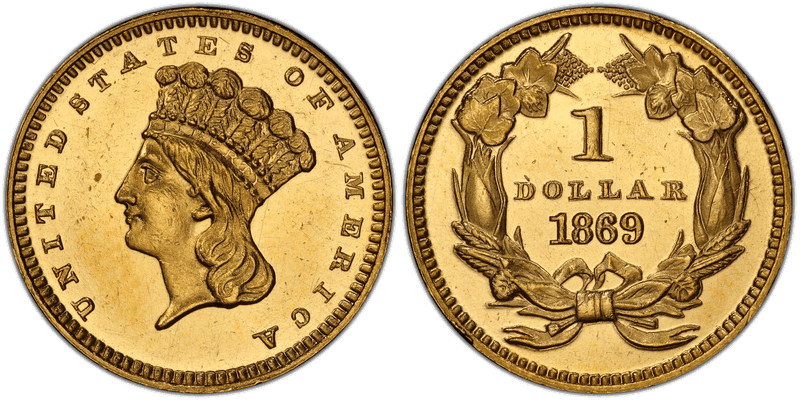
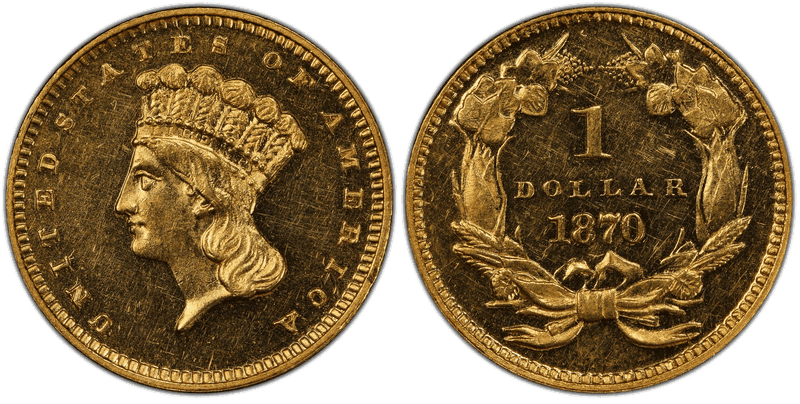
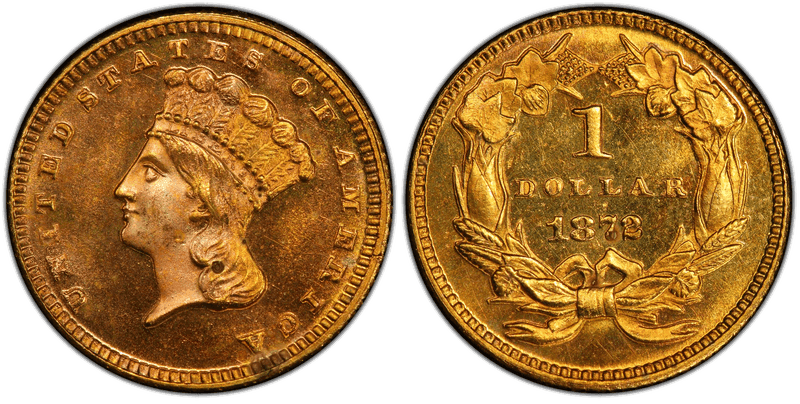
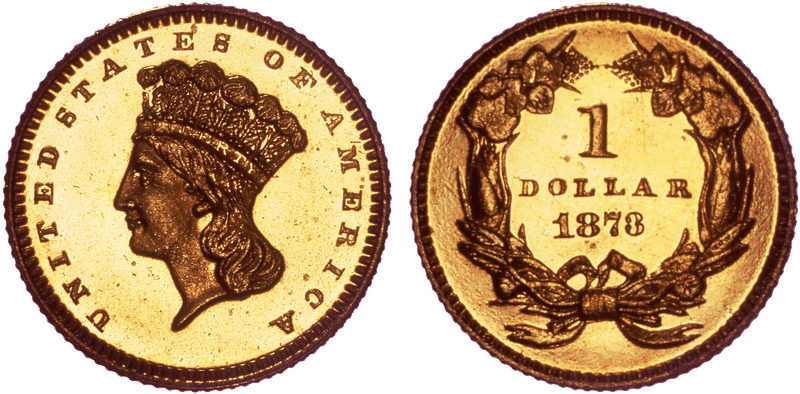
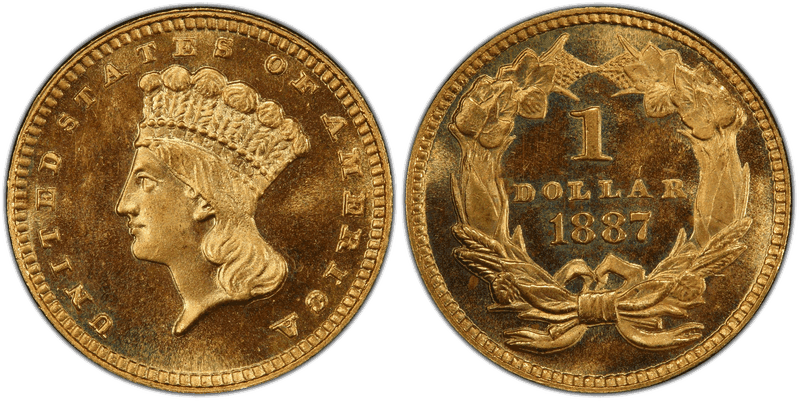
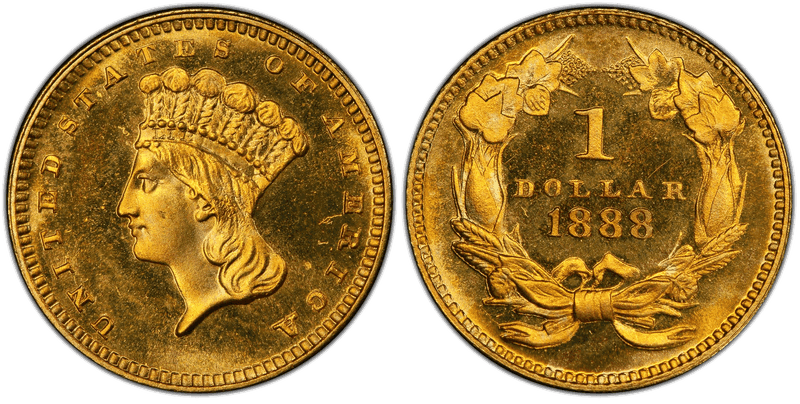
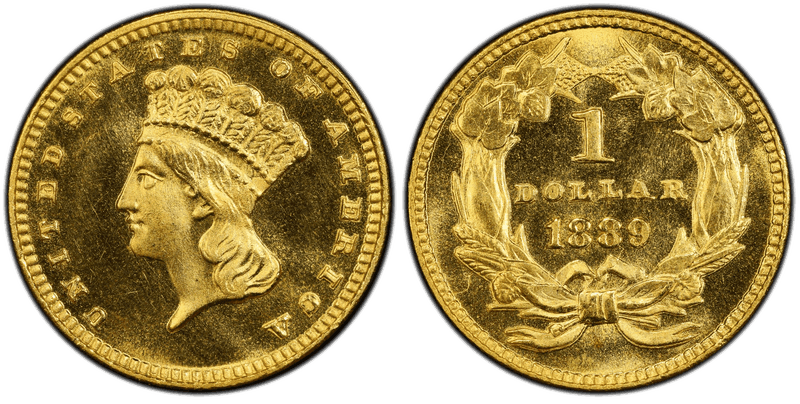
Representing the third and final gold dollar type, the Large Indian Princess Head addressed problems plaguing its predecessor — the Small Indian Princess of 1854-1856 — by enlarging the portrait and lowering its relief on the same 15 mm planchet for improved strikability. Longacre's refined design retains the Indian Princess in feathered headdress on the obverse, with an agricultural wreath encircling the denomination on the reverse. Produced for thirty-four years across four mints, the series spans the Civil War, Reconstruction, and the Gilded Age. The 1861-D was struck at the Dahlonega Mint after Confederate forces seized the facility in April 1861. Mintages declined as the gold dollar became commercially obsolete — too small for practical use and too valuable as bullion to circulate. Proof mintages passed 1,000 in 1884 and stayed above that level through 1889. The series concluded in 1889 after four decades of declining relevance.

From NumisDex News

Series Information

Production Years
1856-1889

Browse by Base(34 bases)

1856 Liberty Gold Dollar
BaseVerified

1856 Liberty Gold Dollar

4 Strike Types
1857 Liberty Gold Dollar
BaseVerified

1857 Liberty Gold Dollar

5 Strike Types
1858 Liberty Gold Dollar
BaseVerified

1858 Liberty Gold Dollar

4 Strike Types
1859 Liberty Gold Dollar
BaseVerified

1859 Liberty Gold Dollar

5 Strike Types
1860 Liberty Gold Dollar
BaseVerified

1860 Liberty Gold Dollar

4 Strike Types
1861 Liberty Gold Dollar
BaseVerified

1861 Liberty Gold Dollar

3 Strike Types
1862 Liberty Gold Dollar
BaseVerified

1862 Liberty Gold Dollar

2 Strike Types
1863 Liberty Gold Dollar
BaseVerified

1863 Liberty Gold Dollar

2 Strike Types
1864 Liberty Gold Dollar
BaseVerified

1864 Liberty Gold Dollar

2 Strike Types
1865 Liberty Gold Dollar
BaseVerified

1865 Liberty Gold Dollar

2 Strike Types
1866 Liberty Gold Dollar
BaseVerified

1866 Liberty Gold Dollar

2 Strike Types
1867 Liberty Gold Dollar
BaseVerified

1867 Liberty Gold Dollar

2 Strike Types
1868 Liberty Gold Dollar
BaseVerified

1868 Liberty Gold Dollar

2 Strike Types
1869 Liberty Gold Dollar
BaseVerified

1869 Liberty Gold Dollar

2 Strike Types
1870 Liberty Gold Dollar
BaseVerified

1870 Liberty Gold Dollar

3 Strike Types
1871 Liberty Gold Dollar
BaseVerified

1871 Liberty Gold Dollar

2 Strike Types
1872 Liberty Gold Dollar
BaseVerified

1872 Liberty Gold Dollar

2 Strike Types
1873 Liberty Gold Dollar
BaseVerified

1873 Liberty Gold Dollar

3 Strike Types
1874 Liberty Gold Dollar
BaseVerified

1874 Liberty Gold Dollar

2 Strike Types
1875 Liberty Gold Dollar
BaseVerified

1875 Liberty Gold Dollar

2 Strike Types
1876 Liberty Gold Dollar
BaseVerified

1876 Liberty Gold Dollar

2 Strike Types
1877 Liberty Gold Dollar
BaseVerified

1877 Liberty Gold Dollar

2 Strike Types
1878 Liberty Gold Dollar
BaseVerified

1878 Liberty Gold Dollar

2 Strike Types
1879 Liberty Gold Dollar
BaseVerified

1879 Liberty Gold Dollar

2 Strike Types
1880 Liberty Gold Dollar
BaseVerified

1880 Liberty Gold Dollar

2 Strike Types
1881 Liberty Gold Dollar
BaseVerified

1881 Liberty Gold Dollar

2 Strike Types
1882 Liberty Gold Dollar
BaseVerified

1882 Liberty Gold Dollar

2 Strike Types
1883 Liberty Gold Dollar
BaseVerified

1883 Liberty Gold Dollar

2 Strike Types
1884 Liberty Gold Dollar
BaseVerified

1884 Liberty Gold Dollar

2 Strike Types
1885 Liberty Gold Dollar
BaseVerified

1885 Liberty Gold Dollar

2 Strike Types
1886 Liberty Gold Dollar
BaseVerified

1886 Liberty Gold Dollar

2 Strike Types
1887 Liberty Gold Dollar
BaseVerified

1887 Liberty Gold Dollar

2 Strike Types
1888 Liberty Gold Dollar
BaseVerified

1888 Liberty Gold Dollar

2 Strike Types
1889 Liberty Gold Dollar
BaseVerified

1889 Liberty Gold Dollar

2 Strike Types
Showing all 34 listings

History

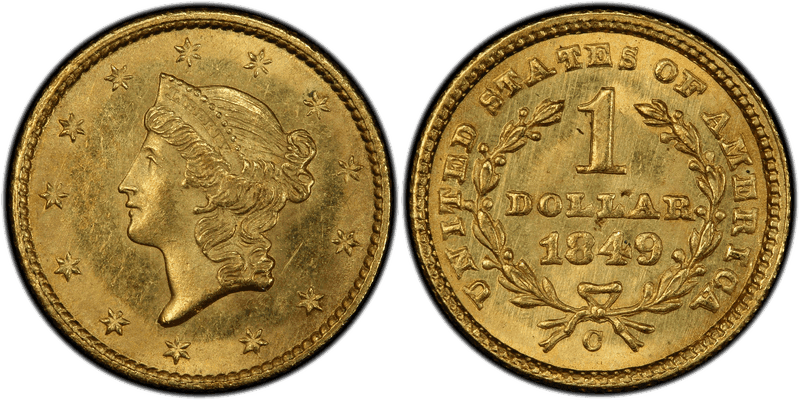
The Type 2 gold dollar of 1854 had been hard to strike, and in 1856 Chief Engraver James B. Longacre reworked it. He made Liberty's head larger and flatter, essentially a reduced copy of the head on the three-dollar gold piece, and moved the legend out toward the rim. The metal now flowed into the dies far more easily. The reverse was left exactly as it was. This version, the Type 3, was struck until the denomination ended.

In its early years the Type 3 was still a working coin, and four mints made it. Philadelphia struck it every year from 1856 to 1889. San Francisco struck it from 1857 to 1860 and once more in 1870. In the South, Charlotte struck it only in 1857 and 1859, and Dahlonega every year from 1856 to 1861. Output was falling by the end of the 1850s: about 51,000 gold dollars were made in 1860, only 1,566 of them at Dahlonega.

The Civil War ended the Southern branch mints. Dies for 1861 reached Dahlonega on January 7, and two weeks later Georgia left the Union. State authorities took charge of the mint, and Confederate troops occupied it on April 8. CoinWeek reports that the gold dollars dated 1861-D were all struck after that date, before the mint closed for good in June. No record of the mintage survives. Neither Dahlonega nor Charlotte ever reopened, and New Orleans, though it later resumed coining, never struck another gold dollar.

By mid-1862 hoarding had driven gold and silver coins out of circulation in most of the country. Philadelphia struck 1,361,355 gold dollars in 1862, the last year the figure topped a million, and only 6,200 in 1863. Mintages never recovered, apart from 1873 and 1874, when the Treasury melted old, worn gold dollars and recoined them ahead of the planned return to specie payments. When payments resumed at the end of 1878 the gold dollar still found no place in commerce.

What kept it alive was demand from outside commerce. Collectors and speculators put the low-mintage dates away, and jewelers bought large numbers to mount in pins and rings, often exporting them for the purpose. The Mint sold proofs at a small premium, and proof mintages passed 1,000 in 1884. Mint Director James Pollock had already written in 1873 that the coin was too small to be convenient, and his successors called for its abolition. The last gold dollars were struck in 1889, and the Act of September 26, 1890 ended the denomination along with the three-dollar piece and the three-cent nickel.
How to Identify It

Obverse. Liberty as an Indian princess in a feathered headdress inscribed LIBERTY, with UNITED STATES OF AMERICA close to the rim. The head is noticeably larger than on the Type 2.

Reverse. The agricultural wreath of cotton, corn, tobacco and wheat encloses 1 DOLLAR and the date, as on the Type 2.

Mint mark. On the reverse, below the wreath: C, D or S. Philadelphia coins have none. D is Dahlonega; no gold dollar was ever struck at Denver.

Things that cause confusion.

  • Type 3 or Type 2. On the Type 3 the head fills more of the field and the legend sits near the rim. The only Type 2 coin dated 1856 is the 1856-S; the 1856 Philadelphia and 1856-D coins are Type 3.
  • 1856 Upright 5 and Slanted 5. Philadelphia's 1856 coins come with two styles of 5 in the date. NGC lists them separately, and no record divides the 1,762,936 total between them.
  • 1873 Closed 3 and Open 3. On the Closed 3 the two ends of the numeral almost touch; on the Open 3 they are well apart. NGC lists the 1873 proofs only as Closed 3.
  • Jewelry pieces. Wikipedia notes that jewelers took most of each late issue, so many surviving gold dollars of this period were once mounted in jewelry.

Key Dates and Varieties

  • 1861-D: struck under Confederate control after April 8, 1861. No mintage was recorded; CoinWeek gives 1,000 to 1,500, NGC 1,250, and Carl Lester suggests as few as 500. CoinWeek estimates 50 to 60 survive.
  • 1875: 400 business strikes and 20 proofs. Doug Winter puts the business strikes known today at up to 100.
  • 1863: 6,200 struck in the second year of the war, down from 1,361,355 in 1862.
  • Dahlonega: 1856-D (1,460 struck) and 1860-D (1,566, with roughly a hundred known by Wikipedia's count).
  • Charlotte: the 1857-C (13,280) and 1859-C (5,235), its only two Type 3 issues.
  • 1870-S: 3,000 struck, the only branch-mint gold dollar after the Civil War.
  • 1873: the Closed 3 (1,800 struck) and the Open 3 (123,300), plus Closed 3 proofs (25).
  • 1856: the Slanted 5 and Upright 5, and the 1856 proof (10 recorded).
  • Late proofs: from 1884 (1,006) to 1889 (1,779), proof mintages stayed above 1,000.
  • Other varieties: Doug Winter also lists an 1862 doubled die obverse and an 1874 with LIBERTY polished off the headband.

In Our Catalog

No errors or varieties are listed for Large Indian Princess Head Gold Dollars 1856-1889 yet. Submit one

Mintages

Large Indian Princess Head Gold Dollars 1856-1889 mintages by year and mint, taken from each coin's page in our catalog. Each figure opens that coin's page, which lists its varieties and errors. A dash means no figure was recorded. Where one issue was struck in more than one type, each type is listed.

Composition and Gold Content

  • Composition: 90% gold, 10% copper
  • Weight: 1.672 grams
  • Gold content: 0.0484 troy ounce
  • Diameter: 14.3 mm (Wikipedia; NGC and CoinWeek give 15 mm)
  • Edge: reeded
  • Designer: James B. Longacre

From 1849 to 1889 the Mint struck 19,499,337 gold dollars of all three types, by Wikipedia's total.

FAQ

What is the 1861-D gold dollar?

It is the last coin struck at the Dahlonega Mint in Georgia. Dies reached Dahlonega in January 1861, Georgia seceded two weeks later, and Confederate forces took over the mint on April 8. CoinWeek reports that no gold dollars were struck there before April, so the 1861-D dollars were made under Confederate control before the mint closed in June. No mintage was recorded; estimates run from 1,000 to 1,500 (NGC uses 1,250), and the researcher Carl Lester has suggested as few as 500.

How many 1875 gold dollars were made?

The Philadelphia Mint struck 400 business-strike gold dollars and 20 proofs dated 1875. Doug Winter estimates that as many as 100 of the business strikes are known today.

When did the United States stop making gold dollars?

The last gold dollars were struck in 1889. Congress abolished the denomination, together with the three-dollar gold piece and the three-cent nickel, by the Act of September 26, 1890.

Why were so many proof gold dollars made in the 1880s?

By then the gold dollar no longer circulated, and much of each year's output went to collectors, speculators and the jewelry trade, which mounted the little coins in pins, rings and other pieces. Proof mintages passed 1,000 in 1884 and stayed above that level to 1889; Wikipedia notes that agents for jewelers were probably among the buyers.

How do I tell an 1873 Closed 3 gold dollar from an Open 3?

Look at the 3 in the date. On the Closed 3 its two ends nearly touch; on the Open 3 there is a clear gap between them. Philadelphia struck 1,800 Closed 3 and 123,300 Open 3 business strikes by NGC's figures, and the 1873 proofs are Closed 3.

How much gold is in a Type 3 gold dollar?

Each coin weighs 1.672 grams and is 90% gold and 10% copper, about 0.0484 troy ounce of pure gold, the same as every gold dollar since 1849.

↑ Back to the coins: every year, mint, variety and error

Explore Other Denominations

Collector Essentials

Tools and references for building and protecting your coin collection.

As an Amazon Associate, NumisDex earns from qualifying purchases.