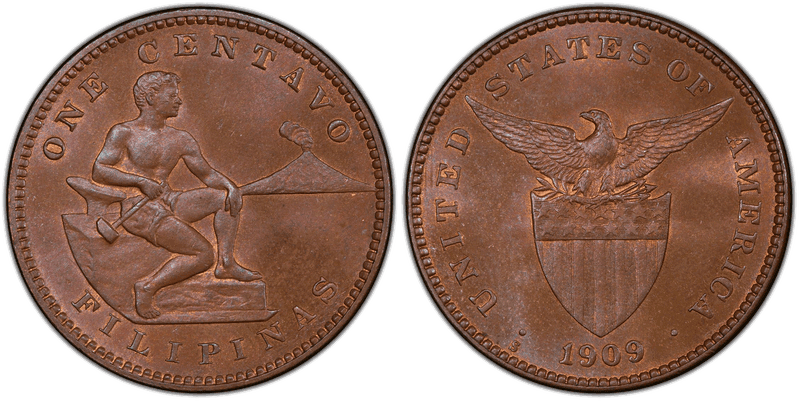
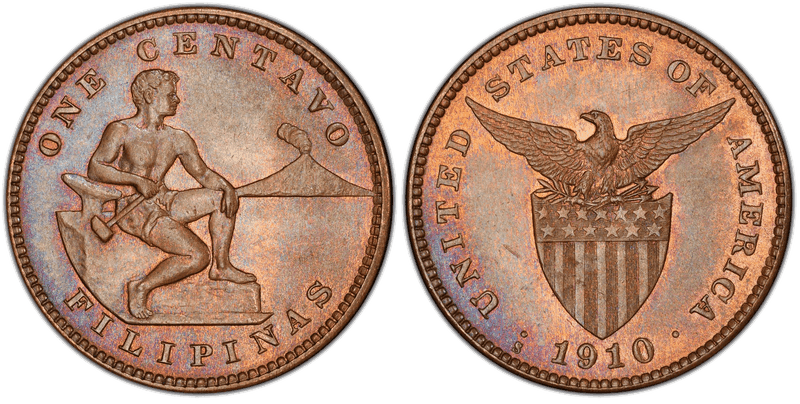
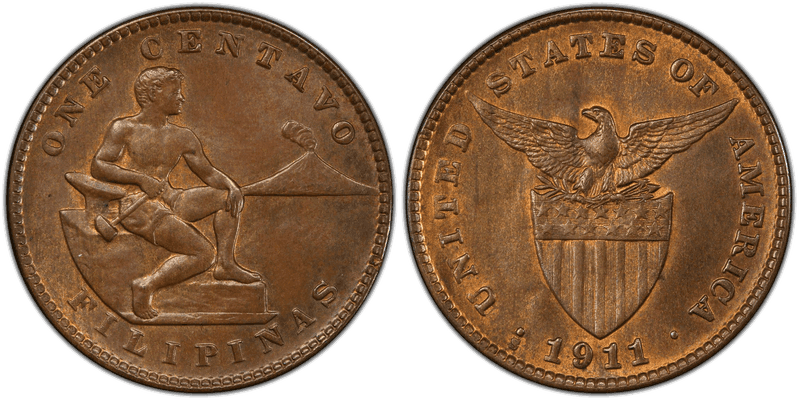
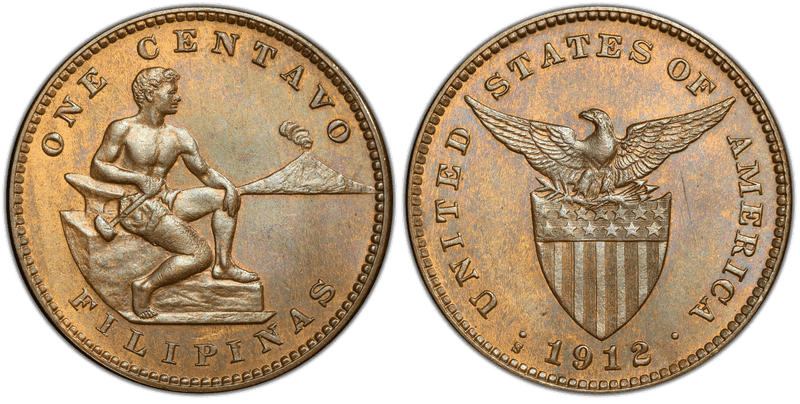
Philippines Centavos 1903-1945

Coin Series
Philippines Centavos 1903-1945 series coin

About This Series

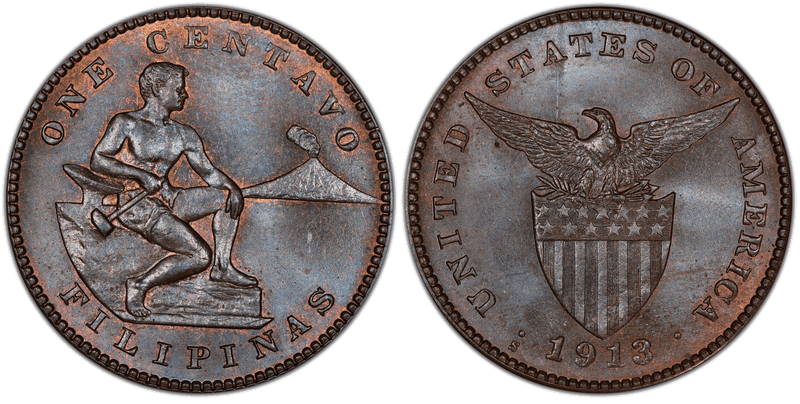
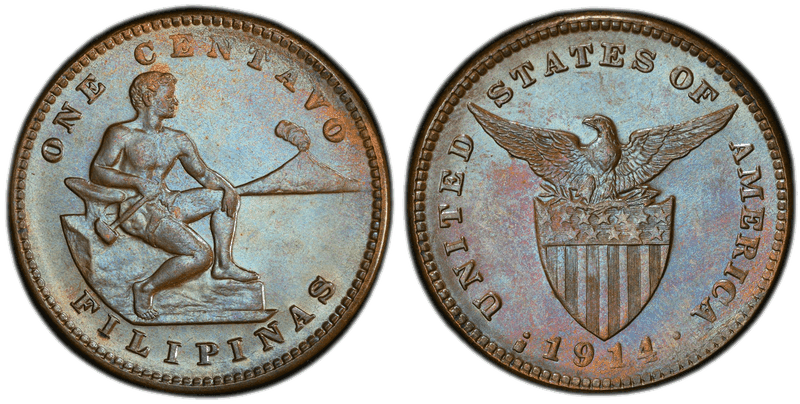
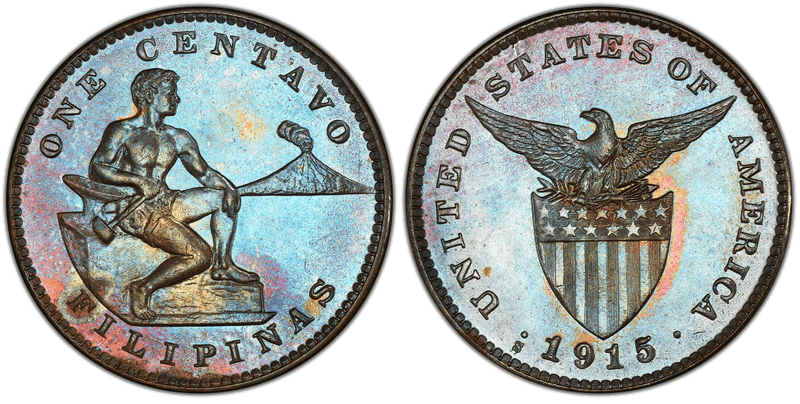
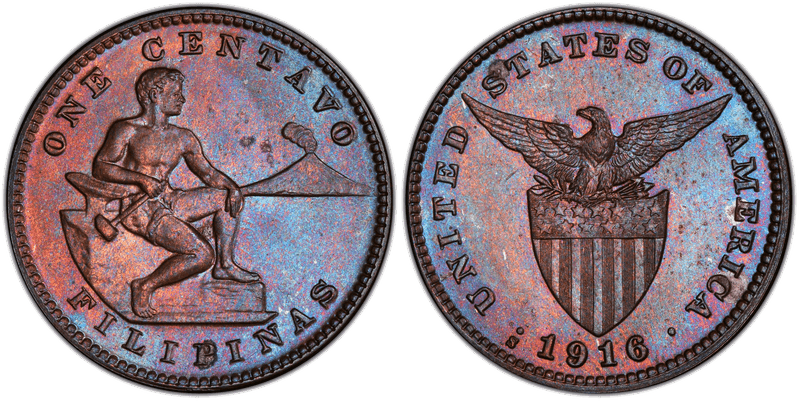
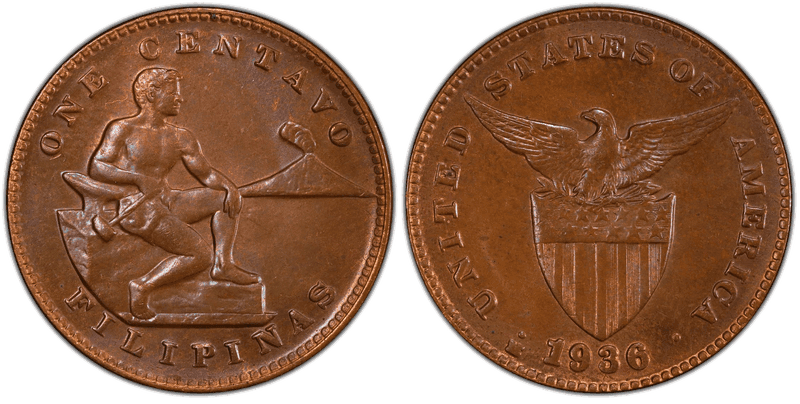
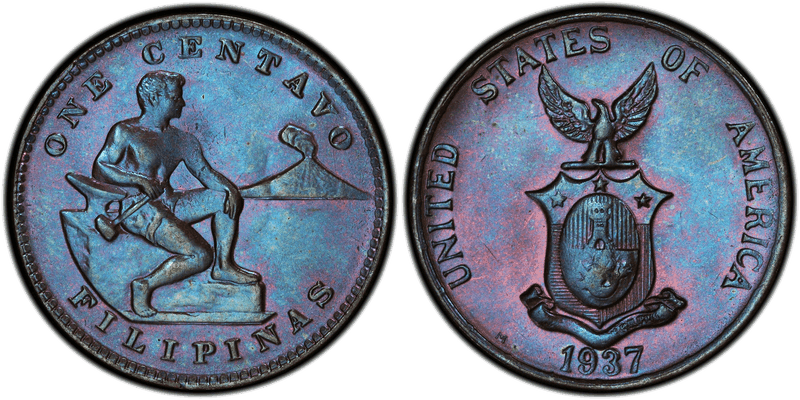
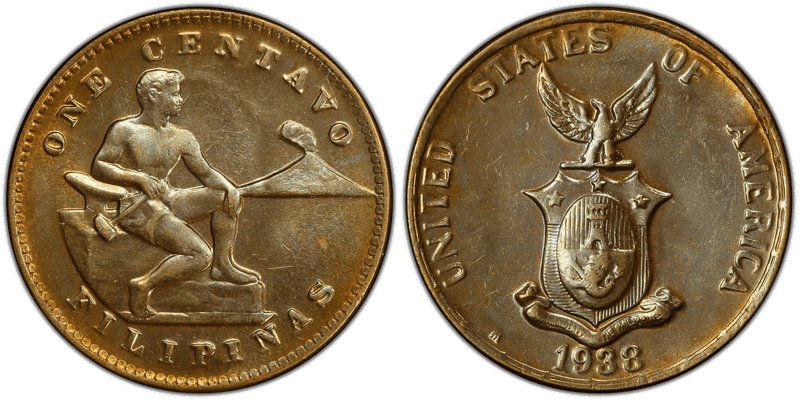
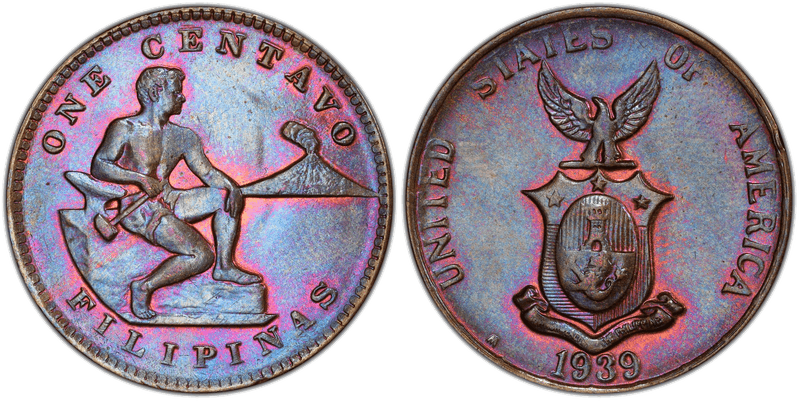
The one centavo of the Philippines under United States administration was struck in bronze from 1903 to 1944. The first design, used through 1936, pairs Melecio Figueroa's seated man with anvil, hammer and Mount Mayon with the eagle and United States shield; from 1937 the reverse carries the arms of the Commonwealth of the Philippines. Philadelphia struck the coins of 1903-1905 and the proofs, San Francisco those of 1908-1920 and 1944 with an S, and the Manila Mint those of 1920-1922 without a mint mark and of 1925-1941 with an M.

Browse by Base(36 bases)

1903 Philippine Centavo
BaseVerified

1903 Philippine Centavo

2 Strike Types
1904 Philippine Centavo
BaseVerified

1904 Philippine Centavo

2 Strike Types
1905 Philippine Centavo
BaseVerified

1905 Philippine Centavo

2 Strike Types
1906 Philippine Centavo
BaseVerified

1906 Philippine Centavo

1 Strike Type
1908 Philippine Centavo
BaseVerified

1908 Philippine Centavo

2 Strike Types
1909 Philippine Centavo
BaseVerified

1909 Philippine Centavo

1 Strike Type
1910 Philippine Centavo
BaseVerified

1910 Philippine Centavo

1 Strike Type
1911 Philippine Centavo
BaseVerified

1911 Philippine Centavo

1 Strike Type
1912 Philippine Centavo
BaseVerified

1912 Philippine Centavo

1 Strike Type
1913 Philippine Centavo
BaseVerified

1913 Philippine Centavo

1 Strike Type
1914 Philippine Centavo
BaseVerified

1914 Philippine Centavo

1 Strike Type
1915 Philippine Centavo
BaseVerified

1915 Philippine Centavo

1 Strike Type
1916 Philippine Centavo
BaseVerified

1916 Philippine Centavo

1 Strike Type
1917 Philippine Centavo
BaseVerified

1917 Philippine Centavo

3 Strike Types
1918 Philippine Centavo
BaseVerified

1918 Philippine Centavo

1 Strike Type
1919 Philippine Centavo
BaseVerified

1919 Philippine Centavo

1 Strike Type
1920 Philippine Centavo
BaseVerified

1920 Philippine Centavo

2 Strike Types
1921 Philippine Centavo
BaseVerified

1921 Philippine Centavo

1 Strike Type
1922 Philippine Centavo
BaseVerified

1922 Philippine Centavo

1 Strike Type
1925 Philippine Centavo
BaseVerified

1925 Philippine Centavo

1 Strike Type
1926 Philippine Centavo
BaseVerified

1926 Philippine Centavo

1 Strike Type
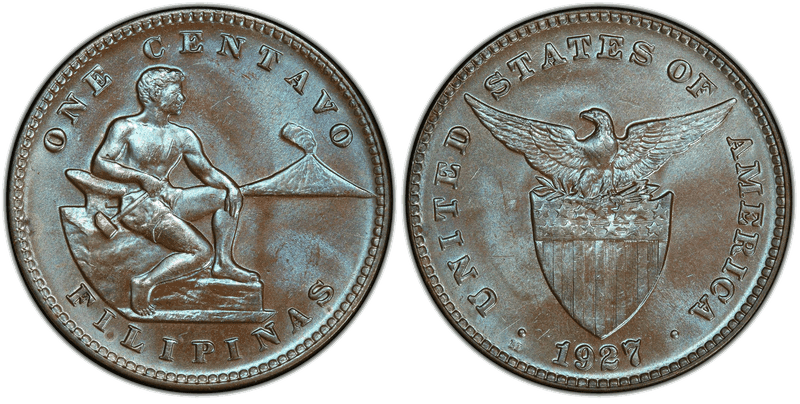
1927 Philippine Centavo
BaseVerified

1927 Philippine Centavo

1 Strike Type
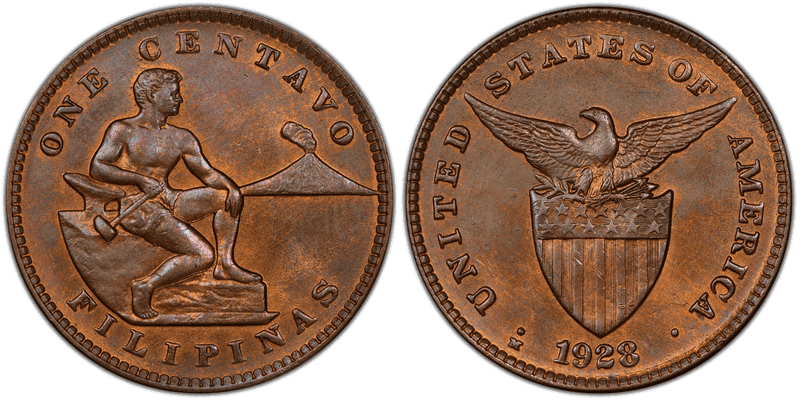
1928 Philippine Centavo
BaseVerified

1928 Philippine Centavo

1 Strike Type
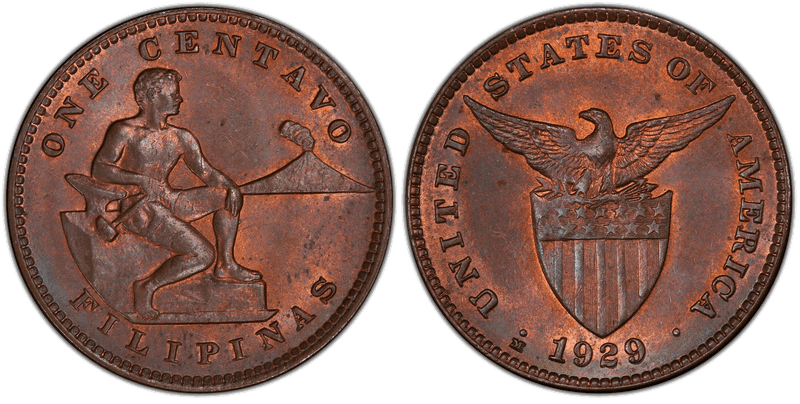
1929 Philippine Centavo
BaseVerified

1929 Philippine Centavo

1 Strike Type
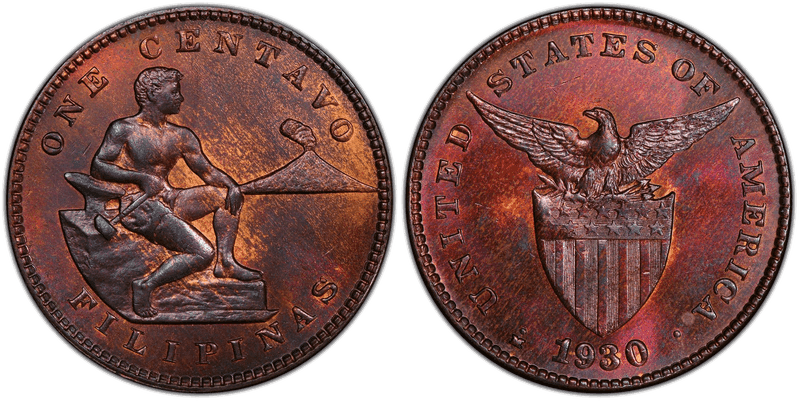
1930 Philippine Centavo
BaseVerified

1930 Philippine Centavo

1 Strike Type
1931 Philippine Centavo
BaseVerified

1931 Philippine Centavo

1 Strike Type
1932 Philippine Centavo
BaseVerified

1932 Philippine Centavo

1 Strike Type
1933 Philippine Centavo
BaseVerified

1933 Philippine Centavo

1 Strike Type
1934 Philippine Centavo
BaseVerified

1934 Philippine Centavo

1 Strike Type
1936 Philippine Centavo
BaseVerified

1936 Philippine Centavo

1 Strike Type
1937 Philippine Centavo
BaseVerified

1937 Philippine Centavo

1 Strike Type
1938 Philippine Centavo
BaseVerified

1938 Philippine Centavo

1 Strike Type
1939 Philippine Centavo
BaseVerified

1939 Philippine Centavo

1 Strike Type
1940 Philippine Centavo
BaseVerified

1940 Philippine Centavo

1 Strike Type
1941 Philippine Centavo
BaseVerified

1941 Philippine Centavo

1 Strike Type
1944 Philippine Centavo
BaseVerified

1944 Philippine Centavo

1 Strike Type
Showing all 36 listings

History

Under a coinage law that Congress approved on March 2, 1903, the Philippine Islands received their own money under United States rule, valued at two pesos to the American dollar. The one centavo was its bronze coin for everyday change. Melecio Figueroa, a Filipino sculptor and engraver, won the design competition: a young man seated at an anvil, the volcano Mount Mayon trailing smoke in the background.

Philadelphia struck the first centavos, dated 1903 to 1905, along with the proofs for the Philippine sets of 1903-1906 and 1908. San Francisco was cleared to strike base-metal coins for the islands in 1908 and made every centavo from 1908-S to 1920-S, each with a small S. In 1920 the Manila Mint, the former Spanish colonial mint, reopened as a branch of the United States Mint, the first outside the continental United States. Its centavos of 1920, 1921 and 1922 carry no mint mark; from 1925 they have an M. No centavos are dated 1923, 1924 or 1935.

With the creation of the Commonwealth of the Philippines, the reverse took the Commonwealth arms from 1937, based on the seal designed by Ambrosio Morales. Manila struck the new type until 1941. After Japan took the islands, the San Francisco Mint struck 58,000,000 centavos dated 1944 while Manila was occupied, by the Director of the Mint's calendar-year record. The same series of reports lists a further 78,485,798 one-centavo pieces struck for the Philippines at San Francisco during 1945, although no centavo dated 1945 is catalogued; the reports do not say which date those coins carry.
How to Identify It

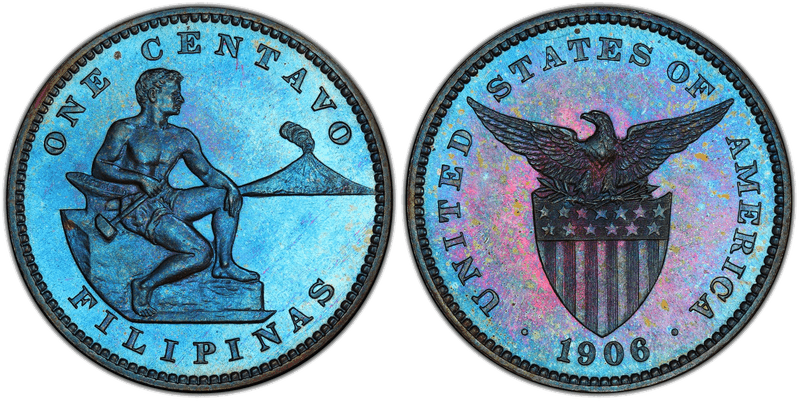
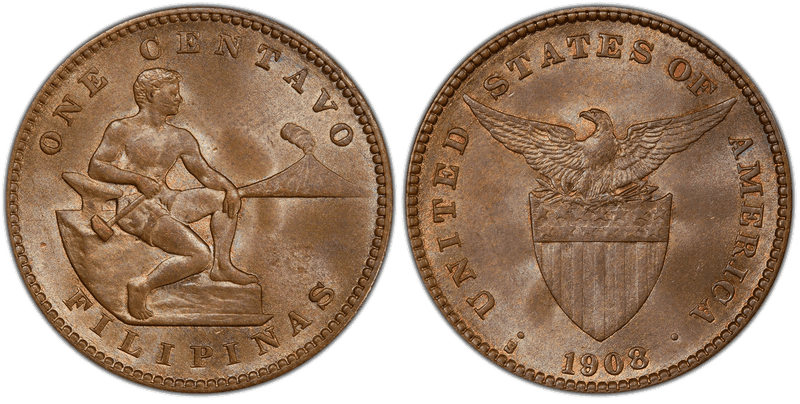
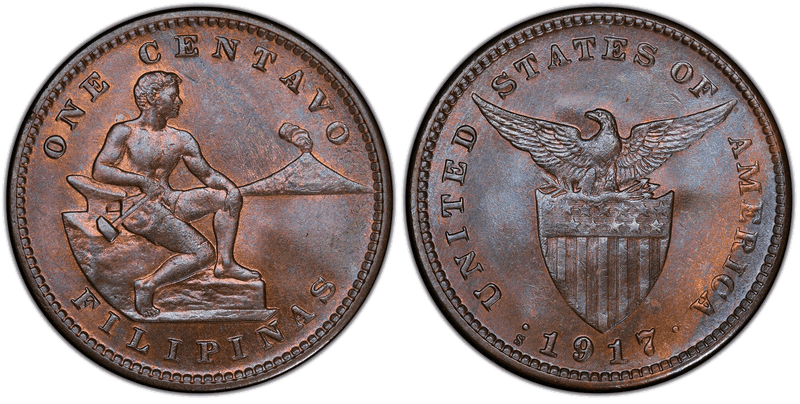
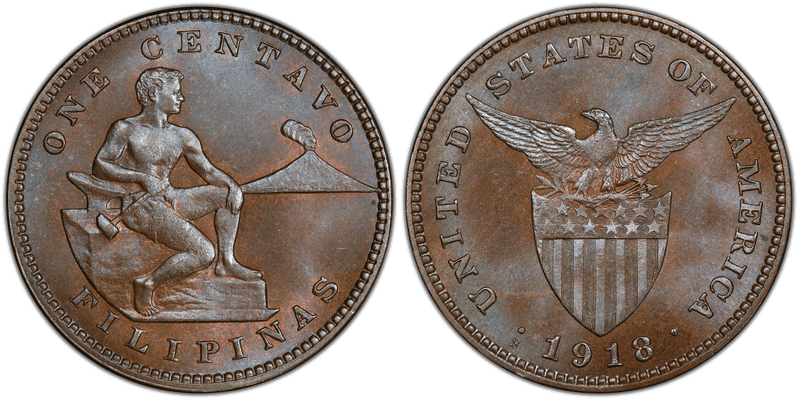
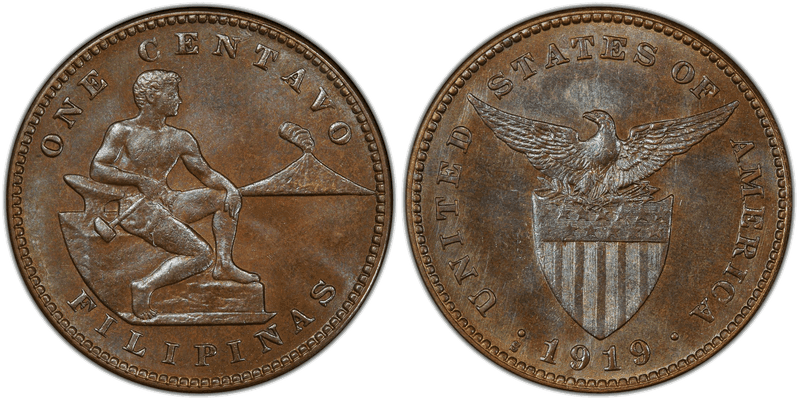
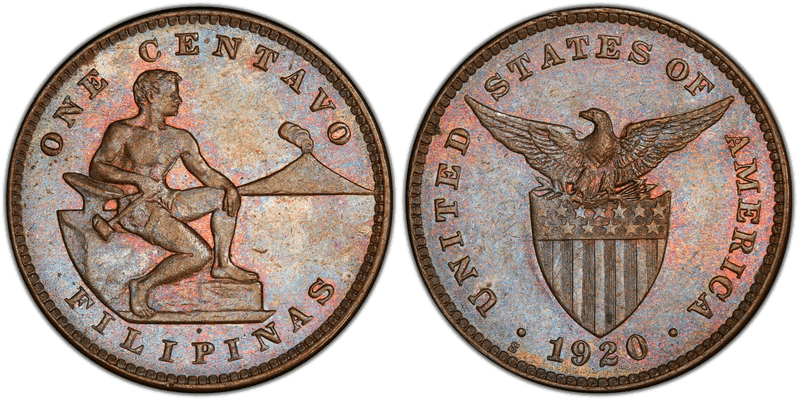
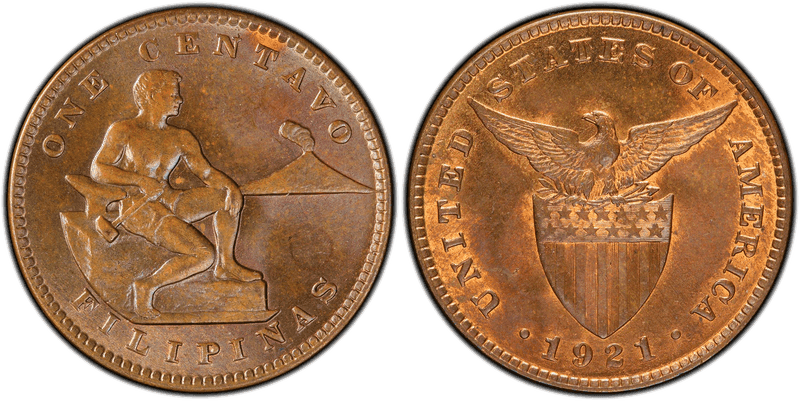
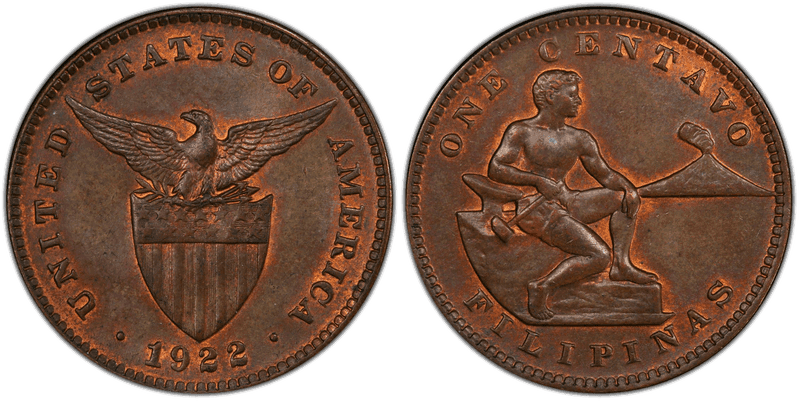
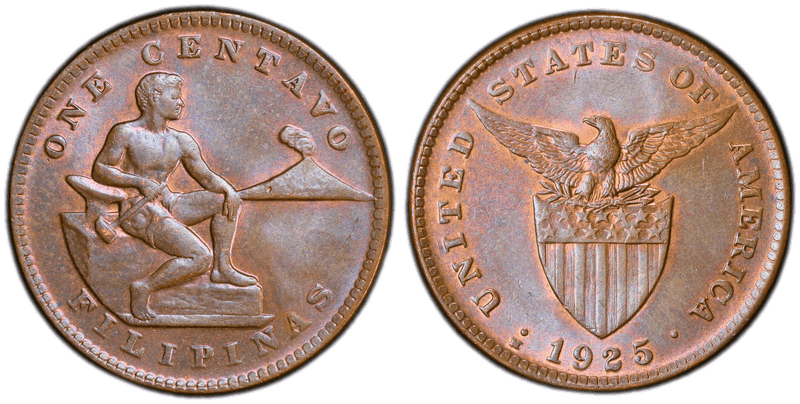
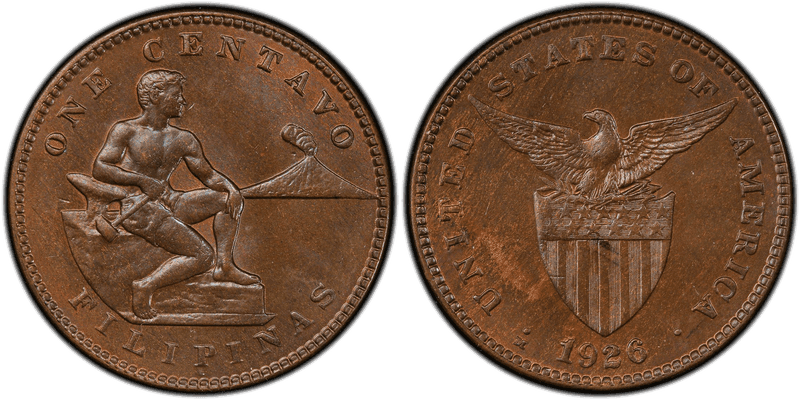
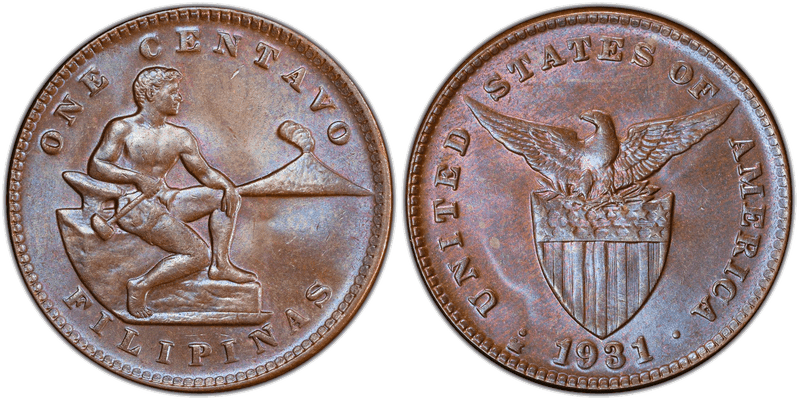
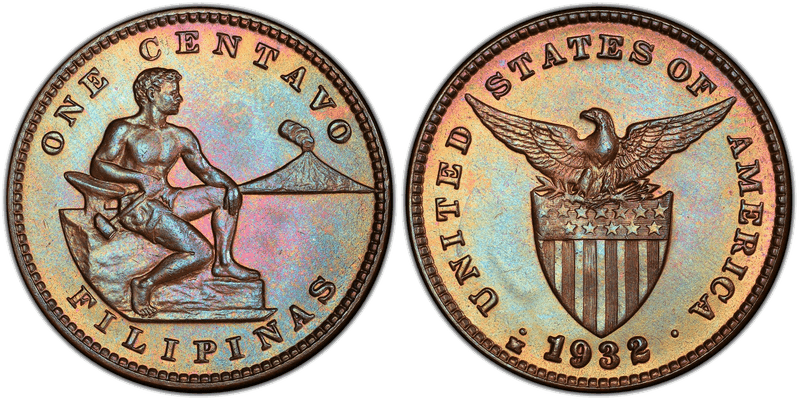
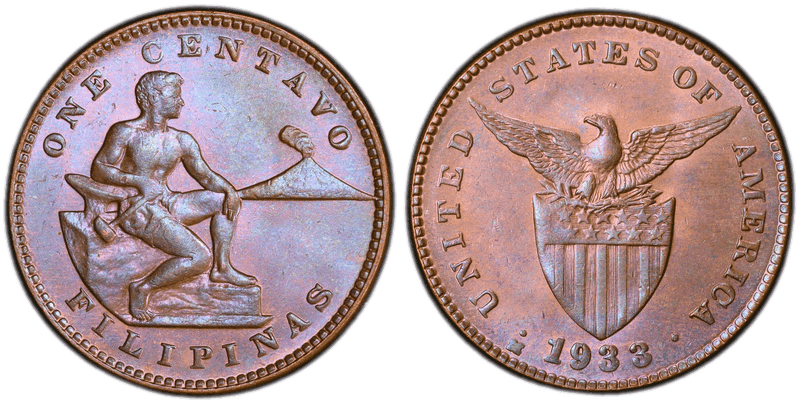
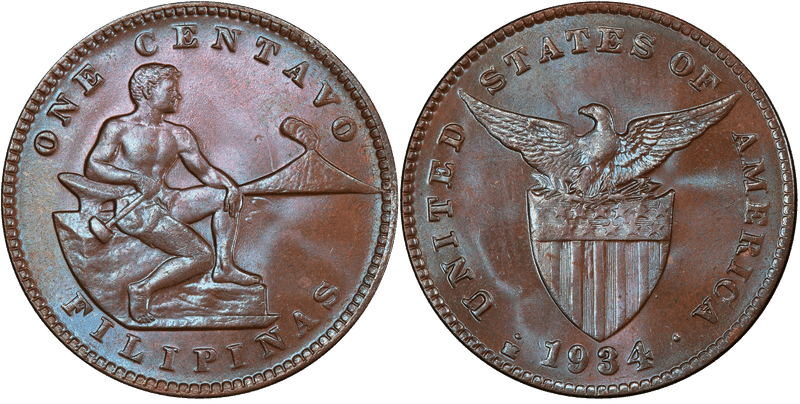
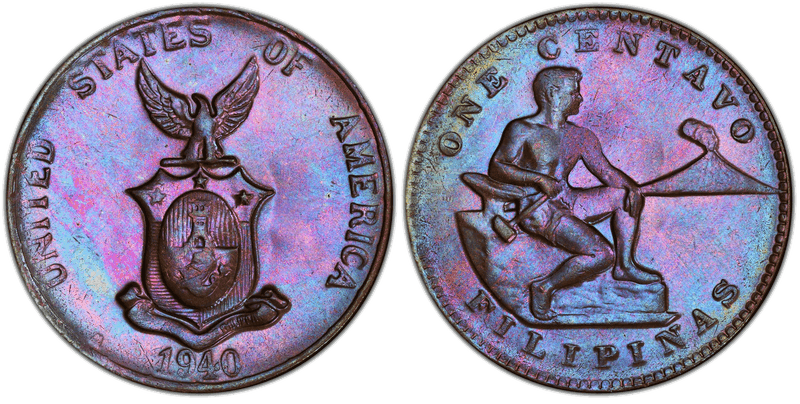
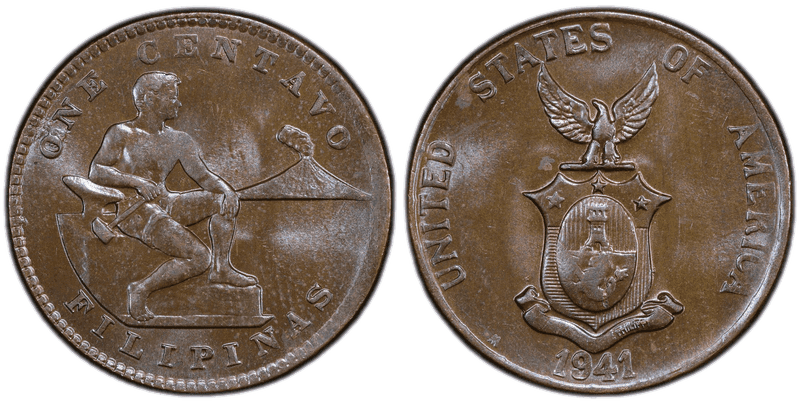
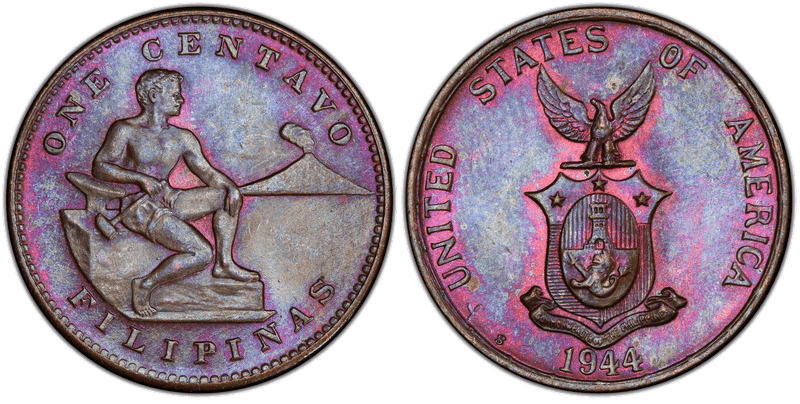
Obverse. Figueroa's seated youth, stripped to the waist, holds a hammer by an anvil while Mount Mayon smokes in the distance. ONE CENTAVO arcs above him and FILIPINAS runs below.

Reverse, 1903-1936. An eagle, wings open, perches on the United States shield; UNITED STATES OF AMERICA runs around the edge and the year is beneath.

Reverse, 1937-1944. The arms of the Commonwealth of the Philippines, a small eagle with raised wings over a shield, with a scroll reading COMMONWEALTH OF THE PHILIPPINES; the legend still reads UNITED STATES OF AMERICA.

Mint mark. Look to the left of the date on the reverse. S is San Francisco, M is Manila. A coin with no letter is from Philadelphia if dated 1903 to 1908, and from Manila if dated 1920 to 1922.

Key Dates and Varieties

  • Philadelphia, 1903-1905: 1903 (10,790,000), 1904 (17,040,400) and 1905 (10,000,000), the figures of the Red Book and Krause. The 1906 proof and 1908 proof are the only centavos of those dates from Philadelphia, 500 of each.
  • 1909-S: 1,737,612 struck, by the Red Book and Krause.
  • 1917-S: 7,070,000 struck, by the Mint's record for 1917. Two overdates come from this year: 7 over 6 (Allen-2.15a, FS-301) and 7 over 8 (Allen-2.15c).
  • 1918-S Large S: on some 1918-S centavos the S is much taller than usual; Lyman Allen thought a punch made for fifty-centavo coins was used (Allen-2.16a, FS-501, search). The Mint's record gives 11,660,000 centavos for the year, all kinds together.
  • 1920 from two mints: 1920-S (2,500,000) and the unmarked Manila 1920 (3,552,259).
  • 1933-M: 8,392,692 struck, by the Red Book and Krause.
  • 1937-M: the first Commonwealth centavo. The Red Book and Greysheet give 15,790,492; CoinVarieties prints 15,760,000.
  • 1944-S: 58,000,000 struck at San Francisco, in a copper-zinc alloy without tin.

In Our Catalog

No errors or varieties are listed for Philippines Centavos 1903-1945 yet. Submit one

Mintages

Philippines Centavos 1903-1945 mintages by year and mint, taken from each coin's page in our catalog. Each figure opens that coin's page, which lists its varieties and errors. A dash means no figure was recorded. Where one issue was struck in more than one type, each type is listed.

Composition

  • Composition: bronze, about 95 percent copper with tin and zinc (CoinVarieties); the 1944-S is 95 percent copper and 5 percent zinc (Mint report)
  • Weight: sources differ. The Red Book table, Greysheet and CoinVarieties give 5.18 grams, the Krause catalogue 4.7 grams, and Numista (search) reports measured coins at about 5.3 grams
  • Diameter: 24 mm
  • Edge: plain

FAQ

Where is the mint mark on a Philippine centavo?

On the reverse, to the left of the date. S stands for San Francisco (1908-1920 and 1944) and M for Manila (1925-1941). Philadelphia coins have no mark, and neither do the centavos the Manila Mint struck in 1920, 1921 and 1922, before it adopted the M in 1925.

How can a 1920 centavo come from two mints?

San Francisco struck 2,500,000 centavos with an S in 1920, and the newly opened Manila Mint struck 3,552,259 without any mint mark, according to the Red Book figures, which the Krause catalogue confirms. A 1920 centavo with no letter is therefore a Manila coin, not a Philadelphia one.

What changed on the centavo in 1937?

The reverse. Through 1936 it shows the American eagle on the United States shield; from 1937 it carries the arms of the Commonwealth of the Philippines, taken from the Commonwealth seal by Ambrosio Morales. Figueroa's seated man stayed on the obverse.

How many 1944-S centavos were struck?

The Director of the Mint's report lists 58,000,000 one-centavo pieces struck at San Francisco for the Philippines in calendar year 1944, the same figure as the Red Book. The same report gives their alloy as 95 percent copper and 5 percent zinc.

What is the 1917/6 centavo?

A 1917-S die on which the final 7 of the date was punched over a 6. PCGS catalogues it as Allen-2.15a and FS-301, and lists a second overdate, 7 over 8, as Allen-2.15c.

↑ Back to the coins: every year, mint, variety and error

Explore Other Denominations

Collector Essentials

Tools and references for building and protecting your coin collection.

As an Amazon Associate, NumisDex earns from qualifying purchases.