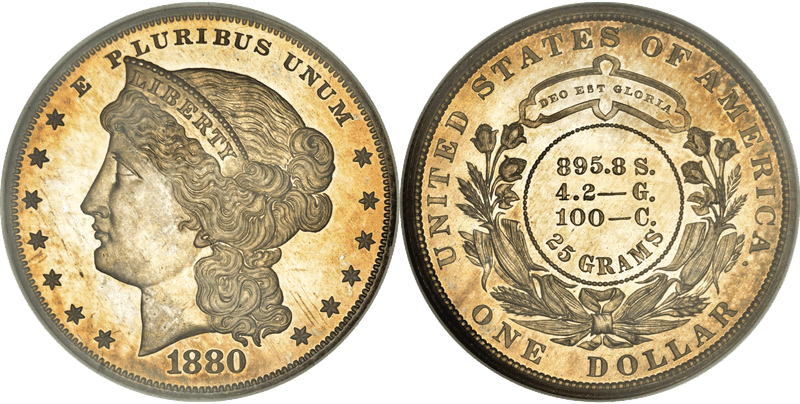





By 1880 the experiments of the 1870s were winding down. Every pattern dated 1880 repeats a design of 1879: the goloid metric dollars of William Barber and George T. Morgan, struck in Dr. Wheeler Hubbell's alloy of gold, silver and copper, and the four-dollar Stella proposed for an international gold coinage. Goloid was dropped because it could not be told from ordinary coin silver without an assay, and Congress never adopted the Stella.
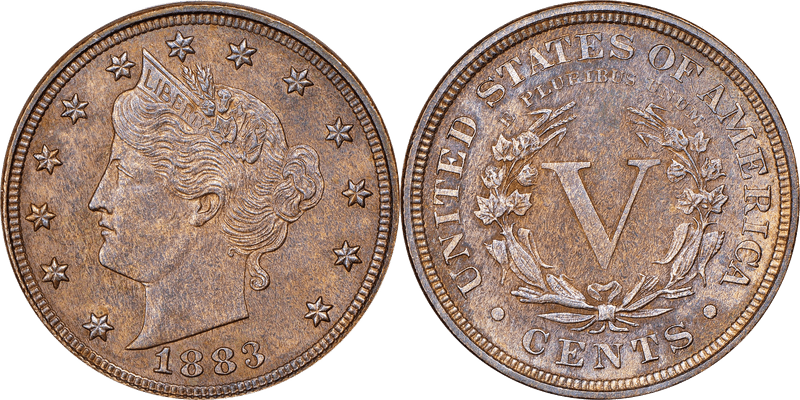
The next push came from the minor coins. In 1881 Mint Superintendent A. Loudon Snowden had Chief Engraver Charles E. Barber design a matching cent, three-cent and five-cent piece, and Barber's Liberty head of that set became the obverse of the five-cent piece from 1883 to 1913. The 1882 and 1883 patterns test reverses with and without mottoes, a Shield nickel obverse with the ball removed from the base of the shield, and reverses that state their own alloy. When the first 1883 nickels, which lacked the word CENTS, were gold-plated and passed as five-dollar pieces, the Mint added the word. Eastman Johnson's holed cent and five-cent designs followed in 1884 and 1885, and in 1885 the Mint tested a segmented collar that raised E PLURIBUS UNUM on the edge of the silver dollar.
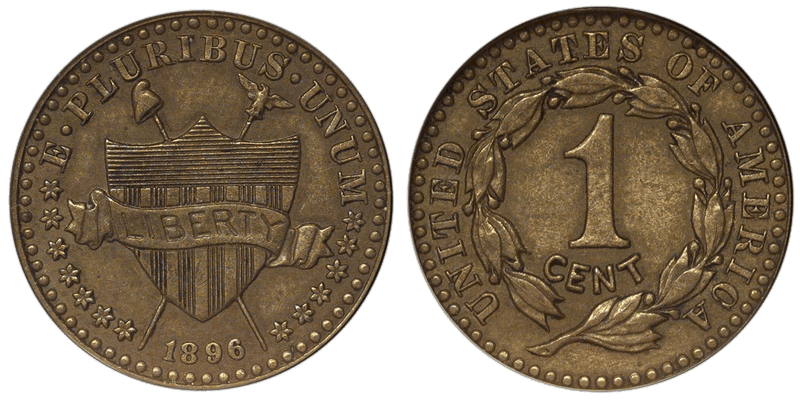
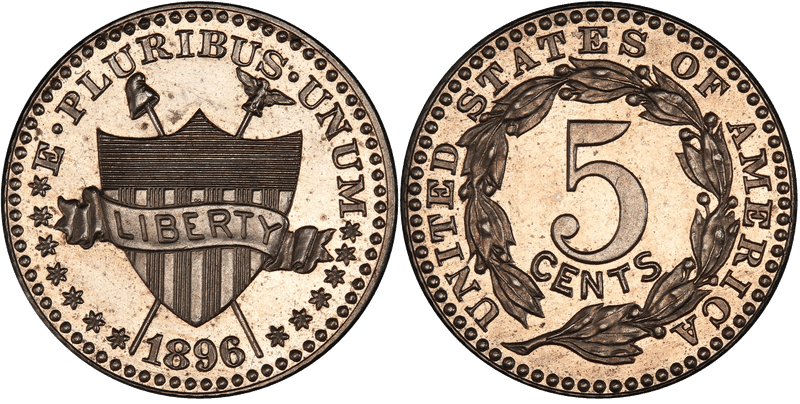
An act of September 1890 let the Mint redesign any coin at once with the Treasury Secretary's approval, and after that only once a design had been in use for 25 years. Mint Director Edward O. Leech's 1891 competition for new silver designs failed, and Barber's own Liberty head dime, quarter and half dollar were approved in November 1891, after a small group of patterns now all in the Smithsonian. The Mint tried new cent and five-cent alloys in 1896.
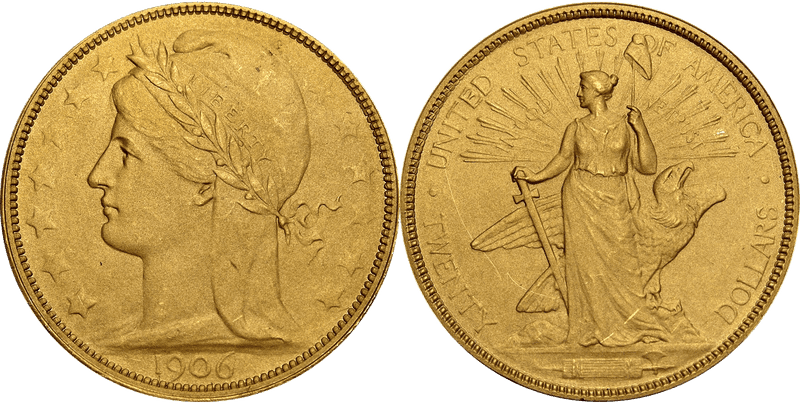
President Theodore Roosevelt brought in Augustus Saint-Gaudens to redesign the gold. His 1907 eagle and double eagle were modeled in a relief the Mint's presses could not bring up in one blow, and the patterns of 1907 record the attempts: the eagle with periods, the Indian head double eagle, the Ultra High Relief, an eagle-size double-thick piece, and brass trials flattened after striking. Bela Lyon Pratt's quarter eagle and half eagle followed in 1908. Barber made Washington five-cent patterns in 1909 and 1910, and James Earle Fraser's Buffalo nickel was struck in pattern form in January and February 1913.
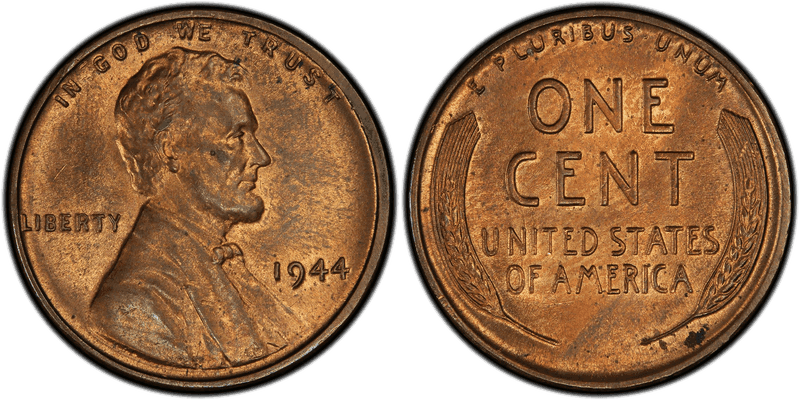
The silver redesign of 1916 produced Adolph A. Weinman's dime and half dollar and Hermon A. MacNeil's quarter, each with several pattern versions. After 1921 George T. Morgan reworked Anthony de Francisci's Peace dollar to lower its relief, and the 1922 medium relief coins are one of those attempts. The tree ends with the 1942 search for a cent made without copper, when the Mint struck an experimental design in several metals and sent dies to outside firms that made plastic and glass pieces.