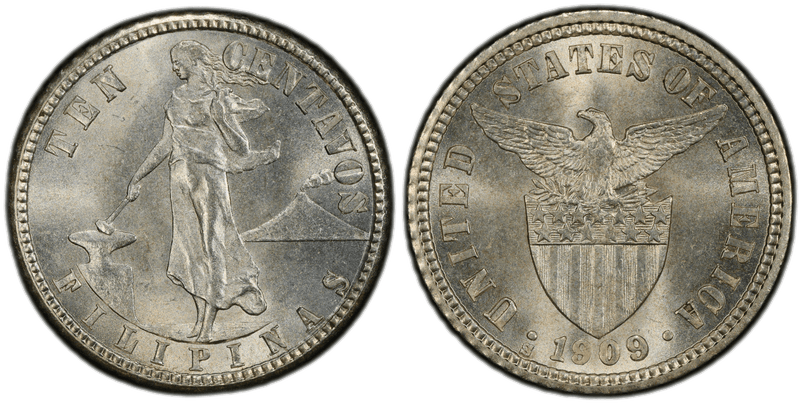
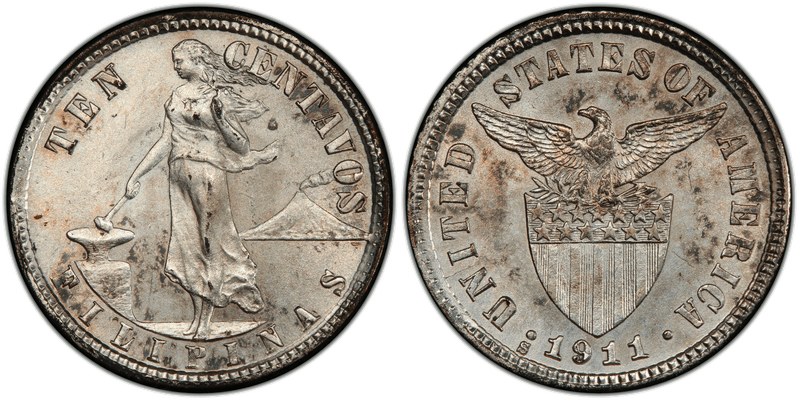
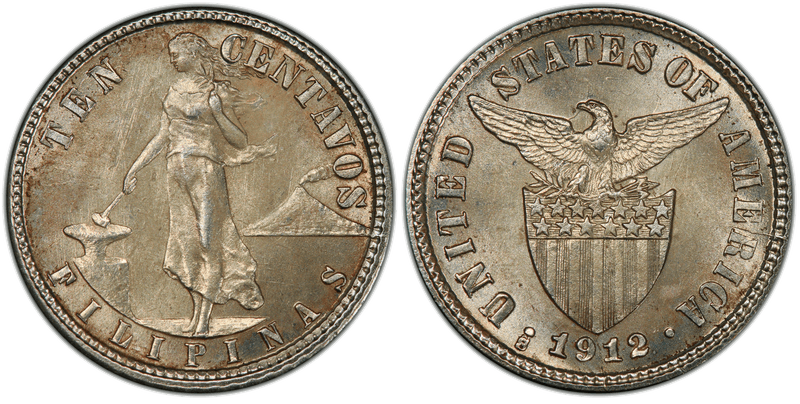
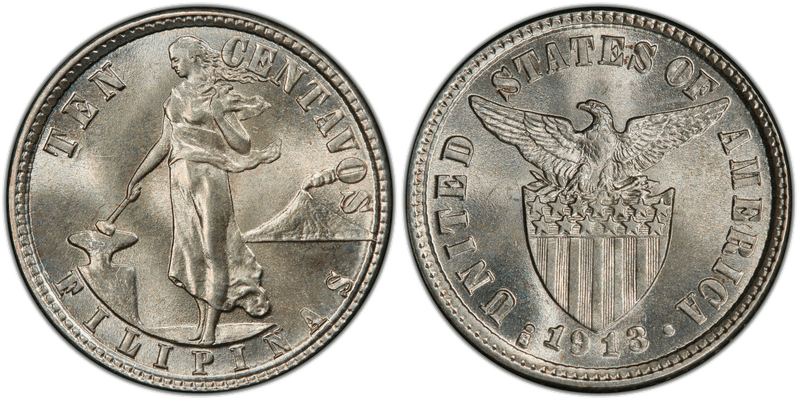
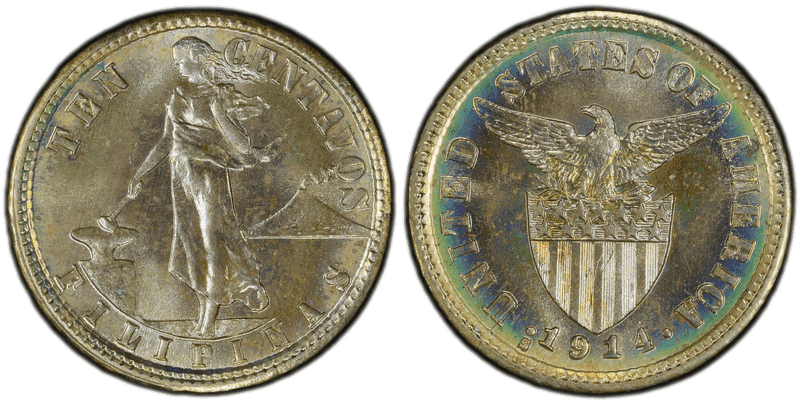
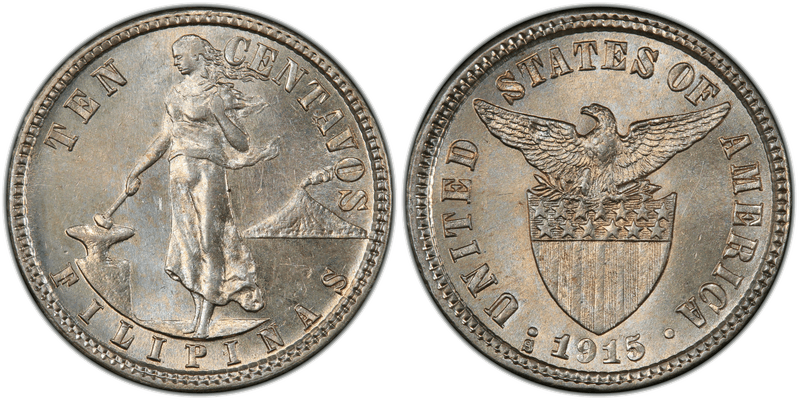
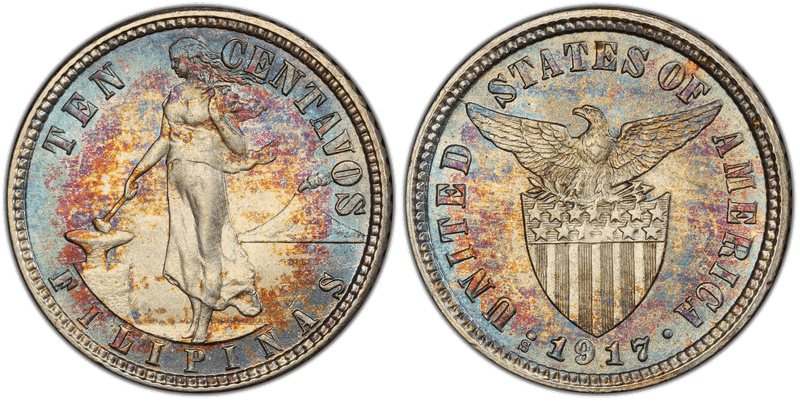
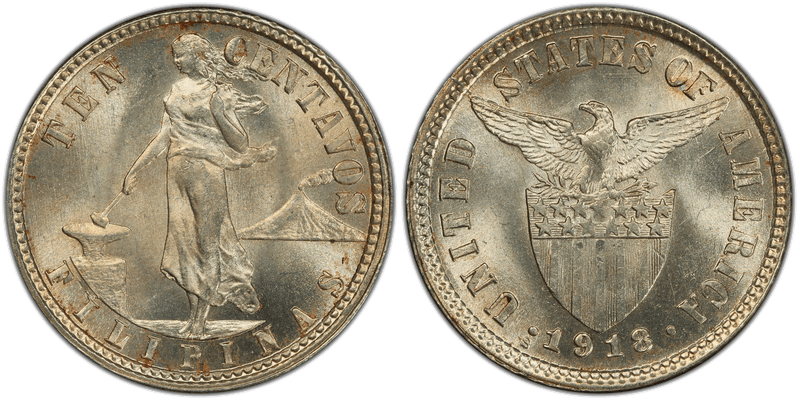
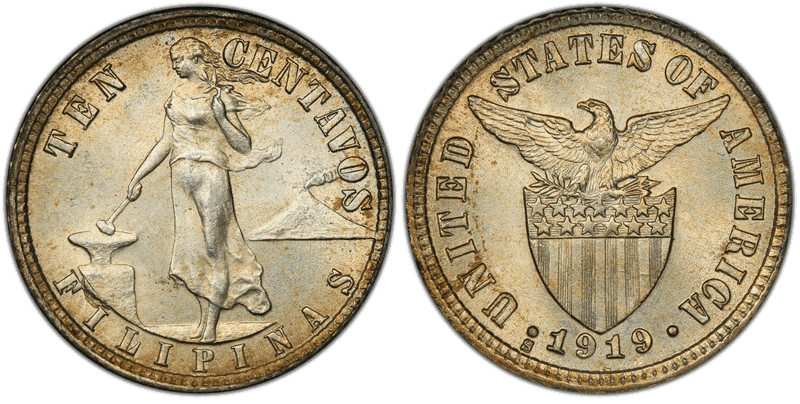
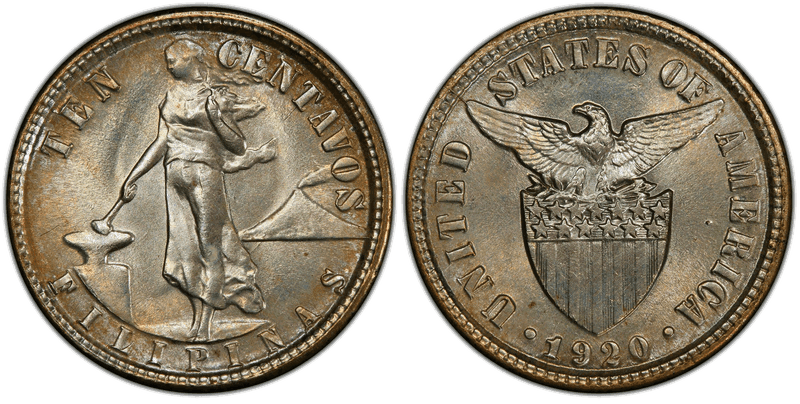
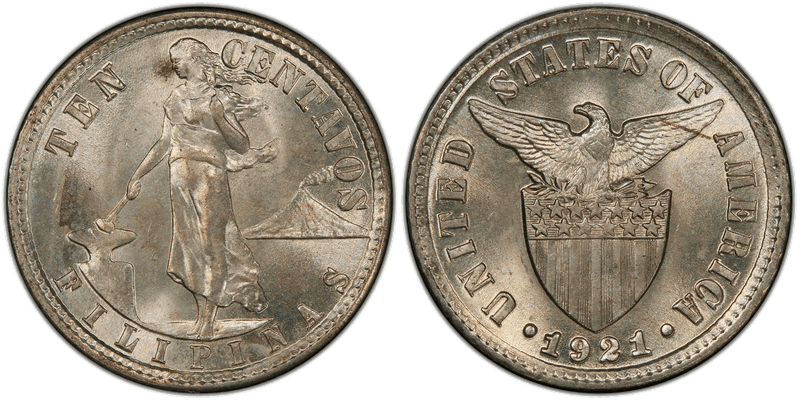
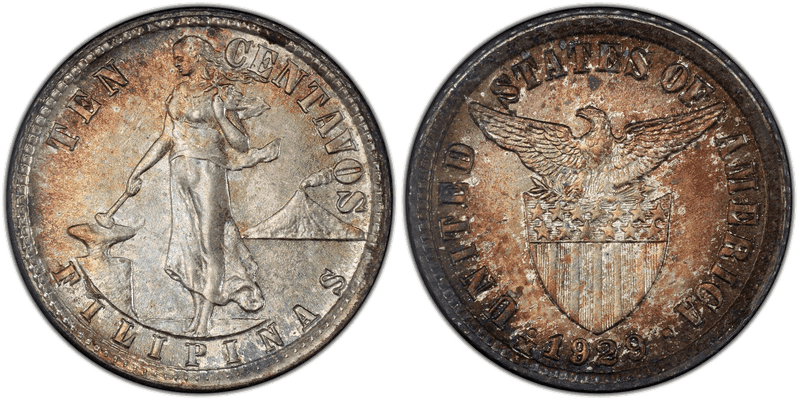
Philippines Ten Centavos 1903-1945

Coin Series
Philippines Ten Centavos 1903-1945 series coin

About This Series

The ten centavos of the Philippines under United States administration was struck in silver from 1903 to 1945: in .900 silver at 2.69 grams through 1906, then, under the act of June 23, 1906, in .750 silver at 2 grams. From 1937 the reverse carries the Commonwealth arms. Philadelphia struck the coins of 1903, 1904 and 1907 and the proofs, San Francisco those of 1903-1919 with an S, the Manila Mint those of 1920-1921 without a mint mark and of 1929-1941 with an M, and the Denver Mint those of 1944-1945 with a D.

Browse by Base(25 bases)

Showing all 25 listings

History

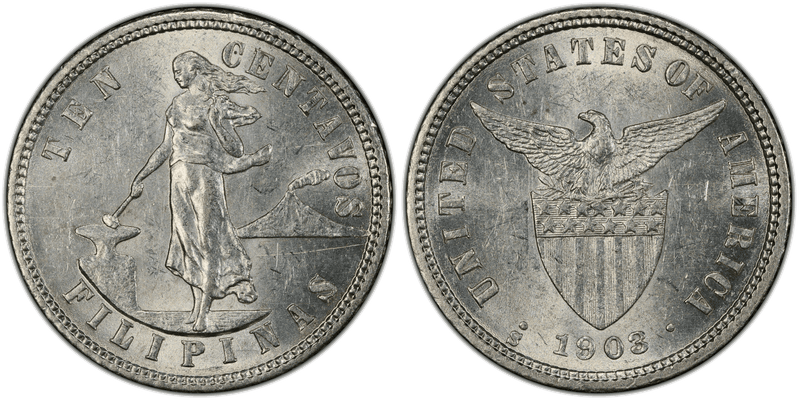
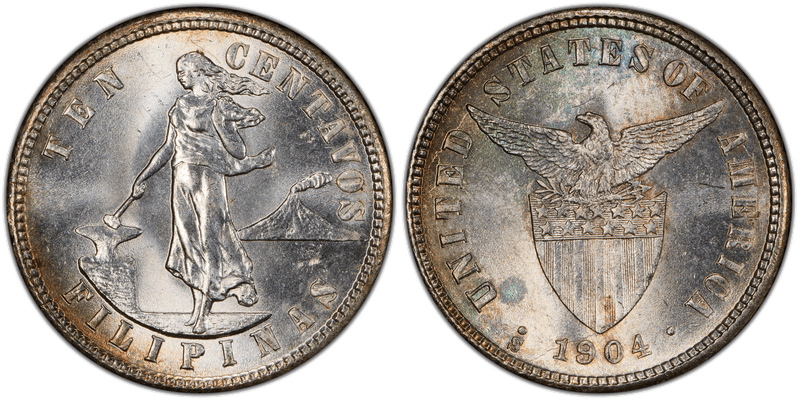
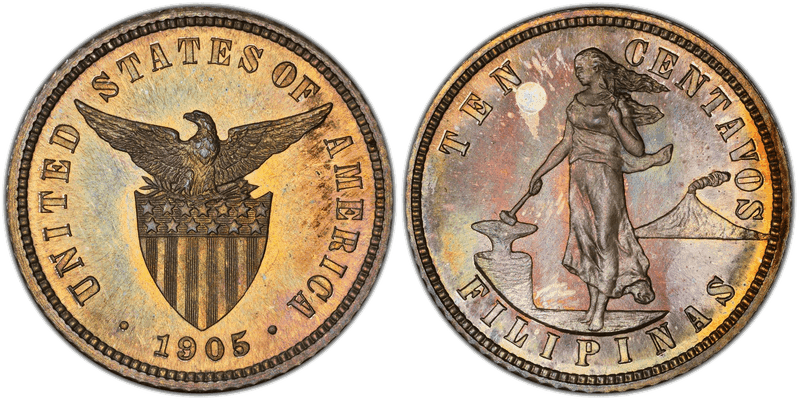
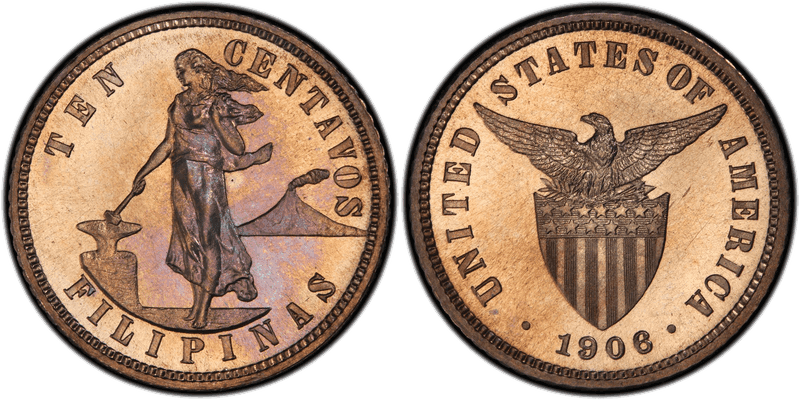
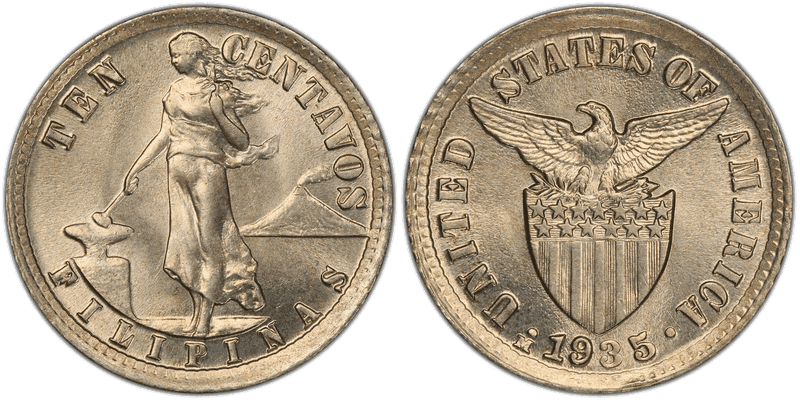
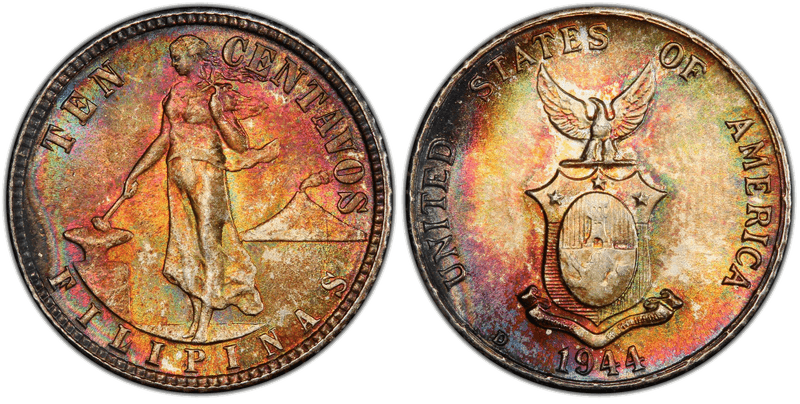
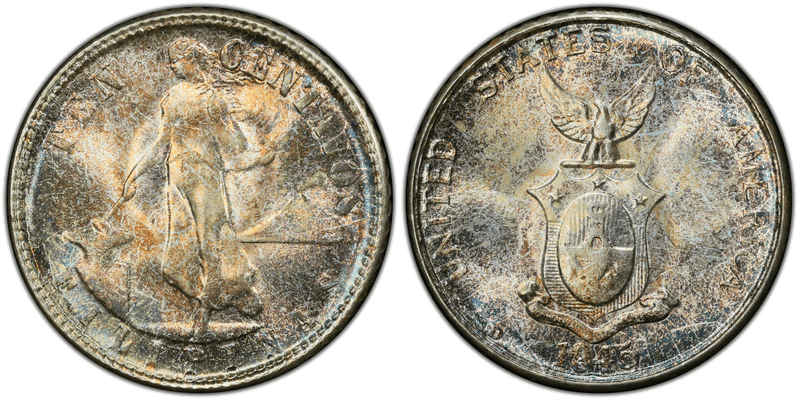
The ten centavos was the smallest silver piece of the Philippine coinage that Congress approved on March 2, 1903. Melecio Figueroa gave the silver denominations their own obverse: a young woman in a long gown striking an anvil with a hammer, with Mount Mayon in the background. The coin weighed 41.55 grains, about 2.69 grams, of .900 silver. Philadelphia made circulating coins in 1903 and 1904 and proofs through 1906, while San Francisco struck the 1903-S and 1904-S. Krause gives 1,200,000 and 5,040,000 for those two, which together make the 6,240,000 ten centavos the Mint's report credits to San Francisco through June 1905.

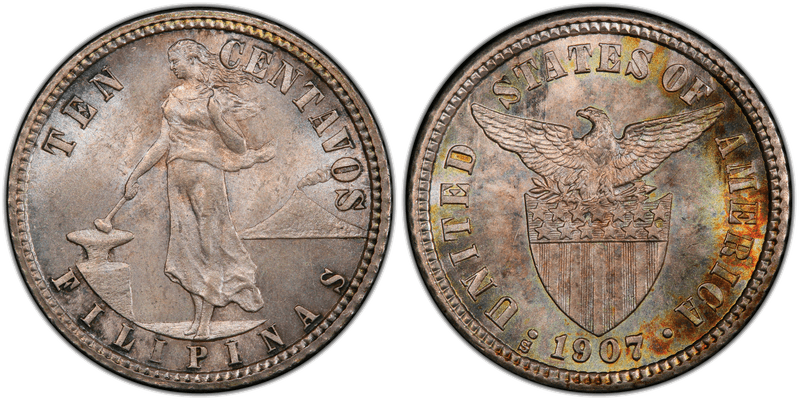
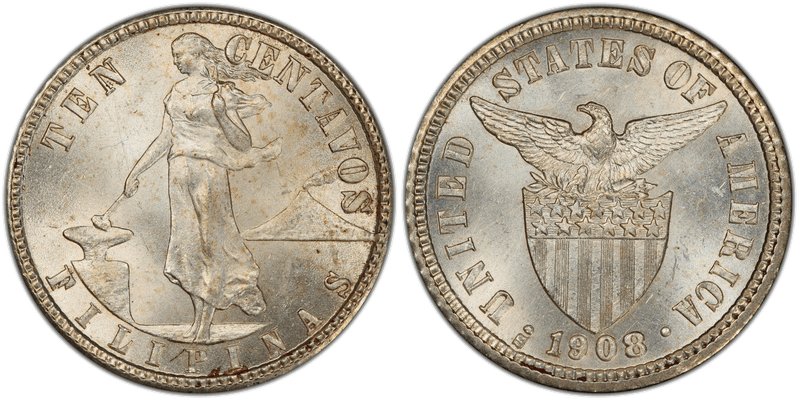
When the value of silver rose, Congress passed the act of June 23, 1906, which made the Philippine silver coins lighter and less fine. From 1907 the ten centavos weighed 30.864 grains, 2 grams, of .750 silver and was smaller across; older coins returned from the islands were melted at San Francisco and struck again to the new standard. Philadelphia made 1,500,781 coins dated 1907 by the Mint's report and the 1908 proofs; San Francisco struck ten centavos from 1907 to 1919, with no recorded coinage dated 1910 or 1916.

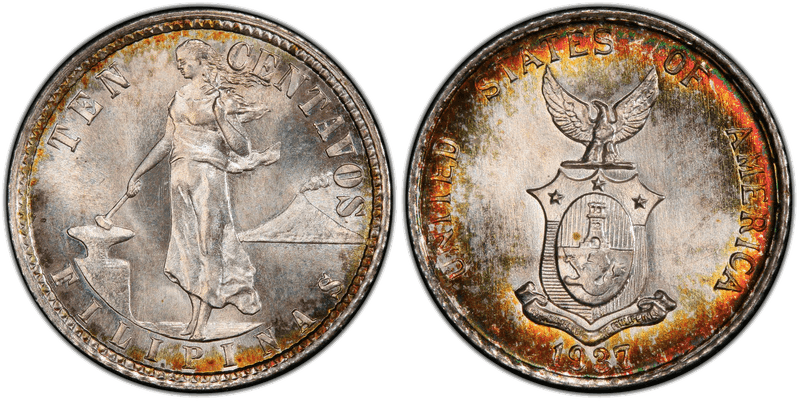
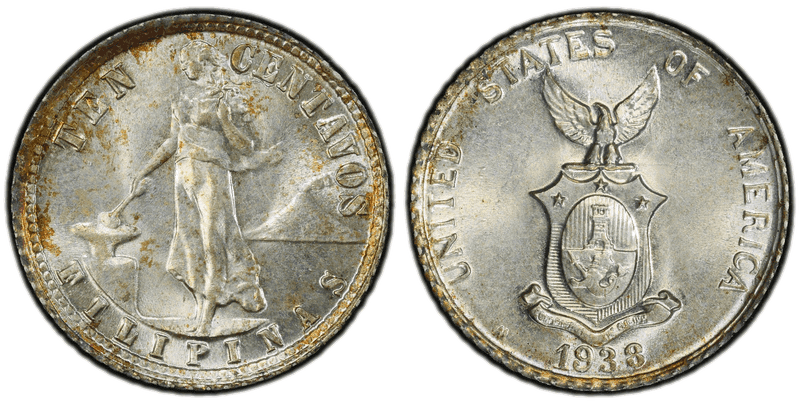
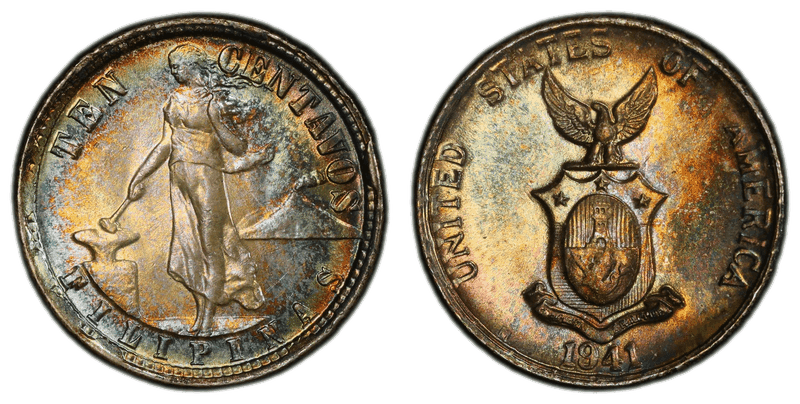
The Manila Mint struck the ten centavos of 1920 and 1921 without a mint mark and those of 1929 and 1935 with an M. From 1937 the reverse showed the arms of the Commonwealth of the Philippines, and Manila produced the new design in 1937, 1938 and 1941. With Manila occupied, the Denver Mint struck the ten centavos dated 1944 and 1945, the first Philippine coins to carry a D.
How to Identify It

Obverse. Figueroa's standing figure, a young woman in a long dress, is shown at an anvil with a raised hammer, Mount Mayon behind her; TEN CENTAVOS and FILIPINAS are in the legend.

Reverse. Up to 1935 the American eagle and shield, ringed by UNITED STATES OF AMERICA over the year; from 1937 the Commonwealth arms.

Large or small. The .900 silver coins of 1903-1906 are larger than the .750 silver coins from 1907: the Red Book table gives 17.5 mm and 16.5 mm, Krause 18 mm and 17 mm.

Mint mark. Where there is a letter, it stands left of the year on the reverse: S (San Francisco), M (Manila) or D (Denver). Unmarked coins of 1903-1908 are Philadelphia's; unmarked 1920 and 1921 coins are Manila's.

Key Dates and Varieties

  • 1904: Philadelphia's business strike of 1904: 10,000 coins by Greysheet and CoinVarieties (CoinsBook prints 11,000), besides 1,355 proofs.
  • 1905 proof and 1906 proof: proof only; Krause gives 471 and 500.
  • 1907: the first year of the lighter coin and Philadelphia's last ten centavos for circulation, 1,500,781 struck.
  • 1909-S: 312,199 struck, the San Francisco figure for the fiscal year 1910 in the Mint's report.
  • 1910-S: NGC and PCGS list the date, but no mintage is recorded and the Mint's reports show no ten centavos struck between July 1910 and June 1911.
  • 1914-S crossbar varieties: PCGS separates a short crossbar (Allen-8.10a) and a long crossbar (Allen-8.10b).
  • 1917-S, 1918-S and 1919-S: 5,991,148, 8,420,000 and 1,630,000 struck, by the Mint's calendar-year records.
  • Unmarked Manila coins: 1920 and 1921.
  • 1937-M: the first Commonwealth ten centavos, 3,500,000 by the Red Book's figure.
  • 1944-D and 1945-D: 31,592,000 and 137,208,000 struck at Denver. A 1945-D with the D punched twice is listed by PCGS as Allen-9.05a.

In Our Catalog

1 error or variety is listed for this series. Browse them by type:

Recently added

    Mintages

    Philippines Ten Centavos 1903-1945 mintages by year and mint, taken from each coin's page in our catalog. Each figure opens that coin's page, which lists its varieties and errors. A dash means no figure was recorded. Where one issue was struck in more than one type, each type is listed.

    Composition and Silver Content

    • 1903-1906: 90 percent silver, 10 percent copper; 41.55 grains (2.69 grams); about 0.0779 troy ounce of pure silver
    • 1907-1945: 75 percent silver, 25 percent copper; 30.864 grains (2 grams); about 0.0482 troy ounce of pure silver
    • Diameter: about 17.5 mm (1903-1906) and 16.5 mm (from 1907) in the Red Book table; Krause gives 18 mm and 17 mm
    • Edge: reeded

    The weights and fineness are the legal standards of the acts of 1903 and 1906 as printed in the Director of the Mint's report for 1907; the silver figures are those weights multiplied by the fineness.

    FAQ

    How much silver is in a Philippine ten centavos?

    The coins of 1903-1906 weigh 41.55 grains, or 2.69 grams, of .900 silver, which works out to about 0.0779 troy ounce of pure silver. From 1907 the coin weighs 30.864 grains, 2 grams, of .750 silver, about 0.0482 troy ounce. Both standards are in the Director of the Mint's report for 1907.

    Why did the ten centavos change in 1907?

    The value of the silver in the coins rose, and the act of Congress of June 23, 1906 cut the weight and fineness of the Philippine silver coins. Old pieces sent back from the islands were melted at San Francisco and recoined to the new standard.

    Is there a 1910-S ten centavos?

    No mintage has been recorded for one. The Mint's reports show 312,199 ten centavos struck at San Francisco in the fiscal year that ended June 30, 1910, which the catalogues give as the 1909-S, and none in the following year. NGC and PCGS each list a 1910-S, but the Krause catalogue gives no figure for it and the Red Book date list goes from 1909-S to 1911-S.

    Where is the mint mark?

    On the reverse, to the left of the date. S is San Francisco, M is Manila and D is Denver. Philadelphia coins have none, and neither do the Manila coins of 1920 and 1921, struck before the Manila Mint adopted the M in 1925.

    Why were 1944 and 1945 ten centavos struck at Denver?

    The Manila Mint was in Japanese hands, so the wartime Philippine coins were made in the United States. The ten and twenty centavos came from Denver, the first Philippine coins with a D mint mark; the Mint's records give 31,592,000 ten centavos for 1944 and 137,208,000 for 1945.

    ↑ Back to the coins: every year, mint, variety and error

    Explore Other Denominations

    Collector Essentials

    Tools and references for building and protecting your coin collection.

    As an Amazon Associate, NumisDex earns from qualifying purchases.