Washington Pieces (1783-1800)

Coin Series
Washington Pieces (1783-1800) series coin

About This Series

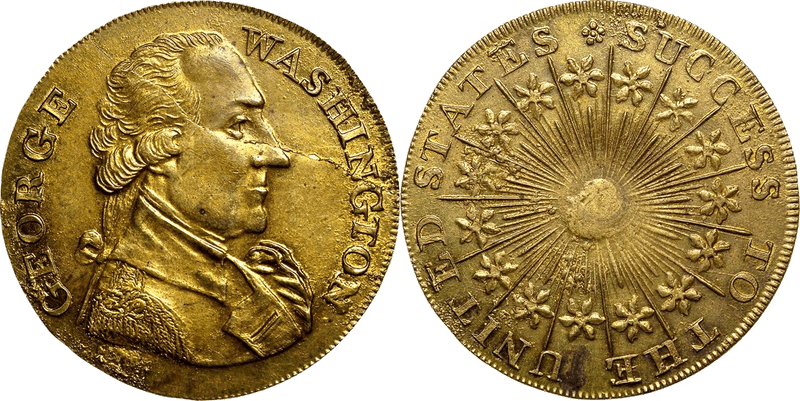
Washington Pieces (1783-1800) gathers the coins, tokens and medals bearing the name or portrait of George Washington that William S. Baker catalogued in 1885, from the English-made pieces dated 1783 to the patterns of 1792 and the funeral medals of 1800. Baker thought the portraits on the 1783 pieces were imaginary, credited the 1791 cents to the Birmingham engraver Hancock and the 1792 half dollars to Peter Getz of Lancaster, Pennsylvania. Musante's GW numbers are the modern reference, and several later medals and restrikes are also filed here.

Browse by Base(21 bases)

Showing all 21 listings

History

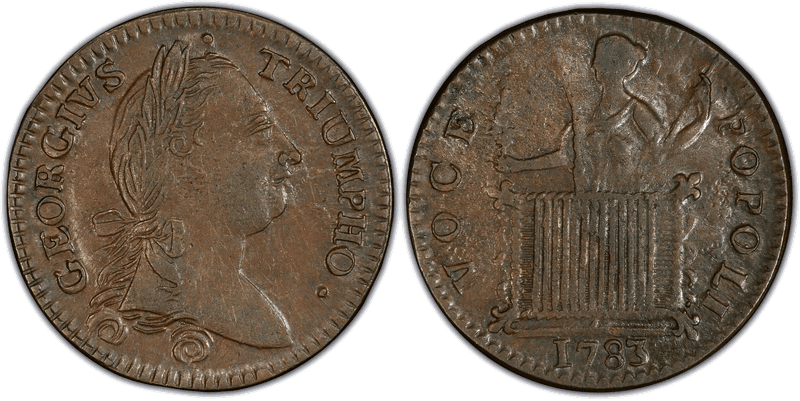
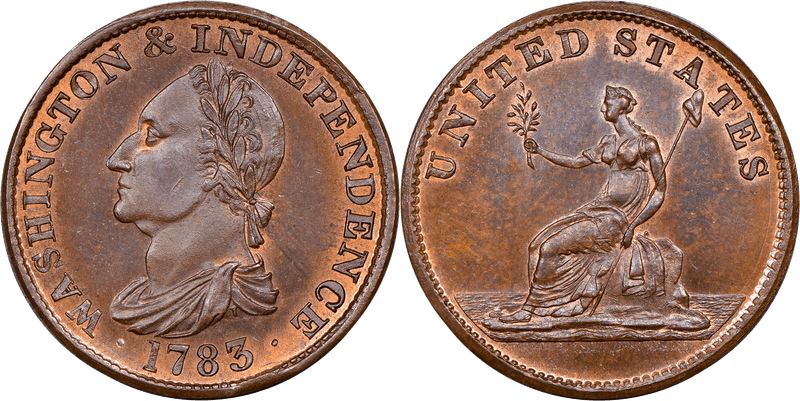
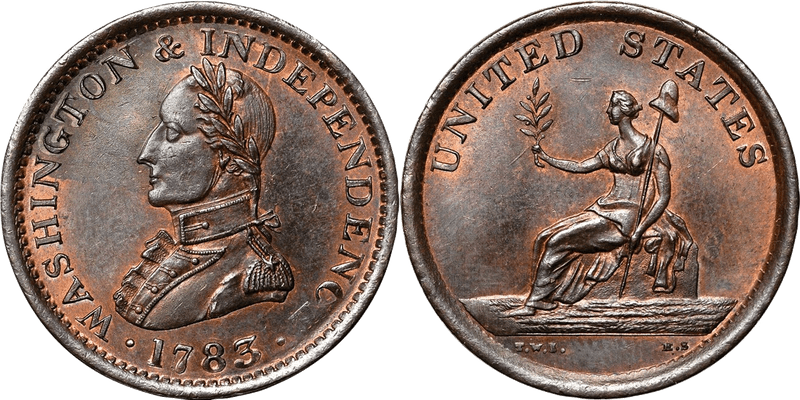
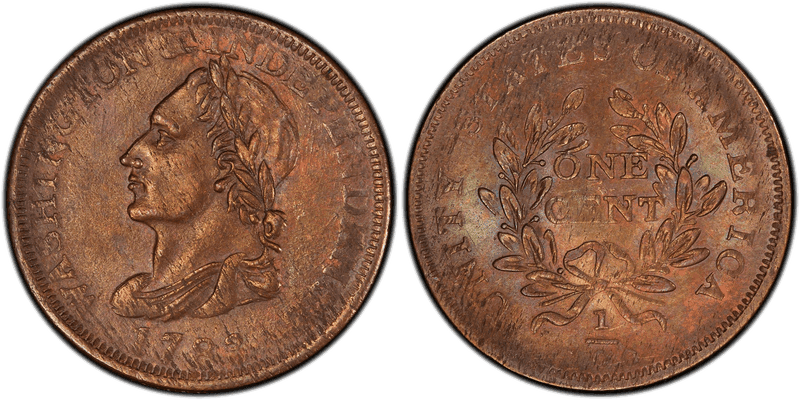
The first pieces bearing Washington's name are coppers dated 1783 and made in England: the Washington & Independence cents with a draped or uniformed bust and a seated Liberty, the Unity States cent, and the Georgius Triumpho token, whose head looks like George III but which Baker and Crosby read as a tribute to Washington's success. Baker wrote that the portraits on these pieces are imaginary. The Unity States cent copies the reverse of the United States cent of about 1802, so it was made long after its date (search), and the Washington & Independence draped bust with heavier letters (Baker 3) is a reissue of about 1860.

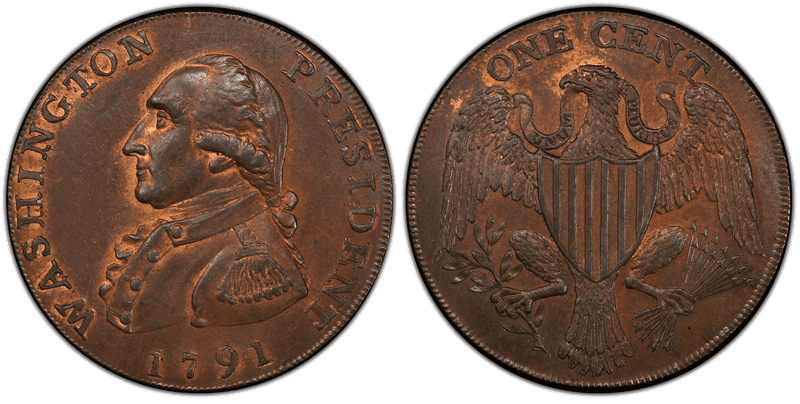
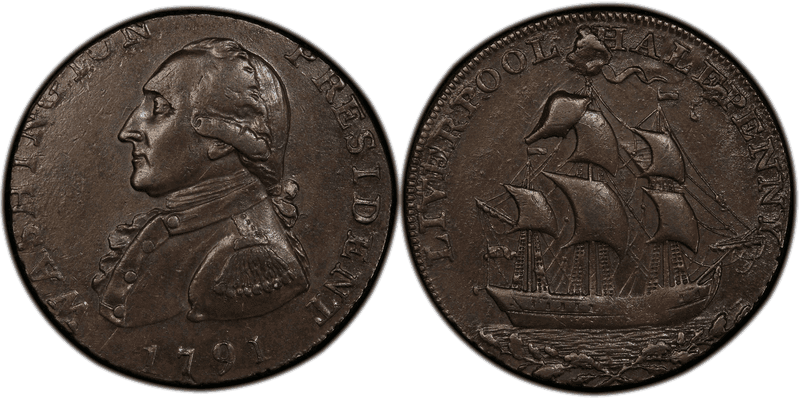
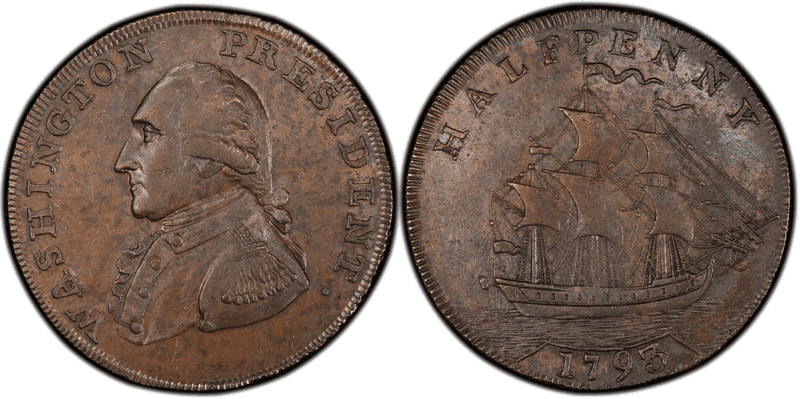
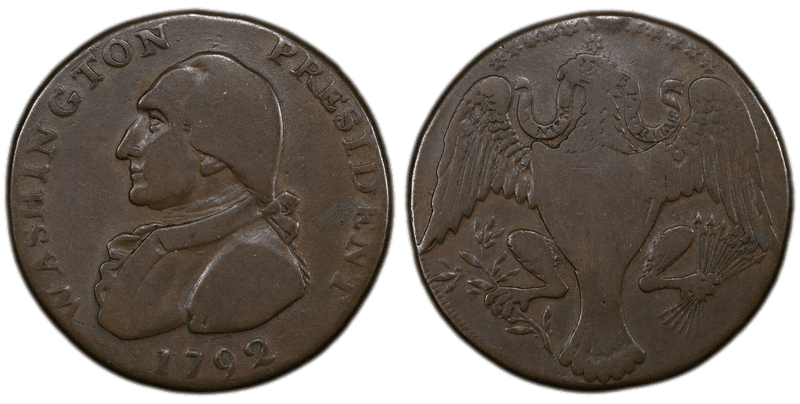
In 1791 the Birmingham engraver Hancock, as Baker names him, made two cents with a uniformed bust and WASHINGTON PRESIDENT, one with a large heraldic eagle and one with a small eagle under clouds. Baker thought they were patterns for an American copper coinage, and found in them the first true likeness of Washington, taken from a drawing by Pierre Eugène Du Simitière. The same obverse dies were used for the Liverpool halfpenny of 1791 and the Ship halfpenny of 1793.

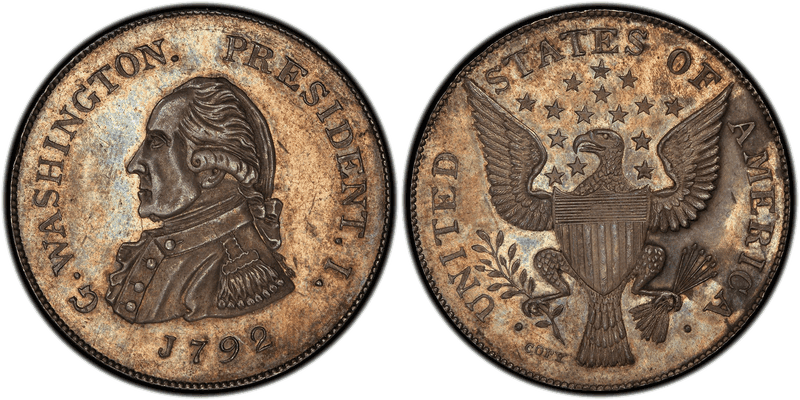
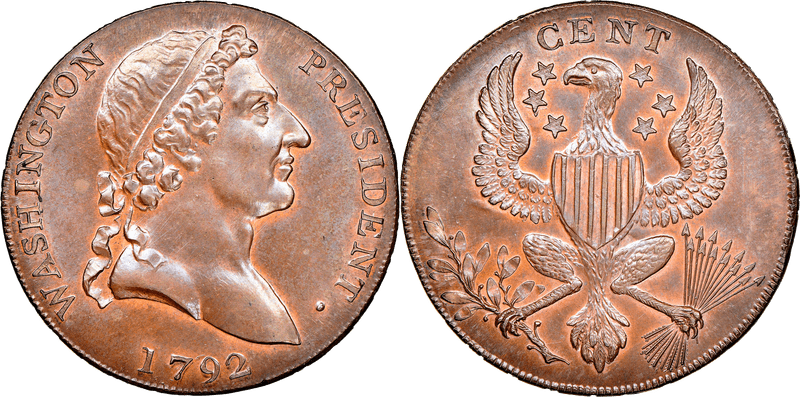
In 1792 the Senate's coinage bill called for the head of the President on the coins. Pieces dated 1792 with an eagle and thirteen stars were struck in silver, copper and once in gold from experimental dies, and Peter Getz of Lancaster, Pennsylvania, cut dies for half dollars with G. WASHINGTON PRESIDENT I. Baker thought these were shown to the members of Congress. The House struck out the clause, and the Act of April 2, 1792 called for an impression emblematic of liberty instead, so the pieces stayed patterns.

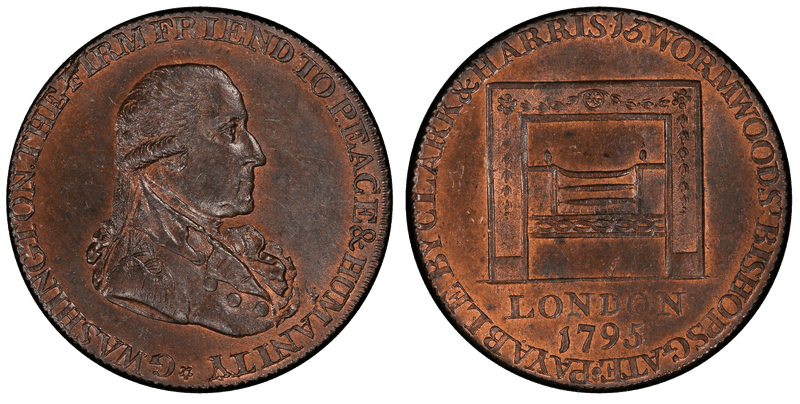
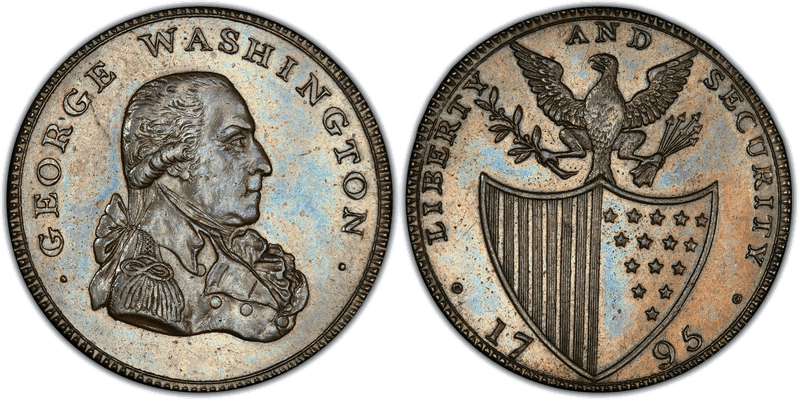
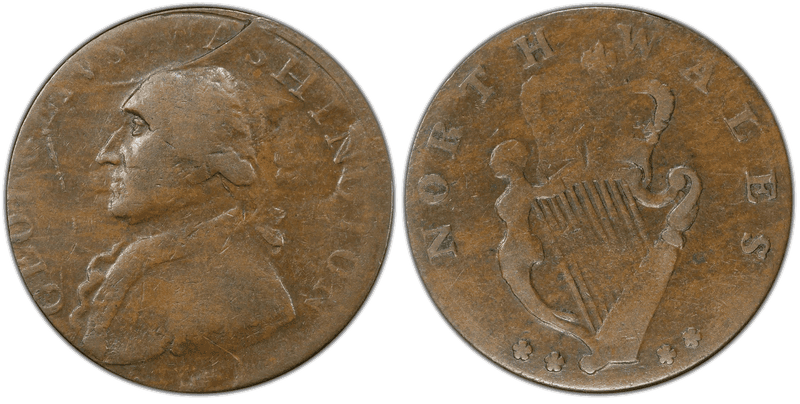
English token makers kept using Washington's name through the 1790s. The Grate halfpenny of 1795 is a London store card of Clark & Harris; the Liberty and Security penny and halfpenny, the North Wales pieces and the Success tokens pair a bust of Washington with American legends.

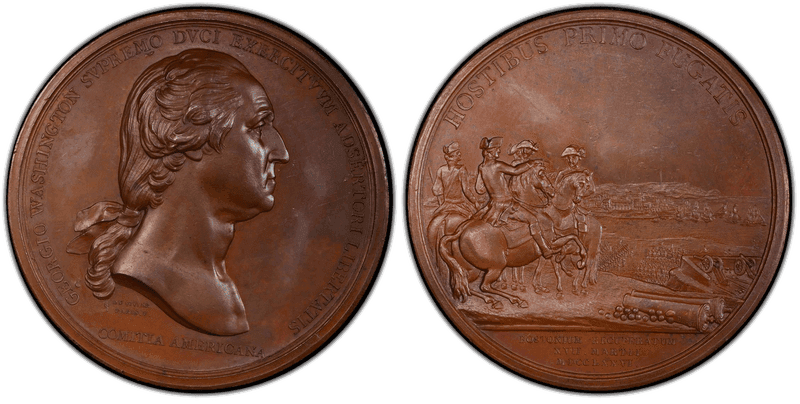
Medals form the rest of the group. Congress voted Washington a gold medal for the recovery of Boston in March 1776, and its dies were cut in Paris by Pierre Simon Duvivier in 1786; the Washington Before Boston medals include Paris Mint strikes made over many years and United States Mint copies. Samuel Brooks's Manly medal, published by J. Manly in Philadelphia in March 1790, was in Baker's view the first Washington medal issued in America. After Washington's death on December 14, 1799 came the funeral medals with HE IS IN GLORY, THE WORLD IN TEARS, the Hero of Freedom and Westwood medals, and in 1805 the Eccleston medal by Webb.
How to Identify It

Legends and devices identify the type, and Baker's numbers name it. The 1783 coppers read WASHINGTON & INDEPENDENCE; a bust in a Roman mantle without a button is Baker 2, with a button Baker 5, and a bust in uniform Baker 4, from two pairs of dies. The Unity States cent misspells UNITED on its reverse. The 1791 cents read WASHINGTON PRESIDENT with the edge UNITED STATES OF AMERICA, the large eagle with ONE CENT above it (Baker 15) and the small eagle under clouds with the date below (Baker 16).

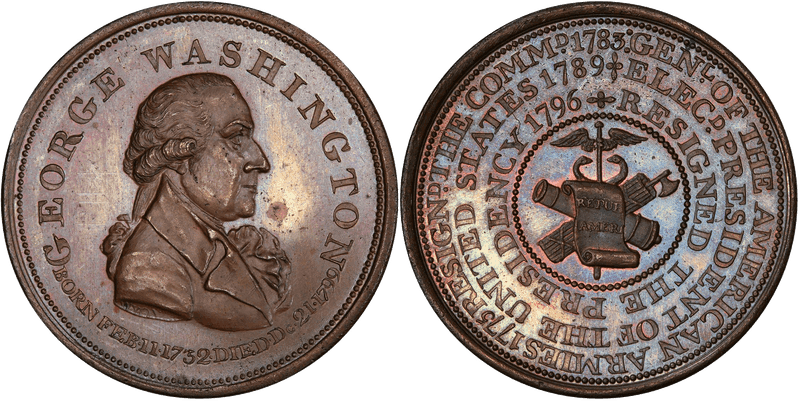
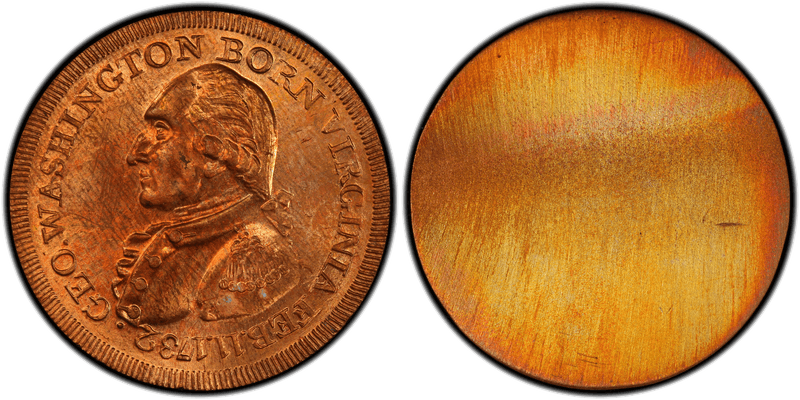
The 1792 pieces differ by reverse and obverse legend. The eagle with thirteen stars and UNUM E PLURIBUS has WASHINGTON PRESIDENT 1792 (Baker 20-21); the GENERAL OF THE AMERICAN ARMIES reverse in ten lines comes with that obverse or with GEO. WASHINGTON BORN VIRGINIA (Baker 59-60). Getz's pieces read G. WASHINGTON PRESIDENT I. The Roman head cent, which Baker calls the Naked Bust cent, has an undraped filleted head facing right.

Edges separate many varieties. The Liverpool and Ship halfpence read PAYABLE IN ANGLESEY LONDON OR LIVERPOOL; the Liberty and Security halfpenny is found with PAYABLE AT LONDON LIVERPOOL OR BRISTOL, BIRMINGHAM REDRUTH & SWANSEA, the asylum legend or a plain edge, and the penny with AN ASYLUM FOR THE OPPRESS'D OF ALL NATIONS. The Grate halfpenny has an engrailed or a lettered edge.

Later copies carry their own numbers. The Idler copies of the Getz half dollar (Musante GW-27) may show the word COPY, and the Before Boston medals are sorted by reverse die and maker into Musante's Paris and Mint issues. Pages here say which pieces are reissues, restrikes or copies.

Key Types and Varieties

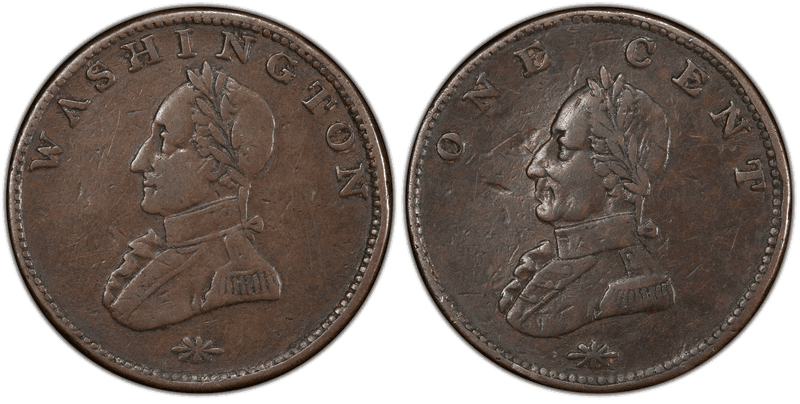
  • 1783 coppers: the Unity States cent (Baker 1), the draped bust with and without button (Baker 2 and 5) and its reissue of about 1860 (Baker 3), the military bust in large and small bust varieties (Baker 4), the Double Head cent (Baker 6) and the Georgius Triumpho (Baker 7).
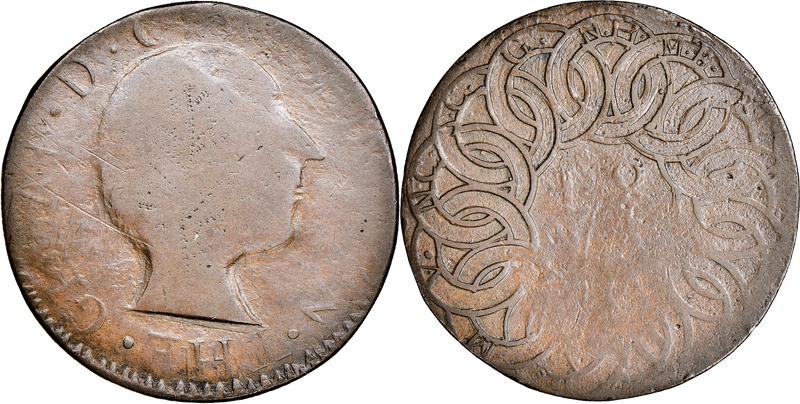
  • WASHINGTON THE GREAT (the Ugly Head): dated 1784, with a chain of thirteen rings carrying the states' initials (Baker 8). See the Ugly Head group.
  • 1791 cents: the Large Eagle and Small Eagle cents, with a brass Small Eagle Baker noted.
  • 1792 patterns: the eagle and stars pieces in copper, silver and gold, the GENERAL reverse pieces, the Getz half dollars with small and large eagles and their Idler copies, and the Roman head cent.
  • English tokens of 1791-1795: Liverpool and Ship halfpence, the Grate halfpenny, Liberty and Security penny and halfpenny, North Wales halfpennies and Success tokens in large and small sizes.
  • Medals to 1805: Washington Before Boston, the Manly medal of 1790, the Repub Ameri medals by Thomas Wyon, the funeral medals with urn and skull, the Hero of Freedom, Westwood and Eccleston medals.
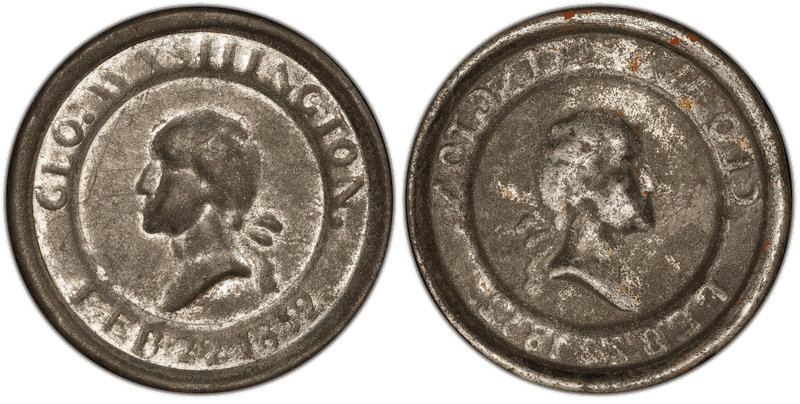
  • Later medals filed here: Sansom medals by John Reich and their Mint reissues, the 1832 civic procession medal, the 1824 Lafayette counterstamps, temperance medalets of the 1840s and other medals in the miscellaneous group.

Composition

The tokens and cents are copper, with some pieces in brass, pewter or white metal; Baker notes brass impressions of the 1791 Small Eagle cent, the Ship halfpenny and the Grate halfpenny. The 1792 eagle and stars pieces were struck in silver and copper, with one impression in gold, and Getz's dies in silver and copper. Baker gives the Success tokens as brass, some later silvered. Among the medals, Baker records the Manly medal in silver, bronze and tin, the funeral medals in gold, silver, copper and tin, and the Washington Before Boston medal in silver and bronze, with the 1776 gold piece now in the Boston Public Library.

In Our Catalog

3 errors and varieties are listed for this series. Browse them by type:

Recently added

    FAQ

    Are Washington pieces United States coins?

    No. None was struck by the United States Mint as money. Most of the 1783-1795 pieces were made in England as tokens or for sale in America, and Baker thought the 1791 cents and the 1792 eagle pieces were patterns submitted while Congress debated a coinage. The Senate's bill would have put the President's head on the coins, but the House struck that out, and the Act of April 2, 1792 called for a device emblematic of liberty instead.

    Is the portrait on the 1783 pieces really Washington?

    Baker thought not. He wrote that the portraits on the pieces dated 1783 and on the Double Head cent are imaginary and bear no resemblance to Washington. He found the first likeness on the 1791 cents, after a drawing made from life by Pierre Eugène Du Simitière in Philadelphia in 1778-79, and the same head reappears on the Liverpool and Ship halfpence and the 1792 eagle pieces.

    What do Baker and Musante numbers mean?

    They are the two catalogues of Washington coins, tokens and medals. William S. Baker's Medallic Portraits of Washington (1885) numbered the pieces from 1 for the Unity States cent through the medals; modern catalogues add letter suffixes for metals and varieties, as in Baker-47B. Neil Musante's GW numbers are used alongside them in recent sale catalogues, such as GW-09 for the Washington Before Boston medal and GW-10 for the Manly medal.

    How can I tell a Getz original from an Idler copy?

    Baker says the copy of the Getz small eagle half dollar was cut about 1858 by Robert Lovett Jr. for William Idler of Philadelphia and struck in silver, German silver, copper, brass and tin, with the word COPY on the reverse that was sometimes removed. Musante numbers the copies GW-27, apart from the 1792 originals.

    Which Washington Before Boston medal is an original?

    Baker separates the medal with the original reverse (his No. 47) from one with a second reverse, on which a horse below Washington's mount shows three legs instead of four (No. 48), and from the United States Mint pieces struck from dies made in 1860 (No. 49). The Paris Mint kept striking from its dies into the twentieth century, and Musante numbers those issues GW-09-P1 to P6 and the Mint issues GW-09-US.

    ↑ Back to the coins: every year, mint, variety and error

    Explore Other Denominations

    Collector Essentials

    Tools and references for building and protecting your coin collection.

    As an Amazon Associate, NumisDex earns from qualifying purchases.