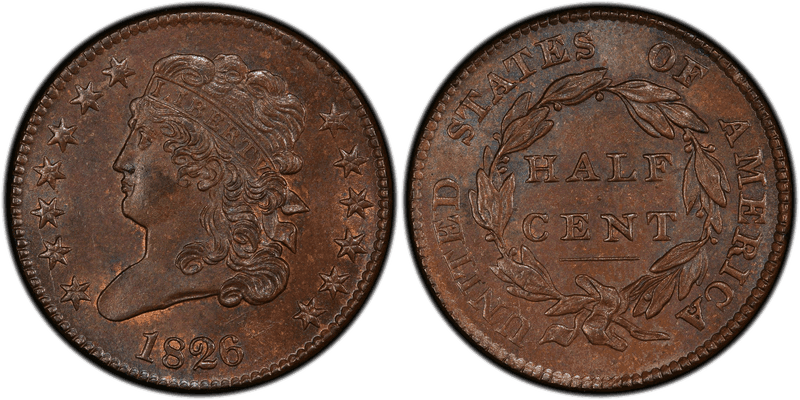
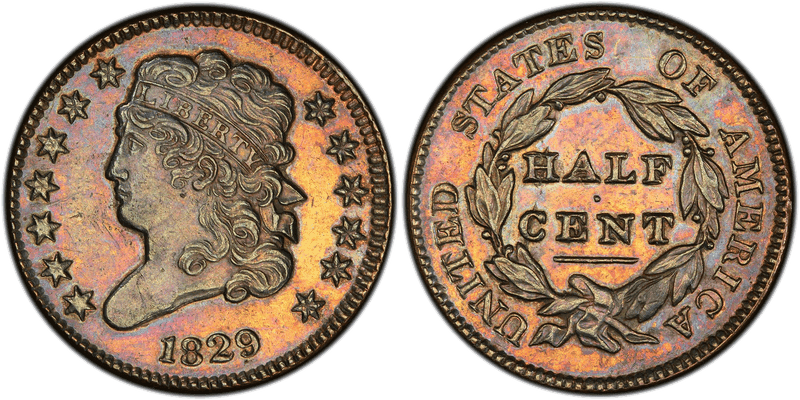
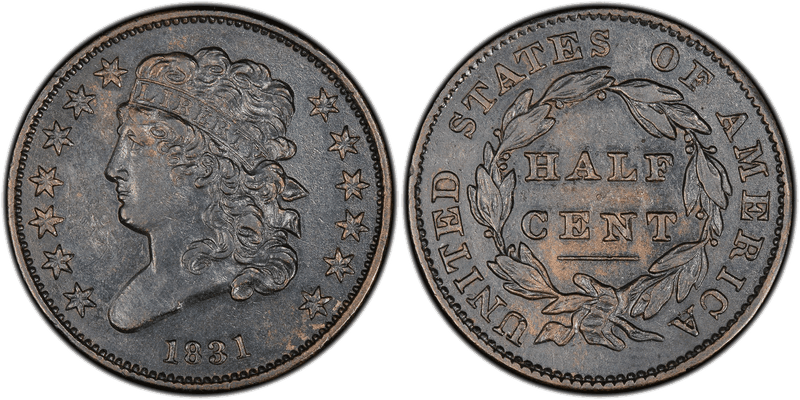
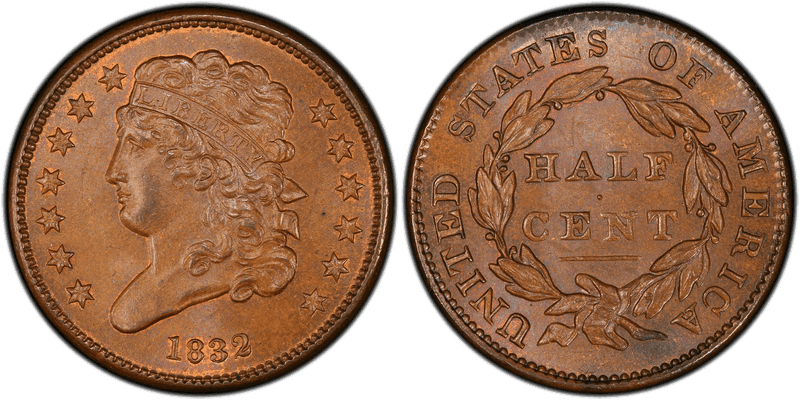
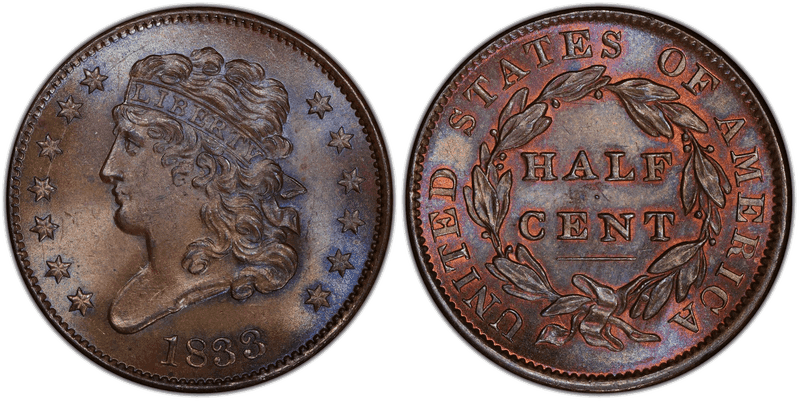
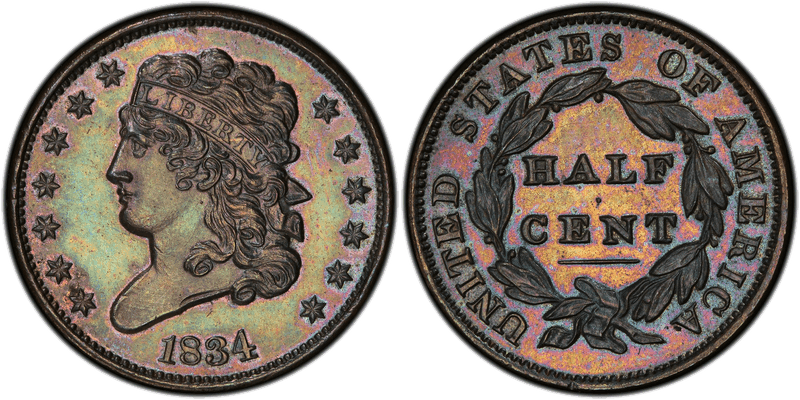
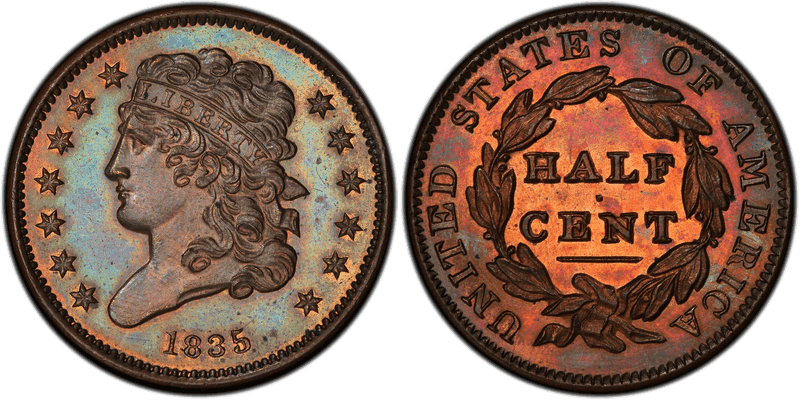
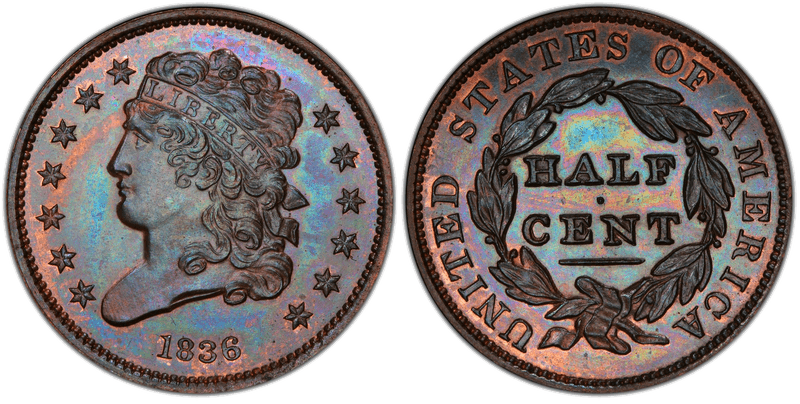
Classic Head Half Cents 1809-1836

Coin Series
Classic Head Half Cents 1809-1836 series coin

About This Series

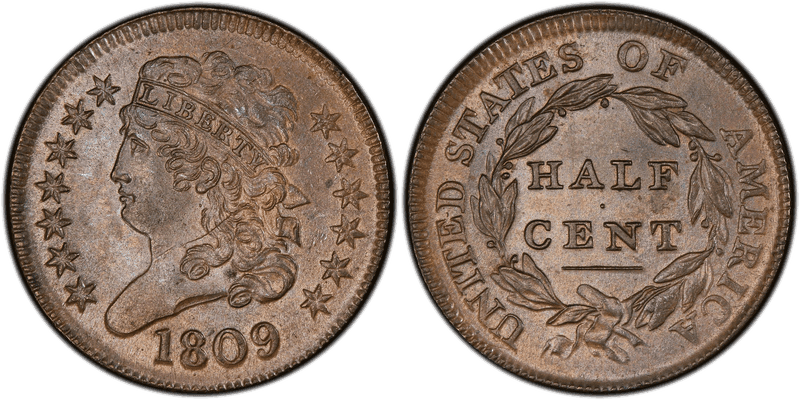
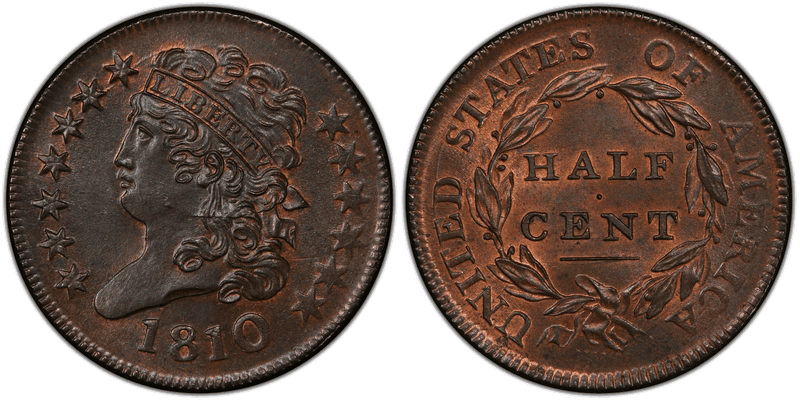
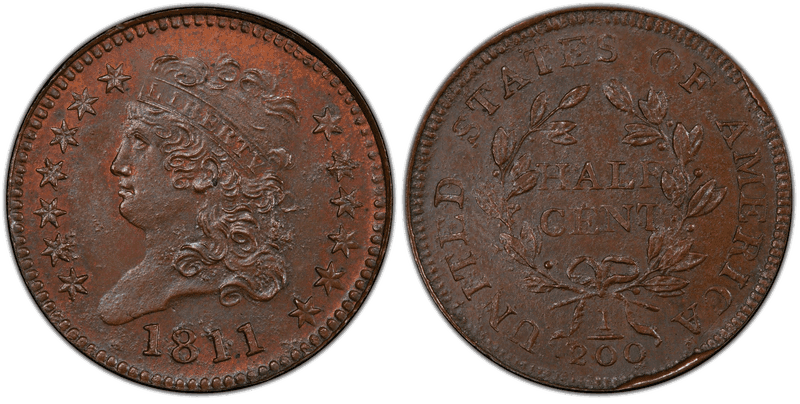
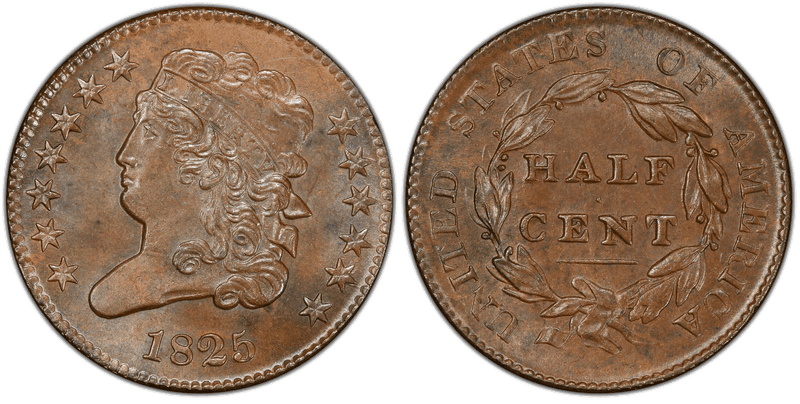
John Reich's Classic Head design on the half cent features Liberty wearing a fillet inscribed LIBERTY, creating an elegant portrait adapted from his concurrent designs for the cent and higher denominations. The series is notable for significant production gaps: no half cents were struck from 1812 to 1824, because the coins already struck met the small demand. Half cents dated 1831 and 1836 are known essentially as proofs and later restrikes, while 1832 through 1835 were struck for circulation in quantity alongside very small numbers of proofs. The 1811 had a mintage of 63,140. Struck in copper at 23.5mm and 5.44 grams, Classic Head half cents bridge the Draped Bust and Braided Hair series. The Cohen reference provides the die variety framework.

From NumisDex News

Series Information

Production Years
1809-1836
Composition
Copper

Browse by Base(13 bases)

Showing all 13 listings

History

John Reich's Classic Head first appeared on the large cent in 1808 and on the half cent in 1809. Liberty faces left, her curls bound by a band lettered LIBERTY, with thirteen stars around her. For 1831 the Chief Engraver William Kneass recut the portrait with bolder detail, and from then on half cents were struck inside a close collar, which gave them raised rims and a flat edge.

The series has long gaps. After 63,140 half cents in 1811, the Mint stopped: according to NGC the coins already made were enough for the small demand, and production did not resume until a single order came in 1825. There are also no half cents dated 1827 or 1830. NGC records that at least 234,000 unwanted half cents were melted at the Mint in 1830 and 1831 for copper to alloy gold and silver coins.

As with earlier half cents, the yearly mintages are the Mint's delivery figures for each calendar year. Dies were used until they wore out, whatever their date, so NGC thinks the figures for 1810, 1828, 1829 and 1834 include coins with other dates, and several later figures are reconstructions that sources do not agree on.

The last Classic Head half cents for circulation were dated 1835. The 1836 half cents were made only as proofs, and no more half cents were struck for circulation until 1849, under the Braided Hair design.
How to Identify It

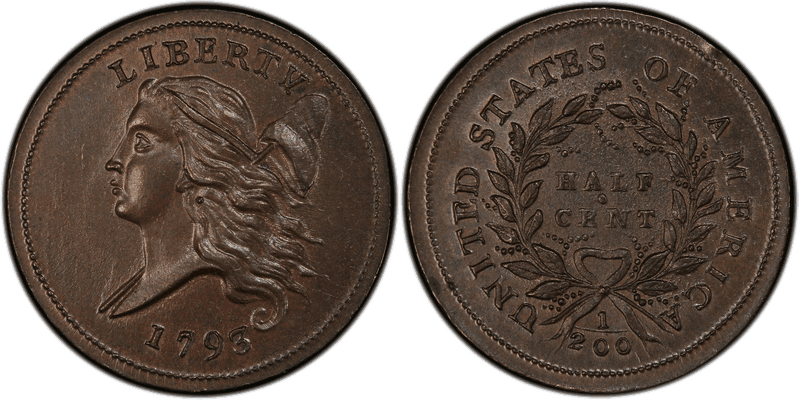
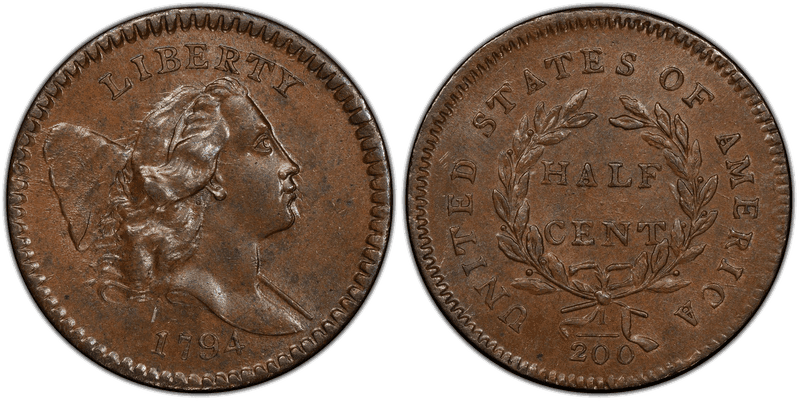
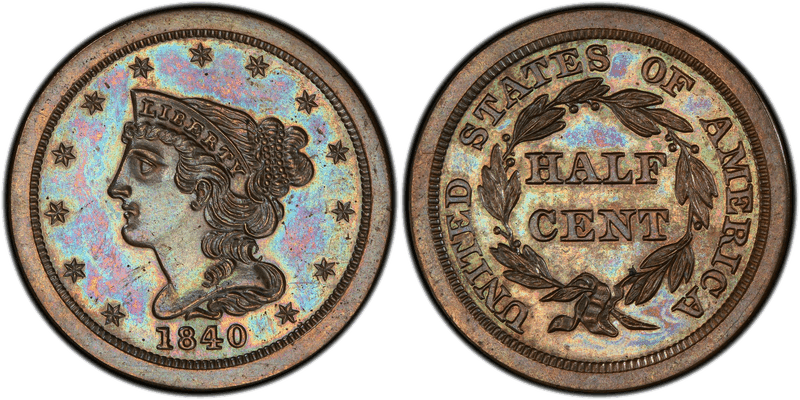
Obverse. Liberty faces left, with LIBERTY on the band in her hair, thirteen stars around her and the date below.

Reverse. HALF CENT inside a wreath, with UNITED STATES OF AMERICA around it.

Before and after 1831. From 1831 the half cents show Kneass's bolder portrait and, because they were struck in a close collar, distinct raised rims and a flat edge.

Mint mark. None. All half cents were struck at Philadelphia.

Cohen numbers. Die pairings carry numbers from Roger S. Cohen Jr.'s American Half Cents. Many dates come from a single pair of dies, among them 1810, 1829, 1833 and 1834.

Key Dates and Varieties

  • 1809: six die pairings. On the Circle in 0 die (C-4) the 0 was punched over a smaller 0, which shows inside it. The 9 over inverted 9 (C-5), which PCGS lists as 1809/6, has a final 9 punched over one cut upside down. The Mint reported 1,154,572 for 1809.
  • 1810: a single pair of dies. NGC thinks many of the 215,000 struck that year were dated 1809.
  • 1811: 63,140 struck from two pairings, collected as the Close Date and Wide Date.
  • 1811 Mickley restrike: a private striking from discarded dies, the rusted 1811 obverse with a reverse of 1802. Breen dated it to 1858 or 1859 and counted six; NGC estimates about a dozen.
  • 1825 and 1826: 63,000 and 234,000 struck. One 1826 die shows its 6 punched over a 6 lying on its side.
  • 1828: 13 Stars from two pairings and 12 Stars from one (C-2). A hoard of about 1,000 unworn 1828 half cents, the Collins hoard, came to light in 1894.
  • 1829: one pair of dies; PCGS also lists an 1829 specimen striking. The Mint reported 487,000.
  • 1831: the Mint recorded 2,200 half cents, a figure NGC doubts. The originals are almost all proofs; Breen counted five or six proofs and eight to ten business strikes. The obverse was used again later for a first restrike with the 1836 reverse and a second restrike with a reverse in the style of 1840.
  • 1832, 1833, 1834 and 1835: struck for circulation, with small numbers of proofs (1832, 1833, 1834, 1835). The 1832 and 1833 figures are disputed: Wikipedia and USA Coin Book give 51,000 and 103,000, and NGC calls them reconstructions, with 90,000 and 184,000 as other estimates. The Mint reported 141,000 for 1834 and 398,000 for 1835.
  • 1836: proofs only, in three issues: the originals, a first restrike from the same dies, and a second restrike with an 1840-style reverse. No figure was recorded. Breen counted about a dozen originals, NGC more than two dozen.

In Our Catalog

4 errors and varieties are listed for this series. Browse them by type:

Recently added

Mintages

Classic Head Half Cents 1809-1836 mintages by year and mint, taken from each coin's page in our catalog. Each figure opens that coin's page, which lists its varieties and errors. A dash means no figure was recorded. Where one issue was struck in more than one type, each type is listed.

Composition

  • Composition: copper. Classic Head half cents contain no silver.
  • Weight: 5.44 grams (84 grains). Breen notes that many restrikes are well off this weight.
  • Diameter: 23.5 mm
  • Edge: plain

FAQ

Why are there no half cents dated 1812 to 1824?

The half cents already struck were enough for the little demand there was. NGC says the Mint stopped after the 63,140 coins of 1811 and made no more until a single order arrived in 1825. There are also no half cents dated 1827 or 1830.

What is the 1811 Mickley restrike?

A half cent made outside the Mint from two discarded, rusted dies, an 1811 obverse and a reverse of 1802. Walter Breen wrote that it was struck around 1858 or 1859 for the Philadelphia collector Joseph J. Mickley and that six were made; NGC estimates about a dozen. The dies were seized from Mickley's estate in 1878.

Were half cents made for circulation in 1831 and 1836?

The Mint's records show 2,200 half cents for 1831, but NGC doubts that figure and thinks it may refer to coins dated 1832. Most 1831 half cents known are proofs, and 1836 half cents were struck as proofs only. Both dates were restruck in later years.

What is the 1828 12 Stars half cent?

One of the three 1828 die pairings (Cohen 2) has only twelve stars around Liberty instead of thirteen. NGC calls it a punching mistake that was either missed or let pass.

Where is the mint mark on a Classic Head half cent?

There is none. Every half cent was struck at the Philadelphia Mint.

↑ Back to the coins: every year, mint, variety and error

Explore Other Denominations

Collector Essentials

Tools and references for building and protecting your coin collection.

As an Amazon Associate, NumisDex earns from qualifying purchases.