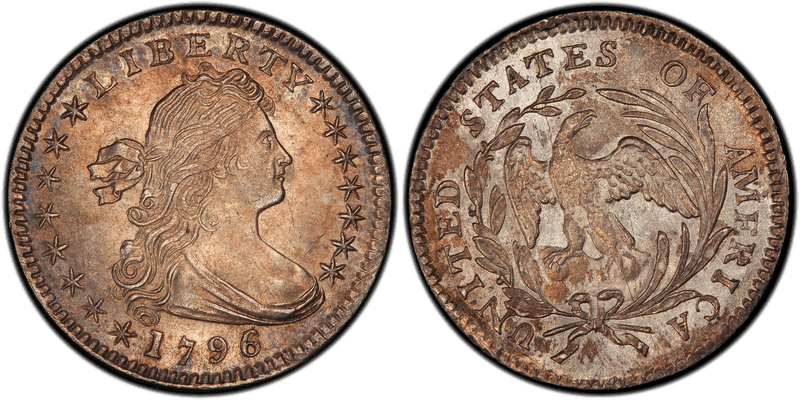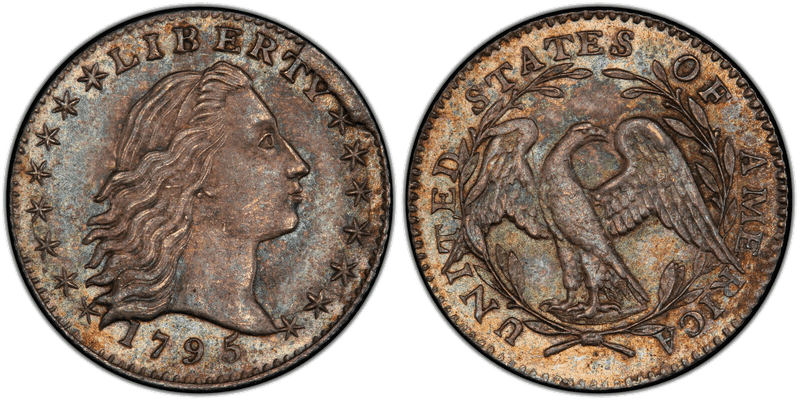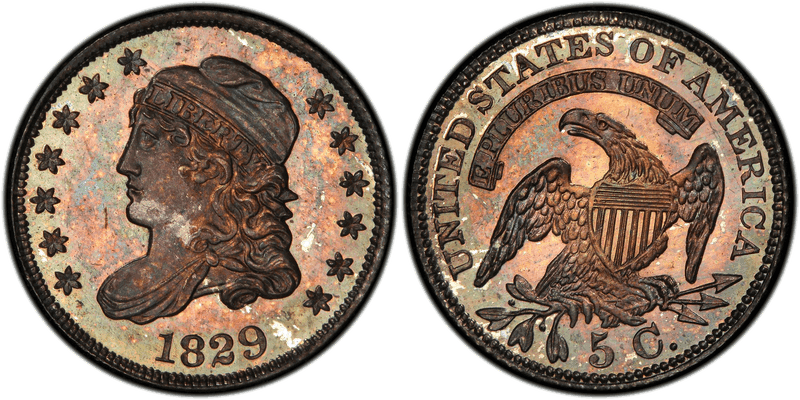
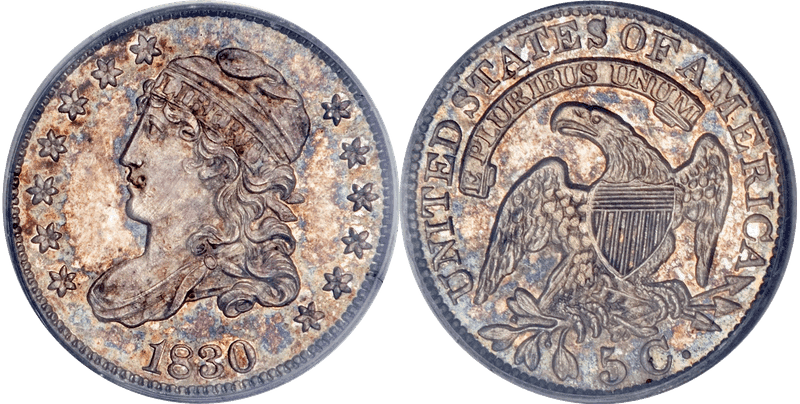
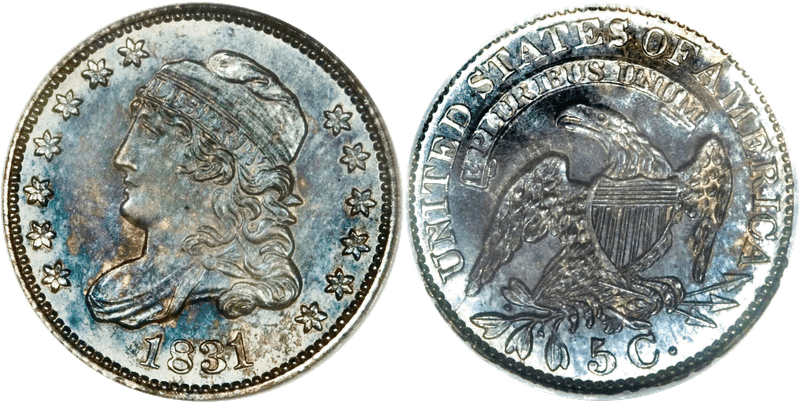

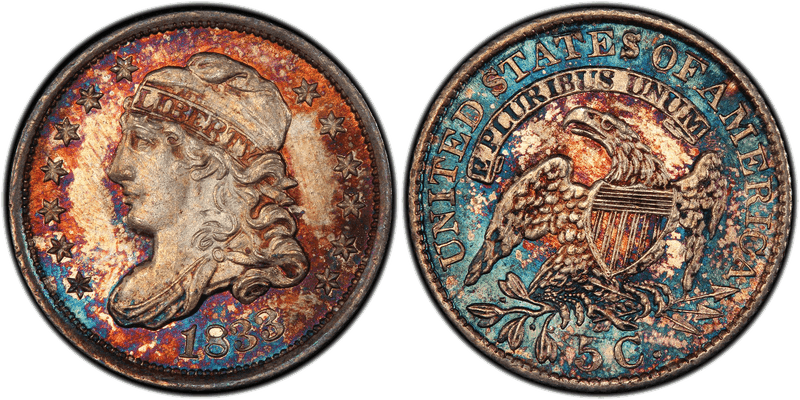
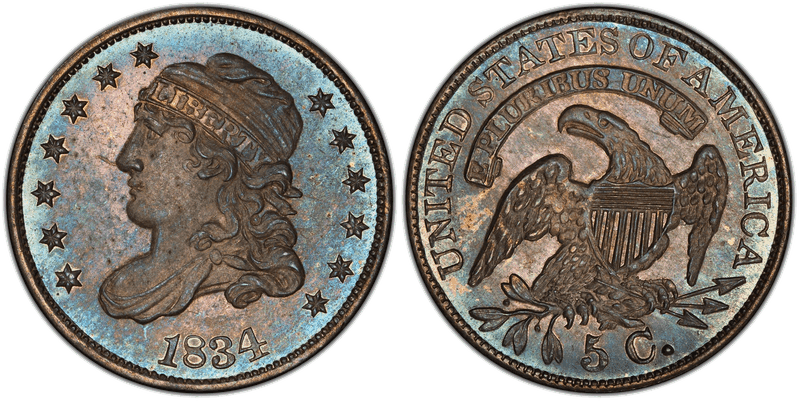
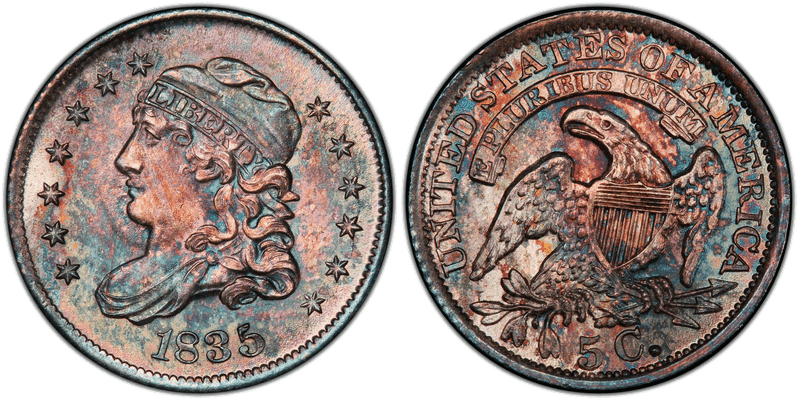
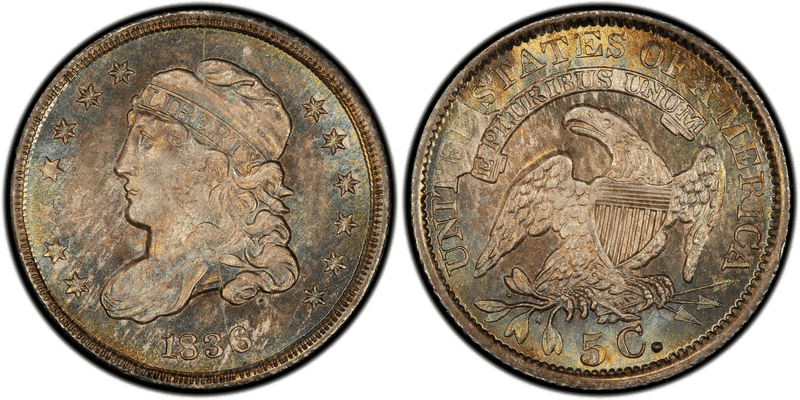

After 1805 the Mint struck no half dimes for more than twenty years. It started again in 1829, and the first pieces were struck on July 4 of that year, the day the cornerstone of the second Philadelphia Mint was laid. Why the denomination came back is not known.
The new coin was the work of Chief Engraver William Kneass, thought to have modeled it on John Reich's Capped Bust Liberty of 1807. Christian Gobrecht cut the letter and numeral punches and later revised Kneass's work. The half dime was struck from the start in a close collar, which the Mint had adopted in the late 1820s. The collar formed the reeded edge during striking, held every coin to the same diameter and gave it a raised rim.
The Mint's yearly totals for these coins are calendar-year figures, and the dies were used until they wore out. NGC notes that the 1831 total includes coins dated 1829 or 1830, that many 1832 half dimes were struck in 1833, and that the 1834 total includes coins dated 1832 and 1833. Director Robert M. Patterson ended the reuse of old-dated dies after taking office in 1835.
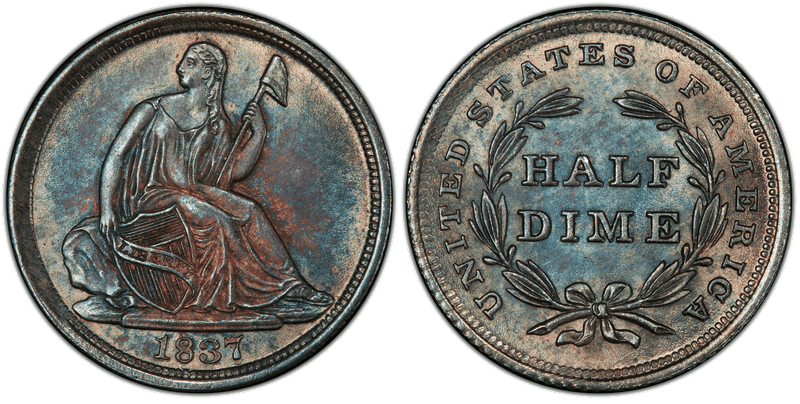
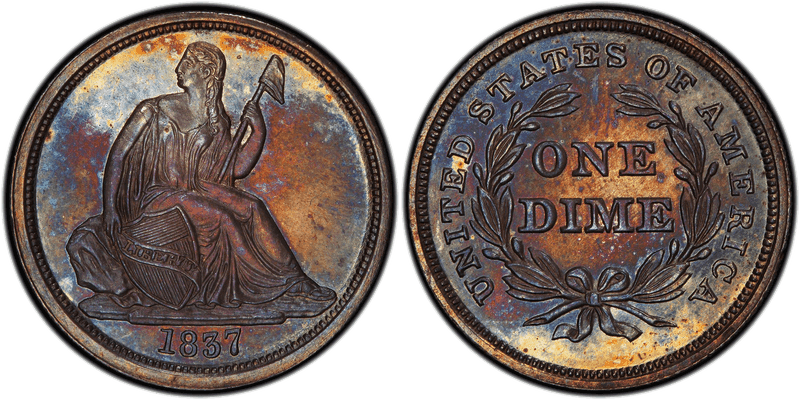
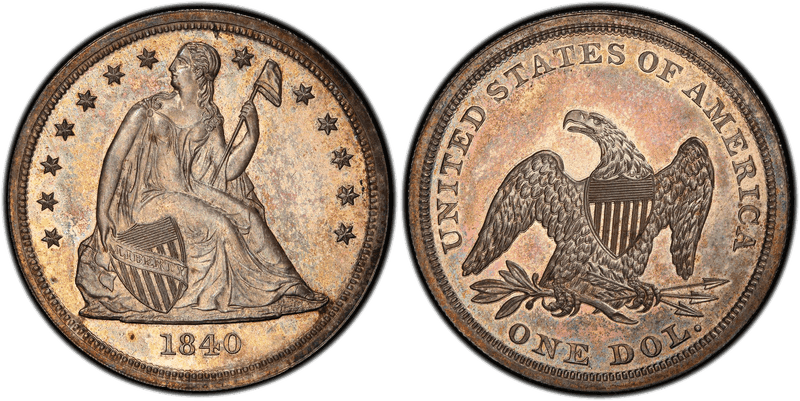
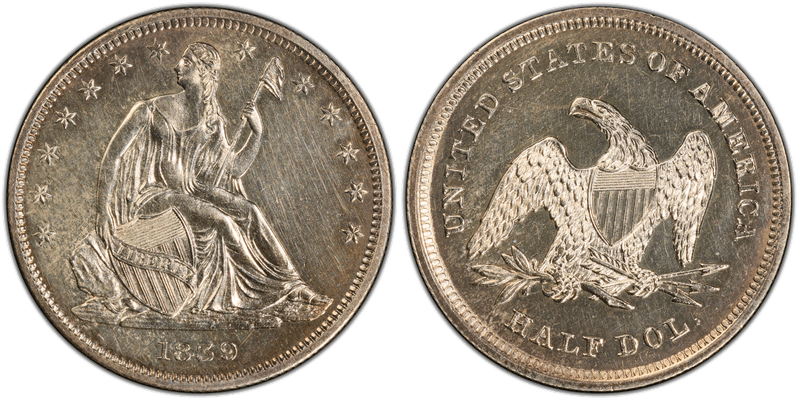
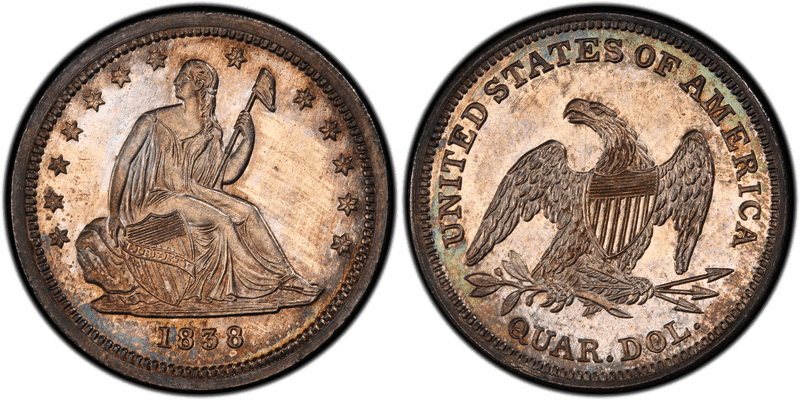
Gobrecht's Seated Liberty half dime was ready in 1837, and NGC reports that the Capped Bust dies were retired that June. Both designs carry the date 1837.