The Coinage Act of April 2, 1792 set up the Mint and named the coins it would make, the half disme among them, worth one twentieth of a dollar. The law fixed the silver standard at 1,485 parts pure silver to 179 parts alloy, a fineness of about .8924.
By that summer most of the Mint's staff had been hired, but it had no buildings: its lots on Seventh Street were bought only on July 18, 1792. The first half dismes were therefore struck, in or around July, on equipment in the Philadelphia workshop of John Harper, a saw maker, with Mint staff running the work. Thomas Jefferson, then Secretary of State, supplied 75 silver dollars and noted in his memorandum book that he received 1,500 half dismes on July 13. He spent some of them on his journey home to Monticello.
In his annual message to Congress that November, George Washington told the House that a "small beginning" had been made in coining half dimes, prompted by the shortage of small change. Later stories added that the silver came from the Washington household and that the portrait shows Martha Washington. Neither has solid evidence behind it.
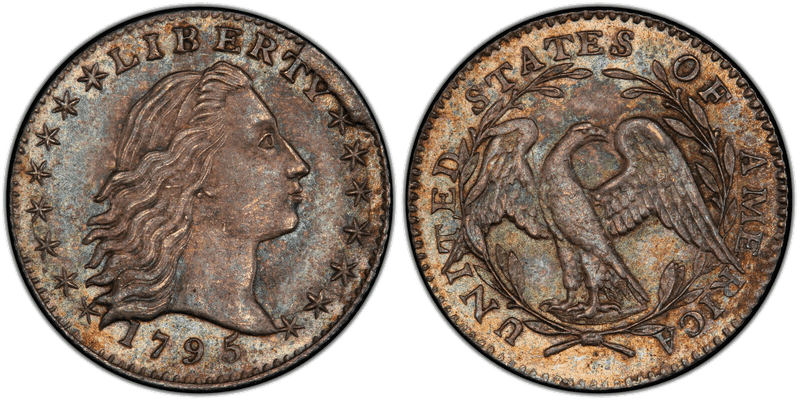
Whether the half disme was a pattern or the country's first circulating coin is still argued. It is catalogued among the patterns as Judd-7, and the Red Book has long listed it that way. NGC reads the 1,500 figure as a hesitant start at real coinage, and CoinWeek points to the wear on surviving coins and the documentary record as proof that they circulated. The Mint itself treats the 1793 Chain cent as its first circulating coin. The design was used for this one issue only; half dimes struck inside the Mint began with the Flowing Hair coins dated 1794.