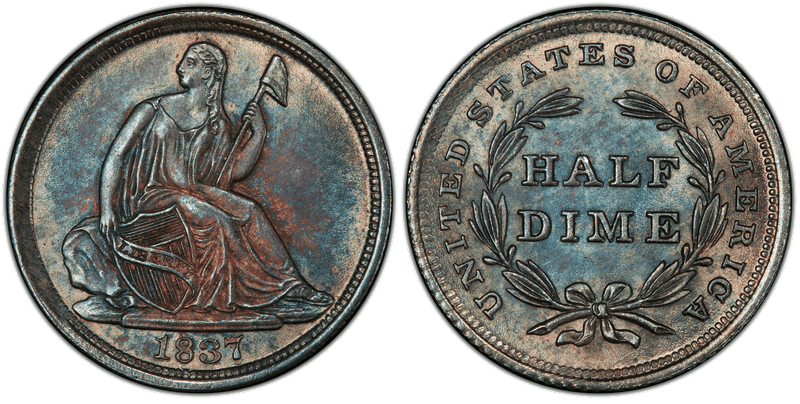
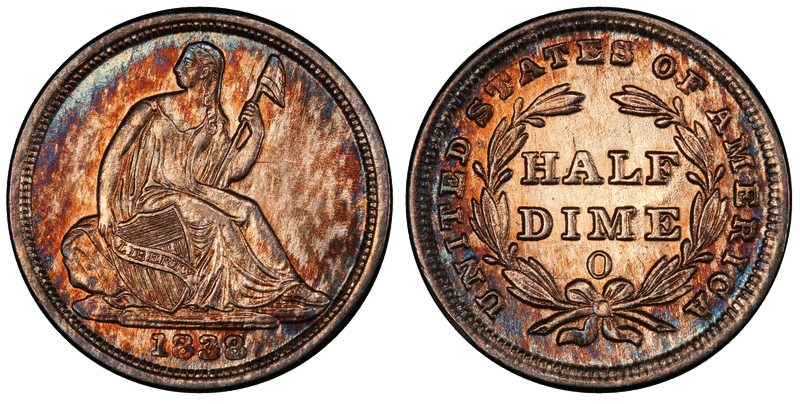
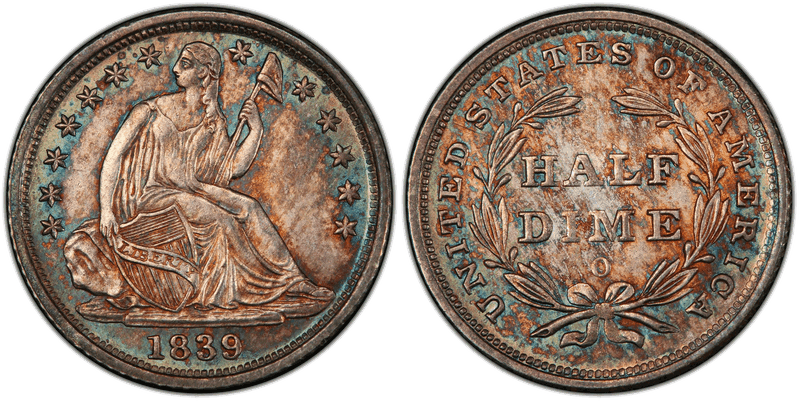
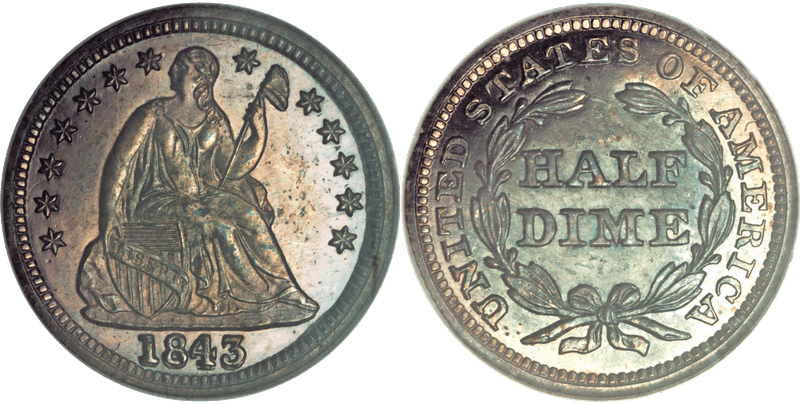
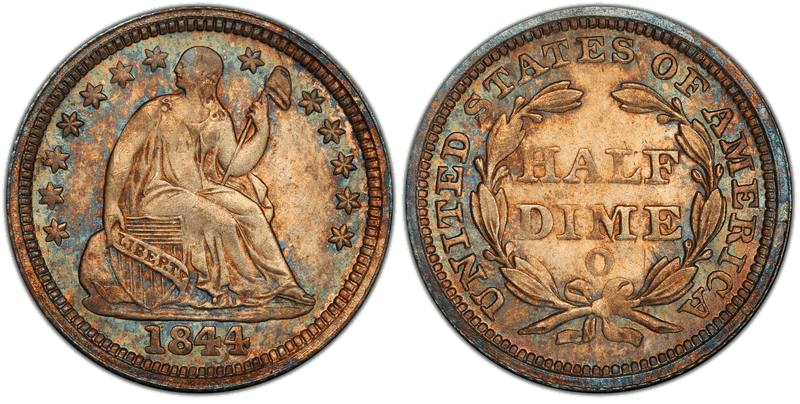
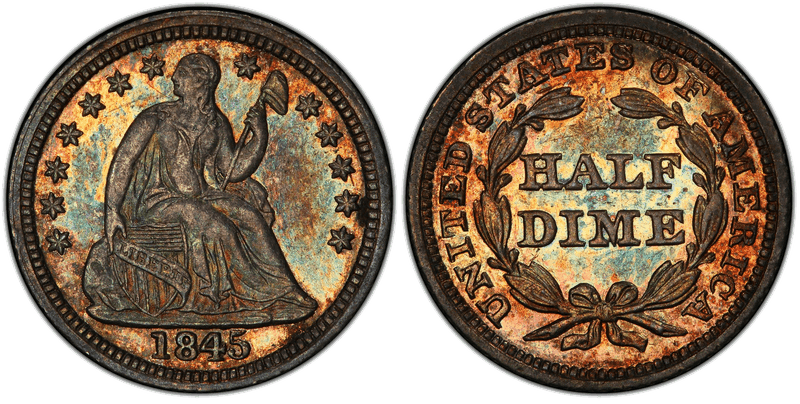
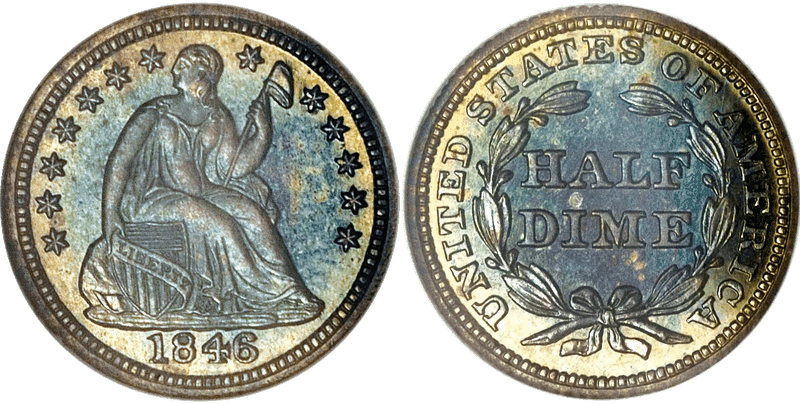
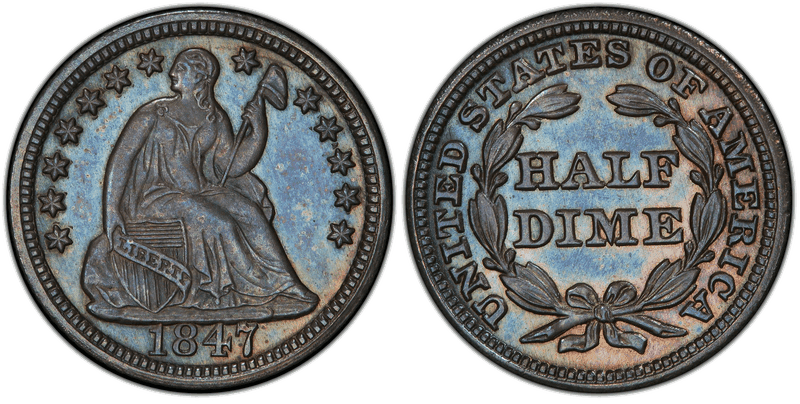
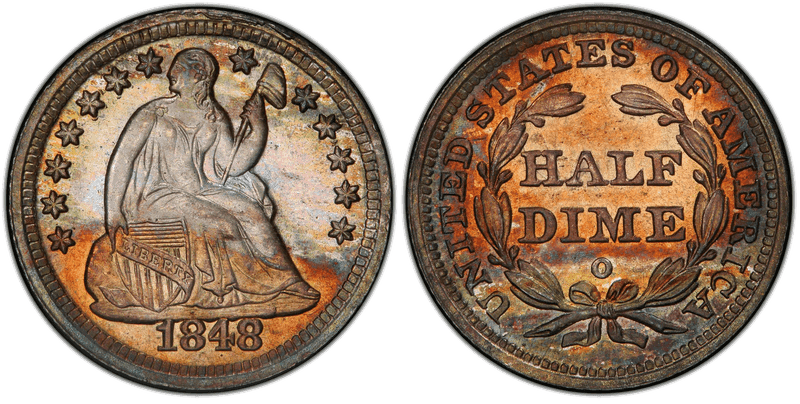
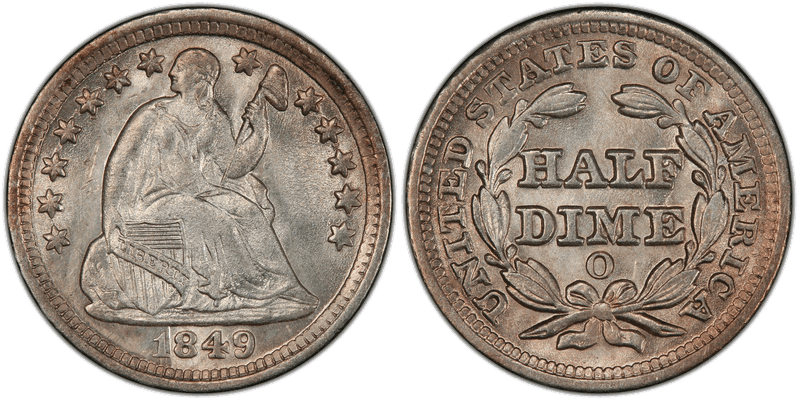
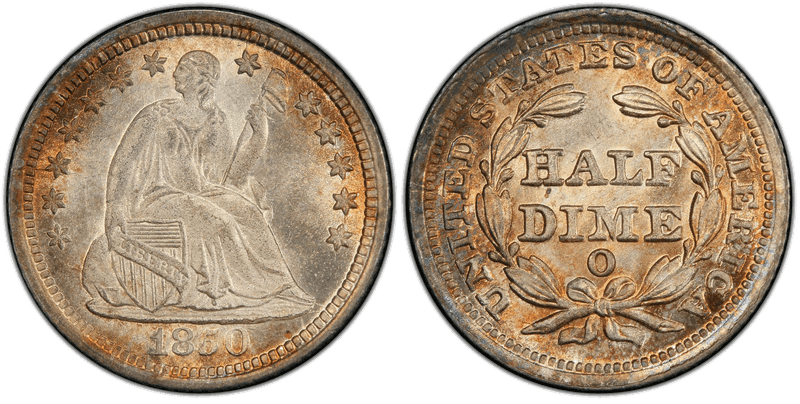
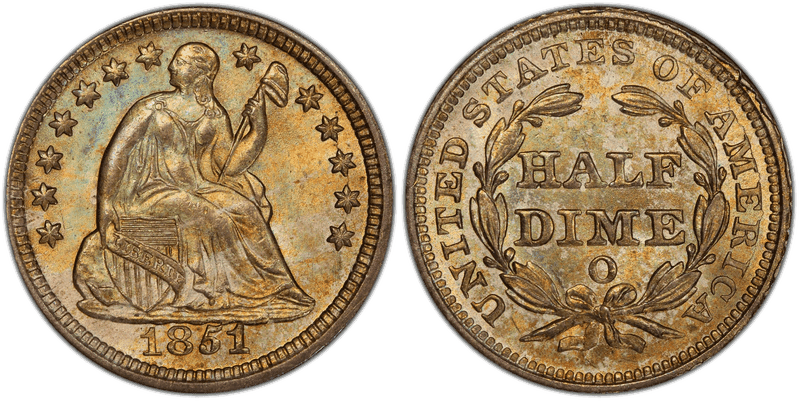
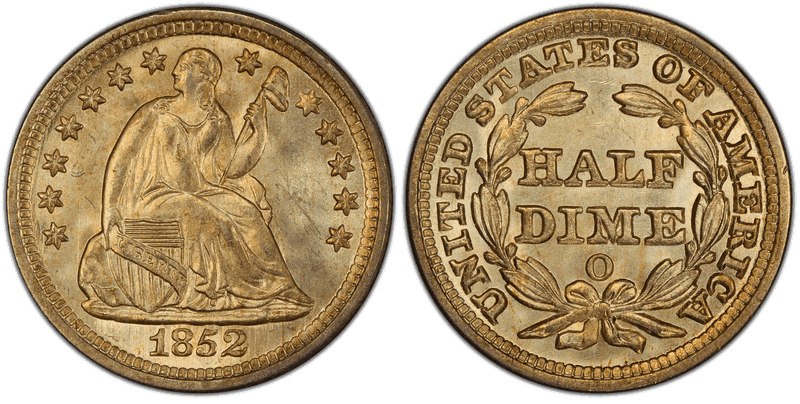
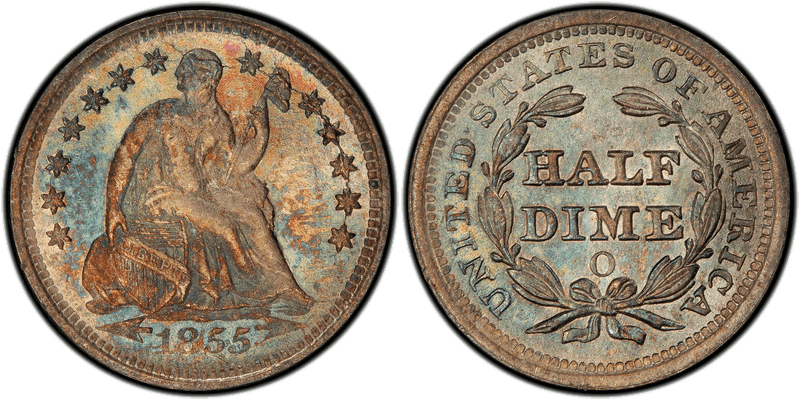
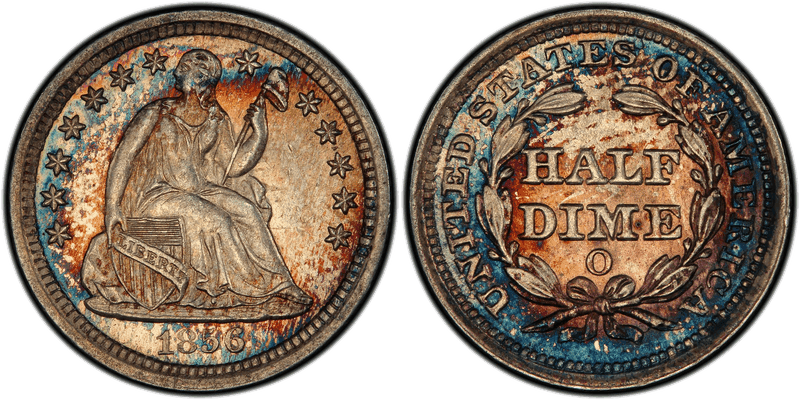
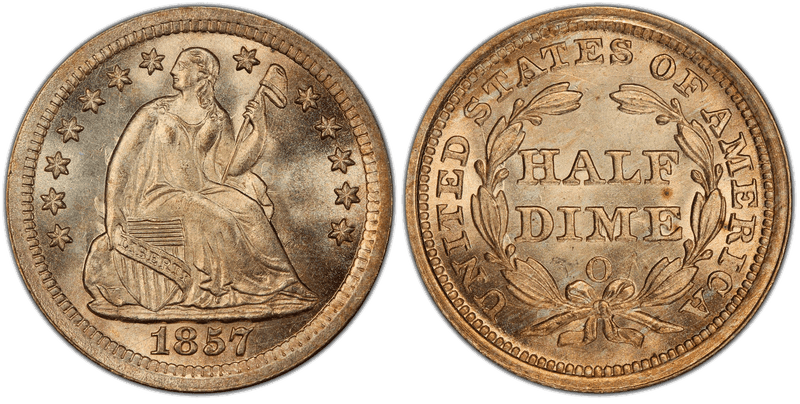
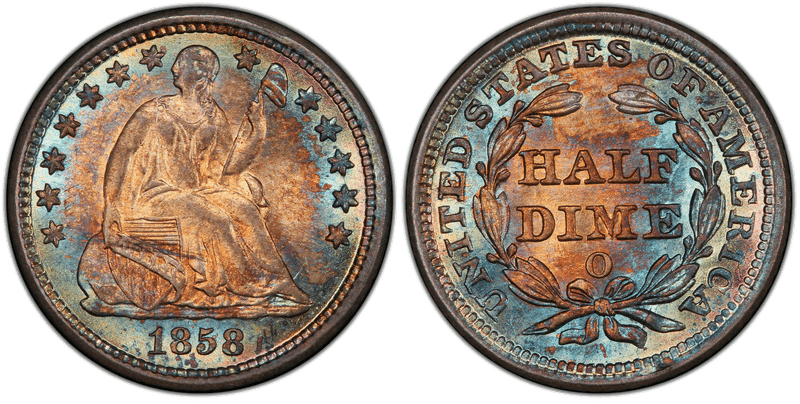
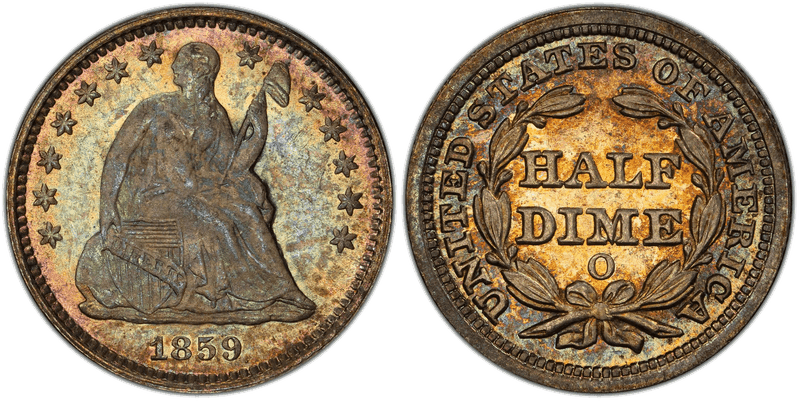
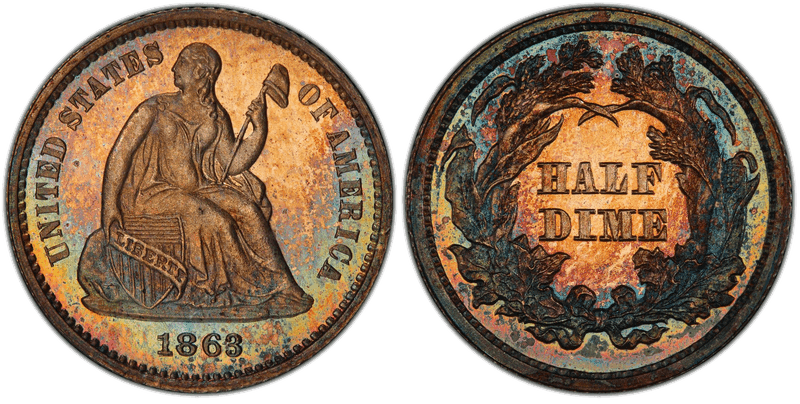
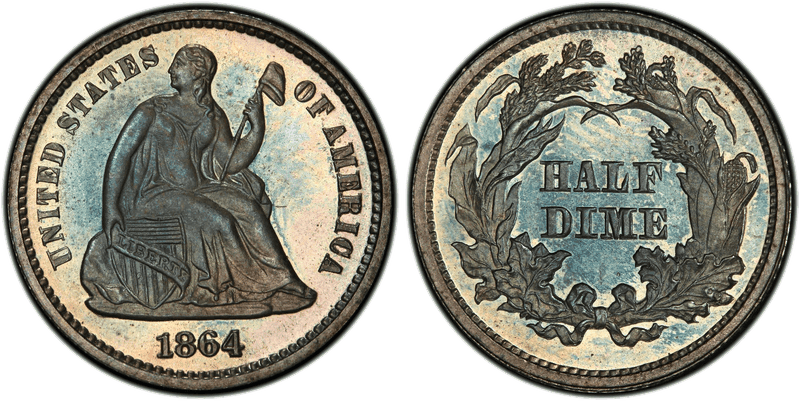
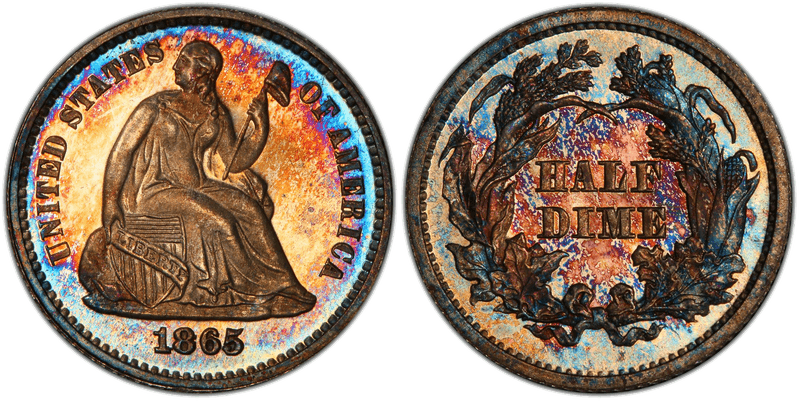
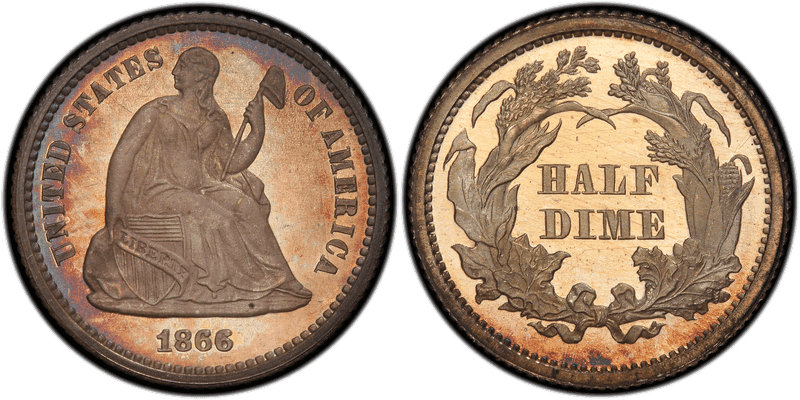
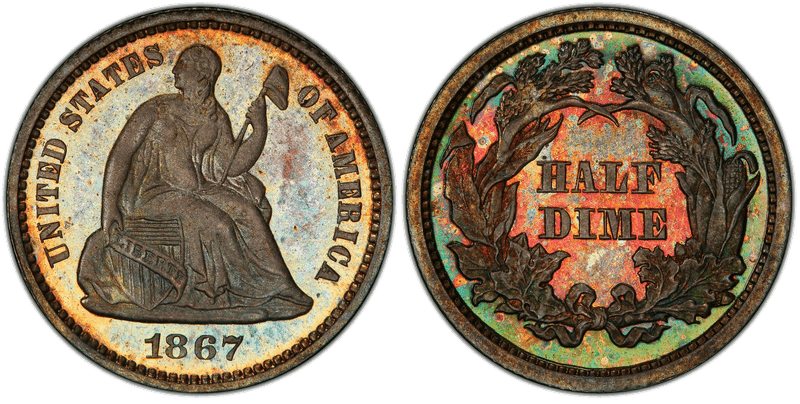
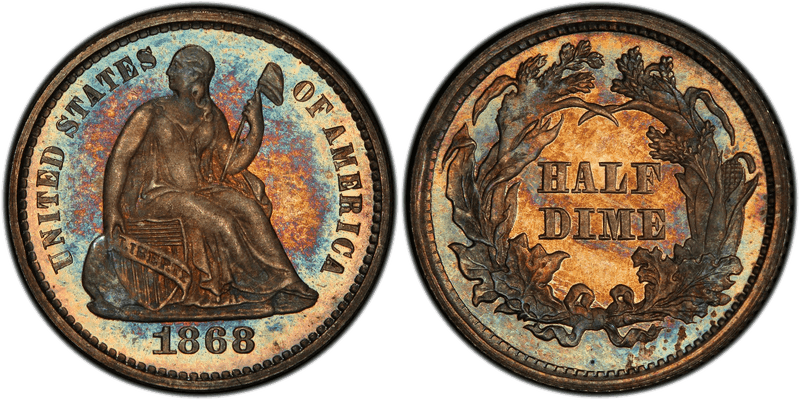
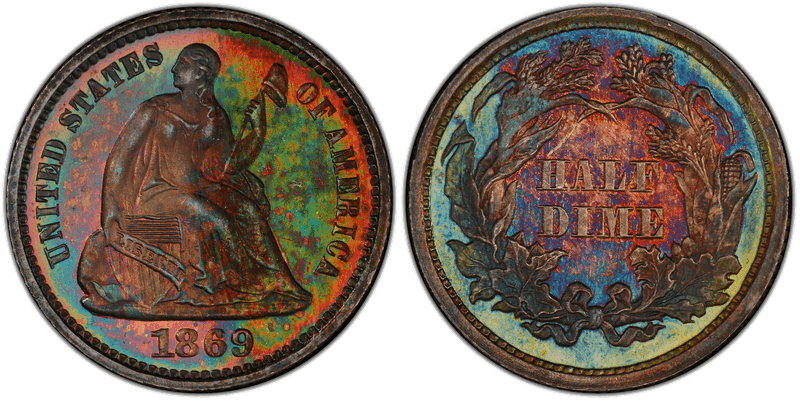
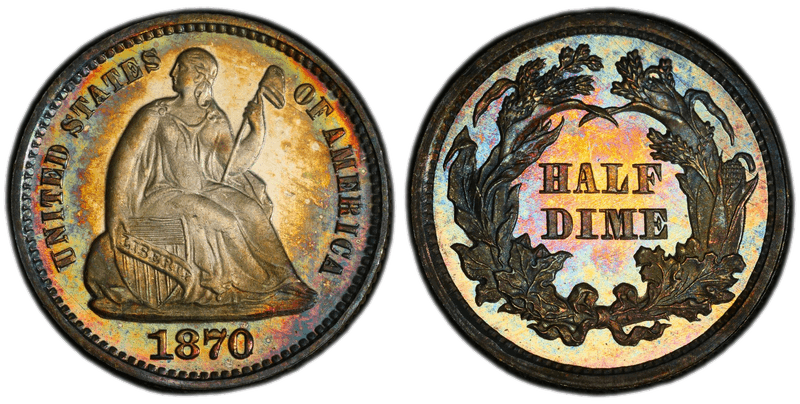
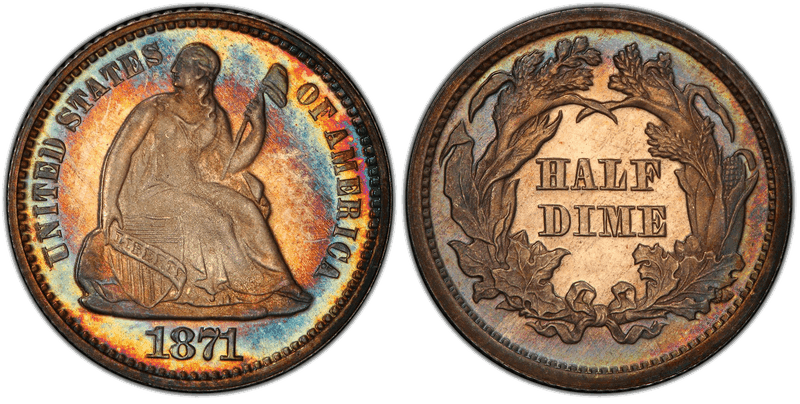
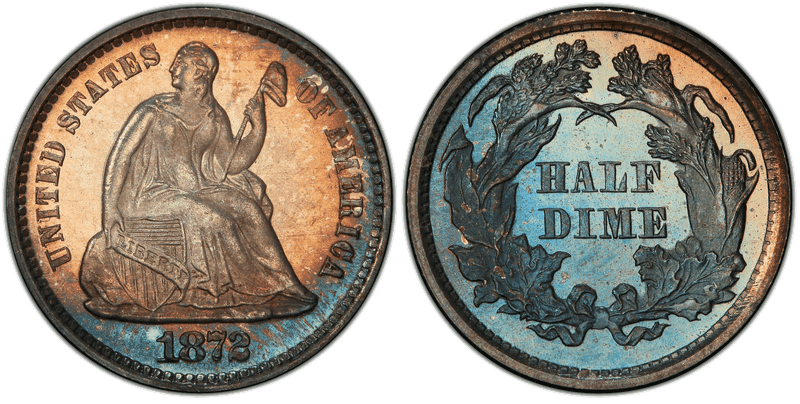
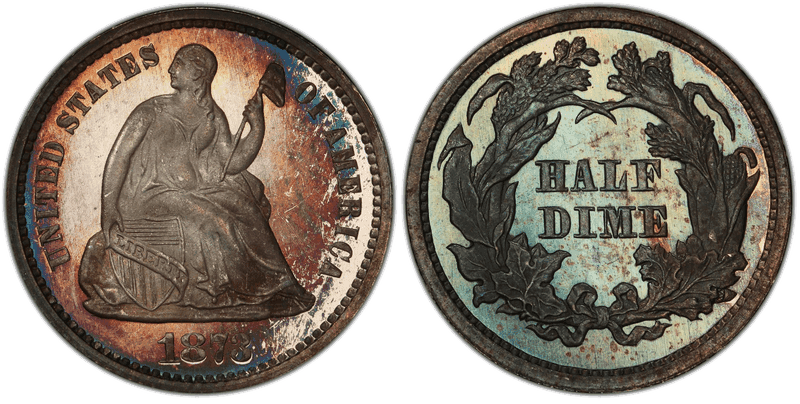
The seated figure of Liberty that Christian Gobrecht engraved from drawings by Thomas Sully and Titian Peale first appeared on the silver dollars of 1836, which few people saw. Most Americans met it on the dimes and half dimes of 1837. Philadelphia struck its first Seated half dimes on July 25, 1837, with no stars on the obverse. New Orleans received the same starless dies and kept using them for its first half dimes, dated 1838, while Philadelphia moved on.
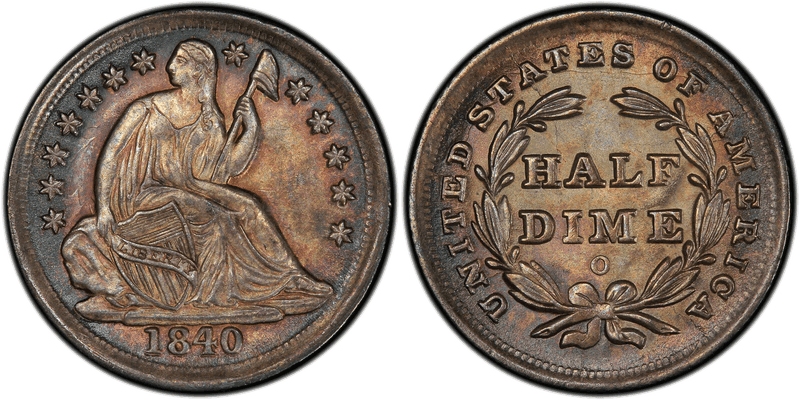
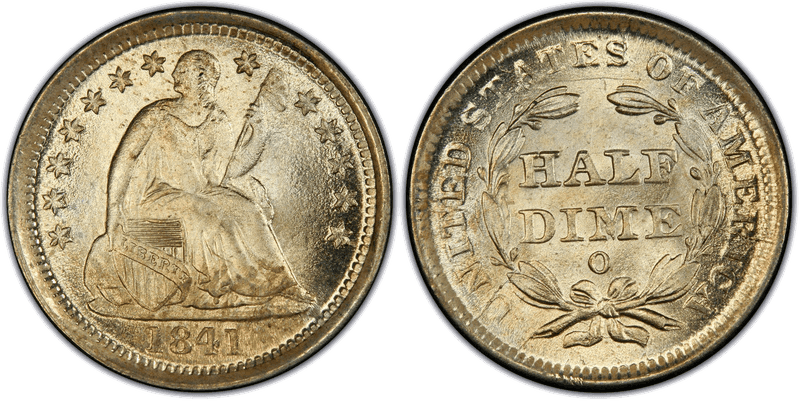
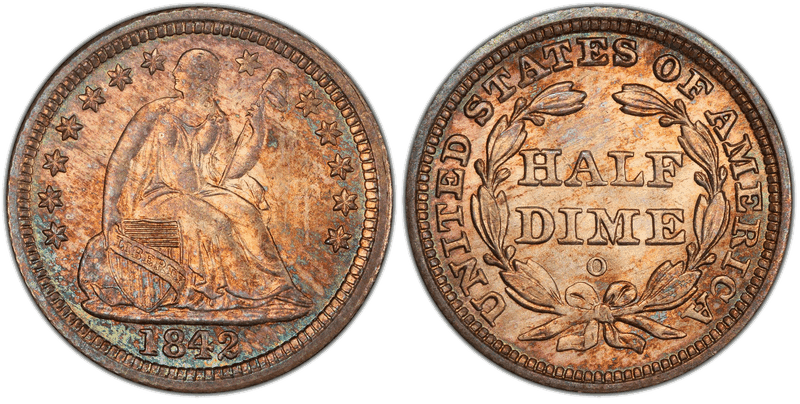
Philadelphia's 1838 half dimes added thirteen stars, punched by hand into each die because the master hub did not yet carry them. In 1840 a revised figure with a fold of drapery under Liberty's left elbow replaced Gobrecht's original, and both Philadelphia and New Orleans struck the old and new designs that year.
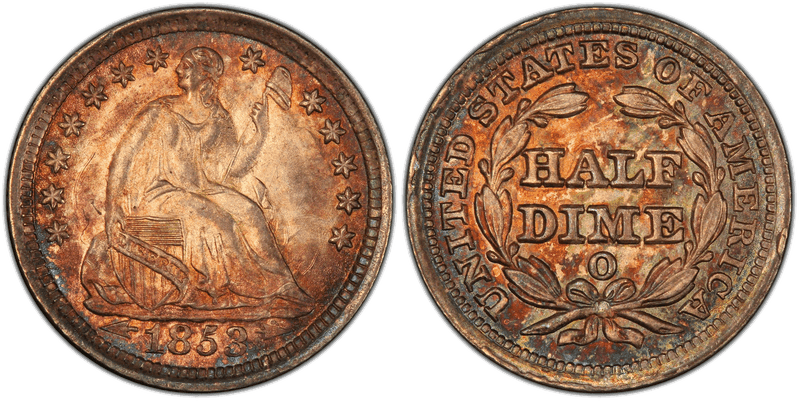
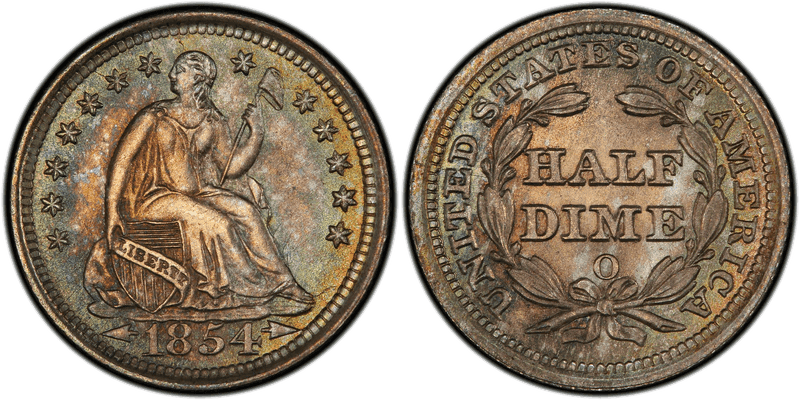
When the California gold rush lowered the value of gold against silver, silver coins became worth more than face value and disappeared into hoards. The Act of February 21, 1853 cut the weight of the half dime and the larger silver coins by about seven percent, and arrowheads beside the date marked the lighter pieces through 1855. Philadelphia struck more than 13 million half dimes at the new weight in 1853 alone. Large mintages continued while Mint Director James Ross Snowden paid out small silver coins for bullion deposits, a policy the Treasury stopped late in the decade.
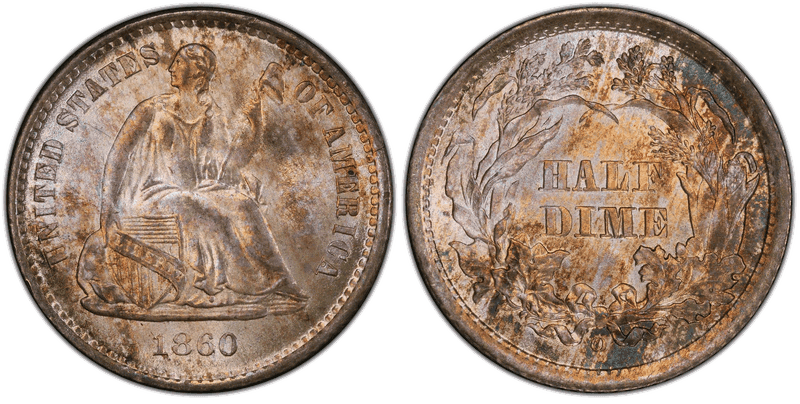
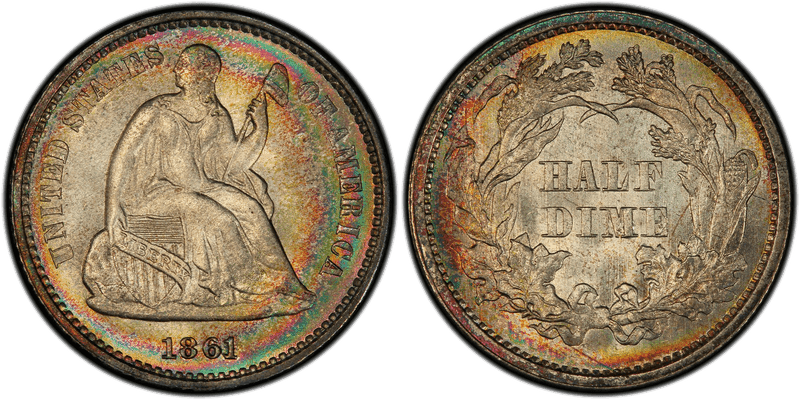
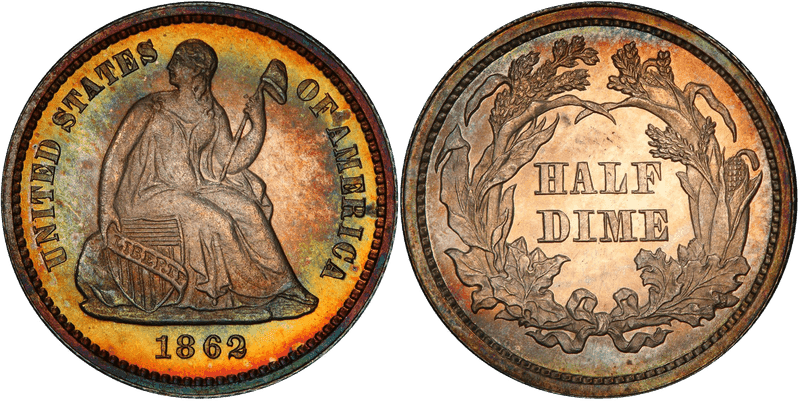
For 1859 alone, Philadelphia used a new obverse by assistant engraver Anthony C. Paquet, with a slimmer Liberty, a more curved LIBERTY ribbon and stars with hollow centers. New Orleans kept the older figure. In 1860 a larger wreath of cereal grains and leaves left no room for the legend on the reverse, so UNITED STATES OF AMERICA moved to the obverse in place of the stars. That change is credited to Chief Engraver James B. Longacre. New Orleans struck its last half dimes in 1860, and San Francisco began in 1863.
Civil War hoarding kept Philadelphia's circulation strikes small from 1863 through 1867. Congress authorized a copper-nickel five-cent piece in May 1866, and the two coins circulated together until the Mint Act of 1873 abolished the half dime. The last were struck early in 1873.