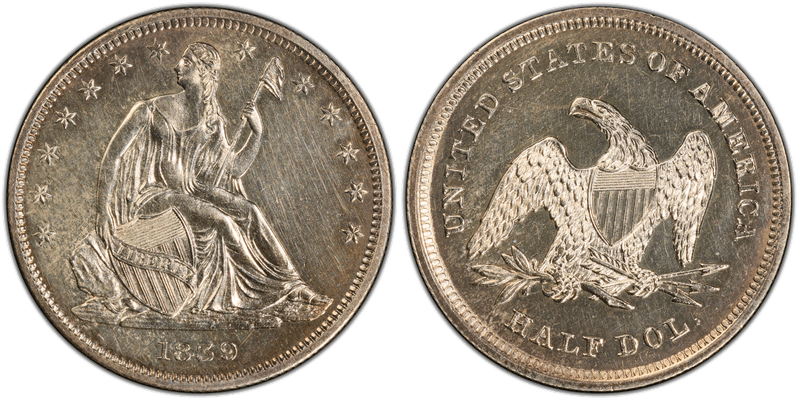
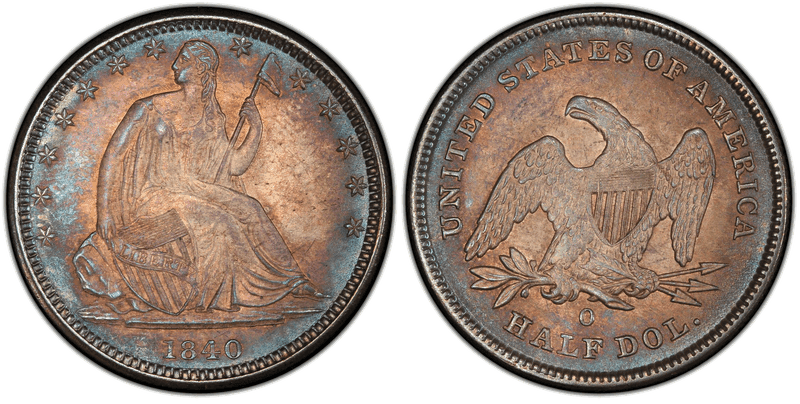
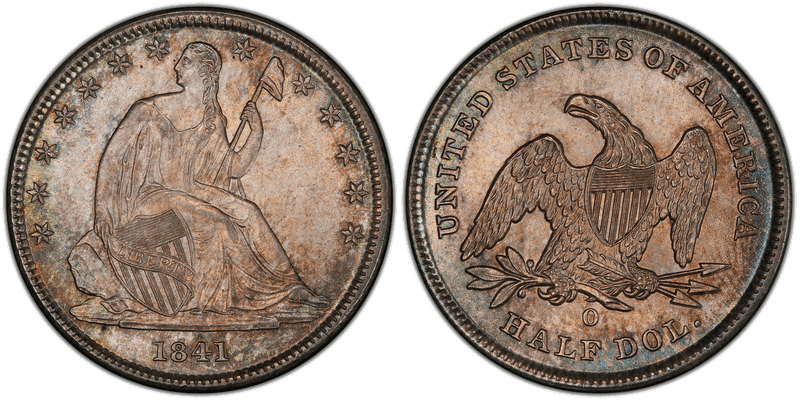
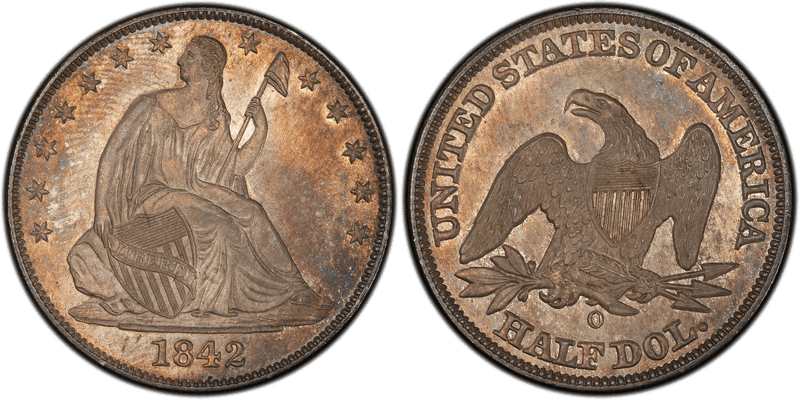
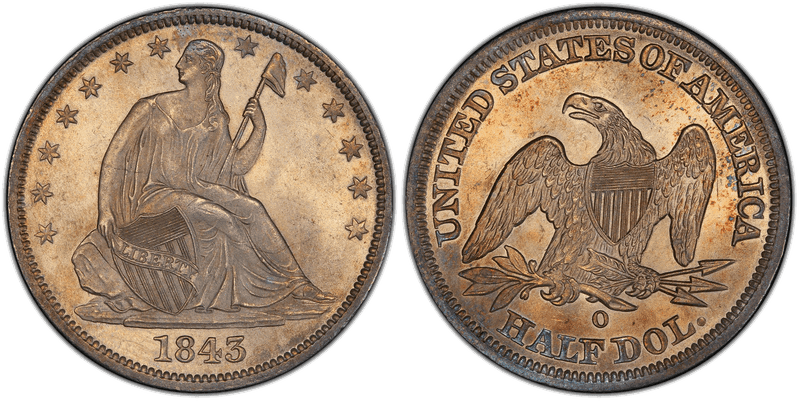
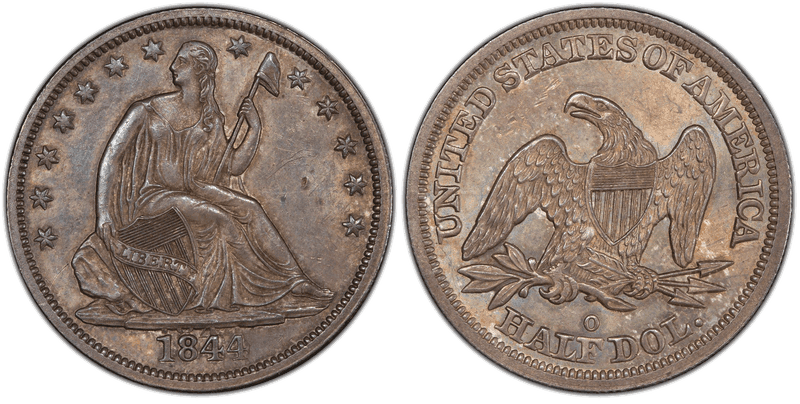
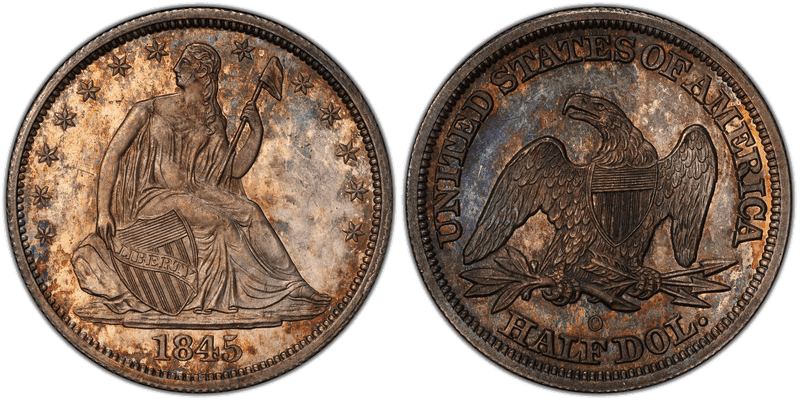
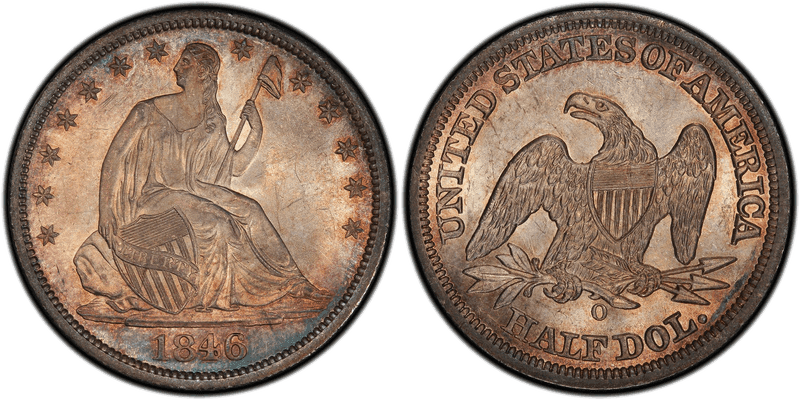
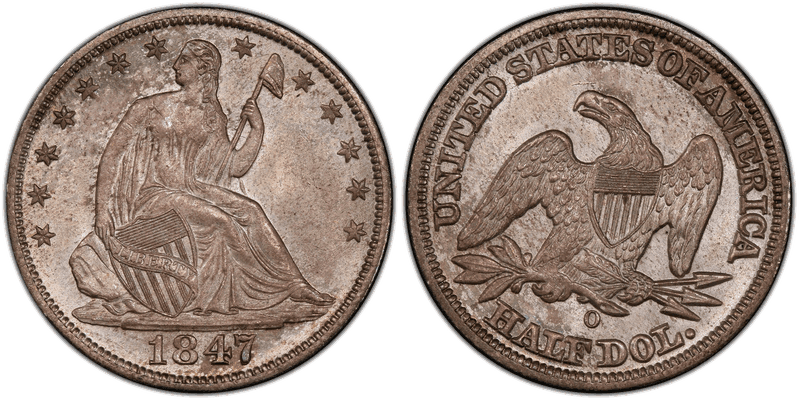
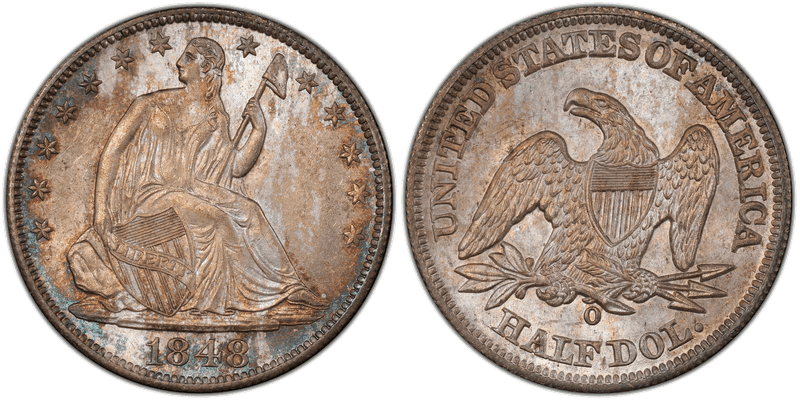
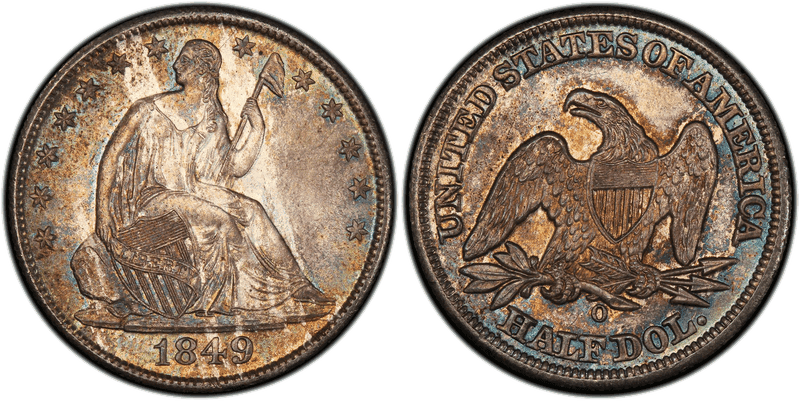
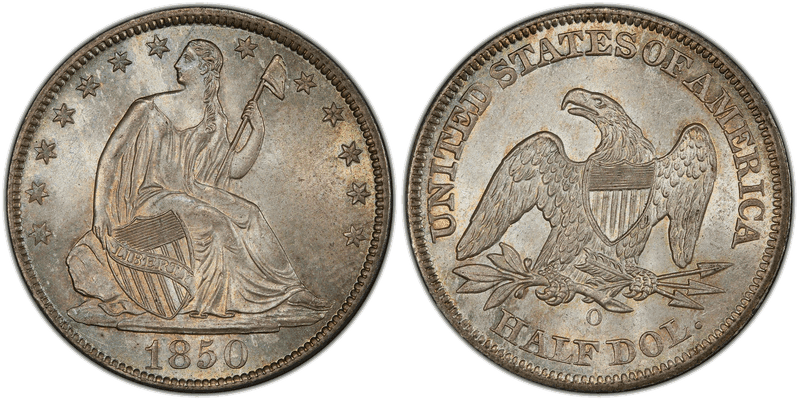
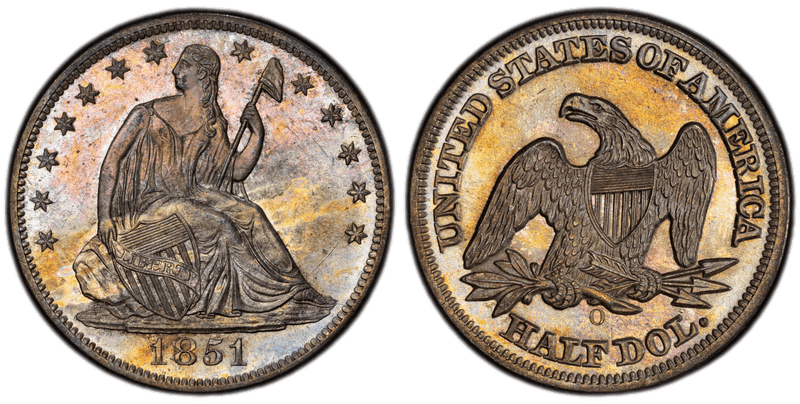
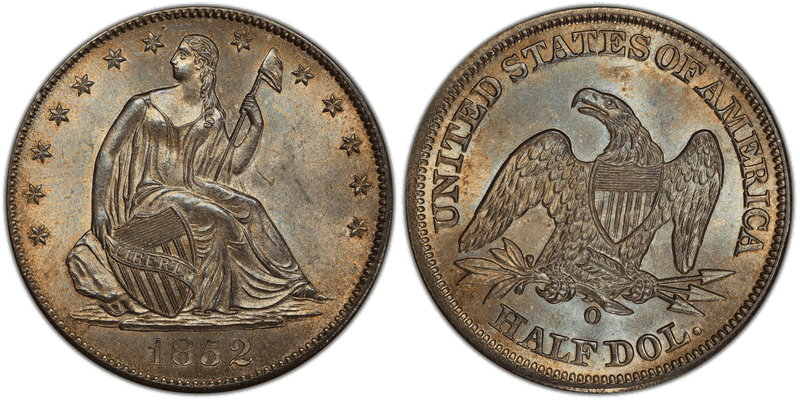
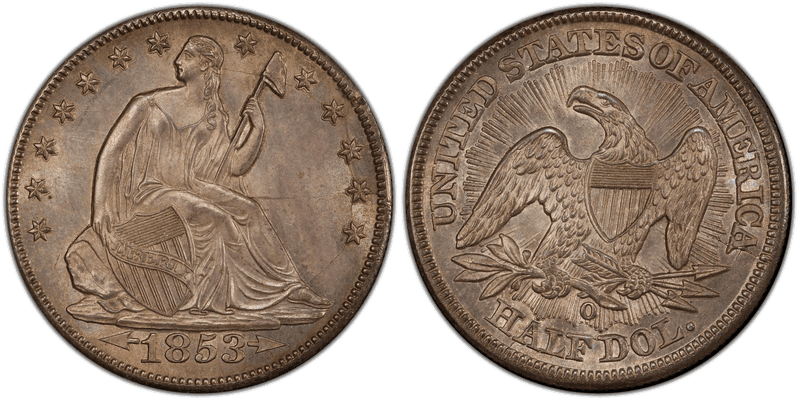
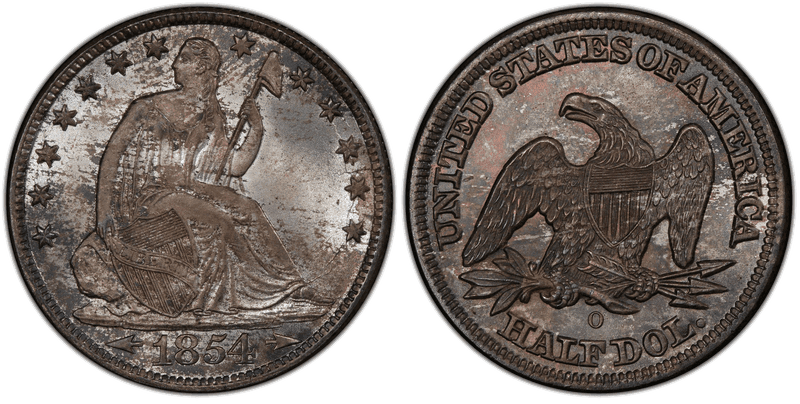
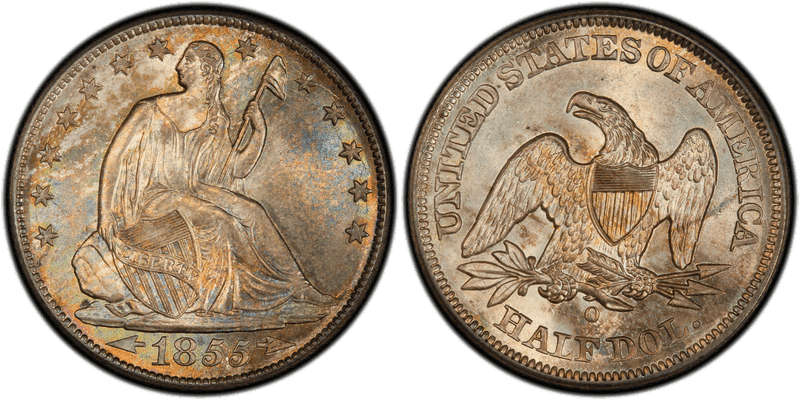
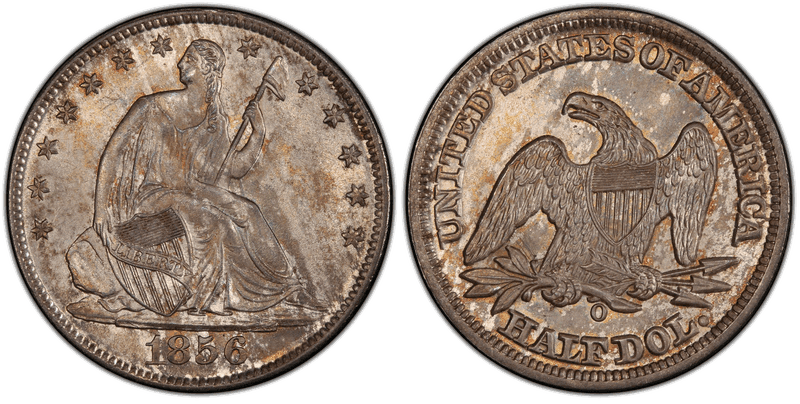
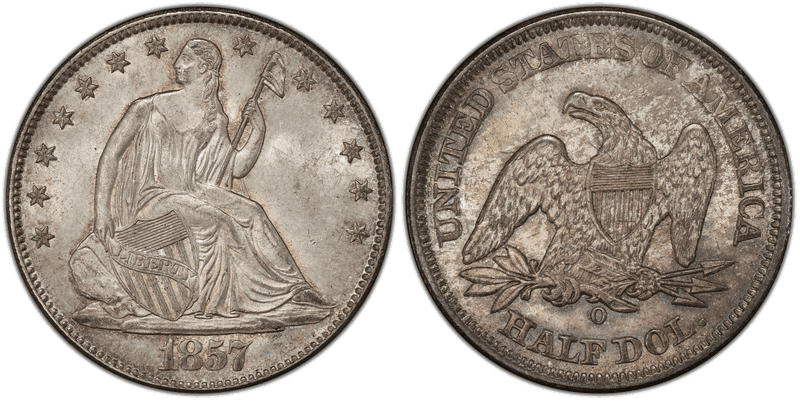
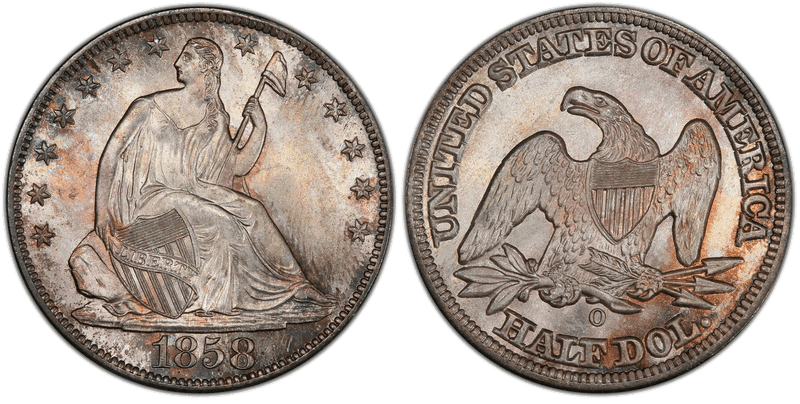
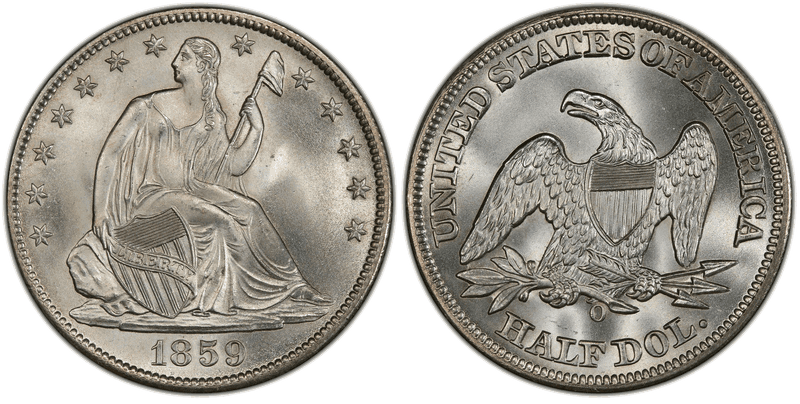
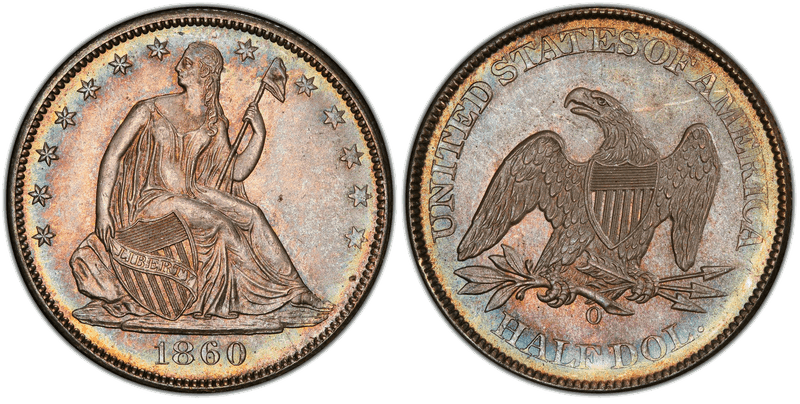

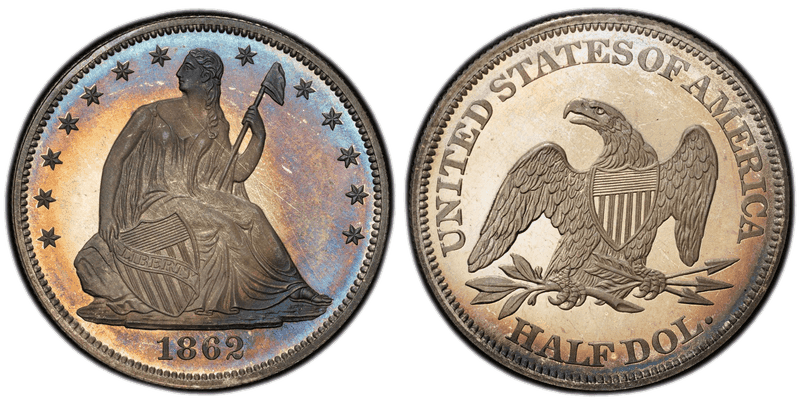
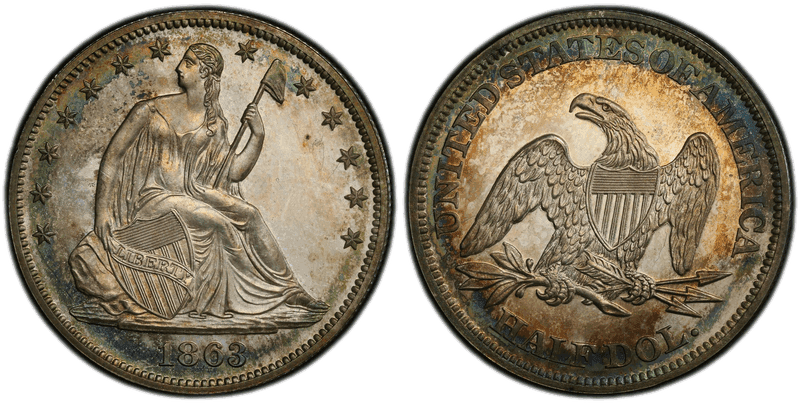
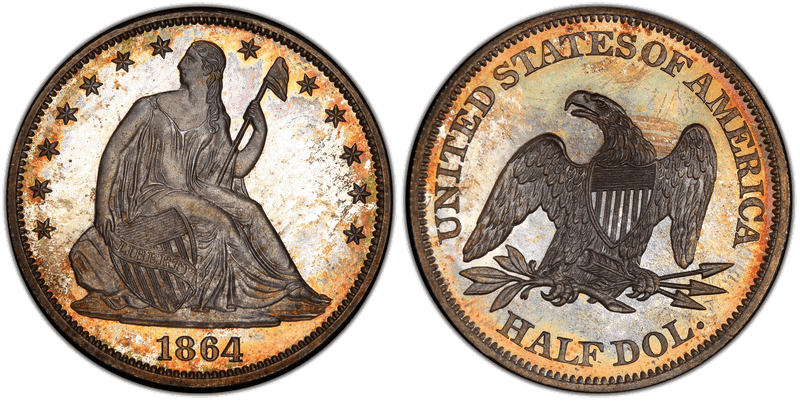
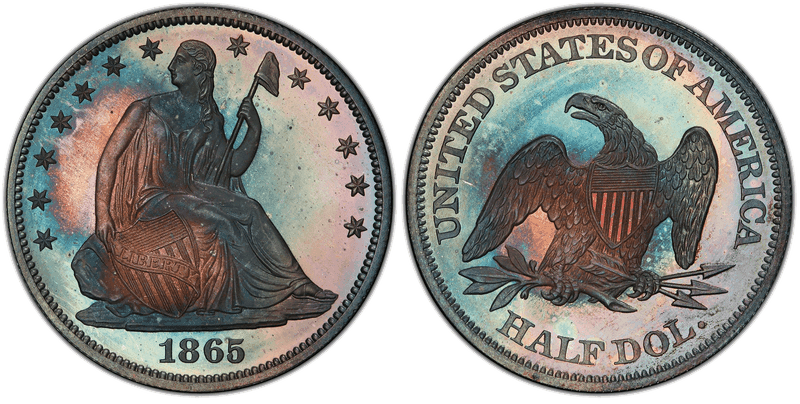
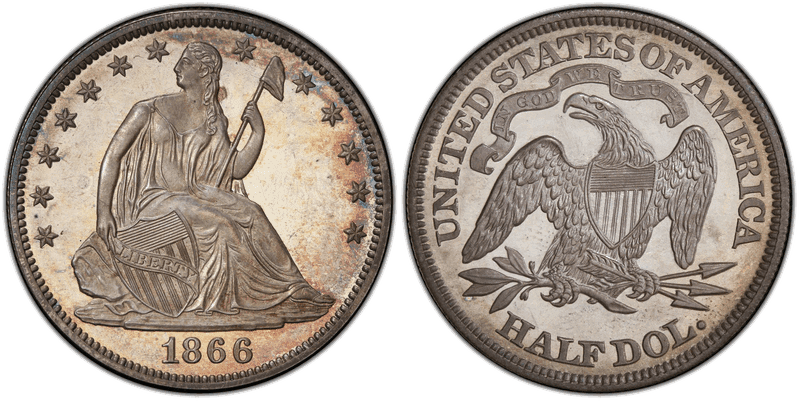
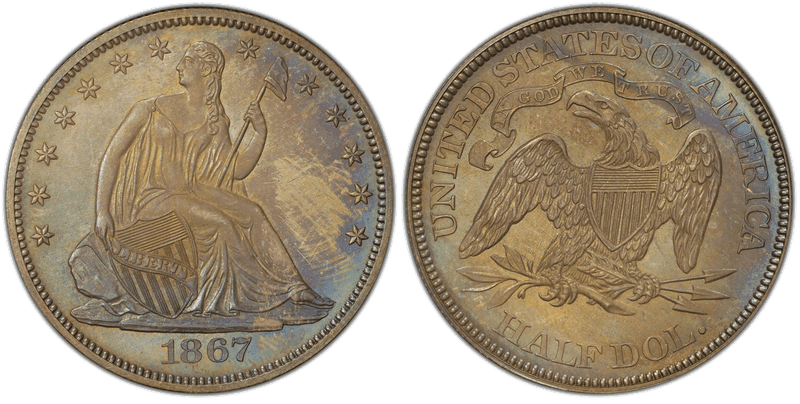
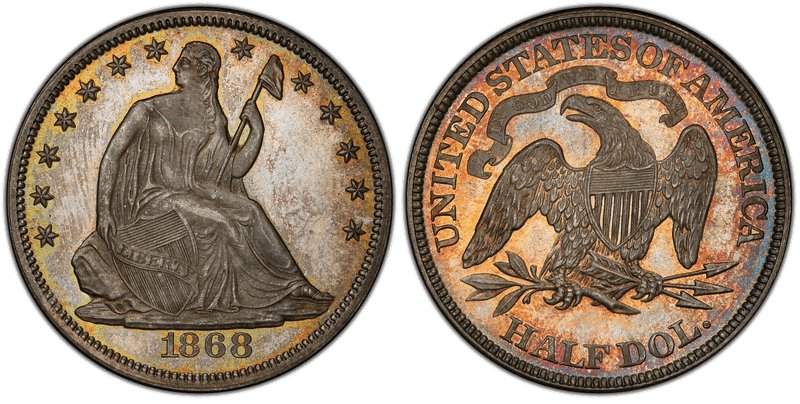
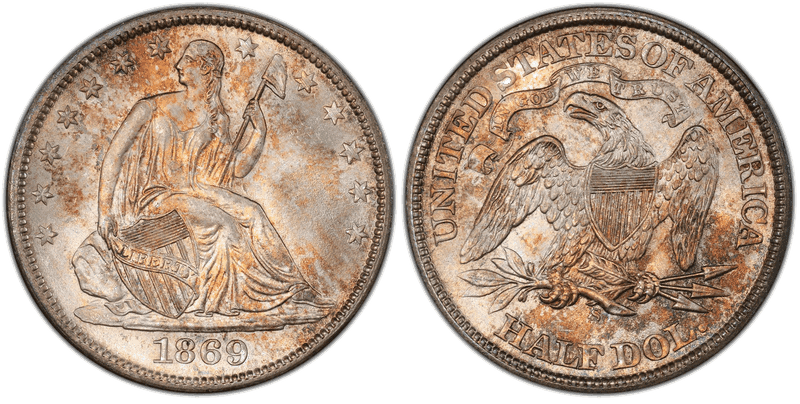
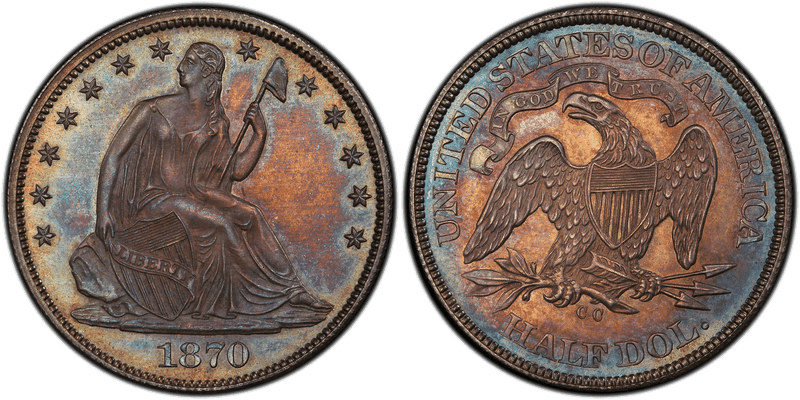
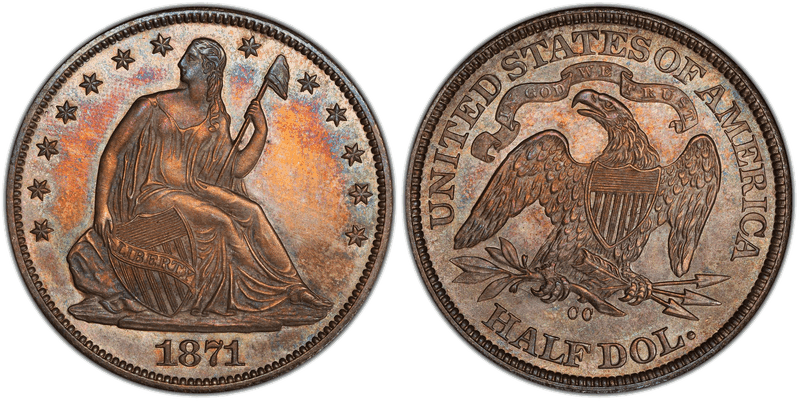
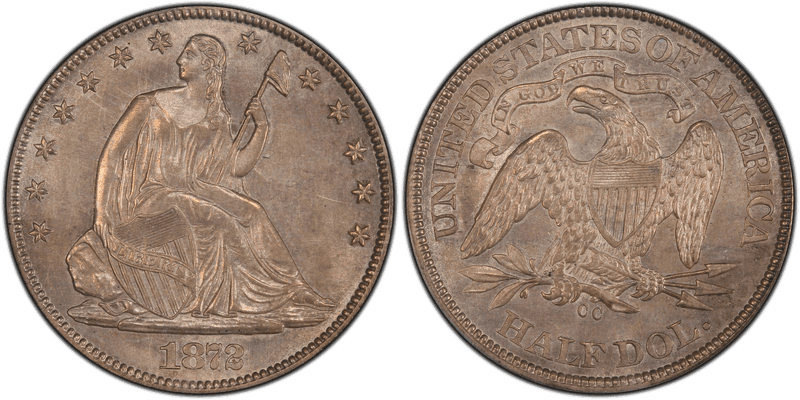
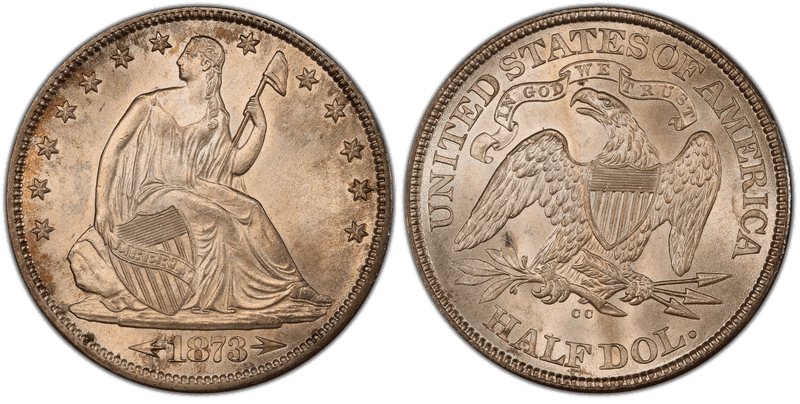
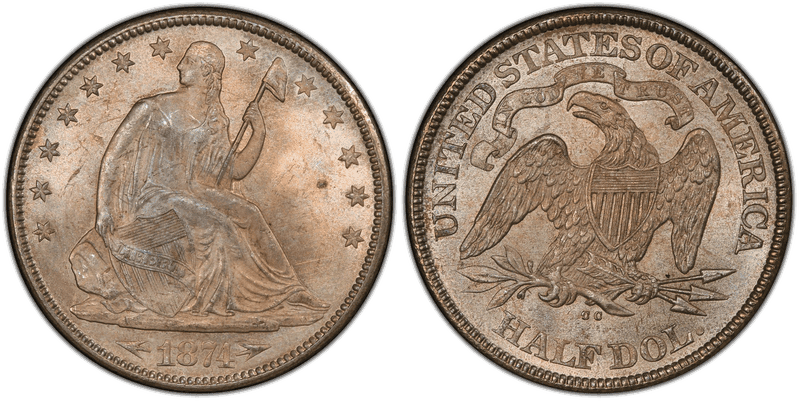
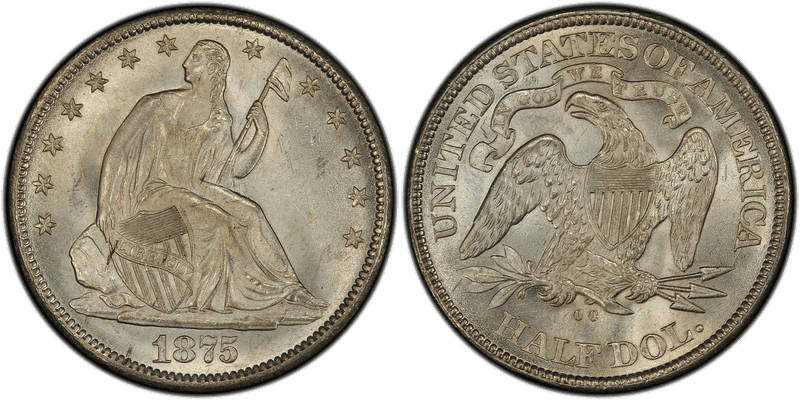
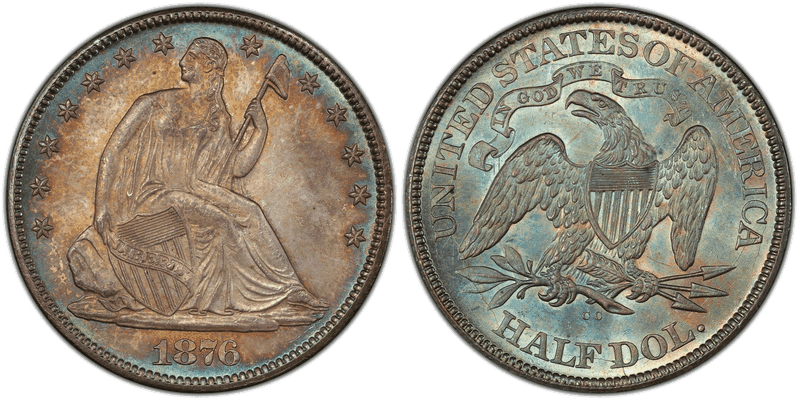
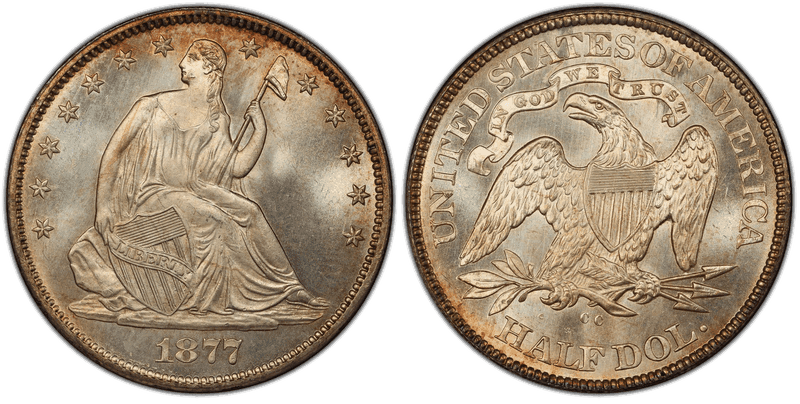
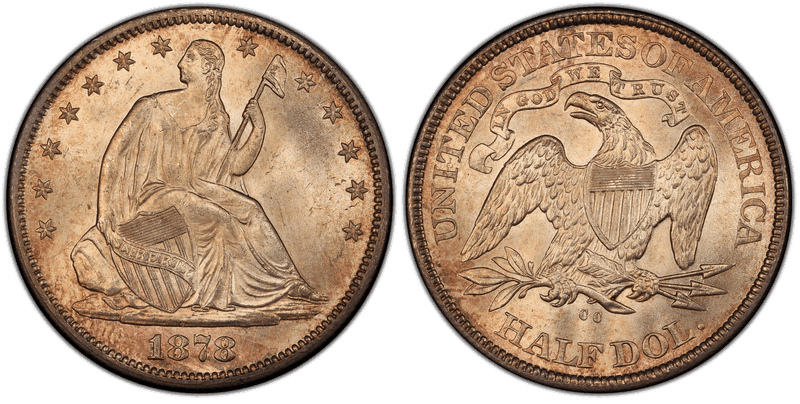
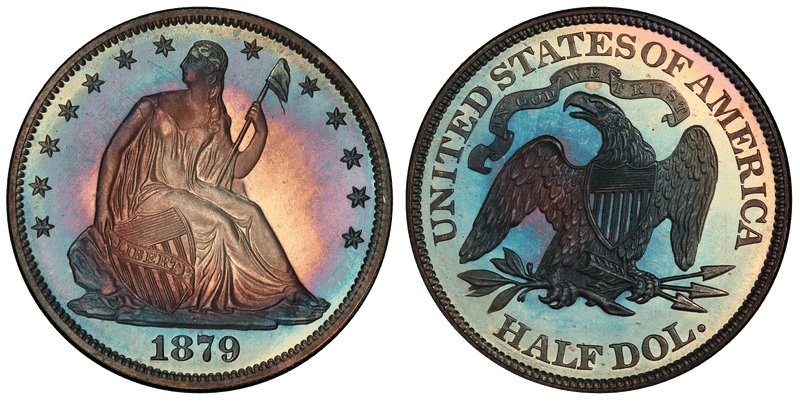
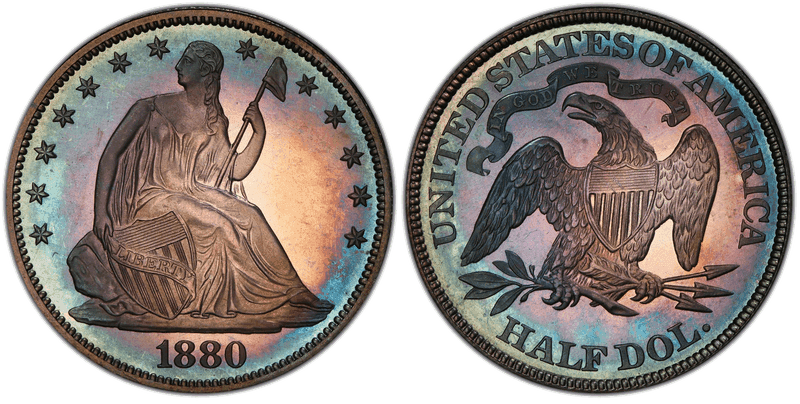
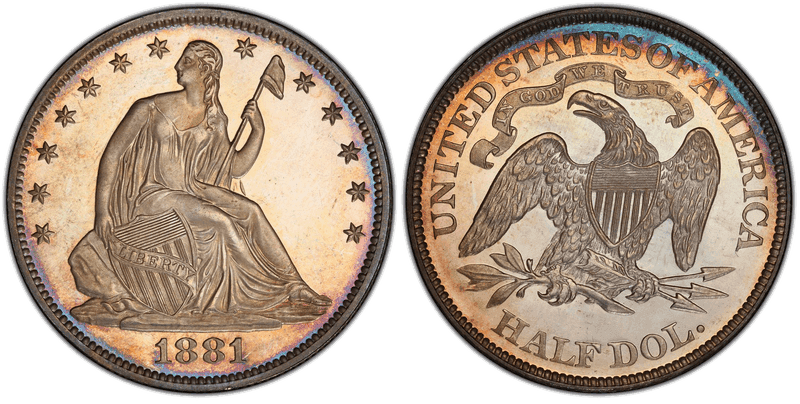
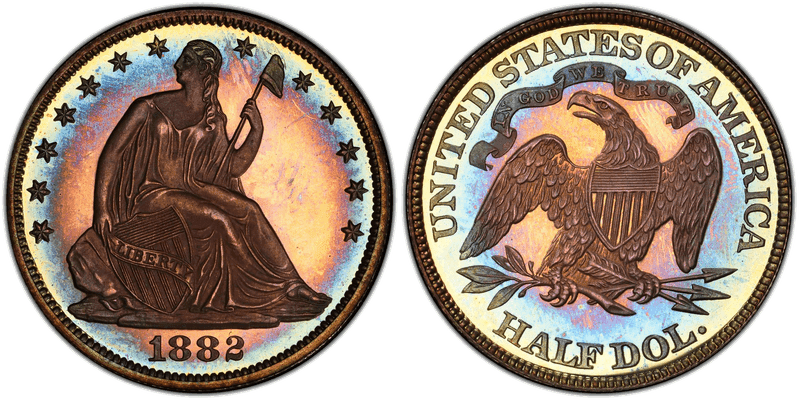
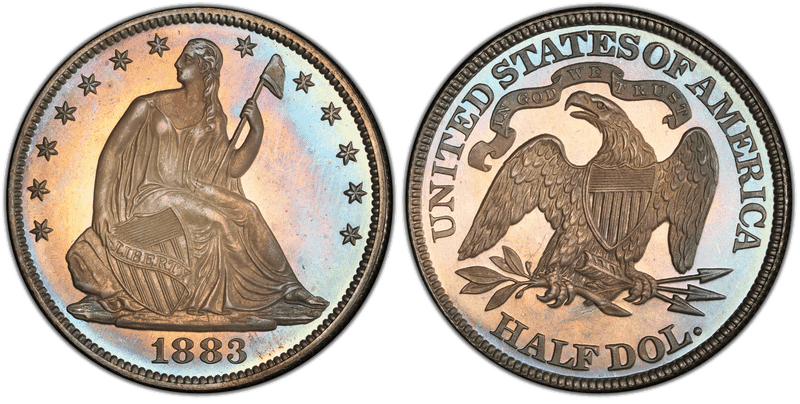
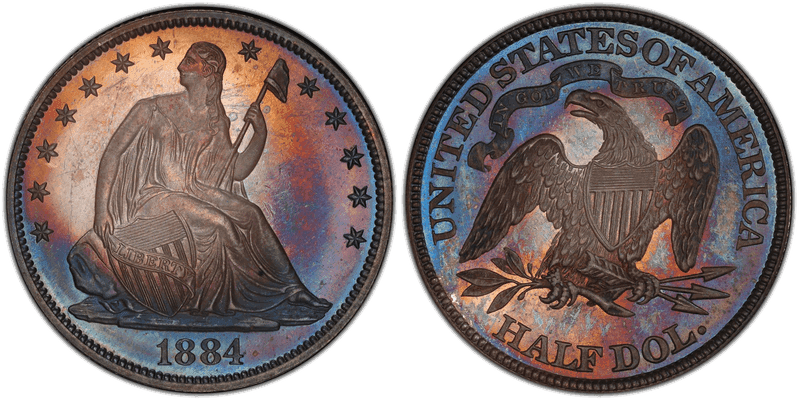
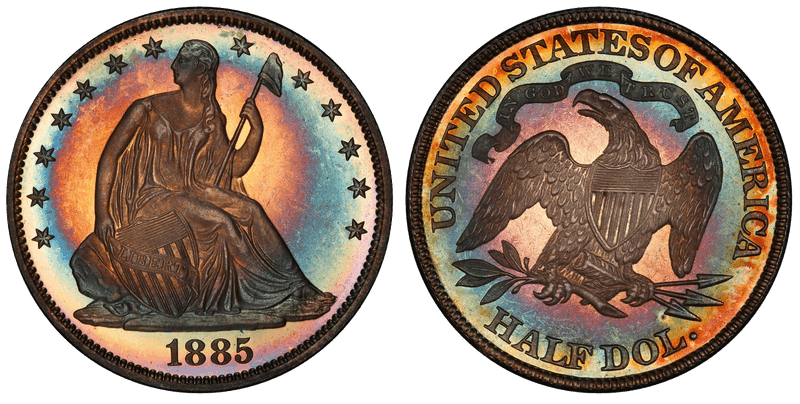
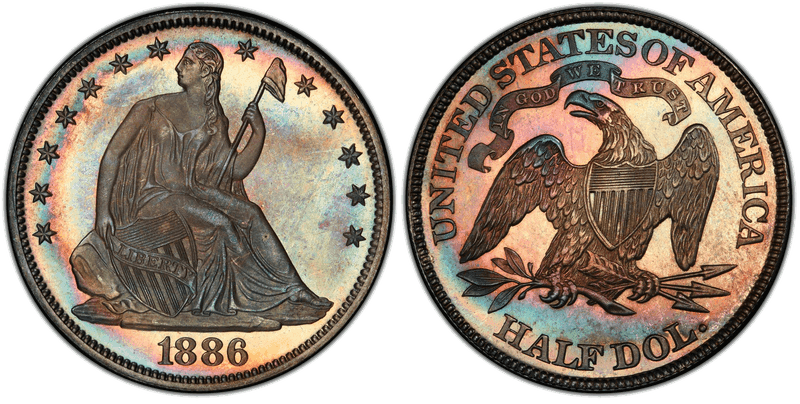
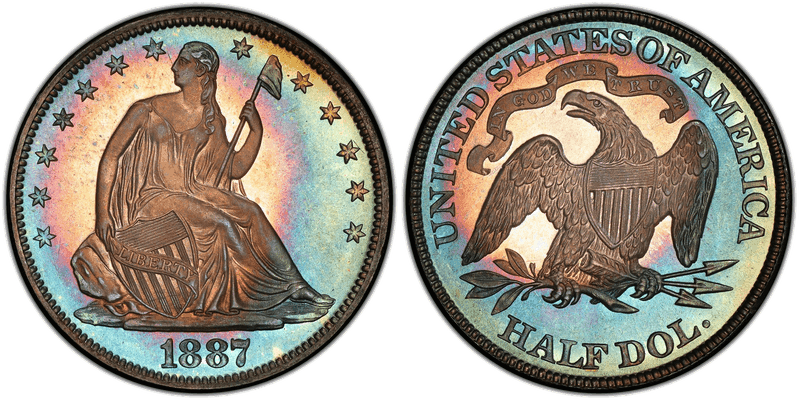
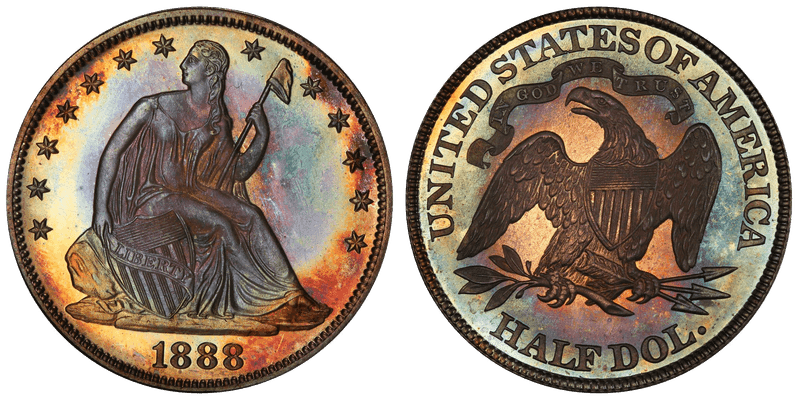
The Seated Liberty half dollar first appeared in 1839. It was the fourth denomination to get the design, and nearly two million were struck that first year. Christian Gobrecht engraved it from a drawing by the painter Thomas Sully. The first 1839 coins lack the fold of drapery under Liberty's left elbow and show a large bunched gown to the left of her shield. Both were changed within the year.
Two changes to the coin's weight produced the series' major types. Large gold finds in California and Australia drove down the price of gold against silver. Silver coins became worth more as metal than at face value, so they were hoarded or shipped abroad to be melted. In 1853 Congress cut the weight of the fractional silver coins by about 7% and kept the .900 fineness. The Mint marked the new, lighter coins with arrowheads beside the date, and on the quarter and half it added rays around the eagle. The rays were dropped in 1854 and the arrows in 1856. In 1866 the motto IN GOD WE TRUST, first used on the 1864 two-cent piece, was added on a ribbon above the eagle. On April 1, 1873, the half was made very slightly heavier at 12.5 grams, an even metric figure, and arrows went back beside the date for 1873 and 1874.
Four mints struck the series. New Orleans struck halves through 1861, when the mint passed from federal hands to the State of Louisiana and then to the Confederacy, and it never struck a half with the motto. San Francisco struck halves from 1855 to 1878 and Carson City from 1870 to 1878. After 1878 only Philadelphia struck them. From 1879 through 1890, mintages were kept small and the coins went mostly to collectors and buyers of souvenirs and gifts.