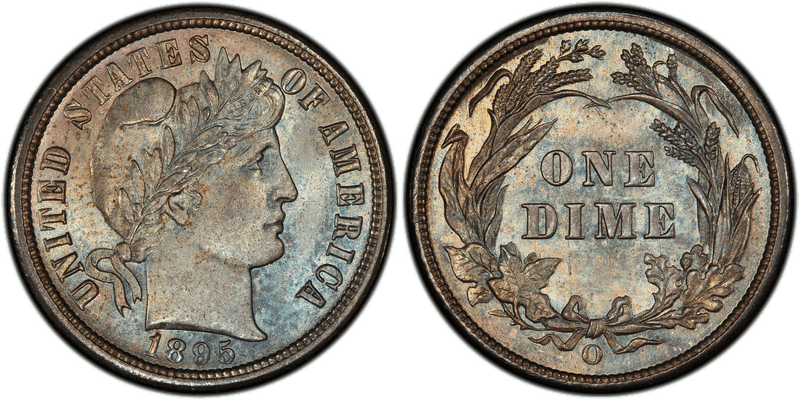
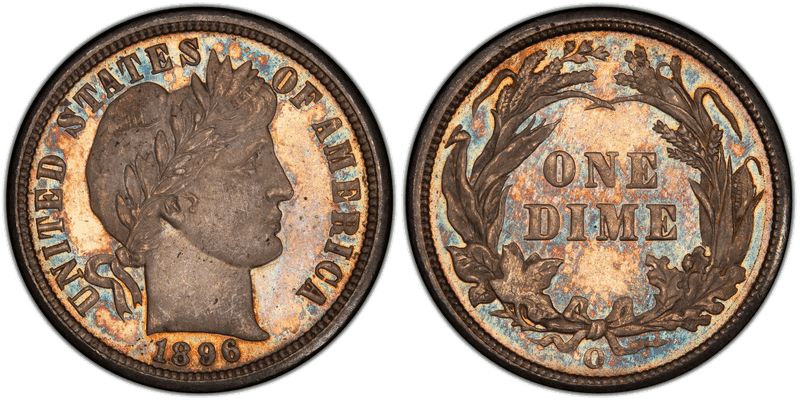


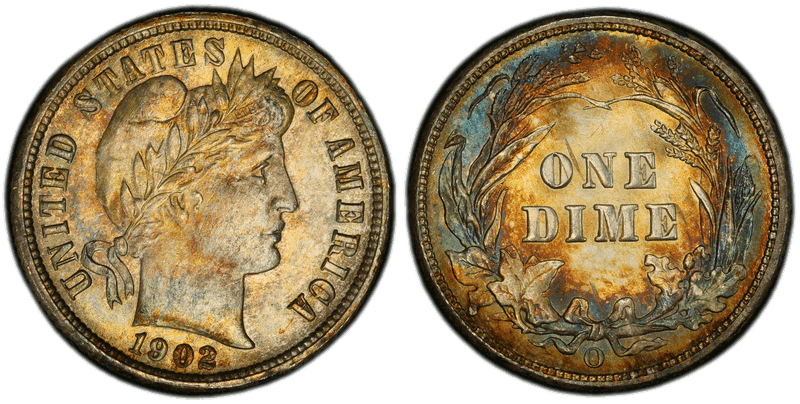


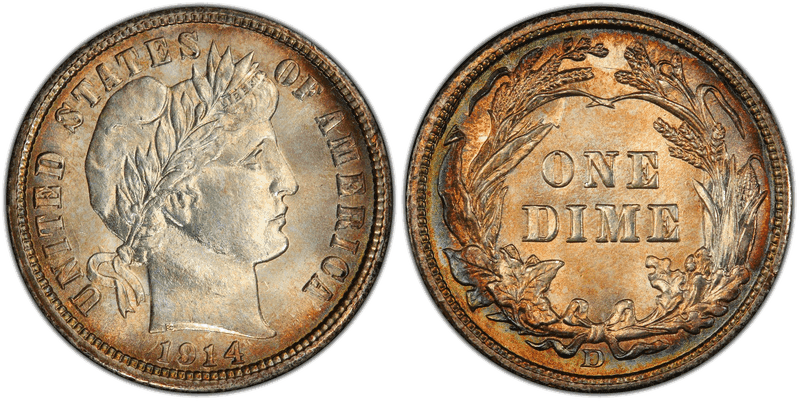


The Mint Act of 1890 allowed a coin design to be replaced once it had been in use for 25 years, which opened the dime, quarter and half dollar to redesign. The Treasury first approached a group of ten leading sculptors, but that plan collapsed when the artists asked to be paid for every design they submitted, chosen or not. The contest that replaced it, open to the public, produced no winner.
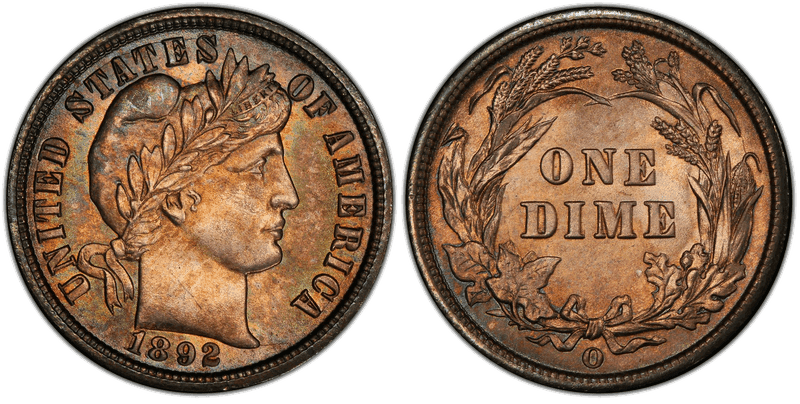
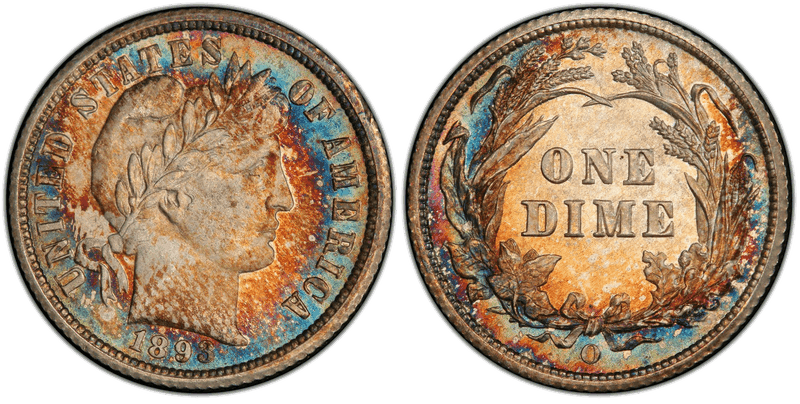
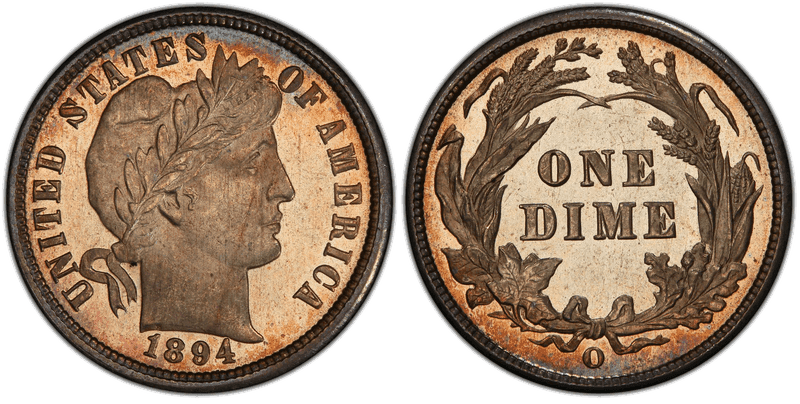
Mint Director Edward Leech then handed the job to his chief engraver, Charles E. Barber. Leech wanted something in the spirit of the French coins of the period. Barber's first try, a standing full-length Liberty with an eagle behind her, was turned down, and the head he produced next went onto all three denominations in 1892.
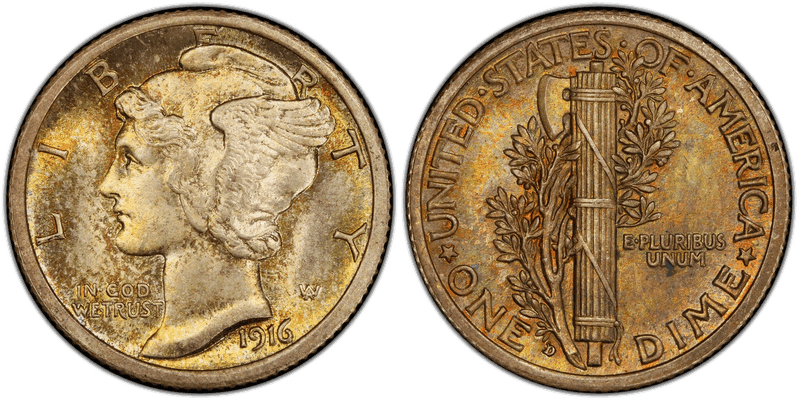
The design was cut in low relief, which suited a coin meant to be struck by the millions. Barber kept the reverse wreath that had been on the Seated Liberty dime since 1860, with some changes to the plants. The series ran through 1916. Dime production that year was held back while the Mint waited on the new Winged Liberty Head design, and the last Barber dimes were saved in some numbers as the end of the type.