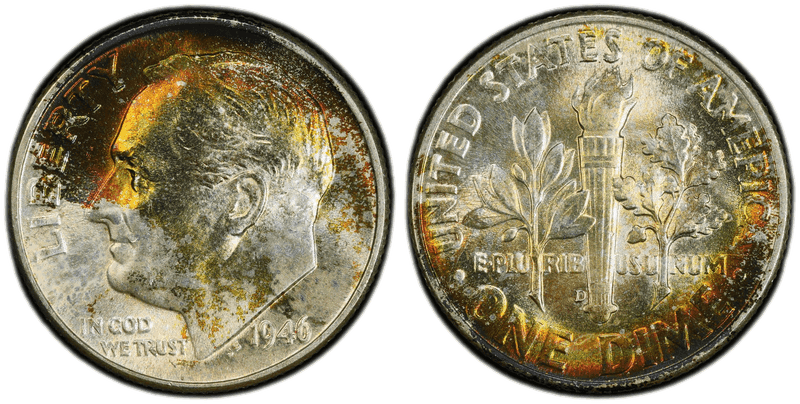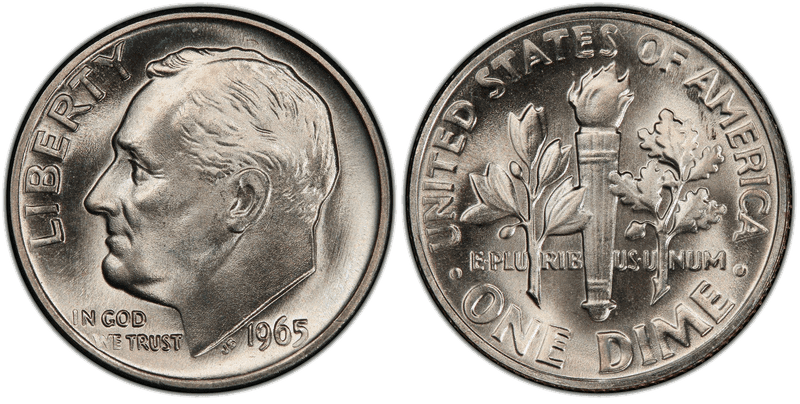
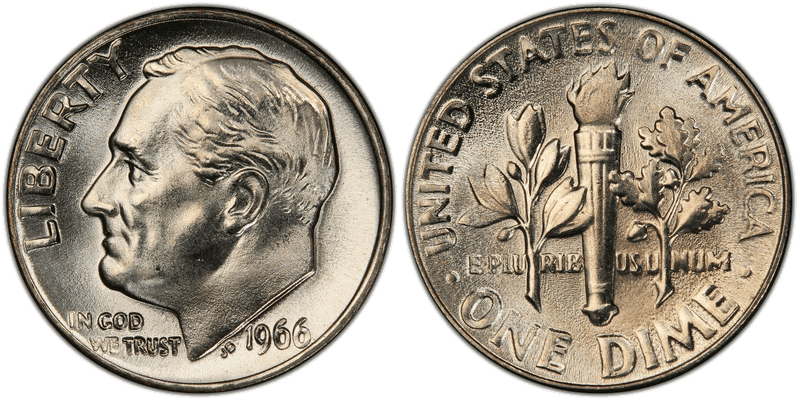
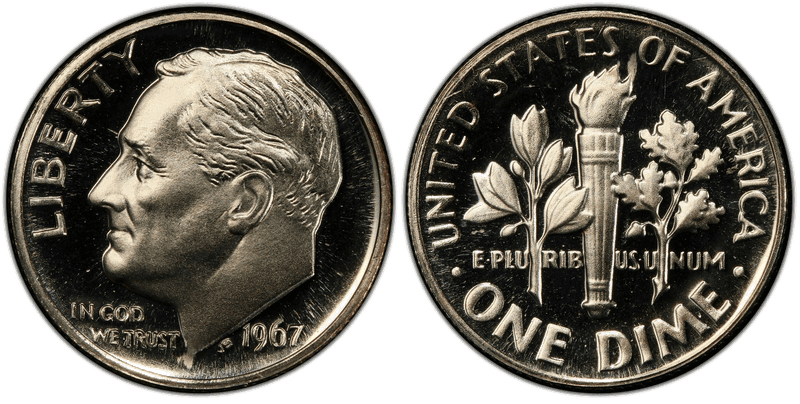
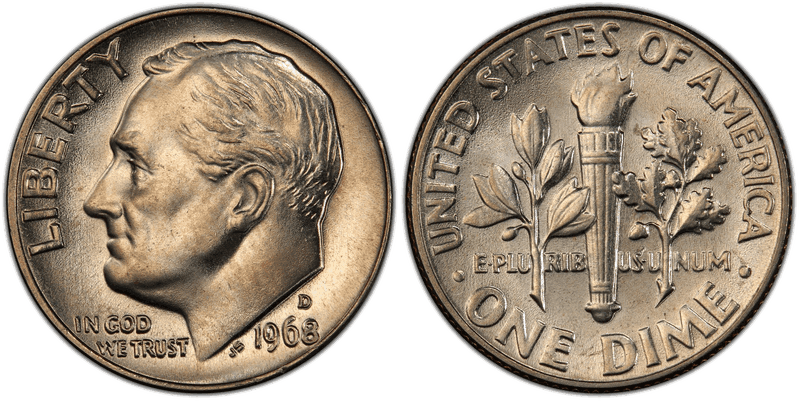
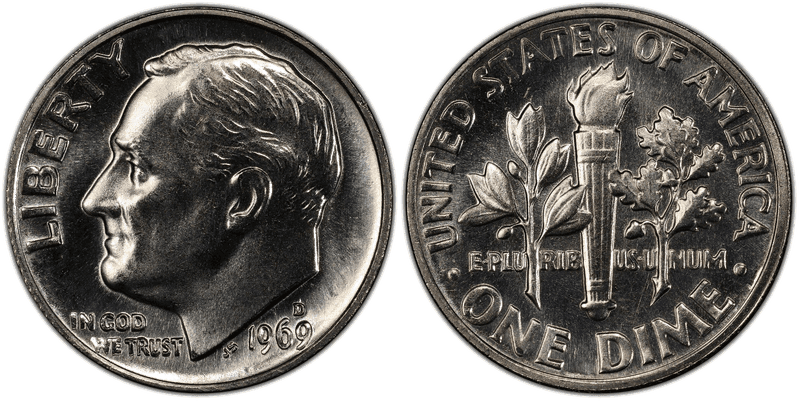
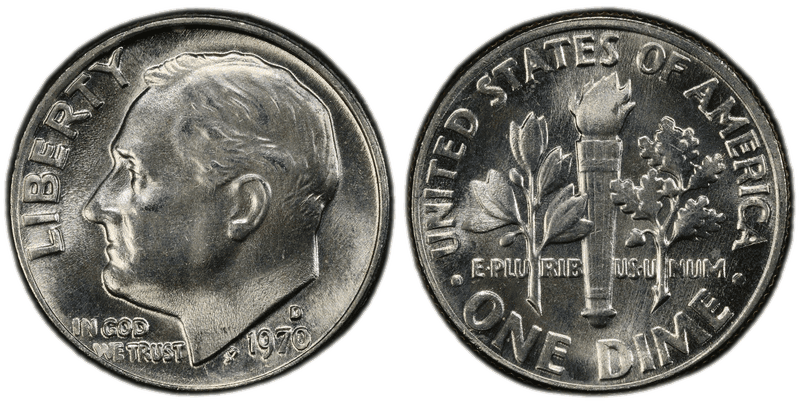
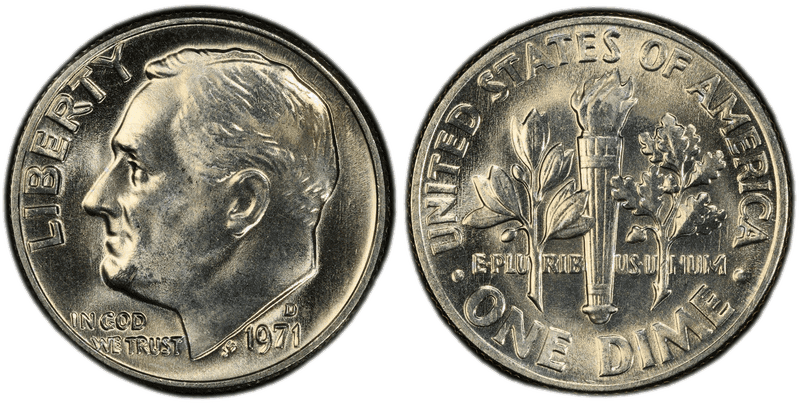
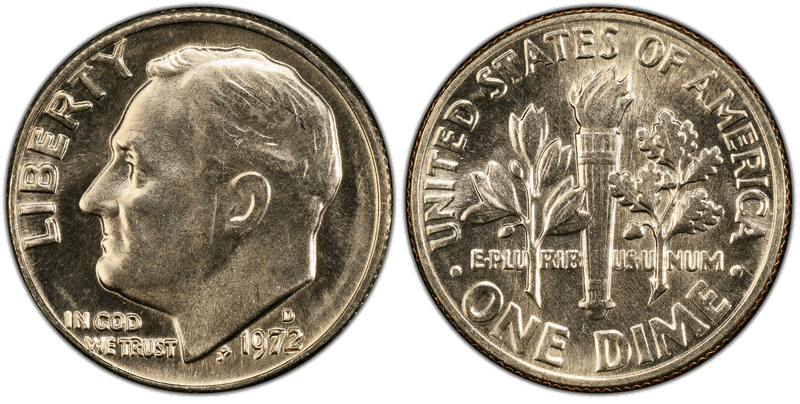
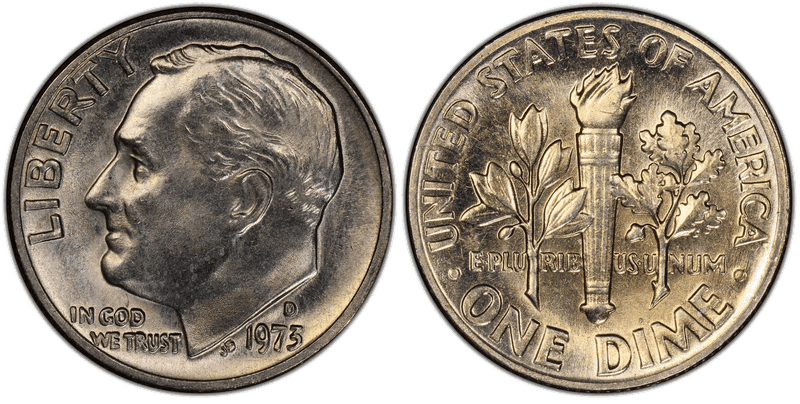
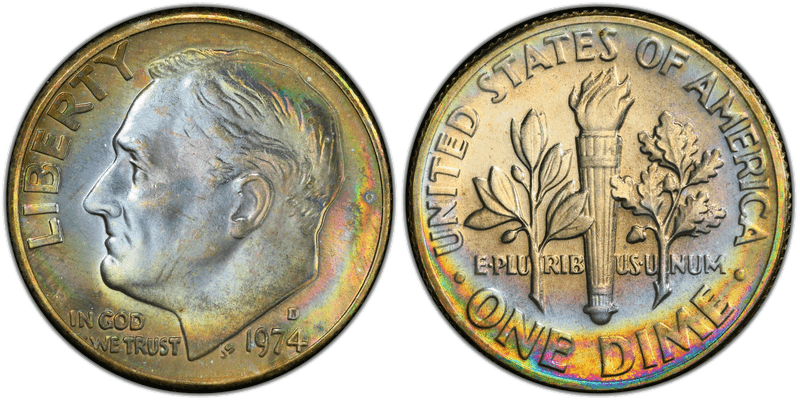
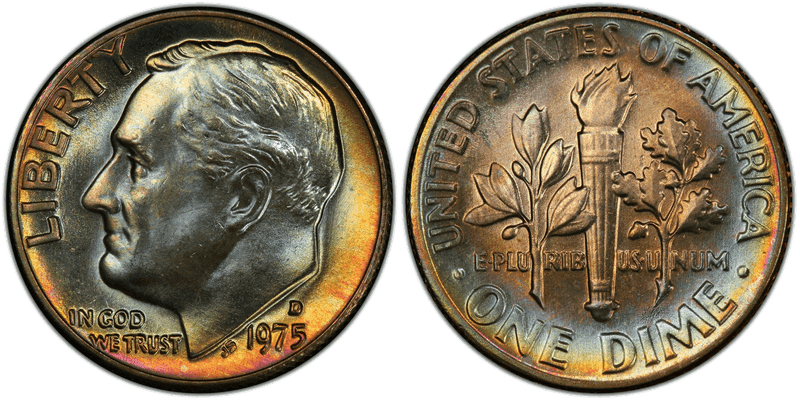
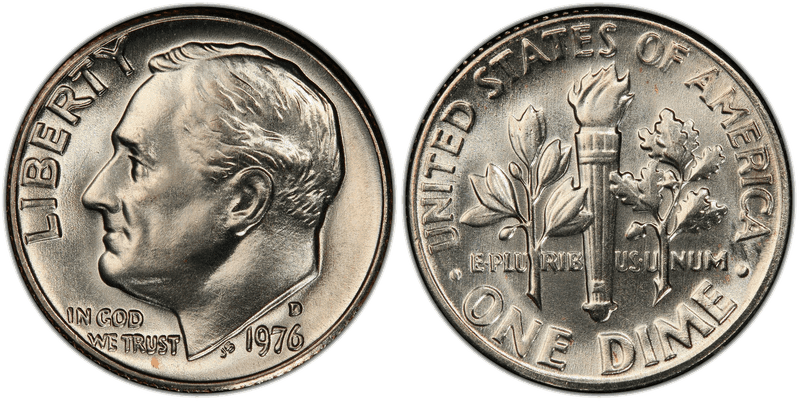
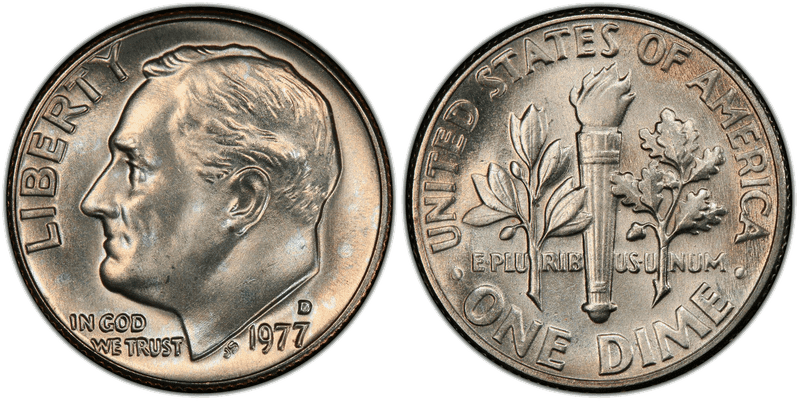
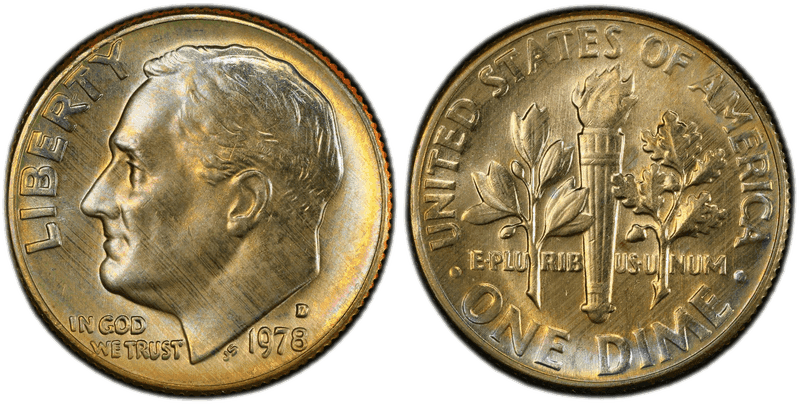
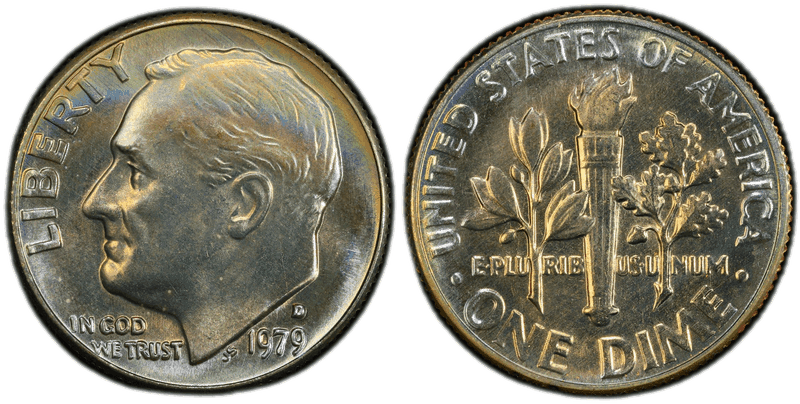
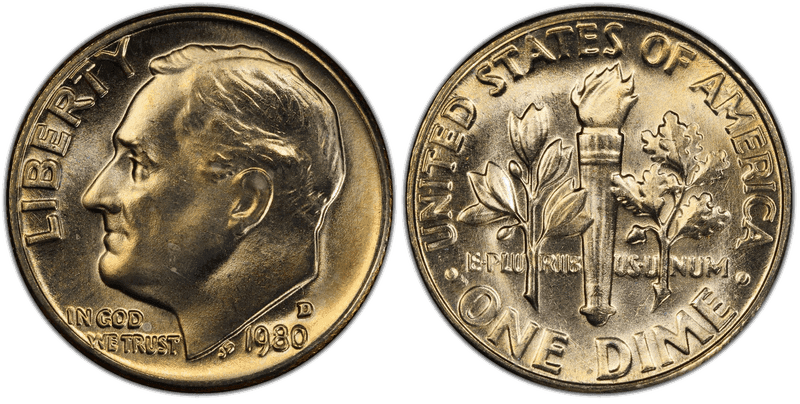
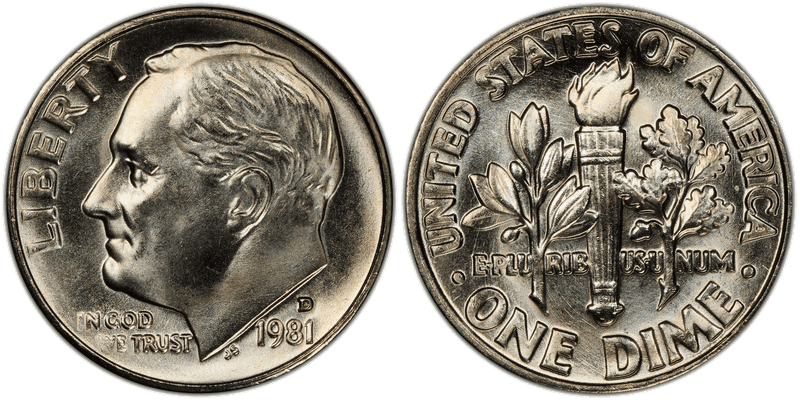
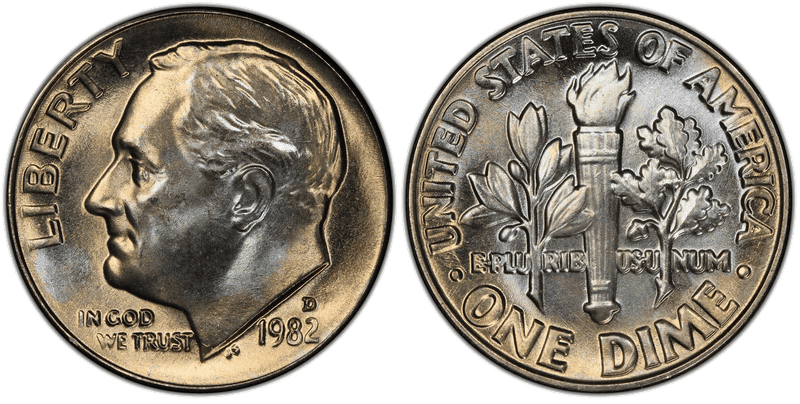
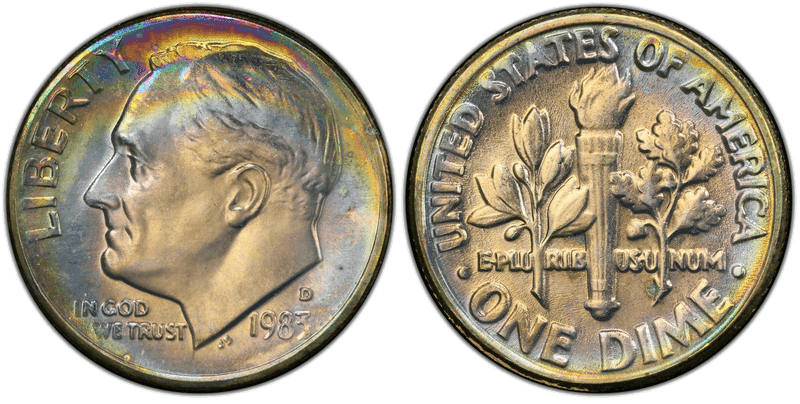
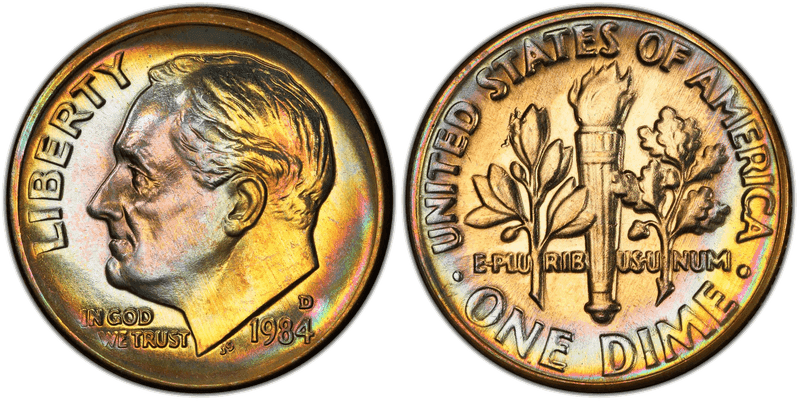
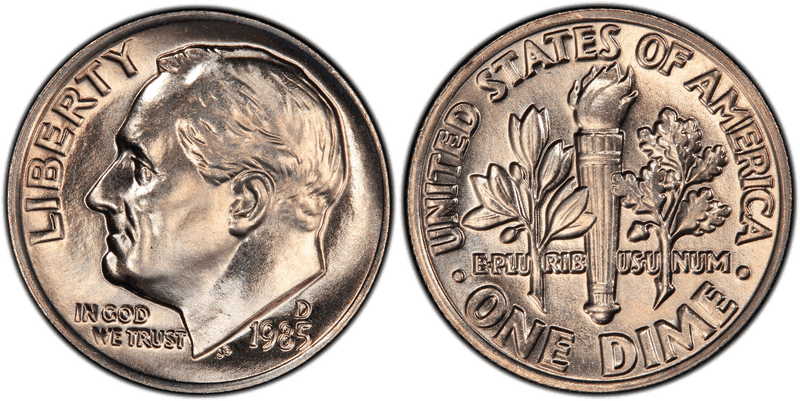
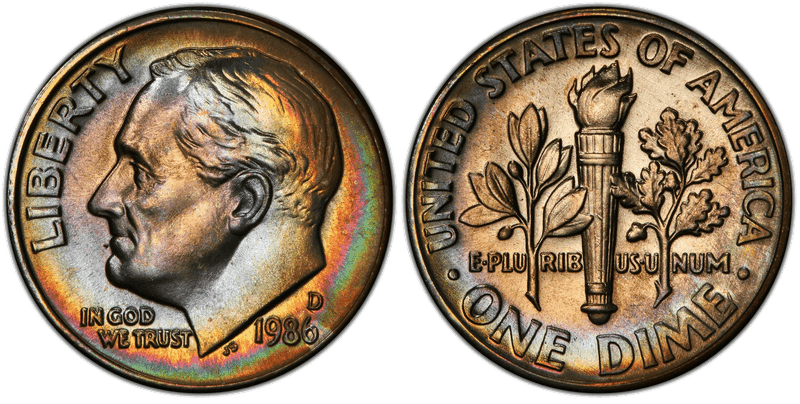
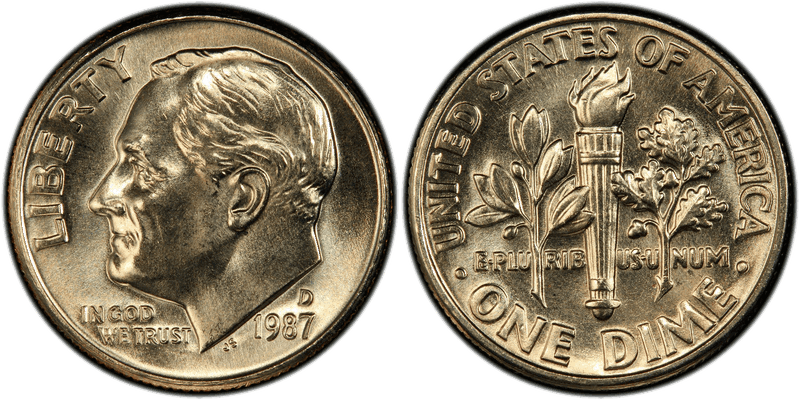
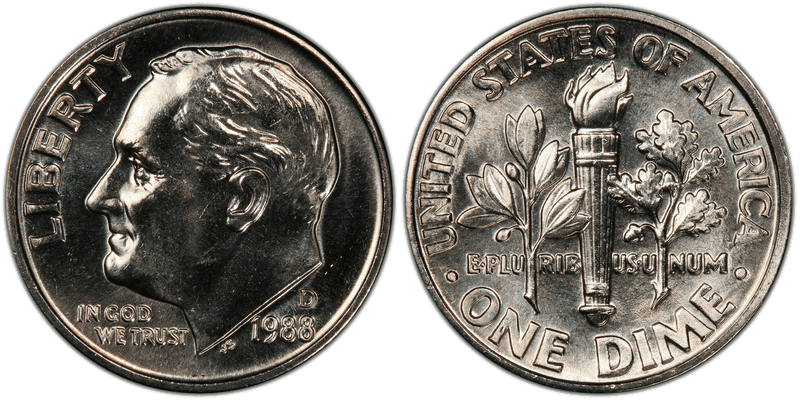
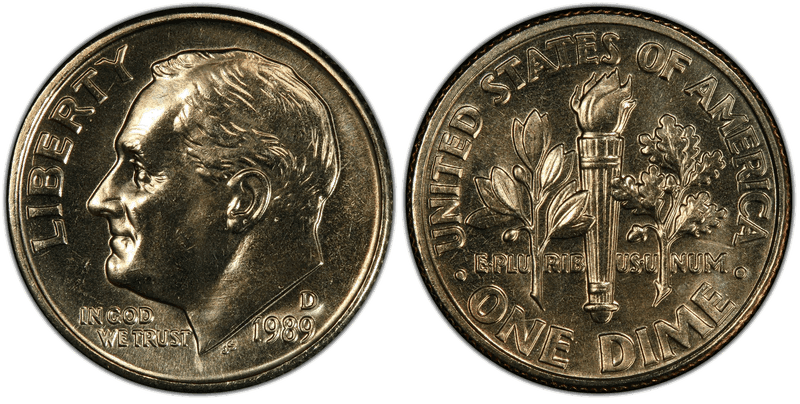
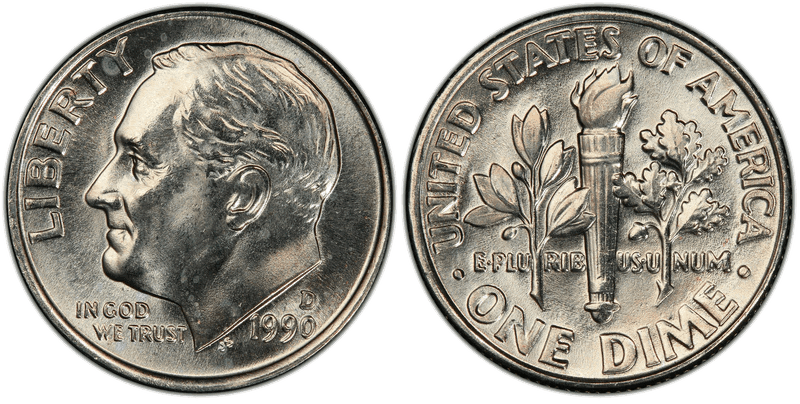
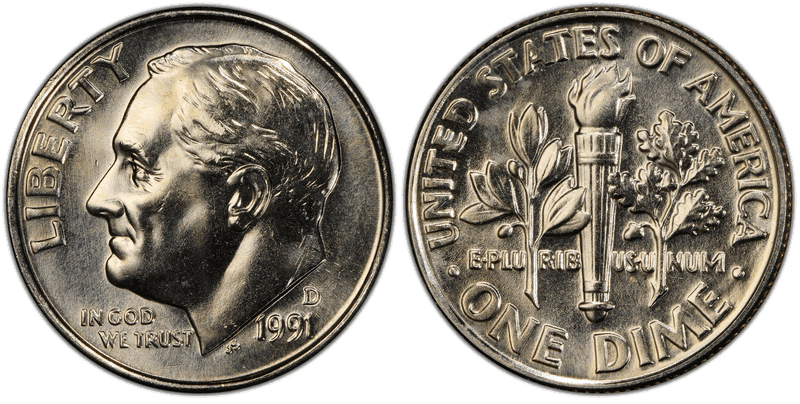
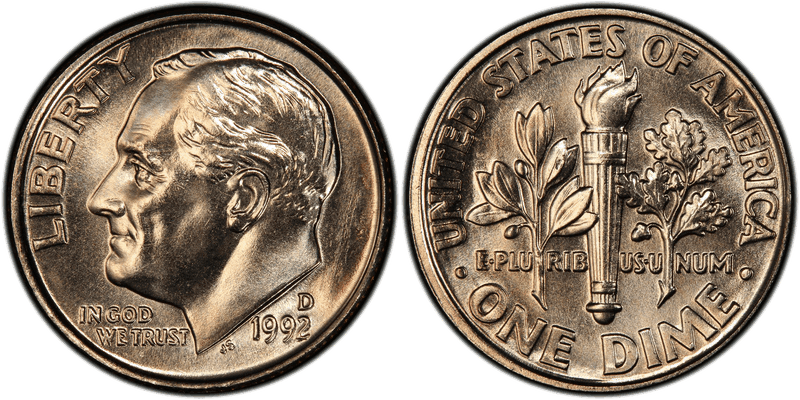

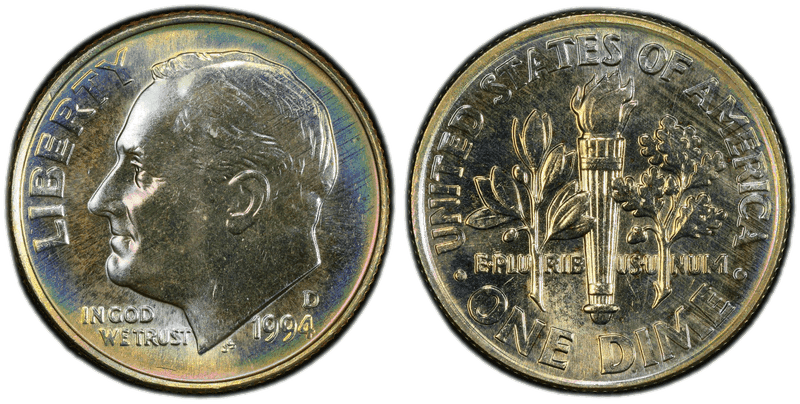
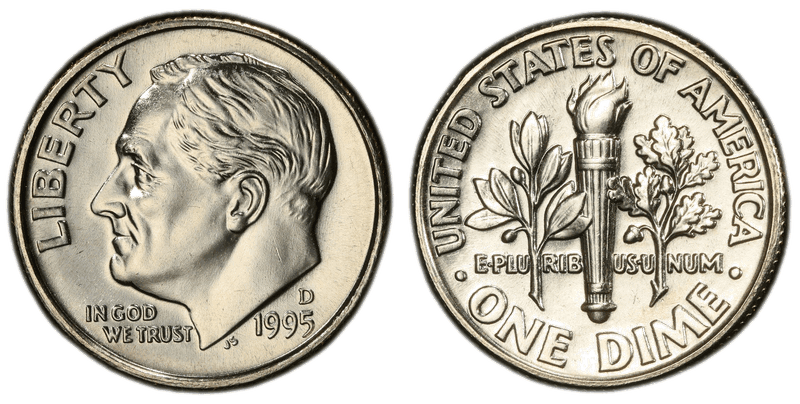
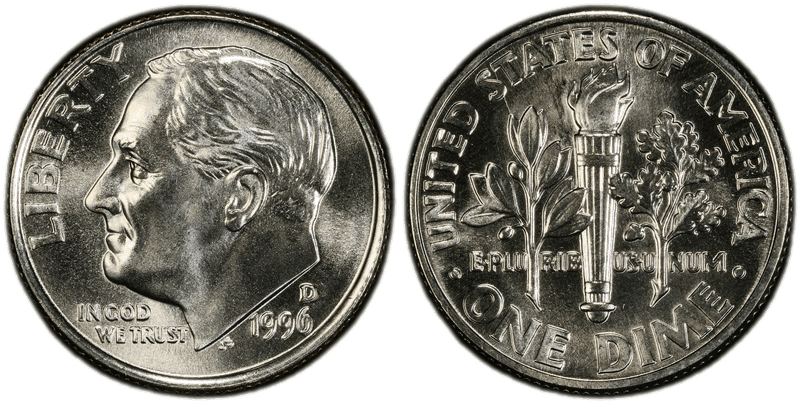
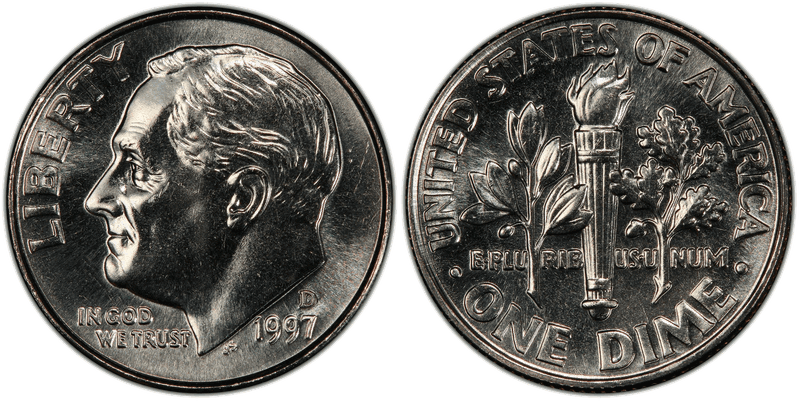
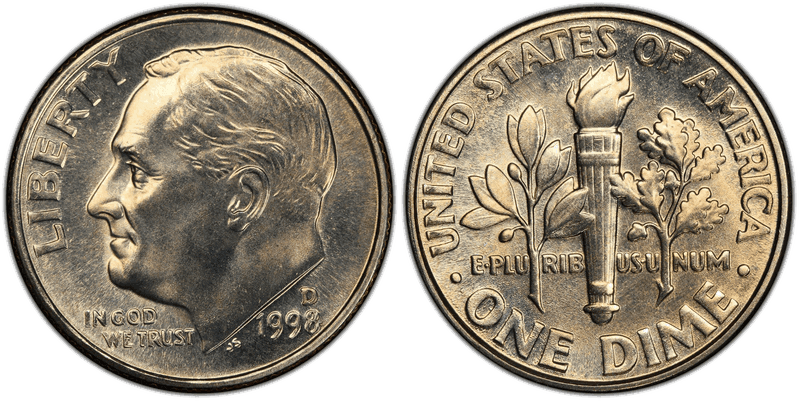
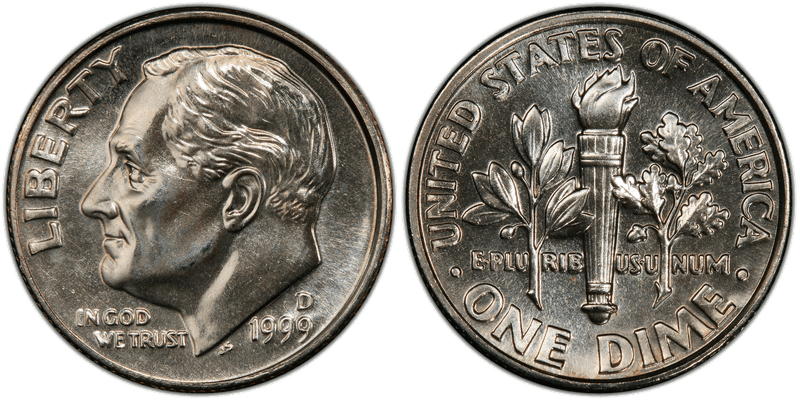
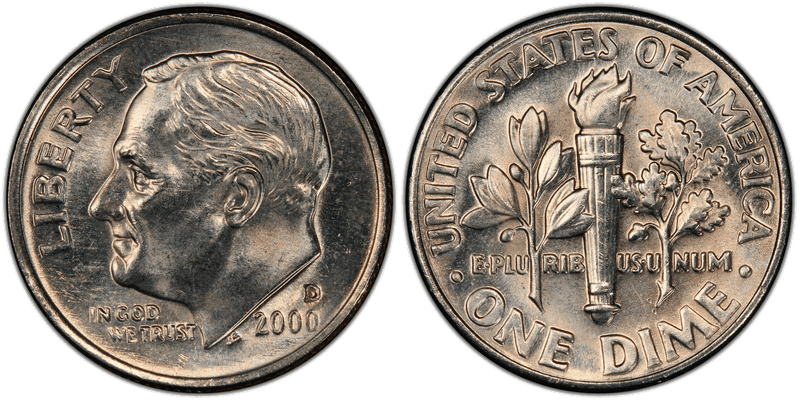
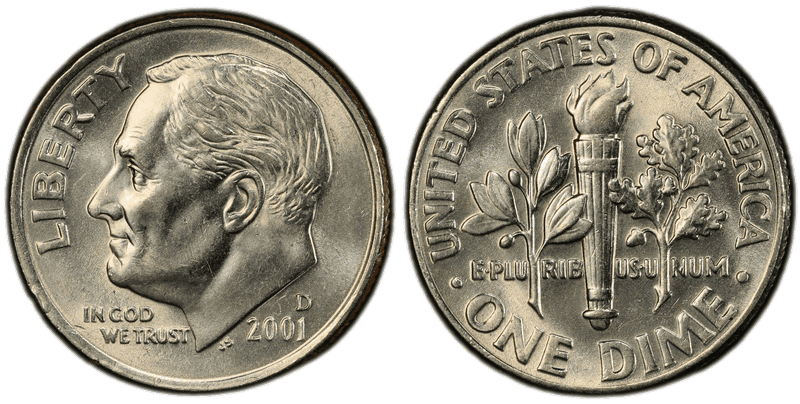
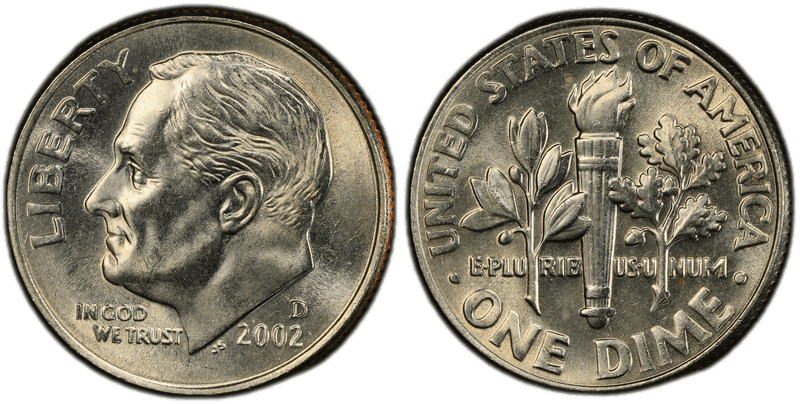
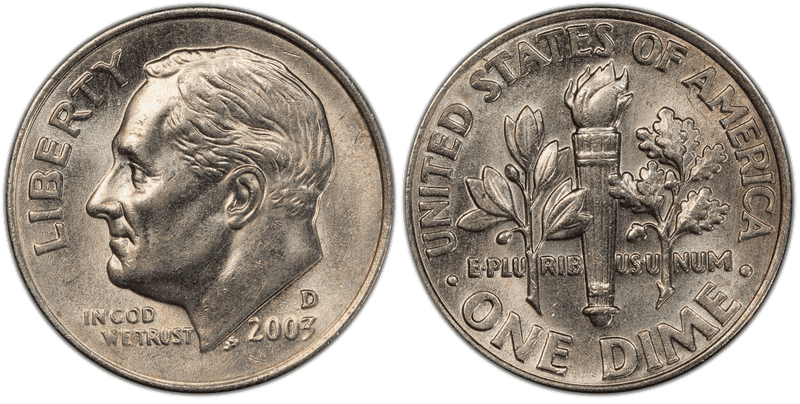
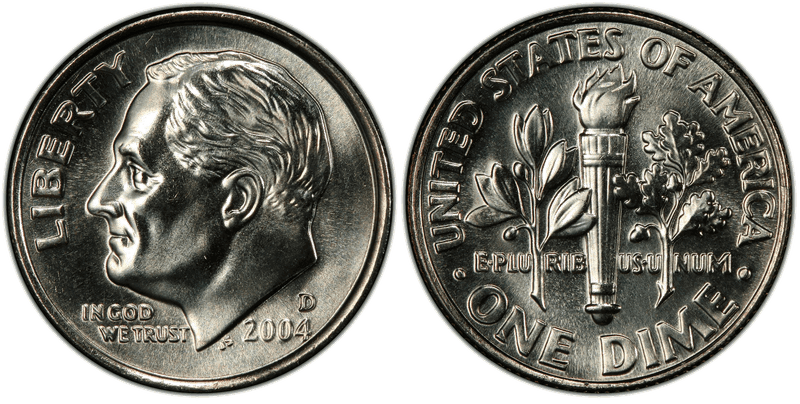
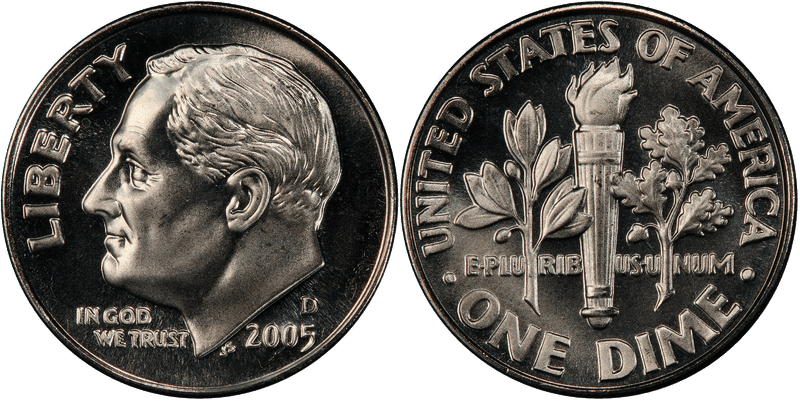
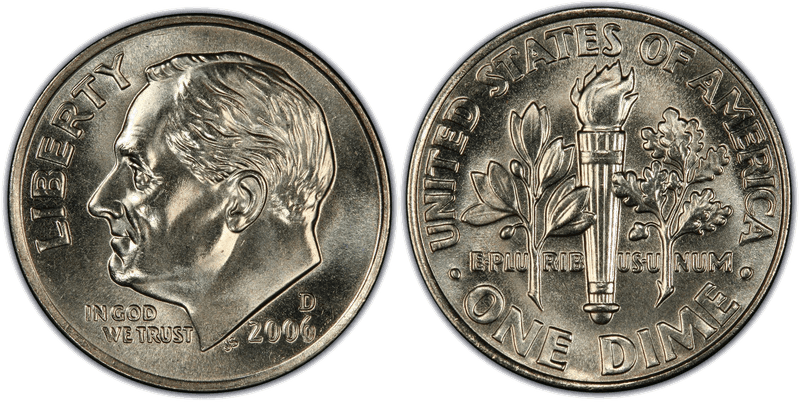
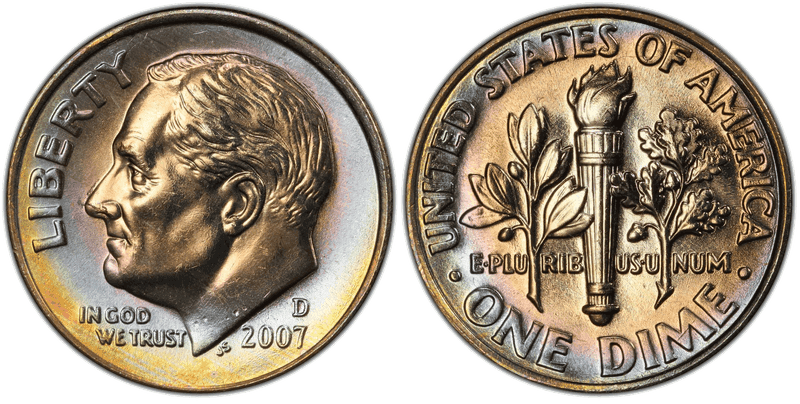
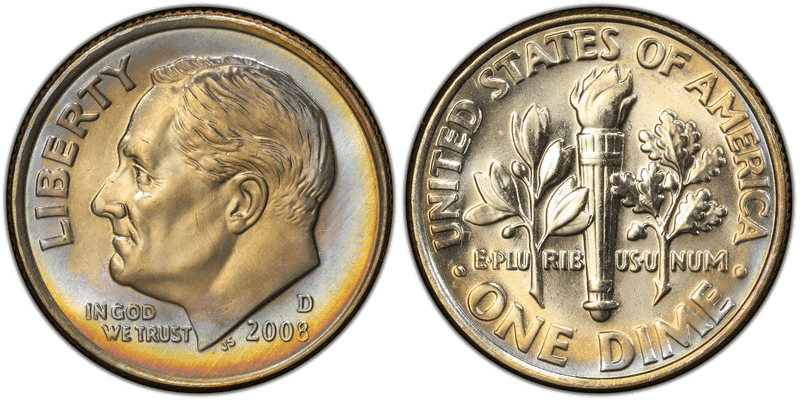
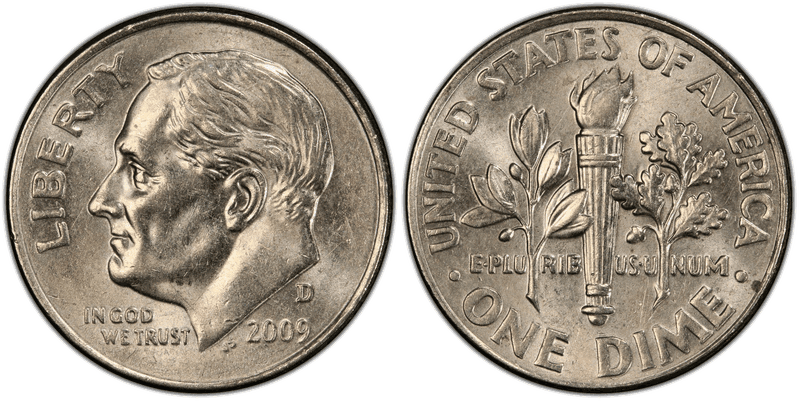

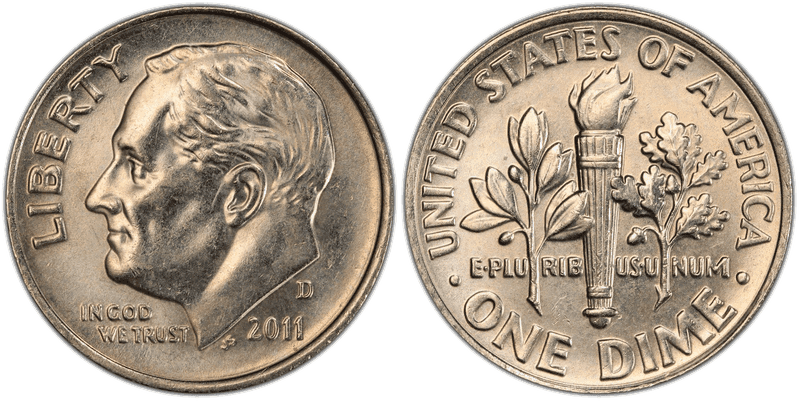


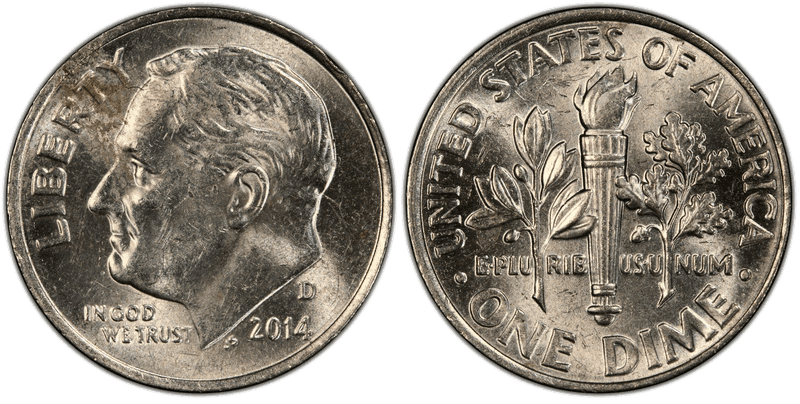
By the early 1960s the country was short of coins and the market price of silver was climbing. The Coinage Act of July 23, 1965 took silver out of the dime. From then on the coin was made of three layers: copper-nickel on each face, bonded to a core of pure copper. John R. Sinnock's design did not change. The 90% silver dimes that came before are covered on the Roosevelt silver dime page.
For three years the new dimes carried no mint mark. Coin World explains that the Mint still blamed collectors for the shortage and did not want them hoarding the new coins, so dimes dated 1965, 1966 and 1967 were struck at several facilities with nothing to tell them apart. There were no proof sets in those years either. In their place the Mint sold Special Mint Sets, with coins finished better than circulation strikes but not to proof standard. NGC notes that the San Francisco Assay Office made them.
Mint marks came back in 1968, now on the obverse above the date. Denver used a D, and San Francisco resumed proof coinage with an S. Philadelphia added a P in 1980. From 1981 the Mint lowered the relief a little so its dies would last longer, which gives later coins a flatter portrait.
Silver returned for collectors in 1992. Public Law 101-585, signed November 15, 1990, allowed 90% silver proof sets, and each set since has held a silver dime struck at San Francisco. From 2019 those dimes are .999 fine.
Anniversaries brought new mint marks and finishes. West Point struck the 1996-W for the coin's 50th year, sold only in that year's mint set. A 2015 set honoring the March of Dimes on its 75th anniversary paired a West Point proof silver dime with a Philadelphia reverse proof silver dime. In 2018 a silver reverse proof set marked 50 years of proof coinage at San Francisco.
For 2026 the Semiquincentennial Emerging Liberty dime took Roosevelt's place for one year. Wikipedia reports that the Roosevelt design is due back in 2027.