
DC-10c-1892-02 Die Chip
Error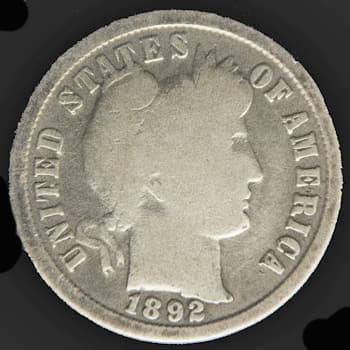
Description
Struck in the inaugural year of Charles E. Barber's Liberty Head Dime design, this 1892 die chip variety was documented by Cuds on Coins under the catalog designation DC-10c-1892-02. A die chip occurs when a small fragment of the die face breaks away, creating a raised lump of metal on struck coins — distinct from a die crack, which remains connected to the surrounding die surface. The Barber Dime debuted in 1892 alongside the Barber Quarter and Half Dollar, replacing the Seated Liberty designs that had served since the 1830s. Barber's obverse featured a right-facing Liberty wearing a laurel wreath and Phrygian cap, with UNITED STATES OF AMERICA encircling the portrait — a design continuing through 1916. Die chips on nineteenth-century coinage are relatively common because the softer die steel used in that era was more prone to surface deterioration under repeated striking stress, and the Philadelphia Mint's high production volumes accelerated die wear. No cross-references to other catalog systems are listed. First-year Barber Dime varieties hold particular appeal for type collectors combining design history with error and variety attribution.
Attribution History
- Discovered by Chuck Newman
- Expert attribution by Cuds on Coins
External References
Community & Reference
Related Errors
More Die Chip Errors
Collector Essentials
Tools for examining and preserving error coins and die varieties.
10x-20x Jeweler's Loupe
Essential for examining die varieties, doubled dies, and RPMs
Cherry Picker's Guide
The definitive reference for U.S. error coins and die varieties
2x2 Coin Flips & Holders
Protect and organize your finds with archival-quality holders
USB Digital Microscope
Capture detailed images for documentation and community submissions
As an Amazon Associate, NumisDex earns from qualifying purchases.