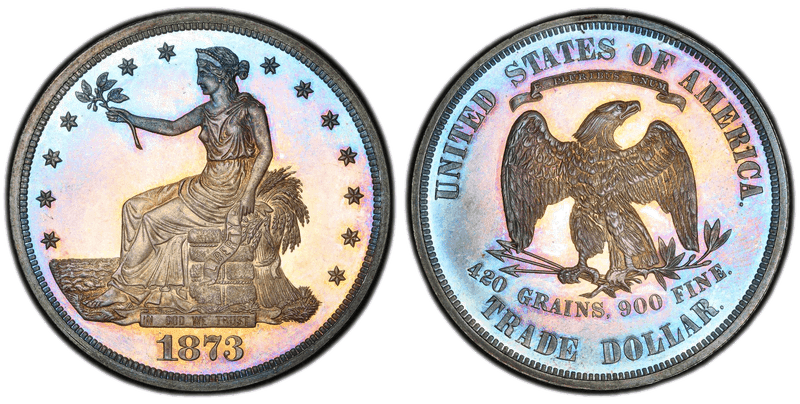
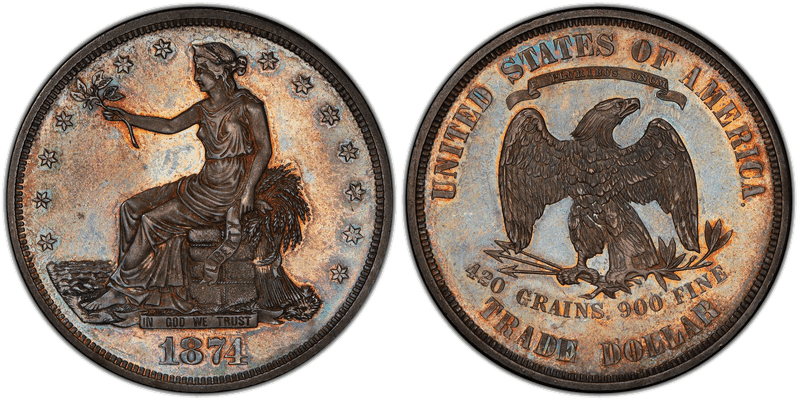
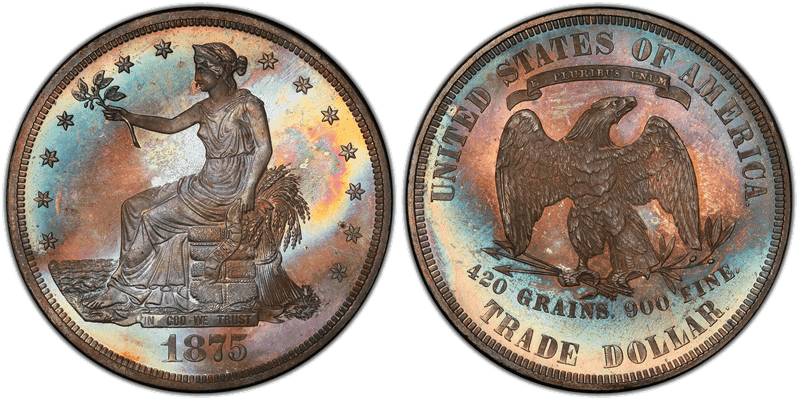
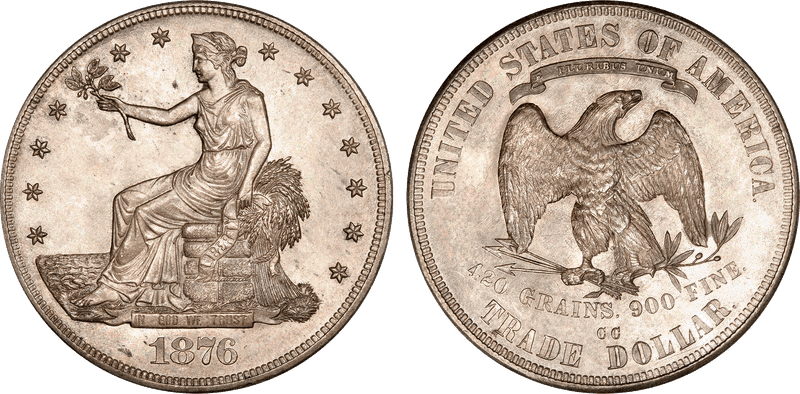
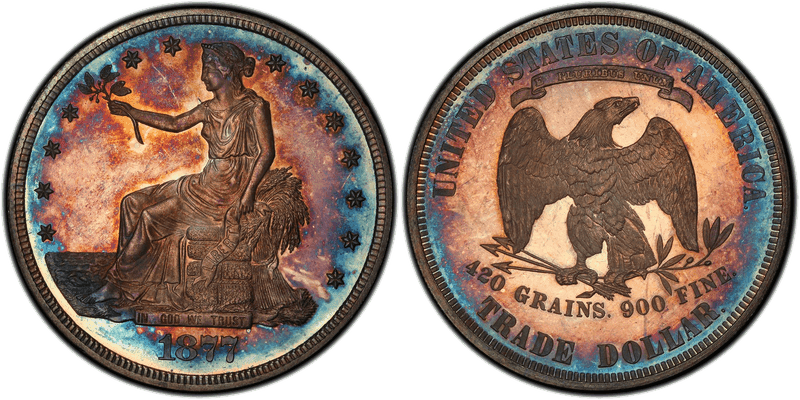
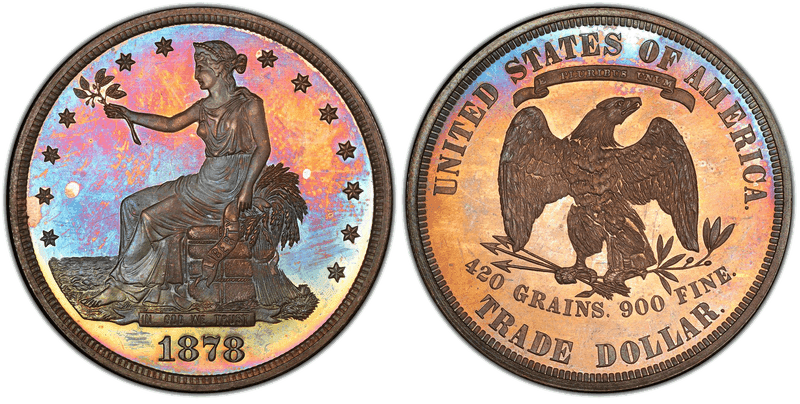
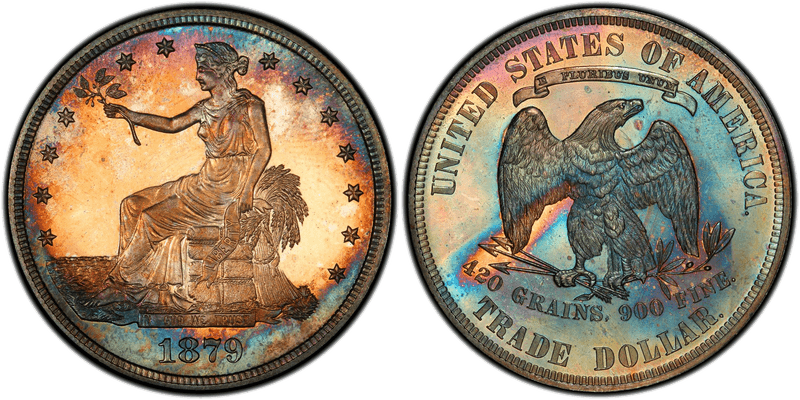
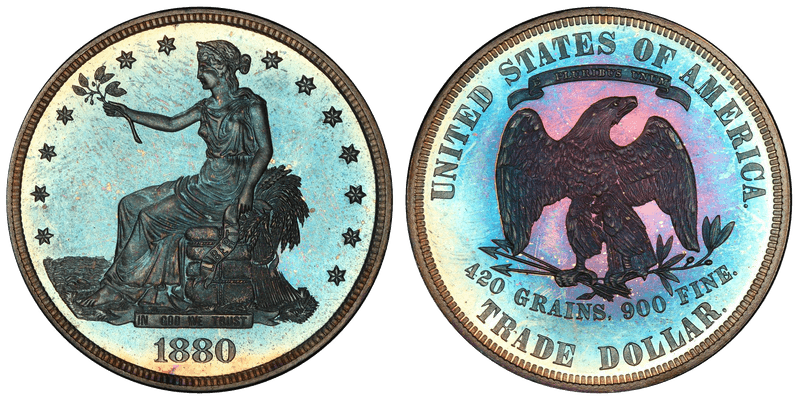
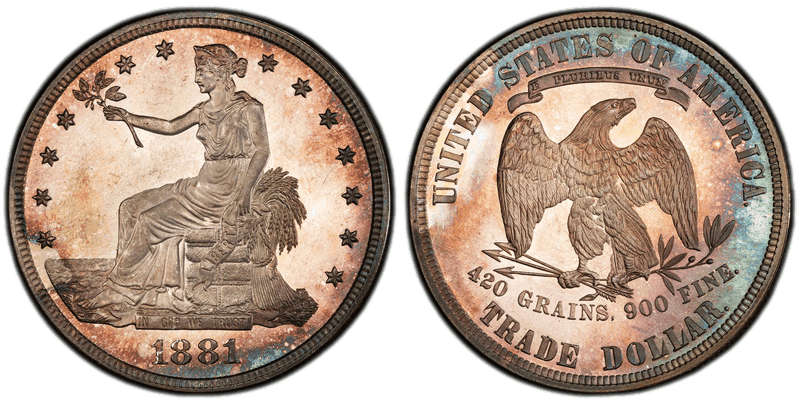
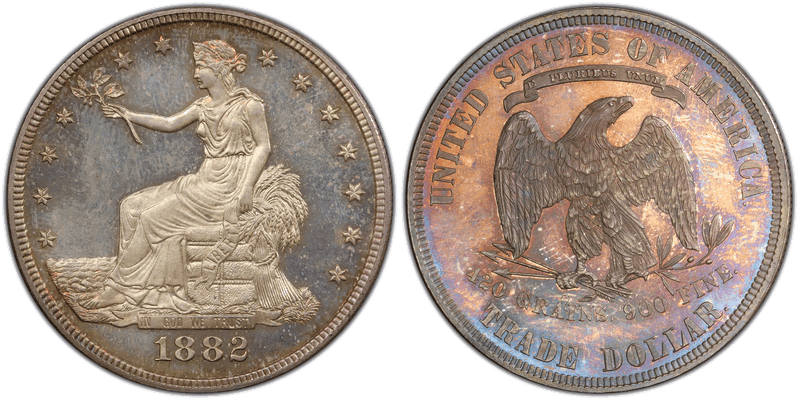
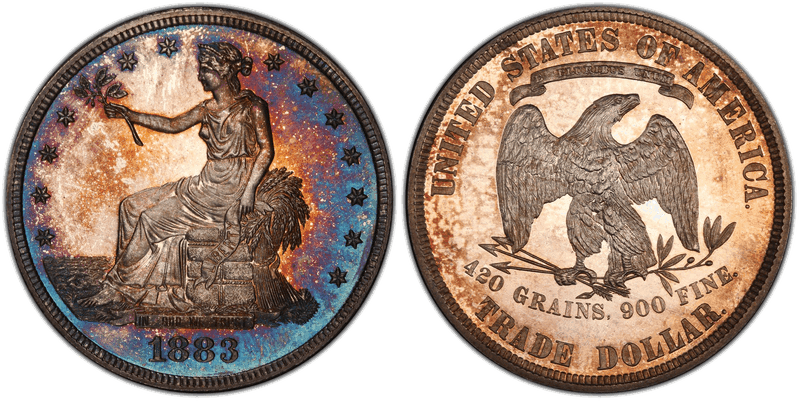
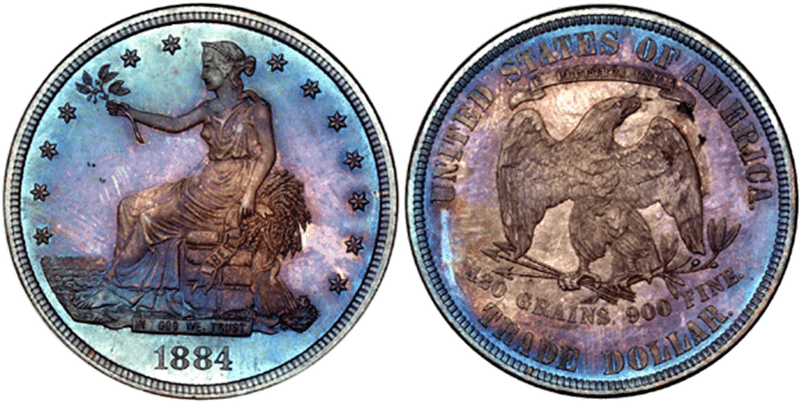
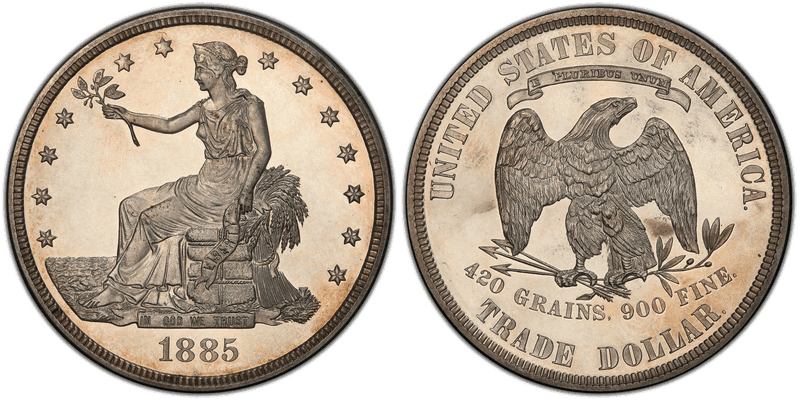
By the late 1860s the United States had a problem with its silver dollar in Asia. Chinese merchants trusted the Mexican peso, and the American dollar was lighter, so traders bound for China bought Mexican coins instead. Deputy Comptroller John Jay Knox, after talks with the former San Francisco assayer Louis A. Garnett and with Henry Linderman, pushed for a heavier coin made just for export. The idea ended up in the Coinage Act of 1873, which President Ulysses S. Grant signed on February 12, 1873. A late rider made the new coin legal tender for debts up to five dollars.
Linderman, soon Director of the Mint, chose designs by Chief Engraver William Barber. The first trade dollars were struck at Philadelphia on July 11, 1873, and Carson City began within days of receiving its dies on July 22. San Francisco, the port for Asia, struck more than either of the others that year. Most of the early coins went to China and were melted there or weighed as bullion.
Then the price of silver fell. By 1875 the silver in a trade dollar was worth less than a dollar, and anyone who brought bullion to the Mint could have it struck into trade dollars and spend them at home for face value. Coins came back from Asia too. Congress answered on July 22, 1876, by ending the trade dollar's legal tender status, but that only left the people who were paid in trade dollars, often factory workers, with coins that banks and shops could refuse. Treasury Secretary John Sherman tried to stop new orders in 1877 and finally ended them on February 22, 1878.
Business strikes stopped that spring. Philadelphia kept striking proofs for collectors through 1883. In 1887 Congress let holders redeem unmutilated trade dollars for six months, and the Mint melted them into smaller silver coins. Coins with chop marks or holes were turned away. Far from Washington, trade dollars kept passing as silver in Asian ports, and many came back to the United States in the 1950s, worn and stamped.
The 1884 and 1885 proofs were never part of the public record. NGC traces 264 proofs dated 1884 delivered in January 1884, just before orders arrived to stop. Ten ended up with the Philadelphia collector William Idler, together with five dated 1885 from a different reverse die. Their existence became public only in 1908.