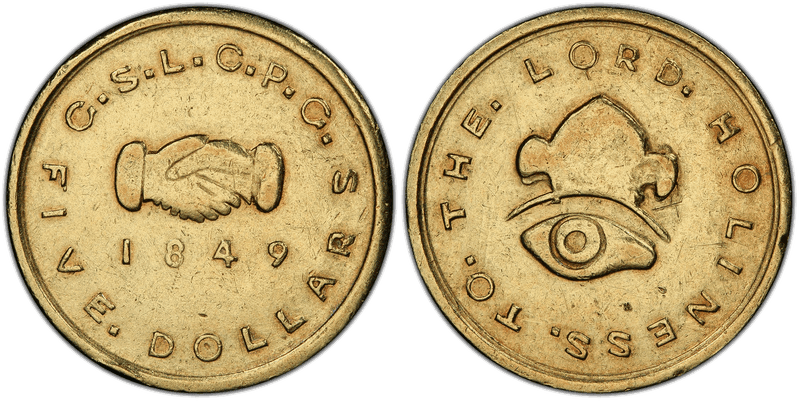
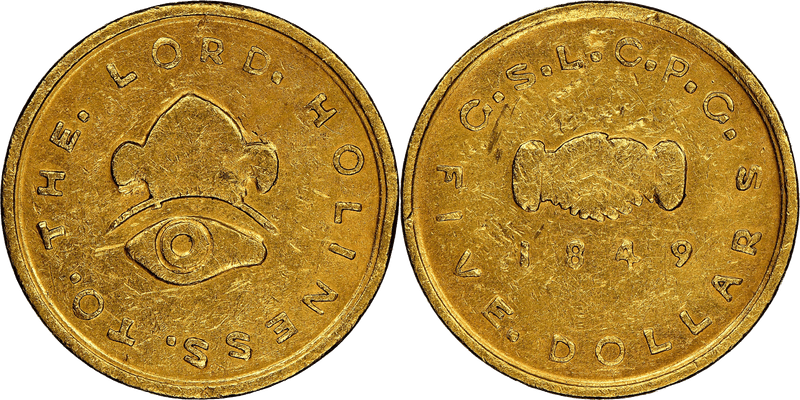
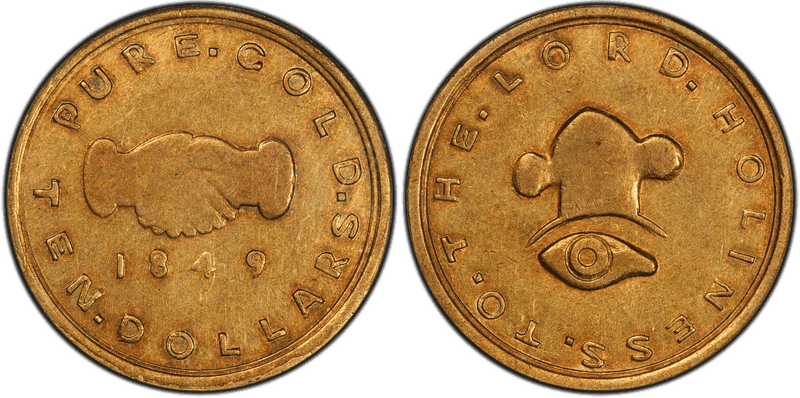
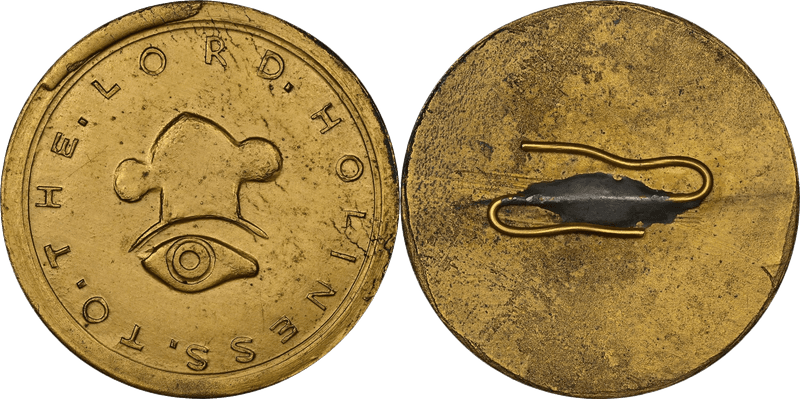
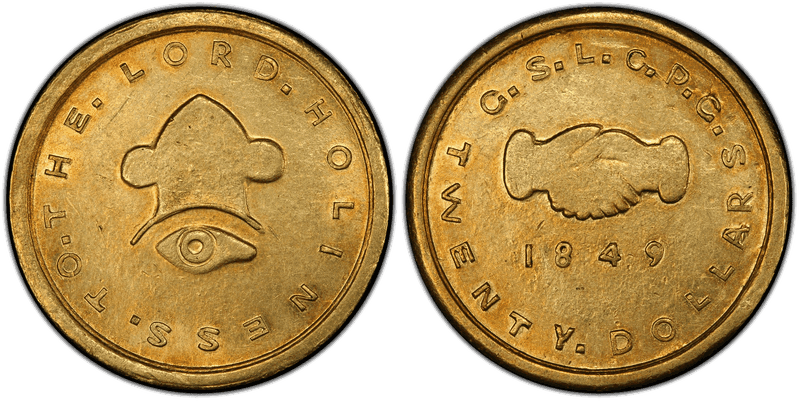
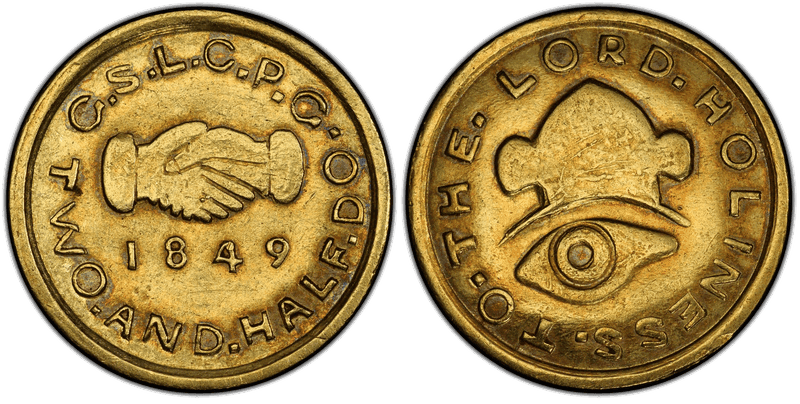
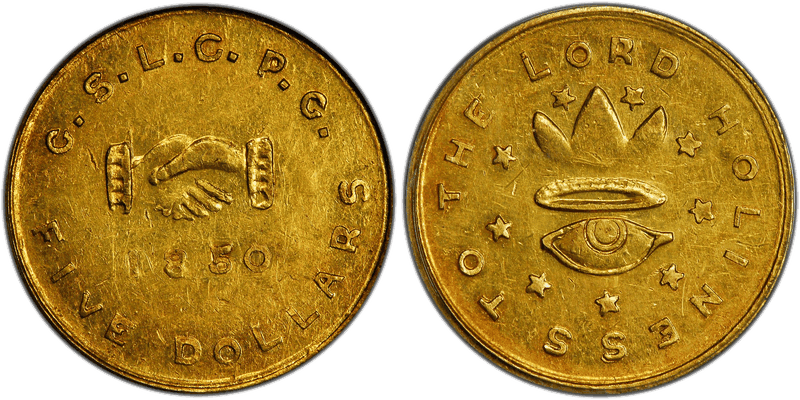
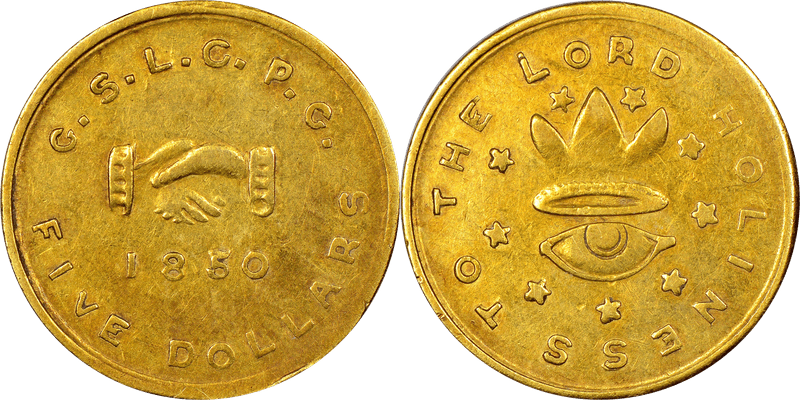
The Church of Jesus Christ of Latter-day Saints began to strike gold pieces at Salt Lake City late in 1848 from gold brought from California; Wikipedia says the first came from Mormon Island, and Greysheet dates the ten-dollar pieces to December 12 and 19, 1848, though they bear the date 1849. The coinage of 1849 ran to four values, two and a half, five, ten and twenty dollars, and Greysheet calls the twenty the first coin of that value struck in the United States.
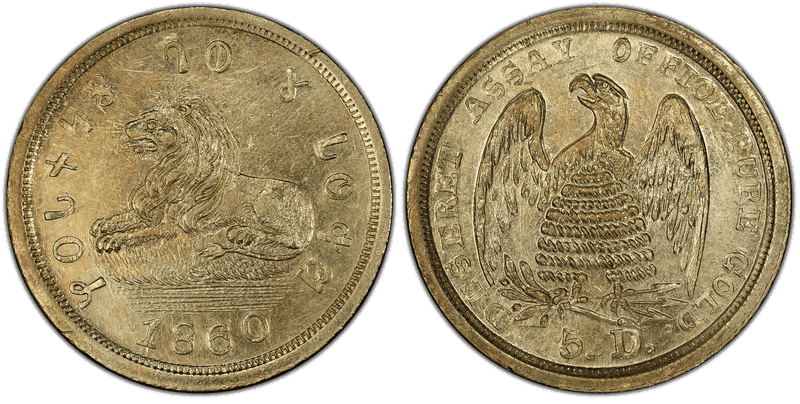
When the first pieces reached the Philadelphia Mint, its assayers found them about 899 thousandths fine and well short of their stated weights, so that a twenty-dollar piece held under $17.53 in gold. A five-dollar piece followed in 1850 with new dies, and a last five-dollar piece in 1860 with new designs. Wikipedia reports that the territorial governor, Alfred Cumming, ordered the coining stopped in 1861.
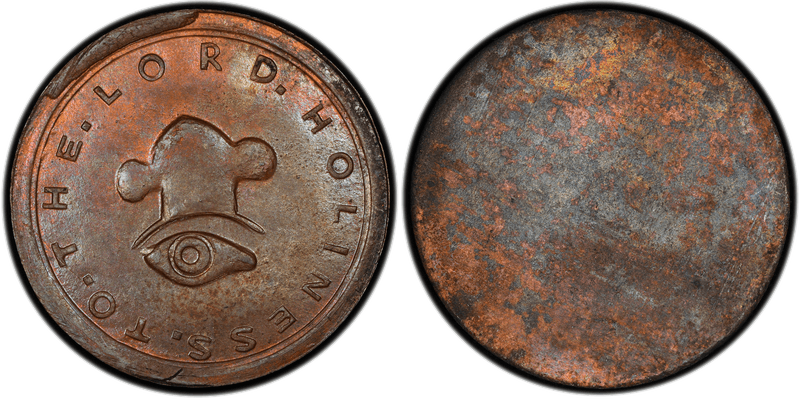
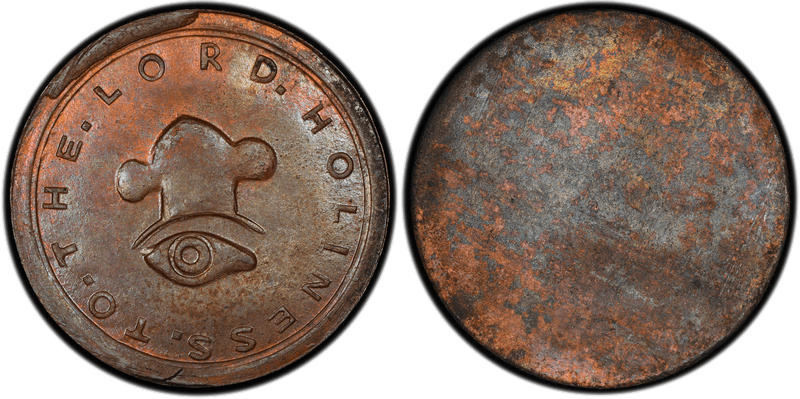
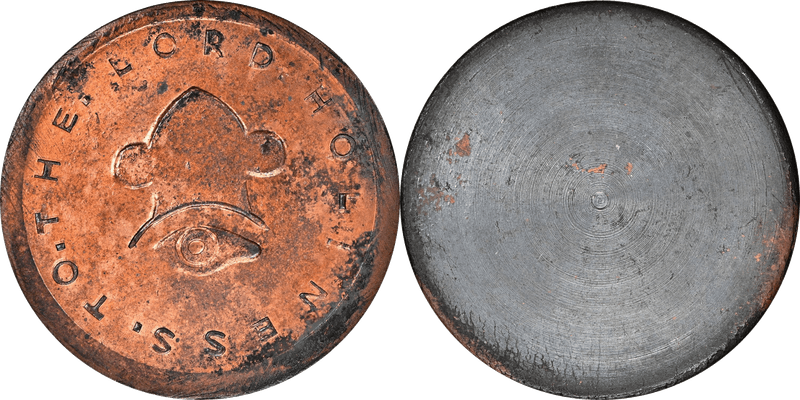
Long after the coins, uniface impressions of the dies were struck in copper and other metals; Kagin connected some with the fiftieth anniversary of the first coinage, in 1898.