Templeton Reid (Georgia) Gold (1830-1849)

Coin Series
Templeton Reid (Georgia) Gold (1830-1849) series coin

About This Series

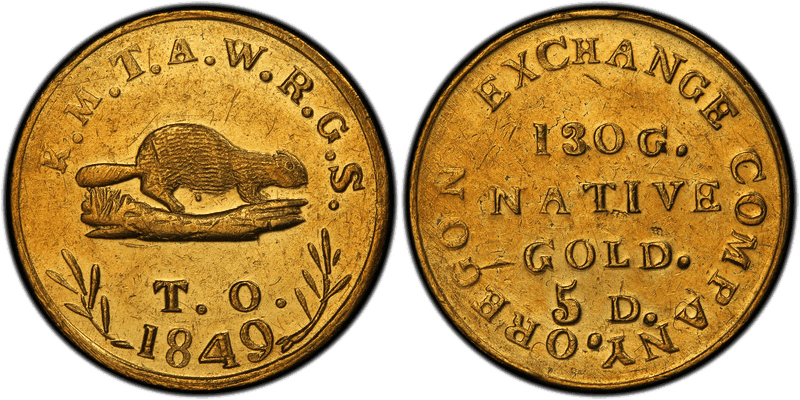
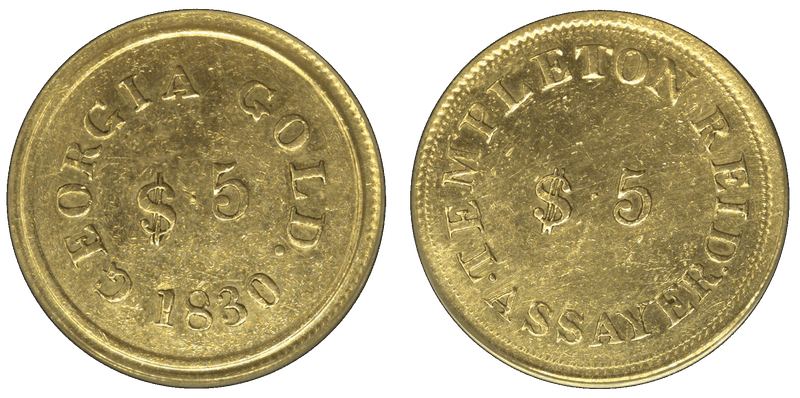
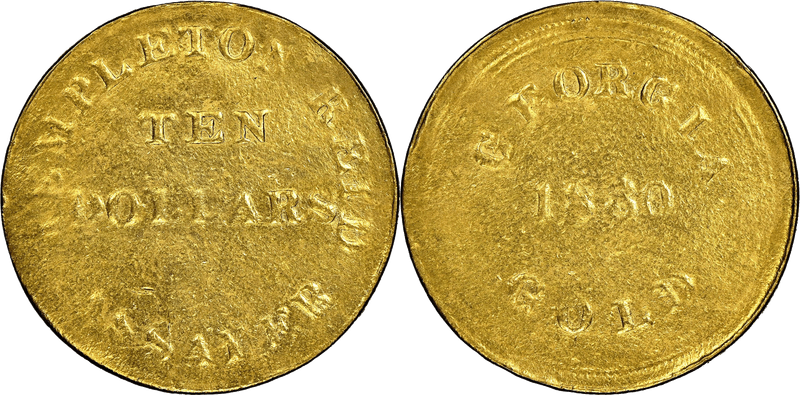
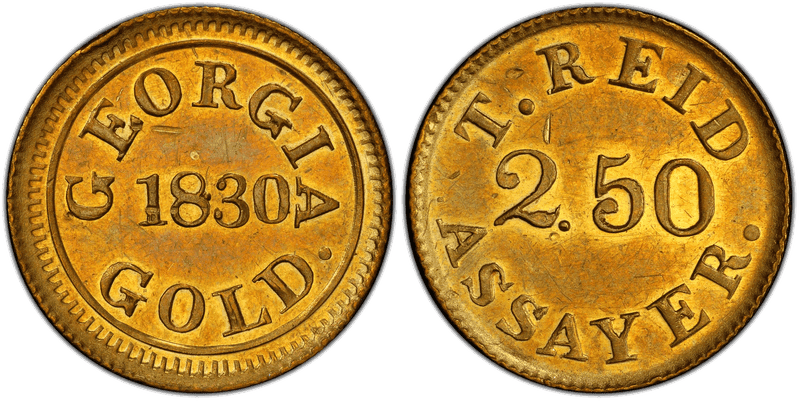
Templeton Reid's gold pieces: the Georgia coins of 1830 and two pieces with his name dated 1849. Templeton Reid, a silversmith and machinist from Milledgeville, moved to Gainesville, Georgia, in 1830 to run an assay office and that year struck gold pieces of two and a half, five and ten dollars (Georgia historical marker, search). They read GEORGIA GOLD on one side and TEMPLETON REID ASSAYER with the value on the other (Smithsonian, search). A letter signed No Assayer, printed in a Georgia paper in August 1830, claimed that a tested ten-dollar piece was worth only about $9.38 (search). The Mint's assayers Eckfeldt and Du Bois wrote that Reid's coins had reached the Mint in quantity twice, the last time in 1831; they recorded a ten-dollar piece at 248 grains and 942 thousandths fine and a quarter eagle at 60.5 grains and 932 fine, and had not tested the five (quoted by Dickeson, 1859). Two pieces with Reid's name dated 1849, a ten and a twenty-five dollar piece, reached the Philadelphia Mint. Eckfeldt and Du Bois reported in 1852 that they weighed 260 and 649 grains, that as the only specimens received they had not been cut for assay, and that they appeared to be California gold with no alloy added, worth about $9.75 and $24.50. Greysheet records that the $25 was stolen from a display at the Mint in 1858 and has not been found, and that the $10 went with the Mint cabinet to the Smithsonian Institution in 1923.

Browse by Base(2 bases)

Showing all 2 listings

Strike Types & Varieties(7)

History

In 1830, during the Georgia gold rush, Templeton Reid, a Milledgeville silversmith and machinist, moved to Gainesville to assay the miners' gold and turn it into money. That year he struck pieces of two and a half, five and ten dollars. Greysheet describes his as the first private gold rush mint in the United States.

The venture was short. In August 1830 a writer signing himself No Assayer told a Georgia paper that one of Reid's ten-dollar pieces held only about $9.38 in gold. The Mint's assayers, Jacob Eckfeldt and William Du Bois, later wrote that Reid's coins had been brought to Philadelphia in quantity on two occasions and not after 1831. The pieces they tested were of high fineness: a ten-dollar piece of 248 grains at 942 thousandths, and a quarter eagle of 60.5 grains at 932 thousandths.

Reid's name appears again on two coins dated 1849, of ten and twenty-five dollars, which reached the Mint during the California gold rush. Eckfeldt and Du Bois described them in 1852 as the only specimens received, too few to cut for assay, and apparently of California gold with nothing added. The larger piece was stolen from the Mint in 1858.
How to Identify It

The Georgia pieces read GEORGIA GOLD on one side and TEMPLETON REID ASSAYER with the value on the other. Three of the four 1830 pieces carry the date; the fourth, a ten-dollar piece, has GEORGIA GOLD inside a ring of forty stars instead, struck with the same reverse die as the dated ten. Collectors and grading services number the Georgia pieces by Donald Kagin's catalogue of private gold, K-1 to K-4, and the two pieces of 1849 as K-1 and K-2 of Reid's California issues.

Key Types and Varieties

Composition and Gold Content

Reid used the gold as it came from the ground, without adding copper. The Mint's figures for his Georgia coins are 942 thousandths fine for a ten-dollar piece of 248 grains and 932 thousandths for a quarter eagle of 60.5 grains; the five-dollar piece was not tested. The 1849 pieces weighed 260 and 649 grains and were judged to be California gold without added alloy. No record gives the number of coins Reid struck, so the pages carry no mintage figures.

In Our Catalog

No errors or varieties are listed for Templeton Reid (Georgia) Gold (1830-1849) yet. Submit one

FAQ

Who was Templeton Reid?

He was a silversmith and machinist from Milledgeville, Georgia, who moved to Gainesville in 1830 during the Georgia gold rush and opened an assay office there, according to the Georgia historical marker. That year he struck gold pieces of two and a half, five and ten dollars with his name and the word ASSAYER.

Why did Reid stop coining in Georgia?

His coins were attacked in print. A letter signed No Assayer, published in a Georgia paper in August 1830, claimed that a ten-dollar piece tested out at about $9.38. The Mint's own records, as Eckfeldt and Du Bois later reported them, show that quantities of his coins reached Philadelphia twice and none after 1831, and that the ten-dollar piece they tested was 942 thousandths fine.

What happened to the 1849 twenty-five dollar piece?

The Mint received it, with a ten-dollar piece bearing Reid's name, and its assayers recorded a weight of 649 grains in 1852 without cutting it for assay. Greysheet records that it was stolen from a display at the Philadelphia Mint in 1858 and has never been recovered. The ten-dollar piece went with the Mint's cabinet to the Smithsonian Institution.

↑ Back to the coins: every year, mint, variety and error

Explore Other Denominations

Collector Essentials

Tools and references for building and protecting your coin collection.

As an Amazon Associate, NumisDex earns from qualifying purchases.