
In 1935 the federal government moved about two hundred farm families from the Midwest to the Matanuska Valley in the Territory of Alaska, near Palmer, as a New Deal resettlement colony run by the Alaska Rural Rehabilitation Corporation. The corporation gave the colonists its own tokens to spend at the colony store: $30 in tokens for each adult and $5 for each child. Its 1955 booklet on the colony's first twenty years says the tokens were in use some six months only, during the winter of 1935-36, before they were called in; the Rumsey lot description puts the end of their issue in 1937 and their redemption through 1938, when most were melted. Alaskans call tokens of all kinds bingles, and the name stuck to these.
Alaska Rural Rehabilitation Corp. (1935)
Coin Series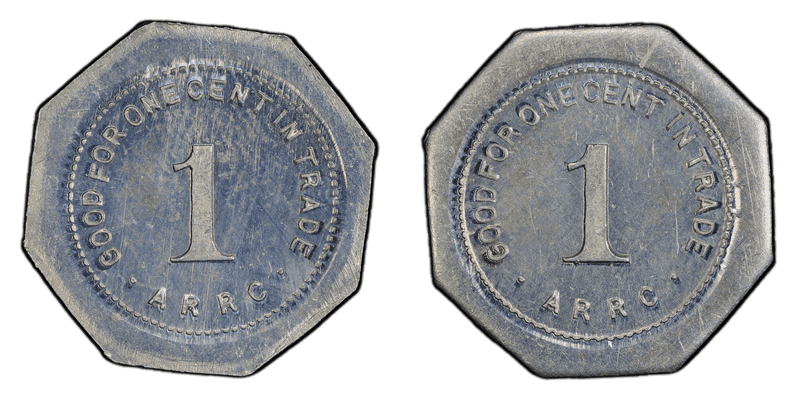
About This Series
The tokens of the Alaska Rural Rehabilitation Corporation for the Matanuska Valley colony. In 1935 the Alaska Rural Rehabilitation Corporation, a federal New Deal body, moved about two hundred farm families from the Midwest to the Matanuska Valley near Palmer and issued tokens in eight values from one cent to ten dollars to spend at the colony store; each adult received $30 in tokens and each child $5 (Rumsey lot description; Antique Trader). A 1955 booklet of the corporation says the tokens were in use some six months only, during the winter of 1935-36 (E-Sylum), while the Rumsey description says their issue stopped in 1937 and redemption ran through 1938, when most were melted. In Alaska bingle is a name for tokens in general; the Rumsey description and the booklet connect it with a local minister named Bingle (E-Sylum; Rumsey). A set in the same eight values dated 1985 was struck later (NGC census), from rediscovered original dies according to Numista (search).
Browse by Base(1 base)
Showing all 1 listings
Strike Types & Varieties(8)
Strike TypeVerified
1935 Alaska RRC Bingle Cent
Strike TypeVerified
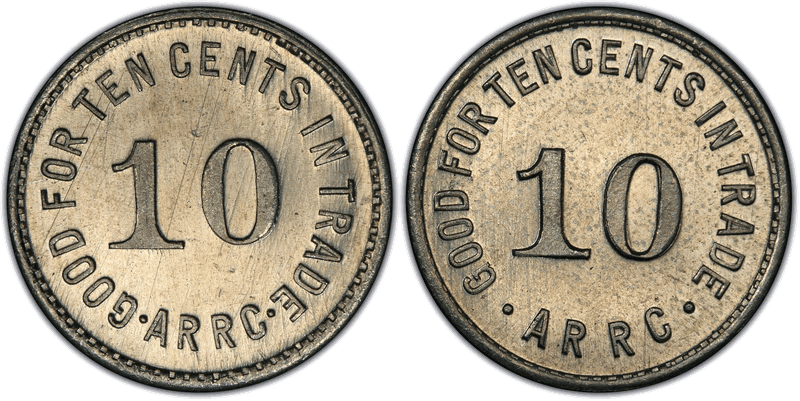
1935 Alaska RRC Bingle Dime
Strike TypeVerified
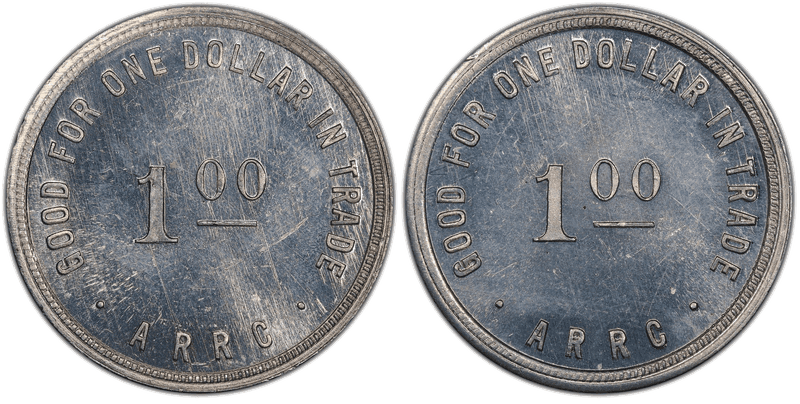
1935 Alaska RRC Bingle Dollar
Strike TypeVerified
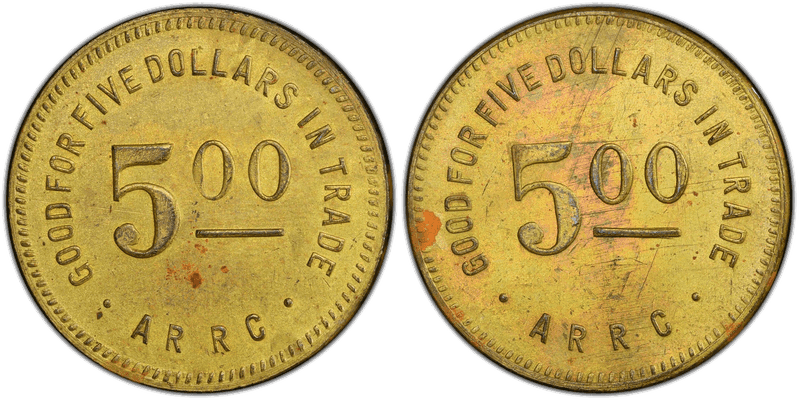
1935 Alaska RRC Bingle Five Dollars
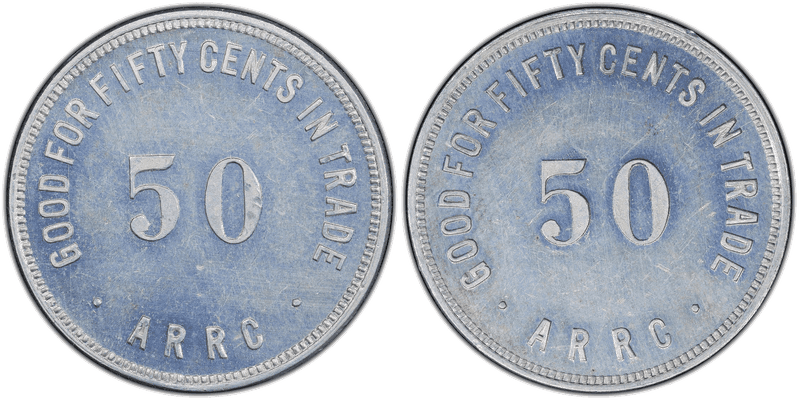
Strike TypeVerified
1935 Alaska RRC Bingle Half Dollar
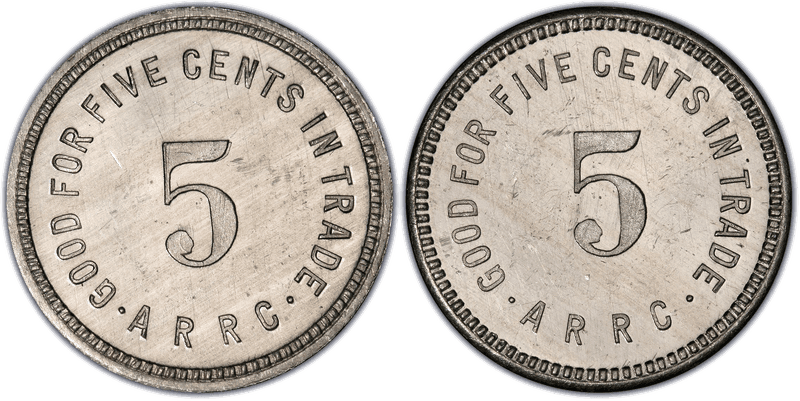
Strike TypeVerified
1935 Alaska RRC Bingle Nickel

Strike TypeVerified
1935 Alaska RRC Bingle Quarter
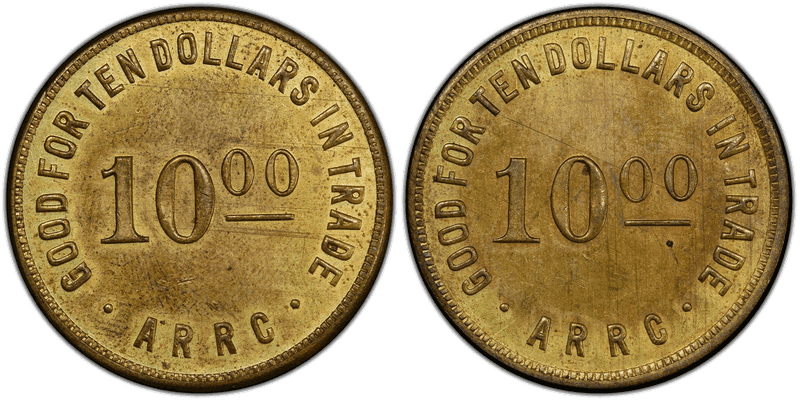
Strike TypeVerified
1935 Alaska RRC Bingle Ten Dollars
Showing all 8 listings
History
How to Identify It
The tokens come in eight values, one cent, five, ten, twenty-five and fifty cents, one dollar, five dollars and ten dollars, all dated 1935 according to NGC. They are about the size of the matching United States coins except the one cent, which is octagonal. The five- and ten-dollar tokens are brass and the rest aluminum. A later set in the same eight values is dated 1985.
Key Types and Varieties
The one cent, five cents, ten cents, twenty-five cents, fifty cents, one dollar, five dollars and ten dollars.
Composition
The tokens from one cent to one dollar are aluminum and the five- and ten-dollar tokens brass, according to Numista and APMEX; Antique Trader describes the series as aluminum. No record of the numbers issued has been confirmed by two sources, so the pages carry no issue figures.
In Our Catalog
No errors or varieties are listed for Alaska Rural Rehabilitation Corp. (1935) yet. Submit one
FAQ
What are bingles?
In Alaska bingle is a common name for tokens. The tokens issued in 1935 by the Alaska Rural Rehabilitation Corporation to the Matanuska Valley colonists are among the pieces called by that name. A 1955 booklet of the corporation was unsure where the word came from and pointed to a local minister named Bingle; the Rumsey lot description names him as the Reverend Bert Jennings Bingle.
How were the tokens used?
The colonists received them to spend at the colony store at Palmer, $30 in tokens for each adult and $5 for each child, according to the Rumsey lot description. The corporation's 1955 booklet says they were in use for some six months only, during the winter of 1935-36, while the same description says their issue stopped in 1937 and they were redeemed through 1938, after which most were melted.
Are there later copies?
NGC lists a second set in the same eight values dated 1985, and Numista reports that it was struck from the original dies after they were found again. The 1935 tokens and the 1985 pieces are listed separately by NGC.
Explore Other Denominations

Bechtler (North Carolina/Georgia) Gold (1831-1850)
6 base coins

California Gold (1849-1855)
28 base coins

Colorado Gold (1860-1861)
9 base coins

Lesher (Colorado) Dollars (1900-1901)
3 base coins

Mormon Gold (Utah) (1849-1860)
2 base coins
Oregon Gold (1849)
2 base coins

Souvenir & Fantasy Gold Tokens (1849-1915)
5 base coins
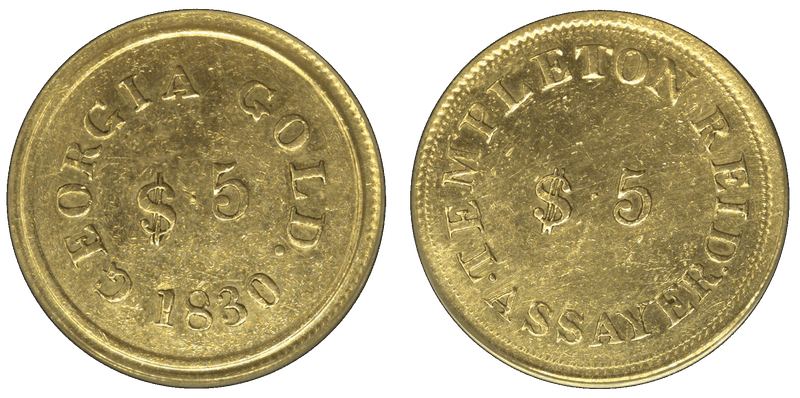
Templeton Reid (Georgia) Gold (1830-1849)
2 base coins
Collector Essentials
Tools and references for building and protecting your coin collection.
10x-20x Jeweler's Loupe
A must-have for examining coin details, mint marks, and surface quality
Red Book — Guide to U.S. Coins
The essential annual reference for U.S. coin values, history, and mintages
Coin Albums & Storage
Archival-quality albums and holders to protect and display your collection
USB Digital Microscope
Capture detailed images for documentation and community submissions
As an Amazon Associate, NumisDex earns from qualifying purchases.