
Series: Indian Head Cents 1859-1909 and Lincoln Wheat Cents 1909-1958
Woodies: Why Some Old Pennies Look Like They're Made of Wood
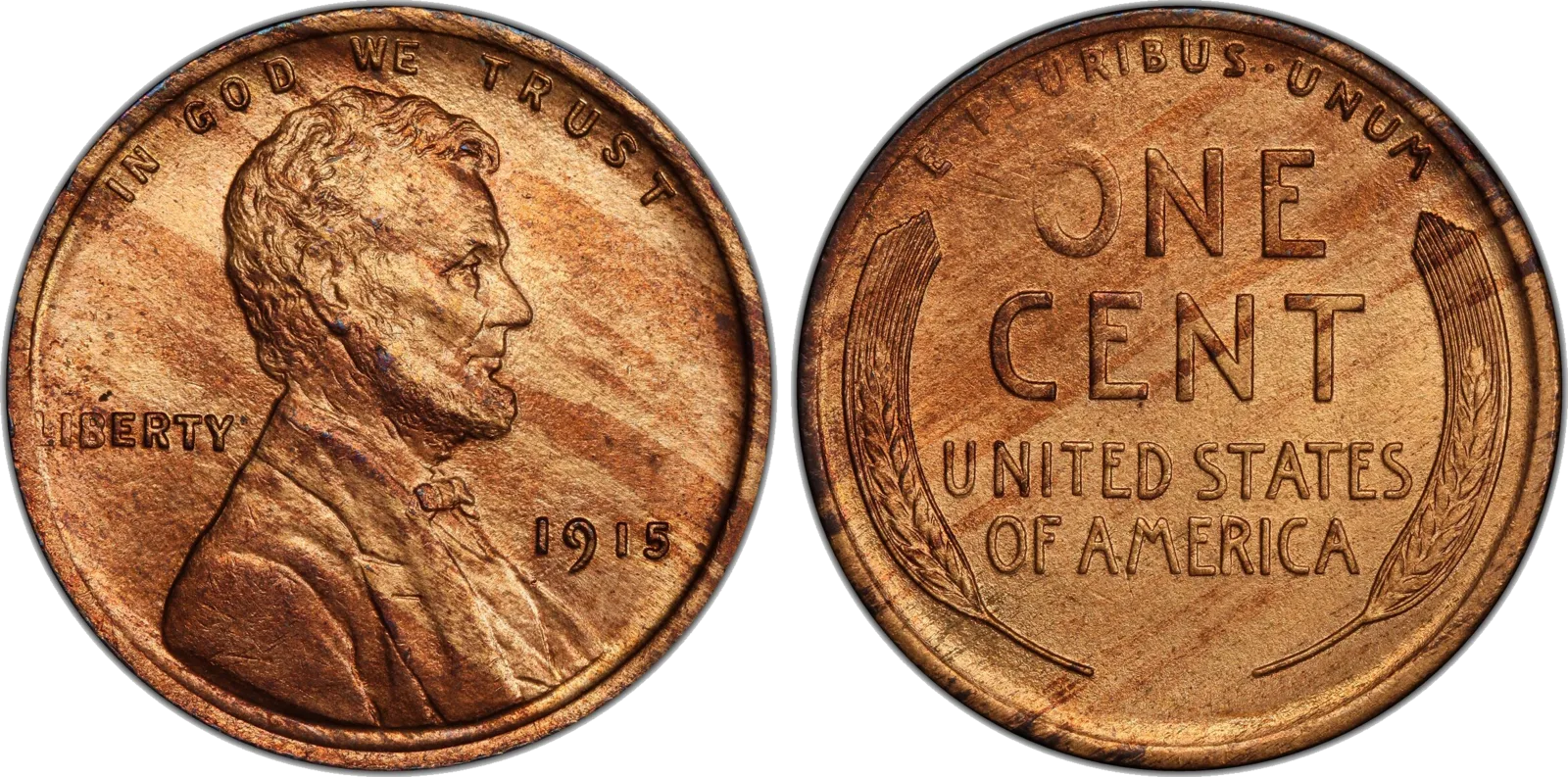
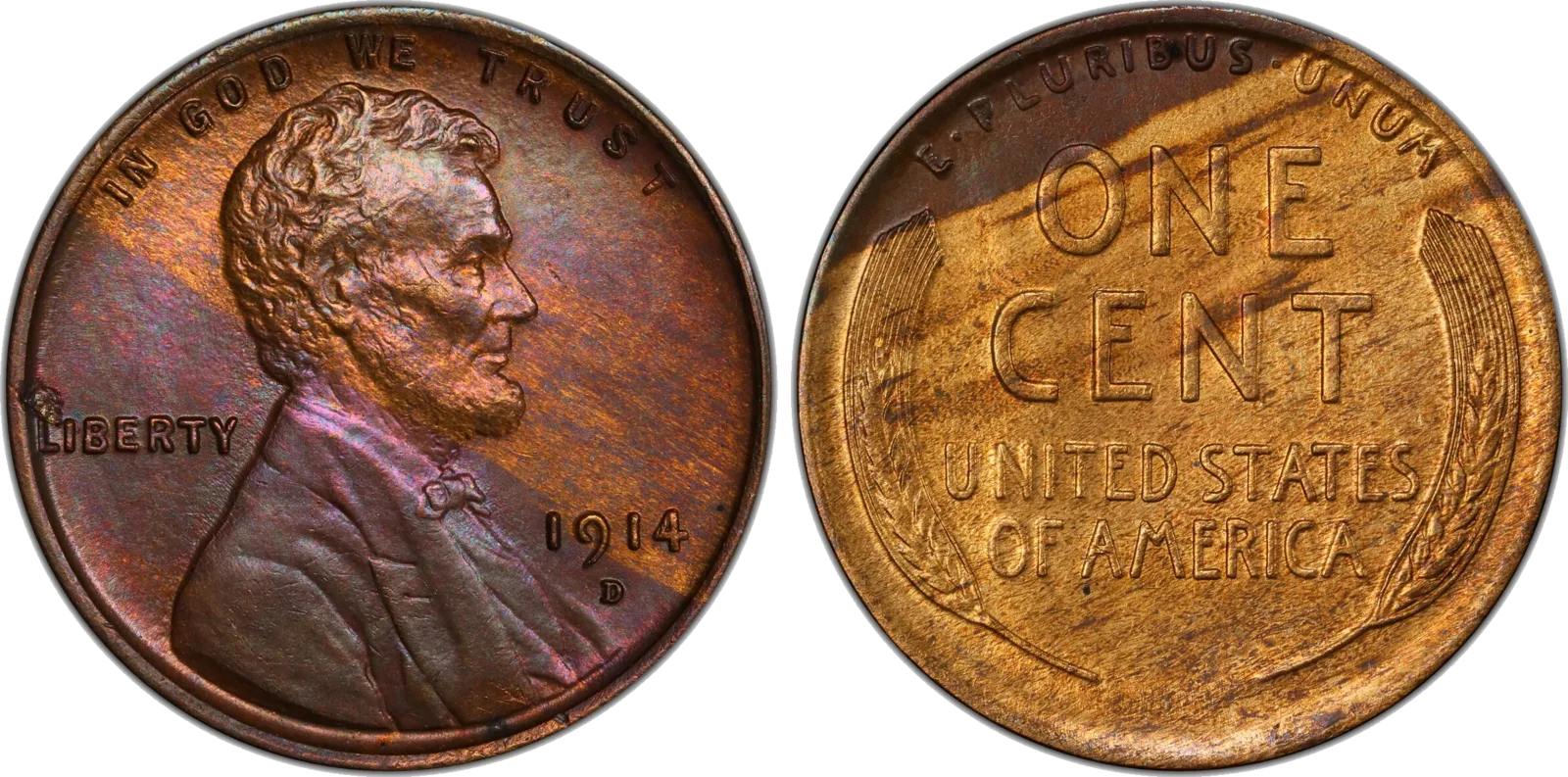
Every so often an old Lincoln or Indian Head cent turns up with light and dark stripes running across it, like the grain in a piece of wood. Collectors call these woodies, and the stripes aren't toning or damage. They're a mistake in the metal itself.
What Causes It
Before 1982, cents were mostly copper (the steel cents of 1943 aside). In the bronze years (1864–1942 and 1947–1962) the rest was a little tin and zinc. If those metals weren't mixed all the way before the metal was cast and rolled into strip, you get streaks in the strip, and every blank punched from it carries them. Error specialists call it an improper alloy mix (or a poorly mixed alloy). Error-Ref notes it's "not that uncommon in the early Lincoln cent series."
How to Tell It From Toning
This is the part people get wrong:
| Woodie (improper alloy mix) | Toning / environmental damage | |
|---|---|---|
| Where it is | In the metal: wear shows the same streak underneath | On the surface |
| Pattern | Parallel bands that follow the direction the strip was rolled | Random spots, splotches, halos, fingerprints |
| Sides | Usually both sides (Diamond notes some show it on only one) | Often one side, or only where something touched it |
Woodies and Laminations
A lamination is metal flaking or peeling in thin layers. It's a different error, but the two travel together: Mike Diamond writes in Coin World that laminations are "both common and expected" on ordinary improper alloy mix coins.
Not Every Stripe Is a Woodie
The very thin pinstripes common on 1978–1982 cents may be something else, possibly staining from the rolling process. Diamond doubts they're true alloy-mix errors, and he titled the piece Different causes of stripes on coins are not fully understood. The classic woodie is the broad, irregular banding you see on early Lincolns and Indian Heads.
From the Catalog
Woodies in the NumisDex catalog range from an 1867/67 Indian Head and a 1903 Indian Head to a 1914-D, a 1915 and a 1926 Lincoln. The full breakdown is on the Improper Alloy Mix page.
Sources: Error-Ref, "Poorly Mixed Alloy"; Mike Diamond, Coin World, "Different causes of stripes on coins are not fully understood" (2014); CONECA, Glossary of Error-Variety Terms; Wikipedia, "Penny (United States coin)."